

The DOI matches its Crossref record; 55 of the 55 references it cites were found in a registry or an index.
Small molecule-assisted synthesis of carbon supported platinum intermetallic fuel cell catalysts
Open accessAbstract
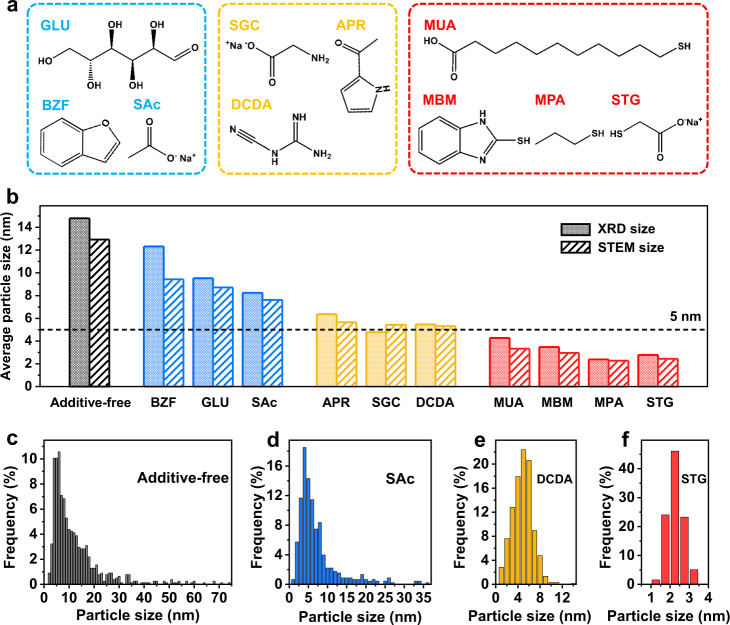
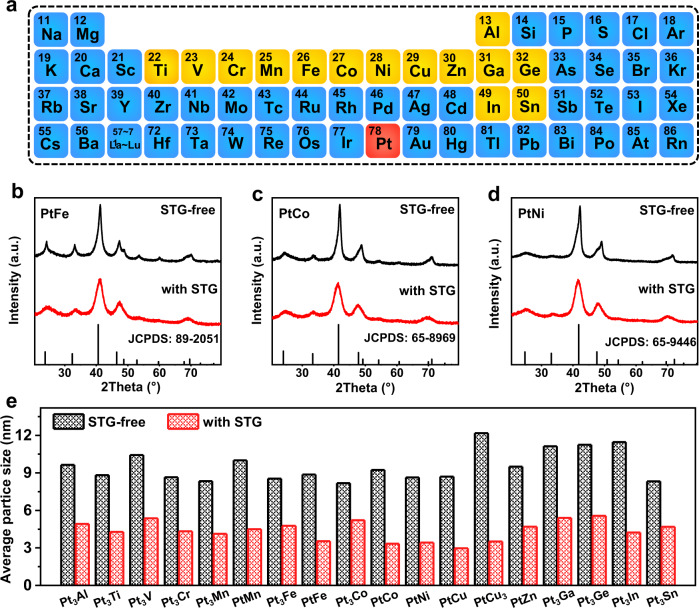
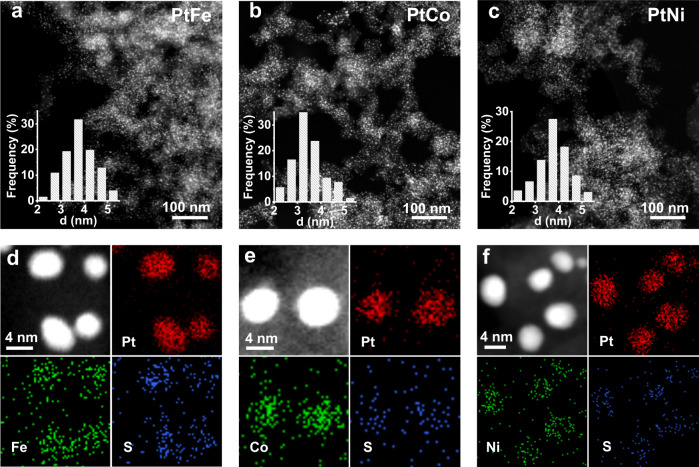
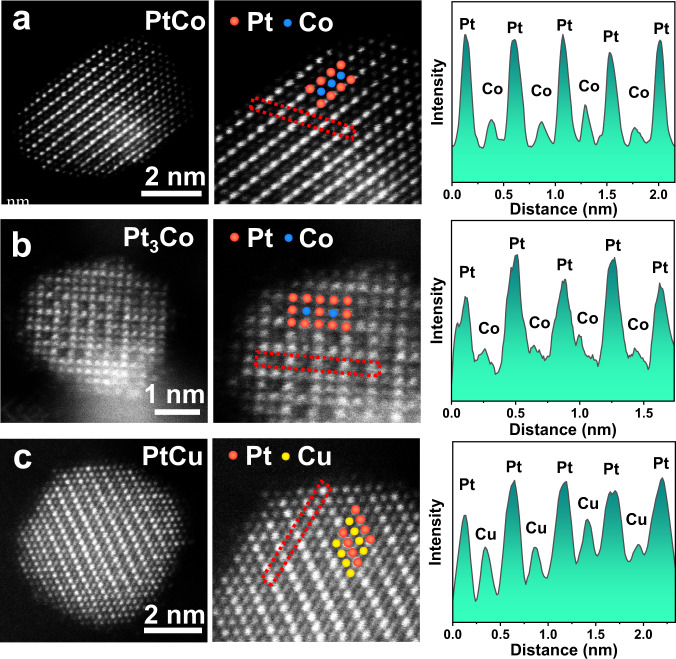
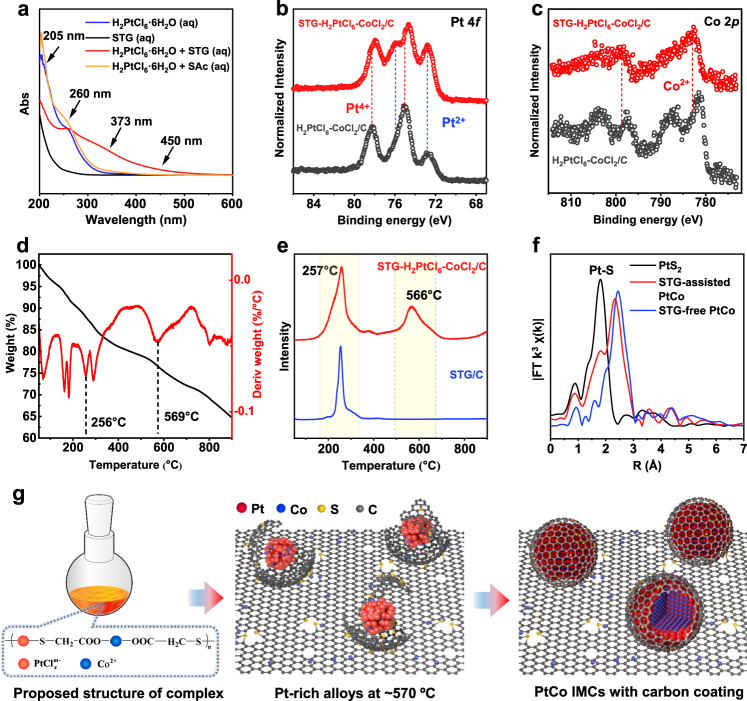
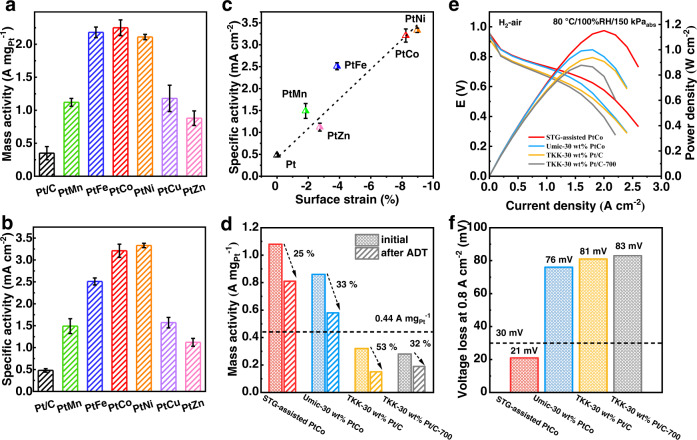
Supported ordered intermetallic compounds exhibit superior catalytic performance over their disordered alloy counterparts in diverse reactions. But the synthesis of intermetallic compounds catalysts often requires high-temperature annealing that leads to the sintering of metals into larger crystallites. Herein, we report a small molecule-assisted impregnation approach to realize the general synthesis of a family of intermetallic catalysts, consisting of 18 binary platinum intermetallic compounds supported on carbon blacks. The molecular additives containing heteroatoms (that is, O, N, or S) can be coordinated with platinum in impregnation and thermally converted into heteroatom-doped graphene layers in high-temperature annealing, which significantly suppress alloy sintering and insure the formation of small-sized intermetallic catalysts. The prepared optimal PtCo intermetallics as cathodic oxygen-reduction catalysts exhibit a high mass activity of 1.08 A mg Pt–1 at 0.9 V in H 2-O 2 fuel cells and a rated power density of 1.17 W cm–2 in H 2-air fuel cells.
Overview
The claims and statistics of this paper haven’t been checked yet.
Run the check — free, no account needed. It reads the open-access text and checks the sources it cites.
Integrity signals
Registry
Cites
Statistics
Figures
Verification
Claims the paper makes
The claims and statistics of this paper haven’t been checked yet.
Run the check — free, no account needed. It reads the open-access text and checks the sources it cites.
Self-check
Percentages, sums and reported differences re-computed from the paper’s own numbers.
The self-check needs the paper’s full text.
Citations
Cites
Wang, D., Xin, H. L., Hovden, R., Wang, H., Yu, Y., Muller, D. A., DiSalvo, F. J., & Abruña, H. D. (2013) · Nature Materials · doi:10.1038/nmat3458 · Cited by 2,082
Biaxially strained PtPb/Pt core/shell nanoplate boosts oxygen reduction catalysis
Bu, L., Zhang, N., Guo, S., Zhang, X., Li, J., Yao, J., Wu, T., Lu, G., Ma, J.-Y., Su, D., et al. (2016) · Science · doi:10.1126/science.aah6133 · Cited by 1,642
Wang, X. X., Swihart, M. T., & Wu, G. (2019) · Nature Catalysis · doi:10.1038/s41929-019-0304-9 · Cited by 1,174
Tuning the activity of Pt alloy electrocatalysts by means of the lanthanide contraction
Escudero-Escribano, M., Malacrida, P., Hansen, M. H., Vej-Hansen, U. G., Velázquez-Palenzuela, A., Tripkovic, V., Schiøtz, J., Rossmeisl, J., Stephens, I. E. L., & Chorkendorff, I. (2016) · Science · doi:10.1126/science.aad8892 · Cited by 1,057
Sulfur-anchoring synthesis of platinum intermetallic nanoparticle catalysts for fuel cells
Yang, C.-L., Wang, L.-N., Yin, P., Liu, J., Chen, M.-X., Yan, Q.-Q., Wang, Z.-S., Xu, S.-L., Chu, S.-Q., Cui, C., et al. (2021) · Science · doi:10.1126/science.abj9980 · Cited by 908
Self-citationBoosting Fuel Cell Performance with Accessible Carbon Mesopores
Yarlagadda, V., Carpenter, M. K., Moylan, T. E., Kukreja, R. S., Koestner, R., Gu, W., Thompson, L., & Kongkanand, A. (2018) · ACS Energy Letters · doi:10.1021/acsenergylett.8b00186 · Cited by 686
Highly Durable and Active PtFe Nanocatalyst for Electrochemical Oxygen Reduction Reaction
Chung, D. Y., Jun, S. W., Yoon, G., Kwon, S. G., Shin, D. Y., Seo, P., Yoo, J. M., Shin, H., Chung, Y.-H., Kim, H., et al. (2015) · Journal of the American Chemical Society · doi:10.1021/jacs.5b09653 · Cited by 677
Design and Synthesis of Bimetallic Electrocatalyst with Multilayered Pt-Skin Surfaces
Wang, C., Chi, M., Li, D., Strmcnik, D. S., van der Vliet, D., Wang, G., Komanický, V., Chang, K., Paulikas, A. P., Tripković, D. V., et al. (2011) · Journal of the American Chemical Society · doi:10.1021/ja2047655 · Cited by 627
Design criteria for stable Pt/C fuel cell catalysts
Meier, J. C., Galeano, C., Katsounaros, I., Witte, J., Bongard, H. J., Topalov, A. A., Baldizzone, C., Mezzavilla, S., Schüth, F., & Mayrhofer, K. J. J. (2014) · Beilstein Journal of Nanotechnology · doi:10.3762/bjnano.5.5 · Cited by 559
Intermetallic Nanocrystals: Syntheses and Catalytic Applications
Yan, Y., Du, J. S., Gilroy, K. D., Yang, D., Younan Xia, A., & Zhang, H. (2017) · Advanced Materials · doi:10.1002/adma.201605997 · Cited by 553
Cited by
Sorted by citations
Kuang, P., Ni, Z., Zhu, B., Lin, Y., & Yu, J. (2023) · Advanced Materials · doi:10.1002/adma.202303030 · Cited by 396
Intermetallic Nanocrystals for Fuel-Cells-Based Electrocatalysis
Lin, F., Li, M., Zeng, L., Luo, M., & Guo, S. (2023) · Chemical Reviews · doi:10.1021/acs.chemrev.3c00382 · Cited by 262
Advanced Architectures of Air Electrodes in Zinc–Air Batteries and Hydrogen Fuel Cells
Li, L., Tang, X., Wu, B., Huang, B., Yuan, K., & Chen, Y. (2023) · Advanced Materials · doi:10.1002/adma.202308326 · Cited by 155
Yin, P., Niu, X., Li, S.-B., Chen, K., Zhang, X., Zuo, M. J., Zhang, L., & Liang, H. (2024) · Nature Communications · doi:10.1038/s41467-023-44674-1 · Cited by 152
Self-citationA P–O functional group anchoring Pt – Co electrocatalyst for high-durability PEMFCs
Hu, S., Xu, W., Tian, N., Chen, S., Li, M., Shen, J., Lin, J., Guo, S.-L., Huang, X. J., Zhou, Z., et al. (2024) · Energy & Environmental Science · doi:10.1039/d3ee04503j · Cited by 124
Metadata
- Authors
- Song, T.-W., Xu, C., Sheng, Z.-T., Yan, H.-K., Tong, L., Liu, J., Zeng, W.-J., Zuo, L.-J., Yin, P., Zuo, M., Chu, S.-Q., Chen, P., & Liang, H.-W.
- Affiliations
- University of Science and Technology of China (CN)
- Anhui Normal University (CN)
- Chinese Academy of Sciences (CN)
- Anhui University (CN)
- Corresponding author
- Liang, Hai-Wei
- ORCID
- Venue
- Nature Communications
- Published
- 2022-10-31
- Volume
- 13
- Issue
- 1
- Pages
- 6521-6521
- ISSN
- 2041-1723 (ISSN-L)
- PMC
- PMC9622856
- OpenAlex
- W4307897536
- Cited by
- 193
- References
- 55
- Citations by year
- 2026: 40 · 2025: 64 · 2024: 53 · 2023: 36
- FWCI
- 6.89
- Type
- journal article
- Language
- en
- Open access
- gold
- doi.org
- Locations
- Nature Communications (publishedVersion, cc-by)
- PubMed Central (publishedVersion, cc-by)
- PubMed (publishedVersion)
- RePEc: Research Papers in Economics (submittedVersion)
- DOAJ (DOAJ: Directory of Open Access Journals) (submittedVersion, cc-by-sa)
- Funders
- National Natural Science Foundation of China (22071225 and 51971211)
- Youth Innovation Promotion Association of the Chinese Academy of Sciences (2017483)
- Topics
- Physical Sciences › Energy › Renewable Energy, Sustainability and the Environment › Electrocatalysts for Energy Conversion
- Physical Sciences › Engineering › Electrical and Electronic Engineering › Fuel Cells and Related Materials
- Physical Sciences › Materials Science › Materials Chemistry › Catalytic Processes in Materials Science
- Keywords
- carbon-supported catalysts, heteroatom-doped graphene, sintering suppression, high-temperature annealing, oxygen reduction reaction, fuel cell catalysts, H2/O2 fuel cells, H2/air fuel cells, mass activity
About these checks
Registry, retraction, Cites and statistics results are computed, not judged, with one exception: a printed reference that no index lists is read once by a model before it counts as a citation error. Claims are extracted by a model and kept only when their quote appears verbatim in the text; each cited source is then checked, with a model’s help, for whether it says what the claim relies on. Those verdicts can be wrong — read the claim’s quote and the cited source before relying on one.
Statistics and arithmetic are recomputed, not judged.
Confidence bands are shown only for fields calibrated on our annotated test set. None is calibrated yet, so no band is shown.
What counts as a claim ›How we measure confidence ›How we check this ›
Are you an author, or do you see a problem with this page? Request a review
