

Multilevel proteomic analyses reveal molecular diversity between diffuse-type and intestinal-type gastric cancer
Open accessThe DOI matches its Crossref record; 69 of the 69 references it cites were found in a registry or an index.
Abstract
Diffuse-type gastric cancer (DGC) and intestinal-type gastric cancer (IGC) are the major histological types of gastric cancer (GC). The molecular mechanism underlying DGC and IGC differences are poorly understood. In this research, we carry out multilevel proteomic analyses, including proteome, phospho-proteome, and transcription factor (TF) activity profiles, of 196 cases covering DGC and IGC in Chinese patients. Integrative proteogenomic analysis reveals ARIDIA mutation associated with opposite prognostic effects between DGC and IGC, via diverse influences on their corresponding proteomes. Systematical comparison and consensus clustering analysis identify three subtypes of DGC and IGC, respectively, based on distinct patterns of the cell cycle, extracellular matrix organization, and immune response-related proteins expression. TF activity-based subtypes demonstrate that the disease progressions of DGC and IGC were regulated by SWI/SNF and NFKB complexes. Furthermore, inferred immune cell infiltration and immune clustering show Th1/Th2 ratio is an indicator for immunotherapeutic effectiveness, which is validated in an independent GC anti-PD1 therapeutic patient group. Our multilevel proteomic analyses enable a more comprehensive understanding of GC and can further advance the precision medicine.
Overview
The claims and statistics of this paper haven’t been checked yet.
Free: it reads the open-access text and checks the first 5 claims that cite a source we can check. Create a free account to check every claim.
Integrity signals
Registry
Cites
Statistics
Figures
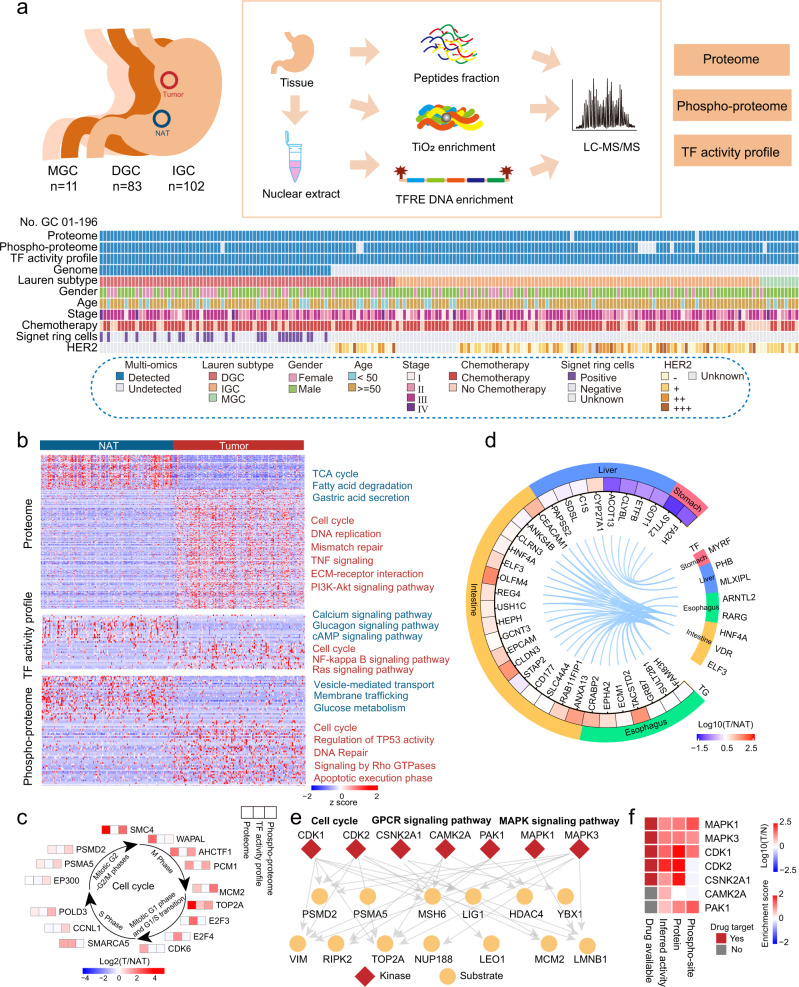
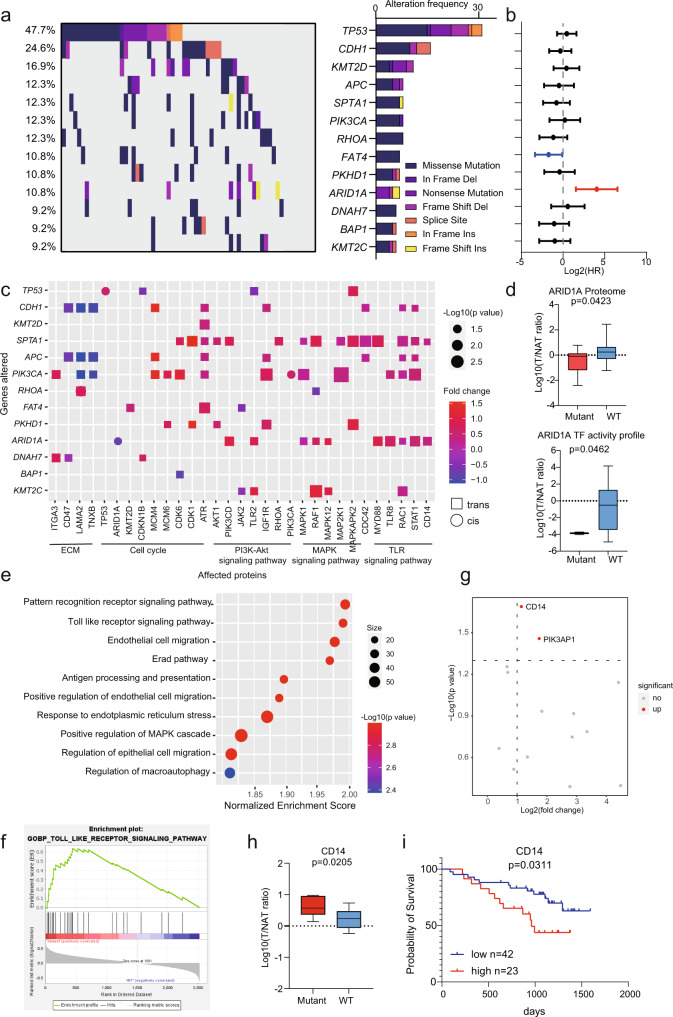
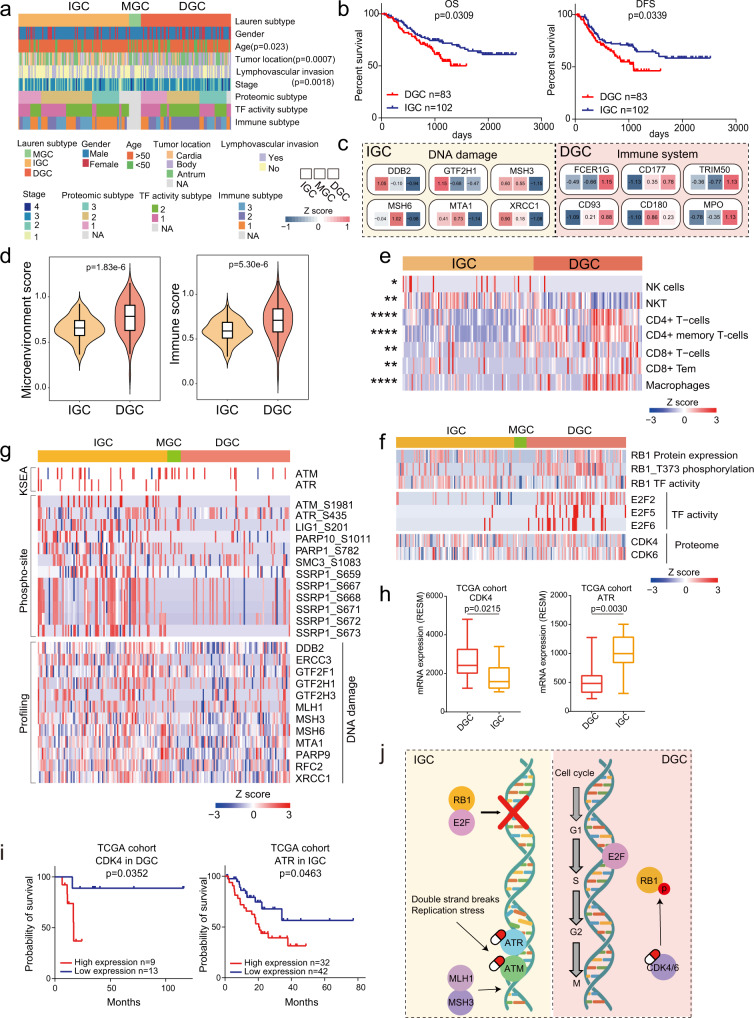
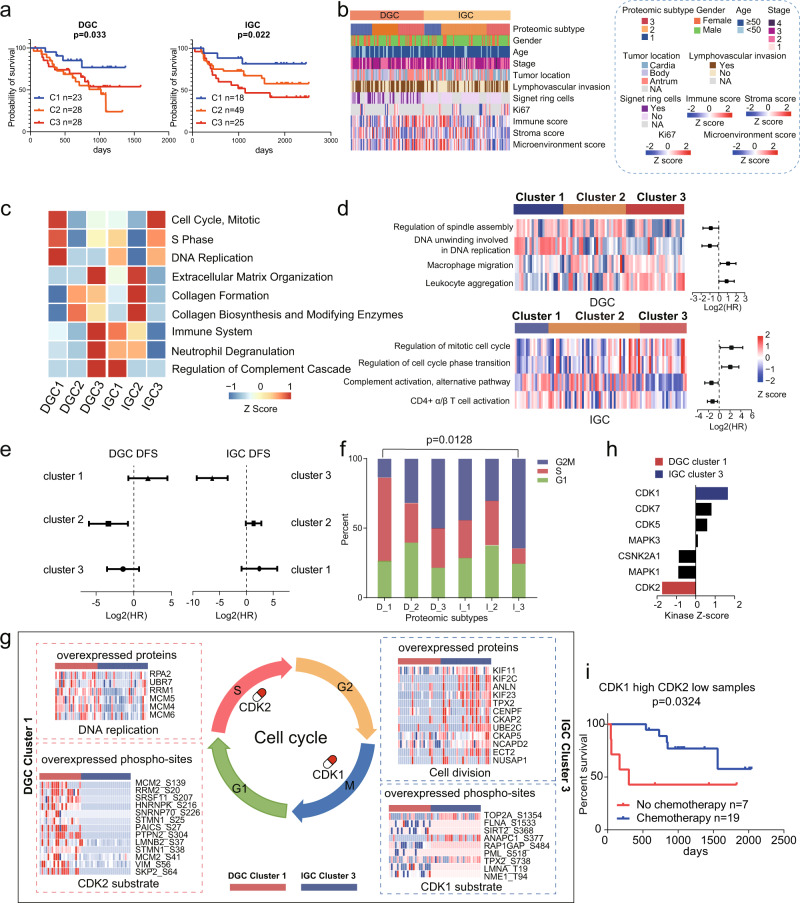
Verification
Claims the paper makes
The claims and statistics of this paper haven’t been checked yet.
Free: it reads the open-access text and checks the first 5 claims that cite a source we can check. Create a free account to check every claim.
Claims other papers make about this one
Each is checked against this paper’s own text: does it say what the citing paper says it does?
The cited source says what the claim attributes to it.
In the citing paper
“For instance, integrative proteogenomic analysis showed that the ARID1A mutation conferred contradictory prognostic influences in the two different entities.”
From Bioinformatics Analysis and Validation of Potential Markers Associated with Prediction and Prognosis of Gastric Cancer (2024) · cites this paper as [90]
The cited source says what the claim attributes to it.
In the citing paper
“Meanwhile, diverse effects on corresponding proteomes were demonstrated, implying that diffuse-GC and intestinal-GC should be characterized based on multilevel data, including proteogenomics.”
From Bioinformatics Analysis and Validation of Potential Markers Associated with Prediction and Prognosis of Gastric Cancer (2024) · cites this paper as [90]
Self-check
Percentages, sums and reported differences re-computed from the paper’s own numbers.
The self-check needs the paper’s full text.
Citations
Cites
Cancer statistics in China, 2015
Chen, W., Zheng, R., Baade, P. D., Zhang, S., Zeng, H., Bray, F., Jemal, A., Yu, X. Q., & He, J. (2016) · CA: A Cancer Journal for Clinicians · doi:10.3322/caac.21338 · Cited by 17,038
Integrating single-cell transcriptomic data across different conditions, technologies, and species
Butler, A., Hoffman, P., Smibert, P., Papalexi, E., & Satija, R. (2018) · Nature Biotechnology · doi:10.1038/nbt.4096 · Cited by 13,174
NF-κB signaling in inflammation
Liu, T., Zhang, L., Joo, D., & Sun, S.-C. (2017) · Signal Transduction and Targeted Therapy · doi:10.1038/sigtrans.2017.23 · Cited by 8,791
Universal sample preparation method for proteome analysis
Wiśniewski, J. R., Zougman, A., Nagaraj, N., & Mann, M. (2009) · Nature Methods · doi:10.1038/nmeth.1322 · Cited by 8,352
Bolstad, B. M., Irizarry, R. A., Åstrand, M., & Speed, T. P. (2003) · Bioinformatics · doi:10.1093/bioinformatics/19.2.185 · Cited by 8,266
Global quantification of mammalian gene expression control
Schwanhäusser, B., Busse, D., Li, N., Dittmar, G., Schuchhardt, J., Wolf, J., Chen, W., & Selbach, M. (2011) · Nature · doi:10.1038/nature10098 · Cited by 6,566
Comprehensive molecular characterization of gastric adenocarcinoma
The Cancer Genome Atlas Research Network (2014) · Nature · doi:10.1038/nature13480 · Cited by 6,498
LAURÉN, P. (1965) · Acta Pathologica Microbiologica Scandinavica · doi:10.1111/apm.1965.64.1.31 · Cited by 6,133
The DNA-damage response in human biology and disease
Jackson, S. P., & Bartek, J. (2009) · Nature · doi:10.1038/nature08467 · Cited by 6,092
ConsensusClusterPlus: a class discovery tool with confidence assessments and item tracking
Wilkerson, M. D., & Hayes, D. N. (2010) · Bioinformatics · doi:10.1093/bioinformatics/btq170 · Cited by 5,669
Research works printed but not linked: 1
- Wild, C., Weiderpass, E. & Stewart, B.World Cancer Report: Cancer Research for Cancer Prevention (WHO, 2020). 39432694
Cited by
Mamun, T. I., Younus, S., & Rahman, M. H. (2024) · Cancer Treatment and Research Communications · doi:10.1016/j.ctarc.2024.100845 · Cited by 252
Matsuoka, T., & Yashiro, M. (2024) · International Journal of Molecular Sciences · doi:10.3390/ijms25115880 · Cited by 83
“For instance, there has been deep attention to the comprehensive characterization of the divergent mechanisms of diffuse-GC and intestinal-GC [90].”
BackgroundBeyond the Gut: The intratumoral microbiome's influence on tumorigenesis and treatment response
Zhang, H., Fu, L., Leiliang, X., Qu, C., Wu, W., Wen, R., Huang, N., He, Q., Cheng, Q., Liu, G., et al. (2024) · 癌症:英文版 · doi:10.1002/cac2.12597 · Cited by 78
Zhang, C., Liu, S., Zhang, J., Lu, J., Chen, Z., Pan, B., Liu, C., Huang, M. S., Zhan, H., Wang, H., et al. (2025) · Research · doi:10.34133/research.0735 · Cited by 58
“The Th1 proportion is also positively correlated with the response to immunotherapy in various cancer types [ 45 , 46 ].”
Self-citationLi, Y., Wang, B., Yang, W., Ma, F., Zou, J., Li, K., Tan, S., Feng, J., Wang, Y., Qin, Z., et al. (2024) · Nature Communications · doi:10.1038/s41467-024-44911-1 · Cited by 39
“All data were processed using the Firmiana proteomics workstation 83 , which were used in our previous studies 46,84,85 .”
Self-citationLiao, W., Wang, J., & Li, Y. (2024) · Journal of Pharmaceutical Analysis · doi:10.1016/j.jpha.2024.101075 · Cited by 36
“The intestinal-type GC is characterized by a differentiating glandular structure and a complex multifactorial, multistep process [4].”
Self-citationCurrent development of molecular classifications of gastric cancer based on omics (Review)
Ma, Y., Jiang, Z., Pan, L., Zhou, Y., Xia, R., Liu, Z., & Li, Y. (2024) · International Journal of Oncology · doi:10.3892/ijo.2024.5677 · Cited by 35
“Shi et al (38) discov‑ ered that patients with elevated SMARCC1 activity in IGC and reduced NFKB1 activity in DGC may derive benefits from chemotherapy.”
BackgroundSelf-citationTelomeres, telomerase, and cancer: mechanisms, biomarkers, and therapeutics
Shou, S., Maolan, A., Zhang, D., Jiang, X., Liu, F., Li, Y., Zhang, X., Geer, E., Pu, Z., Hua, B., et al. (2025) · Experimental Hematology and Oncology · doi:10.1186/s40164-025-00597-9 · Cited by 31
“Multilayered proteomic analysis suggests distinct pathogenic mechanisms between the two conditions: DNA damage is upregulated in intestinal-type gastric cancer, whereas immune and extracellular matrix (ECM) proteins are elevated in diffuse-type gastritis [339].”
Self-citationHER-2 positive gastric cancer: Current targeted treatments
Malla, R. R., Nellipudi, H. R., Srilatha, M., & Nagaraju, G. P. (2024) · International Journal of Biological Macromolecules · doi:10.1016/j.ijbiomac.2024.133247 · Cited by 27
The Human Gastric Juice: A Promising Source for Gastric Cancer Biomarkers
Felípez, N., Montori, S., Mendizuri, N., Llach, J., Delgado‐Guillena, P., Moreira, L., Santamaría, E., Fernández‐Irigoyen, J., & Albéniz, E. (2023) · International Journal of Molecular Sciences · doi:10.3390/ijms24119131 · Cited by 22
“More recently, multi-proteomic analyses have been used to dissect GC heterogeneity, characterizing three subtypes of DGC and IGC, and advancing a more comprehensive understanding of precision oncology [59].”
BackgroundWang, L., Sun, M., Li, J., Wan, L., Tan, Y., Tian, S., Hou, Y., Wu, L., Peng, Z., Hu, X., et al. (2024) · Clinical Cancer Research · doi:10.1158/1078-0432.ccr-24-2436 · Cited by 21
Self-citationImmunotherapy for diffuse gastric cancer: challenges and new avenues
Zhou, Y., & Li, J. (2025) · npj Precision Oncology · doi:10.1038/s41698-025-01052-y · Cited by 19
“Interestingly, DGC and IGC patients with this immune subtype have opposite prognostic trends, with DGC patients showing poorer survival 32 .”
Self-citationSu, Y., Zhang, X., Liang, Y., Sun, J., Lu, C., & Huang, Z. (2023) · Biochimica et Biophysica Acta (BBA) - Molecular Basis of Disease · doi:10.1016/j.bbadis.2023.166849 · Cited by 18
Diagnosis and prognosis prediction of gastric cancer by high-performance serum lipidome fingerprints
Cai, Z., Wang, W., Chen, D., Chen, H., Hu, Y., Luo, X.-J., Wang, Y.-T., Pan, Y., Mo, H., Luo, S., et al. (2024) · EMBO Molecular Medicine · doi:10.1038/s44321-024-00169-0 · Cited by 18
“…transcriptomics analysis (The Cancer Genome Atlas Research Network, 2014; Data ref: The Cancer Genome Atlas Research Network, 2014) and proteomics analysis (Shi et al, 2023; Data ref: Shi et al, 2023) of GC tissues were conducted to systematically explore lipid metabolic reprogramming in GC.”
Self-citationThe role of cuproptosis in gastric cancer
Li, Y., Sun, W., Yuan, S., Liu, X., Zhang, Z., Gu, R., Li, P., & Gu, X. (2024) · Frontiers in Immunology · doi:10.3389/fimmu.2024.1435651 · Cited by 17
Self-citationKemp, L. J. S., Monster, J. L., Wood, C. S., Moers, M., Vliem, M. J., Khalil, A., Jamieson, N. B., Brosens, L. A. A., Kodach, L. L., van Dieren, J. M., et al. (2025) · Gut · doi:10.1136/gutjnl-2024-334589 · Cited by 15
Zhang, Z., Wu, X., Bao, S., Sun, X., Yang, F., Zhang, Y., Yang, Z., Zhang, L., Chen, R., Xing, P., et al. (2025) · Research · doi:10.34133/research.0671 · Cited by 14
“The proportions of 28 immune cell signatures [ 63 ], immune-related Fges [ 60 ], and immune-related hallmark gene sets were calculated using the ssGSEA method with “GSVA” (v.1.48.3) R package based on proteomic data, as described in previous studies [ 64 , 65 ].”
InfluentialSelf-citationSun, J., Li, X., Wang, Q., Chen, P., Zhao, L., & Gao, Y. (2024) · Frontiers in Pharmacology · doi:10.3389/fphar.2024.1349459 · Cited by 14
“The validation cohort (https://www.iprox.cn//page/subproject. html?id=IPX0004819001) is a group of GC patients treated with anti-PD1 therapy, including seven responder cases and seven non-responder cases (Shi et al., 2023).”
Hou, Y., Zhang, Y., Zheng, K., Wang, H., Zhou, Y., Zhai, Y., He, F., Tian, C., & Sun, A. (2024) · International Journal of Biological Sciences · doi:10.7150/ijbs.99734 · Cited by 13
Self-citationLatin American young patients with gastric adenocarcinoma: worst prognosis and outcomes
Calderillo-Ruiz, G., Romero, M. D. C. D., Carbajal-López, B., Herrera-Martínez, M., Ruíz‐García, E., León-Takahashi, A. M., López-Basave, H. N., Meneses-García, A., & Herrera‐Gómez, Á. (2023) · Journal of Gastrointestinal Oncology · doi:10.21037/jgo-23-259 · Cited by 13
“The incidence of young age at the time of diagnosis has increased over the past decade, defined as “early onset of GC”, these populations have demonstrated to highlight the prevalence of these 3 features of bad prognosis, besides higher metastatic risk (19,21,30).”
Mass Spectrometry‐Based Proteomics for Next‐Generation Precision Oncology
Lin, K., Muneer, G., Huang, P., Chen, C., & Chen, Y. (2025) · Mass Spectrometry Reviews · doi:10.1002/mas.21932 · Cited by 12
Zhao, R., Lu, H., Yuan, H., Chen, S., Xu, K., Zhang, T., Liu, Z., Jiang, Y., Suo, C., & Chen, X. (2025) · International Journal of Cancer · doi:10.1002/ijc.35518 · Cited by 10
“49 IVW was used as the primary method due to its high efficiency when plei-otropy is absent.”
Metabolic signatures for gastric cancer diagnosis and mechanistic insights: a multicenter study
Zhu, J. L., Huang, Y., Li, X., Liu, B., Li, Y., Wang, L., Qian, K., Mao, Y., Xu, Y., Du, L., et al. (2025) · EMBO Molecular Medicine · doi:10.1038/s44321-025-00325-0 · Cited by 10
“Protein pro fi ling was performed as previously described (Shi et al, 2023), using Orbitrap-based mass spectrometers.”
Self-citationMulti-omics perspective: mechanisms of gastrointestinal injury repair
Zhao, H., Zhang, Z., Liu, H., Ma, M., Sun, P., Zhao, Y., & Liu, X. (2025) · Burns & Trauma · doi:10.1093/burnst/tkae057 · Cited by 10
Shoji, H., Hirano, H., Nojima, Y., Gunji, D., Shinkura, A., Muraoka, S., Abe, Y., Narumi, R., Nagao, C., Aoki, M., et al. (2024) · Cell Reports · doi:10.1016/j.celrep.2024.114774 · Cited by 9
Chang, Y.-H., Hong, T., Lin, K., Hsiao, Y., Hsu, H.-E., Waniwan, J. T., Silva, R. E., Lai, I., Lee, P., Lin, M.-T., et al. (2026) · Gut · doi:10.1136/gutjnl-2025-337247 · Cited by 8
“These proteins have been previously implicated in cancer progression across tissues, 68–72 and notably, CRIP1 promotes tumour growth, metastasis and lymphangiogenesis in gastric carcinogenesis.”
Self-citationHarnessing technologies to unravel gastric cancer heterogeneity
Wang, Y., Jin, R. U., Xu, J., Lin, D., Sun, Z.-Y. J., Xu, Y., Li, Q. K., & Zhang, H. (2025) · Trends in cancer · doi:10.1016/j.trecan.2025.04.011 · Cited by 8
Self-citationDong, Y., Zhang, J., Xie, S., Di, S., Fan, B., & Gong, T. (2024) · The Journal of Gene Medicine · doi:10.1002/jgm.3679 · Cited by 7
Zhu, X., Chen, J., Liao, J., Wang, M., Long, Y., Liu, M., Zhang, Y., & Wang, H. (2024) · Nano Letters · doi:10.1021/acs.nanolett.4c05208 · Cited by 7
Ding, P., Wu, J., Wu, H., Ma, W., Li, T., Yang, P., Guo, H., Tian, Y., Yang, J., Er, L., et al. (2025) · Journal of Experimental & Clinical Cancer Research · doi:10.1186/s13046-025-03305-x · Cited by 6
“Recent studies have emphasized the role of gene expression in classifying patients with GC into various molecular subtypes [25–28].”
Self-citationLiao, Y., Wei, Z., Xu, H., Zhang, Z., & Zhu, F. (2024) · Precision medication. · doi:10.1016/j.prmedi.2024.10.002 · Cited by 5
Zhan, D., Yang, Z., Li, P., & Pan, J. (2024) · Postgraduate Medical Journal · doi:10.1093/postmj/qgae140 · Cited by 4
Zhang, J., Xiong, A., Yang, Y., Cao, Y., Yang, M., Su, C., Lei, M., Chen, Y., Shen, X., Wang, P., et al. (2025) · Journal of Proteome Research · doi:10.1021/acs.jproteome.4c01067 · Cited by 4
A 15-layer multi-omics analysis of gastric cancer ecotypes provides therapeutic insights
Wang, Y., Olsen, L. K., Jiao, F., Wang, C., Jiang, K. X., Dou, Y., Hu, Y., Jiao, L., Chen, W., Elizarraras, J. M., et al. (2026) · Cell Reports Medicine · doi:10.1016/j.xcrm.2026.102756 · Cited by 4
Self-citationGao, A., He, C. S., Chen, H., Liu, Q., Chen, Y., Sun, J., Wu, C., Pan, Y., Rocha, S., Wang, M., et al. (2024) · PROTEOMICS - CLINICAL APPLICATIONS · doi:10.1002/prca.202400010 · Cited by 4
Wan, C., Xu, Y., Zhu, Y., Cao, X., Wang, P., & Gu, Y. (2025) · Molecular Medicine Reports · doi:10.3892/mmr.2025.13550 · Cited by 3
“CD4 + T lymphocytes consist of four distinct groups: Th1, Th2, Th17 and Treg cells (37).”
Establishment and characterization of a new mouse gastric carcinoma cell line, MCC
Wang, Y., Li, X., Wang, Y., & Qin, J. (2025) · Cancer Cell International · doi:10.1186/s12935-024-03633-6 · Cited by 3
“…sys-tem for gastric cancer [8], molecular subtyping through omics approaches such as genomics [9], transcriptomics [10], proteomics [11, 12], and single-cell transcrip-tomics [13, 14] offers potential therapeutic targets by delineating the characteristics of different patient sub-types.”
Self-citationArtificial Intelligence and Bioinformatics in the Malignant Progression of Gastric Cancer
Matsuoka, T., & Yashiro, M. (2025) · Applied Sciences · doi:10.3390/app152011092 · Cited by 2
Felípez, N., Montori, S., Valero, A., Santamaría, E., Ausín, K., Peral, E., Llach, J., Delgado, P., Flórez-Díez, P., Barreiro, E., et al. (2026) · Scientific Reports · doi:10.1038/s41598-026-45298-3 · Cited by 2
“Additionally, multilevel analyses revealed subtype-specific differences in signaling pathways, protein expression, and clinical behavior 12 .”
Zhang, X., Wang, X., Wang, Q., Wang, X., Sun, H., Liu, Y., Tan, C., Ni, S., Weng, W., Zhang, M., et al. (2026) · Biomarker Research · doi:10.1186/s40364-025-00867-y · Cited by 2
“Moreover, patients with intestinal-type GC exhibited markedly elevated DLEU1 levels compared to those with diffuse-type subtype [19], a finding consistently observed in both the TCGA ( P = 0.002) and GEO22377 cohorts ( P = 0.008, Fig.”
InfluentialLi, P., Huang, Y., Jiang, W., Zheng, H., Chen, R., & Ding, X. (2026) · Future Oncology · doi:10.1080/14796694.2026.2631302 · Cited by 2
Li, H., Sun, P., Wang, J., Wang, Y., Zhao, Q., Peng, Y., Xu, N., Zhang, Z., & Jiang, Y. (2026) · Journal of Gastroenterology and Hepatology · doi:10.1111/jgh.70512 · Cited by 2
Self-citationChandan, S., Bhargavi, C. P., Bhavana, S., Dasegowda, K. R., Kumaraswamy, H. M., Meghana, P., Babu, R. L., & Naika, H. R. (2024) · Elsevier eBooks · doi:10.1016/b978-0-443-27523-4.00022-6 · Cited by 1
Rao, M., Ruan, R., Xiong, J., & Deng, J. (2025) · Current Medicinal Chemistry · doi:10.2174/0109298673376656250602095713 · Cited by 1
Su, B., Li, J., Zhang, G., Deng, T., Fang, Z., & Wang, Y. (2026) · Current Radiopharmaceuticals · doi:10.1016/j.craph.2026.100040 · Cited by 1
Self-citationAdvances in the molecular subtyping of gastric cancer
Chen, J., Zhang, X., & Zhao, Y. W. (2026) · World Journal of Surgical Oncology · doi:10.1186/s12957-026-04437-w · Cited by 1
“Other classifications derived from single-cell sequencing, spatial transcriptomics, and proteomics (e.g., Chen’s L1-L3 [42], Tian’s stromal subtype [51], Li’s PX1-PX3 [52], and Shi’s G-P1-G-P4 [53]) remain at the hypothesis-generating stage.”
ARID1A loss drives gastric signet ring cell carcinoma by regulating mucin production and secretion
Liu, H., Zhong, A., Lu, Z., Gao, L., Zhang, M., Li, J., Wang, Y. F., Wang, Y., Zhang, L., Zhang, J. M., et al. (2026) · Nature Communications · doi:10.1038/s41467-026-73933-0 · Cited by 1
Self-citationJiang, W., Bronk, G., Lake, M. T., Hoffman, N., Zar, H. J., Breen, M. S., Stein, D. J., Koen, N., Ressler, K. J., & Klengel, T. (2026) · American Journal of Psychiatry · doi:10.1176/appi.ajp.20251098
Yu, D., Qi, J., Nie, X., Pu, R., Zhang, B., Wan, Z., Tang, X., Li, N., Cang, X., Huang, S., et al. (2026) · Translational Cancer Research · doi:10.21037/tcr-2025-1-2625
“The Lauren classification system is commonly used to categorize GC into diffuse, intestinal, or mixed types (3).”
Xu, J. M. S., Ding, G., Wang, Y., & Liu, C. (2026) · Oncology Letters · doi:10.3892/ol.2026.15578
“Intestinal‑type GC, accounting for 50‑60% of cases, arises from intestinal metaplasia (a premalignant lesion), exhibits glandular differen‑ tiation and is associated with environmental risk factors [such as Helicobacter pylori ( H. pylori ) infection, high‑salt diet and smoking] (5).”
Self-citationProteogenomics: decoding cancer in multiple dimensions
Liu, Q., Chen, Y., & Zhou, H. (2026) · MedScience · doi:10.1007/s11684-026-1222-2
Leng, Z., & Zhang, W. (2026) · Cytotechnology · doi:10.1007/s10616-026-01014-7
“Stom - ach adenocarcinoma (STAD), the predominant subtype, is categorized into intestinal (well-structured glandular formations) and diffuse (discohesive cellular infiltration) variants, each demonstrating distinct molecular profiles and clinical manifestations (Ning et al. 2021, Shi et al. 2023).”
Yu, X., 童嘉宁, Xie, Y., Hao, Z., Yan, Z., Ge, J., & Guo, J. (2026) · Journal of Advanced Research · doi:10.1016/j.jare.2026.08.022
Tumor context determines ARID1A effects on gastric cancer immunityPreprint
Xiao, S., Heslin, R. T., Pettigrew, M. F., Karalis, J. D., Fatimah, N., Huang, S.-P., Cao, V., Burns, E., Kwon, L. Y., Nassour, I., et al. (2026) · bioRxiv (Cold Spring Harbor Laboratory) · doi:10.64898/2026.08.18.745460
Self-citationLiu, H., Yao, Y., Zhang, X., Jia, L., Wang, W., Chu, X., Wu, L., Li, Z., Yu, X., Zhu, W., et al. (2026) · Cell Death and Disease · doi:10.1038/s41419-026-09278-9
Huang, Y., Yang, S., Ding, X., Chu, F., & Chen, R. (2026) · PubMed Central · doi:10.12122/j.issn.1673-4254.2026.09.25
Public omics data reuse in gastric cancer: from discovery abundance to translational evidence
Su, S., Huang, C., Yang, B., Huang, Y., Yang, P., & Liu, A. (2026) · Frontiers in Oncology · doi:10.3389/fonc.2026.1974260
Liu, X., Lyu, L., Zhu, C., Zhang, M., 吴又多, Ye, M., Zheng, L., Dong, M., & Xue, C. (2026) · Biotechnology and Bioengineering · doi:10.1002/bit.70436
Jiao, X., Zhang, P., Zhuo, N., Wang, F., Zhang, M., Gong, J., Dai, Y., Shen, L., Shi, W., Miao, Z., et al. (2026) · 中国科学通报:英文版 · doi:10.1016/j.scib.2026.11.005
Self-citationZhang, M., Zhou, Z., Cheng, Q., & Ziqi, S. (2026) · Cellular Signalling · doi:10.1016/j.cellsig.2026.113003
Shen, C., Liu, M., & Li, W. (2026) · Frontiers in Immunology · doi:10.3389/fimmu.2026.1846002
Metadata
- Authors
- Shi, W., Wang, Y., Xu, C., Li, Y., Ge, S., Bai, B., Zhang, K., Wang, Y., Zheng, N., Wang, J., Wang, S., Ji, G., Li, J., Nie, Y., Liang, W., Wu, X., Cui, J., Wang, Y., Chen, L., Zhao, Q., Shen, L., He, F., Qin, J., & Ding, C.
- Affiliations
- Beijing Proteome Research Center (CN)
- Fudan University (CN)
- Peking University Cancer Hospital (CN)
- National Clinical Research Center for Digestive Diseases (CN)
- Chinese PLA General Hospital (CN)
- Chinese Academy of Medical Sciences & Peking Union Medical College (CN)
- Shanghai Medical College of Fudan University (CN)
- Corresponding author
- Chen, Lin
- Zhao, Qingchuan
- Shen, Lin
- He, Fuchu
- Qin, Jun
- Ding, Chen
- ORCID
- Venue
- Nature Communications
- Published
- 2023-02-14
- Volume
- 14
- Issue
- 1
- Pages
- 835-835
- ISSN
- 2041-1723 (ISSN-L)
- PMC
- PMC9929250
- OpenAlex
- W4320856871
- Semantic Scholar
- 453385d21bf63d8caa852dc71378cee04310693a
- Cited by
- 50
- References
- 69
- Citations by year
- 2026: 13 · 2025: 14 · 2024: 20 · 2023: 3
- FWCI
- 9.17
- Type
- journal article
- Language
- en
- Open access
- gold
- doi.org
- Licence
- cc-by
- creativecommons.org/licenses/by/4.0 (tdm)
- creativecommons.org/licenses/by/4.0 (vor)
- Locations
- Nature Communications (publishedVersion, cc-by)
- PubMed Central (publishedVersion, cc-by)
- PubMed (publishedVersion)
- RePEc: Research Papers in Economics (submittedVersion)
- DOAJ (DOAJ: Directory of Open Access Journals) (submittedVersion, cc-by-sa)
- Funders
- National Natural Science Foundation of China (31972933, 2018YFA0507501, 2016YFA0502500, 2017YFA0505100, 22XD1420100, 2017SHZDZX01, 31700682, 31770886, 81902514)
- Shanghai Education Development Foundation (19SG02)
- Shanghai Municipal Education Commission (19SG02)
- Chinese Academy of Medical Sciences (2017SHZDZX01, CIFMS, 2019, 2019-12M-5-063)
- Program of Shanghai Academic Research Leader (22XD1420100)
- Topics
- Health Sciences › Medicine › Oncology › Gastric Cancer Management and Outcomes
- Physical Sciences › Chemistry › Spectroscopy › Advanced Proteomics Techniques and Applications
- Health Sciences › Medicine › Gastroenterology › Helicobacter pylori-related gastroenterology studies
- Keywords
- diffuse-type gastric cancer, intestinal-type gastric cancer, histological subtypes, proteogenomics, ARID1A mutation, phosphoproteome, transcription factor activity, SWI/SNF complex, NF-κB, tumor subtypes, extracellular matrix, immune cell infiltration, Th1/Th2 balance, anti-PD-1 therapy, prognosis
- MeSH terms
- Humans, Mutation, Stomach Neoplasms, Proteome, Proteomics
About these checks
Registry, retraction, Cites and statistics results are computed, not judged, with one exception: a printed reference that no index lists is read once by a model before it counts as a citation error. Claims are extracted by a model and kept only when their quote appears verbatim in the text; each cited source is then checked, with a model’s help, for whether it says what the claim relies on. Those verdicts can be wrong — read the claim’s quote and the cited source before relying on one.
Statistics and arithmetic are recomputed, not judged.
Confidence bands are shown only for fields calibrated on our annotated test set. None is calibrated yet, so no band is shown.
What counts as a claim ›How we measure confidence ›How we check this ›
Are you an author, or do you see a problem with this page? Request a review
Data sources
Bibliographic data: Semantic Scholar, OpenAlex, Crossref.
Contains information from the Semantic Scholar Academic Graph Datasets, made available under the ODC Attribution License (ODC-BY 1.0).
Semantic Scholar’s data is described in: Kinney, R., et al. (2023). The Semantic Scholar Open Data Platform. arXiv:2301.10140.
