

Optogenetic stimulation of anterior insular cortex neurons in male rats reveals causal mechanisms underlying suppression of the default mode network by the salience network
Open accessThe DOI matches its Crossref record; 99 of the 100 references it cites were found in a registry or an index.
Abstract
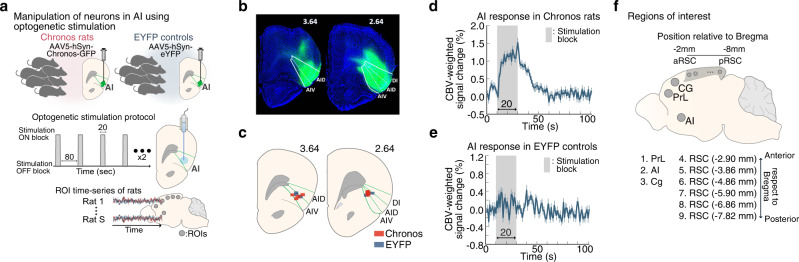
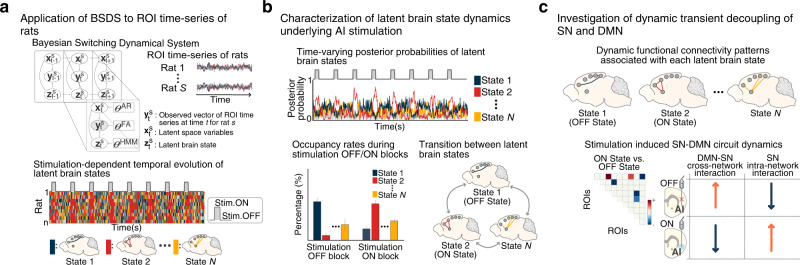
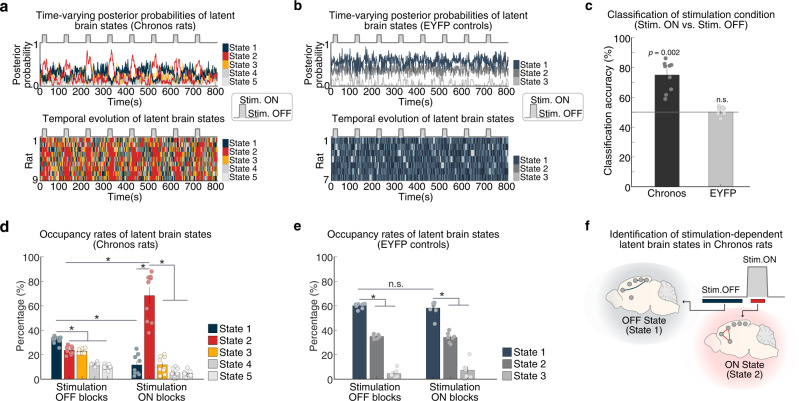
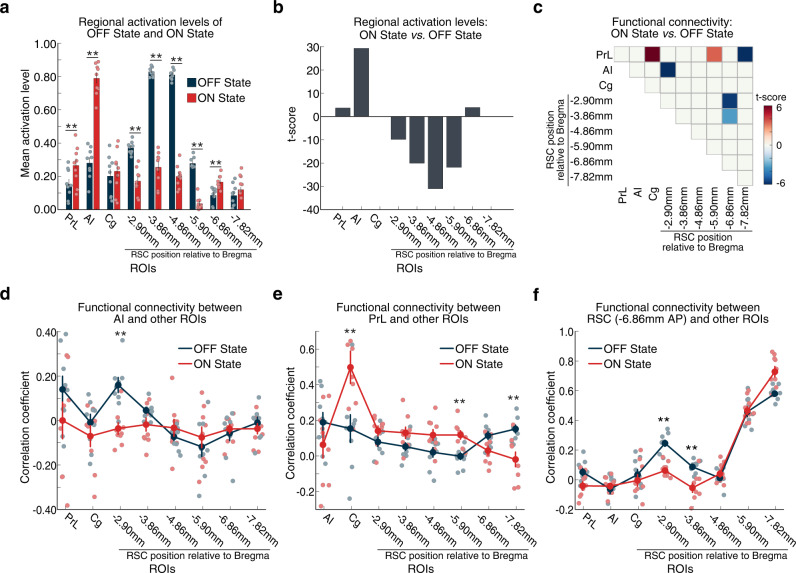
The salience network (SN) and default mode network (DMN) play a crucial role in cognitive function. The SN, anchored in the anterior insular cortex (AI), has been hypothesized to modulate DMN activity during stimulus-driven cognition. However, the causal neural mechanisms underlying changes in DMN activity and its functional connectivity with the SN are poorly understood. Here we combine feedforward optogenetic stimulation with fMRI and computational modeling to dissect the causal role of AI neurons in dynamic functional interactions between SN and DMN nodes in the male rat brain. Optogenetic stimulation of Chronos-expressing AI neurons suppressed DMN activity, and decreased AI-DMN and intra-DMN functional connectivity. Our findings demonstrate that feedforward optogenetic stimulation of AI neurons induces dynamic suppression and decoupling of the DMN and elucidates previously unknown features of rodent brain network organization. Our study advances foundational knowledge of causal mechanisms underlying dynamic cross-network interactions and brain network switching.
Overview
The claims and statistics of this paper haven’t been checked yet.
Free: it reads the open-access text and checks the first 5 claims that cite a source we can check. Create a free account to check every claim.
Integrity signals
Registry
Cites
Statistics
Figures
Verification
Claims the paper makes
The claims and statistics of this paper haven’t been checked yet.
Free: it reads the open-access text and checks the first 5 claims that cite a source we can check. Create a free account to check every claim.
Claims other papers make about this one
Each is checked against this paper’s own text: does it say what the citing paper says it does?
The source backs part of the claim, not all of it — or backs it for a different population, condition or comparison.
In the citing paper
“More recently, these findings have been validated using optogenetic stimulation and fiber photometry in the rodent brain 33,34 (Figure 4).”
From 20 years of the default mode network: A review and synthesis. (2023) · cites this paper as [33]
Experimental — accuracy not yet measuredThe source backs part of the claim, not all of it — or backs it for a different population, condition or comparison.
In the citing paper
“Notably, suppression of the DMN and engagement of cognitive control networks during task performance are thought to be controlled by a common mechanism, with the salience network playing a crucial role.”
From 20 years of the default mode network: A review and synthesis. (2023) · cites this paper as [33]
Experimental — accuracy not yet measuredThe check wasn’t confident either way, so it gives no verdict — never disputed.
In the citing paper
“A brain-penetrant HCN blocker produces antidepressant-like effects, supporting target validity while underscoring the need for dose-limited, partial modulation [283,288].”
From Synaptic Plasticity—Intrinsic Excitability and Antidepressant Discovery (2026) · cites this paper as [288]
Experimental — accuracy not yet measuredThe check wasn’t confident either way, so it gives no verdict — never disputed.
In the citing paper
“By contrast, antagonizing HCN channels in ventral tegmental dopamine neurons or blocking HCN in basolateral amygdala prolongs inhibition and heightens anxiety, cautioning against indiscriminate blockade [283,288].”
From Synaptic Plasticity—Intrinsic Excitability and Antidepressant Discovery (2026) · cites this paper as [288]
Experimental — accuracy not yet measured
Self-check
Percentages, sums and reported differences re-computed from the paper’s own numbers.
The self-check needs the paper’s full text.
Citations
Cites
Double-slit photoelectron interference in strong-field ionization of the neon dimer
Kunitski, M., Eicke, N., Huber, P., Köhler, J., Zeller, S., Voigtsberger, J., Schlott, N., Henrichs, K., Sann, H., Trinter, F., et al. (2019) · Nature Communications · doi:10.1038/s41467-018-07882-8 · Cited by 8,162
Double-slit photoelectron interference in strong-field ionization of the neon dimer
Kunitski, M., Eicke, N., Huber, P., Köhler, J., Zeller, S., Voigtsberger, J., Schlott, N., Henrichs, K., Sann, H., Trinter, F., et al. (2019) · Institutional Repository of Leibniz Universität Hannover (Leibniz Universität Hannover) · doi:10.15488/5174 · Cited by 8,161
Dissociable intrinsic connectivity networks for salience processing and executive control
Seeley, W. W., Menon, V., Schatzberg, A. F., Keller, J., Glover, G. H., Kenna, H., Reiss, A. L., & Greicius, M. D. (2007) · The Journal of Neuroscience · doi:10.1523/jneurosci.5587-06.2007 · Cited by 7,426 · cited 2×
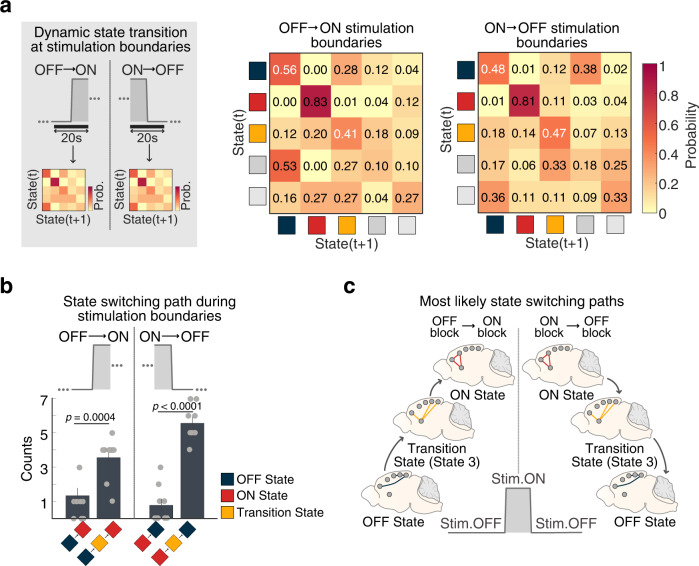
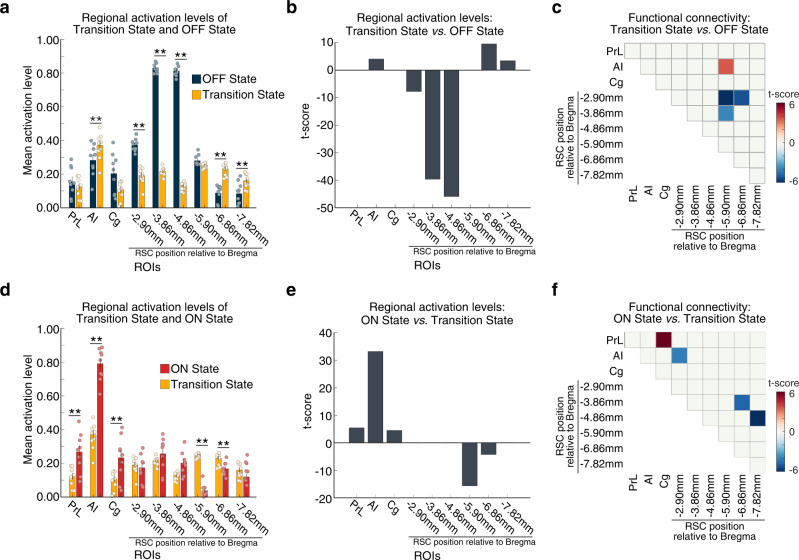
“Our computational approach using state-space modeling revealed five key findings associated with AI feedforward stimulation: (1) Distinct stable brain states of patterned activity corresponding to periods with and without AI stimulation; (2) DMN suppression of specific subdivisions of the RSC; (3) Activation of the AI…”
Self-citationFunctional connectivity in the resting brain: a network analysis of the default mode hypothesis
Greicius, M. D., Krasnow, B., Reiss, A. L., & Menon, V. (2003) · Proceedings of the National Academy of Sciences · doi:10.1073/pnas.0135058100 · Cited by 6,358
Self-citationSaliency, switching, attention and control: a network model of insula function
Menon, V., & Uddin, L. Q. (2010) · Brain Structure and Function · doi:10.1007/s00429-010-0262-0 · Cited by 5,592
Self-citationLarge-scale brain networks and psychopathology: a unifying triple network model
Menon, V. (2011) · Trends in Cognitive Sciences · doi:10.1016/j.tics.2011.08.003 · Cited by 4,168
Self-citationPredicting human resting-state functional connectivity from structural connectivity
Honey, C. J., Sporns, O., Cammoun, L., Gigandet, X., Thiran, J. P., Meuli, R., & Hagmann, P. (2009) · Proceedings of the National Academy of Sciences · doi:10.1073/pnas.0811168106 · Cited by 3,307
Sridharan, D., Levitin, D. J., & Menon, V. (2008) · Proceedings of the National Academy of Sciences · doi:10.1073/pnas.0800005105 · Cited by 2,892
Self-citationCircular analysis in systems neuroscience: the dangers of double dipping
Kriegeskorte, N., Simmons, W. K., Bellgowan, P. S. F., & Baker, C. I. (2009) · Nature Neuroscience · doi:10.1038/nn.2303 · Cited by 2,696
Large-scale brain networks in cognition: emerging methods and principles
Bressler, S. L., & Menon, V. (2010) · Trends in Cognitive Sciences · doi:10.1016/j.tics.2010.04.004 · Cited by 2,348
Self-citation
Research works printed but not linked: 2
- 44. Semedo, J., Zandvakili, A., Kohn, A., Machens, C. K. & Byron, M. Y. Extracting latent structure from multiple interacting neural populations. in Advances in neural information processing systems) (2014).
- 49. Paxinos G. & Watson C. The Rat Brain in Stereotaxic Coordinates: Hard Cover Edition. (Elsevier, 2006).
Cited by
20 years of the default mode network: A review and synthesis.
Menon, V. (2023) · Neuron · doi:10.1016/j.neuron.2023.04.023 · Cited by 934
Self-citationMapping and comparing fMRI connectivity networks across species
Pagani, M., Gutierrez‐Barragan, D., de Guzman, A. E., Xu, T., & Gozzi, A. (2023) · Communications Biology · doi:10.1038/s42003-023-05629-w · Cited by 74
Connecting Circuits with Networks in Addiction Neuroscience: A Salience Network Perspective
Cushnie, A. K., Tang, W., & Heilbronner, S. R. (2023) · International Journal of Molecular Sciences · doi:10.3390/ijms24109083 · Cited by 51
Chao, T.-H. H., Lee, B., Hsu, L.-M., Cerri, D. H., Zhang, W.-T., Wang, T.-W. W., Ryali, S., Menon, V., & Shih, Y.-Y. I. (2023) · Science Advances · doi:10.1126/sciadv.ade5732 · Cited by 49
Self-citationGodbersen, G. M., Klug, S., Wadsak, W., Pichler, V., Raitanen, J., Rieckmann, A., Jonasson, L. S., Cocchi, L., Breakspear, M. J., Hacker, M., et al. (2023) · eLife · doi:10.7554/elife.84683 · Cited by 45
“This hypothesis seems reasonable in the light of recent work reporting bidirectional information exchange between default mode and other networks ( Das et al., 2022 ; Menon et al., 2023 ).”
Distinct neurochemical influences on fMRI response polarity in the striatum
Cerri, D. H., Albaugh, D. L., Walton, L. R., Katz, B. M., Wang, T.-W. W., Chao, T.-H. H., Zhang, W., Nonneman, R. J., Jiang, J., Lee, S., et al. (2024) · Nature Communications · doi:10.1038/s41467-024-46088-z · Cited by 40
Self-citationAlcohol, HMGB1, and Innate Immune Signaling in the Brain
Crews, F. T., Coleman, L. G., Macht, V. A., & Vetreno, R. P. (2024) · Alcohol research · doi:10.35946/arcr.v44.1.04 · Cited by 31
Space wandering in the rodent default mode network
Nghiem, T.-A. E., Lee, B., Chao, T.-H. H., Branigan, N. K., Mistry, P. K., Shih, Y. I., & Menon, V. (2024) · Proceedings of the National Academy of Sciences · doi:10.1073/pnas.2315167121 · Cited by 23
“Prior research using fMRI has identified these regions as key cortical nodes of the rat DMN (23, 24).”
InfluentialSelf-citationLee, B., Young, C. B., Cai, W., Yuan, R., Ryman, S. G., Kim, J., Yang, L., Henderson, V. W., Poston, K. L., & Menon, V. (2025) · Nature Communications · doi:10.1038/s41467-025-56660-w · Cited by 22
Self-citationSORDINO: silent, sensitive, specific and artifact-resistant fMRI in awake, behaving mice
MacKinnon, M., Song, S., Chao, T.-H. H., Hsu, L., Albert, S. T., Ma, Y., Shnitko, T. A., Wang, T.-W. W., Nonneman, R., Freeman, C., et al. (2026) · Nature Neuroscience · doi:10.1038/s41593-026-02424-8 · Cited by 19
“We followed established protocols for rat MRI procedures 4,8,49,50,90–93 .”
Self-citationOptogenetic fMRI reveals therapeutic circuits of subthalamic nucleus deep brain stimulation
Li, Y., Lee, S., Yu, C., Hsu, L., Wang, T.-W. W., Do, K., Kim, H., Shih, Y. I., & Grill, W. M. (2024) · Brain stimulation · doi:10.1016/j.brs.2024.07.022 · Cited by 17
Self-citationWilson, D. A., Sullivan, R. M., Smiley, J. F., Saito, M., & Raineki, C. (2024) · Neuroscience & Biobehavioral Reviews · doi:10.1016/j.neubiorev.2024.105567 · Cited by 14
Brain-wide resting-state fMRI network dynamics elicited by activation of single thalamic input
Xie, L., Wang, X., Lin, X., Wen, J., Ma, T., Leong, A. T. L., & Wu, E. X. (2025) · Nature Communications · doi:10.1038/s41467-025-66104-0 · Cited by 13
fMRI data acquisition and analysis for task-free, anesthetized rats
Vrooman, R. M., van den Berg, M., Desrosiers-Grégoire, G., van Engelenburg, W. A., Galteau, M. E., Lee, S., Veltien, A. A., Barrière, D. A., Cash, D., Chakravarty, M. M., et al. (2025) · Nature Protocols · doi:10.1038/s41596-024-01110-y · Cited by 11
Self-citationCausal inference in food safety: Methods, applications, and future prospects
Dou, X., Liu, Y., & Dong, Q. (2024) · Trends in Food Science & Technology · doi:10.1016/j.tifs.2024.104805 · Cited by 10
NIMH perspectives on future directions in neuroimaging for mental health
Wijtenburg, S. A., Rowland, L. M., Vicentic, A., Rossi, A. F., Brady, L. S., Gordon, J. A., & Lisanby, S. H. (2024) · Neuropsychopharmacology · doi:10.1038/s41386-024-01900-8 · Cited by 9
Neuromodulation in Small Animal fMRI
Hsu, L., & Shih, Y. I. (2024) · Journal of Magnetic Resonance Imaging · doi:10.1002/jmri.29575 · Cited by 9
Self-citationHsu, L., Cerri, D. H., Lee, S., Shnitko, T. A., Carelli, R. M., & Shih, Y. I. (2024) · Journal of Neuroscience · doi:10.1523/jneurosci.1452-23.2023 · Cited by 8
Self-citationHsu, L., Cerri, D. H., Carelli, R. M., & Shih, Y. I. (2025) · Brain stimulation · doi:10.1016/j.brs.2025.03.006 · Cited by 7
Self-citationCharting the path in rodent functional neuroimaging
Gozzi, A., Stuefer, A., Alvino, F. G., Bedin, V., Cover, C. G., Kang, C., Galbusera, A., Gil, R., Gini, S., de Guzman, A. E., et al. (2025) · Imaging Neuroscience · doi:10.1162/imag.a.12 · Cited by 7
Self-citationLarge-scale signal propagation modes in the human brain
Song, Y., Kim, P. S., Philip, B. A., & Kim, T. (2025) · NeuroImage · doi:10.1016/j.neuroimage.2025.121357 · Cited by 7
Study on tinnitus-related electroencephalogram microstates in patients with vestibular schwannomas
Zhang, C., Wang, X., Ding, Z., Zhou, H., Liu, P., Xue, X., Wang, L., Jiang, Y., Chen, J., Shen, W., et al. (2023) · Frontiers in Neuroscience · doi:10.3389/fnins.2023.1159019 · Cited by 7
Epilepsy alters brain networks in patients with insular glioma
He, Q., Yang, Z., Xue, B., Song, X., Zhang, C., Yin, C., Li, Z., Deng, Z., Sun, S., Qiao, H., et al. (2024) · CNS Neuroscience & Therapeutics · doi:10.1111/cns.14805 · Cited by 6
Kemmerer, D. L. (2025) · Journal of Cognitive Neuroscience · doi:10.1162/jocn.a.66 · Cited by 5
BrainTACO: an explorable multi-scale multi-modal brain transcriptomic and connectivity data resource
Ganglberger, F., Kargl, D., Töpfer, M., Hernandez-Lallement, J., Lawless, N. M., Fernández-Albert, F., Haubensak, W. E., & Bühler, K. (2024) · Communications Biology · doi:10.1038/s42003-024-06355-7 · Cited by 5
Puaud, M., Joshi, D., Wright, A., Ho, V., Belin‐Rauscent, A., Fouyssac, M., Everitt, B. J., Peterschmitt, Y., & Belin, D. (2025) · eNeuro · doi:10.1523/eneuro.0156-25.2025 · Cited by 4
Attention and emotion in adolescents with ADHD; a time-varying functional connectivity study
Rafi, H., Samson, J. L., Barrios, J., Poznyak, E., Gauthey, M., Perroud, N. A., & Debbané, M. (2024) · Journal of Affective Disorders · doi:10.1016/j.jad.2024.11.036 · Cited by 4
Lungu, R., Fernandes, F. F., Monteiro, S. P., Outeiro, T. F., & Shemesh, N. (2025) · Journal of Cerebral Blood Flow & Metabolism · doi:10.1177/0271678x251338952 · Cited by 3
Mori, K., & Sakano, H. (2025) · Frontiers in Neuroscience · doi:10.3389/fnins.2025.1640801 · Cited by 3
Jeon, J. Y., Santika, B. B., Lee, H., Yoon, H., Ahn, D., & Kim, J. S. (2026) · Applied Acoustics · doi:10.1016/j.apacoust.2026.111282 · Cited by 3
Carvalho, J., Fernandes, F. F., Valente, M., Haak, K. V., & Shemesh, N. (2026) · Nature Communications · doi:10.1038/s41467-026-71506-9 · Cited by 3
“Functional MRI provides a critical view into brain-wide signal processing 26 – 28 .”
Neural plasticity, heterochrony, and the onto-phylogeny of consciousness
Iurato, G. (2025) · Biosystems · doi:10.1016/j.biosystems.2025.105661 · Cited by 3
Mapping functional traces of opioid memories in the rat brain
Gomes-Ribeiro, J., Martins, J., Sereno, J., Deslauriers‐Gauthier, S., Summavielle, T., Coelho, J. E., Remondes, M., Castelo-Branco, M. S., & Lopes, L. V. (2024) · Brain Communications · doi:10.1093/braincomms/fcae281 · Cited by 3
“58 Tsai et al .”
Objective self-awareness theory and violence: A brain network perspective
Morley, R. H., Jantz, P. B., Fulton, C. L., & Trujillo, L. T. (2023) · Neuroscience and Behavioral Physiology · doi:10.1007/s11055-023-01421-9 · Cited by 3
Comparative insights into insula structure and function
Charbonneau, J. A., Carp, S. B., Bennett, J. L., Maw, S. M., Moadab, G., Christianson, J. P., Baxter, M. G., & Bliss‐Moreau, E. (2026) · Nature Neuroscience · doi:10.1038/s41593-026-02380-3 · Cited by 3
“Despite these differences, optogenetic stimulation of the rat anterior insula has been linked to suppression of a putative homolog of the default mode network 171 —suggesting at least partial conservation of these networks and their dynamic interactions in the rat brain.”
Son, J. J., Rice, D. L., Schantell, M. D., Picci, G., Okelberry, H. J., Coutant, A. T., Ende, G. C., Wang, Y., Stephen, J. M., Calhoun, V. D., et al. (2025) · Social Cognitive and Affective Neuroscience · doi:10.1093/scan/nsaf037 · Cited by 2
Xu, Y., Weigard, A. S., Wilson, S. J., Shapiro, Z. R., Galloway-Long, H., Warner, T., Roule, A. L., Hlutkowsky, C. O., & Huang‐Pollock, C. L. (2026) · Nicotine & Tobacco Research · doi:10.1093/ntr/ntaf269 · Cited by 1
Expanding the cross-species lens: Rodents in focus
Gini, S., & Gozzi, A. (2026) · Aperture Neuro · doi:10.52294/001c.154764 · Cited by 1
Dynamic Functional Connectivity Changes in Parkinson's Disease With and Without Depression
Lin, Y., Tang, Y., Tan, C., Wang, C., Liu, Q., Shen, Q., Cai, S., Huang, C., Niu, Y., Deng, S., et al. (2026) · European Journal of Neuroscience · doi:10.1111/ejn.70549 · Cited by 1
Zhang, W., Cohen, A. D., McCrea, M., Mukherjee, P., & Wang, Y. (2025) · Frontiers in Neuroscience · doi:10.3389/fnins.2025.1577029 · Cited by 1
Synaptic Plasticity—Intrinsic Excitability and Antidepressant Discovery
Tanaka, M. (2026) · Biomedicines · doi:10.3390/biomedicines14061265
Strock, A., Nghiem, T.-A. E., Lecea, A. D., Hassan, A., Ryali, S., & Menon, V. (2025) · bioRxiv (Cold Spring Harbor Laboratory) · doi:10.1101/2025.02.24.639808
Self-citationImpact of Anesthesia on Brain Functional Networks in Moyamoya Disease and Spinal Lesions
Chen, X., Qin, X., Li, Z., Wang, S., Liang, Z., Zhang, H., Yao, L., Li, X., Duan, R., Wang, R., et al. (2025) · CNS Neuroscience & Therapeutics · doi:10.1111/cns.70358
Biophysical mechanisms of default mode network function and dysfunctionPreprint
Nghiem, T.-A. E., & Menon, V. (2025) · bioRxiv (Cold Spring Harbor Laboratory) · doi:10.1101/2025.04.16.649208
Self-citationProbing Functional Network Topology in Major Depressive Disorder on the Cellular and Systems Levels
Issa, R. (2024) · University of Regensburg Publication Server (University of Regensburg) · doi:10.5283/epub.57905
Wireless Biosymbiotic Haptic Device
Tyree, A., & Tyree, A. (2024) · UA Campus Repository (The University of Arizona)
Vazquez-Matias, D. A., de Vries, E. F. J., Guerrin, C. G. J., Prasad, K., & Doorduin, J. (2026) · Psychiatry Research · doi:10.1016/j.psychres.2026.116951
The impact of posterior cingulate and dorsal lateral connectivity on aggression
Morley, R. H., Jantz, P. B., Gumatay, A. J., & Grimshaw, B. R. (2026) · Neuropsychological Trends · doi:10.7358/neur-2026-039-morl
Behavioral and brain-wide neural signatures of sundowning in Alzheimer’s diseasePreprint
Jin, M., Fu, Y., Chen, X., Hunsberger, H. C., Sorid, S., Mouris, G., Huang, C., Whye, A., Ogundare, S., Yao, Y., et al. (2026) · Research Square · doi:10.21203/rs.3.rs-9272255/v1
Self-citationMethodological Considerations for fMRI with Optogenetics, Chemogenetics, and Fiber Photometry
Song, S., Chao, T.-H. H., Hsu, L., Nonneman, R., Wang, T.-W. W., & Shih, Y. I. (2026) · Neuromethods · doi:10.1007/978-1-0716-5178-0_7
Self-citationLeveraging Optogenetic fMRI for Understanding Disease Processes in Neurological Disorders
Kelberman, M. A., Anumba, N., Daley, L., Marriott, A., Pan, W.-J., Weinshenker, D., & Keilholz, S. D. (2026) · Neuromethods · doi:10.1007/978-1-0716-5178-0_16
Optogenetic Functional MRI Interrogation of Brain-Wide Neural Oscillations and Behavioral Relevance
Wang, X. (2026) · Neuromethods · doi:10.1007/978-1-0716-5178-0_11
Nanotechnology-driven optogenetics for therapeutic grade interventions
Chen, X., Zhang, X., & Zhao, Y. (2026) · Chemical Society Reviews · doi:10.1039/d6cs00398b
Zhang, X., Wang, W., & Ge, S. (2026) · International Conference on Health Informatization and Data Analysis (HIDA) · doi:10.1145/3819113.3819120
“…a crucial mechanism that facilitates the flexible switching between different cognitive states of the brain (e.g., from internally oriented self-referential processing to externally oriented attentional allocation), effective functional segregation, and optimal allocation of neural resources [12].”
Evrard, H. (2026) · Elsevier eBooks · doi:10.1016/b978-0-443-24078-2.00021-8
Excitation-inhibition balance dynamics across brain networks during naturalistic behaviorPreprint
Branigan, N. K., Nghiem, T.-A. E., Chao, T.-H. H., Varghese, A., Kumar, A., Linderman, S. W., Shih, Y. I., & Menon, V. (2026) · bioRxiv (Cold Spring Harbor Laboratory) · doi:10.64898/2026.08.22.746465
Self-citationAltered EEG-derived functional brain states in Parkinson's disease with mild cognitive impairment
Wang, Y., Zhang, Z., Wang, J., Jiang, Z., She, L., Pan, Y., & Liu, C. (2026) · Brain Communications · doi:10.1093/braincomms/fcag348
“45 This imbalance in transition dynamics closely mirrors the clinical phenotype of Parkinson’s disease with MCI: the overexpression of state B may exacerbate susceptibility to task-irrelevant distractions (e.g. visually salient stimuli), whereas the underrepresentation of state D may compromise the…”
The vagus nerve drives cognitive function through the default mode networkPreprint
Yamakawa, M., 富樫, 建., Kawagoe, H., Reina, S., Fukushima, F., Urushihata, T., Xie, Z., Kayama, T., Ikeda, G., Xue, W., et al. (2026) · bioRxiv (Cold Spring Harbor Laboratory) · doi:10.64898/2026.10.08.757463
Amnesia Induced by Suppressing the Focus of Internal AttentionPreprint
Satish, A., Hulbert, J. C., & Anderson, M. C. (2026) · bioRxiv (Cold Spring Harbor Laboratory) · doi:10.64898/2026.11.03.763713
Psychological and Cognitive Roots of Misinformation Belief and Spread
Alcântara, L. B., & Miguel, D. (2026) · IGI Global eBooks · doi:10.4018/979-8-3373-7421-5.ch001
Metadata
- Authors
- Menon, V., Cerri, D., Lee, B., Yuan, R., Lee, S.-H., & Shih, Y.-Y. I.
- Affiliations
- Stanford Medicine (US)
- University of North Carolina at Chapel Hill (US)
- Corresponding author
- Menon, Vinod
- Shih, Yen-Yu Ian
- Venue
- Nature Communications
- Published
- 2023-02-16
- Volume
- 14
- Issue
- 1
- Pages
- 866-866
- ISSN
- 2041-1723 (ISSN-L)
- PMC
- PMC9935890
- OpenAlex
- W4321100534
- Semantic Scholar
- a846a5c3081f82eeec678762a4dd9da314c3b0c1
- Cited by
- 53
- References
- 100
- Citations by year
- 2026: 16 · 2025: 16 · 2024: 14 · 2023: 7
- FWCI
- 7.92
- Type
- journal article
- Language
- en
- Open access
- gold
- doi.org
- Licence
- cc-by
- creativecommons.org/licenses/by/4.0 (tdm)
- creativecommons.org/licenses/by/4.0 (vor)
- Locations
- Nature Communications (publishedVersion, cc-by)
- PubMed Central (publishedVersion, cc-by)
- PubMed (publishedVersion)
- Carolina Digital Repository (University of North Carolina at Chapel Hill) (submittedVersion, cc-by)
- RePEc: Research Papers in Economics (submittedVersion)
- DOAJ (DOAJ: Directory of Open Access Journals) (submittedVersion, cc-by-sa)
- UNC Libraries
- Funders
- National Institutes of Health (1s10od026796-01a1)
- National Institute on Alcohol Abuse and Alcoholism (U01AA020023, P60AA011605, T32AA007573)
- National Institute of Mental Health (S10MH124745, R01MH111429, RF1MH117053, R01MH121069, R01MH126518)
- National Institute of Neurological Disorders and Stroke (RF1NS086085, R01NS091236, R01NS086085)
- National Institute of Biomedical Imaging and Bioengineering (R01EB022907)
- National Institute of Child Health and Human Development
- Eunice Kennedy Shriver National Institute of Child Health and Human Development (P50HD103573)
- Topics
- Life Sciences › Neuroscience › Cognitive Neuroscience › Functional Brain Connectivity Studies
- Life Sciences › Neuroscience › Cognitive Neuroscience › Neural dynamics and brain function
- Life Sciences › Neuroscience › Cognitive Neuroscience › Neural and Behavioral Psychology Studies
- Keywords
- anterior insula, default mode network, salience network, optogenetic stimulation, functional connectivity, network switching
- MeSH terms
- Default Mode Network, Insular Cortex, Animals, Brain, Brain Mapping, Magnetic Resonance Imaging, Male, Nerve Net, Neurons, Rats, Optogenetics
About these checks
Registry, retraction, Cites and statistics results are computed, not judged, with one exception: a printed reference that no index lists is read once by a model before it counts as a citation error. Claims are extracted by a model and kept only when their quote appears verbatim in the text; each cited source is then checked, with a model’s help, for whether it says what the claim relies on. Those verdicts can be wrong — read the claim’s quote and the cited source before relying on one.
Statistics and arithmetic are recomputed, not judged.
Confidence bands are shown only for fields calibrated on our annotated test set. None is calibrated yet, so no band is shown.
What counts as a claim ›How we measure confidence ›How we check this ›
Are you an author, or do you see a problem with this page? Request a review
Data sources
Bibliographic data: Semantic Scholar, OpenAlex, Crossref.
Contains information from the Semantic Scholar Academic Graph Datasets, made available under the ODC Attribution License (ODC-BY 1.0).
Semantic Scholar’s data is described in: Kinney, R., et al. (2023). The Semantic Scholar Open Data Platform. arXiv:2301.10140.
