

Reply to: No evidence of worsening Arctic springtime ozone losses over the 21st century
Open accessThe DOI matches its Crossref record; 28 of the 28 references it cites were found in a registry or an index.
Abstract
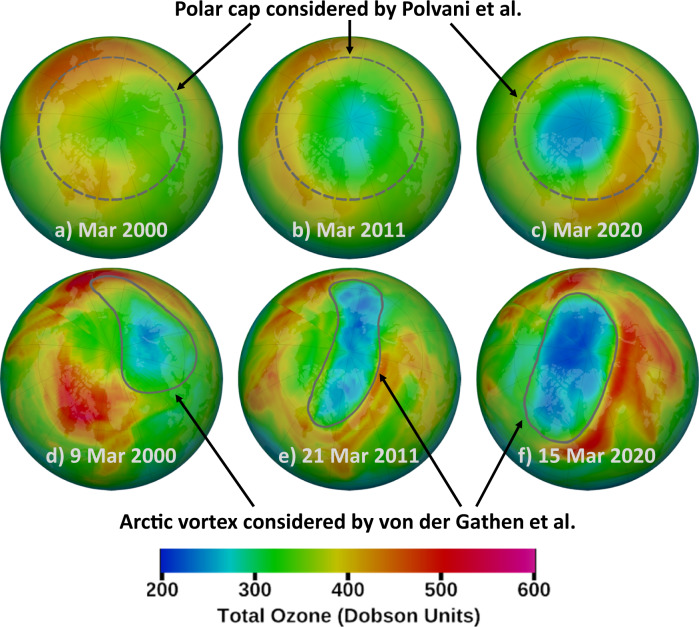
Long-term declines in the thickness of Earth’s protective ozone layer have been caused by the decomposition products of organic chlorine and bromine compounds such as chlorofluorocarbons and halons that have been phased out by the Montreal Protocol and its amendments and adjustments. The decline of these industrial compounds, termed ozone-depleting substances (ODSs), will result in the recovery of the thickness of the ozone layer, including eventually the elimination of severe loss of ozone in polar regions during this century 1 . We had written “future levels of Arctic column ozone during late winter and early spring are expected to increase due to factors such as intensification of the Brewer Dobson Circulation (BDC), upper stratospheric cooling, as well as possible changes in planetary and gravity wave activity that exert a strong influence on the abundance of column ozone within the Arctic vortex” 2 .
Overview
The claims and statistics of this paper haven’t been checked yet.
Free: it reads the open-access text and checks the first 5 claims that cite a source we can check. Create a free account to check every claim.
Integrity signals
Registry
Cites
Statistics
Figures
Verification
Claims the paper makes
The claims and statistics of this paper haven’t been checked yet.
Free: it reads the open-access text and checks the first 5 claims that cite a source we can check. Create a free account to check every claim.
Self-check
Percentages, sums and reported differences re-computed from the paper’s own numbers.
The self-check needs the paper’s full text.
Citations
Cites
Unprecedented Arctic ozone loss in 2011
Manney, G. L., Santee, M. L., Rex, M., Livesey, N. J., Pitts, M. C., Veefkind, P., Nash, E. R., Wohltmann, I., Lehmann, R., Froidevaux, L., et al. (2011) · Nature · doi:10.1038/nature10556 · Cited by 639
Self-citationAn objective determination of the polar vortex using Ertel's potential vorticity
Nash, E. R., Newman, P. A., Rosenfield, J. E., & Schoeberl, M. R. (1996) · Journal of Geophysical Research: Atmospheres · doi:10.1029/96jd00066 · Cited by 581
Arctic ozone loss and climate change
Rex, M., Salawitch, R. J., von der Gathen, P., Harris, N. R. P., Chipperfield, M. P., & Naujokat, B. (2004) · Geophysical Research Letters · doi:10.1029/2003gl018844 · Cited by 347 · cited 2×
“Rex et al.(18) first suggested rising levels of GHGs cause winters in the Arctic stratosphere to become colder in a manner that favors the enhanced formation of PSCs.”
BackgroundSelf-citationMultimodel projections of stratospheric ozone in the 21st century
Eyring, V., Waugh, D. W., Bodeker, G. E., Cordero, E., Akiyoshi, H., Austin, J., Beagley, S. R., Boville, B. A., Braesicke, P., Brühl, C., et al. (2007) · Journal of Geophysical Research: Atmospheres · doi:10.1029/2006jd008332 · Cited by 330
Long‐term ozone changes and associated climate impacts in CMIP5 simulations
Eyring, V., Arblaster, J. M., Cionni, I., Sedláček, J., Perlwitz, J., Young, P. J., Bekki, S., Bergmann, D., Cameron‐Smith, P., Collins, W. J., et al. (2013) · Journal of Geophysical Research: Atmospheres · doi:10.1002/jgrd.50316 · Cited by 324
Waters, J. W., Froidevaux, L., Read, W. G., Manney, G. L., Elson, L. S., Flower, D. A., Jarnot, R. F., & Harwood, R. S. (1993) · Nature · doi:10.1038/362597a0 · Cited by 265
Manney, G. L., Livesey, N. J., Santee, M. L., Froidevaux, L., Lambert, A., Lawrence, Z. D., Millán, L. F., Neu, J. L., Read, W. G., Schwartz, M. J., et al. (2020) · Geophysical Research Letters · doi:10.1029/2020gl089063 · Cited by 233
Multi-model assessment of stratospheric ozone return dates and ozone recovery in CCMVal-2 models
Eyring, V., Cionni, I., Bodeker, G. E., Charlton-Perez, A. J., Kinnison, D. E., Scinocca, J. F., Waugh, D. W., Akiyoshi, H., Bekki, S., Chipperfield, M. P., et al. (2010) · Atmospheric Chemistry and Physics · doi:10.5194/acp-10-9451-2010 · Cited by 214
Estimates of ozone return dates from Chemistry-Climate Model Initiative simulations
Dhomse, S. S., Kinnison, D., Chipperfield, M. P., Salawitch, R. J., Cionni, I., Hegglin, M. I., Abraham, N. L., Akiyoshi, H., Archibald, A. T., Bednarz, E. M., et al. (2018) · Atmospheric Chemistry and Physics · doi:10.5194/acp-18-8409-2018 · Cited by 198
Self-citationNear‐Complete Local Reduction of Arctic Stratospheric Ozone by Severe Chemical Loss in Spring 2020
Wohltmann, I., von der Gathen, P., Lehmann, R., Maturilli, M., Deckelmann, H., Manney, G. L., Davies, J., Tarasick, D., Jepsen, N., Kivi, R., et al. (2020) · Geophysical Research Letters · doi:10.1029/2020gl089547 · Cited by 174
Self-citationEvaluating stratospheric ozone and water vapour changes in CMIP6 models from 1850 to 2100
Keeble, J., Hassler, B., Banerjee, A., Checa-Garcia, R., Chiodo, G., Davis, S., Eyring, V., Griffiths, P. T., Morgenstern, O., Nowack, P., et al. (2021) · Atmospheric Chemistry and Physics · doi:10.5194/acp-21-5015-2021 · Cited by 170 · cited 2×
“Keeble et al.11 state “the CMIP6 MMM underestimates the observed decline in TCO Received: 15 March 2022 Accepted: 3 March 2023 Check for updates 1Alfred Wegener Institute, Helmholtz Centre for Polar and Marine Research, Potsdam, Germany.”
BackgroundArctic winter 2005: Implications for stratospheric ozone loss and climate change
Rex, M., Salawitch, R. J., Deckelmann, H., von der Gathen, P., Harris, N. R. P., Chipperfield, M. P., Naujokat, B., Reimer, E., Allaart, M., Andersen, S. B., et al. (2006) · Geophysical Research Letters · doi:10.1029/2006gl026731 · Cited by 169
Self-citationChemical Loss of Ozone in the Arctic Polar Vortex in the Winter of 1991-1992
Salawitch, R. J., Wofsy, S. C., Gottlieb, E. W., Lait, L. R., Newman, P. A., Schoeberl, M. R., Loewenstein, M., Podolske, J. R., Strahan, S. E., Proffitt, M. H., et al. (1993) · Science · doi:10.1126/science.261.5125.1146 · Cited by 155
Self-citationThe Potential for Ozone Depletion in the Arctic Polar Stratosphere
Brune, W. H., Anderson, J. G., Toohey, D. W., Fahey, D. W., Kawa, S. R., Jones, R. L., McKenna, D. S., & Poole, L. R. (1991) · Science · doi:10.1126/science.252.5010.1260 · Cited by 122
Human and natural influences on the changing thermal structure of the atmosphere
Santer, B. D., Painter, J. F., Bonfils, C., Mears, C. A., Solomon, S., Wigley, T. M. L., Gleckler, P. J., Schmidt, G. A., Doutriaux, C., Gillett, N. P., et al. (2013) · Proceedings of the National Academy of Sciences · doi:10.1073/pnas.1305332110 · Cited by 121
Climate change favours large seasonal loss of Arctic ozone
von der Gathen, P., Kivi, R., Wohltmann, I., Salawitch, R. J., & Rex, M. (2021) · Nature Communications · doi:10.1038/s41467-021-24089-6 · Cited by 100
Self-citationTilmes, S., Muller, R. H., Grooß, J., & Russell, J. M. (2004) · Atmospheric chemistry and physics · doi:10.5194/acp-4-2181-2004 · Cited by 99
Chemical ozone loss in the Arctic and Antarctic stratosphere between 1992 and 2005
Tilmes, S., Müller, R., Engel, A., Rex, M., & Russell, J. M. (2006) · Geophysical Research Letters · doi:10.1029/2006gl026925 · Cited by 89
Self-citationNOAA-GFDL GFDL-ESM4 model output prepared for CMIP6 CMIP
Krasting, J. P., John, J. G., Blanton, C., McHugh, C., Nikonov, S. V., Radhakrishnan, A., Rand, K., Zadeh, N. T., Balaji, V., Durachta, J., et al. (2018) · Earth System Grid Federation · doi:10.22033/esgf/cmip6.1407 · Cited by 82
Sensitivity of 21st century stratospheric ozone to greenhouse gas scenarios
Eyring, V., Cionni, I., Lamarque, J. F., Akiyoshi, H., Bodeker, G. E., Charlton‐Perez, A. J., Frith, S. M., Gettelman, A., Kinnison, D. E., Nakamura, T., et al. (2010) · Geophysical Research Letters · doi:10.1029/2010gl044443 · Cited by 66
Weber, M. C., Arosio, C., Feng, W., Dhomse, S. S., Chipperfield, M. P., Meier, A. C., Burrows, J. P., Eichmann, K., Richter, A., & Rozanov, A. V. (2021) · Journal of Geophysical Research Atmospheres · doi:10.1029/2020jd034386 · Cited by 62
Arctic ozone loss and climate sensitivity: Updated three‐dimensional model study
Chipperfield, M. P., Feng, W., & Rex, M. (2005) · Geophysical Research Letters · doi:10.1029/2005gl022674 · Cited by 61
Self-citationRecent Arctic ozone depletion: Is there an impact of climate change?
Pommereau, J.-P., Goutail, F., Pazmino, A., Lefèvre, F., Chipperfield, M. P., Feng, W., Van Roozendael, M., Jepsen, N., Hansen, G., Kivi, R., et al. (2018) · Comptes Rendus. Géoscience · doi:10.1016/j.crte.2018.07.009 · Cited by 56
Self-citationA closer look at Arctic ozone loss and polar stratospheric clouds
Harris, N., Lehmann, R., Rex, M., & von der Gathen, P. (2010) · Atmospheric chemistry and physics · doi:10.5194/acp-10-8499-2010 · Cited by 49
Self-citationAre recent Arctic ozone losses caused by increasing greenhouse gases?
Rieder, H. E., & Polvani, L. M. (2013) · Geophysical Research Letters · doi:10.1002/grl.50835 · Cited by 41
The effect of increased carbon dioxide concentrations on stratospheric ozone
Boughner, R. E. (1978) · Journal of Geophysical Research Atmospheres · doi:10.1029/jc083ic03p01326 · Cited by 34
Tilmes, S., Kinnison, D. E., Garcia, R. R., Müller, R., Sassi, F., Marsh, D. R., & Boville, B. A. (2007) · Journal of Geophysical Research: Atmospheres · doi:10.1029/2006jd008334 · Cited by 29
No evidence of worsening Arctic springtime ozone losses over the 21st century
Polvani, L. M., Keeble, J., Banerjee, A., Checa-Garcia, R., Chiodo, G., Rieder, H. E., & Rosenlof, K. H. (2023) · Nature Communications · doi:10.1038/s41467-023-37134-3 · Cited by 10 · cited 4×
“Reply to: No evidence of worsening Arctic springtime ozone losses over the 21st century Peter von der Gathen 1 , Rigel Kivi 2, Ingo Wohltmann 1, Ross J. Salawitch 3 & Markus Rex 1,4 REPLYING TO L. M. Polvani et al. Nature Communications https://doi.org/10.1038/ s41467-023-37134-3 (2023) Long-term declines in the thick…”
BackgroundInfluential
Cited by
Neale, P. J., Hylander, S., Banaszak, A. T., Häder, D.-P., Rose, K. C., Vione, D., Wängberg, S.-Å., Jansen, M. A. K., Busquets, R., Andersen, M. P. S., et al. (2025) · Photochemical & Photobiological Sciences · doi:10.1007/s43630-025-00687-x · Cited by 32
“These results were disputed by von der Gathen et al. [15] who argued that the projected loss found in their previous study is limited to the polar vortex area, whilst the study by Polvani et al. [14] considers the polar cap (latitudes of 60–90° N) and uses models that have difficulty representing…”
Weakening of springtime Arctic ozone depletion with climate change
Friedel, M., Chiodo, G., Sukhodolov, T., Keeble, J., Peter, T., Seeber, S., Stenke, A., Akiyoshi, H., Rozanov, E., Plummer, D., et al. (2023) · Atmospheric Chemistry and Physics · doi:10.5194/acp-23-10235-2023 · Cited by 18
Arctic stratosphere changes in the 21st century in the Earth system model SOCOLv4
Vargin, P. N., Kostrykin, S. V., Koval, A. V., Rozanov, E., Egorova, T. A., Smyshlyaev, S. P., & Tsvetkova, N. (2023) · Frontiers in Earth Science · doi:10.3389/feart.2023.1214418 · Cited by 10
Kumar, A., Karami, K., & Jacobi, C. (2025) · Climate Dynamics · doi:10.1007/s00382-025-07889-0 · Cited by 7
Kumar, A., Karami, K., Jacobi, C., & Mehrdad, S. (2025) · Journal of Atmospheric and Solar-Terrestrial Physics · doi:10.1016/j.jastp.2025.106538 · Cited by 3
Metadata
- Authors
- von der Gathen, P., Kivi, R., Wohltmann, I., Salawitch, R. J., & Rex, M.
- Affiliations
- Finnish Meteorological Institute (FI)
- Alfred-Wegener-Institut Helmholtz-Zentrum für Polar- und Meeresforschung (DE)
- Earth System Science Interdisciplinary Center (US)
- Venue
- Nature Communications
- Published
- 2023-03-24
- Volume
- 14
- Issue
- 1
- Pages
- 1609-1609
- ISSN
- 2041-1723 (ISSN-L)
- PMC
- PMC10039039
- OpenAlex
- W4360855664
- Cited by
- 6
- References
- 28
- Citations by year
- 2025: 4 · 2023: 2
- Type
- journal article
- Language
- en
- Open access
- gold
- doi.org
- Licence
- cc-by
- creativecommons.org/licenses/by/4.0 (tdm)
- creativecommons.org/licenses/by/4.0 (vor)
- Locations
- Nature Communications (publishedVersion, cc-by)
- PubMed Central (publishedVersion, cc-by)
- PubMed (publishedVersion)
- Helmholtz-Zentrum für Polar-und Meeresforschung (Alfred-Wegener-Institut) (submittedVersion)
- DOAJ (DOAJ: Directory of Open Access Journals) (submittedVersion, cc-by-sa)
- Funders
- National Aeronautics and Space Administration (80NSSC19K0983)
- Topics
- Physical Sciences › Earth and Planetary Sciences › Atmospheric Science › Atmospheric Ozone and Climate
- Physical Sciences › Earth and Planetary Sciences › Atmospheric Science › Atmospheric chemistry and aerosols
- Physical Sciences › Earth and Planetary Sciences › Space and Planetary Science › Ionosphere and magnetosphere dynamics
- Keywords
- ozone recovery, ozone-depleting substances, Montreal Protocol, Brewer-Dobson circulation, Arctic vortex, ozone column, stratospheric cooling, gravity waves, Rossby waves, halogenated compounds
About these checks
Registry, retraction, Cites and statistics results are computed, not judged, with one exception: a printed reference that no index lists is read once by a model before it counts as a citation error. Claims are extracted by a model and kept only when their quote appears verbatim in the text; each cited source is then checked, with a model’s help, for whether it says what the claim relies on. Those verdicts can be wrong — read the claim’s quote and the cited source before relying on one.
Statistics and arithmetic are recomputed, not judged.
Confidence bands are shown only for fields calibrated on our annotated test set. None is calibrated yet, so no band is shown.
What counts as a claim ›How we measure confidence ›How we check this ›
Are you an author, or do you see a problem with this page? Request a review
Data sources
Bibliographic data: Semantic Scholar, OpenAlex, Crossref.
Contains information from the Semantic Scholar Academic Graph Datasets, made available under the ODC Attribution License (ODC-BY 1.0).
Semantic Scholar’s data is described in: Kinney, R., et al. (2023). The Semantic Scholar Open Data Platform. arXiv:2301.10140.
