

Oral and gut dysbiosis leads to functional alterations in Parkinson’s disease
Open accessThe DOI matches its Crossref record; 77 of the 77 references it cites were found in a registry or an index.
Abstract
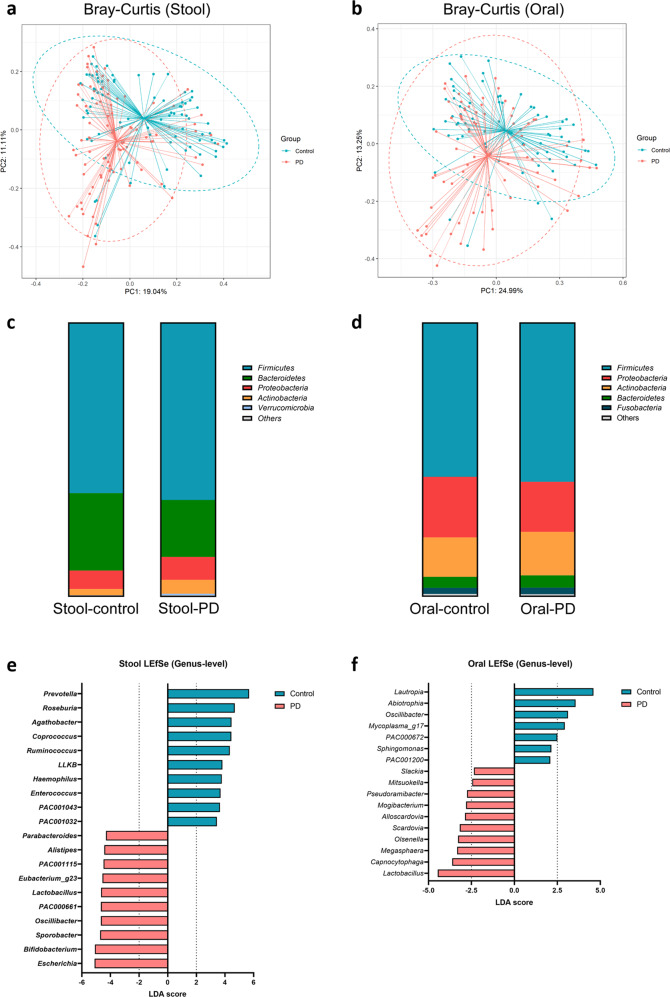
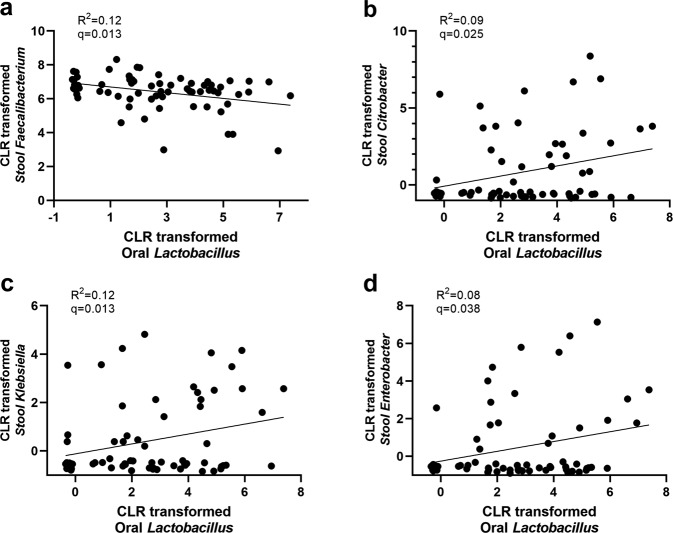
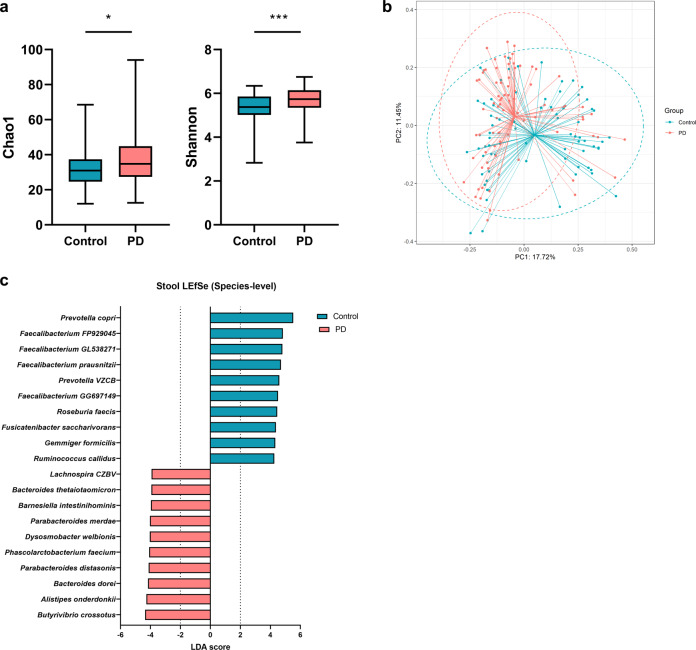
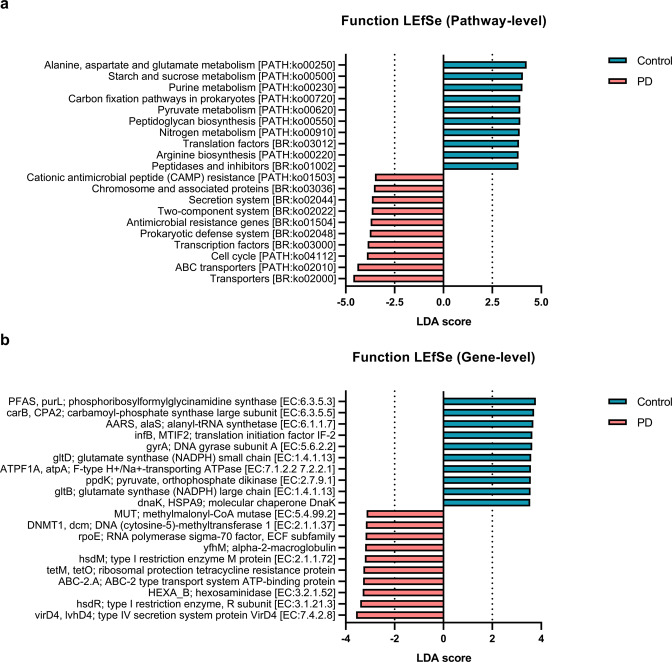
Although several studies have identified a distinct gut microbial composition in Parkinson's disease (PD), few studies have investigated the oral microbiome or functional alteration of the microbiome in PD. We aimed to investigate the connection between the oral and gut microbiome and the functional changes in the PD-specific gut microbiome using shotgun metagenomic sequencing. The taxonomic composition of the oral and gut microbiome was significantly different between PD patients and healthy controls (P = 0.003 and 0.001, respectively). Oral Lactobacillus was more abundant in PD patients and was associated with opportunistic pathogens in the gut (FDR-adjusted P < 0.038). Functional analysis revealed that microbial gene markers for glutamate and arginine biosynthesis were downregulated, while antimicrobial resistance gene markers were upregulated in PD patients than healthy controls (all P < 0.001). We identified a connection between the oral and gut microbiota in PD, which might lead to functional alteration of the microbiome in PD.
Overview
The claims and statistics of this paper haven’t been checked yet.
Free: it reads the open-access text and checks the first 5 claims that cite a source we can check. Create a free account to check every claim.
Integrity signals
Registry
Cites
Statistics
Figures
Verification
Claims the paper makes
The claims and statistics of this paper haven’t been checked yet.
Free: it reads the open-access text and checks the first 5 claims that cite a source we can check. Create a free account to check every claim.
Claims other papers make about this one
Each is checked against this paper’s own text: does it say what the citing paper says it does?
In the citing paper
“Moreover, combined oral-gut microbiome metagenomic sequencing revealed a link between oral Lactobacillus and gut opportunistic pathogens, suggesting a connection between these two microbial communities [498].”
From The Interplay between Gut Microbiota and Parkinson’s Disease: Implications on Diagnosis and Treatment (2022) · cites this paper as [498]
Self-check
Percentages, sums and reported differences re-computed from the paper’s own numbers.
The self-check needs the paper’s full text.
Citations
Cites
Scikit-learn: Machine Learning in Python
Pedregosa, F., Varoquaux, G., Gramfort, A., Michel, V., Thirion, B., Grisel, O., Blondel, M., Müller, A., Nothman, J., Louppe, G., et al. (2012) · arXiv · doi:10.48550/arxiv.1201.0490 · Cited by 71,016 · cited 1×
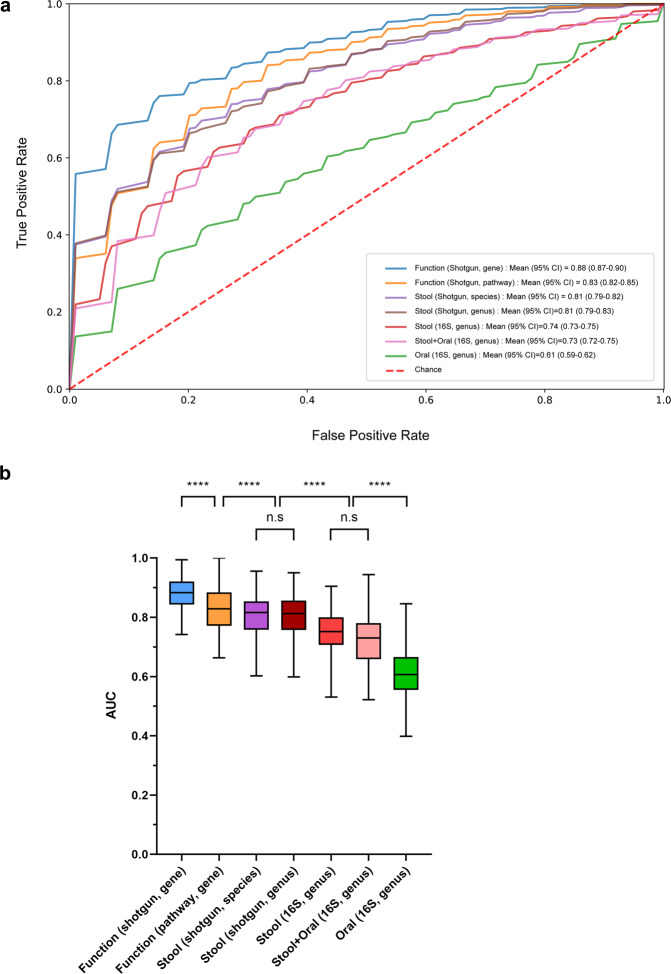
“Using the 16 S rRNA-based sequencing data for the oral and gut microbiome and the whole-genome shotgun sequencing data for the gut microbiome, we developed a random forest classi fi er for discriminating PD from HCs, using custom python scripts employing the Scikit-learn package 70 .”
Reproducible, interactive, scalable and extensible microbiome data science using QIIME 2
Bolyen, E., Rideout, J. R., Dillon, M. R., Bokulich, N. A., Abnet, C. C., Al-Ghalith, G. A., Alexander, H., Alm, E. J., Arumugam, M., Asnicar, F., et al. (2019) · Nature Biotechnology · doi:10.1038/s41587-019-0209-9 · Cited by 23,742 · cited 2×
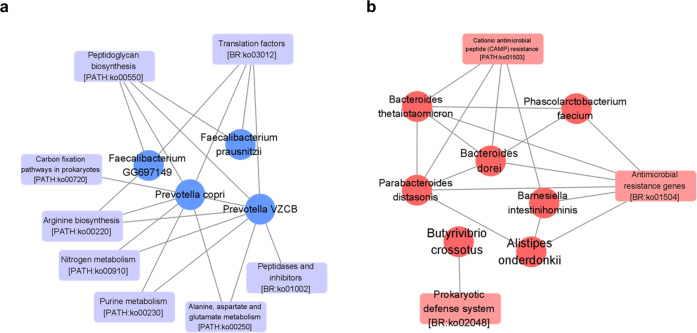
“Network maps were generated between bacterial species and functional pathways using QIIME2 SCNIC and visualized in Cytoscape version 3.8.2 76 .”
InfluentialSelf-citationphyloseq: An R Package for Reproducible Interactive Analysis and Graphics of Microbiome Census Data
McMurdie, P. J., & Holmes, S. (2013) · PLoS ONE · doi:10.1371/journal.pone.0061217 · Cited by 21,322
Metagenomic biomarker discovery and explanation
Segata, N., Izard, J., Waldron, L., Gevers, D., Miropolsky, L., Garrett, W. S., & Huttenhower, C. (2011) · Genome Biology · doi:10.1186/gb-2011-12-6-r60 · Cited by 16,192 · cited 1×
“To examine the taxonomic and functional differences between PD and HC, we performed LEfSe analysis 72 , which uses effect size to measure phenotypic differences in metagenomic data, as well as statistical signi fi cance.”
Fast and sensitive protein alignment using DIAMOND
Buchfink, B., Xie, C., & Huson, D. H. (2015) · Nature Methods · doi:10.1038/nmeth.3176 · Cited by 14,201 · cited 3×
“An initial database fi le was built from the KEGG fasta fi le containing the ortholog amino acid sequences using DIAMOND ’ s makedb command with the default parameters.”
Hughes, A. J., Daniel, S. E., Kilford, L., & Lees, A. J. (1992) · Journal of Neurology, Neurosurgery & Psychiatry · doi:10.1136/jnnp.55.3.181 · Cited by 10,378 · cited 1×
“In this case-control study, we prospectively enrolled patients with PD using the UK PD Society brain bank clinical diagnostic criteria 57 and their spouses as HCs at Asan Medical Center from 2019 to 2020.”
Predictive functional profiling of microbial communities using 16S rRNA marker gene sequences
Langille, M. G. I., Zaneveld, J., Caporaso, J. G., McDonald, D., Knights, D., Reyes, J. A., Clemente, J. C., Burkepile, D. E., Vega Thurber, R. L., Knight, R., et al. (2013) · Nature Biotechnology · doi:10.1038/nbt.2676 · Cited by 9,116 · cited 1×
“The prediction of functional biomarkers of the oral microbiota was performed using the PICRUSt with EzBioCloud MTP server 62 .”
KEGG: new perspectives on genomes, pathways, diseases and drugs
Kanehisa, M., Furumichi, M., Tanabe, M., Sato, Y., & Morishima, K. (2017) · Nucleic Acids Research · doi:10.1093/nar/gkw1092 · Cited by 8,865 · cited 1×
“Functional annotations were obtained by matching each read against the KEGG database 67 using DIAMOND 68 .”
Yoon, S.-H., Ha, S.-M., Kwon, S., Lim, J., Kim, Y., Seo, H., & Chun, J. (2017) · International Journal of Systematic and Evolutionary Microbiology · doi:10.1099/ijsem.0.001755 · Cited by 7,702 · cited 1×
“A Kraken2 database 63 containing bacterial and archaeal species represented in the EzBioCloud database was generated 64 .”
Improved metagenomic analysis with Kraken 2
Wood, D. E., Lu, J., & Langmead, B. (2019) · Genome Biology · doi:10.1186/s13059-019-1891-0 · Cited by 7,061 · cited 1×
“A Kraken2 database 63 containing bacterial and archaeal species represented in the EzBioCloud database was generated 64 .”
Cited by
Examining the healthy human microbiome concept
Joos, R., Boucher, K., Lavelle, A., Arumugam, M., Blaser, M. J., Claesson, M. J., Clarke, G., Cotter, P. D., De Sordi, L., Dominguez-Bello, M. G., et al. (2025) · Nature Reviews Microbiology · doi:10.1038/s41579-024-01107-0 · Cited by 166
“In the oral microbiome, shifts in functional capacities have been linked to disease phenotypes such as Parkinson disease 135 .”
Emerging role of the host microbiome in neuropsychiatric disorders: overview and future directions
Hashimoto, K. (2023) · Molecular Psychiatry · doi:10.1038/s41380-023-02287-6 · Cited by 158
“2), which could lead to functional changes within the microbiome of PD patients [113, 114].”
BackgroundApproach to the diagnosis and management of dysbiosis
Alagiakrishnan, K., Morgadinho, J., & Halverson, T. (2024) · Frontiers in Nutrition · doi:10.3389/fnut.2024.1330903 · Cited by 92
Varesi, A., Campagnoli, L. I. M., Fahmideh, F., Pierella, E., Romeo, M., Ricevuti, G., Nicoletta, M., Chirumbolo, S., & Pascale, A. (2022) · International Journal of Molecular Sciences · doi:10.3390/ijms232012289 · Cited by 88
Meta-analysis of shotgun sequencing of gut microbiota in Parkinson’s disease
Nishiwaki, H., Ueyama, J., Ito, M., Hamaguchi, T., Takimoto, K., Maeda, T., Kashihara, K., Tsuboi, Y., Mori, H., Kurokawa, K., et al. (2024) · npj Parkinson s Disease · doi:10.1038/s41531-024-00724-z · Cited by 86
Romano, S., Wirbel, J., Ansorge, R., Schudoma, C., Ducarmon, Q. R., Narbad, A., & Zeller, G. (2025) · Nature Communications · doi:10.1038/s41467-025-56829-3 · Cited by 85
“Nevertheless, there is still limited consensus on the bacterial species and metabolic pathways associated with the disease 15 – 19 .”
Influentialdos Santos, J. C. C., Oliveira, L. F., Noleto, F. M., Gusmão, C. T. P., Brito, G. A. D. C., & Viana, G. S. D. B. (2023) · Neural Regeneration Research · doi:10.4103/1673-5374.373673 · Cited by 76
“In rodent studies, the spread of preformed α-syn fibrils injected into gastric muscle layers to the brain was prevented by truncal vagotomy (Jo et al., 2022).”
BackgroundOral microbiome variations related to ageing: possible implications beyond oral health
Kazarina, A., Kuzmicka, J., Bortkevica, S., Zayakin, P., Ķimsis, J., Igumnova, V., Sadovska, D., Freimane, L., Kivrāne, A., Namiņa, A., et al. (2023) · Archives of Microbiology · doi:10.1007/s00203-023-03464-5 · Cited by 65
Krueger, M. E., Boles, J. S., Simon, Z. D., Alvarez, S. D., McFarland, N. R., Okun, M. S., Zimmermann, E. M., Forsmark, C. E., & Tansey, M. G. (2025) · npj Parkinson's Disease · doi:10.1038/s41531-025-00894-4 · Cited by 57
“Wallen PD displayed enrichments in L -arginine degradation and depletions in L-arginine synthesis, which have been reported previously by Jo et al. in a study of the PD gut metagenome 70 .”
Oral pathogens exacerbate Parkinson’s disease by promoting Th1 cell infiltration in mice
Bai, X., Xu, S., Zhou, L.-J., Meng, X.-Q., Li, Y.-L., Chen, Y., Jiang, Y.-H., Lin, W.-Z., Chen, B., Du, L., et al. (2023) · Microbiome · doi:10.1186/s40168-023-01685-w · Cited by 52
“Oral dysbiosis can cause systemic effects through local and systemic inflammation and oral-gut communication [33].”
BackgroundKong, F., Wang, S., Zhang, Y., Li, C., Dai, D., Guo, C., Wang, Y., Cao, Z., Yang, H., Bi, Y., et al. (2025) · Microbiome · doi:10.1186/s40168-025-02072-3 · Cited by 43
“This phenomenon has also been observed in humans with Parkinson’s disease with gut disruption [89].”
Mosaddad, S. A., Mahootchi, P., Safari, S., Rahimi, H., & Aghili, S. S. (2023) · Journal of Basic Microbiology · doi:10.1002/jobm.202300141 · Cited by 43
“However, confounding variables like disease duration and dysphagia did not substantially differ between the two groups [158].”
BackgroundDysphagia in Parkinson Disease: Part I – Pathophysiology and Diagnostic Practices
Rudisch, D. M., Krasko, M. N., Burdick, R. J., Broadfoot, C. K., Rogus‐Pulia, N. M., & Ciucci, M. R. (2023) · Current Physical Medicine and Rehabilitation Reports · doi:10.1007/s40141-023-00392-9 · Cited by 41
Clasen, F., Yıldırım, S., Arıkan, M., García-Guevara, F., Hanoğlu, L., Yılmaz, N. H., Şen, A., Celik, H. K., Alagöz, A. N., Demir, T. K., et al. (2025) · Gut Microbes · doi:10.1080/19490976.2025.2506843 · Cited by 38
“The increased abundance of microbial species from the Bifidobacterium, Lactobacillus and Akkermansia genera in the gut have consistently been associated with PD, 2,11,12,25,48 while butyrate-producing taxa such as, Roseburia, Faecalibacterium and Blautia are consistently depleted in PD patients.”
Zhao, R., Mu, B., Wang, D., XinHuang, Ma, Q., & Lu, M. (2024) · Molecular Neurobiology · doi:10.1007/s12035-024-04584-9 · Cited by 30
“Notably, PD patients consistently exhibited reduced abundance of Prevo-tellaceae [17–24], Roseburia [20–22, 25–31], Blautia [ 20, 21, 27, The findings above demonstrate inconsistent changes in the abundance of certain microbial families and genera in the gastrointestinal tract of PD patients across…”
Marzouk, N. H., Rashwan, H. H., El-Hadidi, M. S., Ramadan, R., & Mysara, M. (2025) · npj Parkinson's Disease · doi:10.1038/s41531-025-00950-z · Cited by 26
“As the disease progresses, symptoms expand to gastrointestinal disturbances such as gastroparesis, gut in fl am-mation, increased intestinal permeability, and constipation 4 .”
Revisiting Alpha-Synuclein Pathways to Inflammation
Lyra, P., Machado, V., Rota, S., Chaudhuri, К. R., Botelho, J., & Mendes, J. J. (2023) · International Journal of Molecular Sciences · doi:10.3390/ijms24087137 · Cited by 26
Faizan, M., Sarkar, A., & Singh, M. P. (2022) · Ageing Research Reviews · doi:10.1016/j.arr.2022.101727 · Cited by 25
Association between oral microbiome and depression: A population-based study
Zheng, Z., Xu, M., Xiao, K., & Yu, K. (2025) · Journal of Affective Disorders · doi:10.1016/j.jad.2025.03.018 · Cited by 24
Oral pathogens meet the gut microbiome: new mechanistic insights on systemic disease
Gan, G., Chen, R., Zheng, P., Long, K., Ma, K. K., Sulaiman, J. E., & Huang, X. (2026) · Frontiers in Cellular and Infection Microbiology · doi:10.3389/fcimb.2025.1673512 · Cited by 23
Metagenomic Analysis Reveals Large‐Scale Disruptions of the Gut Microbiome in Parkinson's Disease
Metcalfe‐Roach, A., Cirstea, M. S., Yu, A. C., Ramay, H. R., Coker, O. O., Boroomand, S., Kharazyan, F., Martino, D., Sycuro, L. K., Appel‐Cresswell, S., et al. (2024) · Movement Disorders · doi:10.1002/mds.29959 · Cited by 22
Microbiome signature of Parkinson’s disease in healthy and genetically at-risk individuals
Menozzi, E., Ren, Y., Geiger, M., Macnaughtan, J., Avenali, M., Toffoli, M., Gilles, M., Calabrese, R., Mitrotti, P., Gallo, L., et al. (2026) · Nature Medicine · doi:10.1038/s41591-026-04318-5 · Cited by 21
“One was from the United States (PD, n = 491; HC, n = 234) 12 , one from Turkey (PD, n = 69; HC, n = 17) 25 and one from Korea (PD, n = 78; HC, n = 68) 26 .”
Oral and gut microbiome profiles in people with early idiopathic Parkinson’s disease
Stagaman, K., Kmiecik, M. J., Wetzel, M., Aslibekyan, S. W., Sönmez, T. F., Fontanillas, P., Auton, A., Babalola, E., Bell, R. K., Bielenberg, J., et al. (2024) · Communications Medicine · doi:10.1038/s43856-024-00630-8 · Cited by 19
“Previous work has indicated that antibiotic resistance genes have greater abundance in PD patients ’ stool 32 ,andcertaintypesoforalantibioticshavebeenshowntobecorrelated with an elevated risk of PD 57 .”
InfluentialAssociation between oral dysbiosis and Parkinson’s disease: a systematic review
Murcia, L., Sánchez-García, A., Pecci‐Lloret, M. P., & Rodríguez‐Lozano, F. J. (2025) · Frontiers in Cellular and Infection Microbiology · doi:10.3389/fcimb.2025.1564362 · Cited by 19
Kim, G. H., Kim, B. R., Yoon, H., & Jeong, J. H. (2024) · Journal of Clinical Medicine · doi:10.3390/jcm13071944 · Cited by 17
Self-citationLi, D., Ren, T., Li, H., Huang, M., Chen, J., He, Q., Lv, W., Liu, H., Xu, R., & Zhang, X. (2024) · Molecular Neurobiology · doi:10.1007/s12035-024-04119-2 · Cited by 17
Porphyromonas gingivalis, neuroinflammation and Alzheimer’s disease
Owoyele, V., & Malekzadeh, S. (2022) · Nigerian Journal of Physiological Sciences · doi:10.54548/njps.v37i2.1 · Cited by 16
Regulation of Pain Perception by Microbiota in Parkinson Disease
Manjarres, Z., Calvo, M., & Pacheco, R. (2023) · Pharmacological Reviews · doi:10.1124/pharmrev.122.000674 · Cited by 15
Lewy body diseases and the gut
Sampson, T. R., Tansey, M. G., West, A. B., & Liddle, R. A. (2025) · Molecular Neurodegeneration · doi:10.1186/s13024-025-00804-5 · Cited by 14
Oral and Gut Dysbiosis in Migraine
Cho, S., Jung, Y., Oh, H., Yum, J., Song, S.-W., Jeong, J., Ha, W., Kim, K. M., Kim, W., & Chu, M. K. (2025) · Neurology Neuroimmunology & Neuroinflammation · doi:10.1212/nxi.0000000000200437 · Cited by 14
Lee, J., Jo, S., Lee, J., Choi, M., Kim, K., Lee, S.-J., Kim, H. S., Bae, J., & Chung, S. J. (2025) · Microbiome · doi:10.1186/s40168-025-02095-w · Cited by 13
“…taxonomy findings are consistent with previous studies investigating the gut microbiome in idiopathic RBD, PD, and PD with premotor RBD [8, 13–15, 17, 40, 62–65, 72, 73], which have reported an enrichment of Akkermansia , Eisenbergiella , Desulfovibrio , Hun-gatella , and Barnesiella , and a…”
Self-citationMicrobiota Orchestra in Parkinson’s Disease: The Nasal and Oral Maestros
Rei, N., Grunho, M., Mendes, J. J., & Fonseca, J. (2024) · Biomedicines · doi:10.3390/biomedicines12112417 · Cited by 12
“…the potential migration of oral pathogens to the gut and subsequent alterations in the intestinal environment is emphasized in a recent study [22], underscoring the complex interplay between the oral and gut microbiomes in PD pathogenesis and emphasizing conditions that are linked to damage…”
Functional Outcome Prediction of Acute Ischemic Stroke Based on the Oral and Gut Microbiota
Liang, J., Ren, Y., Zheng, Y., Lin, X., Song, W., Zhu, J., Zhang, X., Zhou, H., Wu, Q., He, Y., et al. (2024) · Molecular Neurobiology · doi:10.1007/s12035-024-04618-2 · Cited by 12
Christopher, C. J., Morgan, K. H., Tolleson, C., Trudell, R., Fernandez-Romero, R., Rice, L., Abiodun, B. A., Vickery, Z. A., Jones, K. A., Woodall, B., et al. (2025) · Nutrients · doi:10.3390/nu17091597 · Cited by 13
“Other studies have also implicated Bilophilia wadsworthia in PD altering microbial sulfur metabolism, yet the etiology remains elusive [7,9,107,108].”
Mohammadzadeh, R., Mahnert, A., Zurabishvili, T., Wink, L., Kumpitsch, C., Habisch, H., Sprengel, J., Filek, K., Mertelj, P., Pernitsch, D., et al. (2026) · Nature Communications · doi:10.1038/s41467-026-69711-7 · Cited by 13
“In the studies conducted by Yu et al. and Jo et al. 32,33 , case-control sample matching based on these covariates was not feasible due to incomplete metadata.”
Mechanisms of oral microflora in Parkinson's disease
Wang, B., Zhang, C. M., Shi, C., Zhai, T., Zhu, J., Wei, D., Shen, J., Liu, Z., Jia, K., & Zhao, L. (2024) · Behavioural Brain Research · doi:10.1016/j.bbr.2024.115200 · Cited by 12
Gut microbial β-glucuronidases and their role in the microbiome-metabolite axis in colorectal cancer
Chen, J., Li, Y., Tang, S., Jin, W., & Yan, R. (2025) · Nature Communications · doi:10.1038/s41467-025-65679-y · Cited by 11
“However, the elevation of B. cellulosilyticus in fecal microbiota has been reported in several diseases, including Parkinson ’ s disease 32 and type 1 diabetes 33 , as well as in dextran sulfate sodium-induced colitismice 34 .”
Oral Dysbiosis and Neuroinflammation: Implications for Alzheimer’s, Parkinson’s and Mood Disorders
Zavala-Medina, L. C., Salas‐Leiva, J. S., Villegas‐Mercado, C. E., Arreguín-Cano, J. A., Soto‐Barreras, U., Santana-Delgado, S. A., Larrinúa-Pacheco, A. D., Vega, M. F. G., & Bermúdez, M. (2026) · Microorganisms · doi:10.3390/microorganisms14010143 · Cited by 11
“Beta-diversity significantly differs in PD gut and oral samples from controls, with gut depletion of short-chain fatty acid producers ( Prevotella , Roseburia ) and enrichment of Escherichia and Lactobacillus [91].”
Alterations of the gut virome in patients with Parkinson’s disease
Chen, W., Guo, R., Zhang, W., Yan, Q., Wang, X., Chen, R., Hu, X., Liang, J., Xing, G., Xu, D., et al. (2026) · The Journals of Gerontology Series A · doi:10.1093/gerona/glag001 · Cited by 11
Human mini-brains for reconstituting central nervous system disorders
Kang, Y. J., Xue, Y., Shin, J. H., & Cho, H. (2023) · Lab on a Chip · doi:10.1039/d2lc00897a · Cited by 11
Verhoeff, M. C., Raphael, K. G., & Lobbezoo, F. (2024) · Journal of Oral Rehabilitation · doi:10.1111/joor.13731 · Cited by 9
Li, M., Qu, R., Li, P., Mo, X., Liu, J., & Xu, Z. Z. (2024) · Food Bioscience · doi:10.1016/j.fbio.2024.104519 · Cited by 10
Gut bacteriome dynamics in high altitude-adapted chicken lines: a key to future poultry therapeutics
Bhagat, N. R., Bharti, V. K., Shukla, G., Rishi, P., & Chaurasia, O. P. (2025) · Scientific Reports · doi:10.1038/s41598-025-96178-1 · Cited by 10
Kenneth, M. J., Chen, J., Fang, C., Tsai, H., Wu, C., Hsu, T.-K., Chen, C., & Hsu, B. (2025) · International Journal of Antimicrobial Agents · doi:10.1016/j.ijantimicag.2025.107585 · Cited by 8
Dietary quality and the gut microbiome in early-stage Parkinson’s disease patients
Yoon, H. J., Kang, W., Jo, S., Hwang, Y. S., Lee, J. H., Chung, S. J., & Park, Y. K. (2023) · Nutritional Neuroscience · doi:10.1080/1028415x.2023.2253025 · Cited by 8
“Firmicutes showed similar abundance among all subjects and the data could be seen in a separate article [35].”
BackgroundSelf-citationBiałoń, N., Górka, H. N. O. Z. D., & Górka, M. (2024) · AIMS neuroscience · doi:10.3934/neuroscience.2024019 · Cited by 10
Moss-derived microbiome improves crop growth in lunar and Martian soil simulants
Park, J., Kang, D., Jang, J. W., Choi, S., Jeong, S., Kim, S., & Kim, D. (2025) · Ecological Indicators · doi:10.1016/j.ecolind.2025.114023 · Cited by 7
Vo, T. T. T., Tsai, M.-H., Cheng, C.-Y., Wang, Y.-L., Lee, W.-J., & Lee, I. (2025) · Biochemical Pharmacology · doi:10.1016/j.bcp.2025.117362 · Cited by 7
Ilie, O., Văcărean-Trandafir, I.-C., Amărandi, R.-M., Nita, I.-B., Dobrin, R., Doroftei, M., Ivanov, I.-C., Săvuţă, G., Kirov, B., & Doroftei, B. (2025) · Frontiers in Neuroscience · doi:10.3389/fnins.2025.1654995 · Cited by 7
“…Aho et al., 2019, 2021; Barichella et al., 2019; Wallen et al., 2020; Cirstea et al., 2020; Sarah et al., 2020; Yan et al., 2021; Ji et al., 2021; Jo et al., 2022; Nishiwaki et al., 2022; Shi et al., 2023), interpretations vary: this increase may represent a compensatory response to dysbiosis or…”
Hisamatsu, D., Masuoka, H., Takeshige‐Amano, H., Kurokawa, R., Ogata, Y., Suda, W., Hatano, T., Asaoka, D., Mabuchi, Y., Naraoka, Y., et al. (2025) · iScience · doi:10.1016/j.isci.2025.112593 · Cited by 6
“The accuracy of AD prediction in patients with proteinopathy was compared be-tween salivary and fecal samples, indicating that the salivary microbiome may be more appropriate than the gut microbiome for distinguishing between AD and PD.”
InfluentialMicrobial diversity in drug-naïve Parkinson’s disease patients
Papić, E., Rački, V., Hero, M., Zimani, A. N., Sajko, M. Č., Rožmarić, G., Čizmarević, N. S., Ostojić, S., Kapović, M., Hauser, G., et al. (2025) · PLoS ONE · doi:10.1371/journal.pone.0328761 · Cited by 6
“Previous studies have shown that relative abundance of B. eggerthii is increased in PD patients and was linked with hyposmia [42,43].”
Silva, S. P., González, A., Roupar, D., Dias, M. S., Salvador, A. F., Teixeira, J. A., Almeida, R. D., Nobre, C., Coimbra, M. A., & Coelho, E. (2026) · Carbohydrate Polymers · doi:10.1016/j.carbpol.2026.125497 · Cited by 6
Metagenomics indicates an interplay of the microbiome and functional pathways in Parkinson’s disease
Park, S. J., Özdinç, B., Coker, K. G., Walsh, D. M., Fox, D. J., Evans, S., Farahnik, J., Moffat, K. S., Boomgaarden, M., & Mischley, L. K. (2026) · npj Parkinson's Disease · doi:10.1038/s41531-026-01271-5 · Cited by 5
“Recently, a study from Taiwan 47 also showed that hepatitis C virus infectionisassociatedwithPDrisk,andthein fl uenzavirus,Coxsackievirus, Japanese encephalitis virus, and HIV have also been associated with secondary PD 48,49 .”
Altered oral health and microbiota in drug-free patients with schizophrenia
Huang, H., Yang, N.-Y., Chen, M., Chen, X., Chen, W. J., Li, X., Chen, Y., Deng, Z., Zhou, W., Xu, S., et al. (2025) · BMC Psychiatry · doi:10.1186/s12888-025-06633-6 · Cited by 5
“Several studies have identified a distinct oral microbiome composition in patients with Parkinson’s disease (PD), with microbiome diversity metrics correlating with the severity of non-motor autonomic symptoms [11–13].”
Ge, Z., Chen, J., Chen, X., Zhang, R., Zhang, Y., & Luo, W. F. (2025) · BMC Oral Health · doi:10.1186/s12903-025-06448-7 · Cited by 5
“For instance, Streptococcus mutans may promote amyloid formation and α-synuclein aggregation [19], while increased Lactobacillus reuteri might enhance α-synuclein release into enteric nervous system [21].”
Alterations of the gut virome in patients with Parkinson's diseasePreprint
zhang, W., Wang, X., Guo, R., Xing, G., Xu, D., Ma, X., Chen, Q., Li, S., Qin, Y., Liu, J., et al. (2024) · Research Square · doi:10.21203/rs.3.rs-4823775/v1 · Cited by 5
Gonçalves, A. R., Ranganathan, H., Valdes, C., Zhu, H., Zhang, B., Kok, C. R., Martí, J. M., Mulakken, N., Thissen, J. B., Jaing, C. J., et al. (2026) · Frontiers in Microbiology · doi:10.3389/fmicb.2025.1695501 · Cited by 4
Bhardwaj, K., Singh, A. A., & Kumar, H. (2024) · ACS Chemical Neuroscience · doi:10.1021/acschemneuro.4c00293 · Cited by 4
Oral microbiota and central nervous system diseases: A review
Zhang, X., Zhong, M., Li, Y., Wang, H., Xi, G., Wang, F., Cheng, C., & Shi, Y. (2025) · Neuroprotection/Neuroprotection (Chichester, England. Print) · doi:10.1002/nep3.75 · Cited by 4
“Oral Lactobacillus is particularly relevant to brain function in PD, offering the potential for early ‐ stage PD diagnosis and evaluation of brain function in patients with PD.”
InfluentialShalash, A., Ezzeldin, S., Hashish, S. A., Salah, Y., Dawood, N. L., Moustafa, A., & Salama, M. (2025) · Journal of Parkinson s Disease · doi:10.1177/1877718x251370156 · Cited by 3
“1,3,8 This fi nding contrasted with the general expectation of decreased microbial diversity in disorders, suggesting compensatory expansion of rare taxa or ecological instability.”
Examination of shared gut microbiome signatures in aging and Parkinson’s disease
Tng, T. J. W., Vanan, S., Tan, E.-K., Zeng, L., Goh, W. W. B., Wong, H. S., & Lim, K. (2026) · Frontiers in Aging Neuroscience · doi:10.3389/fnagi.2026.1745455 · Cited by 3
Evaluation of an Adapted Semi-Automated DNA Extraction for Human Salivary Shotgun Metagenomics
Meslier, V., Menozzi, E., David, A., Morabito, C., Pozo, S. L. D., Famechon, A., North, J. M., Quinquis, B., Koletsi, S., Macnaughtan, J., et al. (2023) · Biomolecules · doi:10.3390/biom13101505 · Cited by 3
Meta2DB: curated shotgun metagenomic feature sets and metadata for health state prediction
Kok, C. R., Mulakken, N., Thissen, J. B., Martí, J. M., Lee, R., Trainer, J. B., Gonçalves, A. R., Ranganathan, H., Avila-Herrera, A., Jaing, C. J., et al. (2026) · Bioinformatics · doi:10.1093/bioinformatics/btag422 · Cited by 4
“2022, Jo et al .”
Delice, B., Nalbantoğlu, Ö. U., & Yıldırım, S. (2025) · bioRxiv (Cold Spring Harbor Laboratory) · doi:10.1101/2025.03.28.645180 · Cited by 3
Beisembayeva, M., Shayakhmetova, Y., Сабитовна, М. Ш., Li, I., Yakupov, E. Z., Kaiyrzhanov, R. B., & Grigolashvili, M. A. (2025) · International Journal of Clinical Practice · doi:10.1155/ijcp/5511146 · Cited by 2
“…is that the prevalence of the genus Prevotella , an opportunistic mucin-degrader with endotoxins on its outer membrane, has been reported to increase in the American region [18, 54] and in one Asian study [13], while it has been decreasing in Europe [24, 26] and other Asian studies [17, 38, 46].”
InfluentialBlood microbiome signatures in the REM sleep behavior disorder–Lewy body disease continuum
Kim, R., Oh, S., Woo, K. A., Shin, C. M., Park, K. U., & Lee, J. (2025) · Journal of Neural Transmission · doi:10.1007/s00702-025-02953-9 · Cited by 2
“…et al. 2023; Nishiwaki et al. 2020), with some trends overlapping but different from those seen in PD. Additionally, distinct microbiota signatures in oral (Jo et al. 2022; Pereira et al. 2017; Li et al. 2022; Mihaila et al. 2019) and deep nasal (Pal et al. 2021) cavities have been reported in PD.”
Self-citationJu, Y., Lin, S., Hu, S., Jin, X., Xiao, L., Zhang, T., Zhang, Y., Zhang, L., Ma, X., Zhu, F., et al. (2026) · Gut Microbes · doi:10.1080/19490976.2026.2630563 · Cited by 2
Microbiome-based disease prediction with artificial intelligence: A systematic review
Jabeen, T., Karimi, F., Zomorrodi, A. R., & Khalilpour, K. R. (2026) · Array · doi:10.1016/j.array.2026.100910 · Cited by 2
苏, 斌., Meng, F., Yao, L., Zhang, Y., Wang, T., Zhang, Y., Liu, J., & Lin, L. (2026) · Antioxidants · doi:10.3390/antiox15070882 · Cited by 2
“Notably, both PD patients and MPTP-induced PD models mice showed increased levels of Lactobacillus and Allobaculum at the genus level [43,46,47], a finding that aligns with the baseline observations of this study.”
Markers of Neurodegeneration in Parkinson’s Disease
Никитина, М. А., Alifirova, V. M., Borodina, S. O., & Koroleva, E. S. (2023) · Нейрохимия · doi:10.31857/s1027813323030135 · Cited by 2
Lyra, P., Botelho, J., Rota, S., Popławska-Domaszewicz, K., Machado, V., Guerreiro, D., Proença, L., Barroso, H., Mendes, J. J., & Chaudhuri, К. R. (2024) · Journal of Clinical Medicine · doi:10.3390/jcm13123586 · Cited by 2
“Therefore, disruptions in commensal microbiota may be a driving force in α -synucleinopathies [15,26], as firmly established within the microbiota–gut–brain axis [26,27].”
BackgroundBrain virome dysbiosis in Parkinson’s disease and multiple system atrophy
Ghorbani, M., Gabarrini, G., & Hajikhezri, Z. (2025) · Frontiers in Microbiology · doi:10.3389/fmicb.2025.1683277 · Cited by 1
“In recent years, scientists have proven that some non-brain localized microbiomes such as the salivary microbiome, via the oral-neuro axis, and the gut microbiome, via the gut-brain axis, play a role in the etiology of MSA and PD (Romano et al., 2021; Tan et al., 2017; Jo et al., 2022).”
Hirayama, M., Maeda, T., Kashihara, K., Tsuboi, Y., Ito, M., Nishiwaki, H., Ohno, K., & Ueyama, J. (2025) · Journal of Neural Transmission · doi:10.1007/s00702-025-03052-5 · Cited by 1
“…studies have analyzed the gut microbiota of PD patients, with more than 20 employing 16S rRNA sequencing and at least seven using shotgun metagenomic analysis (Bedarf et al. 2017; Qian et al. 2020 2169; Mao et al. 2021; Jo et al. 2022; Wallen et al. 2022; Chen et al. 2022; Nishiwaki et al. 2024).”
Multi-scale diversity analysis reveals scale-dependent microbial alterations in Parkinson's disease
Qiao, Y., & Ma, Z. (. (2026) · Medicine in Microecology · doi:10.1016/j.medmic.2026.100167 · Cited by 1
Jin, H., Meng, L., Yuluğ, B., Altay, Ö., Li, X., Çankaya, Ş., Hanoğlu, L., Ji, B., Coşkun, E., İdil, E., et al. (2026) · Neurobiology of Disease · doi:10.1016/j.nbd.2026.107424 · Cited by 1
Connection between drug-mediated neurotransmission and salivary microbiomePreprint
Hisamatsu, D., Ogata, Y., Takeshige‐Amano, H., Suda, W., Hatano, T., Asaoka, D., Mabuchi, Y., Naraoka, Y., Sato, N., Asada, T., et al. (2023) · bioRxiv (Cold Spring Harbor Laboratory) · doi:10.1101/2023.08.20.553896 · Cited by 1
Evaluation of an adapted semi-automated DNA extraction for human salivary shotgun metagenomicsPreprint
Meslier, V., Menozzi, E., David, A., Morabito, C., Pozo, S. L. D., Famechon, A., North, J. M., Quinquis, B., Koletsi, S., Macnaughtan, J., et al. (2023) · Research Square · doi:10.21203/rs.3.rs-2762553/v2 · Cited by 1
Diet and the microbiome in Parkinson's disease
Metcalfe‐Roach, A. (2025) · cIRcle (University of British Columbia) · doi:10.14288/1.0444180 · Cited by 1
Evaluation of an adapted semi-automated DNA extraction for human salivary shotgun metagenomicsPreprint
Almeida, M., Meslier, V., Menozzi, E., David, A., Morabito, C., Pozo, S. L. D., Famechon, A., North, J. M., Quinquis, B., Koletsi, S., et al. (2023) · Research Square · doi:10.21203/rs.3.rs-2762553/v1
Kheirouri, S., Alizadeh, M., & Keramati, M. (2023) · Nutritional Neuroscience · doi:10.1080/1028415x.2023.2277974
“Jo et al. [31] reported that oral and gut dysbiosis contributes to functional changes in PD. Dysbiosis may lead to enhanced intestinal and blood – brain barrier permeability in PD patients.”
BackgroundBoyer, É., Meuric, V., & Auffret, M. (2025) · Elsevier eBooks · doi:10.1016/b978-2-294-78712-6.00011-7
Hisamatsu, D., Masuoka, H., Takeshige‐Amano, H., Hatano, T., Ogawa, T., Yamashiro, K., Kurokawa, R., Mabuchi, Y., Naraoka, Y., Asada, T., et al. (2026) · npj Biofilms and Microbiomes · doi:10.1038/s41522-026-01138-w
Ciongaru, D. N., Pițuru, S., Păunica, S., Giurgiu, M. C., Popescu, G. A. D., & Dumitriu, A. S. (2025) · Biomedicines · doi:10.3390/biomedicines13122885
“This degeneration results in motor, cognitive, and psychiatric symptoms, with postural instability becoming increasingly apparent as the disease progresses [5,6].”
Bai, X.-B., Xu, S., Zhou, L.-J., Xiaoqian, M., Li, Y.-L., Chen, Y.-L., Jiang, Y.-H., Lin, W., Chen, B.-Y., Du, L., et al. (2023) · Figshare · doi:10.6084/m9.figshare.24586069
L'impact de la flore buccale dans le développement de la maladie de Parkinson
Galdos, L. (2024) · HAL
Alteraciones de la microbiota intestinal en las enfermedades prion-like: Una revisión sistemática
Huertas, C. L., & Martín Burriel, I. (2023) · Zaguan (University of Zaragoza Repository)
Pathogen Antibodies and Parkinson's Disease: A Two-sample Mendelian Randomization Study
Yuyan, L. U., Zhou, L., Guirong, D., Bao, C., He, M., Zhu, J., & Liu, B. (2026) · Current Neurovascular Research · doi:10.2174/0115672026422559251226101530
Kang, L., Tian, Y., Jin, J., Zhang, N., 孙彩虹, Liu, Y., & Kang, L. (2026) · Frontiers in Microbiology · doi:10.3389/fmicb.2026.1890167
Baram, S., Sarathi, A., Bakke, M., Arumugam, M., & Pedersen, A. M. L. (2026) · Journal of Oral Microbiology · doi:10.1080/20002297.2026.2726612
“Our findings align with previous studies reporting reduced microbial diversity and increased anaerobic enrichment in saliva and oral swab samples from patients with PD [20,22].”
Oral Microbiota Associated With Parkinson'S Disease: A Systematic Review
Abreu, M. D. S., de Morais, R. P. L., Pereira, T. F., Sales, P. H. D. H., Leão, J. C., & Carvalho, A. D. A. T. (2026) · Special Care in Dentistry · doi:10.1111/scd.70272
“Other genera, such as Veillonella , Megasphaera and Scardovia , were also considered, although less expressively, with an association of 27.3% [ 9, 10, 12, 14, 16, 19 ].”
InfluentialAlikunju, A. P., Jose, D. A., Venkatachalam, S., Tajudeen, J., Vasu, D. A., K, D. K., Raman, G., Gayathri Thankam, L., Thomas, F., P, D. K., et al. (2026) · npj Parkinson's Disease · doi:10.1038/s41531-026-01547-w
Decoding the Gut-Brain Axis: Implications for Neurodegenerative Disease Therapies
(2026) · Frontiers research topics · doi:10.3389/978-2-8325-8753-9
Chen, Y., Cheng, Y., Huang, S., Liu, X., Xu, X., Hu, P., Wu, L., Ling, Z., Gao, Y., & Cai, G. (2026) · Frontiers in Immunology · doi:10.3389/fimmu.2026.1969319
Research Advances on Gut–Brain Axis in Parkinson’s Disease Pathogenesis and Prodromal Prediction
Huang, L., Du, W., Zhai, J., Zhu, W., Wu, J., & Li, Y. (2026) · International Journal of Molecular Sciences · doi:10.3390/ijms272210126
Metadata
- Authors
- Jo, S., Kang, W., Hwang, Y. S., Lee, S. H., Park, K. W., Kim, M. S., Lee, H., Yoon, H. J., Park, Y. K., Chalita, M., Lee, J. H., Sung, H., Lee, J.-Y., Bae, J.-W., & Chung, S. J.
- Affiliations
- Asan Medical Center (KR)
- Kyung Hee University (KR)
- Eulji University (KR)
- Corresponding author
- Chung, Sun Ju
- ORCID
- Venue
- npj Parkinson s Disease
- Published
- 2022-07-07
- Volume
- 8
- Issue
- 1
- Pages
- 87-87
- ISSN
- 2373-8057 (ISSN-L)
- PMC
- PMC9262988
- OpenAlex
- W4284664007
- Cited by
- 85
- References
- 77
- Citations by year
- 2026: 17 · 2025: 29 · 2024: 19 · 2023: 17 · 2022: 3
- FWCI
- 5.55
- Type
- journal article
- Language
- en
- Open access
- gold
- doi.org
- Licence
- cc-by
- creativecommons.org/licenses/by/4.0 (tdm)
- creativecommons.org/licenses/by/4.0 (vor)
- Locations
- npj Parkinson s Disease (publishedVersion, cc-by)
- PubMed Central (publishedVersion, cc-by)
- PubMed (publishedVersion)
- DOAJ (DOAJ: Directory of Open Access Journals) (submittedVersion, cc-by-sa)
- Funders
- Ministry of Health and Welfare (HI19C0256)
- Asan Institute for Life Sciences, Asan Medical Center (2018-0622)
- Topics
- Life Sciences › Biochemistry, Genetics and Molecular Biology › Molecular Biology › Gut microbiota and health
- Health Sciences › Medicine › Clinical Neurology › Parkinson's Disease Mechanisms and Treatments
- Health Sciences › Dentistry › Periodontics › Oral microbiology and periodontitis research
- Keywords
- Parkinson's disease, oral microbiota, gut microbiota, dysbiosis, Lactobacillus, opportunistic pathogens, glutamate synthesis, arginine biosynthesis, antimicrobial resistance genes, microbial gene function, oral-gut axis
About these checks
Registry, retraction, Cites and statistics results are computed, not judged, with one exception: a printed reference that no index lists is read once by a model before it counts as a citation error. Claims are extracted by a model and kept only when their quote appears verbatim in the text; each cited source is then checked, with a model’s help, for whether it says what the claim relies on. Those verdicts can be wrong — read the claim’s quote and the cited source before relying on one.
Statistics and arithmetic are recomputed, not judged.
Confidence bands are shown only for fields calibrated on our annotated test set. None is calibrated yet, so no band is shown.
What counts as a claim ›How we measure confidence ›How we check this ›
Are you an author, or do you see a problem with this page? Request a review
Data sources
Bibliographic data: Semantic Scholar, OpenAlex, Crossref.
Contains information from the Semantic Scholar Academic Graph Datasets, made available under the ODC Attribution License (ODC-BY 1.0).
Semantic Scholar’s data is described in: Kinney, R., et al. (2023). The Semantic Scholar Open Data Platform. arXiv:2301.10140.
