

Effective integration of multi-omics with prior knowledge to identify biomarkers via explainable graph neural networks
Open accessThe DOI matches its Crossref record; 75 of the 75 references it cites were found in a registry or an index.
Abstract
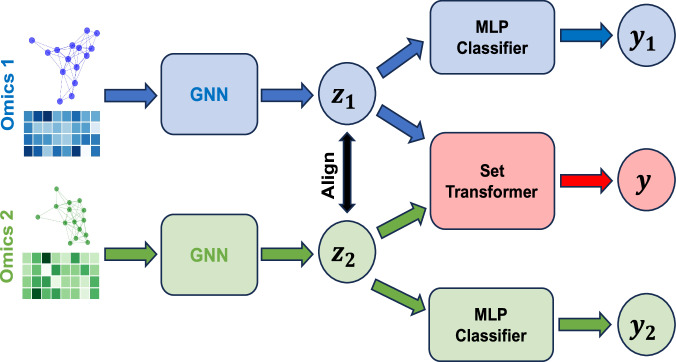
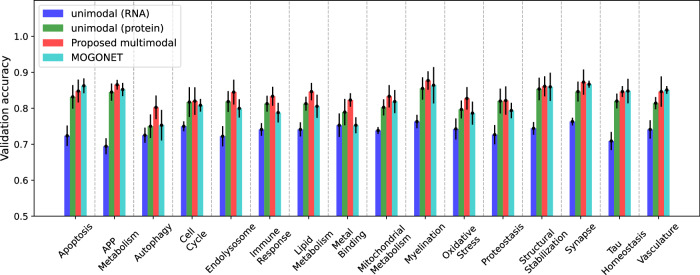
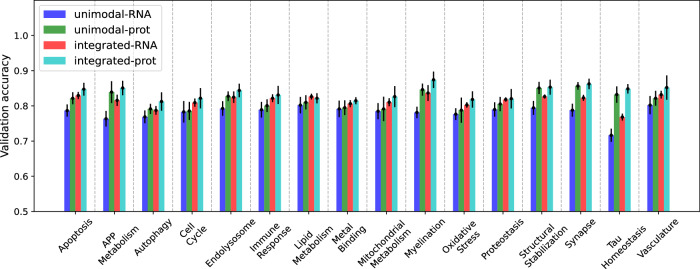
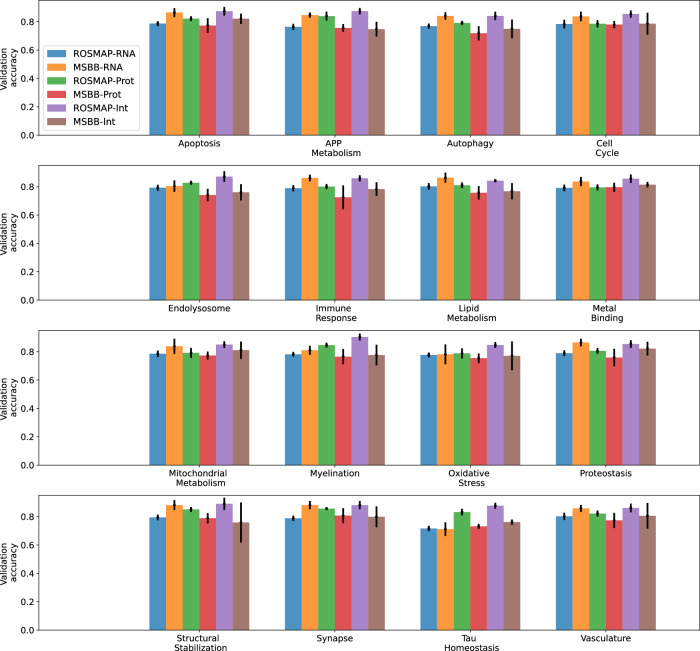
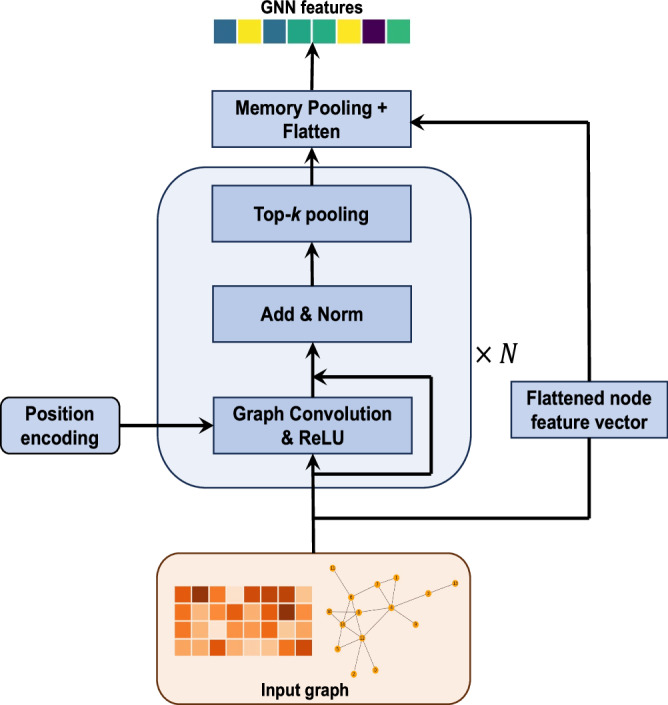
The rapid growth of multi-omics datasets and the wealth of biological knowledge necessitates the development of effective methods for their integration. Such methods are essential for building predictive models and identifying drug targets based on a limited number of samples. We propose a framework called GNNRAI for the supervised integration of multi-omics data with biological priors represented as knowledge graphs. Our framework leverages graph neural networks (GNNs) to model the correlation structures among features from high-dimensional ‘omics data, which reduces the effective dimensions in data and enables us to analyze thousands of genes simultaneously using hundreds of samples. Furthermore, our framework incorporates explainability methods to elucidate informative biomarkers. We apply our framework to Alzheimer’s disease (AD) multi-omics data, showing that the integration of transcriptomics and proteomics data with prior AD knowledge is effective, improving the prediction accuracy of AD status over single-omics analyses and highlighting both known and novel AD-predictive biomarkers.
Overview
The claims and statistics of this paper haven’t been checked yet.
Free: it reads the open-access text and checks the first 5 claims that cite a source we can check. Create a free account to check every claim.
Integrity signals
Registry
Cites
Statistics
Figures
Verification
Claims the paper makes
The claims and statistics of this paper haven’t been checked yet.
Free: it reads the open-access text and checks the first 5 claims that cite a source we can check. Create a free account to check every claim.
Claims other papers make about this one
Each is checked against this paper’s own text: does it say what the citing paper says it does?
The source backs part of the claim, not all of it — or backs it for a different population, condition or comparison.
In the citing paper
“SHAP-based interpretation further revealed lipid metabolism and synaptic signaling as key discriminative pathways, underscoring the model's biological relevance228.”
From Artificial intelligence-driven multi-omics approaches in Alzheimer's disease: Progress, challenges, and future directions (2025) · cites this paper as [228]
Experimental — accuracy not yet measuredThe source backs part of the claim, not all of it — or backs it for a different population, condition or comparison.
In the citing paper
“The GNNRAI framework combines transcriptomic and proteomic graphs from the ROS/MAP cohort, employing a set-transformer for modality alignment. This model achieved a mean cross-validation accuracy of 0.83 across sixteen AD-relevant biological domains and outperformed the widely used MOGONET pipeline in external validation.”
From Artificial intelligence-driven multi-omics approaches in Alzheimer's disease: Progress, challenges, and future directions (2025) · cites this paper as [228]
Experimental — accuracy not yet measuredThe source backs part of the claim, not all of it — or backs it for a different population, condition or comparison.
In the citing paper
“High-performing architectures such as GNNs and deep generative models often provide limited transparency regarding feature attribution, and existing explainability tools such as SHAP or attention mechanisms yield inconsistent results228,314,315.”
From Artificial intelligence-driven multi-omics approaches in Alzheimer's disease: Progress, challenges, and future directions (2025) · cites this paper as [228]
Experimental — accuracy not yet measuredThe cited source says what the claim attributes to it.
In the citing paper
“Hybrid frameworks that embed mechanistic priors into machine learning models, such as GNNs enriched with biological knowledge graphs, offer a path to balancing predictive power with interpretability228.”
From Artificial intelligence-driven multi-omics approaches in Alzheimer's disease: Progress, challenges, and future directions (2025) · cites this paper as [228]
Self-check
Percentages, sums and reported differences re-computed from the paper’s own numbers.
The self-check needs the paper’s full text.
Citations
Cites
Vaswani, A., Shazeer, N., Parmar, N., Uszkoreit, J., Jones, L., Gomez, A. N., Kaiser, L., & Polosukhin, I. (2017) · arXiv · doi:10.48550/arxiv.1706.03762 · Cited by 120,404
Adam: A Method for Stochastic Optimization
Kingma, D. P., & Ba, J. (2014) · arXiv · doi:10.48550/arxiv.1412.6980 · Cited by 98,946
Folstein, M. F., Folstein, S. E., & McHugh, P. R. (1975) · Journal of Psychiatric Research · doi:10.1016/0022-3956(75)90026-6 · Cited by 88,282
Exploiting Generative AI to Scale up Intelligent Tutoring Systems
Jakubův, J., Chvalovský, K., Goertzel, Z., Kaliszyk, C., Olšák, M., Piotrowski, B., Schulz, S., Suda, M., & Urban, J. (2023) · DROPS (Schloss Dagstuhl – Leibniz Center for Informatics) · doi:10.4230/lipics.itp.2023.19 · Cited by 76,658
Gene Ontology: tool for the unification of biology
Ashburner, M., Ball, C. A., Blake, J. A., Botstein, D., Butler, H., Cherry, J. M., Davis, A. P., Dolinski, K., Dwight, S. S., Eppig, J. T., et al. (2000) · Nature Genetics · doi:10.1038/75556 · Cited by 43,206
McKhann, G., Drachman, D., Folstein, M., Katzman, R., Price, D., & Stadlan, E. M. (1984) · Neurology · doi:10.1212/wnl.34.7.939 · Cited by 27,915
Semi-supervised classification with graph convolutional networks
Kipf, T. N., & Welling, M. (2016) · arXiv · doi:10.48550/arxiv.1609.02907 · Cited by 24,853
Hirono, N., Mori, E., Ikejiri, Y., Imamura, T., Shimomura, T., Hashimoto, M., Yamashita, H., & Ikeda, M. (1997) · Brain and nerve · Cited by 21,039
Kok, J. S., Berg, I. J., & Scherder, E. J. A. (2013) · Dementia and Geriatric Cognitive Disorders Extra · doi:10.1159/000353441 · Cited by 20,589
Older Adults' Reasons for Using Technology while Aging in Place
Peek, S. T. M., Luijkx, K. G., Rijnaard, M. D., Nieboer, M. E., van der Voort, C. S., Aarts, S., van Hoof, J., Vrijhoef, H. J. M., & Wouters, E. J. M. (2016) · Gerontology · doi:10.1159/000430949 · Cited by 19,690
Research works printed but not linked: 2
- 17. Sundararajan, M., Taly, A. & Yan, Q. Axiomatic attribution for deep networks. in International Conference on Machine Learning, 2017: PMLR, 3319-3328.
- 18. Janizek, J. D., Sturmfels, P. & Lee, S.-I. Explaining explanations: axiomatic feature interactions for deep networks. J. Mach. Learn. Res. 22, 1-54 (2021).
Cited by
Ren, F., Wei, J., Chen, Q., Hu, M., Yu, L., Mi, J., Zhou, X., Qin, D., Wu, J., & Wu, A. (2025) · Acta Pharmaceutica Sinica B · doi:10.1016/j.apsb.2025.07.030 · Cited by 97
Application of Multi-Omics Techniques in Aquatic Ecotoxicology: A Review
Li, B., Zhang, Y., Du, J., Liu, C., Zhou, G., Li, M., & Yan, Z. (2025) · Toxics · doi:10.3390/toxics13080653 · Cited by 56
Xiao, X., Fu, L., Zhang, Z., Tu, Z., Shen, N., & Fan, S. (2025) · Journal of Agricultural and Food Chemistry · doi:10.1021/acs.jafc.5c08522 · Cited by 48
Sutanto, H., & Fetarayani, D. (2025) · npj Drug Discovery. · doi:10.1038/s44386-025-00029-y · Cited by 39
“AImethods,especiallygraphneuralnetworks(GNNs)andintegrative models,canmaptheseproteomicsignaturestodrug-targetnetworks, improvingtheidenti fi cation of actionable targets and predictive biomarkers 61,62 .”
Vaida, M. L., & Huang, Z. (2026) · Frontiers in Artificial Intelligence · doi:10.3389/frai.2025.1716706 · Cited by 31
Inamdar, A., Bugadannavar, P., Palled, M. S., Umarani, S., Salve, P. S., Gurupadayya, B., Patil, P. D., & Sharma, H. (2025) · Frontiers in Aging Neuroscience · doi:10.3389/fnagi.2025.1614962 · Cited by 23
Dong, J., & Zhong, H. (2025) · Neurology International · doi:10.3390/neurolint17120197 · Cited by 21
Deep Learning-Enabled Multi-Omics Integration: A New Frontier in Precise Drug Target Discovery
Ren, Y.-F., Bai, H.-T., Wang, J.-H., Yang, Y.-N., & Wang, Y. (2026) · Biology · doi:10.3390/biology15050410 · Cited by 15
“A recent study by Tripathy et al. proposed GNNRAI [127], an explainable graph neural network framework that integrates multi-omics data with prior knowledge to prioritize Alzheimer’s disease (AD) biomarkers.”
Bridging data and discovery: a survey on knowledge graphs in AI for science
Ding, K., Zhu, Z., Tang, Y., Feng, K., Zhuang, X., Yang, Y., Yang, Y., Du, H., Ni, Z., Wang, S., et al. (2026) · National Science Review · doi:10.1093/nsr/nwag140 · Cited by 17
Self-citationFrom networks of data to networks of care in clinical medicine: this is not artificial intelligence
Novielli, P., Bellotti, R., Khalil, M., Portincasa, P., & Tangaro, S. (2025) · European Journal of Internal Medicine · doi:10.1016/j.ejim.2025.106613 · Cited by 3
An Improved Machine Learning Model for Screening and Activity Prediction of Receptor Tyrosine Kinase
Xia, H., Xia, H., & Huang, J. (2025) · Journal of Bionic Engineering · doi:10.1007/s42235-025-00816-3 · Cited by 3
“Recent studies have shown that integrating multi-omics data can significantly enhance prediction accuracy and biological relevance [75], suggesting an important direction for future improvements to our model.”
Zhao, Y., Pan, M., He, S., & Zhou, X. (2026) · Molecular Neurobiology · doi:10.1007/s12035-026-05794-z · Cited by 3
Protein glycoxidation in neuropsychiatric disorders—from basic research to clinical practice
Orlof, W., & Maciejczyk, M. (2026) · Redox Biology · doi:10.1016/j.redox.2026.104190 · Cited by 3
Njume, C. M., Petracci, I., Bellini, S., Goljanek‐Whysall, K., Quinlan, L. R., Fiszer, A., Borroni, B., Ghidoni, R., Kumbasar, A., & Cakmak, A. (2026) · Briefings in Bioinformatics · doi:10.1093/bib/bbag211 · Cited by 3
Hierarchical graph networks for breast cancer subtype classification
Rinaldi, A. M., Russo, C., & Tommasino, C. (2026) · Data Mining and Knowledge Discovery · doi:10.1007/s10618-026-01259-y · Cited by 2
Mapping cross‐domain drivers of Alzheimer's disease risk through integrated network analysis
Cary, G. A., Keegan, S., Wiley, J. C., Gockley, J., Butler, R. R., Longo, F. M., Levey, A. I., Greenwood, A. K., Leal, K., & Carter, G. W. (2026) · Alzheimer s & Dementia · doi:10.1002/alz.71564 · Cited by 1
“…have also been successfully applied to AD data, including to identify regulators of selective neuronal vulnerability to AD neurodegeneration, 11,12 as prior knowledge for graph neural network based machine learning approaches 13 , and to elucidate key drivers of multi-scale expression networks.”
Self-citationGraph Neural Network with Pretrained Embeddings for Cancer and miRNA Regulator Discovery
Li, S., Shader, J., Bhattacharya, A., & Ma, T. (2025) · ACM International Conference on Bioinformatics, Computational Biology, and Health Informatics (ACM-BCB) · doi:10.1145/3768322.3769029 · Cited by 1
Adjuvant databases and knowledge bases for data-driven research: a computational biology perspective
Natsume‐Kitatani, Y. (2026) · Current Opinion in Virology · doi:10.1016/j.coviro.2026.101542 · Cited by 1
Zhang, J.-Z., Nie, Z.-Y., Lau, Y., Huang, H., Wu, S.-W., Chen, Y.-T., Huang, D., Liang, B.-Y., Zou, L., Balamurugan, S., et al. (2026) · Biotechnology Advances · doi:10.1016/j.biotechadv.2026.108915 · Cited by 1
Temporal network analysis in systems biology: concepts, inference, and validation
Khazaal, A., & Vafaee, F. (2026) · Frontiers in Bioinformatics · doi:10.3389/fbinf.2026.1822526 · Cited by 1
“The most robust predictive models will therefore be those that are grounded in biological reality, using curated PPI networks or pathway databases to constrain the model’s hypothesis space (Tripathy et al., 2025; Yan et al., 2024).”
Biomedical knowledge graphs driving new target identification and novel drug discovery
Dou, P., Yang, X., Jiang, Y., Xie, X., Geng, X., Huang, H., Li, H., & Li, S. (2026) · Targetome · doi:10.48130/targetome-0026-0025 · Cited by 1
Yashi, Kumar, N., Kumar, R., & Singh, R. P. (2026) · Functional & Integrative Genomics · doi:10.1007/s10142-026-01932-x · Cited by 1
Özbulak, G. A. T., Shrestha, Y. R., & Calbimonte, J.-P. (2026) · Knowledge-Based Systems · doi:10.1016/j.knosys.2026.116662 · Cited by 1
Higgins, K., Laponogov, I., Veselkov, D. A., & Veselkov, K. (2026) · arXiv (Cornell University) · doi:10.48550/arxiv.2605.21502 · Cited by 1
Decoding neuronal gene expression: integrative insights from omics and AI
Goswami, A., Lagad, R. R., & Rafi, S. (2026) · Brain Informatics · doi:10.1186/s40708-026-00323-z
A critical evaluation of Gene Ontology priors in biologically-informed neural networksPreprint
Verlaan, T., Lieftinck, M., Mwine, W., & Reinders, M. J. T. (2025) · bioRxiv (Cold Spring Harbor Laboratory) · doi:10.1101/2025.11.06.686983
Kulandaivelu, S., & Mani, M. S. R. M. (2025) · International Conference on Computational Innovations and Sustainable Technologies (ICCIST) · doi:10.1109/iccist67338.2025.11438385
Najma, U., Sathyanarayana, K. V. Y., Reddy, B. G., Kumar, S. S., Narayana, T. V., Bagchi, S. C., Lekhi, S., Vatsala, B. R., Dash, M., Das, P. K., et al. (2026) · Journal of Advances in Information Technology · doi:10.12720/jait.17.4.800-815
Chen, X., Puteh, N., & Husen, M. N. (2026) · Electronics · doi:10.3390/electronics15091919
Li, M. M., & Zhang, Q. (2026) · Archives of Microbiology · doi:10.1007/s00203-026-04942-2
“Integrating immune pathway priors directly into the model architecture—such as through graph neural networks or pathway-constrained learning—represents a promising strategy to enforce biological realism and improve interpretability (Tripathy et al. 2025).”
Alkaabi, H., & Abugabah, A. (2026) · Procedia Computer Science · doi:10.1016/j.procs.2026.04.111
Multi-Omics Cancer Subtyping with Robust Correlation, UMAP, and Topological Hypergraph Learning
Mukhdoomi, M. A., & Chachoo, M. A. (2026) · Biomedical & Pharmacology Journal · doi:10.13005/bpj/3415
Nagaraju, A., & Gampala, V. (2026) · Journal of Asian Scientific Research · doi:10.55493/5003.v16i2.6011
Li, S., & Liu, Y. (2026) · Frontiers in Cardiovascular Medicine · doi:10.3389/fcvm.2026.1798922
“Graph neural networks, feature selection methods, and biological network modeling have been used to identify pathway nodes and candidate targets in multi-omics studies (101).”
Artificial intelligence and machine learning as the next frontier in gastrointestinal cancer
Mukherjee, A., & Pfister, N. T. (2026) · Elsevier eBooks · doi:10.1016/b978-0-443-43976-6.00001-6
Functional omics for disease modelling and target identification in neurodegenerative drug discovery
Singh, S. A., Nirenjen, S., Sridevi, S., Afreen, N., Prajapati, B. G., Rushendran, R., Vellapandian, C., & Begum, R. F. (2026) · Advances in protein chemistry and structural biology · doi:10.1016/bs.apcsb.2026.02.008
Intra- and inter-multi-omics interaction analysis using deep learning
Kang, M., Jang, E., & Baye, T. M. (2026) · Bioinformatics Advances · doi:10.1093/bioadv/vbag165
Farrag, M. A. (2026) · Vector-Borne and Zoonotic Diseases · doi:10.1177/15303667261469037
“These signals include internet search inquiries, social media posts, over-the-counter drug sales, school and work absences, veterinary clinic visits, and viral RNA concentrations in wastewater (Shu and McCauley, 2017; Meijers et al., 2025; Wang et al., 2025).”
Leveraging Advanced AI Frameworks for Dual PPAR α/γ Agonist Discovery in Alzheimer’s Disease
Chaturvedi, N., Mishra, V., Haque, S., Khatoon, S., Rawal, K., & Kumar, V. (2026) · ACS Chemical Neuroscience · doi:10.1021/acschemneuro.6c00148
Chakraborty, S., Adam, E., Stilwell, T., Riethman, H. C., Ranjan, D., & Rana, P. (2026) · ACM International Conference on Bioinformatics, Computational Biology, and Health Informatics (ACM-BCB) · doi:10.1145/3807503.3819442
Widiasti, I., & Novianti, P. W. (2026) · Cancer Informatics · doi:10.1177/11769351261454663
“6,7 Moreover, recent studies have sought to couple these aggregative, meta-analytic strategies with predictive modeling frameworks to enhance biomarker discovery and disease classification performance.”
Graph designs for deep learning–based multi-omics integration
Alif, M. N., Ahmed, K. T., Baul, S., & Zhang, W. (2026) · Briefings in Bioinformatics · doi:10.1093/bib/bbag410
Predictive Biomarkers of Systemic Therapy Response in Cutaneous Melanoma
Wong, U. S., & Guo, D. (2026) · Cancers · doi:10.3390/cancers18152487
“In contrast, machine learning and deep learning approaches can integrate multi-omics datasets and capture complex or potentially hidden relationships (i.e., knowledge graphs) [139].”
Kakkar, A., Singh, H., Anand, A., Mishra, A. K., Chopra, S., Chopra, H., & Greig, N. H. (2026) · Discover Artificial Intelligence · doi:10.1007/s44163-026-01850-8
Acharjee, A., Rai, N., Patel, A., & Acharjee, P. (2026) · Biochimica et Biophysica Acta (BBA) - Proteins and Proteomics · doi:10.1016/j.bbapap.2026.141169
Explainable AI for multi-omics in precision medicine: a systematic review
Hasnain, M., Hameed, S., Azim, K., & Waseem, M. (2026) · Exploration of Digital Health Technologies · doi:10.37349/edht.2026.1011102
Kuzudisli, C., Qaqish, B. F., Bakır-Güngör, B., & Yousef, M. (2026) · Mathematics · doi:10.3390/math14183281
Kim, S. J. J., & Min, S. (2026) · Clinical Transplantation and Research · doi:10.4285/ctr.26.0055
“Tripathy et al. [31] introduced the graph neural net-work-derived representation alignment and integration (GNNRAI) framework, an explainable graph neural network architecture that integrates transcriptomic and proteomic data with biological knowledge graphs for biomarker identification in…”
A fracture surface guided multistage registration framework for bamboo slip point clouds
Wan, T., Yang, Y., Qi, F., Zhang, Q., Qi, Y., & Du, S. (2026) · npj Heritage Science · doi:10.1038/s40494-026-03039-9
Genome-wide association studies of osteoarthritis: from genetic discovery to precision medicine
Wu, Y., Hong, Y., Lyu, X., Wang, P., Zheng, H., & Su, J. (2026) · Journal of genetics and genomics/Journal of Genetics and Genomics · doi:10.1016/j.jgg.2026.10.005
Deep Learning-Based Pathological Classification Research for Alzheimer’s Disease
Fu, B. (2026) · ITM Web of Conferences · doi:10.1051/itmconf/20269203007
Park, D., Park, J., Chun, O. K., Kwon, E.-Y., & Bae, H. R. (2026) · International Journal of Molecular Sciences · doi:10.3390/ijms27219500
Rokade, A. K., Meiliana, A., Gatera, V. A., & Sim, E. U. (2026) · Pharmacogenomics and Personalized Medicine · doi:10.2147/pgpm.s636883
“17,59 Beyond the bulk transcriptomics and proteomics profiling discussed above, emerging single-cell RNA sequencing approaches now allow gene-diet interactions to be resolved at the level of individual PBMC subsets (eg, distinguishing monocytes from lymphocyte responses), while targeted,…”
Wang, Q., Qu, H., Jin, S., Wang, J., Li, Z., Zhao, G., Liu, J., Huang, Y., Ji, X., & Pan, X. (2026) · Signal Transduction and Targeted Therapy · doi:10.1038/s41392-026-03081-w
Cui, L., Li, H., Liu, E., Wei, N., 杨卫民, Song, B., Chen, K., & Sun, M. (2026) · Frontiers in Computational Neuroscience · doi:10.3389/fncom.2026.1973333
Metadata
- Authors
- Tripathy, R. K., Frohock, Z., Wang, H., Cary, G. A., Keegan, S., Carter, G. W., & Li, Y.
- Affiliations
- The Jackson Laboratory for Genomic Medicine (US)
- Jackson Laboratory (US)
- Corresponding author
- Carter, Gregory W.
- Li, Yi
- Venue
- npj Systems Biology and Applications
- Published
- 2025-05-08
- Volume
- 11
- Issue
- 1
- Pages
- 43-43
- ISSN
- 2056-7189 (ISSN-L)
- PMC
- PMC12062277
- OpenAlex
- W4410191441
- Cited by
- 36
- References
- 69
- Citations by year
- 2026: 27 · 2025: 9
- FWCI
- 10.82
- Type
- journal article
- Language
- en
- Open access
- gold
- doi.org
- Licence
- cc-by
- creativecommons.org/licenses/by/4.0 (tdm)
- creativecommons.org/licenses/by/4.0 (vor)
- Locations
- npj Systems Biology and Applications (publishedVersion, cc-by)
- PubMed Central (publishedVersion, cc-by)
- PubMed (publishedVersion)
- DOAJ (DOAJ: Directory of Open Access Journals) (submittedVersion, cc-by-sa)
- The Mouseion at the JAXlibrary (Jackson Laboratory) (submittedVersion, cc-by)
- Funders
- NIA (R21 AG083299)
- NIH (U54 AG065187)
- Topics
- Life Sciences › Biochemistry, Genetics and Molecular Biology › Molecular Biology › Bioinformatics and Genomic Networks
- Life Sciences › Pharmacology, Toxicology and Pharmaceutics › Drug Discovery › Computational Drug Discovery Methods
- Physical Sciences › Computer Science › Artificial Intelligence › Advanced Graph Neural Networks
- Keywords
- multi-omics integration, knowledge graphs, graph neural networks, explainable AI, biomarker discovery, Alzheimer's disease, transcriptomics, proteomics, drug target prediction
- MeSH terms
- Multiomics, Graph Neural Networks, Algorithms, Alzheimer Disease, Humans, Biomarkers, Neural Networks, Computer, Computational Biology, Gene Expression Profiling, Genomics, Proteomics, Transcriptome
About these checks
Registry, retraction, Cites and statistics results are computed, not judged, with one exception: a printed reference that no index lists is read once by a model before it counts as a citation error. Claims are extracted by a model and kept only when their quote appears verbatim in the text; each cited source is then checked, with a model’s help, for whether it says what the claim relies on. Those verdicts can be wrong — read the claim’s quote and the cited source before relying on one.
Statistics and arithmetic are recomputed, not judged.
Confidence bands are shown only for fields calibrated on our annotated test set. None is calibrated yet, so no band is shown.
What counts as a claim ›How we measure confidence ›How we check this ›
Are you an author, or do you see a problem with this page? Request a review
Data sources
Bibliographic data: Semantic Scholar, OpenAlex, Crossref.
Contains information from the Semantic Scholar Academic Graph Datasets, made available under the ODC Attribution License (ODC-BY 1.0).
Semantic Scholar’s data is described in: Kinney, R., et al. (2023). The Semantic Scholar Open Data Platform. arXiv:2301.10140.
