

The DOI matches its Crossref record; 32 of the 33 references it cites were found in a registry or an index.
A conserved mechanism for regulating replisome disassembly in eukaryotes
Open accessAbstract
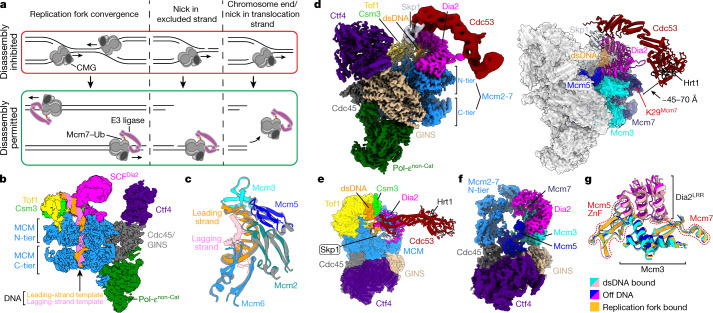
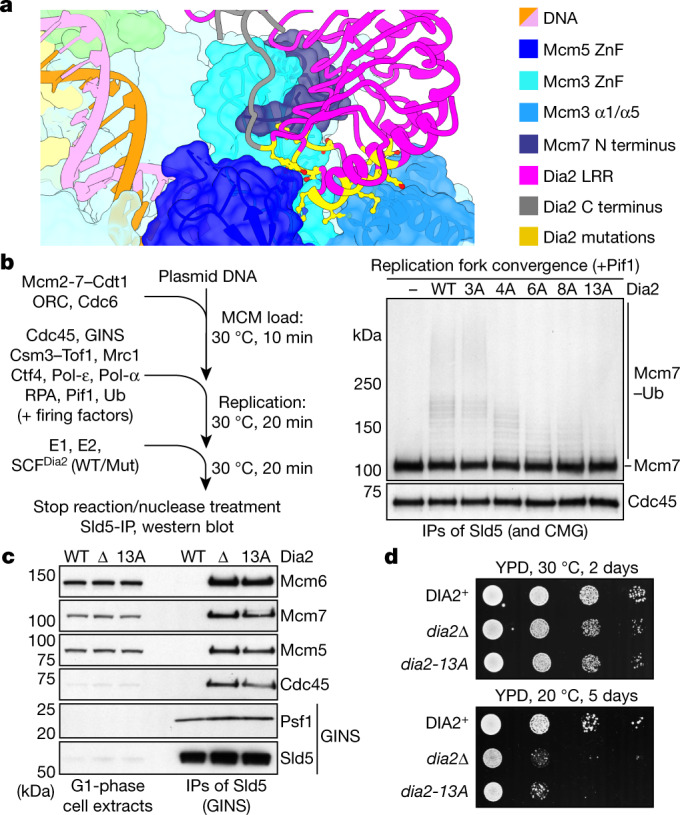
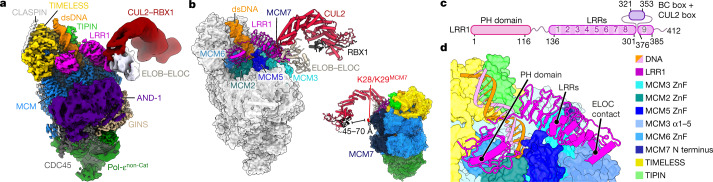
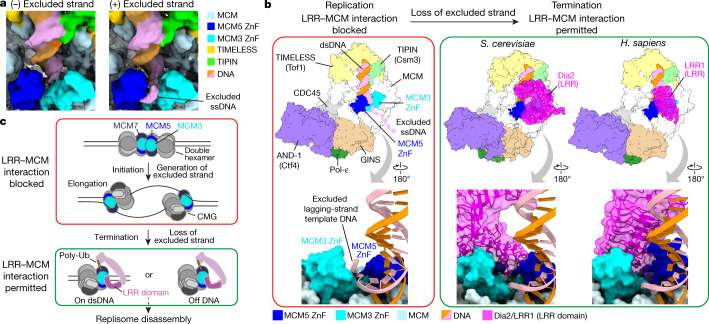
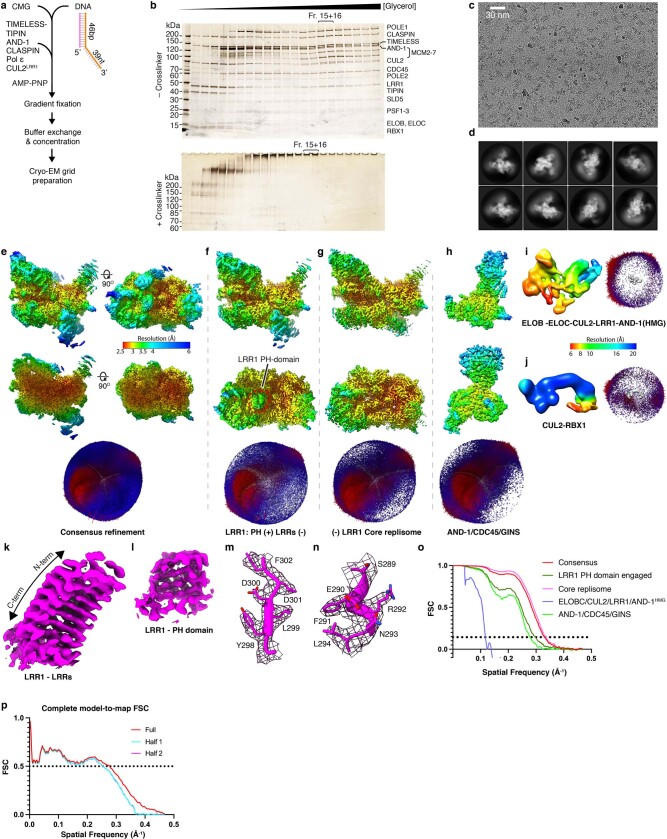
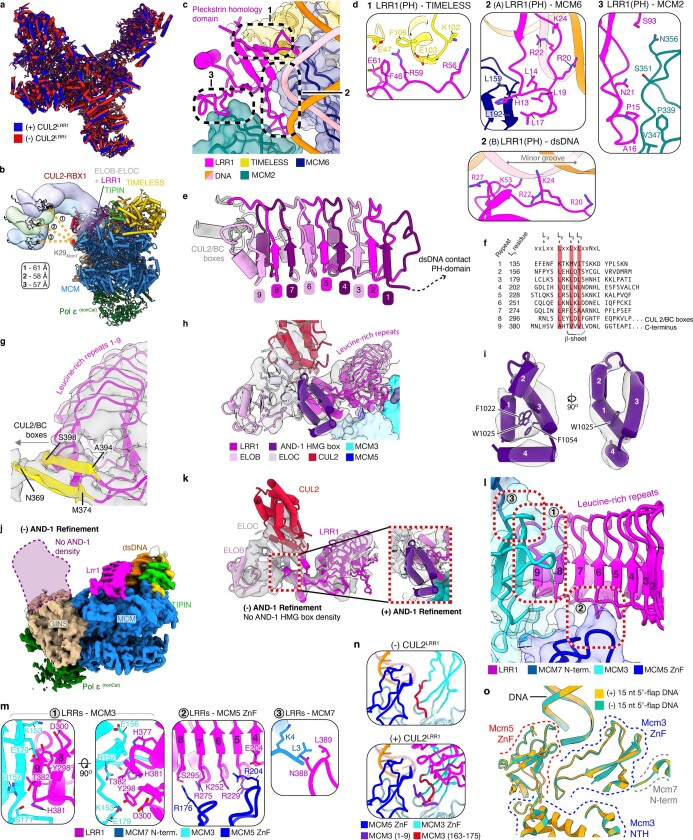
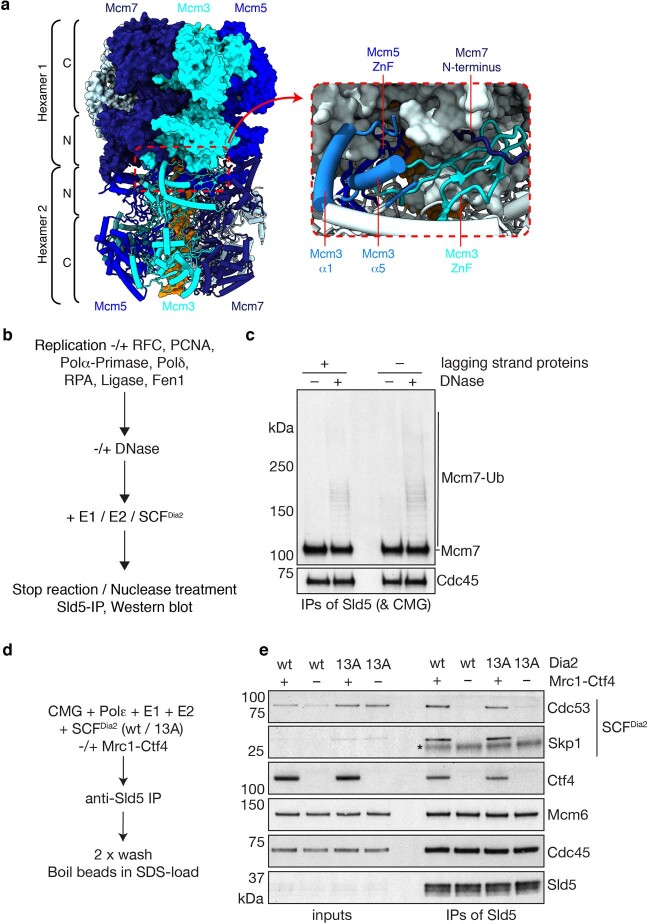
Replisome disassembly is the final step of eukaryotic DNA replication and is triggered by ubiquitylation of the CDC45–MCM–GINS (CMG) replicative helicase 1–3 . Despite being driven by evolutionarily diverse E3 ubiquitin ligases in different eukaryotes (SCF Dia2 in budding yeast 1 , CUL2 LRR1 in metazoa 4–7 ), replisome disassembly is governed by a common regulatory principle, in which ubiquitylation of CMG is suppressed before replication termination, to prevent replication fork collapse. Recent evidence suggests that this suppression is mediated by replication fork DNA 8–10 . However, it is unknown how SCF Dia2 and CUL2 LRR1 discriminate terminated from elongating replisomes, to selectively ubiquitylate CMG only after termination. Here we used cryo-electron microscopy to solve high-resolution structures of budding yeast and human replisome–E3 ligase assemblies. Our structures show that the leucine-rich repeat domains of Dia2 and LRR1 are structurally distinct, but bind to a common site on CMG, including the MCM3 and MCM5 zinc-finger domains. The LRR–MCM interaction is essential for replisome disassembly and, crucially, is occluded by the excluded DNA strand at replication forks, establishing the structural basis for the suppression of CMG ubiquitylation before termination. Our results elucidate a conserved mechanism for the regulation of replisome disassembly in eukaryotes, and reveal a previously unanticipated role for DNA in preserving replisome integrity.
Overview
The claims and statistics of this paper haven’t been checked yet.
Run the check — free, no account needed. It reads the open-access text and checks the sources it cites.
Integrity signals
Registry
Cites
Statistics
Figures
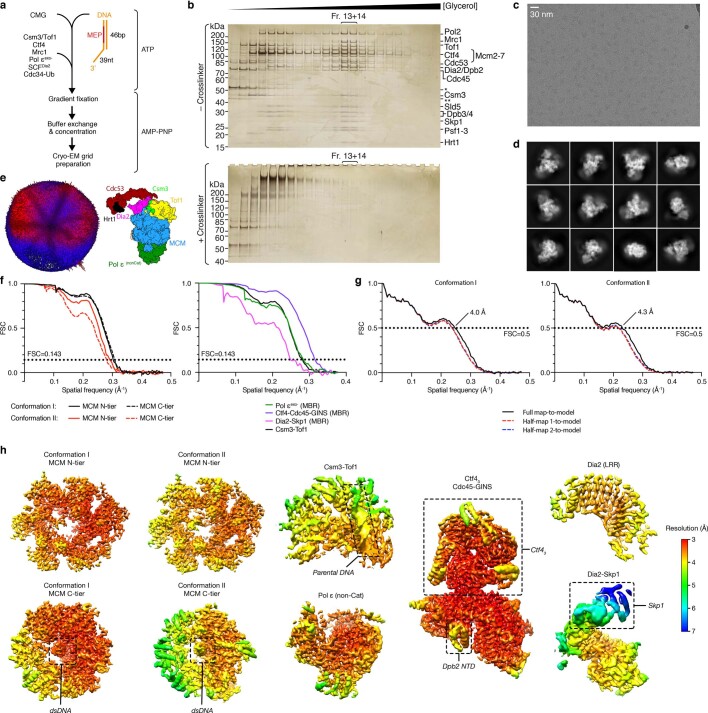
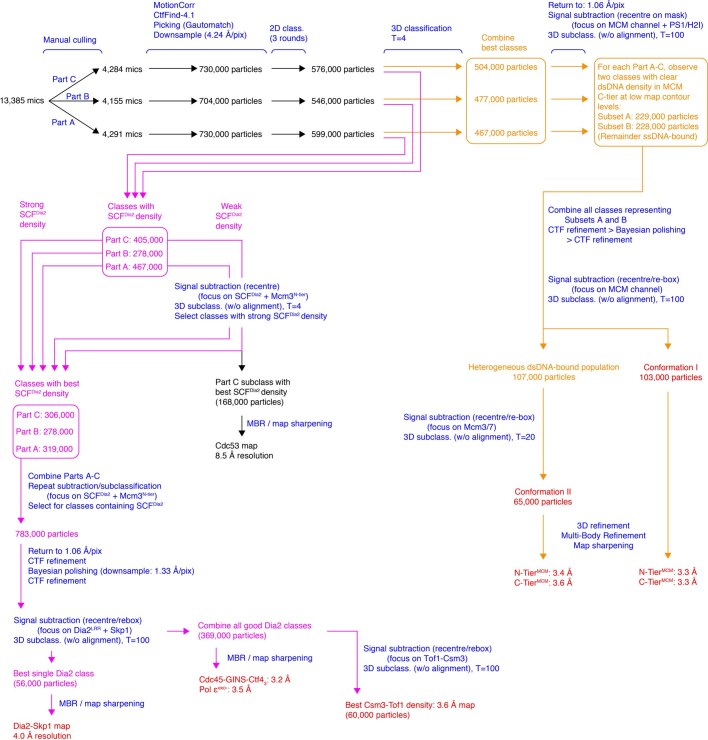
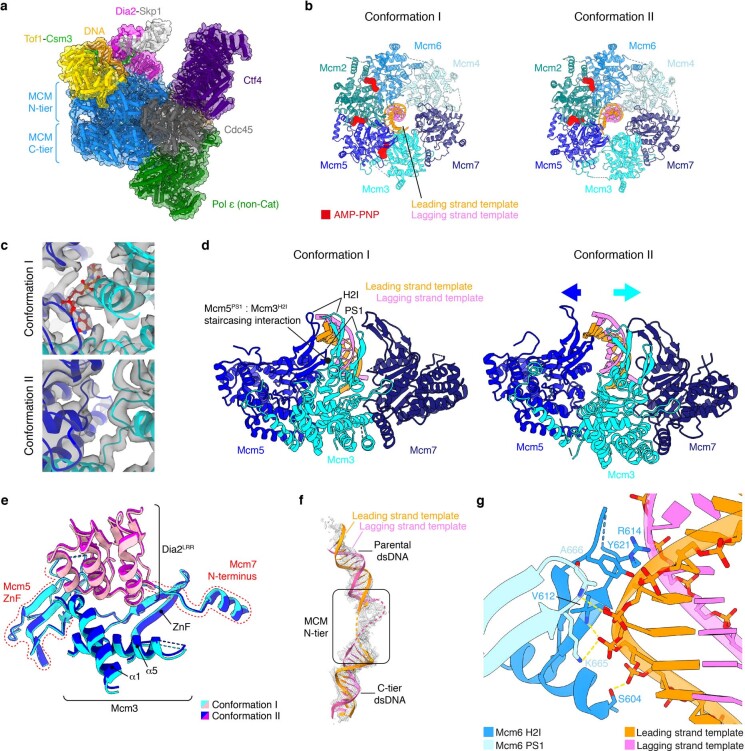
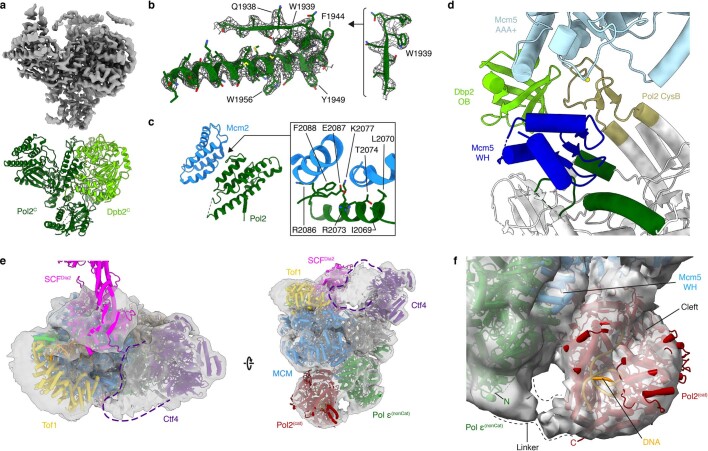
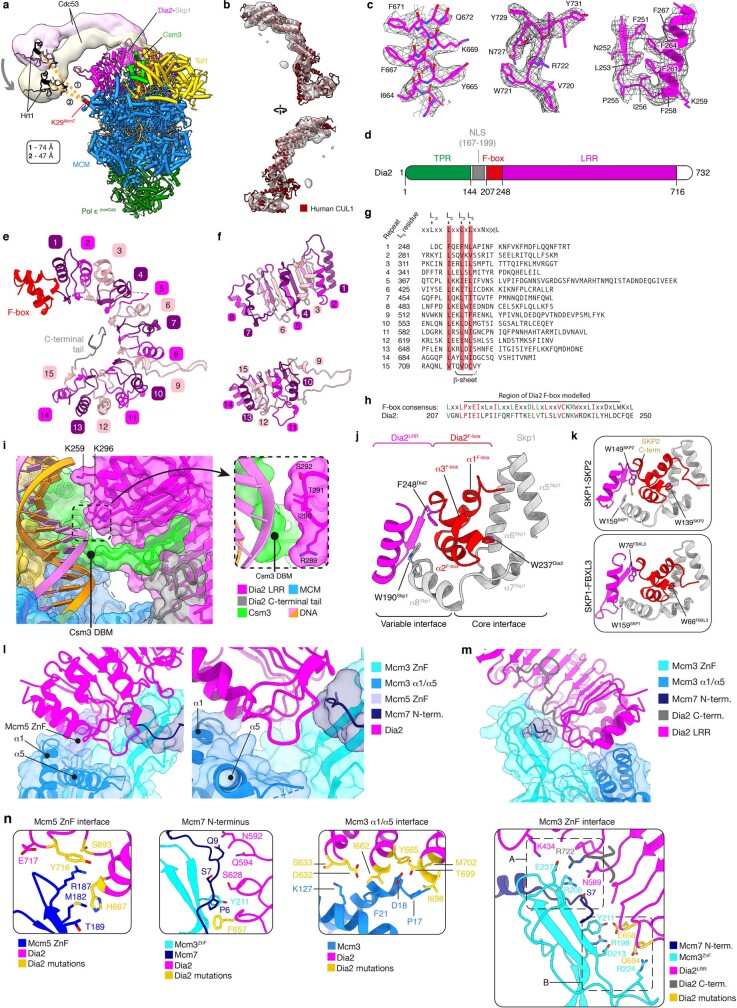
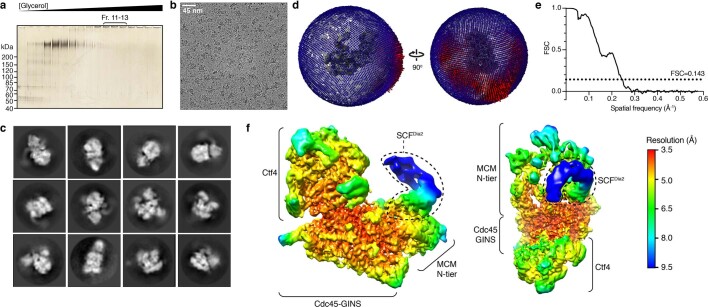
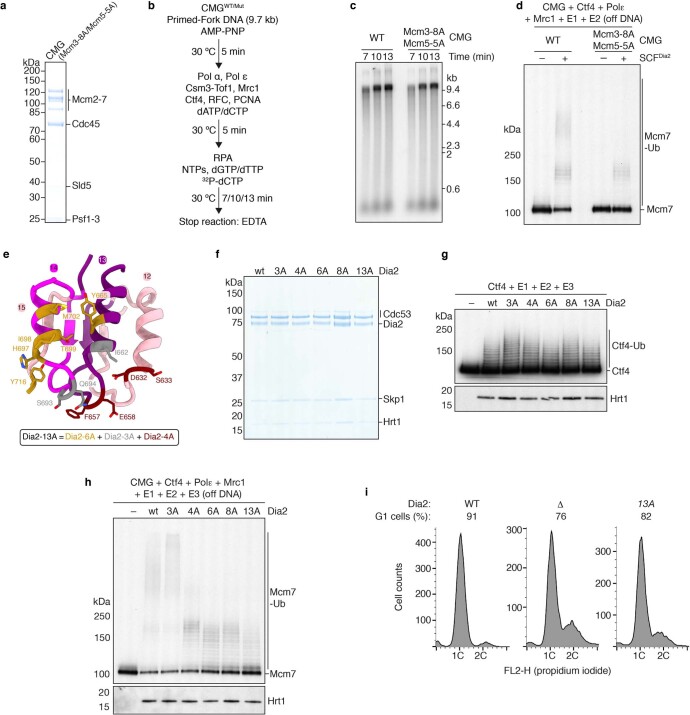
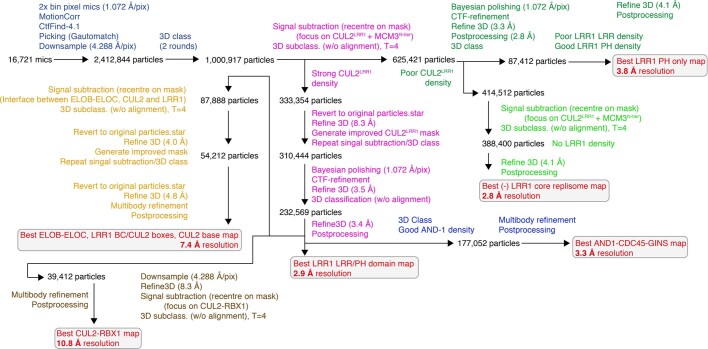
Verification
Claims the paper makes
The claims and statistics of this paper haven’t been checked yet.
Run the check — free, no account needed. It reads the open-access text and checks the sources it cites.
Claims other papers make about this one
Each is checked against this paper’s own text: does it say what the citing paper says it does?
The check wasn’t confident either way, so it gives no verdict — never disputed.
In the citing paper
“in budding yeast, previous experiments mapped this interaction to the location in both proteins predicted by AF-M69,70.”
From Predictomes, a classifier-curated database of AlphaFold-modeled protein-protein interactions (2025) · cites this paper as [69]
Experimental — accuracy not yet measured
Self-check
Percentages, sums and reported differences re-computed from the paper’s own numbers.
The self-check needs the paper’s full text.
Citations
Cites
Structure of the Cul1–Rbx1–Skp1–F boxSkp2 SCF ubiquitin ligase complex
Zheng, N., Schulman, B. A., Song, L., Miller, J. J., Jeffrey, P. D., Wang, P., Chu, C., Koepp, D. M., Elledge, S. J., Pagano, M., et al. (2002) · Nature · doi:10.1038/416703a · Cited by 1,507
Uninterrupted MCM2-7 function required for DNA replication fork progression.
Labib, K., Tercero, J. A., & Diffley, J. (2000) · Science · doi:10.1126/science.288.5471.1643 · Cited by 689
Self-citationStructure of a RING E3 ligase and ubiquitin-loaded E2 primed for catalysis
Plechanovová, A., Jaffray, E. G., Tatham, M. H., Naismith, J. H., & Hay, R. T. (2012) · Nature · doi:10.1038/nature11376 · Cited by 521
Selective bypass of a lagging strand roadblock by the eukaryotic replicative DNA helicase
Fu, Y. V., Yardimci, H., Long, D. T., Ho, T. V., Guainazzi, A., Bermudez, V., Hurwitz, J., van Oijen, A. V., Schärer, O., & Walter, J. (2011) · Cell · doi:10.1016/j.cell.2011.07.045 · Cited by 372
NEDD8 recruits E2‐ubiquitin to SCF E3 ligase
Kawakami, T., Chiba, T., Suzuki, T., Iwai, K., Yamanaka, K., Minato, N., Suzuki, H., Shimbara, N., Hidaka, Y., Osaka, F., et al. (2001) · EMBO Journal · doi:10.1093/emboj/20.15.4003 · Cited by 344
Structure of the eukaryotic MCM complex at 3.8 Å
Li, N., Zhai, Y., Zhang, Y., Li, W., Yang, M., Lei, J., Tye, B., & Gao, N. (2015) · Nature · doi:10.1038/nature14685 · Cited by 264
Cdc48 and a ubiquitin ligase drive disassembly of the CMG helicase at the end of DNA replication
Maric, M., Maculins, T., Piccoli, G. D., & Labib, K. (2014) · Science · doi:10.1126/science.1253596 · Cited by 245
Self-citationPolyubiquitylation drives replisome disassembly at the termination of DNA replication
Moreno, S. P., Bailey, R., Campion, N. J., Herron, S., & Gambus, A. (2014) · Science · doi:10.1126/science.1253585 · Cited by 214
Xie, P., Zhang, M., He, S., Lu, K., Chen, Y., Xing, G., Lu, Y., Liu, P., Yang, L., Wang, S., et al. (2014) · Nature Communications · doi:10.1038/ncomms4733 · Cited by 210
The Architecture of a Eukaryotic Replisome
Sun, J.-C., Shi, Y., Georgescu, R., Yuan, Z.-N., Chait, B., Li, H.-L., & O'Donnell, M. (2015) · Nature Structural &Molecular Biology · doi:10.1038/nsmb.3113 · Cited by 181
Research works printed but not linked: 8
- Villa, F. et al. CUL2LRR1, TRAIP and p97 control CMG helicase disassembly in the mammalian cell cycle. EMBO Rep. 22, e52164 (2021). · DOI
- Hogg, M. et al. Structural basis for processive DNA synthesis by yeast DNA polymerase varepsilon. Nat. Struct. Mol. Biol. 21, 49–55 (2014). · DOI
- Yuan, Z., Georgescu, R., Schauer, G. D., O’Donnell, M. E. & Li, H. Structure of the polymerase ε holoenzyme and atomic model of the leading strand replisome. Nat. Commun. 11, 3156 (2020). · DOI
- Martin, E. C. et al. LRRpredictor—a new LRR motif detection method for irregular motifs of plant NLR proteins using an ensemble of classifiers. Genes 11, 286 (2020). · DOI
- Schulman, B. A. et al. Insights into SCF ubiquitin ligases from the structure of the Skp1–Skp2 complex. Nature 408, 381–386 (2000). · DOI
- Xing, W. et al. SCFFBXL3 ubiquitin ligase targets cryptochromes at their cofactor pocket. Nature 496, 64–68 (2013). · DOI · Paper page
- Noguchi, Y. et al. Cryo-EM structure of Mcm2-7 double hexamer on DNA suggests a lagging-strand DNA extrusion model. Proc. Natl Acad. Sci. USA 114, E9529–E9538 (2017). · DOI
- Afonine, P. V. et al. Real-space refinement in PHENIX for cryo-EM and crystallography. Acta Crystallogr. D 74, 531–544 (2018). · DOI
Cited by
Sorted by citations
Items 101–110 of 110
At the fork: where epigenetic decisions are made
Jia, S. (2026) · Trends in Genetics · doi:10.1016/j.tig.2026.03.006 · Cited by 1
Importance of E3 Ligases for Preserving Genome Integrity: Progress and Challenges
Mahata, R., & Santra, M. K. (2026) · Molecular and Cellular Biology · doi:10.1080/10985549.2026.2638203
A new model for coordinating the functions of TIMELESS at the replication forkPreprint
Vipat, S., Harolikar, R., Šapovalovaitė, K., Chavata, N. R., Musvi, S. S., Morgunov, A., Vallo, S., & Moiseeva, T. N. (2025) · bioRxiv · doi:10.64898/2025.12.17.694947
“We therefore employed a split-Turbo ID-based proximity labelling strategy (26), allowing biotinylation of nearby proteins only when two bait proteins tagged with two complementary parts of TurboID biotin ligase (TurboN and TurboC) come together to form a functional enzyme.”
Evolution, composition and functions of cullin E3 ubiquitin ligases in trypanosomes
del Pino, R. C., Zoltner, M., Butterfield, E. R., & Field, M. C. (2025) · Scientific Reports · doi:10.1038/s41598-025-32077-9
“Significantly, the anaphase promoting complex (APC) and replisome also contain a cullin/Rbx ubiquitin ligase at their core and govern turnover of critical proteins during mitosis 8,9 .”
Comprehensive Analysis of Human Colorectal Cancers Harboring Polymerase Epsilon Mutations
Gibson, L. M., Konda, P., Bliss, H. J., Nelakurti, D. D., Mirzaei, G., Bouley, R. A., Wang, J. J., & Petreaca, R. C. (2025) · International Journal of Molecular Sciences · doi:10.3390/ijms26157208
“A recent cryo-EM structure of human POLe as part of the replisome was recently solved, but only residues 1317–1926 were resolved in the catalytic subunit [54].”
Li, T., Guo, Y., Liu, R., Lv, M., & Wang, Y. (2025) · Functional & Integrative Genomics · doi:10.1007/s10142-025-01626-w
“The ubiquitylation associated with LRR1 significantly contributes to the regulation of replisome disassembly in eukaryotes (Jenkyn-Bedford et al. 2021).”
Cryo-EM structures of G4-stalled CMG reveal inchworm mechanism of DNA translocationPreprint
Batra, S., Allwein, B., Kumar, C., Devbhandari, S., Brüning, J.-G., Bahng, S., Lee, C., Marians, K. J., Hite, R. K., & Remus, D. (2024) · bioRxiv (Cold Spring Harbor Laboratory) · doi:10.1101/2024.10.02.616340
“For example, the canonical configuration of the fork junction is predicted to protect the replisome from ubiquitin-mediated disassembly ( 57 ), which may rule out replisome disassembly as a mechanism to expose the G4 for processing by G4 helicases and allow completion of DNA replication by a fork…”
BackgroundDNA replication recruits a friend to overcome a challenging break-up
Dewar, J. M. (2024) · EMBO Journal · doi:10.1038/s44318-024-00204-3
“…Lrr1 are evolutionarily unrelated, they share the same mechanism of replisome recognition and thus represent an example of convergent evolution (Jenkyn-Bedford et al, 2021); this suggested that replisome unloading may be required in both yeast and vertebrates as a solution for an…”
BackgroundLi, A., Qin, C., Chen, H., Zhou, Y., Xu, Y., Xu, M., & Zha, W.-Z. (2024) · Journal of Biomedical Nanotechnology · doi:10.1166/jbn.2024.3815
Nucleotide binding halts diffusion of the eukaryotic replicative helicase during activation
Montero, D. R., Sánchez, H., van Veen, E., van Laar, T., Solano, B., Diffley, J., & Dekker, N. (2022) · bioRxiv · doi:10.1101/2022.12.23.521684
Metadata
- Authors
- Jenkyn-Bedford, M., Jones, M. L., Baris, Y., Labib, K. P. M., Cannone, G., Yeeles, J. T. P., & Deegan, T. D.
- Affiliations
- MRC Laboratory of Molecular Biology (GB)
- University of Dundee (GB)
- Corresponding author
- Yeeles, Joseph T. P.
- Deegan, Tom D.
- ORCID
- Venue
- Nature
- Published
- 2021-10-26
- Volume
- 600
- Issue
- 7890
- Pages
- 743-747
- ISSN
- 0028-0836 (ISSN-L)
- 1476-4687
- PMC
- PMC8695382
- OpenAlex
- W3208795162
- Cited by
- 116
- References
- 33
- Citations by year
- 2026: 17 · 2025: 34 · 2024: 32 · 2023: 26 · 2022: 7
- FWCI
- 5.10
- Type
- journal article
- Language
- en
- Open access
- hybrid
- doi.org
- Locations
- Nature (publishedVersion, cc-by)
- PubMed Central (publishedVersion, cc-by)
- PubMed (publishedVersion)
- Discovery Research Portal (University of Dundee) (publishedVersion, cc-by)
- RePEc: Research Papers in Economics (submittedVersion)
- Edinburgh Research Explorer (University of Edinburgh) (submittedVersion, cc-by)
- Apollo (University of Cambridge) (submittedVersion, cc-by)
- Apollo
- Funders
- Wellcome Trust (204678/Z/16/Z)
- UK Research and Innovation (MC_UP_1201/12)
- Cancer Research UK (24558)
- Directorate for Biological Sciences
- Medical Research Council (MC_UU_12016/13, MC_UP_1201/12, MC_UU_12016, MC_UU_00018/4)
- Biotechnology and Biological Sciences Research Council
- Topics
- Life Sciences › Biochemistry, Genetics and Molecular Biology › Molecular Biology › DNA Repair Mechanisms
- Life Sciences › Biochemistry, Genetics and Molecular Biology › Molecular Biology › Ubiquitin and proteasome pathways
- Life Sciences › Biochemistry, Genetics and Molecular Biology › Molecular Biology › Genomics and Chromatin Dynamics
- Keywords
- CMG helicase, E3 ubiquitin ligase, ubiquitination, replication termination, leucine-rich repeat domain, replication fork collapse, eukaryotic DNA replication
- MeSH terms
- DNA, DNA Replication, DNA Helicases, Humans, Cryoelectron Microscopy, Ubiquitin-Protein Ligases, Eukaryota
About these checks
Registry, retraction, Cites and statistics results are computed, not judged, with one exception: a printed reference that no index lists is read once by a model before it counts as a citation error. Claims are extracted by a model and kept only when their quote appears verbatim in the text; each cited source is then checked, with a model’s help, for whether it says what the claim relies on. Those verdicts can be wrong — read the claim’s quote and the cited source before relying on one.
Statistics and arithmetic are recomputed, not judged.
Confidence bands are shown only for fields calibrated on our annotated test set. None is calibrated yet, so no band is shown.
What counts as a claim ›How we measure confidence ›How we check this ›
Are you an author, or do you see a problem with this page? Request a review
