

An evaporite sequence from ancient brine recorded in Bennu samples
Open accessThe DOI matches its Crossref record; 58 of the 58 references it cites were found in a registry or an index; none of the 54 sources its claims cite is checked for support yet.
Abstract
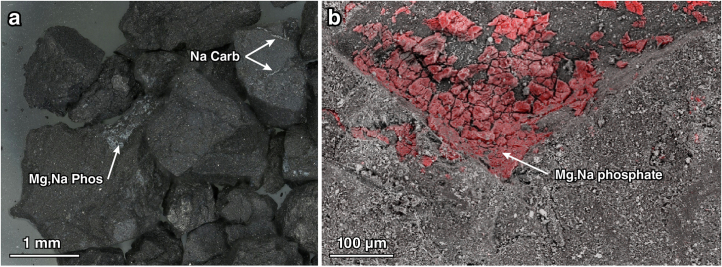
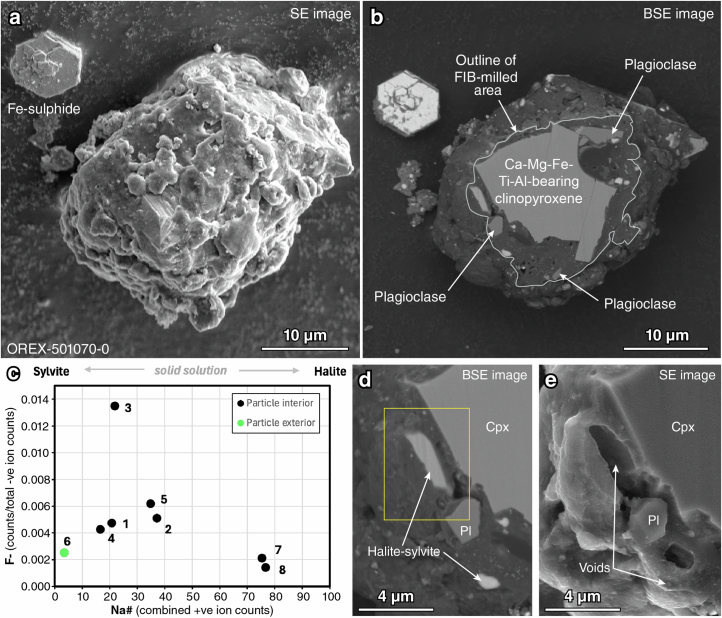
Evaporation or freezing of water-rich fluids with dilute concentrations of dissolved salts can produce brines, as observed in closed basins on Earth 1 and detected by remote sensing on icy bodies in the outer Solar System 2,3 . The mineralogical evolution of these brines is well understood in regard to terrestrial environments 4 , but poorly constrained for extraterrestrial systems owing to a lack of direct sampling. Here we report the occurrence of salt minerals in samples of the asteroid (101955) Bennu returned by the OSIRIS-REx mission 5 . These include sodium-bearing phosphates and sodium-rich carbonates, sulfates, chlorides and fluorides formed during evaporation of a late-stage brine that existed early in the history of Bennu’s parent body. Discovery of diverse salts would not be possible without mission sample return and careful curation and storage, because these decompose with prolonged exposure to Earth’s atmosphere. Similar brines probably still occur in the interior of icy bodies Ceres and Enceladus, as indicated by spectra or measurement of sodium carbonate on the surface or in plumes 2,3 .
Overview
CoChat Summary
TL;DR
OSIRIS-REx samples from asteroid Bennu contain a diverse suite of sodium-rich evaporite minerals—phosphates, carbonates, sulfates, chlorides and fluorides—recording evaporation of a late-stage brine on Bennu’s parent body. The sequence resembles terrestrial closed-basin evaporites such as Searles Lake and implies ancient brine conditions relevant to Ceres and Enceladus.
Key findings
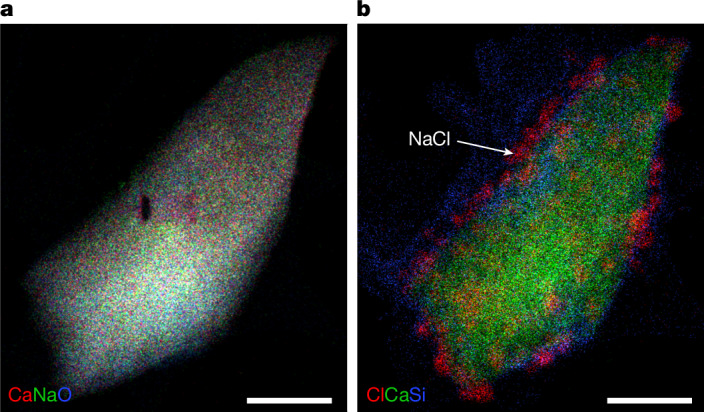
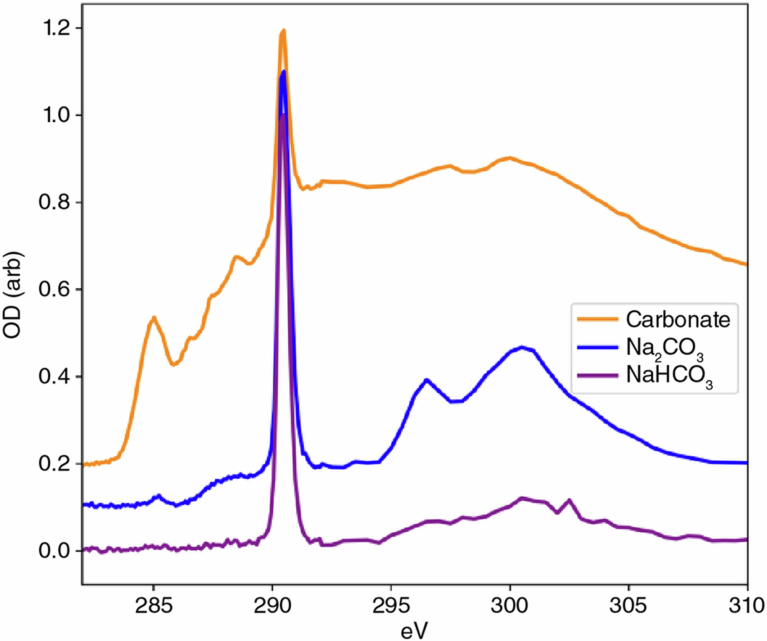
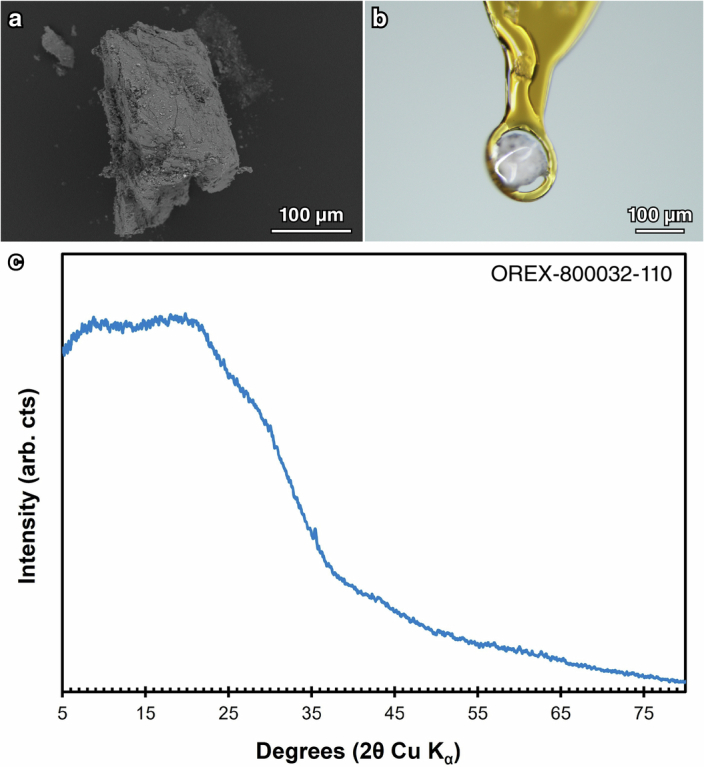
- Bennu samples contain Na-bearing phosphates and Na-rich carbonates, sulfates, chlorides and fluorides formed during evaporation of a late-stage brine. Identified phases include calcite, dolomite, Fe,Mn-bearing magnesite, hydrated Na,Ca carbonate (gaylussite/pirssonite), Na carbonate (best fit trona, cannot exclude nahcolite), Na sulfate (thénardite, Na2SO4), halite (NaCl), sylvite (KCl), Na fluoride (villiaumite, NaF), and amorphous Mg,Na phosphate.
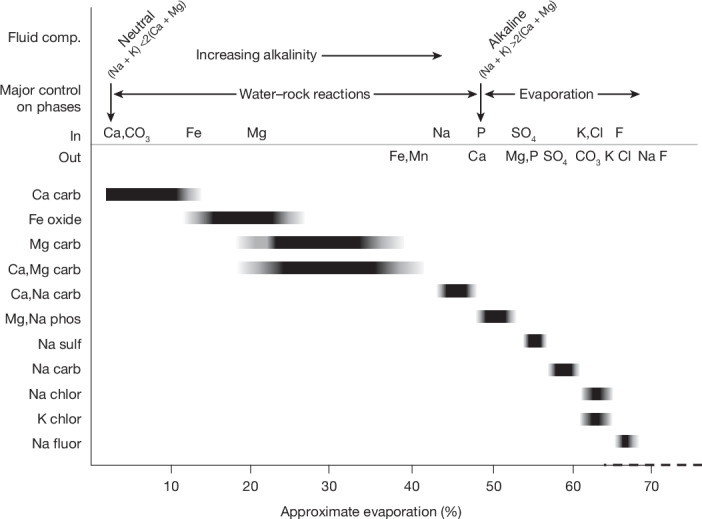
- Six minerals observed at Searles Lake are also present: calcite, dolomite, gaylussite/pirssonite, thénardite, trona and halite; the paper adopts the Searles Lake order of formation for the latter four phases. Evaporation calculations using an initial salinity of about 125 g kg−1 (4× seawater), from 630 ppm Cl and a water:rock ratio of 0.5, place Na,Ca carbonate formation at around 45% evaporation, Na carbonate at about 60% and halite at 65%; the main text states Na carbonate and Na chloride form at a minimum of 60–70% evaporation.
- The salts are air-sensitive: Na,Ca carbonate altered after roughly 5 months in an air-filled desiccator with NaCl growth, and halite-sylvite grains disappeared after 8 months in an air-filled autodesiccator at relative humidity 30–40%. Samples stored in nitrogen retained Na-rich evaporite phases, supporting terrestrial alteration as an explanation for sulfate veins in CI chondrites.
- Temperature constraints from Searles Lake modelling are 20–29 °C, consistent with gaylussite below 40 °C, pirssonite below 55 °C and trona above 20 °C; this favours evaporation rather than freezing as the dominant control at least through Na carbonate formation. Similar Na carbonate/chloride deposits on Ceres and Enceladus plume salts suggest analogous brines.
Methods
- Samples were OSIRIS-REx Bennu material from avionics-deck spillover and the TAGSAM bulk sample, as aggregates of particles less than a few millimetres; they are denoted OREX-5#####-# and OREX-8#####-# and were curated in high-purity nitrogen at NASA’s Johnson Space Center, shipped and stored in nitrogen except as noted.
- Mineral identification and textural context used optical microscopy, SEM/EDS, high-resolution cathodoluminescence, EMPA, FIB-SEM, TEM/STEM with SAED and EELS, XRD, scanning transmission X-ray microscopy, and ToF-SIMS.
- Evaporation degrees were calculated from salinity estimated from Cl concentration and water:rock ratio, compared with Searles Lake brine modelling salinities for Na,Ca carbonate (220 g kg−1), Na carbonate (330 g kg−1) and Na chloride (360 g kg−1).
Limitations
- The paper states that petrographic constraints on the timing of the latter four phases are lacking, so it adopts the Searles Lake order of formation; initial salinity is uncertain because allowable water:rock mass ratios are 0.5–1.0, whether Cl was completely dissolved is unknown, and other ion concentrations are needed, making the initial salinity probably an upper limit and calculated evaporation degrees probable lower limits.
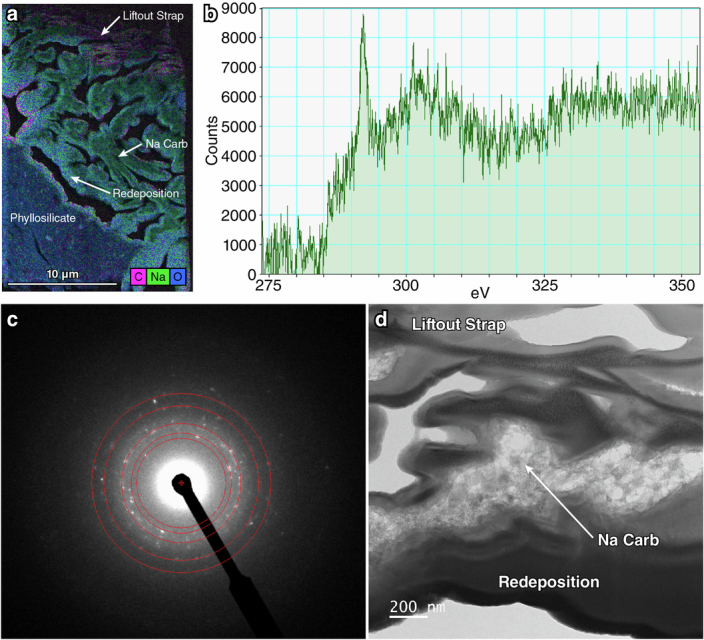
- The paper states that the physical plausibility of extensive evaporation of a fluid moving solely through cracks is unconstrained, and whether single-phase evaporite veins are small-scale offshoots of a larger brine body is unclear. Na carbonate identification is uncertain because it is nanocrystalline: trona is the best fit, but nahcolite or a mixture cannot be excluded; Na,Ca carbonate is beam-sensitive and hydrated, and the NaF formula comes from small, irregular grains.
- Evident from the text: samples were exposed to air during preparation and equipment loading for hours to days, and some were deliberately stored in air-filled desiccators, which altered or removed salts; thus some observed textures or voids may reflect terrestrial alteration, although the authors use this behaviour as evidence and note that nitrogen storage retained the Na-rich evaporites.
Model-written summary. Check it against the paper before relying on it.
Integrity signals
Registry
Cites
Statistics
Figures
Verification
Claims the paper makes
0 Valid · 0 Not valid · 38 Not checked · 72 Own results and interpretations
A result the paper reports from its own data — it cites no other source for it, so there is none to check. The quote shows it is in the paper.
In the paper
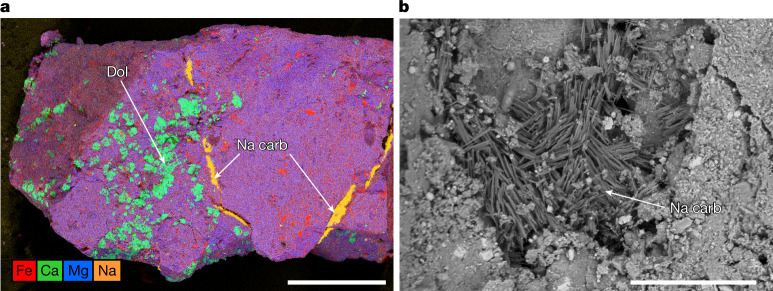
“Within these veins, Na carbonate occurs as randomly oriented needles of width below 1 µm and length 5–10 µm (Fig. 4b).”
§ An evaporite sequence from ancient brine recorded in Bennu samples > Main
plain- Asserted: passes — The authors put it forward as true.
- Checkable: passes — It can be checked against evidence.
- Load-bearing: unclear — It is unclear whether the paper’s conclusions depend on it.
- Based: passes — The paper gives a reason why it holds.
In the paper
“Here we report the occurrence of salt minerals in samples of the asteroid (101955) Bennu returned by the OSIRIS-REx mission5.”
§ An evaporite sequence from ancient brine recorded in Bennu samples > Abstract
What the sources say
- Not checked yetcites [5] Lauretta, D. S. et al. Asteroid (101955) Bennu in the laboratory: properties of the sample collected by OSIRIS-REx. Meteorit. Planet. Sci. 59, 2453–2486 (2024). source
plainSingle case- Asserted: passes — The authors put it forward as true.
- Checkable: passes — It can be checked against evidence.
- Load-bearing: passes — The paper’s conclusions depend on it.
- Based: passes — The paper gives a reason why it holds.
A result the paper reports from its own data — it cites no other source for it, so there is none to check. The quote shows it is in the paper.
In the paper
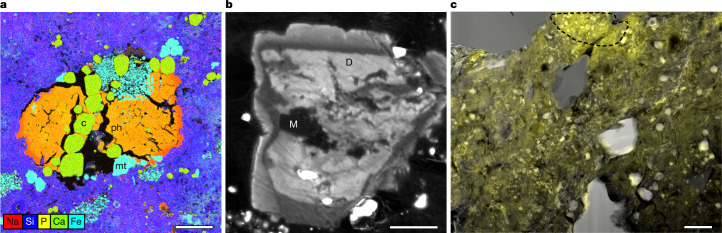
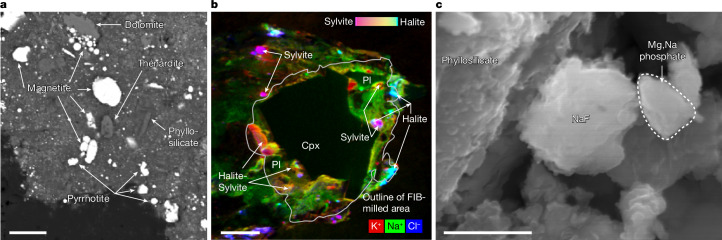
“In addition, we observed a continuum of submicron amorphous to molecular carbonate occurring with phyllosilicates (Fig. 1c) using transmission electron microscopy (TEM) and scanning transmission X-ray microscopy.”
§ An evaporite sequence from ancient brine recorded in Bennu samples > Main
plainstates an association- Asserted: passes — The authors put it forward as true.
- Checkable: passes — It can be checked against evidence.
- Load-bearing: passes — The paper’s conclusions depend on it.
- Based: passes — The paper gives a reason why it holds.
A result the paper reports from its own data — it cites no other source for it, so there is none to check. The quote shows it is in the paper.
In the paper
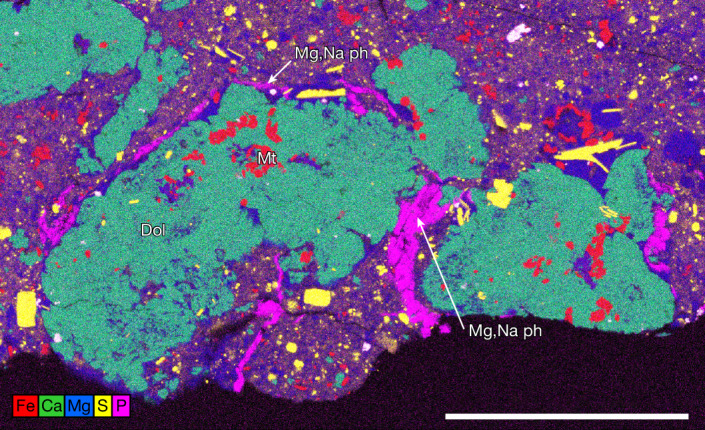
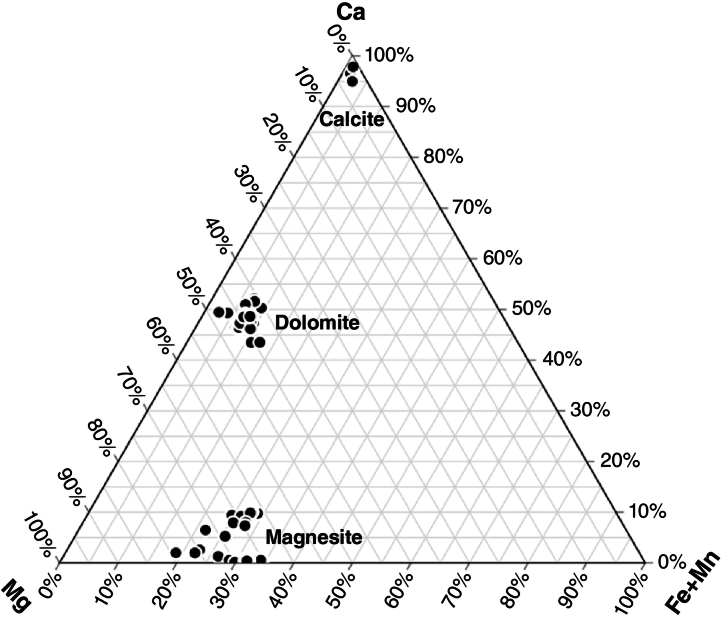
“SEM and EMPA indicate dolomite of subequal molar Ca and Mg, with minor Fe and Mn (under 11 mol.% FeCO3, under 8 mol.% MnCO3; Extended Data Fig. 2).”
§ An evaporite sequence from ancient brine recorded in Bennu samples > Main
hedged- Asserted: passes — The authors put it forward as true.
- Checkable: passes — It can be checked against evidence.
- Load-bearing: passes — The paper’s conclusions depend on it.
- Based: passes — The paper gives a reason why it holds.
A result the paper reports from its own data — it cites no other source for it, so there is none to check. The quote shows it is in the paper.
In the paper
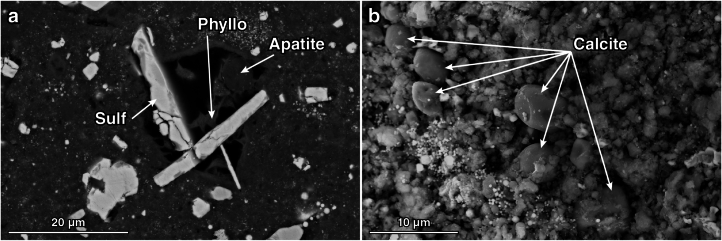
“Intergrowths of Ca,Mg,Fe,Mn-bearing carbonates, including dolomite and Fe,Mn-bearing magnesite, are observed using SEM and high-resolution cathodoluminescence (HR-CL).”
§ An evaporite sequence from ancient brine recorded in Bennu samples > Main
plain- Asserted: passes — The authors put it forward as true.
- Checkable: passes — It can be checked against evidence.
- Load-bearing: passes — The paper’s conclusions depend on it.
- Based: passes — The paper gives a reason why it holds.
53 more claims
Create a free account to see all 110 claims and to verify the 52 references still open.
- It may state two separate claims as one. 34
- Probably not a substantial claim. 25
Claims other papers make about this one
Each is checked against this paper’s own text: does it say what the citing paper says it does?
In the citing paper
“Petrologic data from Bennu samples indicate that late-stage fluid in the parent body sequentially precipitated evaporite minerals, starting with Ca and Mg carbonates, progressing to phosphates, followed by Na carbonates and concluding with halides and sulfates48.”
From Abundant ammonia and nitrogen-rich soluble organic matter in samples from asteroid (101955) Bennu (2025) · cites this paper as [48]
In the citing paper
“These minerals strongly imply alkaline pH, substantial concentrations of dissolved inorganic carbon and fluid temperatures below ~55 °C (ref. 48).”
From Abundant ammonia and nitrogen-rich soluble organic matter in samples from asteroid (101955) Bennu (2025) · cites this paper as [48]
Self-check
Percentages, sums and reported differences re-computed from the paper’s own numbers.
Each contradiction between two passages listed here was confirmed by an independent check.
Rated major: it would touch a result — a value a result rests on, reported and recomputed p-values on opposite sides of the significance level, two passages that conflict with no sign which is right, or a cited work retracted before this paper was published.
In the paper
“The average CI chondrite chlorine concentration of 630 ppm (ref. 59) and a water:rock ratio by mass of 0.5 (ref. 60) yields an approximate initial salinity of 125 (4× terrestrial seawater).”
§ An evaporite sequence from ancient brine recorded in Bennu samples > Methods > Evaporation calculations
Reported 125 · recomputed 1260
Rated minor: it would not touch a result — a value no result rests on, a p-value that stays on the same side of the significance level, or a conflict that is clerical, resolved elsewhere in the paper, or outside its own findings.
In the paper
§ An evaporite sequence from ancient brine recorded in Bennu samples > Main
“The occurrence of Na carbonate on Bennu’s parent body suggests that its ancient brine, at about 55% evaporation, produced evaporites similar to those emplaced recently on Ceres.”
§ An evaporite sequence from ancient brine recorded in Bennu samples > Main
“Preliminary calculations (Methods) suggest formation of Na carbonate and Na chloride at a minimum of 60–70% evaporation.”
Citations
Cites
Synthesis of long prebiotic oligomers on mineral surfaces.
Ferris, J. P., Hill, A. R., Liu, R., & Orgel, L. E. (1996) · Nature · doi:10.1038/381059a0 · Cited by 865
Sodium salts in E-ring ice grains from an ocean below the surface of Enceladus
Postberg, F., Kempf, S., Schmidt, J., Brilliantov, N., Beinsen, A., Abel, B., Buck, U., & Srama, R. (2009) · Nature · doi:10.1038/nature08046 · Cited by 596
Hansen, C. J., Esposito, L., Stewart, A. I. F., Colwell, J., Hendrix, A., Pryor, W., Shemansky, D., & West, R. (2006) · Science · doi:10.1126/science.1121254 · Cited by 578
Cassini Encounters Enceladus: Background and the Discovery of a South Polar Hot Spot
Spencer, J. R., Pearl, J. C., Segura, M., Flasar, F. M., Mamoutkine, A., Romani, P., Buratti, B. J., Hendrix, A. R., Spilker, L. J., & Lopes, R. M. C. (2006) · Science · doi:10.1126/science.1121661 · Cited by 572
CRISP: crystallographic image processing on a personal computer
Hovmöller, S. (1992) · Ultramicroscopy · doi:10.1016/0304-3991(92)90102-p · Cited by 391
On the chemical evolution of the carbonaceous chondrites
Dufresne, E. R., & Anders, E. (1962) · Geochimica et Cosmochimica Acta · doi:10.1016/0016-7037(62)90047-9 · Cited by 347
Formation and evolution of carbonaceous asteroid Ryugu: Direct evidence from returned samples
Nakamura, T., Matsumoto, M., Amano, K., Enokido, Y., Zolensky, M. E., Mikouchi, T., Genda, H., Tanaka, S., Zolotov, M. Y., Kurosawa, K., et al. (2023) · Science · doi:10.1126/science.abn8671 · Cited by 345
Self-citationThe nakhlite meteorites: Augite-rich igneous rocks from Mars
Treiman, A. H. (2005) · Geochemistry · doi:10.1016/j.chemer.2005.01.004 · Cited by 333
Use of electron-energy loss near-edge fine structure in the study of minerals
Garvie, L. A. J., Craven, A. J., & Brydson, R. (1994) · American Mineralogist · Cited by 300
Bright carbonate deposits as evidence of aqueous alteration on (1) Ceres
De Sanctis, M. C., Raponi, A., Ammannito, E., Ciarniello, M., Toplis, M. J., McSween, H. Y., Castillo-Rogez, J. C., Ehlmann, B. L., Carrozzo, F. G., Marchi, S., et al. (2016) · Nature · doi:10.1038/nature18290 · Cited by 285
Research works printed but not linked: 2
- Hardie, L. A. & Eugster, H. P. The evolution of closed-basin brines. In Morgan, B. A. (ed.) Fiftieth Anniversary Symposia: Mineralogy and Petrology of the Upper Mantle, Sulfides, Mineralogy and Geochemistry of Non-Marine Evaporites: Mineralogical Society of America Special Paper 3, 273–290 (Mineralogical Society of America, 1970).
- National Academies of Sciences, Engineering, and Medicine. Origins, Worlds, and Life: A Decadal Strategy for Planetary Science and Astrobiology 2023–2032 (The National Academies Press, 2023).
Cited by
Abundant ammonia and nitrogen-rich soluble organic matter in samples from asteroid (101955) Bennu
Glavin, D. P., Dworkin, J. P., Alexander, C. M. O., Aponte, J. C., Baczynski, A. A., Barnes, J. J., Bechtel, H. A., Berger, E. L., Burton, A. S., Caselli, P., et al. (2025) · Nature Astronomy · doi:10.1038/s41550-024-02472-9 · Cited by 272
“https://doi.org/10.1038/s41550-024-02472-9 indicate that late-stage fluid in the parent body sequentially precipitated evaporite minerals, starting with Ca and Mg carbonates, progressing to phosphates, followed by Na carbonates and concluding with halides and sulfates 48 .”
InfluentialSelf-citationMineralogical evidence for hydrothermal alteration of Bennu samples
Zega, T. J., McCoy, T. J., Russell, S. S., Keller, L. P., Gainsforth, Z., Singerling, S. A., Manga, V. R., Harrison, C. S., Libourel, G., Prince, B. S., et al. (2025) · Nature Geoscience · doi:10.1038/s41561-025-01741-0 · Cited by 78
“Measured compositions span from nearly pure calcite to dolomite and Fe–Mn-rich magnesite, with rare sodium carbonate 6 .”
InfluentialSelf-citationThe variety and origin of materials accreted by Bennu’s parent asteroid
Barnes, J., Nguyen, A. N., Abernethy, F. A. J., Bajo, K., Bekaert, D. V., Bloch, E. M., Brennecka, G. A., Busemann, H., Cowpe, J., Crowther, S. A., et al. (2025) · Nature Astronomy · doi:10.1038/s41550-025-02631-6 · Cited by 67
“7,12)).”
InfluentialSelf-citationAn overview of the petrography and petrology of particles from aggregate sample from asteroid Bennu
Connolly, H. C., Jr., LAURETTA, D. S., McCoy, T. J., Russell, S. S., Haenecour, P., Polit, A. T., Barnes, J., Zega, T. J., Yurimoto, H., Kawasaki, N., et al. (2025) · Meteoritics and Planetary Science · doi:10.1111/maps.14335 · Cited by 61
“The presence of evaporite minerals (McCoy and Russell et al., 2025) including dolomite and Fe,Mn-bearing magnesite suggests that ices such as H ₂ O, CO ₂ , and possibly NH ₃ were accreted and later melted, driving extensive aqueous alteration.”
Self-citationBio-essential sugars in samples from asteroid Bennu
Furukawa, Y., Sunami, S., Takano, Y., Koga, T., Hirakawa, Y., Oba, Y., Naraoka, H., Saigusa, D., Yoshikawa, T., Tanaka, S., et al. (2025) · Nature Geoscience · doi:10.1038/s41561-025-01838-6 · Cited by 53
“Veins of potential carbonates in boulders on Bennu observed by the OSIRIS-REx spacecraft indicate a history of large-scale fluid activity 35 , and evaporites in Bennu samples point to past alkaline fluids rich in sodium, magnesium and calcium carbonate 16 .”
InfluentialSelf-citationOued Chebeika 002: A new CI1 meteorite linked to outer solar system bodies
Gattacceca, J., Gounelle, M., Devouard, B., Barrat, J., Bonal, L., King, A. J., Maurel, C., Beck, P., Roskosz, M., Viennet, J., et al. (2025) · Meteoritics and Planetary Science · doi:10.1111/maps.14359 · Cited by 42
“The range of compositions of apatites and Mg,Na-rich phosphates (Table S1) is compatible with those observed in CI1 chondrites, Ryugu samples (Mikouchi et al., 2024), and Bennu samples (McCoy et al., 2025).”
Self-citationPrebiotic organic compounds in samples of asteroid Bennu indicate heterogeneous aqueous alteration
Mojarro, A., Aponte, J. C., Dworkin, J. P., Elsila, J. E., GLAVIN, D. P., Connolly, H. C., Jr., & LAURETTA, D. S. (2025) · Proceedings of the National Academy of Sciences · doi:10.1073/pnas.2512461122 · Cited by 42
“In the hum-mocky case, at least one additional event must have occurred to cement the aqueously altered clasts within the matrix; in the mottled case, a very late - stage fluid event is evidenced by the abundance of Mg,Na - rich phosphate, an evaporite mineral ( 11 , 13 , 14 ).”
Self-citationSpace weathering effects in Bennu asteroid samples
Keller, L. P., Thompson, M. S., Seifert, L. B., Melendez, L. E., Thomas-Keprta, K. L., Le, L., Snead, C. J., Welten, K. C., Nishiizumi, K., Caffee, M. W., et al. (2025) · Nature Geoscience · doi:10.1038/s41561-025-01745-w · Cited by 35
Self-citationPhosphates reveal high pH ocean water on Enceladus
Glein, C. R., & Truong, N. (2025) · Icarus · doi:10.1016/j.icarus.2025.116717 · Cited by 30
“The chemistry of these solutions bears a striking resemblance to salts found in Ryugu and Bennu samples (Matsumoto et al., 2024; McCoy et al., 2025).”
Sandford, S. A., Gainsforth, Z., Nuevo, M., Marcus, M. A., Bechtel, H. A., Ogliore, R. C., Jones, C., Dominguez, G., GLAVIN, D. P., Dworkin, J. P., et al. (2025) · Nature Astronomy · doi:10.1038/s41550-025-02694-5 · Cited by 28
“Late-stage evaporation of water brines on Bennu produced an evaporite sequence of carbonates, sulfates, phosphates and other salts, from which the evolution of pH can be inferred 28 .”
Self-citationNguyen, A. N., Seifert, L. B., Shimizu, K., Thomas-Keprta, K. L., Le, L., Keller, L. P., Clemett, S. J., Rahman, Z., Barnes, J., Connolly, H. C., Jr., et al. (2025) · Nature Astronomy · doi:10.1038/s41550-025-02688-3 · Cited by 22
“Bennu’s parent body may therefore have experienced lower temperatures or shorter heating duration than those of CI and CM chondrites, which is consistent with the low temperature ( 50 °C) of aqueous alteration inferred from mineralogical observations of Bennu samples 12,24 .”
Self-citationCody, G. D., Alexander, C. M. O., Foustoukos, D. I., Hazen, R. M., GLAVIN, D. P., Dworkin, J. P., Furukawa, Y., Koga, T., Connolly, H. C., Jr., & LAURETTA, D. S. (2025) · Geochimica et Cosmochimica Acta · doi:10.1016/j.gca.2025.09.009 · Cited by 16
Self-citationPilorget, C., Okada, T., Bibring, J. P., Loizeau, D., Hatakeda, K., Nardelli, L., Riu, L., Sheppard, R. Y., Jiang, T., Mahlke, M., et al. (2025) · Nature Communications · doi:10.1038/s41467-025-65438-z · Cited by 14
“Similarly 3 , and then 17 reported the detection of Mg-phosphates in Bennu samples.”
InfluentialSingerling, S. A., Brenker, F. E., Tkalcec, B. J., Russell, S. S., Zega, T. J., McCoy, T. J., Connolly, H. C., Jr., & LAURETTA, D. S. (2025) · Geochimica et Cosmochimica Acta · doi:10.1016/j.gca.2025.06.028 · Cited by 14
Self-citationHarries, D., Zhao, X., & Franchi, I. A. (2023) · Meteoritics and Planetary Science · doi:10.1111/maps.13980 · Cited by 13
Self-citationBaczynski, A. A., Mcintosh, O. M., Simkus, D. N., McLain, H. L., Dworkin, J. P., GLAVIN, D. P., Elsila, J. E., Matney, M., House, C. H., Freeman, K. H., et al. (2026) · Proceedings of the National Academy of Sciences · doi:10.1073/pnas.2517723123 · Cited by 12
“The complex chemical environments of Bennu’s parent body, including brine fluids during some stages, could have affected amino acid isotope values via interactions with minerals, salts, and/ or alkaline fluids (as detected in Bennu samples; 38).”
Self-citationThe unreasonable likelihood of being: origin of life, terraforming, and AI
Endres, R. G. (2026) · npj Systems Biology and Applications · doi:10.1038/s41540-026-00785-1 · Cited by 12
“The delivery of relatively stable, complex molecules—by meteorites or interstellar dust—could act as a bootstrap for prebiotic evolution [56].”
Surface Ages for the Sample Return Asteroids Bennu, Ryugu, and Itokawa
Bottke, W. F., Meyer, A. J., Vokrouhlický, D., Nesvorný, D., Bierhaus, E. B., DellaGiustina, D. N., Hoover, R. H., Connolly, H. C., Jr., & LAURETTA, D. S. (2025) · The Planetary Science Journal · doi:10.3847/psj/add46a · Cited by 11
Self-citationConstraining the survival of HCN during cometary impacts
McDonald, C. H., Bonsor, A., Rae, A. S. P., Rimmer, P. B., Anslow, R. J., & Todd, Z. R. (2025) · Icarus · doi:10.1016/j.icarus.2025.116704 · Cited by 10
Oba, Y., Koga, T., Takano, Y., Naraoka, H., Hirakawa, Y., Sunami, S., Furukawa, Y., Yamazaki, T., Tomaru, T., Dworkin, J. P., et al. (2026) · Communications Chemistry · doi:10.1038/s42004-026-01966-z · Cited by 10
Self-citationAponte, J. C., Buckner, D. K., Mojarro, A., Elsila, J. E., Dworkin, J. P., GLAVIN, D. P., Connolly, H. C., Jr., & LAURETTA, D. S. (2026) · Geochimica et Cosmochimica Acta · doi:10.1016/j.gca.2026.02.036 · Cited by 10
Self-citationTrigo-Rodríguez, J. M., Grèbol-Tomàs, P., Ibáñez, J., Alonso‐Azcárate, J., & Gritsevich, M. I. (2025) · Monthly Notices of the Royal Astronomical Society · doi:10.1093/mnras/staf1902 · Cited by 10
Magnesium phosphate in the Cold Bokkeveld ( CM2 ) carbonaceous chondrite
Lee, M., Salge, T., & MacLaren, I. (2025) · Meteoritics and Planetary Science · doi:10.1111/maps.70018 · Cited by 9
Self-citationAnhydrous minerals in asteroid Bennu: Evidence for well‐preserved primordial components
Russell, S. S., Franchi, I. A., Salge, T., Zhao, X., Jones, R. H., King, A. J., Almeida, N. V., Schofield, P. F., Bates, H. C., Cortes-Calderon, E. A., et al. (2026) · Meteoritics and Planetary Science · doi:10.1111/maps.70151 · Cited by 9
“In addition to primordial olivine and pyroxene, other primordial phases identified in the Bennu samples include oxides such as spinel and chromite, phosphides, nanodiamonds, and presolar grains (Barnes et al., 2025; Nguyen et al., 2025; Zega et al., 2025).”
InfluentialSelf-citationNoble gases and nitrogen in material from asteroid Bennu
Marty, B. M., Zimmermann, L., Füri, E., Bekaert, D. V., Barnes, J., Nguyen, A. N., Connolly, H. C., Jr., & LAURETTA, D. S. (2025) · Meteoritics and Planetary Science · doi:10.1111/maps.70058 · Cited by 8
Self-citationA window into the early stages of aqueous alteration from mackinawite in samples of asteroid Bennu
Benner, M. C., Zega, T. J., Prince, B. S., Wilbur, Z. E., Connolly, H. C., Jr., & LAURETTA, D. S. (2026) · Geochimica et Cosmochimica Acta · doi:10.1016/j.gca.2026.01.056 · Cited by 8
Self-citationAponte, J. C., McLain, H. L., Saeedi, D., Aghazadeh, A., Elsila, J. E., GLAVIN, D. P., & Dworkin, J. P. (2025) · Astrobiology · doi:10.1089/ast.2025.0017 · Cited by 7
“…Naka-mura et al., 2023), it is reasonable to argue that New Polana and Eulalia could have been a Ceres-like or a large asteroid-like icy body that experienced extensive liquid water alteration but, unlike Ceres, has not undergone complete differentiation (Glavin et al., 2025; McCoy et al., 2025).”
Self-citationLow temperature brine formation by serpentinization on asteroid (162,173) Ryugu
Libourel, G., Portail, M., Guigoz, V., Brändli, V., Collin, C., Vigier, N., Nakamura, T., Yabuta, H., Tachibana, S., & Engrand, C. (2026) · Earth and Planetary Science Letters · doi:10.1016/j.epsl.2026.119885 · Cited by 6
Self-citationStefano, G. B., Büttiker, P., Michaelsen, M. M., & Esch, T. (2025) · International Journal of Molecular Sciences · doi:10.3390/ijms26125491 · Cited by 6
“Interestingly, the presence of salt minerals, amino acids, and all five DNA and RNA nucleobases on asteroid (101955) Bennu suggests that Earth may have been seeded with the essential building blocks for life, potentially supporting the planet’s biological evolution [2,3] (Figure 1).”
Petrography of phosphates in CI and CY carbonaceous chondrites
Harrison, C. S., King, A. J., Jones, R. H., & Piani, L. (2025) · Meteoritics and Planetary Science · doi:10.1111/maps.70052 · Cited by 6
Self-citationCI chondrite Oued Chebeika 002 links asteroids Bennu and Ryugu to common parent body
Broussard, M., Lodders, K., Carpenter, P. K., Koefoed, P., Ziegler, K., Nishiizumi, K., Caffee, M. W., Garvie, L. A. J., Ogliore, R. C., Irving, A. J., et al. (2026) · Meteoritics and Planetary Science · doi:10.1111/maps.70138 · Cited by 6
3D SR ‐ μXCT analysis for lithology detection: Application to Ryugu sample A0159
Jossé, L., Dionnet, Z., Toppani, A., Brunetto, R., King, A., Gardès, E., Héripré, E., Loizeau, D., Cryan, S., & Hatakeda, K. (2025) · Meteoritics and Planetary Science · doi:10.1111/maps.70056 · Cited by 6
Self-citationViennet, J., Amano, K., Delbes, L., Lavina, B., Hubert, F., Bernard, S., Yaroslavtsev, S., Bessas, D., Chumakov, A. I., Celse, J.-P., et al. (2025) · Earth and Planetary Science Letters · doi:10.1016/j.epsl.2025.119678 · Cited by 6
Apatite in Bennu samples indicates multiple stages of aqueous alteration
Seifert, L. B., Erickson, T. M., Keller, L. P., Barnes, J. J., Thomas-Keprta, K. E., Le, L., Gorce, J. S., Rahman, Z., Zega, T. J., Connolly, H. C., Jr., et al. (2026) · Meteoritics and Planetary Science · doi:10.1111/maps.70093 · Cited by 6
“…are present in Bennu samples, Mg, Na-phosphates and the Ca-phosphate apatite, both of which occur as minor/trace phases and have distinct formation mechanisms (Lauretta and Connolly et al. 2024; Connolly and Lauretta et al., 2025; McCoy and Russell et al. 2025; Zega and McCoy et al. 2025).”
InfluentialSelf-citationHamilton, V. E., Cloutis, E. A., Milliken, R. E., Haenecour, P., Golish, D. R., Domanik, K. J., McCoy, T. J., Keller, L. P., Simon, A. A., Kaplan, H. H., et al. (2026) · Meteoritics and Planetary Science · doi:10.1111/maps.70176 · Cited by 5
“…not directly relatable to the scale of the spectral measurements, transmission electron microscopy of Bennu samples revealed fine-and coarse-grained sheet silicates at the scale of hundreds of nanometers and both poorly crystalline to amorphous and long-range ordered components (Zega et al., 2025).”
InfluentialSelf-citationKing, A. J., Schofield, P. F., Najorka, J., Bates, H. C., Russell, S. S., McCoy, T. J., Zega, T. J., Connolly, H. C., Jr., & LAURETTA, D. S. (2026) · Meteoritics and Planetary Science · doi:10.1111/maps.70169 · Cited by 5
“In comparison, Zega et al. (2025) reported ~ 1% anhydrous silicate in a polished section of a hummocky particle, an abundance similar to what we find in the aggregates.”
InfluentialSelf-citationLow-energy glycine formation and spectral masking in star-forming regions
Mates‐Torres, E., & Rimola, A. (2026) · Communications Chemistry · doi:10.1038/s42004-025-01870-y · Cited by 5
Zetterlind, A., Kopacz, N., Jumpertz, L., Locht, S. L. D., Schneidt, A., Deelen, S., Krijnen, M., van Ingen, H., Hellebrand, E. W. G., & ten Kate, I. L. (2025) · International Journal of Astrobiology · doi:10.1017/s1473550425100098 · Cited by 4
“The detection of such minerals suggests that these asteroids underwent processes involving liquid water, which subsequently evaporated or froze, leaving behind salt deposits (Matsumoto et al ., 2024; McCoy et al ., 2025).”
Foustoukos, D. I., Alexander, C. M. O., Cody, G. D., Stern, J. C., Bates, S. M., Furukawa, Y., Koga, T., GLAVIN, D. P., Dworkin, J. P., Barnes, J. J., et al. (2026) · Geochimica et Cosmochimica Acta · doi:10.1016/j.gca.2026.05.028 · Cited by 4
Self-citationSample Return Missions: Rosetta Stones Returned from the First Small Bodies in the Solar System
Nakamura, T., Engrand, C., Zolensky, M. E., Hamilton, V. E., & Fraeman, A. A. (2025) · Space Science Reviews · doi:10.1007/s11214-025-01168-4 · Cited by 4
“…in the sample of Mg,Na-and Ca-phosphates at trace abundances and on particle surfaces was not anticipated and its origin as part of an evaporite sequence has since been described in detail (McCoy et al. 2025); whether phosphates are identifiable in Bennu spectra is a subject of further study.”
Self-citationRyugu reference project: Recommendations from the measurement definition team
Yokoyama, T., Avice, G., Busemann, H., Dauphas, N., GLAVIN, D. P., King, A. J., Kleine, T., Lodders, K., Moynier, F., Schönbächler, M., et al. (2026) · Meteoritics and Planetary Science · doi:10.1111/maps.70141 · Cited by 4
“Initial analysis of Bennu samples has also revealed a composition closely resembling CI chondrites (Connolly Jr et al., 2025; Lauretta et al., 2024; McCoy et al., 2025; Zega et al., 2025).”
Self-citationPhotometric characterization of near-Earth objects from OASI and CASLEO observations
Pereira, W., Arcoverde, P., Melita, M. D., Mammana, L. A., Rondón, E., Michimani, J., Tello-Huanca, E., Monteiro, F. V. D., Corrêa, T., Degen, R., et al. (2025) · Monthly Notices of the Royal Astronomical Society · doi:10.1093/mnras/staf1701 · Cited by 4
One's Trash is Another's Treasure: Cosmic Rubble Piles
Yabuta, H., McCoy, T. J., & Alexander, C. M. O. (2025) · Elements · doi:10.2138/gselements.21.5.340 · Cited by 4
Self-citationDamer, B., & Deamer, D. W. (2026) · Astrobiology · doi:10.1177/15311074261428661 · Cited by 3
“Clues to answering the fi rst question come from analysis of samples recently returned from the asteroid Bennu (McCoy et al., 2025), which con-fi rmed that the monomers required for life ’ s origin are synthesized by nonbiological chemistry and would have plausibly been delivered to the early Earth.”
InfluentialNonenzymatic, Prebiotic Aminoacylation Couples Chirality of RNA and Protein
Davisson, J. A., Kalb, E. M., Lin, S., Lee, J., Knudson, I. J., Schepartz, A., Engelhart, A. E., Zhang, S., & Adamala, K. P. (2026) · ACS Omega · doi:10.1021/acsomega.5c11196 · Cited by 3
Hirakawa, Y., Koga, T., Suzuki, T., Ohkouchi, N., & Takano, Y. (2025) · ACS Omega · doi:10.1021/acsomega.5c07173 · Cited by 3
To See a World in a Grain of Sand
Barnes, J., & Davidson, J. (2025) · Elements · doi:10.2138/gselements.21.5.321 · Cited by 3
Self-citationBest Bulk Bennu (B3): elemental compositions of aggregate samples from asteroid Bennu
Wang, K., Lodders, K., Koefoed, P., Broussard, M., Wimpenny, J., Render, J., Shollenberger, Q. R., Kruijer, T. S., Brennecka, G. A., Amini, M., et al. (2026) · Geochimica et Cosmochimica Acta · doi:10.1016/j.gca.2026.11.022 · Cited by 3
Self-citationPotential metabolic viability on asteroid chemistry
Fisher, T. M., & Ferrière, R. (2026) · Communications Chemistry · doi:10.1038/s42004-025-01860-0 · Cited by 2
Mahlke, M., Lantz, C., Pilorget, C., Baklouti, D., Brunetto, R., Hatakeda, K., Jiang, T., Loizeau, D., Sheppard, R. Y., Toppani, A., et al. (2026) · The Planetary Science Journal · doi:10.3847/psj/ae6643 · Cited by 2
“While exceptions occur at smaller scales ( e.g., A. Yamaguchi et al. 2023, their Figure S6e, breunnerite in contact with dolomite, and T. J. McCoy et al. 2025, Figure 1b, breunnerite inclusion in dolomite ) , dolomites and breunnerites larger than ∼ 50 μ m are generally not found in close vicinity.”
Calcite as polar biomineral with a tendency for glass formation
Yang, Y., Lin, Y., Gou, B., Ding, X., Sun, J., Howard, C. J., & Salje, E. K. H. (2025) · Physical Review Materials · doi:10.1103/mpmg-71ck · Cited by 2
Various inorganic phosphorus species in prebiotic Earth and extraterrestrial settings
Gull, M., & Cruz, H. A. (2026) · Discover Chemistry. · doi:10.1007/s44371-026-00835-x · Cited by 2
“Evaporative processes may have increased sodium concentrations sufficiently to promote the precipitation of Mg–Na phosphate phases [90].”
Mineralogy, mineral chemistry, and redox equilibria in ten aggregate particles from asteroid Bennu
Righter, K., Gorce, J. S., Le, L., Thomas-Keprta, K. E., Wilbur, Z. E., Keller, L. P., Gainsforth, Z., McCoy, T. J., Zega, T. J., Russell, S. S., et al. (2026) · Meteoritics and Planetary Science · doi:10.1111/maps.70182 · Cited by 2
Self-citationMolaro, J. L., McCoy, T. J., Ryan, A. J., Opeil, C. P., Hoover, C. G., Hanton, L. T. J., Hildebrand, A. R., Patzek, M., Mir, C. E., Wardell, L. R., et al. (2026) · Icarus · doi:10.1016/j.icarus.2026.117139 · Cited by 2
Self-citationThe iron mineralogy of Bennu samples: similarities and variations among CI chondritic materials
Amano, K., Viennet, J., Beck, P., Yaroslavtsev, S., Bessas, D., Chumakov, A. I., Celse, J.-P., Delbes, L., Nakamura, T., Enokido, Y., et al. (2026) · Geochimica et Cosmochimica Acta · doi:10.1016/j.gca.2026.09.011 · Cited by 2
Self-citationAsteroid Bennu contains salts from ancient brine
Sekine, Y. (2025) · Nature · doi:10.1038/d41586-025-00084-5 · Cited by 2
Astronomical Optical Interferometry from the Lunar Surface.Preprint
Belle, G. T. V., Boyajian, T., Creech-Eakman, M., Elliott, J., Ennico-Smith, K., Hillsberry, D., Hubbard, K., Ito, T., Kulkarni, S., Langford, C., et al. (2025) · arXiv · doi:10.26206/z655j-jqm38 · Cited by 2
Refractory inclusions in Bennu samples indicative of outer Solar System accretion
Kawasaki, N., Matsumoto, T., Arakawa, S., Sakamoto, N., Bajo, K., Russell, S. S., Barnes, J., Nguyen, A. N., McCoy, T. J., Haenecour, P., et al. (2026) · Nature Communications · doi:10.1038/s41467-026-73868-6 · Cited by 2
“…was controlled by local fl uid – mineral interactions — whereas the occurrence of extensive evaporite sequences, including carbonates, sulfates, halides, and Na-bearing phosphates, indicates that Bennu ’ s parent body also experienced prolonged, system-wide brine evolution and fl uid circulation 24 .”
Self-citationMatsumoto, Y., & Tachibana, S. (2026) · GEOCHEMICAL JOURNAL · doi:10.2343/geochemj.gj26002 · Cited by 2
Self-citationYurimoto, H., Tachibana, S., Homma, H., Komatani, S., Watanabe, T., Motomura, K., Hosoi, Y., Tanaka, S., Sakaguchi, M., Kawasaki, N., et al. (2026) · Meteoritics and Planetary Science · doi:10.1111/maps.70158 · Cited by 2
“…showing compositions closely resembling those of samples from asteroid (162173) Ryugu and CI carbonaceous chondrites (Barnes et al., 2025; Connolly Jr et al., 2025; Lauretta et al., 2024; McCoy et al., 2025; Nakamura et al., 2023; Wang et al., 2026; Yokoyama et al., 2023; Zega et al., 2025).”
Self-citationDark asteroids exhibiting intermediate characteristics between C and X types
Hasegawa, S., Avdellidou, C., Marsset, M., Bhat, U., Delbò, M., Kuroda, D., Matsuoka, M., Ishiguro, M., Thomas, C. A., DeMeo, F. E., et al. (2026) · Monthly Notices of the Royal Astronomical Society · doi:10.1093/mnras/stag1095 · Cited by 2
Eckley, S. A., Lunning, N. G., O’Neal, E. W., Plummer, J. D., Funk, R. C., Calva, C., Connelly, W. D., Ferdous, J., Garcia, G. C., Hernandez, N., et al. (2026) · Meteoritics and Planetary Science · doi:10.1111/maps.70205 · Cited by 2
Self-citationAsteroid fragments upend theory of how life on Earth bloomed
Witze, A. (2025) · Nature · doi:10.1038/d41586-025-00264-3 · Cited by 2
The molecular chemistry of nanoscale organic matter in asteroid RyuguPreprint
Vollmer, C., Kepaptsoglou, D., Lier, J., Mosberg, A. B., & Ramasse, Q. M. (2025) · White Rose Research Online (University of Leeds, The University of Sheffield, University of York) · doi:10.48550/arxiv.2506.16798 · Cited by 2
“Furthermore, unique sodium carbonates in Ryugu and Bennu samples demonstrate the existence of highly saline brines on these asteroids 51,52 .”
Hanna, R. D., Ketcham, R. A., Edey, D., Avice, G., Miller, K., & Whittington, A. (2026) · The Planetary Science Journal · doi:10.3847/psj/ae63c9 · Cited by 1
“…D. Young et al. 1999; B. J. Travis & G. Schubert 2005; J. Palguta et al. 2010 ) , and observations of meter-scale high-albedo veins ( interpreted as carbonate or possibly salt minerals ) on carbonaceous asteroid Bennu provide further support ( H. H. Kaplan et al. 2020; T. J. McCoy et al. 2025 ) .”
Nanoscale chemistry of magnetite framboids in the tarda meteorite: a proxy for fluid chemistry
Wilson, B. J. K., Arcuri, G. A., Casagrande, T., Andrei, C., Langelier, B., Tait, K. T., & Daly, M. G. (2026) · Geochimica et Cosmochimica Acta · doi:10.1016/j.gca.2026.09.024 · Cited by 1
Self-citationHuss, G. R., Nagashima, K., Dobrică, E., Krot, A. N., Cane, G., Wilbur, Z. E., McCoy, T. J., Corrigan, C. M., Russell, S. S., Barnes, J., et al. (2026) · Meteoritics and Planetary Science · doi:10.1111/maps.70231 · Cited by 1
“…from Bennu revealed that the parent body from which Bennu originated was once geologically active (Barnes and Nguyen et al., 2025; Connolly and Lauretta et al., 2025; Glavin and Dworkin et al., 2025; Lauretta and Connolly et al., 2024; McCoy and Russell et al., 2025; Zega and McCoy et al., 2025).”
InfluentialSelf-citationNanoscale infrared spectroscopy reveals complex organic–mineral assemblages in asteroid Bennu
Yeşiltaş, M., Dopilka, A., Kostecki, R. M., Glotch, T. D., & Northrup, P. A. (2026) · Proceedings of the National Academy of Sciences · doi:10.1073/pnas.2601891123 · Cited by 1
The bulk abundances and isotopic compositions of H in CM and CI carbonaceous chondrites
Alexander, C. M. O., & Foustoukos, D. I. (2026) · Geochimica et Cosmochimica Acta · doi:10.1016/j.gca.2026.05.027 · Cited by 1
Overview of Water-Ice in Asteroids—Targets of a Revolution by LSST and JWST
Keresztúri, Á., El-Maarry, M. R., Levasseur-Regourd, A. C., Tóth, I., Pál, B. D., & Kiss, C. (2025) · Universe · doi:10.3390/universe11080253 · Cited by 1
Milliken, R. E., Hiroi, T., Hamilton, V. E., Schultz, C., Cloutis, E. A., Kaplan, H. H., Kontogiannis, M. K., Vega‐Santiago, N., DellaGiustina, D. N., Connolly, H. C., Jr., et al. (2026) · Meteoritics and Planetary Science · doi:10.1111/maps.70179 · Cited by 1
“This may be due to Mg phosphate occurring in complex networks of many small irregular fractures/veins (e.g., McCoy et al., 2025), but in either case, its pervasiveness in the samples indicates a certain degree of permeability of the host rock.”
InfluentialSelf-citationDistribution of purine and pyrimidine bases in Antarctic carbonaceous meteorites
Oba, Y., Tomaru, T., Koga, T., Furukawa, Y., Sunami, S., Yoshimura, T., Hirakawa, Y., Ogawa, N. O., Ohkouchi, N., Kuwamoto, K., et al. (2026) · Geochimica et Cosmochimica Acta · doi:10.1016/j.gca.2026.06.040 · Cited by 1
Non‐innocent solvents in meteorite extractions: Evidence for artifact formation
Randazzo, N., Hilts, R. W., Whittal, R. M., Reiz, B., Olan‐Rubio, V., Herd, C. D. K., & Krouse, I. H. (2026) · Meteoritics and Planetary Science · doi:10.1111/maps.70127 · Cited by 1
Meteor over New York City: Brines in a primitive CM asteroid
Jenniskens, P. M., Zolensky, M. E., Gordon, A., Gordon, J., Hankey, M., Silber, E. A., Giannone, M. R., Han, J., Le, L., Fries, M. D., et al. (2026) · Science Advances · doi:10.1126/sciadv.aea2105 · Cited by 1
“An evaporite sequence from late-stage brine flowing through primitive asteroids has now been detected in Ivuna-type carbona-ceous chondrites (CI) Ryugu and Bennu samples ( 6 , 8 ).”
Self-citationHaller, R., Lee, M., & Hodson, M. E. (2026) · Meteoritics and Planetary Science · doi:10.1111/maps.70145 · Cited by 1
“McCoy et al. (2025) found halite as well as other Na-K-Cl-SO 4 phases in Bennu samples that are highly susceptible to terrestrial weathering and Barber (1981) also detected NaCl and KCl in CM2 chondrites.”
InfluentialPre-Biotic Earth and a More Complete Theory of Heat Transformation, Part IPreprint
Irons, L. G. (2026) · Preprints.org · doi:10.20944/preprints202602.1676.v2 · Cited by 1
Li, Y., Kitadai, N., Yu, J., & Zhang, P. (2026) · Fundamental Research · doi:10.1016/j.fmre.2026.05.016 · Cited by 1
“Bennu contains large amounts of evaporite minerals (e.g., Ca-and Mg-carbonates, Na-carbonates, halides, and sulfates) [ 14 ], which are present only in trace amounts or are absent in Ryugu.”
Asteroid sample return missions are critical for understanding our Solar System
Bates, H. C. (2026) · Nature Communications · doi:10.1038/s41467-026-72265-3 · Cited by 1
Self-citationCarbonaceous asteroids as a means of space agriculture
Fieber-Beyer, S. K. (2026) · Soil Science Society of America Journal · doi:10.1002/saj2.70269 · Cited by 1
Soluble elemental inventories in samples from asteroid Bennu and CI chondrites
Liu, X., Lodders, K., Koefoed, P., GLAVIN, D. P., Dworkin, J. P., McLain, H. L., Haenecour, P., Barnes, J., Nguyen, A. N., Russell, S. S., et al. (2026) · Meteoritics and Planetary Science · doi:10.1111/maps.70263 · Cited by 1
Self-citationComposition of asteroid Bennu transformed by aqueous alteration
(2025) · Nature Geoscience · doi:10.1038/s41561-025-01765-6 · Cited by 1
Stefano, G. B. (2026) · Journal of Surgery · doi:10.29011/2575-9760.011600 · Cited by 1
Pyrrhotite-driven early-stage terrestrial alteration in Ryugu grains
Miyahara, M., Noguchi, T., Matsumoto, T., Tomioka, N., Araki, T., Miyake, A., Igami, Y., Yusuke, S. E. T. O., & Yamaguchi, A. (2026) · Nature Communications · doi:10.1038/s41467-026-73875-7 · Cited by 1
“These textures indicate a distinct solid – gas reaction pathway rather than the water-mediated oxidation typically responsible for sulfate formation (see Supplementary Discussion 1).”
InfluentialSandford, S. A., Dworkin, J. P., Righter, K., Abernethy, F. A. J., Alosius, R. M. L., Aponte, J. C., Ball, J., Berger, E. L., Buckner, D. K., Busemann, H., et al. (2026) · Meteoritics and Planetary Science · doi:10.1111/maps.70221 · Cited by 1
Self-citationOSIRIS-REx Operational Key Decision Points: A RetrospectivePreprint
Burns, R., & LAURETTA, D. S. (2025) · arXiv · doi:10.48550/arxiv.2505.14632 · Cited by 1
“In fact, the early results of the sample analysis campaign have already provided key findings regarding the nature of the early solar system and potentially the delivery mechanism that seeded Earth with the building blocks of life [5,6,7].”
Self-citationAqueous alteration in C2 ‐ung Bells through the analysis of carbonates – Does a CR origin ring true?
Riches, L., Suttle, M. D., Franchi, I. A., Zhao, X., & Grady, M. M. (2026) · Meteoritics and Planetary Science · doi:10.1111/maps.70150
“Texturally, this assemblage shows textures similar to the vug deposits recently found in Bennu and interpreted as forming by brine evaporation (McCoy et al., 2025).”
Self-citationPinto, G. A., Debaille, V., Eschrig, J., Corgne, A., Soto, K., Leduc, T., Decrée, S., & Goderis, S. (2026) · Icarus · doi:10.1016/j.icarus.2026.117102
“Recent analyses of returned samples from Bennu revealed a complex evaporitic paragenesis linked to brine circulation, including Ca, Mg, and Na-carbonates, Mg-and Na-379 phosphates, Na-sulfides, Na-chlorides, and Na-fluorite (McCoy et al., 2025).”
y Cajal, C. L. R. (2025) · Research Square · doi:10.21203/rs.3.rs-6185543/v1
Tan, S., Kitajima, T., Fukushi, K., Gankhurel, B., Ganbat, S., Fukaya, S., Davaasuren, D., Gerelmaa, T., Yoda, M., Sekine, Y., et al. (2026) · Geochimica et Cosmochimica Acta · doi:10.1016/j.gca.2026.06.034
Covering all the bases on Ryugu
Mojarro, A. (2026) · Nature Astronomy · doi:10.1038/s41550-026-02861-2
Bennu up close and mineralogical
(2025) · Nature Geoscience · doi:10.1038/s41561-025-01799-w
Zhuang, G. U. O., & Yang, B. A. I. (2025) · Acta Mineralogica Sinica · doi:10.3724/j.1000-4734.2025.45.113
Nanomineralogy of planetary materials
Lee, M. (2026) · EPJ Web of Conferences · doi:10.1051/epjconf/202634901009
Chondrule Fragments in Particles from the Carbonaceous Asteroid (101955) BennuPreprint
Thomas-Keprta, K. L., Le, L., Clemett, S. J., Seifert, L. B., Keller, L. P., Nguyen, A. N., Harrington, R., Hanna, R. D., Rahman, Z., Erickson, T. M., et al. (2026) · Research Square · doi:10.21203/rs.3.rs-8896456/v1
Self-citationThe science from asteroid sample return missions
Tasker, E. J., Connolly, H. C., Jr., & Tachibana, S. (2026) · Contemporary Physics · doi:10.1080/00107514.2026.2646056
“The composition in the Bennu sample suggests alteration at approximately 25 ◦ C, with an upper limit near 100 ◦ C (Zega & McCoy et al. 2025).”
Self-citationBlue Halite records a prolonged space exposure history of the meteorite Sidi El Habib 001
Chenan, P., Fu, X., Mao, W., Su, F., Li, J., Chu, J., Zhang, J., & Wu, Z. (2026) · npj Space Exploration · doi:10.1038/s44453-026-00060-x
The Announcement of Opportunity for Ryugu and Bennu Samples: Framework and Recent Activities
OJIMA, T., TACHIBANA, S., Abe, M., Nishimura, M., Hatakeda, K., Nagashima, K., Kumagai, K., Soejima, H., Tahara, R., Enokido, Y., et al. (2025) · Institutional Repositories DataBase (IRDB)
Self-citationComparison Study of Macromolecular Organic Matter between Asteroids Bennu and Ryugu
Yabuta, H., Kebukawa, Y., HASHIGUCHI, M., Komatsu, M., Matsumoto, T., Yamashita, S., Aoki, D., Fukushima, K., Enokido, Y., SAKAMOTO, K., et al. (2025) · Institutional Repositories DataBase (IRDB)
Self-citationAnalysis of Asteroid Ryugu by Wet Chemistry and Pyrolysis-Gas Chromatography-Mass Spectrometry
Mojarro, A., Aponte, J. C., GLAVIN, P. D., CONNOLLY, C. H., & LAURETTA, S. D. (2025) · Institutional Repositories DataBase (IRDB)
Benner, M. C., Prince, B. S., Schrader, D. L., & Zega, T. J. (2026) · Meteoritics and Planetary Science · doi:10.1111/maps.70212
“…Ryugu and Bennu samples are canonically thought to have been altered under low-temperature alkaline conditions based on laboratory analyses (Harrison et al., 2025; Lee et al., 2025; McCoy et al., 2025; Zega, McCoy, et al., 2025) and thermodynamic modeling (Zolensky et al., 1989; Zolotov, 2012).”
Self-citation
Metadata
- Authors
- McCoy, T. J., Russell, S. S., Zega, T. J., Thomas-Keprta, K. L., Singerling, S. A., Brenker, F. E., Timms, N. E., Rickard, W. D. A., Barnes, J. J., Libourel, G., Ray, S., Corrigan, C. M., Haenecour, P., Gainsforth, Z., Dominguez, G., King, A. J., Keller, L. P., Thompson, M. S., Sandford, S. A., Jones, R. H., Yurimoto, H., Righter, K., Eckley, S. A., Bland, P. A., Marcus, M. A., DellaGiustina, D. N., Ireland, T. R., Almeida, N. V., Harrison, C. S., Bates, H. C., Schofield, P. F., Seifert, L. B., Sakamoto, N., Kawasaki, N., Jourdan, F., Reddy, S. M., Saxey, D. W., Ong, I. J., Prince, B. S., Ishimaru, K., Smith, L. R., Benner, M. C., Kerrison, N. A., Portail, M., Guigoz, V., Zanetta, P.-M., Wardell, L. R., Gooding, T., Rose, T. R., Salge, T., Le, L., Tu, V. M., Zeszut, Z., Mayers, C., Sun, X., Hill, D. H., Lunning, N. G., Hamilton, V. E., Glavin, D. P., Dworkin, J. P., Kaplan, H. H., Franchi, I. A., Tait, K. T., Tachibana, S., Connolly, H. C., & Lauretta, D. S.
- Affiliations
- Smithsonian Institution (US)
- Natural History Museum (GB)
- University of Arizona (US)
- Johnson Space Center (US)
- Goethe University Frankfurt (DE)
- Curtin University (AU)
- Centre National de la Recherche Scientifique (FR)
- Space Sciences Laboratory (US)
- California State University, San Marcos (US)
- Purdue University West Lafayette (US)
- Ames Research Center (US)
- University of Manchester (GB)
- Hokkaido University (JP)
- Lawrence Berkeley National Laboratory (US)
- The University of Queensland (AU)
- Southwest Research Institute (US)
- Goddard Space Flight Center (US)
- The Open University (GB)
- Royal Ontario Museum (CA)
- The University of Tokyo (JP)
- American Museum of Natural History (US)
- Corresponding author
- McCoy, T. J.
- ORCID
- McCoy, T. J.
- Russell, S. S.
- Zega, T. J.
- Singerling, S. A.
- Brenker, F. E.
- Timms, N. E.
- Rickard, W. D. A.
- Barnes, J. J.
- Libourel, G.
- Ray, S.
- Corrigan, C. M.
- Haenecour, P.
- Gainsforth, Z.
- Dominguez, G.
- King, A. J.
- Keller, L. P.
- Thompson, M. S.
- Sandford, S. A.
- Jones, R. H.
- Yurimoto, H.
- Righter, K.
- Eckley, S. A.
- Bland, P. A.
- Marcus, M. A.
- DellaGiustina, D. N.
- Ireland, T. R.
- Almeida, N. V.
- Harrison, C. S.
- Bates, H. C.
- Schofield, P. F.
- Seifert, L. B.
- Sakamoto, N.
- Kawasaki, N.
- Jourdan, F.
- Reddy, S. M.
- Saxey, D. W.
- Ong, I. J.
- Prince, B. S.
- Ishimaru, K.
- Smith, L. R.
- Benner, M. C.
- Kerrison, N. A.
- Portail, M.
- Guigoz, V.
- Zanetta, P.-M.
- Wardell, L. R.
- Rose, T. R.
- Salge, T.
- Le, L.
- Tu, V. M.
- Zeszut, Z.
- Mayers, C.
- Sun, X.
- Hill, D. H.
- Lunning, N. G.
- Hamilton, V. E.
- Glavin, D. P.
- Dworkin, J. P.
- Kaplan, H. H.
- Franchi, I. A.
- Tait, K. T.
- Tachibana, S.
- Connolly, H. C.
- Lauretta, D. S.
- Venue
- Nature
- Published
- 2025-01-29
- Volume
- 637
- Issue
- 8048
- Pages
- 1072-1077
- ISSN
- 0028-0836 (ISSN-L)
- 1476-4687
- PMC
- PMC11779627
- OpenAlex
- W4406939472
- Cited by
- 137
- References
- 58
- Citations by year
- 2026: 89 · 2025: 47
- FWCI
- 62.47
- Type
- journal article
- Language
- en
- Open access
- hybrid
- doi.org
- Licence
- cc-by
- creativecommons.org/licenses/by/4.0 (tdm)
- creativecommons.org/licenses/by/4.0 (vor)
- Locations
- Nature (publishedVersion, cc-by)
- PubMed Central (publishedVersion, cc-by)
- PubMed (publishedVersion)
- Research Explorer (The University of Manchester) (publishedVersion, cc-by)
- OSTI OAI (U.S. Department of Energy Office of Scientific and Technical Information) (submittedVersion)
- HAL (submittedVersion, cc-by)
- RePEc: Research Papers in Economics (submittedVersion)
- eScholarship (California Digital Library) (submittedVersion, cc-by)
- Natural History Museum, London (submittedVersion, cc-by)
- Open Research Online (The Open University) (submittedVersion)
- Funders
- Smithsonian Institution
- U.S. Department of Energy (#89233218CNA000001)
- National Aeronautics and Space Administration (80NSSC22K1692, NNH09ZDA007O, NNM10AA11C)
- UK Research and Innovation (MR/T020261/1)
- Nuclear Safety and Security Commission
- National Nuclear Security Administration (89233218C-NA000001)
- Johnson Space Center
- Canadian Space Agency
- Science and Technology Facilities Council (ST/V000675/1, MR/T020261/1, ST/Y000188/1)
- Japan Society for the Promotion of Science (24KK0072, 22H00180, 21H04968, 22K18722)
- Los Alamos National Laboratory (89233218CNA 000001)
- Topics
- Physical Sciences › Earth and Planetary Sciences › Space and Planetary Science › Astro and Planetary Science
- Physical Sciences › Earth and Planetary Sciences › Space and Planetary Science › Planetary Science and Exploration
- Physical Sciences › Physics and Astronomy › Astronomy and Astrophysics › Space Science and Extraterrestrial Life
- Keywords
- Bennu, evaporites, brine, salt minerals, sodium carbonate, sulfate, chloride, fluoride, asteroid sample return, OSIRIS-REx, Ceres, Enceladus, icy bodies
About these checks
Registry, retraction, Cites and statistics results are computed, not judged, with one exception: a printed reference that no index lists is read once by a model before it counts as a citation error. Claims are extracted by a model and kept only when their quote appears verbatim in the text; each cited source is then checked, with a model’s help, for whether it says what the claim relies on. Those verdicts can be wrong — read the claim’s quote and the cited source before relying on one.
A language model drew the claims from the paper on 2026-11-28, under version 3 of the claim definition (model deepseek-v4.1-flash, prompt extract-v3).
A second model labelled each claim on 2026-11-28 (model jev-1.13-20260917, definition revision gold-guideline-v0.2).
Statistics and arithmetic are recomputed, not judged.
Confidence bands are shown only for fields calibrated on our annotated test set. None is calibrated yet, so no band is shown.
What counts as a claim ›How we measure confidence ›How we check this ›
Are you an author, or do you see a problem with this page? Request a review
Data sources
Bibliographic data: Semantic Scholar, OpenAlex, Crossref.
Contains information from the Semantic Scholar Academic Graph Datasets, made available under the ODC Attribution License (ODC-BY 1.0).
Semantic Scholar’s data is described in: Kinney, R., et al. (2023). The Semantic Scholar Open Data Platform. arXiv:2301.10140.
