

The DOI matches its Crossref record; the references it cites are not checked yet.
Immune Memory Response After a Booster Injection of mRNA-1273 for Severe Acute Respiratory Syndrome Coronavirus-2 (SARS-CoV-2)
Open accessAbstract
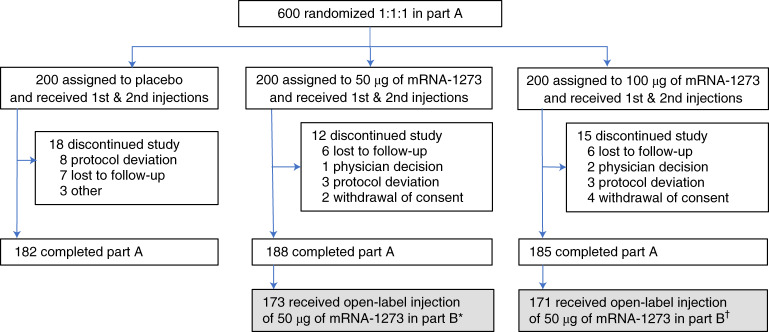
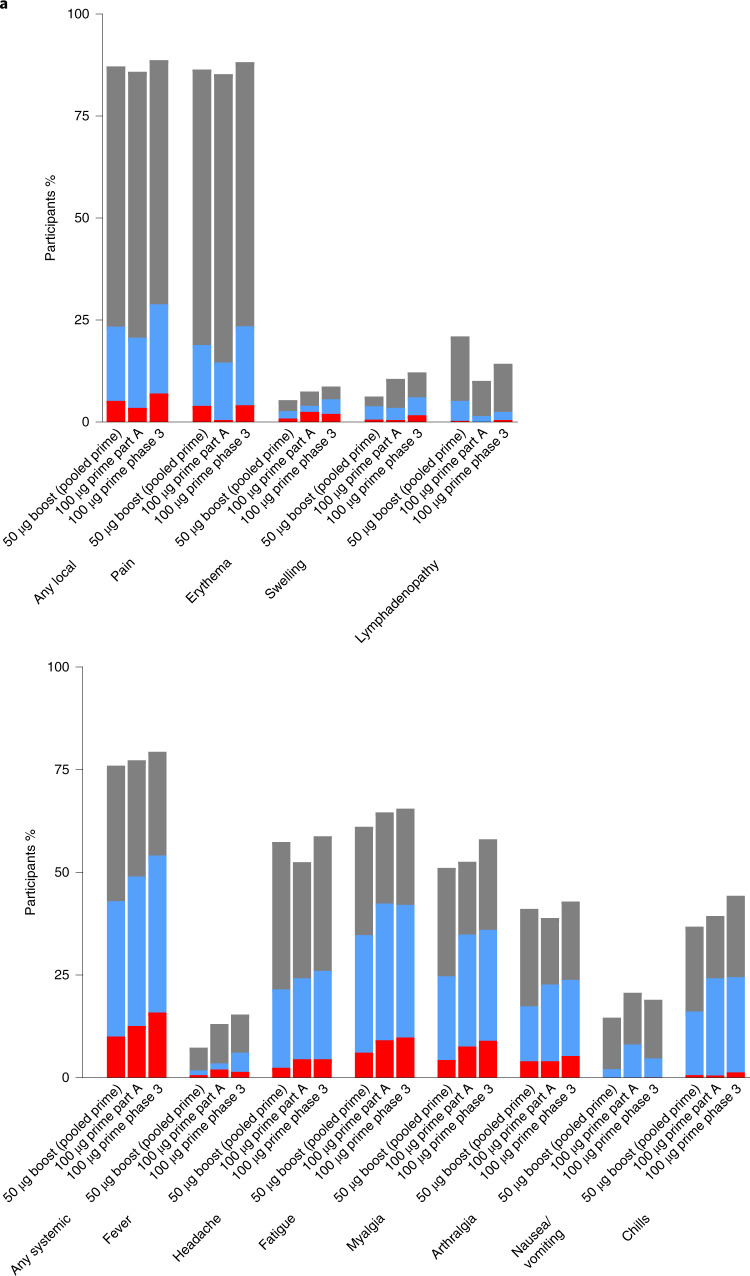
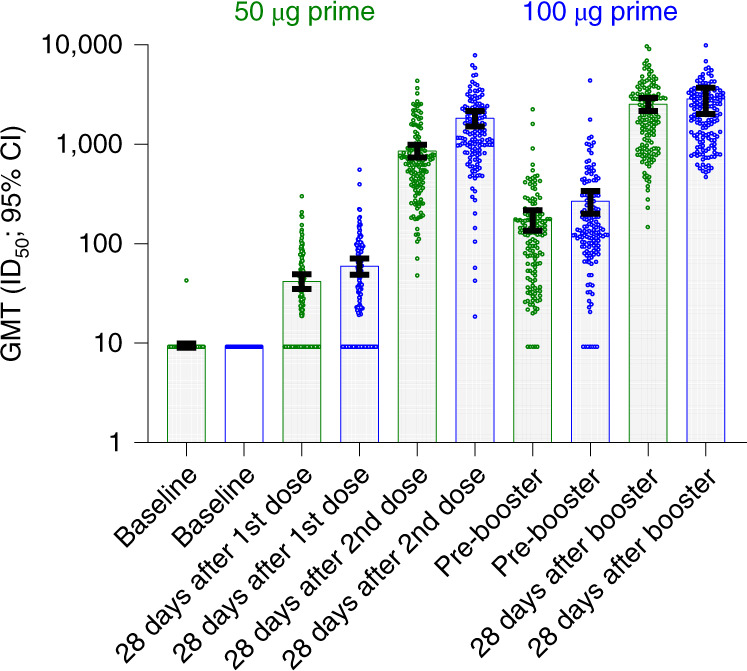
Rising breakthrough infections of coronavirus-2 (SARS-CoV-2) in previously immunized individuals has raised concerns for a booster to combat suspected waning immunity and new variants. Participants immunized 6-8 months earlier with a primary series of two doses of 50 or 100 µg of mRNA-1273 were administered a booster injection of 50 µg of mRNA-1273. Neutralizing antibody levels against wild-type virus and the Delta variant at one month after the booster were 1.7-fold and 2.1-fold higher, respectively, than those 28 days post primary series second injection indicating an immune memory response. The reactogenicity after the booster dose was similar to that after the second dose in the primary series of two doses of mRNA-1273 (50 or 100 µg) with no serious adverse events reported in the one-month follow-up period. These results demonstrate that a booster injection of mRNA-1273 in previously immunized individuals stimulated an immune response greater than the primary vaccination series.
Overview
The claims and statistics of this paper haven’t been checked yet.
Run the check — free, no account needed. It reads the open-access text and checks the sources it cites.
Integrity signals
Registry
Cites
Statistics
Figures
Verification
Claims the paper makes
The claims and statistics of this paper haven’t been checked yet.
Run the check — free, no account needed. It reads the open-access text and checks the sources it cites.
Claims other papers make about this one
Each is checked against this paper’s own text: does it say what the citing paper says it does?
In the citing paper
“with similar immune responses among adolescents aged 12 to 17.410,412–414”
From Advances in COVID-19 mRNA vaccine development (2022) · cites this paper as [414]
In the citing paper
“In a phase III clinical trial involving 30,420 people, participants aged 18 or older were given two doses of 100 μg of mRNA-1273 with a 28-day interval, and vaccine efficacy was 94.1% (Table 5)”
From Advances in COVID-19 mRNA vaccine development (2022) · cites this paper as [414]
Self-check
Percentages, sums and reported differences re-computed from the paper’s own numbers.
The self-check needs the paper’s full text.
Citations
The citation lists haven’t been fetched yet
References 56 · Cited by 105
Research works printed but not linked: 1
- 10.1016/j.vaccine.2021.02.007 · DOI
Metadata
- Authors
- Chu, L., Montefiori, D., Huang, W., Nestorova, B., Chang, Y., Carfi, A., Edwards, D. K., Oestreicher, J., Legault, H., Girard, B., Pajon, R., Miller, J. M., Das, R., Leav, B., & McPhee, R.
- Affiliations
- Benchmark Research (United States) (US)
- Duke University (US)
- Moderna Therapeutics (United States) (US)
- Corresponding author
- McPhee, Roderick
- ORCID
- Venue
- Nature Medicine
- Publisher
- openRxiv
- Published
- 2021-10-01
- Volume
- 28
- Issue
- 5
- Pages
- 1042-1049
- ISSN
- 1078-8956 (ISSN-L)
- PMC
- PMC9117133
- OpenAlex
- W4220654690
- Cited by
- 105
- References
- 56
- Citations by year
- 2026: 8 · 2025: 13 · 2024: 21 · 2023: 27 · 2022: 34 · 2021: 2
- FWCI
- 11.59
- Type
- journal article
- Language
- en
- Open access
- hybrid
- doi.org
- Licence
- cc-by
- Locations
- Nature Medicine (publishedVersion, cc-by)
- medRxiv (acceptedVersion)
- PubMed Central (publishedVersion, cc-by)
- PubMed (publishedVersion)
- Funders
- Moderna
- Biomedical Advanced Research and Development Authority (75A50120C00034)
- Topics
- Health Sciences › Medicine › Infectious Diseases › SARS-CoV-2 and COVID-19 Research
- Health Sciences › Medicine › Infectious Diseases › COVID-19 Clinical Research Studies
- Life Sciences › Immunology and Microbiology › Immunology › Immune responses and vaccinations
- Keywords
- SARS-CoV-2, COVID-19 vaccines, mRNA-1273, booster vaccination, immunogenicity, neutralizing antibodies, Delta variant, antibody waning, seroconversion, anti-spike IgG, vaccine safety, adverse events, memory B cells, non-inferiority, breakthrough infection
- MeSH terms
- Immunogenicity, Vaccine, COVID-19, SARS-CoV-2, COVID-19 Vaccines, 2019-nCoV Vaccine mRNA-1273, Adult, Antibodies, Viral, Humans, Immunity
About these checks
Registry, retraction, Cites and statistics results are computed, not judged, with one exception: a printed reference that no index lists is read once by a model before it counts as a citation error. Claims are extracted by a model and kept only when their quote appears verbatim in the text; each cited source is then checked, with a model’s help, for whether it says what the claim relies on. Those verdicts can be wrong — read the claim’s quote and the cited source before relying on one.
Statistics and arithmetic are recomputed, not judged.
Confidence bands are shown only for fields calibrated on our annotated test set. None is calibrated yet, so no band is shown.
What counts as a claim ›How we measure confidence ›How we check this ›
Are you an author, or do you see a problem with this page? Request a review
How to cite
Cite CoChat for the checks on this page, and the paper for its own findings.
- This page
- CoChat. (2026). Citation check: Immune Memory Response After a Booster Injection of mRNA-1273 for Severe Acute Respiratory Syndrome Coronavirus-2 (SARS-CoV-2). https://app.cochat.ai/papers/10.1101/2021.09.29.21264089
- The paper
- Chu, L., Montefiori, D., Huang, W., Nestorova, B., Chang, Y., Carfi, A., Edwards, D. K., Oestreicher, J., Legault, H., Girard, B., Pajon, R., Miller, J. M., Das, R., Leav, B., & McPhee, R. (2021). Immune Memory Response After a Booster Injection of mRNA-1273 for Severe Acute Respiratory Syndrome Coronavirus-2 (SARS-CoV-2). Nature Medicine. https://doi.org/10.1101/2021.09.29.21264089
