

Triple hormone receptor agonist retatrutide for metabolic dysfunction-associated steatotic liver disease: a randomized phase 2a trial
Open accessThe DOI matches its Crossref record; 48 of the 50 references it cites were found in a registry or an index; 15 of the 54 sources its claims cite were checked for support.
Abstract
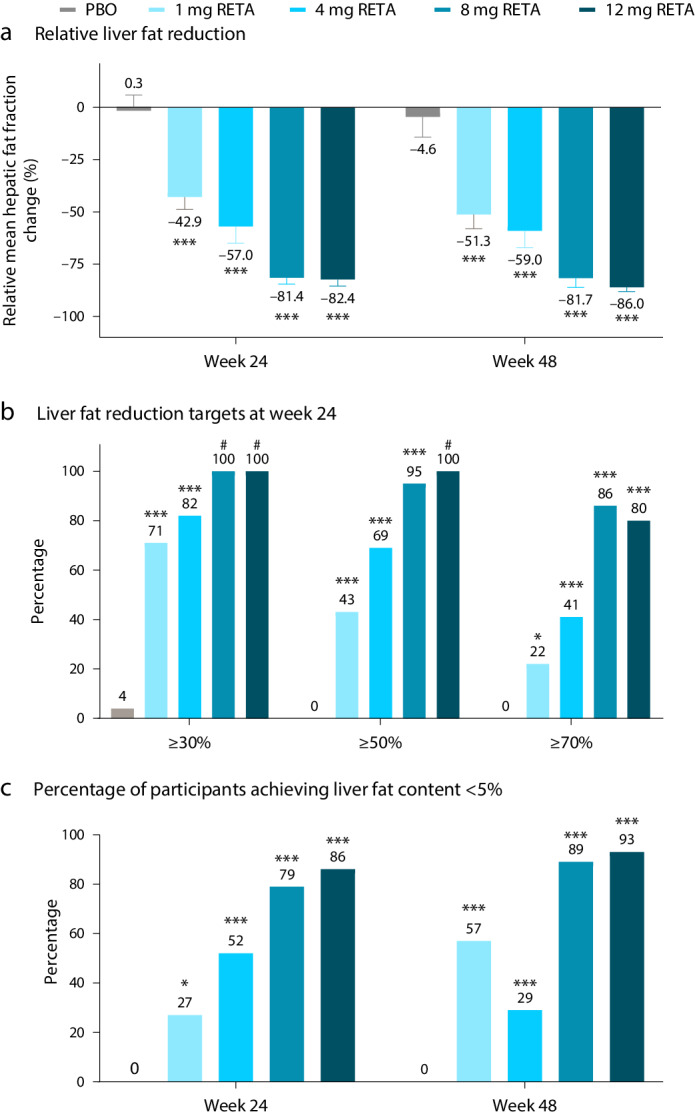
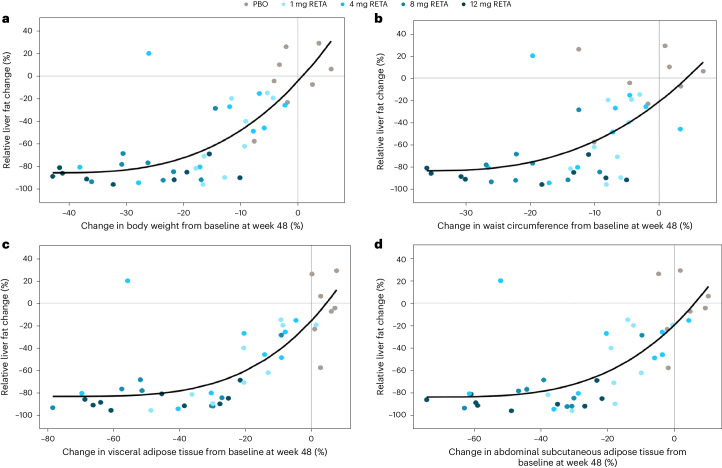
Retatrutide is a novel triple agonist of the glucose-dependent insulinotropic polypeptide, glucagon-like peptide 1 and glucagon receptors. A 48-week phase 2 obesity study demonstrated weight reductions of 22.8% and 24.2% with retatrutide 8 and 12 mg, respectively. The primary objective of this substudy was to assess mean relative change from baseline in liver fat (LF) at 24 weeks in participants from that study with metabolic dysfunction-associated steatotic liver disease and ≥10% of LF. Here, in this randomized, double-blind, placebo-controlled trial, participants (n = 98) were randomly assigned to 48 weeks of once-weekly subcutaneous retatrutide (1, 4, 8 or 12 mg dose) or placebo. The mean relative change from baseline in LF at 24 weeks was -42.9% (1 mg), -57.0% (4 mg), -81.4% (8 mg), -82.4% (12 mg) and +0.3% (placebo) (all P < 0.001 versus placebo). At 24 weeks, normal LF (<5%) was achieved by 27% (1 mg), 52% (4 mg), 79% (8 mg), 86% (12 mg) and 0% (placebo) of participants. LF reductions were significantly related to changes in body weight, abdominal fat and metabolic measures associated with improved insulin sensitivity and lipid metabolism. The ClinicalTrials.gov registration is NCT04881760 .
Overview
CoChat Summary
## TL;DR
This randomized phase 2a substudy found that once-weekly retatrutide substantially reduced liver fat in participants with MASLD over 24 weeks, with the largest effects at 8 mg and 12 mg. The paper reports that more than 85% of participants in the two highest-dose groups achieved liver fat <5% by 24 and 48 weeks.
## Key findings
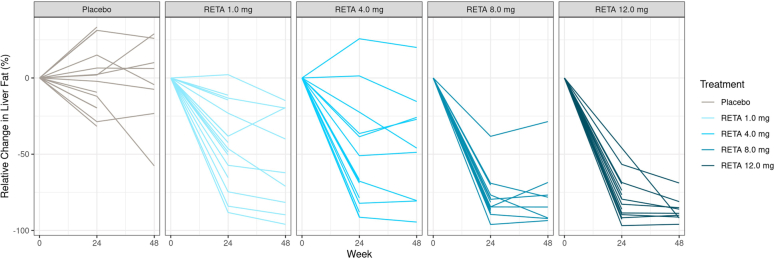
- In 98 randomized participants with MASLD and liver fat ≥10% by MRI-PDFF, mean relative liver fat change at 24 weeks was −42.9% (1 mg), −57.0% (4 mg), −81.4% (8 mg), and −82.4% (12 mg), versus +0.3% with placebo; all were P < 0.001 versus placebo.
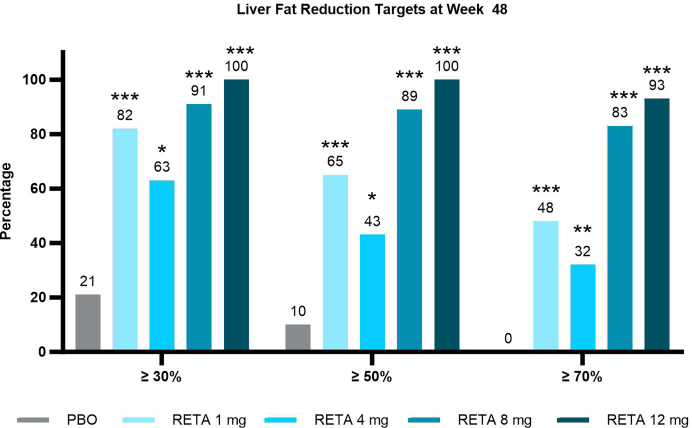
- At 24 weeks, normal liver fat (<5%) was achieved by 27% (1 mg), 52% (4 mg), 79% (8 mg), and 86% (12 mg), versus 0% with placebo.
- At 48 weeks, relative liver fat change remained large: −51.3%, −59.0%, −81.7%, and −86.0% for 1, 4, 8, and 12 mg, versus −4.6% with placebo; all doses were superior to placebo (P < 0.001).
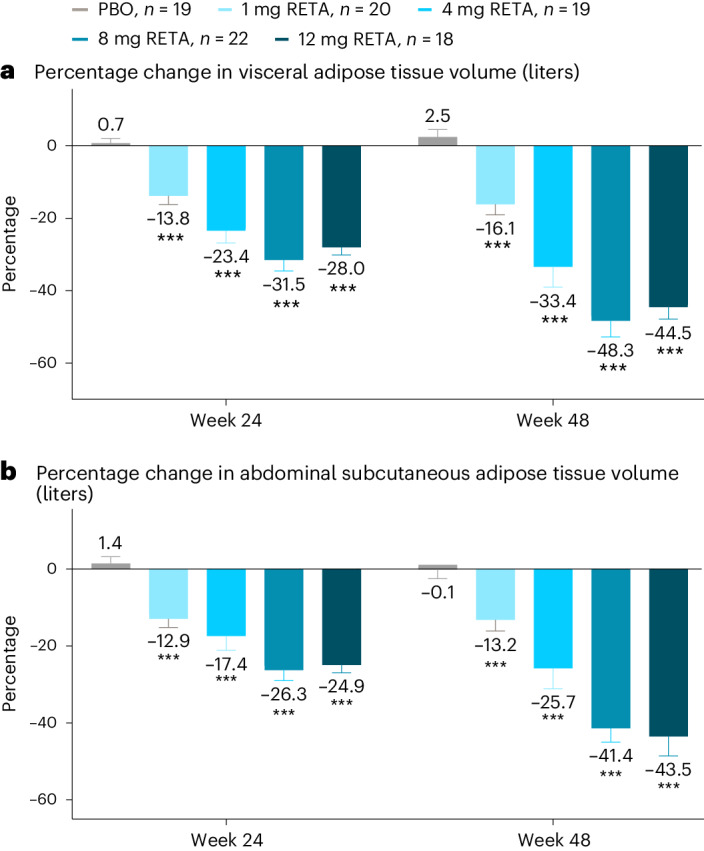
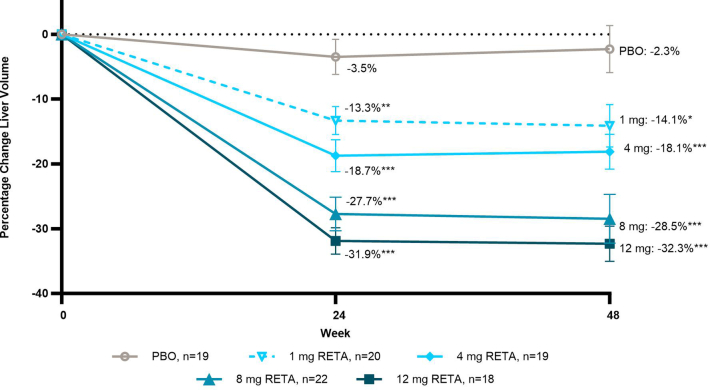
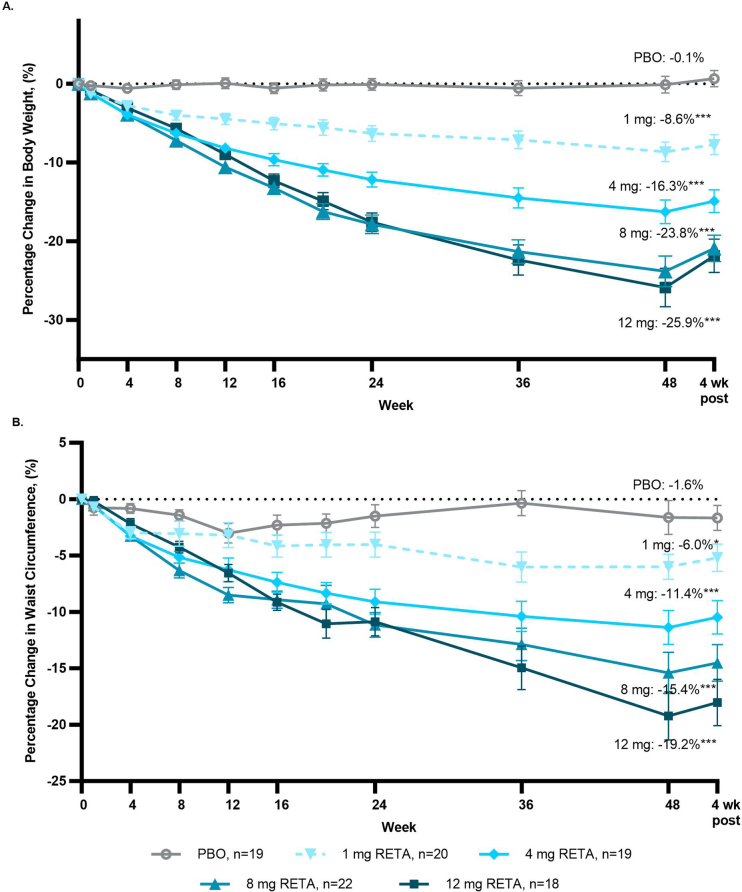
- Retatrutide also reduced body weight and abdominal fat: at 48 weeks, body weight changed by −8.6%, −16.3%, −23.8%, and −25.9% across the 1, 4, 8, and 12 mg doses, and VAT/ASAT were significantly reduced versus placebo.
## Methods
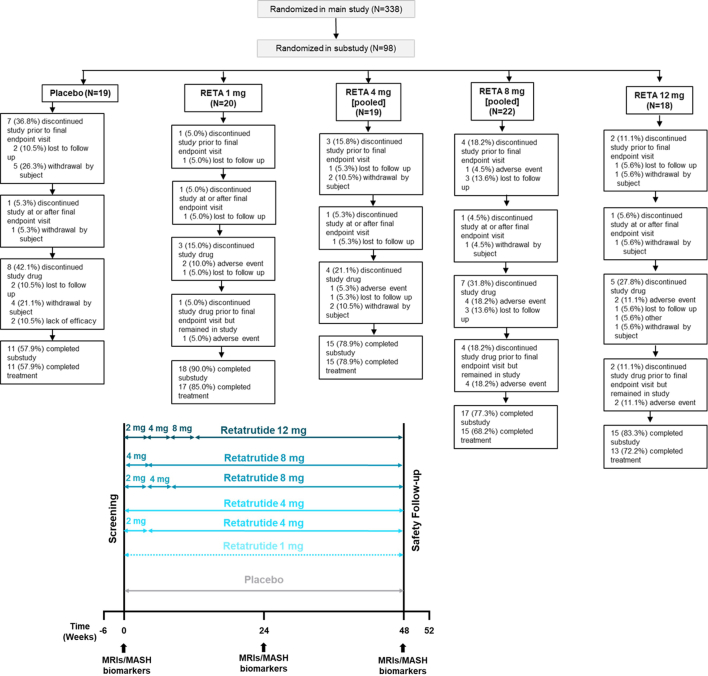
- Randomized, double-blind, placebo-controlled phase 2a substudy of a 48-week multicenter obesity trial; participants received once-weekly subcutaneous retatrutide (1, 4, 8, or 12 mg) or placebo.
- The MASLD substudy included 98 participants from the parent trial who had MASLD and liver fat content ≥10% by MRI-PDFF; the main study randomized 338 participants total.
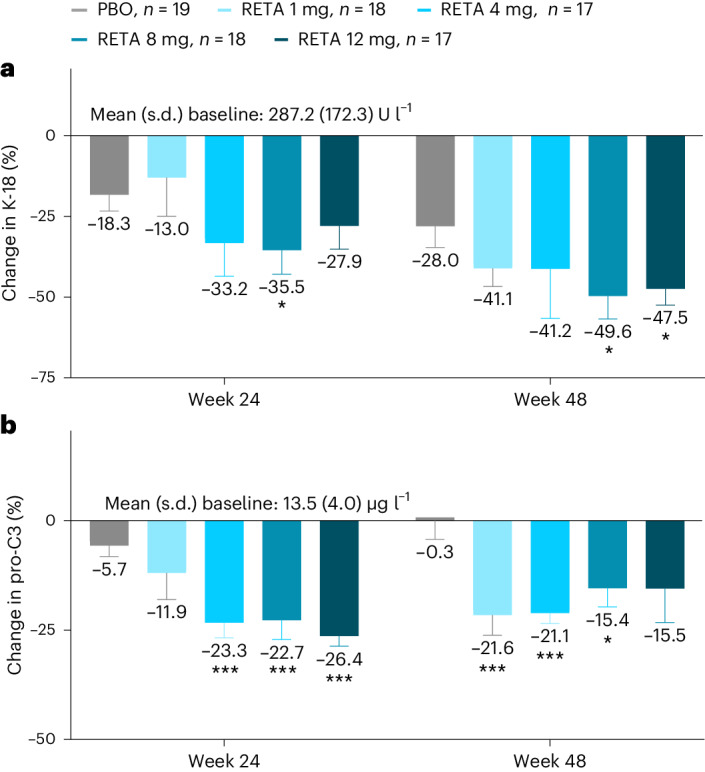
- Primary outcome was relative liver fat change at 24 weeks by MRI-PDFF; secondary/exploratory outcomes included 48-week liver fat, body weight, waist circumference, VAT/ASAT, metabolic biomarkers, and MASH/fibrosis biomarkers, analyzed with mixed models for repeated measures and logistic regression.
## Limitations
- The paper states the substudy had a relatively small sample size, was geographically and racially homogeneous (United States only, majority white), excluded patients with type 2 diabetes, lacked liver histology, lacked enrichment for MASH or significant fibrosis, and had no multiplicity control for many statistical tests.
- The paper states that 48-week MRI data were unavailable for 56.1% of participants, limiting interpretation of the 48-week dose-response for liver fat reduction.
- Evident from the text: this was a substudy within an obesity trial, so the MASLD cohort may not represent broader MASLD populations.
Model-written summary. Check it against the paper before relying on it.
Integrity signals
Registry
Cites
Statistics
Figures
Verification
Claims the paper makes
13 Valid · 2 Not valid · 21 Not checked · 116 Own results and interpretations
Every source the paper cites for this claim was checked and supports it.
In the paper
“Overall, liver fat was normalized (to <5% liver fat) in 32 (64%) of 50 participants after a mean of 22.5 weeks20.”
§ Triple hormone receptor agonist retatrutide for metabolic dysfunction-associated steatotic liver disease: a randomized phase 2a trial > Discussion
What the sources say
- Supportedcites [20] Pooler, B. D. et al. Monitoring fatty liver disease with MRI following bariatric surgery: a prospective, dual-center study. Radiology 290, 682–690 (2019). 30561273 10.1148/radiol.2018181134 PMC6394737 source
The Results report that liver fat normalized to a PDFF below 5% in 32 of 50 participants (64%). The same passage gives a mean estimated time to normalization of 22.5 weeks. (LLM, conf=0.95)
plainn = 50- Asserted: passes — The authors put it forward as true.
- Checkable: passes — It can be checked against evidence.
- Load-bearing: unclear — It is unclear whether the paper’s conclusions depend on it.
- Based: passes — The paper gives a reason why it holds.
- Supported
Every source the paper cites for this claim was checked and supports it.
In the paper
“For weight loss categories of ≤5%, >5% to ≤10%, and >10%, liver fat reduction with efinopegdutide (52.4%, 76.6% and 86.2%, respectively) was greater than with semaglutide (13.4%, 39.6% and 64.2%, respectively)14.”
§ Triple hormone receptor agonist retatrutide for metabolic dysfunction-associated steatotic liver disease: a randomized phase 2a trial > Discussion
What the sources say
- Supportedcites [14] Romero-Gómez, M. et al. A phase 2a active-comparator-controlled study to evaluate the efficacy and safety of efinopegdutide in patients with nonalcoholic fatty liver disease. J. Hepatol. 79, 888–897 (2023). 37355043 10.1016/j.jhep.2023.05.013 sourceExperimental — accuracy not yet measured
The Week 24 results (passage [1]; page not provided) report the same liver-fat reductions for all three weight-loss categories in both treatment groups. The figure caption (passage [7]) identifies these as reductions in liver fat content by weight-loss category. (LLM, conf=0.95)
plainstates an association- Asserted: passes — The authors put it forward as true.
- Checkable: passes — It can be checked against evidence.
- Load-bearing: passes — The paper’s conclusions depend on it.
- Based: passes — The paper gives a reason why it holds.
- Supported
The cited sources support only part of this claim — read each source’s verdict below.
In the paper
“This finding is consistent with a ‘floor effect’ for hepatic fat, which is unlikely to be reduced below the median of 2.1% observed in the large UK Biobank study27.”
§ Triple hormone receptor agonist retatrutide for metabolic dysfunction-associated steatotic liver disease: a randomized phase 2a trial > Discussion
What the sources say
- Partly supportedcites [27] Wilman, H. R. et al. Characterisation of liver fat in the UK Biobank cohort. PLoS ONE 12, e0172921 (2017). 28241076 10.1371/journal.pone.0172921 PMC5328634 sourceExperimental — accuracy not yet measured
The Results report a median hepatic fat fraction of 2.11% in the UK Biobank cohort, supporting the cited figure. They do not establish a floor effect or that hepatic fat is unlikely to be reduced below 2.1%; Table 4 reports values below that level, including a median of 1.32% in the lower-BMI, non-diabetic subset. (LLM, conf=0.89)
hedged- Asserted: passes — The authors put it forward as true.
- Checkable: passes — It can be checked against evidence.
- Load-bearing: passes — The paper’s conclusions depend on it.
- Based: passes — The paper gives a reason why it holds.
- Partly supported
Every source the paper cites for this claim was checked and supports it.
In the paper
“In a recent 24-week study, the dual GLP-1/GCG agonist, efinopegdutide, demonstrated greater liver fat lowering efficacy than semaglutide for the same degree of weight loss.”
§ Triple hormone receptor agonist retatrutide for metabolic dysfunction-associated steatotic liver disease: a randomized phase 2a trial > Discussion
What the sources say
- Supportedcites [14] Romero-Gómez, M. et al. A phase 2a active-comparator-controlled study to evaluate the efficacy and safety of efinopegdutide in patients with nonalcoholic fatty liver disease. J. Hepatol. 79, 888–897 (2023). 37355043 10.1016/j.jhep.2023.05.013 source
The Discussion reports a significantly larger reduction in liver fat content with efinopegdutide than with semaglutide despite similar reductions in body weight. The Week 24 results also show greater liver-fat reductions with efinopegdutide within each weight-loss category. (LLM, conf=0.94)
boostedstates a cause- Asserted: passes — The authors put it forward as true.
- Checkable: passes — It can be checked against evidence.
- Load-bearing: passes — The paper’s conclusions depend on it.
- Based: passes — The paper gives a reason why it holds.
- Supported
Every source the paper cites for this claim was checked and supports it.
In the paper
“consistent with progressive adipose tissue reductions and improvements in insulin sensitivity30.”
§ Triple hormone receptor agonist retatrutide for metabolic dysfunction-associated steatotic liver disease: a randomized phase 2a trial > Discussion
What the sources say
- Supportedcites [30] Ye, R. & Scherer, P. E. Adiponectin, driver or passenger on the road to insulin sensitivity? Mol. Metab. 2, 133–141 (2013). 24049728 10.1016/j.molmet.2013.04.001 PMC3773837 source
The Introduction (page not provided) reports that adiponectin is reduced in obesity and that higher adiponectin is positively associated with insulin sensitivity. It also discusses a study in which reduced adipose tissue mass could partly mediate the relationship between increased adiponectin and insulin sensitivity. These passages support the citing sentence’s cautious description of the changes as consistent with one another. (LLM, conf=0.86)
plainstates an association- Asserted: passes — The authors put it forward as true.
- Checkable: passes — It can be checked against evidence.
- Load-bearing: unclear — It is unclear whether the paper’s conclusions depend on it.
- Based: passes — The paper gives a reason why it holds.
- Supported
76 more claims · 2 with their cited sources checked
Create a free account to see all 152 claims and to verify the 8 references still open.
- Probably not a substantial claim. 32
- It may state two separate claims as one. 53
Claims other papers make about this one
Each is checked against this paper’s own text: does it say what the citing paper says it does?
The source backs part of the claim, not all of it — or backs it for a different population, condition or comparison.
In the citing paper
“Retatrutide 1-12 mg/week over 48 weeks Up to 25•9% (SEM 2•4) NA Reduction in hepatic fat fraction by <86•0%; no histology available to assess fibrosis Sanyal et al (2024) 140”
From GLP-1 receptor agonists and next-generation incretin-based medications: metabolic, cardiovascular, and renal benefits (2026) · cites this paper as [140]
Experimental — accuracy not yet measuredThe source backs part of the claim, not all of it — or backs it for a different population, condition or comparison.
In the citing paper
“At 24 weeks, normal liver fat (<5%) was achieved by 27% (1 mg), 52% (4 mg), 79% (8 mg), 86% (12 mg), and 0% (placebo) of participants.”
From Retatrutide—A Game Changer in Obesity Pharmacotherapy (2025) · cites this paper as [44]
Experimental — accuracy not yet measuredThe source backs part of the claim, not all of it — or backs it for a different population, condition or comparison.
In the citing paper
“At 24 weeks, healthy liver fat levels (< 5%) were achieved by 86% of participants on retatrutide 12 mg and 0% in the placebo group.”
From Triple Agonism Based Therapies for Obesity (2025) · cites this paper as [47]
Experimental — accuracy not yet measuredThe source backs part of the claim, not all of it — or backs it for a different population, condition or comparison.
In the citing paper
“Phase II trials for tirzepatide and survodutide, a GLP-1/glucagon receptor co-agonist, have also shown positive outcomes in people living with MASH and obesity, demonstrating reduction of inflammation without worsening of fibrosis (4, 69).”
From Antiinflammatory actions of glucagon-like peptide-1–based therapies beyond metabolic benefits (2025) · cites this paper as [4]
Experimental — accuracy not yet measuredThe source backs part of the claim, not all of it — or backs it for a different population, condition or comparison.
In the citing paper
“Glucagon-like peptide-1 receptor agonist (GLP1RA) alone [129] or GLP1RA-based combination agents, including dual (e.g., tirzepatide and survodutide) and triple (e.g., retatrutide) agonists, now demonstrate histological improvements in MASH and fibrosis with weight loss approaching that of bariatric surgery [3,130-133].”
From Hepatic Insulin Resistance and Steatosis in Metabolic Dysfunction-Associated Steatotic Liver Disease: New Insights into Mechanisms and Clinical Implications (2025) · cites this paper as [133]
Experimental — accuracy not yet measured
17 more claims about this paper
Create a free account to see every claim other papers make about this one.
Citations
Cites
XGBoost: A Scalable Tree Boosting System
Chen, T., & Guestrin, C. (2016) · Proceedings of the 22nd ACM SIGKDD International Conference on Knowledge Discovery and Data Mining · doi:10.1145/2939672.2939785 · Cited by 54,569
Younossi, Z. M., Koenig, A. B., Abdelatif, D., Fazel, Y., Henry, L., & Wymer, M. (2016) · Hepatology · doi:10.1002/hep.28431 · Cited by 10,781
Once-Weekly Semaglutide in Adults with Overweight or Obesity
Wilding, J. P. H., Batterham, R. L., Calanna, S., Davies, M., Van Gaal, L. F., Lingvay, I., McGowan, B. M., Rosenstock, J., Tran, M. T. D., Wadden, T. A., et al. (2021) · New England Journal of Medicine · doi:10.1056/nejmoa2032183 · Cited by 5,205
Danial, N. N., & Korsmeyer, S. J. (2004) · Cell · doi:10.1016/s0092-8674(04)00046-7 · Cited by 4,651
Mechanisms of NAFLD development and therapeutic strategies
Friedman, S. L., Neuschwander-Tetri, B. A., Rinella, M., & Sanyal, A. J. (2018) · Nature Medicine · doi:10.1038/s41591-018-0104-9 · Cited by 4,354
Self-citationTirzepatide Once Weekly for the Treatment of Obesity
Jastreboff, A. M., Aronne, L. J., Ahmad, N. N., Wharton, S., Connery, L., Alves, B., Kiyosue, A., Zhang, S., Liu, B., Bunck, M. C., et al. (2022) · New England Journal of Medicine · doi:10.1056/nejmoa2206038 · Cited by 3,838
Younossi, Z. M., Golabi, P., Paik, J. M., Henry, A., Van Dongen, C., & Henry, L. (2023) · Hepatology · doi:10.1097/hep.0000000000000004 · Cited by 3,383 · cited 1×
“Nonalcoholic fatty liver disease, now termed metabolic dysfunction-associated steatotic liver disease (MASLD), is one of the most common chronic liver diseases in the world 1,2 .”
BackgroundTirzepatide versus Semaglutide Once Weekly in Patients with Type 2 Diabetes
Frías, J. P., Davies, M. J., Rosenstock, J., Pérez Manghi, F. C., Fernández Landó, L., Bergman, B. K., Liu, B., Cui, X., & Brown, K. (2021) · New England Journal of Medicine · doi:10.1056/nejmoa2107519 · Cited by 2,096
Self-citationA Placebo-controlled trial of subcutaneous semaglutide in nonalcoholic steatohepatitis
Newsome, P. N., Buchholtz, K., Cusi, K., Linder, M., Okanoue, T., Ratziu, V., Sanyal, A. J., Sejling, A.-S., & Harrison, S. A. (2021) · New England Journal of Medicine · doi:10.1056/nejmoa2028395 · Cited by 2,039 · cited 1×
“Semaglutide, a GLP-1 receptor mono-agonist, is in phase 3 development for noncirrhotic MASH, having demonstrated histological improvements in a phase 2 MASH trial 6 .”
BackgroundSelf-citationDavies, M., Færch, L., Jeppesen, O. K., Pakseresht, A., Pedersen, S. D., Perreault, L., Rosenstock, J., Shimomura, I., Viljoen, A., Wadden, T. A., et al. (2021) · The Lancet · doi:10.1016/s0140-6736(21)00213-0 · Cited by 1,419 · cited 1×
“These safety findings are similar to those reported for therapies based on GLP-1 or GIP/GLP-1 agonism for the treatment of type 2 diabetes or obesity 41–45 .”
Result
Cited by
Stefan, N., Yki-Järvinen, H., & Neuschwander-Tetri, B. A. (2025) · The Lancet Diabetes & Endocrinology · doi:10.1016/s2213-8587(24)00318-8 · Cited by 392
Cusi, K., Abdelmalek, M. F., Apovian, C. M., Balapattabi, K., Bannuru, R. R., Barb, D., Bardsley, J. K., Beverly, E. A., Corbin, K. D., ElSayed, N. A., et al. (2025) · Diabetes Care · doi:10.2337/dci24-0094 · Cited by 332
Self-citationMetabolic Dysfunction–Associated Steatotic Liver Disease
Targher, G., Valenti, L., & Byrne, C. D. (2025) · New England Journal of Medicine · doi:10.1056/nejmra2412865 · Cited by 325
Metabolic dysfunction-associated steatotic liver disease in adults
Huang, D. Q., Wong, V. W. S., Rinella, M. E., Boursier, J., Lazarus, J. V., Yki-Järvinen, H., & Loomba, R. (2025) · Nature Reviews Disease Primers · doi:10.1038/s41572-025-00599-1 · Cited by 293
“A phase IIa trial of retatrutide, a triple agonist of the GIP, GLP-1 and glucagon receptors, demonstrated that ~20% weight loss was associated with a near-maximal reduction in liver fat, with a plateau beyond 20% weight loss 234 .”
GLP-1-based therapies for diabetes, obesity and beyond
Drucker, D. J. (2025) · Nature Reviews Drug Discovery · doi:10.1038/s41573-025-01183-8 · Cited by 236
Alfaris, N., Waldrop, S., Johnson, V., Boaventura, B., Kendrick, K., & Stanford, F. C. (2024) · EClinicalMedicine · doi:10.1016/j.eclinm.2024.102782 · Cited by 224
Metabolic Dysfunction–Associated Steatotic Liver Disease in Adults: A Review
Tilg, H., Petta, S., Stefan, N., & Targher, G. (2026) · JAMA · doi:10.1001/jama.2025.19615 · Cited by 221
Stefanakis, K., Kokkorakis, M., & Mantzoros, C. S. (2024) · Metabolism · doi:10.1016/j.metabol.2024.156057 · Cited by 142
Lipid metabolism in MASLD and MASH: From mechanism to the clinic
Carli, F., Della Pepa, G., Sabatini, S., Vidal Puig, A., & Gastaldelli, A. (2024) · JHEP Reports · doi:10.1016/j.jhepr.2024.101185 · Cited by 147
“77 Of these drugs, only tirzepatide is currently approved for the treatment of diabetes and obesity.”
Nauck, M. A., Tuttle, K. R., Tschöp, M. H., & Blüher, M. (2026) · The Lancet · doi:10.1016/s0140-6736(25)02105-1 · Cited by 123
Lombardi, L., Genio, V. D., Alberício, F., & Williams, D. R. (2025) · Chemical Reviews · doi:10.1021/acs.chemrev.4c00989 · Cited by 147
Antiinflammatory actions of glucagon-like peptide-1–based therapies beyond metabolic benefits
Wong, C. K., & Drucker, D. J. (2025) · Journal of Clinical Investigation · doi:10.1172/jci194751 · Cited by 112
“Phase II trials for tirzepatide and survodutide, a GLP-1/ glucagon receptor co-agonist, have also shown positive outcomes in people living with MASH and obesity, demonstrating reduction of inflammation without worsening of fibrosis (4, 69).”
Trends in Hepatocellular Carcinoma Mortality Rates in the US and Projections Through 2040
Qiu, S., Cai, J., Yang, Z., He, X., Xing, Z., Zu, J., Xie, E., Henry, L. L., Chong, C. R., John, E. M., et al. (2024) · JAMA Network Open · doi:10.1001/jamanetworkopen.2024.45525 · Cited by 116
Byrne, C. D., Armandi, A., Pellegrinelli, V., Vidal‐Puig, A., & Bugianesi, E. (2025) · Nature Reviews Gastroenterology & Hepatology · doi:10.1038/s41575-025-01045-z · Cited by 136
“…phase IIa RCT, in which 98 patients with MASH were randomly assigned to retatrutide once weekly (1, 4, 8 or 12 mg dose) or placebo, the mean relative change from baseline in liver fat at 24 weeks was up to −82.4% (in the retatrutide 12 mg) versus +0.3% (placebo) (all P 0.001 versus placebo) 140 .”
InfluentialGlucose-dependent insulinotropic polypeptide (GIP)
Müller, T. D., Adriaenssens, A. E., Ahrén, B., Blüher, M., Birkenfeld, A. L., Campbell, J. E., Coghlan, M. P., D’Alessio, D. D., Deacon, C. F., DelPrato, S., et al. (2025) · Molecular Metabolism · doi:10.1016/j.molmet.2025.102118 · Cited by 114
Truong, X. T., & Lee, D. H. (2025) · Diabetes & Metabolism Journal · doi:10.4093/dmj.2025.0644 · Cited by 84
“…receptor agonist (GLP1RA) alone [129] or GLP1RA-based combination agents, including dual (e.g., tirzepatide and survodu-tide) and triple (e.g., retatrutide) agonists, now demonstrate histological improvements in MASH and fibrosis with weight loss approaching that of bariatric surgery [3,130-133].”
Therapeutic horizons in metabolic dysfunction–associated steatohepatitis
Newsome, P. N., & Loomba, R. (2025) · Journal of Clinical Investigation · doi:10.1172/jci186425 · Cited by 90
“Consequently, there have been concerted efforts to better understand the natural history of MASLD and MASH, the various phenotypes that exist within populations with these diagnoses, and the development of therapeutic approaches (3).”
InfluentialRosen, C. J., & Ingelfinger, J. R. (2026) · New England Journal of Medicine · doi:10.1056/nejmra2500106 · Cited by 140
Mejía-Guzmán, J. E., Belmont-Hernández, R. A., Chávez-Tapia, N. C., Uribe, M., & Nuño‐Lámbarri, N. (2025) · International Journal of Molecular Sciences · doi:10.3390/ijms26072959 · Cited by 97
“Similarly, efocipegtrutide has demonstrated reductions in hepatic steatosis, though it is still in phase 2 trials for the treatment of MASH [163,165].”
Lin, R., Sun, Q., Xin, X., Ng, C. H., Valenti, L. V. C., Hu, Y., Zheng, M., & Feng, Q. (2024) · Metabolism · doi:10.1016/j.metabol.2024.156043 · Cited by 73
Mutruc, V., Bologa, C., Șorodoc, V., Ceasovschih, A., Morărașu, B. C., Șorodoc, L., Catar, O., & Lionte, C. (2025) · Journal of Clinical Medicine · doi:10.3390/jcm14082833 · Cited by 89
Díaz, L. A., Arab, J. P., Idalsoaga, F. J., Perelli, J., Vega, J. A., Dirchwolf, M., Carreño, J., Samith, B., Valério, C. M., Moreira, R. O., et al. (2025) · Annals of Hepatology · doi:10.1016/j.aohep.2025.101903 · Cited by 87
“Signi fi cant reductions in LFC and markers of hepatic in fl ammation in MASLD Retatrutide 1 − 12 mg SC weekly [146] Triple agonists of the GIP, GLP-1, and glucagon receptors MASLD and obesity LFC reductions were signi fi cantly related to changes inbody weight, abdominal fat, and metabolic measures…”
Diabetes as a risk factor for MASH progression
Gancheva, S., Roden, M., & Castéra, L. (2024) · Diabetes Research and Clinical Practice · doi:10.1016/j.diabres.2024.111846 · Cited by 65
Targher, G., Mantovani, A., Byrne, C. D., & Tilg, H. (2025) · Gut · doi:10.1136/gutjnl-2024-334023 · Cited by 48
“One phase 3 placebo-controlled RCT, that is, the ESSENCE trial (NCT04822181), in approximately 1200 individuals with biopsy-proven MASH and liver fibrosis is ongoing to investigate the effects of subcutaneous semaglutide (at a dose of 2.4 mg weekly) on liver histological endpoints (part 1: over 72 weeks) and liver-rel…”
InfluentialZafer, M., Tavaglione, F., Romero‐Gómez, M., & Loomba, R. (2025) · Alimentary Pharmacology & Therapeutics · doi:10.1111/apt.70196 · Cited by 47
Coskun, T., Wu, Q., Schloot, N. C., Haupt, A., Milicevic, Z., Khouli, C., & Harris, C. (2025) · The Lancet Diabetes & Endocrinology · doi:10.1016/s2213-8587(25)00092-0 · Cited by 57
Self-citationSattar, N. A., & Lee, M. M. Y. (2025) · The Lancet Diabetes & Endocrinology · doi:10.1016/s2213-8587(24)00363-2 · Cited by 58
Wang, Y., Zhou, Y., Wang, Z., Ni, Y., Prud’homme, G. J., & WANG, Q. (2025) · The Journal of Clinical Endocrinology & Metabolism · doi:10.1210/clinem/dgaf336 · Cited by 65
Antifibrotic therapies for metabolic dysfunction-associated steatotic liver disease
Schwabe, R. F., Tacke, F., Sugimoto, A., & Friedman, S. L. (2025) · JHEP Reports · doi:10.1016/j.jhepr.2025.101421 · Cited by 70
“228 Besides their bene fi cial effect on liver fat, injury and fi brosis, single, dual and triple GLP-1/GIP receptor agonists improve cardiovascular mortality, a key determinant of outcomes in patients with MASLD, with or without type 2 diabetes.”
O'Keefe, J. H., Franco, W. G., & O'Keefe, E. L. (2025) · Progress in Cardiovascular Diseases · doi:10.1016/j.pcad.2024.12.010 · Cited by 42
Madsbad, S., & Holst, J. J. (2025) · Expert Opinion on Investigational Drugs · doi:10.1080/13543784.2025.2472408 · Cited by 43
“In a sub-study of this trial, 98 participants, who met the inclusion criterion of 10% or greater liver fat content by magnetic resonance imaging were included [124].”
Tantu, M. T., Farhana, F. Z., Haque, F., Koo, K. M., Qiao, L., Ross, A. G., & Shiddiky, M. J. A. (2025) · npj gut and liver. · doi:10.1038/s44355-025-00030-2 · Cited by 57
Westermeier, F., & Fisman, E. Z. (2025) · Cardiovascular Diabetology · doi:10.1186/s12933-025-02608-9 · Cited by 46
Current and emerging therapeutic landscape for metabolic dysfunction-associated steatohepatitis
Li, W., Alazawi, W., & Loomba, R. S. (2025) · The Lancet. Gastroenterology & hepatology · doi:10.1016/s2468-1253(25)00260-2 · Cited by 57
Gunnarsson, S., Vito, O., & Unwin, R. J. (2025) · American Journal of Physiology-Cell Physiology · doi:10.1152/ajpcell.00499.2025 · Cited by 52
Type 2 Diabetes and the Multifaceted Gut-X Axes
Guo, H., Pan, L.-T., Wu, Q., Wang, L., Huang, Z., Wang, J., Wang, L., Fang, X., Dong, S., Zhu, Y., et al. (2025) · Nutrients · doi:10.3390/nu17162708 · Cited by 44
Self-citationMetALD : New Perspectives on an Old Overlooked Disease
Ayares, G., Díaz, L. A., Idalsoaga, F. J., Alkhouri, N., Noureddin, M., Bataller, R. A., Loomba, R. S., Arab, J. P., & Arrese, M. A. (2025) · Liver International · doi:10.1111/liv.70017 · Cited by 40
Associated factors and principal pathophysiological mechanisms of type 2 diabetes mellitus
Wang, L., Li, L., Liu, J., Sheng, C., Yang, M., Hu, Z., & Yue, R. (2025) · Frontiers in Endocrinology · doi:10.3389/fendo.2025.1499565 · Cited by 66
Bailey, C. J., Flatt, P. R., & Conlon, J. M. (2025) · Peptides · doi:10.1016/j.peptides.2025.171380 · Cited by 42
“Molecules that combine GCGR agonism together with a GLP-1RA are gaining traction as a potential new approach to the treatment of steatotic liver disease, eg pemvidutide, mazdutide, efinopeglutide, AZD9550 and the triple agonist retatrutide [85].”
Retatrutide—A Game Changer in Obesity Pharmacotherapy
Katsi, V., Koutsopoulos, G., Fragoulis, C., Dimitriadis, K., & Tsioufis, K. (2025) · Biomolecules · doi:10.3390/biom15060796 · Cited by 29
“Another phase II trial by Sanyal et al. [44] attempted to show retatrutide’s effects on liver steatosis.”
Resmetirom: The First Disease‐Specific Treatment for MASH
Mousa, A. M., Mahmoud, M., & AlShuraiaan, G. M. (2025) · International Journal of Endocrinology · doi:10.1155/ije/6430023 · Cited by 46
“MRI-PDFF measurements confrmed a 38% decrease in hepatic fat content, reinforcing the potential benefts of polyagonists for metabolic and liver health [17].”
The power of three: Retatrutide’s role in modern obesity and diabetes therapy
Abdul-Rahman, T., Roy, P., Ahmed, F. K., Mueller-Gomez, J. L., Sarkar, S., Garg, N., Femi-Lawal, V. O., Wireko, A. A., Thaalibi, H. I., Hashmi, M. U., et al. (2024) · European Journal of Pharmacology · doi:10.1016/j.ejphar.2024.177095 · Cited by 27
Clinical trial design, biomarkers and end points in metabolic and alcohol-related liver disease
Díaz, L. A., Thiele, M. S., Louvet, A., Lee, B. P., Ajmera, V. H., Tavaglione, F., Hsu, C. L., Huang, D. Q., Pose, E., Bataller, R. A., et al. (2025) · Nature Reviews Gastroenterology & Hepatology · doi:10.1038/s41575-025-01120-5 · Cited by 38
“…tirzepatide ( n = 190, NCT04166773) 165 , survodutide ( n = 293, NCT04771273) 166 , pemvidutide ( n = 94, NCT05006885) 167 and retatutride ( n = 98, NCT04881760) 168 , have shown promising results in resolving MASH and reducing body weight, and are attractive therapeutic candidates in MetALD.”
Self-citationPharmacotherapy for metabolic dysfunction-associated steatohepatitis: heart–liver co-management
Zhou, X., Lazarus, J. V., Krittanawong, C., Targher, G., Byrne, C. D., Younossi, Z. M., Tacke, F., Chen, Q., Mantzoros, C. S., Tilg, H., et al. (2026) · The Lancet. Gastroenterology & hepatology · doi:10.1016/s2468-1253(25)00323-1 · Cited by 50
MASLD, MASH, and the CKM Spectrum
Zannad, F. M., Khan, M. S., Bansal, N., Böhm, M., Francque, S., Girerd, N., Januzzi, J. L., Miller, V., Piché, M., Ratziu, V., et al. (2026) · Journal of the American College of Cardiology · doi:10.1016/j.jacc.2025.12.015 · Cited by 40
Self-citationCardiovascular, kidney, and metabolic health: an actionable vision for heart failure prevention
Ostrominski, J. W., CHENG, A. Y. Y., Nelson, A. J., Neuen, B. L., Sattar, N. A., Tuttle, K. R., & Vaduganathan, M. (2025) · The Lancet · doi:10.1016/s0140-6736(25)01384-4 · Cited by 35
Konings, L. A. M., Matute, L. M., Boeren, A. M. P., van de Luitgaarden, I. A. T., Dirksmeier-Harinck, F., de Knegt, R. J., Tushuizen, M. E., Grobbee, D. E., Holleboom, A. G., & Cabezas, M. C. (2025) · European Journal of Clinical Investigation · doi:10.1111/eci.70003 · Cited by 34
Rinella, M. E., & Sookoian, S. C. (2026) · Nature Reviews Gastroenterology & Hepatology · doi:10.1038/s41575-026-01187-8 · Cited by 34
“…agonists, resulting in larger reductions in liver fat, have the potential for enhanced histological benefit, although it remains to be proven if further weight losses beyond 10–15% will translate into superior efficacy and whether this would overcome the potential for reduced tolerability 15 .”
Dash, S. (2024) · Diabetes, Obesity and Metabolism · doi:10.1111/dom.15829 · Cited by 24
Davies, M. J., Lim, S. K., Slater, T., Goldney, J., Philis‐Tsimikas, A., Franco, D. R., Lamptey, R., Yates, T. E., Tankova, T. I., & Lingvay, I. (2026) · Nature Reviews Disease Primers · doi:10.1038/s41572-026-00687-w · Cited by 64
Zhou, X., Fan, Q.-Y., Byrne, C. D., Targher, G., Muthiah, M. D., Huang, D. Q., Chen, Q., Noureddin, M., Li, W., Ratziu, V., et al. (2025) · Gut · doi:10.1136/gutjnl-2025-337431 · Cited by 44
“39 After 24 weeks of weekly dosing (1–12 mg), retatrutide reduced liver fat dose-dependently, with the highest dose achieving up to 82% relative liver fat reduction.”
Self-citationA call for doubling the diagnostic rate of at-risk metabolic dysfunction-associated steatohepatitis
Lazarus, J. V., Brennan, P., Mark, H. E., Alazawi, W., Allen, A. M., Byrne, C. D., Castéra, L., Caussy, C., Cusi, K. J., Grajower, M. M., et al. (2025) · The Lancet Regional Health - Europe · doi:10.1016/j.lanepe.2025.101320 · Cited by 34
“…and/or T2D, including peroxisome proliferator-activated receptor agonists, 34 glucagon-like peptide-1 receptor (GLP-1R) agonists, 35 dual glucose-dependent insulinotropic poly-peptide-GLP-1R agonists, 36 and triple agonists, 37,38 though none are currently approved as MASH speci fi c treatments.”
Zhao, Y., Bo, Y., Zu, J., Xing, Z., Yang, Z., Zhang, Y., Deng, Y., Liu, Y., Zhang, L., Yuan, X., et al. (2025) · Liver International · doi:10.1111/liv.70155 · Cited by 37
“The recent approval of the first medication for MASLD with fibrosis stages 1–3, along with anticipated future agents, may contribute to a decline in the incidence and death of MASLD-related cirrhosis [28, 29].”
Triple Agonism Based Therapies for Obesity
Goldney, J., Hamza, M., Surti, F., Davies, M. J., & Papamargaritis, D. (2025) · Current Cardiovascular Risk Reports · doi:10.1007/s12170-025-00770-z · Cited by 22
“There was a dose-response reduction in liver fat from baseline at 24 weeks with increasing retatrutide doses: -82.4% with 12 mg retatrutide vs. + 0.3% with placebo [47].”
InfluentialAbdrabou Abouelmagd, A., Abdelrehim, A. M., Bashir, M. N., Abdelsalam, F., Marey, A., Tanas, Y., Abuklish, D. M., & Belal, M. M. (2025) · Baylor University Medical Center Proceedings · doi:10.1080/08998280.2025.2456441 · Cited by 25
“It 14 – 16 The approval process for retatrutide by the US Food and Drug Administration is expected to be lengthy, taking several years.”
Langer, H. T., Gilmore, N. K., Hayden, C. M. T., Roux, J., Bariohay, B., Rouquet, T., Awada, M., Marcotorchino, J., Bournot, L., Nunn, E., et al. (2026) · Cell Reports Medicine · doi:10.1016/j.xcrm.2026.102665 · Cited by 21
“Since we found a strong decrease in liver mass in our pre-clinical cohorts, and clinical trials have shown a robust decrease in liver fat 25,45,46 and glycogen 47 with incretin-based therapies that cannot be accurately captured via DXA, this could be another reason why some clinical trials have…”
Bile acid signaling in MASLD: From pathogenesis to therapeutic applications
Simbrunner, B., Paternostro, R., Reiberger, T., & Trauner, M. (2025) · Hepatology · doi:10.1097/hep.0000000000001539 · Cited by 33
Steatotic liver disease and cancer: from pathogenesis to therapeutic targets
Yang, Z., Liu, Z., Liu, W., & Dong, X. C. (2025) · eGastroenterology · doi:10.1136/egastro-2025-100218 · Cited by 33
Modern Challenges in Type 2 Diabetes: Balancing New Medications with Multifactorial Care
Caturano, A., Galiero, R., Rocco, M. P., Tagliaferri, G., Piacevole, A., Nilo, D., Lorenzo, G. D., Sardu, C., Vetrano, E., Monda, M., et al. (2024) · Biomedicines · doi:10.3390/biomedicines12092039 · Cited by 28
“This outcome is superior to that seen with SGLT2is, dulaglutide, tirzepatide, and even semaglutide [124,125].”
ResultPecani, M., Andreozzi, P., Cangemi, R., Corica, B., Miglionico, M., Romiti, G. F., Stefanini, L., Raparelli, V., & Basili, S. (2025) · Journal of Clinical Medicine · doi:10.3390/jcm14082750 · Cited by 29
“%) in up to 86% of participants at the maximal dose in a randomized phase 2a trial [189].”
Moncho, F., Benlloch, S., & Górriz, J. L. (2025) · Clinical Kidney Journal · doi:10.1093/ckj/sfaf260 · Cited by 26
“Retatrutide, a triple GIP/GLP-1/glucagon receptor agonist, has shown potent effects on hepatic fat reduction and metabolic parameters in MASLD patients [64 ].”
The role of incretin receptor agonists in the treatment of obesity
Forst, T. M., Block, C. E. M. D., Prato, S. D., Armani, S., Frías, J. P., Lautenbach, A., Ludvik, B. H., Marinez, M., Mathieu, C., Müller, T. D., et al. (2024) · Diabetes Obesity and Metabolism · doi:10.1111/dom.15796 · Cited by 22
Self-citationTherapeutic Targets and Approaches to Manage Inflammation of NAFLD
Geng, W., Liao, W., Cao, X., & Yang, Y. (2025) · Biomedicines · doi:10.3390/biomedicines13020393 · Cited by 20
“Lastly, Retatrutide, a triple agonist of GCGR/GIPR/GLP1R, showed dose-dependent reductions in liver fat and high rates of NASH resolution phase IIa trial [155].”
Recent achievements and future directions of anti-obesity medications
Grandl, G., Novikoff, A., Liu, X., & Müller, T. D. (2024) · The Lancet Regional Health - Europe · doi:10.1016/j.lanepe.2024.101100 · Cited by 33
Recent progress in the pharmacotherapy for obesity
Lu, J., Liu, P., Cai, M., Lv, T., Zhang, M., Yin, K., Cheng, J., & Zhang, G. (2025) · European Journal of Pharmacology · doi:10.1016/j.ejphar.2025.177850 · Cited by 17
Król, M., Kupnicka, P., Żychowska, J., Kapczuk, P., Szućko-Kociuba, I., Prajwos, E., & Chlubek, D. (2025) · International Journal of Molecular Sciences · doi:10.3390/ijms26146777 · Cited by 19
“In clinical trials, investigational drugs include Icosema [42,43], Mazdutide [44,45], Orfor-glipron [46], Cagrisema [46,47], Retatrutide [48], Survodutide [49], and TG103 [50].”
Call to action—Pediatric MASLD requires immediate attention to curb health crisis
Hartmann, P., Mouzaki, M., Hassan, S. M., Kehar, M., Mysore, K. R., Mauney, E. E., Nonga, D., Karjoo, S., Sood, S., Tou, A. M., et al. (2025) · Hepatology · doi:10.1097/hep.0000000000001440 · Cited by 20
Self-citationGLP-1R agonists: recent advances, current gaps, and future challenges
Saran, A., Raisinghani, R., Paliwal, S., & Sharma, S. K. (2025) · Molecular Diversity · doi:10.1007/s11030-025-11195-6 · Cited by 19
“These therapies aim to provide more comprehensive and effective solutions by simultaneously activating multiple receptors involved in regulating blood sugar levels, metabolism, and appetite, offering the potential for improved outcomes in managing these chronic conditions [22, 29, 41].”
Weight Loss Blockbuster Development: A Role for Unimolecular Polypharmacology
Zhou, Q., Li, G., Hang, K., Li, J., Yang, D., & Wang, M. (2024) · The Annual Review of Pharmacology and Toxicology · doi:10.1146/annurev-pharmtox-061324-011832 · Cited by 16
Proglucagon-derived peptides: human physiology and therapeutic potential
Gasbjerg, L. S., Nielsen, C. K., Suppli, M. P., Grøndahl, M. F. G., Holst, J. J., Knop, F. K., Jeppesen, P. B., & Lund, A. (2025) · Physiological Reviews · doi:10.1152/physrev.00057.2024 · Cited by 22
Tamilwanan, S., Aziz, Z., Rong, L. Y., Bitar, A. N., Zarzour, R. A., & Alshehade, S. A. (2025) · BMC Gastroenterology · doi:10.1186/s12876-025-04358-0 · Cited by 26
“Notably, the improvements in liver enzyme observed in this analysis (SMD for ALT: −0.47) are comparable to those reported in dedicated MAFLD? trials with other therapeutic agents but were achieved in a broader MAFLD population, including patients without biopsy-confirmed steatohepatitis [62, 63].”
InfluentialSpreckley, M., Ruggiero, C. F., & Brown, A. (2026) · Obesity Reviews · doi:10.1111/obr.70079 · Cited by 16
Signaling architecture of the glucagon-like peptide-1 receptor
Austin, G. O., & Tomás, A. (2026) · Journal of Clinical Investigation · doi:10.1172/jci194752 · Cited by 23
Severe Insulin Resistance Syndromes: Clinical Spectrum and Management
Pliszka, M., & Szablewski, L. (2025) · International Journal of Molecular Sciences · doi:10.3390/ijms26125669 · Cited by 23
Role of anti-diabetic medications in the management of MASLD
Isaacs, S. D., Farrelly, F. V., & Brennan, P. (2025) · Frontline Gastroenterology · doi:10.1136/flgastro-2024-102856 · Cited by 21
“The majority of these remain in phase II trials and include survovutide, 73 retatrutide 74 and pemvidutide.”
Strategies to Improve the Lipophilicity of Hydrophilic Macromolecular Drugs
Lindner, S., Keim, S., Haddadzadegan, S., Romero, O. F., Zöller, K., Stern, G., Cesi, I., Kafedjiiski, K., & Bernkop‐Schnürch, A. (2025) · Advanced Healthcare Materials · doi:10.1002/adhm.202503721 · Cited by 24
Harnessing GLP‐1 Receptor Agonists for Obesity Treatment: Prospects and Obstacles on the Horizon
Abdelrahman, R. M., Musa, T. H., Arbab, I. A., Suliman, M. H., Ahmed, E. O., Mohamed, A. N., Musa, H. H., Jalal, M., & Gasmallah, S. I. (2025) · Journal of Obesity · doi:10.1155/jobe/9919810 · Cited by 24
“Te investigational triple agonist retatrutide achieved up to 17.5% mean weight reduction at 24 weeks [34].”
InfluentialSamson, S. L., Vellanki, P., Blonde, L., Hirsch, I. B., Hoang, T. D., Isaacs, S. D., Izuora, K. E., Wang, C. C. L., Ooi, C. P., Padilla, B. I., et al. (2026) · Endocrine Practice · doi:10.1016/j.eprac.2026.01.006 · Cited by 36
Update in clinical science: MASLD in children and adolescents
Lefere, S., Koot, B. G. P., Mann, J. P., Bufler, P., Bruyne, R. D., & Hudert, C. A. (2026) · Journal of Hepatology · doi:10.1016/j.jhep.2026.02.016 · Cited by 22
Liu, C., Zeng, Q., Hu, T., Huang, Y., Song, Y., Guan, H., Rockey, D. C., Tang, H. C., & Li, S. (2025) · Portal hypertension & cirrhosis · doi:10.1002/poh2.100 · Cited by 15
A Pragmatic Management Approach for Metabolic Dysfunction-Associated Steatosis and Steatohepatitis
Shah, N., & Sanyal, A. J. (2024) · The American Journal of Gastroenterology · doi:10.14309/ajg.0000000000003215 · Cited by 17
Self-citationForst, T. M., Block, C. E. M. D., Prato, S. D., Frías, J. P., Lautenbach, A., Ludvik, B. H., Marinez, M., Mathieu, C., Müller, T. D., & Schnell, O. (2025) · Diabetes Obesity and Metabolism · doi:10.1111/dom.16247 · Cited by 15
Self-citationAnastasiou, G., Stefanakis, K., Hill, M. A., & Mantzoros, C. S. (2024) · Metabolism · doi:10.1016/j.metabol.2024.156044 · Cited by 12
Yan, K., Yu, H., & Blaise, B. (2025) · Acta Diabetologica · doi:10.1007/s00592-025-02534-y · Cited by 20
“These multi-incretin receptor therapies, like Tirzepatide (a dual GLP-1/GIP agonist) and Retatrutide (a triple GLP-1/GIP/ GCGR agonist), have shown superior efficacy over single-receptor agonists in weight reduction and blood glucose control [5, 7].”
The Liver in Diabetes and Metabolic Syndrome
Mahmoud, M. C., & Abdelmalek, M. F. (2025) · Clinics in Liver Disease · doi:10.1016/j.cld.2025.04.003 · Cited by 14
Pharmacological therapies for type 2 diabetes: future approaches
Bailey, C. J. (2025) · Diabetologia · doi:10.1007/s00125-025-06581-6 · Cited by 29
Bansal, B., Lajeunesse‐Trempe, F., Keshvani, N., Lavie, C. J., & Pandey, A. (2025) · Canadian Journal of Cardiology · doi:10.1016/j.cjca.2025.04.012 · Cited by 28
Liu, L., Xia, Y., Wang, B., & Zhang, Y. (2025) · Journal of Gastroenterology and Hepatology · doi:10.1111/jgh.70084 · Cited by 13
Concepción‐Zavaleta, M. J., Fuentes‐Mendoza, J. M., Yovera, J. G. G., Ruvalcaba-Barbosa, G. Y., Cura-Rodríguez, L. D., González-Rodríguez, J. S., Urteaga, L. A. C., Pérez-Reyes, A. I., Aldave, J. E. Q., & Paz‐Ibarra, J. (2025) · World Journal of Gastroenterology · doi:10.3748/wjg.v31.i37.111435 · Cited by 18
Zhou, Y., Tu, L., Wang, X., Xu, J., Xu, S., Ning, X., Xiong, X., & Zheng, N. (2025) · Journal of Medicinal Chemistry · doi:10.1021/acs.jmedchem.5c01399 · Cited by 10
Incretins and MASLD: at the Crossroads of Endocrine and Hepatic Disorders
Farrugia, M. A., Pini, E., Tran, A., Chevalier, N., Anty, R., & Gual, P. (2025) · Current Obesity Reports · doi:10.1007/s13679-025-00646-8 · Cited by 13
“Retatrutide also reduced certain biomarkers associated with liver fibrosis such as keratin-18 and pro-convertase 3 [132].”
Shi, Y., Kim, S. U., Yip, T. C., Tsochatzis, E. A., Petta, S., Nakajima, A., Hagström, H., Bugianesi, E., Chan, W., Boursier, J., et al. (2025) · Clinical Gastroenterology and Hepatology · doi:10.1016/j.cgh.2025.06.001 · Cited by 16
Self-citationThe evolving landscape of obesity pharmacotherapy
Petersen, J., Finan, B., Johansen, V. B. I., Müller, T. D., & Clemmensen, C. (2026) · Nature Reviews Drug Discovery · doi:10.1038/s41573-026-01427-1 · Cited by 21
“There are also data supporting benefits of several compounds, including semaglutide 17,281 , tirzepatide 282 , survodutide 164 , and retatrutide 283 , across multiple liver-related end points in MASH, with semaglutide currently the only agent among these to have received regulatory approval for…”
The many pathways driving liver inflammation in MASH
Tilg, H., Adolph, T. E., Romeo, S., & Loomba, R. S. (2026) · Cell Metabolism · doi:10.1016/j.cmet.2026.02.018 · Cited by 20
SNAITH, J. R., Narongkiatikhun, P., Bjornstad, P., Greenfield, J. R., & Tommerdahl, K. L. (2025) · Diabetes Care · doi:10.2337/dci25-0015 · Cited by 19
Przybyłowski, A., Górski, M. K., Gwioździk, W., & Polaniak, R. (2025) · Healthcare · doi:10.3390/healthcare13161967 · Cited by 18
“Pharmacotherapies, particularly GLP-1 receptor agonists, have shown efficacy but vary in safety and accessibility [9,59,93].”
Lim, A. S., Cruz, S. N., Uddin, A. A., Malysheva, O., Caudill, M. A., Alonso, C., Montilla, A., Karsdal, M. A., Leeming, D. J., Mayorca‐Guiliani, A. E., et al. (2025) · Hepatology · doi:10.1097/hep.0000000000001477 · Cited by 13
Wen, Y., Lemen, D., Lin, Y., Chen, Y., Regmi, A., Roell, W. C., Thomas, M. K., Hartman, M. L., Coşkun, T., Miličević, Z., et al. (2025) · Diabetes Obesity and Metabolism · doi:10.1111/dom.16661 · Cited by 11
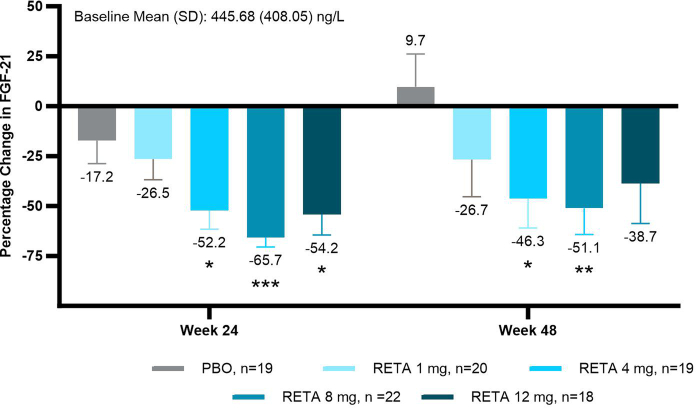
“29 These results indicate that LDL-C and TG reductions in retatrutide-treated individuals were unlikely to be attributable to decreases in PCSK9 or increases in FGF21.”
Self-citationFrom pathophysiology to novel approaches for obesity-associated hypertension
Kanbay, M., Yayci, E., Genc, C., Çöpür, S., Aktaş, Ö. Y., Sarafidis, P. A., Covic, A. C., Ortíz, A., & Laffin, L. J. (2025) · Clinical Kidney Journal · doi:10.1093/ckj/sfaf218 · Cited by 12
“In clinical trials, retatrutide decreased visceral fat and body weight [83 ,84 ].”
Lambert, G. W., Patel, M., & Lambert, É. (2025) · Metabolites · doi:10.3390/metabo15050286 · Cited by 15
“Further, tirzepatide, which is a GIP and GLP-1 receptor agonist, improved blood pressure and physical aspects of quality of life [118], and the triple combination, retatrutide, reduced liver and abdominal fat and improved insulin sensitivity and lipid metabolism in obese individuals [121].”
Metadata
- Authors
- Sanyal, A. J., Kaplan, L. M., Frias, J. P., Brouwers, B., Wu, Q., Thomas, M. K., Harris, C., Schloot, N. C., Du, Y., Mather, K. J., Haupt, A., & Hartman, M. L.
- Affiliations
- Virginia Commonwealth University (US)
- Dartmouth College (US)
- Eli Lilly (United States) (US)
- Eli Lilly (Germany) (DE)
- Corresponding author
- Sanyal, Arun J.
- ORCID
- Venue
- Nature Medicine
- Published
- 2024-06-10
- Volume
- 30
- Issue
- 7
- Pages
- 2037-2048
- ISSN
- 1078-8956 (ISSN-L)
- 1546-170X
- PMC
- PMC11271400
- OpenAlex
- W4399500327
- Cited by
- 315
- References
- 50
- Citations by year
- 2026: 152 · 2025: 137 · 2024: 26
- FWCI
- 95.49
- Type
- journal article
- Language
- en
- Open access
- hybrid
- doi.org
- Licence
- cc-by
- creativecommons.org/licenses/by/4.0 (tdm)
- creativecommons.org/licenses/by/4.0 (vor)
- Locations
- Nature Medicine (publishedVersion, cc-by)
- PubMed Central (publishedVersion, cc-by)
- PubMed (publishedVersion)
- Funders
- Eli Lilly and Company
- Topics
- Health Sciences › Medicine › Hepatology › Liver Disease Diagnosis and Treatment
- Health Sciences › Medicine › Pharmacology (medical) › Pharmacology and Obesity Treatment
- Health Sciences › Medicine › Endocrinology, Diabetes and Metabolism › Diabetes Treatment and Management
- Keywords
- retatrutide, non-alcoholic fatty liver disease, liver fat reduction, glucose-dependent insulinotropic polypeptide, glucagon-like peptide-1, glucagon receptor, obesity, insulin sensitivity, lipid metabolism, weight loss, abdominal fat
- MeSH terms
- Glucagon-Like Peptide-1 Receptor Agonists, Adult, Aged, Double-Blind Method, Fatty Acids, Fatty Liver, Female, Humans, Liver, Male, Middle Aged, Obesity, Peptides, Receptors, Glucagon
About these checks
Registry, retraction, Cites and statistics results are computed, not judged, with one exception: a printed reference that no index lists is read once by a model before it counts as a citation error. Claims are extracted by a model and kept only when their quote appears verbatim in the text; each cited source is then checked, with a model’s help, for whether it says what the claim relies on. Those verdicts can be wrong — read the claim’s quote and the cited source before relying on one.
The claim verdicts this report counts are experimental: their accuracy is not yet measured.
A language model drew the claims from the paper on 2026-09-28, under version 3 of the claim definition (model deepseek-v4.1-flash, prompt extract-v3).
A second model labelled each claim on 2026-09-28 (model jev-1.13-20260917, definition revision gold-guideline-v0.2).
Cited sources are checked with a language model’s help (gpt-6-sol).
Statistics and arithmetic are recomputed, not judged.
Confidence bands are shown only for fields calibrated on our annotated test set. None is calibrated yet, so no band is shown.
What counts as a claim ›How we measure confidence ›How we check this ›
Are you an author, or do you see a problem with this page? Request a review
Data sources
Bibliographic data: Semantic Scholar, OpenAlex, Crossref.
Contains information from the Semantic Scholar Academic Graph Datasets, made available under the ODC Attribution License (ODC-BY 1.0).
Semantic Scholar’s data is described in: Kinney, R., et al. (2023). The Semantic Scholar Open Data Platform. arXiv:2301.10140.
