

Peeking into a black box, the fairness and generalizability of a MIMIC-III benchmarking model.
Open accessThe DOI matches its Crossref record; 54 of the 54 references it cites were found in a registry or an index.
Abstract
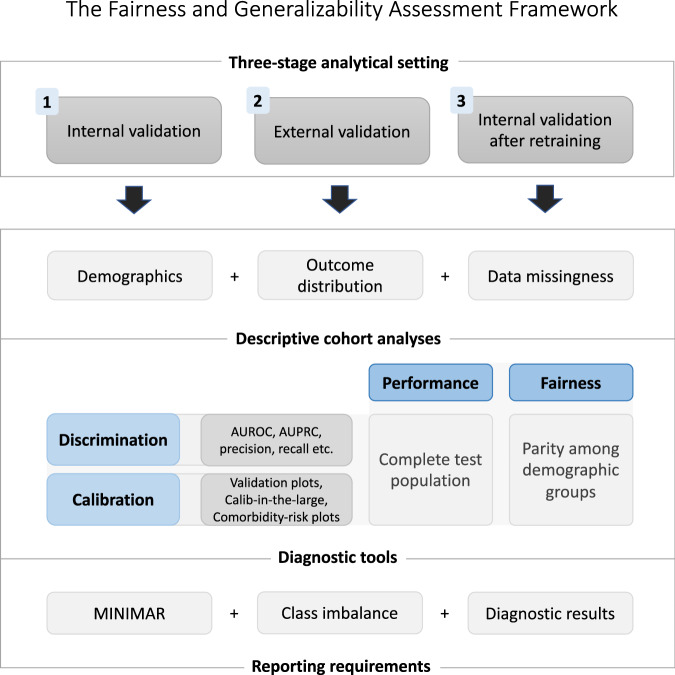
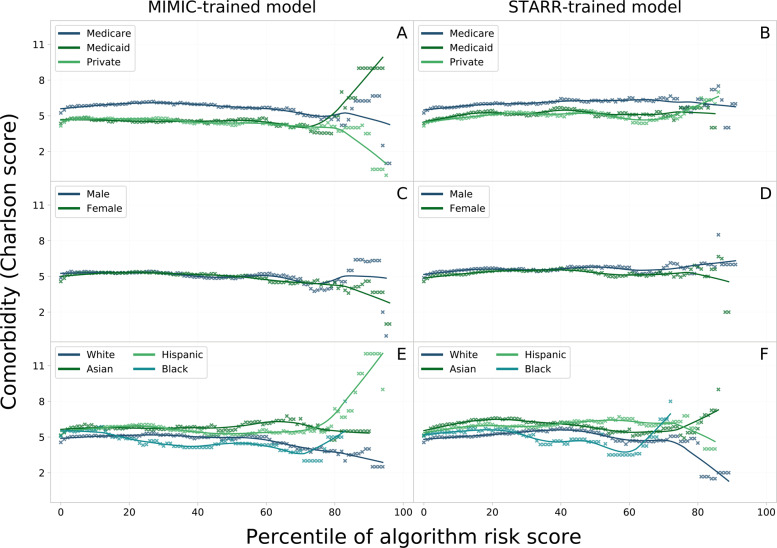
As artificial intelligence (AI) makes continuous progress to improve quality of care for some patients by leveraging ever increasing amounts of digital health data, others are left behind. Empirical evaluation studies are required to keep biased AI models from reinforcing systemic health disparities faced by minority populations through dangerous feedback loops. The aim of this study is to raise broad awareness of the pervasive challenges around bias and fairness in risk prediction models. We performed a case study on a MIMIC-trained benchmarking model using a broadly applicable fairness and generalizability assessment framework. While open-science benchmarks are crucial to overcome many study limitations today, this case study revealed a strong class imbalance problem as well as fairness concerns for Black and publicly insured ICU patients. Therefore, we advocate for the widespread use of comprehensive fairness and performance assessment frameworks to effectively monitor and validate benchmark pipelines built on open data resources.
Overview
The claims and statistics of this paper haven’t been checked yet.
Free: it reads the open-access text and checks the first 5 claims that cite a source we can check. Create a free account to check every claim.
Integrity signals
Registry
Cites
Statistics
Figures
Verification
Claims the paper makes
The claims and statistics of this paper haven’t been checked yet.
Free: it reads the open-access text and checks the first 5 claims that cite a source we can check. Create a free account to check every claim.
Claims other papers make about this one
Each is checked against this paper’s own text: does it say what the citing paper says it does?
The source backs part of the claim, not all of it — or backs it for a different population, condition or comparison.
In the citing paper
“The researchers found that imbalanced representation of racial groups had a significant effect on model performance (yielding recall rates as low as 25%), raising critical concerns for the model’s potential application in real clinical settings [44].”
From Bias in medical AI: Implications for clinical decision-making (2024) · cites this paper as [44]
Experimental — accuracy not yet measured
Self-check
Percentages, sums and reported differences re-computed from the paper’s own numbers.
The self-check needs the paper’s full text.
Citations
Cites
SMOTE synthetic minority over-sampling technique
Chawla, N. V., Bowyer, K. W., Hall, L. O., & Kegelmeyer, W. P. (2002) · Journal of Artificial Intelligence Research · doi:10.1613/jair.953 · Cited by 32,865
MIMIC-III, a freely accessible critical care database
Johnson, A. E. W., Pollard, T. J., Shen, L., Lehman, L.-W. H., Feng, M., Ghassemi, M., Moody, B., Szolovits, P., Anthony Celi, L., & Mark, R. G. (2016) · Scientific Data · doi:10.1038/sdata.2016.35 · Cited by 8,141 · cited 2×
“The Medical Information Mart for Intensive Care (MIMIC) is a prime example of such effort 24 .”
BackgroundDissecting racial bias in an algorithm used to manage the health of populations
Obermeyer, Z., Powers, B., Vogeli, C., & Mullainathan, S. (2019) · Science · doi:10.1126/science.aax2342 · Cited by 7,137 · cited 1×
“These results build on Obermeyer’s previous work and strengthen the case that Black patients and other systemically disadvantaged groups are the ones left behind by AI revolutionizing standards of care 9 .”
ResultThe relationship between Precision-Recall and ROC curves
Davis, J., & Goadrich, M. (2006) · Proceedings of the 23rd international conference on Machine learning - ICML '06 · doi:10.1145/1143844.1143874 · Cited by 6,559
Quan, H., Li, B., Couris, C. M., Fushimi, K., Graham, P., Hider, P., Januel, J.-M., & Sundararajan, V. (2011) · American Journal of Epidemiology · doi:10.1093/aje/kwq433 · Cited by 5,843
A Survey on Bias and Fairness in Machine Learning
Mehrabi, N., Morstatter, F., Saxena, N., Lerman, K., & Galstyan, A. (2019) · arXiv · doi:10.48550/arxiv.1908.09635 · Cited by 5,812 · cited 3×
“Moreover, such wide-ranging repercussions would also destroy public trust and hinder the further adoption of AI tools capable of decisively improving patient outcomes 21 .”
BackgroundA Survey on Bias and Fairness in Machine Learning
Mehrabi, N., Morstatter, F., Saxena, N., Lerman, K., & Galstyan, A. (2022) · ACM Computing Surveys · doi:10.1145/3457607 · Cited by 5,812 · cited 3×
“Moreover, such wide-ranging repercussions would also destroy public trust and hinder the further adoption of AI tools capable of decisively improving patient outcomes 21 .”
BackgroundSaito, T., & Rehmsmeier, M. (2015) · PLOS ONE · doi:10.1371/journal.pone.0118432 · Cited by 5,309
Assessing the Performance of Prediction Models: A Framework for Traditional and Novel Measures
Steyerberg, E. W., Vickers, A. J., Cook, N. R., Gerds, T., Gonen, M., Obuchowski, N., Pencina, M. J., & Kattan, M. W. (2010) · Epidemiology · doi:10.1097/ede.0b013e3181c30fb2 · Cited by 5,170 · cited 1×
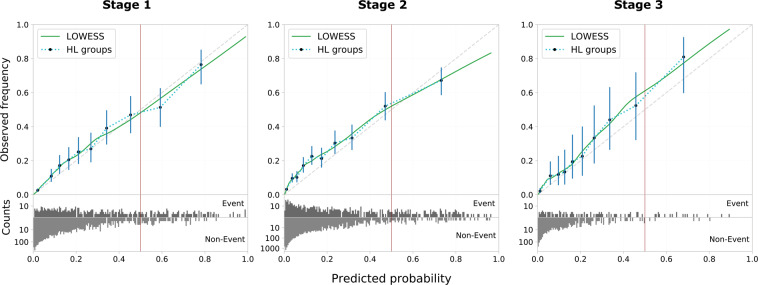
“Validation graphs as proposed by Steyerberg et al . are used to examine overall model calibration 49 .”
MethodArtificial intelligence in healthcare
Yu, K.-H., Beam, A. L., & Kohane, I. S. (2018) · Nature Biomedical Engineering · doi:10.1038/s41551-018-0305-z · Cited by 2,817 · cited 7×
“Observed performance differences can therefore only be attributed to unfair model predictions in two scenarios such that the effect of class imbalance can be excluded: (1) the demographic groups have similar event rates or (2) their event rates are the converse of what the metric would imply (i.”
BackgroundMethodInfluential
Research works printed but not linked: 4
- Gupta, P., Malhotra, P., Vig, L. & Shrof, G. Using features from pre-trained timenet for clinical predictions. In Proceedings of the 3rd International Workshop on Knowledge Discovery in Healthcare Data at IJCAI-ECAI, 38–44 (Stockholm, Sweden). (2018).
- Gupta, P., Malhotra, P., Vig, L. & Shrof, G. Transfer learning for clinical time series analysis using recurrent neural networks. In Machine Learning for Medicine and Healthcare Workshop at ACM KDD 2018 Conference (London, United Kingdom). (2018).
- Chang, C.-H., Mai, M. & Goldenberg, A. Dynamic measurement scheduling for adverse event forecasting using deep RL. In Machine Learning for Health (ML4H) Workshop at NeurIPS (Montreal, Canada). (2018).
- Ali, A., Shamsuddin, S. & Ralescu, A. Classification with class imbalance problem: A review. SOCO. (2015).
Cited by
Algorithmic fairness in artificial intelligence for medicine and healthcare
Chen, R. J., Wang, J. J., Williamson, D. F. K., Chen, T. Y., Lipkova, J., Lu, M. Y., Sahai, S., & Mahmood, F. (2023) · Nature Biomedical Engineering · doi:10.1038/s41551-023-01056-8 · Cited by 750
“…an analysis examining mortality prediction models using Integrated Gradients found disparities in feature importance across ethnicity, gender and age subgroups, with ethnicity often ranked as one of the most important features across a diverse set of models and explain-ability techniques 336–338 .”
MethodBias in medical AI: Implications for clinical decision-making
Cross, J. L., Choma, M. A., & Onofrey, J. A. (2024) · PLOS Digital Health · doi:10.1371/journal.pdig.0000651 · Cited by 607
“Another noteworthy study aimed to systematically quantify the effect of class imbalance on the fairness and generalizability of an AI model across different patient groups [44].”
BackgroundMethodChen, F., Wang, L., Hong, J., Jiang, J., & Zhou, L. (2024) · Journal of the American Medical Informatics Association · doi:10.1093/jamia/ocae060 · Cited by 178
Sanmarchi, F., Fanconi, C., Golinelli, D., Gori, D., Hernandez‐Boussard, T., & Capodici, A. (2023) · Journal of Nephrology · doi:10.1007/s40620-023-01573-4 · Cited by 176
Self-citationDemographic bias in misdiagnosis by computational pathology models
Vaidya, A. J., Chen, R. J., Williamson, D. F. K., Song, A. H., Jaume, G., Yang, Y., Hartvigsen, T., Dyer, E. C., Lu, M. Y., Lipková, J., et al. (2024) · Nature Medicine · doi:10.1038/s41591-024-02885-z · Cited by 180
A survey of recent methods for addressing AI fairness and bias in biomedicine
Yang, Y., Lin, M., Zhao, H., Peng, Y., Huang, F., & Lu, Z. (2024) · Journal of Biomedical Informatics · doi:10.1016/j.jbi.2024.104646 · Cited by 147
“15 18 Several reviews in the biomedical domain have summarized the issue of fairness in artificial intelligence 3,19–21 .”
BackgroundRecent Advances in Large Language Models for Healthcare
Nassiri, K., & Akhloufi, M. A. (2024) · BioMedInformatics · doi:10.3390/biomedinformatics4020062 · Cited by 136
Scientific evidence for clinical text summarization using large language models: scoping review
Bednarczyk, L., Reichenpfader, D., Gaudet-Blavignac, C., Ette, A. K., Zaghir, J., Zheng, Y., Bensahla, A., Bjelogrlic, M., & Lovis, C. (2025) · Journal of Medical Internet Research · doi:10.2196/68998 · Cited by 83
“These biases can manifest as harms in specific downstream tasks, impacting clinical decision-making [5,10,54,60,76,83].”
Sentiment analysis of clinical narratives: A scoping review
Denecke, K., & Reichenpfader, D. (2023) · Journal of Biomedical Informatics · doi:10.1016/j.jbi.2023.104336 · Cited by 78
The AI life cycle: a holistic approach to creating ethical AI for health decisions
Ng, M. Y., Kapur, S., Blizinsky, K. D., & Hernandez-Boussard, T. (2022) · Nature Medicine · doi:10.1038/s41591-022-01993-y · Cited by 71
Self-citationPoulain, R., Bin Tarek, M. F., & Beheshti, R. (2023) · 2023 ACM Conference on Fairness Accountability and Transparency · doi:10.1145/3593013.3594102 · Cited by 63
“However, studies have shown that non-binary attributes (race and insurance type), are usually sources of greater disparities in AI health models[42].”
BackgroundYou, J. G., Hernandez-Boussard, T., Pfeffer, M. A., Landman, A., & Mishuris, R. G. (2025) · npj Digital Medicine · doi:10.1038/s41746-025-01506-4 · Cited by 59
Self-citationDeveloping robust benchmarks for driving forward AI innovation in healthcare
Mincu, D., & Roy, S. (2022) · Nature Machine Intelligence · doi:10.1038/s42256-022-00559-4 · Cited by 41
“A popular benchmarking study on MIMIC-III 1 has recently been found to display issues when it comes to fairness and generalizability 37 .”
MethodCritical Bias in Critical Care Devices
Charpignon, M.-L., Byers, J., Cabral, S., Celi, L. A., Fernandes, C., Gallifant, J., Lough, M. E., Mlombwa, D., Moukheiber, L., Ong, B. A., et al. (2023) · Critical Care Clinics · doi:10.1016/j.ccc.2023.02.005 · Cited by 35
Promoting Equity In Clinical Decision Making: Dismantling Race-Based Medicine
Hernandez‐Boussard, T., Siddique, S. M., Bierman, A. S., Hightower, M., & Burstin, H. R. (2023) · Health Affairs · doi:10.1377/hlthaff.2023.00545 · Cited by 34
“21 Although these sociotechnical approaches to mitigating algorithmic bias have been adopted at some leading academic institutions, widespread adoption remains sporadic and inconsistent across the broader community.”
BackgroundSelf-citationde Hond, A., van Buchem, M. M., Fanconi, C., Roy, M., Blayney, D. W., Kant, I. M. J., Steyerberg, E. W., & Hernandez‐Boussard, T. (2024) · JMIR Medical Informatics · doi:10.2196/51925 · Cited by 34
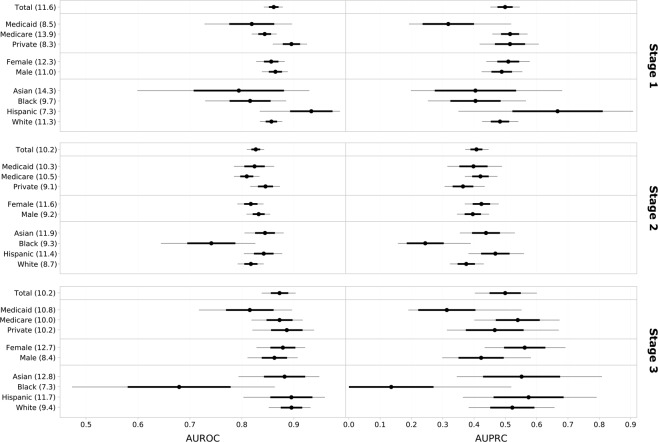
“To identify potential fairness issues for specific demographic groups, AUROC, calibration slope, and intercept were compared across sex and race and ethnicity groups [40].”
Self-citationRavindranath, R., Stein, J. D., Hernandez‐Boussard, T., Fisher, A. C., Wang, S. Y., Amin, S. R., Edwards, P. A., Srikumaran, D. S., Woreta, F. A., Schultz, J. S., et al. (2024) · Ophthalmology Science · doi:10.1016/j.xops.2024.100596 · Cited by 32
“11,12 For example, a widely used algorithm used to identify and help patients with complex health needs was shown to be biased, as Black patients were considerably sicker than White patients for a given risk score, reducing their chances of accessing special care programs.”
Self-citationEvaluating the Impact of Social Determinants on Health Prediction in the Intensive Care Unit
Yang, M. Y., Kwak, G. H., Pollard, T., Celi, L. A., & Ghassemi, M. (2023) · Proceedings of the AAAI/ACM Conference on AI Ethics and Society · doi:10.1145/3600211.3604719 · Cited by 35
Capodici, A., Fanconi, C., Curtin, C. M., Shapiro, A., Noci, F., Giannoni, A., & Hernandez‐Boussard, T. (2025) · Diagnostic and Prognostic Research · doi:10.1186/s41512-025-00190-y · Cited by 25
“Here, we refer to statistical bias as to systematic errors in model performance, while social bias denotes the unfair or ineq-uitable treatment that may result when such errors disproportionately harm underrepresented groups [43].”
Self-citationMachine Learning for Benchmarking Critical Care Outcomes
Atallah, L., Nabian, M., Brochini, L., & Amelung, P. J. (2023) · Healthcare Informatics Research · doi:10.4258/hir.2023.29.4.301 · Cited by 19
“The same applies to bias, model generalizability, and fairness [78].”
BackgroundImproving medical machine learning models with generative balancing for equity and excellence
Theodorou, B., Danek, B. P., Tummala, V., Kumar, S. D. M., Malin, B., & Sun, J. (2025) · npj Digital Medicine · doi:10.1038/s41746-025-01438-z · Cited by 26
Auditing and Generating Synthetic Data with Controllable Trust Trade-offs
Belgodere, B. M., Dognin, P., Ivankay, A., Melnyk, I., Mroueh, Y., Mojsilović, A., Navrátil, J., Nitsure, A., Padhi, I., Rigotti, M., et al. (2024) · IEEE Journal on Emerging and Selected Topics in Circuits and Systems · doi:10.1109/jetcas.2024.3477976 · Cited by 41
Is Generative Artificial Intelligence the Next Step Toward a Personalized Hemodialysis?
Hueso, M., Álvarez, R., Marí, D., Ribas, V. J., Lekadir, K., & Vellido, A. (2023) · Revista de investigaci�n Cl�nica · doi:10.24875/ric.23000162 · Cited by 22
“Despite the potential benefits and promising results, clinical translation is not always guaranteed and presents several issues, namely, fairness, model, and results interpretability 34 and the lack of validated models.”
Background(2024) · doi:10.1093/jamia/ocae001 · Cited by 14
Self-citationApplying Large Language Models to Assess Quality of Care: Monitoring ADHD Medication Side Effects
Bannett, Y., Güntürkün, F., Pillai, M., Herrmann, J. E., Luo, I., Huffman, L. C., & Feldman, H. M. (2024) · PEDIATRICS · doi:10.1542/peds.2024-067223 · Cited by 21
Gittens, A., Yener, B., & Yung, M. M. (2022) · IEEE Access · doi:10.1109/access.2022.3218715 · Cited by 38
“A recent study empirically evaluated the bias and risk trade-offs of a multi-task benchmarking pipeline for ML models [96].”
BackgroundNaderalvojoud, B., Curtin, C. M., Yanover, C., El‐Hay, T., Choi, B., Park, R. W., Tabuenca, J. G., Reeve, M. P., Falconer, T., Humphreys, K. N., et al. (2024) · Journal of the American Medical Informatics Association · doi:10.1093/jamia/ocae028 · Cited by 16
Self-citationUncovering Bias in Personal Informatics
Yfantidou, S., Sermpezis, P., Vakali, A. I., & Baeza-Yates, R. A. (2023) · Proceedings of the ACM on Interactive Mobile Wearable and Ubiquitous Technologies · doi:10.1145/3610914 · Cited by 25
What Is Fair? Defining Fairness in Machine Learning for Health
Gao, J., Chou, B., McCaw, Z. R., Thurston, H., Varghese, P., Hong, C., & Gronsbell, J. L. (2025) · Statistics in Medicine · doi:10.1002/sim.70234 · Cited by 30
“Test Fairness In a model used to predict in-hospital mortality, the predicted event rates are the same for males and females at all values of the score [101].”
Taber, P. A., Armin, J. S., Orozco, G., Fiol, G. D., Erdrich, J., Kawamoto, K., & Israni, S. T. (2023) · Current Oncology Reports · doi:10.1007/s11912-023-01376-7 · Cited by 12
Rhodamine-based fluorescent probe for dynamic STED imaging of mitochondria
Gao, X., Cai, S., Wang, L., Guo, Y., Liu, L., Weng, X., Huang, K., Yan, W., & Qu, J. (2024) · Biomedical Optics Express · doi:10.1364/boe.507770 · Cited by 10
Imputation Strategies Under Clinical Presence: Impact on Algorithmic FairnessPreprint
Jeanselme, V., De‐Arteaga, M., Zhang, Z., Tom, B. D. M., & Barrett, J. (2023) · SSRN Electronic Journal · doi:10.2139/ssrn.4496874 · Cited by 17
Artificial Intelligence in Epidemic Modeling and Pandemic Preparedness: A Comprehensive Review
Sharma, A., Kumar, A., Dhanka, S., Maini, S., Rautela, K., Kant, S., Kaur, A., & Palta, A. (2026) · Archives of Computational Methods in Engineering · doi:10.1007/s11831-026-10525-7 · Cited by 14
HR-BGCN : Predicting readmission for heart failure from electronic health records
Ma, H., Li, D., Zhao, J., Li, W., Fu, J., & Li, C. (2024) · Artificial Intelligence in Medicine · doi:10.1016/j.artmed.2024.102829 · Cited by 12
Naderalvojoud, B., Curtin, C. M., Asch, S. M., Humphreys, K. N., & Hernandez‐Boussard, T. (2025) · JAMIA Open · doi:10.1093/jamiaopen/ooaf115 · Cited by 14
Self-citationde Matos, J. C. R. G., CALSTER, B. V., Celi, L. A., Dhiman, P., Gichoya, J. W., Riley, R. D., Russell, C., Khalid, S., & Collins, G. S. (2026) · The Lancet Digital Health · doi:10.1016/j.landig.2026.101001 · Cited by 27
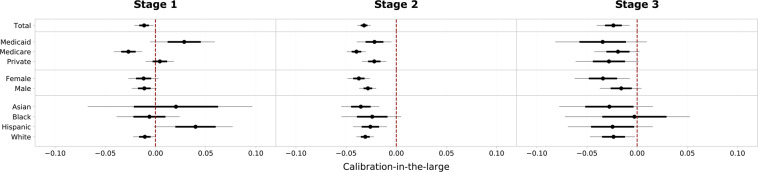
“99 Expected calibration error parity, 78 calibration-in-the-large parity, 62 absolute calibration error parity, 81 and other similar metrics should also be used with caution.”
Using Self-supervised Learning Can Improve Model Fairness
Yfantidou, S., Spathis, D., Constantinides, M., Vakali, A. I., Quercia, D., & Kawsar, F. (2024) · ACM SIGKDD Conference on Knowledge Discovery and Data Mining (KDD) · doi:10.1145/3637528.3671991 · Cited by 12
“On the other hand, Hispanic patients exhibit elevated performance attributable to their significantly lower mortality rates compared to other demographic groups [41] (for more details on mortality rates see Table 3 in Appendix A).”
BackgroundMethodDeep Learning with Disc Photos or OCT Scans in Glaucoma Detection
Katuru, A., Chung, I. Y., Majid, I., Shen, L. Q., & Wang, M. (2025) · Ophthalmology Science · doi:10.1016/j.xops.2025.100877 · Cited by 9
Examining Imbalance Effects on Performance and Demographic Fairness of Clinical Language Models
Jones, P., Liu, W., Huang, I., & Huang, X. (2025) · IEEE International Conference on Healthcare Informatics (ICHI) · doi:10.1109/ichi64645.2025.00016 · Cited by 8
Comparison of the Predictive Performance of Medical Coding Diagnosis Classification Systems
Zikos, D., & Delellis, N. O. (2022) · Technologies · doi:10.3390/technologies10060122 · Cited by 5
Auditing Algorithmic Fairness in Machine Learning for Health with Severity-Based LOGAN
Ovalle, A., Dev, S., Zhao, J., Sarrafzadeh, M., & Chang, K.-W. (2023) · Studies in computational intelligence · doi:10.1007/978-3-031-36938-4_10 · Cited by 7
Busch, F., Keller, S., Rueger, C., Kader, A., Ziegeler, K., Bressem, K. K., & Adams, L. C. (2023) · Acta Radiologica Open · doi:10.1177/20584601231213740 · Cited by 7
Artificial Intelligence in Intelligent Healthcare Systems–Opportunities and Challenges
Petreska, A., & Ristevski, B. (2024) · Lecture notes in networks and systems · doi:10.1007/978-3-031-60840-7_17 · Cited by 6
ICU scoring systems: current perspectives and future directions
Salluh, J. I., Moralez, G. M., Tracy, A., & Deliberato, R. O. (2025) · Current Opinion in Critical Care · doi:10.1097/mcc.0000000000001305 · Cited by 7
Zhang, K., Fan, Y., Long, K., Lan, Y., & Gao, P. (2023) · Journal of Multidisciplinary Healthcare · doi:10.2147/jmdh.s420709 · Cited by 5
Leveraging a Large Language Model to Assess Quality-of-Care: Monitoring ADHD Medication Side EffectsPreprint
Bannett, Y., Güntürkün, F., Pillai, M., Herrmann, J. E., Luo, I., Huffman, L. C., & Feldman, H. M. (2024) · medRxiv · doi:10.1101/2024.04.23.24306225 · Cited by 3
Santoro, C., Flores, C. A. C., Zuiderwijk, A., & Crompvoets, J. (2025) · Information Polity · doi:10.1177/15701255251367168 · Cited by 3
“Moreover, by extending our analysis to disciplines beyond public administration and governance, we also uncover new dimensions of harm that open data can contribute to creating, as in the case of AI models in health trained on open data that carry biases (Röösli et al., 2022).”
Khzem, A. H. A., & Gomaa, M. S. (2026) · Drug Design Development and Therapy · doi:10.2147/dddt.s597087 · Cited by 5
Zhao, Q., Jiang, W., Zhang, C., Ouyang, M., Wu, N., & Guo, Y. (2026) · Frontiers in Public Health · doi:10.3389/fpubh.2026.1863050 · Cited by 3
Hammer or Measuring Tape? Artificial Intelligence and Justice in Healthcare
Heinrichs, J.-H. (2023) · Cambridge Quarterly of Healthcare Ethics · doi:10.1017/s0963180123000257 · Cited by 2
Sakri, S. B., Basheer, S., Zain, Z. M., Ismail, N. H. A., Nassar, D., Alohali, M. A., & Alharaki, M. A. (2024) · Computers, materials & continua/Computers, materials & continua (Print) · doi:10.32604/cmc.2024.048051 · Cited by 10
Fairness in artificial intelligence‐driven multi‐organ image segmentation
Li, Q., Zhang, Y., Sun, L., Sun, M., Liu, M., Wang, Z., Wang, Q., Wang, S., & Wang, C. (2024) · iRadiology · doi:10.1002/ird3.101 · Cited by 2
Deep learning‑based prediction of in‑hospital mortality for acute kidney injury
Yong, L., Ruiyin, D., Wang, X., & Zhao, S. (2025) · Computer Methods in Biomechanics & Biomedical Engineering · doi:10.1080/10255842.2025.2470809 · Cited by 1
Zhu, Y., & Sang, Y. (2024) · International Conference on Electronic Information Engineering and Computer Communication (EIECC) · doi:10.1109/eiecc64539.2024.10929223 · Cited by 1
“The granularity of this data has enabled researchers to delve deep into nuanced areas, be it tracking patient trajectories or discerning patterns in drug prescriptions [4] [6] [7].”
Patient-centric care and digital health tools
Ali, A. M., Shah, S. N., Shamim, T., Khan, A., Rizwee, F., Khan, E. A. R., Neeraj, & Qazi, S. (2025) · Progress in brain research · doi:10.1016/bs.pbr.2025.08.003 · Cited by 3
Artificial intelligence models in the surgical planning of low-grade gliomas: a systematic review
Sanker, V., Venkatesan, A., Salma, A., Sp, A., Li, Z., Heesen, P., Park, C.-G., Park, D. J., & Desai, A. M. (2026) · Frontiers in Oncology · doi:10.3389/fonc.2025.1672289 · Cited by 3
AI Utilization and Clinical Judgment: Predictors of Caring Behavior Among Nursing Students
Kulintang, M. B. M., & Ngo, A. L. (2026) · Journal of Nursing Education · doi:10.3928/01484834-20260522-03 · Cited by 1
Zhang, H., Wang, Y., Li, J., Huang, W., Xu, B., Pang, H., & Jiang, C. (2025) · Dose-Response · doi:10.1177/15593258251335802 · Cited by 2
Liu, X., Shen, M., Lie, M., Zhang, Z., Li, D., Liu, C., Mark, R. G., Zhang, Z., & Celi, L. A. (2022) · medRxiv · doi:10.1101/2022.08.01.22277736 · Cited by 1
“[45] Röösli, Eliane, Selen Bozkurt, and Tina Hernandez-Boussard.”
BackgroundCausal thinking for decision making on Electronic Health Records: why and howPreprint
Doutreligne, M., Struja, T., Abécassis, J., Morgand, C., Celi, L. A., & Varoquaux, G. P. (2023) · arXiv (Cornell University) · doi:10.48550/arxiv.2308.01605 · Cited by 4
Matsuda, T., Wang, T., & Dık, M. (2023) · Proceedings of International Mathematical Sciences · doi:10.47086/pims.1390925
A Causal Perspective on Label Bias
Mhasawade, V., D’Amour, A., & Pfohl, S. R. (2024) · ACM Conference on Fairness, Accountability, and Transparency (FAccT) · doi:10.1145/3630106.3658972 · Cited by 5
“In a setting with proxy labels, we do not observe the true outcome of interest 𝑌 but instead observe a set of proxy labels We consider a mode of evaluation considered in prior work [56, 65, 78] of { 𝑌,𝑌 𝑖 ,𝑋,𝐴 } , where ) for two groups 𝑎 and 𝑎 if 𝑌 is a biased proxy label.”
MethodWhen to Use Demographic Data in Healthcare Models: A Bias-Responsible Approach
Zeleke, S., Berger-Wolf, T. Y., & Ning, X. (2024) · IEEE Conference on Artificial Intelligence (CAI) · doi:10.1109/cai59869.2024.00276
SIMpat: A Synthetic Benchmark for Similarity Metrics on Patient Representations
Voegeli, J.-V., Bjelogrlic, M., Gaudet-Blavignac, C., Dubos, R., Zimmermann, M. O., Talet, A. B., Zheng, Y., Ehrsam, J., & Lovis, C. (2024) · Studies in health technology and informatics · doi:10.3233/shti240739
Assessing Bias in Self-supervised and Supervised Models for Temporal Data
Liatsikou, M., Yfantidou, S., & Vakali, A. I. (2024) · Hellenic Conference on Artificial Intelligence · doi:10.1145/3688671.3688753 · Cited by 1
Bias Mitigation in Medical Datasets: Enhancing GBM and KNN Predictive Models with SMOTE Techniques
Boughareb, D., Bordjiba, H., Boughareb, R., & Séridi, H. (2024) · International Conference on Computing and Data Analytics (ICCDA) · doi:10.1109/iccda64887.2024.10867315
Fairness at Risk: Where Bias Emerges in Machine Learning
Albuquerque, O. D. P., Fantinato, M., & Peres, S. M. (2026) · Expert Systems · doi:10.1111/exsy.70265 · Cited by 1
Ethical challenges of artificial intelligence in critical care
Saida, I. B., Gaddas, M., & Saad, H. B. (2026) · Elsevier eBooks · doi:10.1016/b978-0-443-36554-6.00023-4
Artificial Intelligence in Hand Surgery
Jain, N. S., Kingma, E. S., McEachan, J. E., & Teunis, T. (2026) · Clinics in Plastic Surgery · doi:10.1016/j.cps.2026.08.003
Lin, S. Y. T., Ravindranath, R., Stein, J. D., Hernandez‐Boussard, T., Wang, S. Y., Pira, T. N., Subramanian, M. L., Amin, S., Edwards, P. A., Srikumaran, D. S., et al. (2026) · Journal of the American Medical Informatics Association · doi:10.1093/jamia/ocag166
Self-citationBakir, M., Masri, M. K. A., Mushtaha, Y., Shaikh, N., Raddaoui, M., & Mohammad, K. S. (2026) · Frontiers in Oncology · doi:10.3389/fonc.2026.1960963
“…subgroups are underrepresented, their outcomes tend to be predicted less accurately, so fairness has to be checked directly rather than assumed; benchmark studies outside gynecology have already shown clear class-imbalance and fairness problems for Black and publicly insured patients (108).”
Liu, L., Han, X., Li, X., Yu, F., Zhang, X., Xu, J., Wang, X., Lei, Y., 肖彦, & Tang, Z. (2026) · Journal of International Medical Research · doi:10.1177/03000605261494353
Proios, D., Bornet, A., Vindas, Y., Jia, Y., Quintard, H., Sitek, A., & Teodoro, D. (2026) · doi:10.2196/preprints.112136
Metadata
- Authors
- Röösli, E., Bozkurt, S., & Hernandez-Boussard, T.
- Affiliations
- Stanford Medicine (US)
- Venue
- Scientific Data
- Published
- 2022-01-24
- Volume
- 9
- Issue
- 1
- Pages
- 24-24
- ISSN
- 2052-4463 (ISSN-L)
- PMC
- PMC8786878
- OpenAlex
- W4207057807
- Cited by
- 73
- References
- 45
- Citations by year
- 2026: 13 · 2025: 13 · 2024: 24 · 2023: 18 · 2022: 5
- Type
- data paper
- Language
- en
- Open access
- gold
- doi.org
- Licence
- cc-by
- creativecommons.org/licenses/by/4.0 (tdm)
- creativecommons.org/licenses/by/4.0 (vor)
- Locations
- Scientific Data (publishedVersion, cc-by)
- PubMed Central (publishedVersion, cc-by)
- PubMed (publishedVersion)
- DOAJ (DOAJ: Directory of Open Access Journals) (submittedVersion, cc-by-sa)
- Funders
- U.S. Department of Health & Human Services | NIH | U.S. National Library of Medicine (R01 LM013362-03)
- Topics
- Physical Sciences › Computer Science › Artificial Intelligence › Ethics and Social Impacts of AI
- Physical Sciences › Computer Science › Artificial Intelligence › Machine Learning in Healthcare
- Health Sciences › Medicine › Health Informatics › Artificial Intelligence in Healthcare and Education
- Keywords
- algorithmic fairness, risk prediction model, MIMIC-III, benchmarking model, generalizability, health disparities, class imbalance, Black patients, publicly insured patients, intensive care unit
About these checks
Registry, retraction, Cites and statistics results are computed, not judged, with one exception: a printed reference that no index lists is read once by a model before it counts as a citation error. Claims are extracted by a model and kept only when their quote appears verbatim in the text; each cited source is then checked, with a model’s help, for whether it says what the claim relies on. Those verdicts can be wrong — read the claim’s quote and the cited source before relying on one.
Statistics and arithmetic are recomputed, not judged.
Confidence bands are shown only for fields calibrated on our annotated test set. None is calibrated yet, so no band is shown.
What counts as a claim ›How we measure confidence ›How we check this ›
Are you an author, or do you see a problem with this page? Request a review
Data sources
Bibliographic data: Semantic Scholar, OpenAlex, Crossref.
Contains information from the Semantic Scholar Academic Graph Datasets, made available under the ODC Attribution License (ODC-BY 1.0).
Semantic Scholar’s data is described in: Kinney, R., et al. (2023). The Semantic Scholar Open Data Platform. arXiv:2301.10140.
