

Inflation of test accuracy due to data leakage in deep learning-based classification of OCT images
Open accessThe DOI matches its Crossref record; 39 of the 40 references it cites were found in a registry or an index.
Abstract
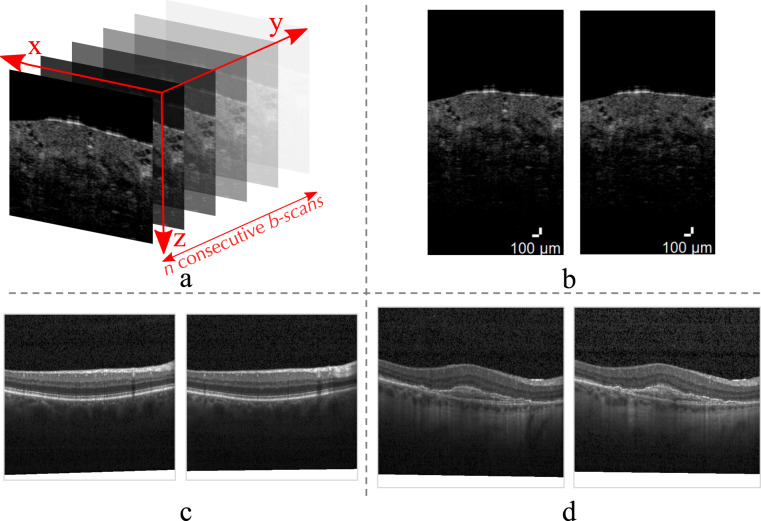
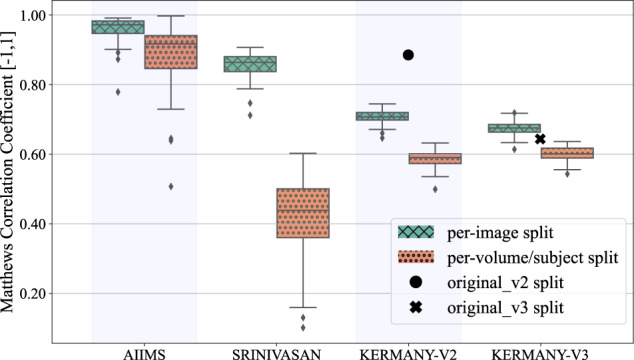
In the application of deep learning on optical coherence tomography (OCT) data, it is common to train classification networks using 2D images originating from volumetric data. Given the micrometer resolution of OCT systems, consecutive images are often very similar in both visible structures and noise. Thus, an inappropriate data split can result in overlap between the training and testing sets, with a large portion of the literature overlooking this aspect. In this study, the effect of improper dataset splitting on model evaluation is demonstrated for three classification tasks using three OCT open-access datasets extensively used, Kermany's and Srinivasan's ophthalmology datasets, and AIIMS breast tissue dataset. Results show that the classification performance is inflated by 0.07 up to 0.43 in terms of Matthews Correlation Coefficient (accuracy: 5% to 30%) for models tested on datasets with improper splitting, highlighting the considerable effect of dataset handling on model evaluation. This study intends to raise awareness on the importance of dataset splitting given the increased research interest in implementing deep learning on OCT data.
Overview
The claims and statistics of this paper haven’t been checked yet.
Free: it reads the open-access text and checks the first 5 claims that cite a source we can check. Create a free account to check every claim.
Integrity signals
Registry
Cites
Statistics
Figures
Verification
Claims the paper makes
The claims and statistics of this paper haven’t been checked yet.
Free: it reads the open-access text and checks the first 5 claims that cite a source we can check. Create a free account to check every claim.
Claims other papers make about this one
Each is checked against this paper’s own text: does it say what the citing paper says it does?
The cited source says what the claim attributes to it.
In the citing paper
“Similar patterns of “identity confounding” data leakage have been documented in studies using functional (Wen et al., 2018) and anatomical (Wen et al., 2020) MRI, optical coherence tomography (OCT) (Tampu et al., 2022), accelerometer and gyroscope recordings from smartphones (Saeb et al., 2017), audio voice recordings (Chaibub Neto et al., 2019; Tougui et al., 2021), and performance on motor tasks”
From Data leakage in deep learning studies of translational EEG (2024) · cites this paper as Tampu et al., 2022
Self-check
Percentages, sums and reported differences re-computed from the paper’s own numbers.
The self-check needs the paper’s full text.
Citations
Cites
A survey on deep learning in medical image analysis
Litjens, G., Kooi, T., Bejnordi, B. E., Setio, A. A. A., Ciompi, F., Ghafoorian, M., van der Laak, J. A. W. M., van Ginneken, B., & Sánchez, C. I. (2017) · Medical Image Analysis · doi:10.1016/j.media.2017.07.005 · Cited by 15,332
A systematic analysis of performance measures for classification tasks
Sokolova, M., & Lapalme, G. (2009) · Information Processing & Management · doi:10.1016/j.ipm.2009.03.002 · Cited by 7,515
Kuhn, M., & Johnson, K. (2013) · doi:10.1007/978-1-4614-6849-3 · Cited by 6,788
Chicco, D., & Jurman, G. (2020) · BMC Genomics · doi:10.1186/s12864-019-6413-7 · Cited by 6,143
Identifying Medical Diagnoses and Treatable Diseases by Image-Based Deep Learning
Kermany, D. S., Goldbaum, M., Cai, W., Valentim, C. C. S., Liang, H., Baxter, S. L., McKeown, A., Yang, G., Wu, X., Yan, F., et al. (2018) · Cell · doi:10.1016/j.cell.2018.02.010 · Cited by 4,842
Refaeilzadeh, P., Tang, L., & Liu, H. (2009) · Encyclopedia of Database Systems · doi:10.1007/978-0-387-39940-9_565 · Cited by 1,549
Deep Learning Applications in Medical Image Analysis
Ker, J., Wang, L., Rao, J., & Lim, T. (2018) · IEEE Access · doi:10.1109/access.2017.2788044 · Cited by 1,481
Medical image analysis using convolutional neural networks: a review
Anwar, S. M., Majid, M., Qayyum, A., Awais, M., Alnowami, M., & Khan, M. K. (2018) · Journal of Medical Systems · doi:10.1007/s10916-018-1088-1 · Cited by 1,431
Xu, Y., & Goodacre, R. (2018) · Journal of Analysis and Testing · doi:10.1007/s41664-018-0068-2 · Cited by 1,030 · cited 5×
“These were selected among the other open-access datasets for several reasons: (1) they are examples of OCT medical images belonging to two different medical disciplines ( ophthalmology and breast oncology) and showing different tissue structures and textures, (2) they are used in literature to evaluate deep learning-b…”
MethodInfluentialChicco, D., Tötsch, N., & Jurman, G. (2021) · BioData Mining · doi:10.1186/s13040-021-00244-z · Cited by 893
Research works printed but not linked: 1
- Karimian, N., Salehi, H. S., Mahdian, M., Alnajjar, H. & Tadinada, A. Deep learning classifier with optical coherence tomography images for early dental caries detection. In Lasers in Dentistry XXIV, vol. 10473, 1047304 (International Society for Optics and Photonics, 2018).
Cited by
Data leakage in deep learning studies of translational EEG
Brookshire, G., Kasper, J., Blauch, N. M., Wu, Y. C., Glatt, R., Merrill, D. A., Gerrol, S., Yoder, K. J., Quirk, C., & Lucero, C. (2024) · Frontiers in Neuroscience · doi:10.3389/fnins.2024.1373515 · Cited by 103
“Prior research has shown that leakage of subject-specific information—sometimes referred to as “identity confounding” (Chaibub Neto et al., 2019)—occurs in a number of different research areas.”
BackgroundPredicting Adolescent Mental Health Outcomes Across Cultures: A Machine Learning Approach
Rothenberg, W. A., Bizzego, A., Esposito, G., Lansford, J. E., Al‐Hassan, S. M., Bacchini, D., Bornstein, M. H., Chang, L., Deater-Deckard, K. D., Giunta, L. D., et al. (2023) · Journal of Youth and Adolescence · doi:10.1007/s10964-023-01767-w · Cited by 86
“Importantly, in accordance with best practice, missing data were only imputed after the test and training data sets were partitioned, to ensure that that estimates of predictive performance were not biased (Kapoor & Narayanan, 2022; Tampu et al., 2022).”
MethodChowdhury, M. M., Ayon, R. S., & Hossain, M. S. (2023) · Healthcare Analytics · doi:10.1016/j.health.2023.100297 · Cited by 100
Marzi, C., Giannelli, M., Barucci, A., Tessa, C., Mascalchi, M., & Diciotti, S. (2024) · Scientific Data · doi:10.1038/s41597-023-02421-7 · Cited by 87
Applying oversampling before cross-validation will lead to high bias in radiomics
Demircioğlu, A. (2024) · Scientific Reports · doi:10.1038/s41598-024-62585-z · Cited by 85
“The misapplication of the resampling methods is only one source of data leakage, which can occur on several levels and yield a large positive bias 9,22–25 .”
MethodAlzahrani, S. M. (2023) · Journal of King Saud University - Computer and Information Sciences · doi:10.1016/j.jksuci.2023.101810 · Cited by 70
Vezakis, I., Lambrou, G. Ι., & Matsopoulos, G. K. (2023) · Cancers · doi:10.3390/cancers15082290 · Cited by 60
“Consequently, the network would be evaluated on images that are extremely similar to the training set, resulting in accuracies that are too optimistic [58].”
BackgroundAlharthi, A. G., & Alzahrani, S. M. (2023) · Computers in Biology and Medicine · doi:10.1016/j.compbiomed.2023.107667 · Cited by 63
Imrie, F., Cebere, B., McKinney, E. F., & van der Schaar, M. (2023) · PLOS Digital Health · doi:10.1371/journal.pdig.0000276 · Cited by 45
Wieser, P., Kent, A. J. R., & Till, C. B. (2023) · Journal of Petrology · doi:10.1093/petrology/egad050 · Cited by 49
“This way, the final ‘publishable’ model is developed in a way that 899 avoids overconfidence in the model, which can occur when the test dataset has been used at 900 any point during model tuning (Tampu et al., 2022; Wujek et al., 2016).”
BackgroundVision Transformers and Transfer Learning Approaches for Arabic Sign Language Recognition
Alharthi, N. M., & Alzahrani, S. M. (2023) · Applied Sciences · doi:10.3390/app132111625 · Cited by 56
Cost Harmonization LightGBM-Based Stock Market Prediction
Zhao, X., Liu, Y., & Zhao, Q. (2023) · IEEE Access · doi:10.1109/access.2023.3318478 · Cited by 50
“This dataset-splitting strategy allows for assessing the model’s performance across different time periods, ensuring a comprehensive evaluation of its predictive capabilities in varying market conditions [42].”
MethodArtificial intelligence in ophthalmology: Progress, challenges, and ethical implications
Savastano, M. C., Rizzo, C., Fossataro, C., Bacherini, D., Giansanti, F., Savastano, A., Arcuri, G., Rizzo, S., & Faraldi, F. (2025) · Progress in Retinal and Eye Research · doi:10.1016/j.preteyeres.2025.101374 · Cited by 52
Zhou, Y., Koyuncu, C., Lu, C. Y., Grobholz, R., Katz, I. A., Madabhushi, A., & Janowczyk, A. R. (2022) · Medical Image Analysis · doi:10.1016/j.media.2022.102702 · Cited by 49
“Such leakage may subsequently inflate the model testing accuracy, degrading the generalizability of the model (Chiavegatto Filho et al., 2021; Dong, 2022; Kaufman et al., 2012; Tampu et al., 2022).”
MethodSchilcher, J., Nilsson, A., Andlid, O., & Eklund, A. (2024) · Computers in Biology and Medicine · doi:10.1016/j.compbiomed.2023.107704 · Cited by 41
Self-citationInvestigating the Quality of DermaMNIST and Fitzpatrick17k Dermatological Image Datasets
Abhishek, K., Jain, A., & Hamarneh, G. (2025) · Scientific Data · doi:10.1038/s41597-025-04382-5 · Cited by 50
“Similar investigations have been conducted on the adverse effects of incorrect data partitioning on test performance in optical coherence tomography (OCT) image classification [31], brain magnetic resonance imaging (MRI) classification [32], and longitudinal brain MRI analysis [33].”
Alharthi, A. G., & Alzahrani, S. M. (2023) · Brain Sciences · doi:10.3390/brainsci13111578 · Cited by 40
Calle, P., Bates, A., Reynolds, J. C., Liu, Y., Cui, H., Ly, S., Wang, C., Zhang, Q., de Armendi, A. J., Shettar, S. S., et al. (2025) · Computer Methods and Programs in Biomedicine · doi:10.1016/j.cmpb.2025.109063 · Cited by 45
“The results showed the significance of partitioning in benchmarking the test performance of deep learning models [26, 27].”
Sadeq, M. A., Ghorab, R. M. F., Ashry, M. H., Abozaid, A. M., Banihani, H. A., Salem, M., Aisheh, M. T. A., Abuzahra, S., Mourid, M. R., Assker, M. M., et al. (2024) · Scientific Reports · doi:10.1038/s41598-024-68996-2 · Cited by 36
Pediatric brain tumor classification using deep learning on MR images with age fusion
Tampu, I. E., Bianchessi, T., Blystad, I., Lundberg, P., Nyman, P., Eklund, A., & Haj‐Hosseini, N. (2024) · Neuro-Oncology Advances · doi:10.1093/noajnl/vdae205 · Cited by 35
Self-citationLocalization is All You Evaluate: Data Leakage in Online Mapping Datasets and How to Fix it
Lilja, A., Fu, J., Stenborg, E., & Hammarstrand, L. (2024) · IEEE Computer Society Conference on Computer Vision and Pattern Recognition/Proceedings - IEEE Computer Society Conference on Computer Vision and Pattern Recognition/Proceedings · doi:10.1109/cvpr52733.2024.02091 · Cited by 57
“By inspecting Argoverse 2, one can see that it too suffers from a considerable level of inter-set geographical overlap.”
BackgroundAlzahrani, S. M., & Qahtani, A. M. (2023) · Journal of King Saud University - Computer and Information Sciences · doi:10.1016/j.jksuci.2023.101907 · Cited by 28
“This separation is crucial to prevent potential data contamination or leakage, as highlighted by Tampu et al. (2022).”
Florensa, A. F., Armenteros, J. J. A., Nielsen, H., Aarestrup, F. M., & Clausen, P. T. L. C. (2024) · NAR Genomics and Bioinformatics · doi:10.1093/nargab/lqae106 · Cited by 32
“This event has been found when developing and testing deep learning models on images ( 16 ), text ( 12 ,17 ) and code ( 18 ).”
BackgroundFigueiredo, R. B. D., & Mendes, H. A. (2024) · IEEE Access · doi:10.1109/access.2024.3383047 · Cited by 25
“In [9], Tampu demonstrate the effect of improper dataset splitting on model evaluation for three classification tasks using three optical coherence tomography (OCT) open-access datasets extensively used, Kermany’s and Srinivasan’s ophthalmology datasets, and AIIMS breast tissue dataset.”
BackgroundInfluentialVázquez, B., Rojas-García, M., Rodríguez-Esquivel, J. I., Márquez-Acosta, J., Aranda-Flores, C. E., Cetina, L., Soto-López, S., Estévez, J. A., Bahena-Román, M., Madrid‐Marina, V., et al. (2025) · Diagnostics · doi:10.3390/diagnostics15121543 · Cited by 32
Accelerometer time series augmentation through externally driving a non-linear dynamical system
Minati, L., Li, C., Bartels, J., Chakraborty, P., Li, Z., Yoshimura, N., Frasca, M., & Ito, H. (2023) · Chaos Solitons & Fractals · doi:10.1016/j.chaos.2023.113100 · Cited by 21
Nakayama, L. F., de Matos, J. C. R. G., Quion, J., Novaes, F. D. C., Mitchell, W. G., Mwavu, R., Hung, C. J.-Y. J., Santiago, A. P. D., Phanphruk, W., Cardoso, J. S., et al. (2024) · PLOS Digital Health · doi:10.1371/journal.pdig.0000618 · Cited by 23
“In the context of ophthalmology, data leakage can occur when 3D volumetric OCT images are split on a per-image basis [65].”
BackgroundEarly diabetic eye damage: Comparing detection methods using diagnostic power
Rai, B. B., van Kleef, J., Sabeti, F., Vlieger, R., Suominen, H., & Maddess, T. (2023) · Survey of Ophthalmology · doi:10.1016/j.survophthal.2023.09.002 · Cited by 21
Coarse race data conceals disparities in clinical risk score performancePreprint
Movva, R., Shanmugam, D., Hou, K., Pathak, P., Guttag, J. V., Garg, N., & Pierson, E. (2023) · arXiv (Cornell University) · doi:10.48550/arxiv.2304.09270 · Cited by 36
Gahrouei, O. R., Côté, J.-F., Bournival, P., Giguère, P., & Béland, M. (2024) · Canadian Journal of Remote Sensing · doi:10.1080/07038992.2024.2359433 · Cited by 19
“The applied condition resulted in having spatially disjoint train, validation, and test subsets, to prevent over-optimistic accuracy assessment that might compromise the models’ ability to generalize to truly unseen data (Mäyrä et al. 2021; Kattenborn et al. 2022; Tampu et al. 2022).”
Generating OCT B-Scan DME images using optimized Generative Adversarial Networks (GANs)
Tripathi, A., Kumar, P., Mayya, V., & Tulsani, A. (2023) · Heliyon · doi:10.1016/j.heliyon.2023.e18773 · Cited by 17
“[40] demonstrated that 92% of the test images correspond to subject-IDs also found in the training set, leading to high accuracy rates in several studies.”
MethodMachine learning for medical image classification
Husain, G., Mayer, J., Bekbolatova, M., Vathappallil, P., Matalia, M., & Toma, M. (2024) · Academia Medicine · doi:10.20935/acadmed7444 · Cited by 15
Melshin, G., DiMaggio, A., Zeramdini, N., Mackinley, M., Palaniyappan, L. K., & Voppel, A. (2025) · NPP—Digital Psychiatry and Neuroscience · doi:10.1038/s44277-025-00040-1 · Cited by 13
Tampu, I. E., Eklund, A., Johansson, K. J. M., Gimm, O., & Haj‐Hosseini, N. (2022) · Journal of Biophotonics · doi:10.1002/jbio.202200227 · Cited by 12
Self-citationYe, Q., Wang, Z.-L., Lou, Y., Yang, Y., Hou, J., Liu, Z., Liu, W., & Li, J. (2025) · Biomolecules and Biomedicine · doi:10.17305/bb.2024.11341 · Cited by 10
Machine Learning Strategies for Improved Cardiovascular Disease Detection
Toma, M., Chong, L., Husain, G., Nasef, D., Vathappallil, P., & Matalia, M. (2024) · Medical Research Archives · doi:10.18103/mra.v13i1.6245 · Cited by 10
Artificial intelligence‐driven anticancer peptide discovery
Wu, J., Ji, S., Sahibzada, K. I., Lou, M., An, F., Li, W., Guo, J., Zhang, T., Zhang, X., Chou, Y., et al. (2025) · iMetaOmics. · doi:10.1002/imo2.70063 · Cited by 11
Super-resolution mapping of anisotropic tissue structure with diffusion MRI and deep learning
Ordinola, A., Abramian, D., Herberthson, M., Eklúnd, A., & Özarslan, E. (2025) · Scientific Reports · doi:10.1038/s41598-025-90972-7 · Cited by 12
“Data were split on the subject level, to avoid data leakage 34 .”
Towards reliable data augmentation in machine learning: Practices to prevent data leakage
Gerz, F., & Jelali, M. (2026) · Smart Agricultural Technology · doi:10.1016/j.atech.2026.102462 · Cited by 8
Alzahrani, S. M. (2025) · Complex & Intelligent Systems · doi:10.1007/s40747-025-01945-2 · Cited by 10
Non-endoscopic Applications of Machine Learning in Gastric Cancer: A Systematic Review
Sy‐Janairo, M. L. L., & Janairo, J. I. B. (2023) · Journal of Gastrointestinal Cancer · doi:10.1007/s12029-023-00960-1 · Cited by 6
“While this practice is totally acceptable, it should be ensured that little to no overlap exists between the training and testing data in order to prevent data leakage which can artificially inflate model performance [85].”
Weaver, J. M., DiPiero, M. A., Rodrigues, P. G., Cordash, H., Davidson, R. J., Planalp, E. M., & Dean, D. (2023) · Imaging Neuroscience · doi:10.1162/imag_a_00023 · Cited by 7
Bagheri, H., Mahdavi, S. R., Eyvazzadeh, N., Neshaseh-Riz, A., Rad, M. S., Sadeghi, S., Gerami, R., & Aval, M. A. (2025) · IEEE Access · doi:10.1109/access.2025.3539323 · Cited by 7
“For better performance evaluation, LOSO-CV has been used in this study to prevent any leakage between the training and test procedures [52].”
LayNet—A multi-layer architecture to handle imbalance in medical imaging data
Jani, J., Doshi, J., Kheria, I., Mehta, K., Bhadane, C., & Karani, R. B. (2023) · Computers in Biology and Medicine · doi:10.1016/j.compbiomed.2023.107179 · Cited by 6
Assaf, J. F., Yazbeck, H., Reinstein, D. Z., Archer, T. J., Assaf, R., de Ortueta, D., Arbelaez, J. G., Arbelaez, M. C., & Awwad, S. T. (2025) · Journal of Refractive Surgery · doi:10.3928/1081597x-20250204-04 · Cited by 6
Deep learning-based detection and identification of brain tumor biomarkers in quantitative MR-images
Tampu, I. E., Haj‐Hosseini, N., Blystad, I., & Eklund, A. (2023) · Machine Learning Science and Technology · doi:10.1088/2632-2153/acf095 · Cited by 6
Self-citationLiu, X., Zhi, X., Zhou, T., Zhao, L., Tian, L., Gao, R., Luo, J., Cui, W., & Wang, Q. (2025) · Scientific Data · doi:10.1038/s41597-025-05591-8 · Cited by 5
“Knowledge distillation techniques 20 face challenges in teacher model selection and parameter optimization 21,22 .”
Elsheref, M., Thapa, P. J., Katwal, A., Naeem, A., Tarr, M. A., & Hoque, M. T. (2026) · Journal of environmental chemical engineering · doi:10.1016/j.jece.2026.121714 · Cited by 5
Image-based taxonomic classification of Microalgae using deep neural networks
Elumalai, R., Sundaram, K. M., Barathi, S., Kamaraj, E., & Rajendran, K. (2026) · Algal Research · doi:10.1016/j.algal.2025.104486 · Cited by 3
Alshagathrh, F. M., Zubaydi, H. D., Alzubaidi, M. S., Alosaimi, A., Saqer, R. M. A., Alzahrani, A. M., Alfaqiri, M. K. S., Elzahrani, M. R., Alswat, K., Aldhebaib, A., et al. (2025) · IEEE Access · doi:10.1109/access.2025.3617778 · Cited by 2
“All 224 images used in the radiologist evaluation were strictly excluded from model training and validation to ensure complete independence and eliminate any risk of data leakage [63].”
Shiddiq, M., & Kurniasih, A. (2025) · doi:10.2991/978-94-6463-854-7_2 · Cited by 2
Yudhana, A., & Reski, J. M. (2025) · International Journal of Advances in Data and Information Systems · doi:10.59395/ijadis.v6i3.1440 · Cited by 2
“This is critical, especially for deep learning architectures that are prone to inflated false accuracy due to data leakage [20], [21].”
Mikulewicz, M., & Chojnacka, K. (2025) · Applied Sciences · doi:10.3390/app152413138 · Cited by 2
Park, W.-Y., Park, J., & Moon, J. (2026) · International Journal of Concrete Structures and Materials · doi:10.1186/s40069-025-00878-x · Cited by 3
“The inflation of test accuracy due to such data leakage has also been reported in medical image classification (Tampu et al., 2022).”
Benchmarking Data Leakage and Generalization in Audio Classification: An Empirical Analysis
Puvanendran, R., Sayakkara, A., Jeyarathna, T., & Ragel, R. (2026) · IEEE International Conference on Industrial and Information Systems (ICIIS) · doi:10.1109/iciis69028.2026.11450559 · Cited by 2
“In standard experimental procedures, the dataset is divided into separate subsets for training, validation (used for hyperparameter optimization), and testing (used for final performance evaluation) [6].”
InfluentialSalman, S. G., Phadke, R. A., Kumar, R., Panwalker, N., Salman, Z. G., Zeitouny, R. T., Sarnala, S., Tavakkoli, A., Waisberg, E., Ong, J., et al. (2026) · Optics · doi:10.3390/opt7050062 · Cited by 4
“Musculoskeletal deep-learning studies outside the spine show that CNN-based orthopedic image interpretation is feasible, but they reinforce the same need for transparent validation before deployment [49–53].”
Nguyen, N. A. (2026) · Journal of Imaging Informatics in Medicine · doi:10.1007/s10278-026-02403-2 · Cited by 2
Baharuddin, S., & John, C. M. (2025) · Journal of Geophysical Research Machine Learning and Computation · doi:10.1029/2024jh000533 · Cited by 2
Giroux, J.-S., Breton, S., & Carreau, J. (2025) · Artificial Intelligence for the Earth Systems · doi:10.1175/aies-d-24-0097.1 · Cited by 5
Data Preparation for AI Analysis
Barucci, A., Diciotti, S., Giannelli, M., & Marzi, C. (2023) · Imaging informatics for healthcare professionals · doi:10.1007/978-3-031-25928-9_7 · Cited by 2
Shamim, M. M. R., Nuruzzaman, M., Ferdus, Z., Ahmed, M. R., Anward, A. N., Tooneer, M., KHAN, J. U., & Hossen, K. (2026) · arXiv (Cornell University) · doi:10.48550/arxiv.2607.16493 · Cited by 2
İnam, M. G., İnam, O., Yang, X., Zeng, Q., & Tezel, G. (2025) · Current Eye Research · doi:10.1080/02713683.2025.2456783 · Cited by 1
“Subject-based versus image-based splitting is critical for eliminating any data leakage due to an overlap between training and testing sets, 47 and it has been a common area for improvement in many previous studies applying machine learning or the downloaded open-access OCT datasets.”
Lewallen, C. F., Ortolan, D., Reichert, D., Sharma, R., & Bharti, K. (2025) · Survey of Ophthalmology · doi:10.1016/j.survophthal.2025.09.014 · Cited by 1
Agustavada, A. A. P., Wibawa, A. P., Sholum, A., Hilmi, D. F., & Dwiyanto, F. A. (2026) · Indonesian Journal of Electronics Electromedical Engineering and Medical Informatics · doi:10.35882/ijeeemi.v8i2.325 · Cited by 1
“Therefore, high numerical accuracy alone is insufficient to indicate clinical reliability, as previously reported in studies discussing data leakage effects in medical imaging model evaluation [10].”
Duran, G. (2026) · Polymers · doi:10.3390/polym18101240 · Cited by 1
“Another highly critical issue is that data partitioning strategies and augmentation protocols are often not discussed sufficiently in existing artificial intelligence-based damage detection studies [24,51–53].”
Zhang, Z., Mi, H., Li, R., Liu, F., Gao, M., Chen, D., Gai, Q., & Wang, H. (2026) · X-Disciplinarity · doi:10.63174/xdi.aukr9833 · Cited by 1
Miller, M. N., Hsu, D., Tailor, P. D., & Starr, M. R. (2026) · Current Opinion in Ophthalmology · doi:10.1097/icu.0000000000001225 · Cited by 2
Ahmmed, F., Antik, A. R., Mehnaj, S., Alaly, A., & Mridha, M. F. (2026) · Artificial Intelligence in Medicine · doi:10.1016/j.artmed.2026.103499 · Cited by 1
Njitacke, Z. T., Fu, L., Zhang, Y., Antonacci, Y., Fossi, J. T., Kuate, P. D. K., Zhao, M., Valdes-Sosa, P. A., Yoshimura, N., Panzica, F., et al. (2026) · Nonlinear Dynamics · doi:10.1007/s11071-026-12756-6 · Cited by 2
A Lightweight Deep Learning Framework for Real-Time Brinjal Detection Under Field Conditions
Pandey, A., Sahoo, P. K., Khura, T. K., Kushwaha, D. K., Parray, R. A., Ranjan, J. K., Haque, M. A., Sarkar, S. K., Gaddamwar, R. B., & Pradhan, N. C. (2026) · Automation · doi:10.3390/automation7040120 · Cited by 1
“This grouping strategy ensured that validation samples remained independent of training samples and prevented artificially inflated performance estimates caused by highly correlated augmented images [35].”
Zhang, S., Liang, D., Lei, Y., Luo, Y., & Shi, R. (2026) · Frontiers in Bioengineering and Biotechnology · doi:10.3389/fbioe.2026.1898243 · Cited by 2
“Random row-level splitting can therefore place highly related observations into both training and test sets, producing overly optimistic performance estimates (Rouzrokh et al., 2022; Tampu et al., 2022; Kapoor and Narayanan, 2023).”
Rojas, F., & Madanian, S. (2026) · Informatics in Medicine Unlocked · doi:10.1016/j.imu.2026.101799 · Cited by 1
Huang, Y., Sun, Z., Chen, J., Yang, T., Xie, L., & Lin, X. (2026) · Frontiers in Medicine · doi:10.3389/fmed.2026.1955863 · Cited by 1
fastml: Guarded Resampling Workflows for Safer Automated Machine Learning in RPreprint
Korkmaz, S., Göksülük, D., & Karaismailoglu, E. (2026) · arXiv (Cornell University) · doi:10.48550/arxiv.2604.05225 · Cited by 1
“Recent studies report that leakage and related evaluation flaws are widespread in applied machine learning and contribute to irreproducible and overly optimistic results across multiple scientific domains (Kapoor and Narayanan, 2023; Rosenblatt et al., 2024; Tampu et al., 2022).”
Application of Artificial Intelligence in Three-level Prevention of Heart Failure (Preprint)Preprint
Ma, H., Chu, Q., Ruichen, C., Wu, L., Conghua, J., & Mao, W. (2023) · doi:10.2196/preprints.50634
Yılmaz, S. R., & Uçkun, N. (2025) · Ekonomi İşletme ve Maliye Araştırmaları Dergisi · doi:10.38009/ekimad.1660370
Vezakis, I. (2024) · DSpace - NTUA (National Technical University of Athens) · doi:10.26240/heal.ntua.26503
Utvärdering av segmentering av näthinnans lager i OCT-bilder från olika leverantörer
Ohlsson Orell, J. (2024) · DiVA (Linkoping University)
Guzmán, I. C., Babiceanu, R., & Peköz, B. (2026) · IEEE Transactions on Aerospace and Electronic Systems · doi:10.1109/taes.2026.3733949 · Cited by 1
Crump, T., Mohammed, E. A., & Weis, E. (2026) · Canadian Journal of Ophthalmology · doi:10.1016/j.jcjo.2026.02.012
Lightweight Hybrid Linformer-Mamba U-Net for Efficient Retinal Microaneurysm Segmentation
Ariyanto, A. S. S., Triwibowo, D. N., Chaniago, A. D., Trivilia, I., & Wulandari, A. N. E. (2026) · Optimum: Journal of Economics and Development (University of Ahmad Dahlan Yogyakarta) · doi:10.26555/jiteki.v11i4.31598
Chen, H.-R., Liu, Y.-C., Yeh, C.-M., Lin, C.-K., Chien, T.-Y., Hong, Y.-C., Liu, C., & Yu, K. (2026) · Digital Health · doi:10.1177/20552076261444599 · Cited by 1
“Such a per-subject splitting method avoids overestimation of performance due to “data leakage” 30 by ensuring that all tiles from the same patient exist in the same set.”
Bakri, M. F., Kurnia, S. T., Muhammad Fajar, B., Kaswar, A. B., Andayani, D. D., Adiba, F., Sanatang, & Syahrul (2026) · Proceedings of Engineering and Technology Innovation · doi:10.46604/peti.2026.16020
“This partitioning aims to ensure that the model can learn effectively, be monitored during training, and be evaluated using previously unseen data [26].”
MORPHOLOGICAL CHARACTERIZATION OF BRAIN TUMOR TISSUE IN MRI IMAGES USING CNN AND TRANSFER LEARNING
Hilmi, D. F., Wibawa, A. P., Agustavada, A. A. P., Sholum, A., & Dwiyanto, F. A. (2026) · BIOMA Jurnal Ilmiah Biologi · doi:10.26877/bioma.v15i1.3550
Fang, R., Xu, R., Wu, Z., & Tong, Y. (2026) · Frontiers in Medicine · doi:10.3389/fmed.2026.1845156
DeepOCT-Net: Leveraging MobileNetV2 Using Self-Attention for Retinal Ailment Classification
Varadharajan, N., Ajith, K., Kolli, M., Gowtham, Y., & Singh, R. S. R. (2026) · Lecture notes in computer science · doi:10.1007/978-3-032-26349-0_24
Zhang, Y., Wu, G., Sun, F., Wang, B., Guo, Y., & Wu, J. (2026) · Frontiers in Oncology · doi:10.3389/fonc.2026.1838755
Grimmer, G., Wenger, R., Flint, C., Forestier, G., Rixhon, G., & Chardon, V. (2026) · ISPRS Open Journal of Photogrammetry and Remote Sensing · doi:10.1016/j.ophoto.2026.100132
Rock identification with convolutional neural networks: A case study
Karakaya, E., Uçar, K., & Koçer, H. E. (2026) · Acta Geodynamica et Geomaterialia · doi:10.13168/agg.2026.0021
Park, Y. H., Lee, K.-B., & Kim, H. (2026) · Bioengineering · doi:10.3390/bioengineering13070769
“In deep learning studies using small-scale medical datasets, preventing performance overestimation caused by data leakage is critically important [27,28].”
InfluentialAmrutha, S., V, Dangi, B. B., & Steinbock, O. (2026) · Analytical Chemistry · doi:10.1021/acs.analchem.6c02602
Suganda, F. S., & Supriyadi, A. A. (2026) · Teknika · doi:10.34148/teknika.v15i2.1483
“…of data leakage between training and testing sets, which has been shown to substantially inflate reported performance when overlooked in deep learning evaluations [29] The detailed instance distribution across the 20 aircraft classes is presented in Table 1 and visualized in Figure 1 and Figure 2.”
Shafik, A. N., Khafagy, M. H., Aziz, A. S., & Hussein, S. A. (2026) · Computers · doi:10.3390/computers15070449
Hu, Z., Zhou, Y., Li, Y., & Zhu, L. (2026) · IEEE International Conference on Pattern Recognition, Machine Vision and Artificial Intelligence (PRMVAI) · doi:10.1109/prmvai70103.2026.11605888
“Tampu et al. [7] showed that data leakage in deep learning evaluation can lead to unrealistically high test accuracy.”
Peningkatan Klasifikasi Biner Glioma pada MRI Otak Menggunakan CLAHE dan Transfer Learning
Sari, D. D. A. K., & Minarno, A. E. (2026) · Jurnal Algoritma · doi:10.33364/algoritma/v.23-1.3357
Lee, J. J., Papastathopoulos-Katsaros, A., Buralkin, I., Shaik, Z., Lee, B., Leung, S. K., Alavi, M., Silva, B., Choi, B., LIU, Z., et al. (2026) · medRxiv · doi:10.64898/2026.07.23.26358829
Makhloughi, F., & Goshvarpour, A. (2026) · IEEE Access · doi:10.1109/access.2026.3717222
“This approach ensures that all EEG epochs from the same subject are exclusively assigned to either training, validation, or test sets, thereby eliminating potential information leakage in splits [29], [49].”
A Multi-Modal, Attention-Guided Framework for Fracture Detection and Healing Prediction
Kumar, M. V. P., Sadik, S., Malathi, A., Mojesh, V. V., & Sujani, M. (2026) · International Conference on Computer Networks, Big Data and IoT (ICCBI) · doi:10.1109/iccbi68589.2026.11619660
“The dataset will be split into 70% training, 15% validation, and 15% test sets, ensuring no patient overlap across splits to prevent data leakage [20].”
Metadata
- Authors
- Tampu, I. E., Eklund, A., & Haj-Hosseini, N.
- Affiliations
- Linköping University (SE)
- Corresponding author
- Tampu, Iulian Emil
- Venue
- Scientific Data
- Published
- 2022-09-22
- Volume
- 9
- Issue
- 1
- Pages
- 580-580
- ISSN
- 2052-4463 (ISSN-L)
- PMC
- PMC9500039
- OpenAlex
- W4221151810
- Semantic Scholar
- b6e598b64c0a2a7ce148b6e126edc11765c23180
- Cited by
- 1
- References
- 40
- Citations by year
- 2024: 1
- Type
- data paper
- Language
- en
- Open access
- gold
- doi.org
- Licence
- cc-by
- creativecommons.org/licenses/by/4.0 (tdm)
- creativecommons.org/licenses/by/4.0 (vor)
- Locations
- Scientific Data (publishedVersion, cc-by)
- PubMed Central (publishedVersion, cc-by)
- PubMed (publishedVersion)
- DiVA (Linkoping University) (submittedVersion, other-oa)
- DOAJ (DOAJ: Directory of Open Access Journals) (submittedVersion, cc-by-sa)
- arXiv (Cornell University) (cc-by)
- Funders
- Åke Wiberg Stiftelse (M19-0455, M20-0034, M21-0083)
- Forskningsrådet i Sydöstra Sverige (931466)
- ITEA
- VINNOVA (2021-01954, 2017-02447)
- Linköpings Universitet
- Vetenskapsrådet (2021-01954, 2018-, 2018-05250)
- Topics
- Health Sciences › Medicine › Radiology, Nuclear Medicine and Imaging › Retinal Imaging and Analysis
- Physical Sciences › Computer Science › Artificial Intelligence › Machine Learning and Data Classification
- Physical Sciences › Engineering › Biomedical Engineering › Optical Coherence Tomography Applications
- Keywords
- optical coherence tomography, data leakage, dataset splitting, model evaluation, ophthalmology, breast tissue classification
- MeSH terms
- Deep Learning, Humans, Tomography, Optical Coherence
About these checks
Registry, retraction, Cites and statistics results are computed, not judged, with one exception: a printed reference that no index lists is read once by a model before it counts as a citation error. Claims are extracted by a model and kept only when their quote appears verbatim in the text; each cited source is then checked, with a model’s help, for whether it says what the claim relies on. Those verdicts can be wrong — read the claim’s quote and the cited source before relying on one.
Statistics and arithmetic are recomputed, not judged.
Confidence bands are shown only for fields calibrated on our annotated test set. None is calibrated yet, so no band is shown.
What counts as a claim ›How we measure confidence ›How we check this ›
Are you an author, or do you see a problem with this page? Request a review
Data sources
Bibliographic data: Semantic Scholar, OpenAlex, Crossref.
Contains information from the Semantic Scholar Academic Graph Datasets, made available under the ODC Attribution License (ODC-BY 1.0).
Semantic Scholar’s data is described in: Kinney, R., et al. (2023). The Semantic Scholar Open Data Platform. arXiv:2301.10140.
