

Synergies between Urban Heat Island and Heat Waves in Athens (Greece), during an extremely hot summer (2012)
Open accessThe DOI matches its Crossref record; 55 of the 56 references it cites were found in a registry or an index.
Abstract
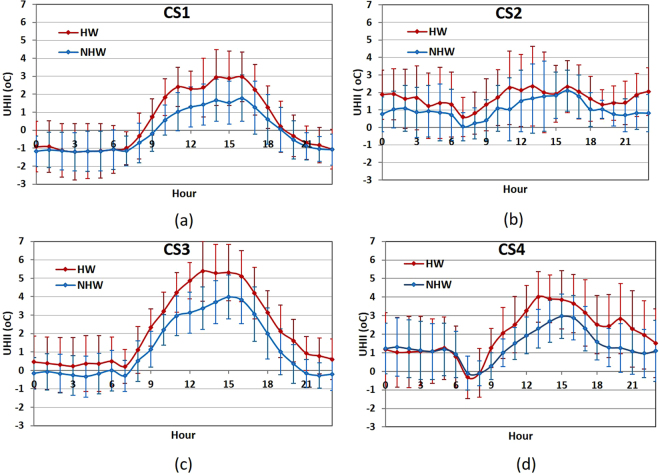
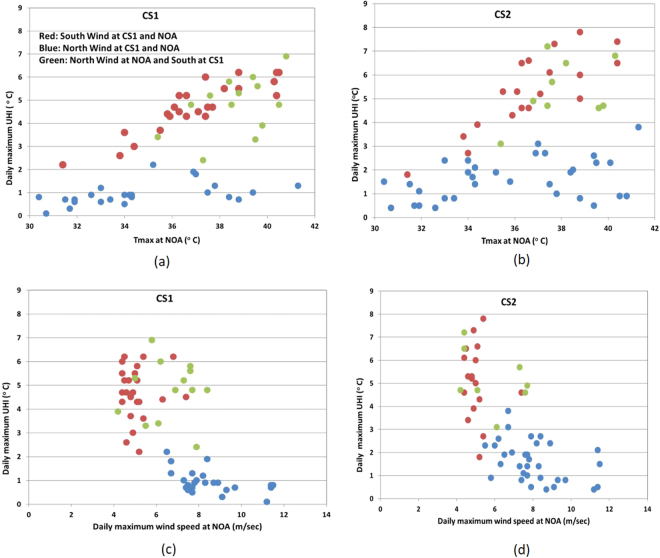
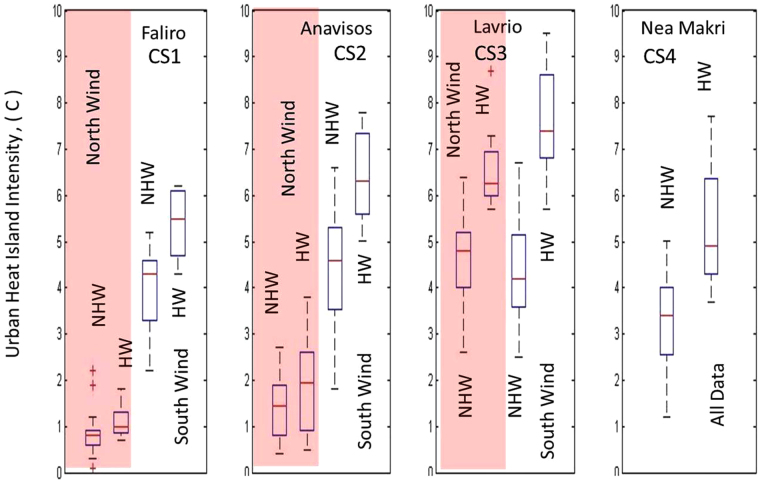
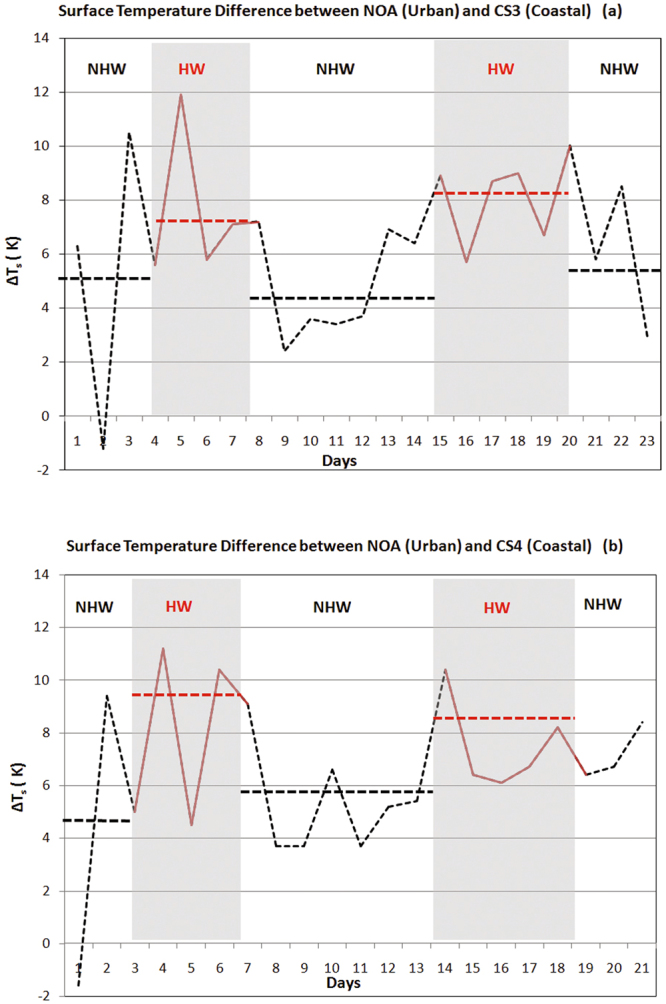
Heat waves (HWs) are recognized as a serious threat for human health worldwide, with urban areas being more vulnerable due to the urban heat island (UHI) effect and population density. Yet, in the climate change context, HWs are becoming more frequent, stronger and longer, which, coupled with intensifying urbanization exacerbates thermal risk for urban residents. Despite the profound impact of this global phenomenon there is no clear consensus so far on possible synergies between UHIs and HWs. The study sheds light on the complex synergies between UHIs and HWs focusing on coastal sites. A quite challenging period comprising five HW episodes during summer 2012 in Athens (Greece) was selected for analysis. A positive feedback between UHIs and HWs was found, with intensification of the average UHI magnitude by up to 3.5 °C during HWs, compared to summer background conditions. Our results contribute significantly to understanding synergies between UHIs and HWs that may strongly increase thermal risk in cities and vulnerability of urban population.
Overview
The claims and statistics of this paper haven’t been checked yet.
Free: it reads the open-access text and checks the first 5 claims that cite a source we can check. Create a free account to check every claim.
Integrity signals
Registry
Cites
Statistics
Figures
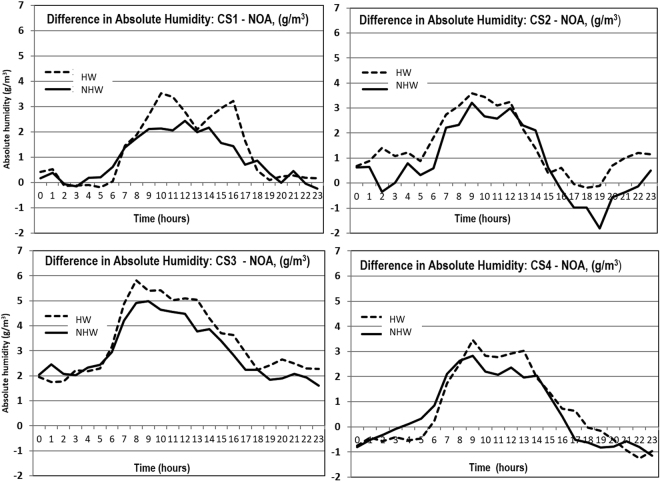
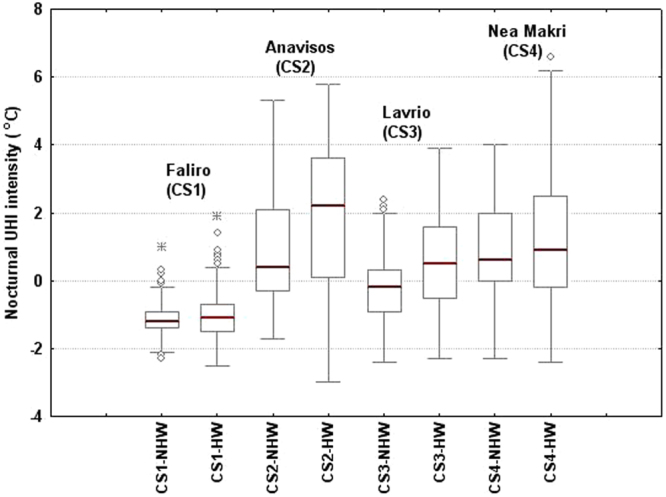
Verification
Claims the paper makes
The claims and statistics of this paper haven’t been checked yet.
Free: it reads the open-access text and checks the first 5 claims that cite a source we can check. Create a free account to check every claim.
Self-check
Percentages, sums and reported differences re-computed from the paper’s own numbers.
The self-check needs the paper’s full text.
Citations
Cites
The NCEP/NCAR 40-Year Reanalysis Project
Kalnay, E., Kanamitsu, M., Kistler, R., Collins, W., Deaven, D., Gandin, L., Iredell, M., Saha, S., White, G., Woollen, J., et al. (1996) · Bulletin of the American Meteorological Society · doi:10.1175/1520-0477(1996)077<0437:tnyrp>2.0.co;2 · Cited by 28,360
The energetic basis of the urban heat island
Oke, T. R. (1982) · Quarterly Journal of the Royal Meteorological Society · doi:10.1002/qj.49710845502 · Cited by 4,670
More Intense, More Frequent, and Longer Lasting Heat Waves in the 21st Century
Meehl, G. A., & Tebaldi, C. (2004) · Science · doi:10.1126/science.1098704 · Cited by 4,322
The role of increasing temperature variability in European summer heatwaves
Schär, C., Vidale, P. L., Lüthi, D., Frei, C., Häberli, C., Liniger, M. A., & Appenzeller, C. (2004) · Nature · doi:10.1038/nature02300 · Cited by 2,781
Climate change and human health: present and future risks
McMichael, A. J., Woodruff, R. E., & Hales, S. (2006) · The Lancet · doi:10.1016/s0140-6736(06)68079-3 · Cited by 2,585
City size and the urban heat island
Oke, T. R. (1973) · Atmospheric Environment (1967) · doi:10.1016/0004-6981(73)90140-6 · Cited by 2,535
Coumou, D., & Rahmstorf, S. (2012) · Nature Climate Change · doi:10.1038/nclimate1452 · Cited by 2,289
Human contribution to the European heatwave of 2003
Stott, P. A., Stone, D. A., & Allen, M. R. (2004) · Nature · doi:10.1038/nature03089 · Cited by 1,735
The Hot Summer of 2010: Redrawing the Temperature Record Map of Europe
Barriopedro, D., Fischer, E. M., Luterbacher, J., Trigo, R. M., & García-Herrera, R. (2011) · Science · doi:10.1126/science.1201224 · Cited by 1,656
Strong contributions of local background climate to urban heat islands
Zhao, L., Lee, X., Smith, R. B., & Oleson, K. (2014) · Nature · doi:10.1038/nature13462 · Cited by 1,577
Research works printed but not linked: 6
- 4. Roth, M. Urban Heat Islands (Chapter 11, 144-151). Handbook of Environmental Fluid Dynamics, Volume Two, edited by Harindra Joseph Shermal Fernando.© 2013 CRC Press/Taylor & Francis Group, LLC. ISBN: 978-1-4665-5601-0 (2013).
- 31. Changnon, S. A., Kunkel, K. E. & Reinke, B. C. Impacts and responses to the 1995 heat wave: a call to action. B. Am. Meteorol. Soc. 77, 1497-506 (1996). · doi:10.1175/1520-0477(1996)077
- 36. Oke, T. R. Urban climates and global change. In: Perry, A.; Thompson, R. (eds). Applied Climatology: Principles and Practice. London: Routledge: 273-287 (1997).
- 46. Unesco. 2014-2021. Medium-term strategy (As approved by the General Conference at its 37 th session (General Conference resolution 37C/Res.1) and validated by the Executive Board at its 194 th session (194 EX/Decision 18) (2014).
- 52. IPCC. 2012. Managing the Risks of Extreme Events and Disasters toAdvance Climate Change Adaptation. A Special Report of Working Groups I and II of the Intergovernmental Panel on Climate Change,Field CB, Barros V, Stocker TF, Qin D, Dokken DJ, EbiKL,Mastrandrea MD, Mach KJ, Plattner GK, Allen SK, TignorM,Midgley PM (eds). Cambridge University Press: Cambridge/ NewYork; 582 (2012).
- 58. Grimmond, C. S. B. & Oke, T. R. Turbulent heat-fluxes in urban areas: observations and a local-scale urban meteorological parameterization scheme (LUMPS). J Appl. Meteorol. 41, 792-810 (2002). · doi:10.1175/1520-0450(2002)041
Cited by
Items 201–300 of 467
Katavoutas, G., Founda, D., Varotsos, K. V., & Giannakopoulos, C. (2023) · Sustainability · doi:10.3390/su151712715 · Cited by 24
Self-citationChanges in urban heat island intensity during heatwaves in China
Shi, Z., & Jia, G. (2024) · Environmental Research Letters · doi:10.1088/1748-9326/ad5b0a · Cited by 25
“…would lead to an overestimation of the UHI intensity compared to inland stations because of the influence of sea-land breezes, which would increase the cooling mechanism through interactions between sea breezes and synoptic winds at coastal stations (Founda and Santamouris 2017, Ao et al 2019).”
Tziogas, C., Papadopoulos, A. M., & Georgiadis, P. (2020) · Energy Policy · doi:10.1016/j.enpol.2020.112100 · Cited by 24
Gupta, N., & Aithal, B. H. (2024) · Geocarto International · doi:10.1080/10106049.2023.2299145 · Cited by 27
“…affecting urban residents’ quality of life, leading to power outages, deteriorated air quality, health issues, increased levels of thermal discomfort, food and water shortages, and rise in extreme events, contributing to increased mortality rates (Founda and Santamouris 2017; Nandi and Swain 2022).”
Vasilakopoulou, K., & Santamouris, M. (2025) · PLOS Climate · doi:10.1371/journal.pclm.0000618 · Cited by 25
Self-citationThe Future of Climate-Resilient and Climate-Neutral City in the Temperate Climate Zone
Antoszewski, P., Krzyżaniak, M., & Świerk, D. (2022) · International Journal of Environmental Research and Public Health · doi:10.3390/ijerph19074365 · Cited by 24
Song, B.-G., & Park, K. (2020) · Sustainable Cities and Society · doi:10.1016/j.scs.2020.102615 · Cited by 23
Shi, L., & Ling, F. (2021) · Land · doi:10.3390/land10050454 · Cited by 23
Mokhtari, Z., Barghjelveh, S., Sayahnia, R., Qureshi, S., & Russo, A. (2022) · Land · doi:10.3390/land11081155 · Cited by 23
Spatiotemporal Analysis of Urban Thermal Effects Caused by Heat Waves through Remote Sensing
García, D. H., Díaz, J. A., Martín, A. M., & Cobos, E. G. (2022) · Sustainability · doi:10.3390/su141912262 · Cited by 22
Enhanced nighttime heatwaves over African urban clusters
Igun, E., Xu, X., Shi, Z., & Jia, G. (2022) · Environmental Research Letters · doi:10.1088/1748-9326/aca920 · Cited by 26
Li, K., Chen, Y., & Gao, S. (2021) · Remote Sensing · doi:10.3390/rs13173505 · Cited by 23
“In particular, the cities labelled as the high patterns in summer, possibly coupled with heat waves to pose great threats on residential health [57], needs a more comprehensive factor analysis for further mitigations.”
BackgroundUnderstanding cooling potential of urban trees in a typical North America neighborhood
Nevers, C., Carmeliet, J., Strebel, D., Wood, S. L. R., Kubilay, A., & Derome, D. (2025) · Building and Environment · doi:10.1016/j.buildenv.2025.113303 · Cited by 28
Bassani, F., Garbero, V., Poggi, D., Ridolfi, L., von Hardenberg, J., & Milelli, M. (2022) · Urban Climate · doi:10.1016/j.uclim.2022.101099 · Cited by 24
Kim, D., Park, K., Baik, J., Jin, H., & Han, B. (2024) · Urban Climate · doi:10.1016/j.uclim.2024.102050 · Cited by 21
Mapping temporal and spatial changes in land use and land surface temperature based on MODIS data
Chen, T.-L. (2020) · Environmental Research · doi:10.1016/j.envres.2020.110424 · Cited by 22
Koukelli, C., Prieto, A., & Aşut, S. (2021) · Applied Sciences · doi:10.3390/app12010082 · Cited by 21
Fox, J., Osmond, P., & Peters, A. (2018) · Climate · doi:10.3390/cli6030056 · Cited by 21
“The superimposition of inadvertent urban heating (i.e., UHIs) and global warming, including more frequent, longer and intense heat waves [13–15] elevates the risk of heat-related mortality and illness in cities [16–18] and extreme urban heat has detrimental outdoor comfort, economic and building energy impacts [19–21].”
BackgroundInfluentialThe Impact of Urban Warming on the Mortality of Vulnerable Populations in Seoul
Ngarambe, J., Santamouris, M., & Yun, G. Y. (2022) · Sustainability · doi:10.3390/su142013452 · Cited by 20
“The effect of UHI on heat-related mortalities has also been demonstrated in Athens [16], London [17], and Shanghai [18].”
BackgroundInfluentialSelf-citationNimac, I., Bulić, I. H., & Žuvela‐Aloise, M. (2022) · Urban Climate · doi:10.1016/j.uclim.2022.101343 · Cited by 21
Song, J., Lü, Y., Fischer, T. B., & Hu, K. (2023) · Frontiers of Environmental Science & Engineering · doi:10.1007/s11783-024-1771-z · Cited by 21
“This exacerbates heat stress from heatwaves in wet climates (Zhao et al., 2014; Founda and Santamouris, 2017).”
BackgroundTactical urban pocket parks (TUPPs) for subjective and objective multi-domain comfort enhancement
Rosso, F., Pioppi, B., & Pisello, A. L. (2023) · Journal of Environmental Management · doi:10.1016/j.jenvman.2023.119447 · Cited by 20
“Among these challenges, Urban Heat Island (UHI) (Oke, 1982) and the increasingly frequent presence of heatwaves (Falasca et al., 2019; Founda and Santamouris, 2017), pose serious challenges to the safety and wellbeing of citizens.”
BackgroundJi, Y., Song, J.-S., & Shen, P. (2023) · Building and Environment · doi:10.1016/j.buildenv.2023.111098 · Cited by 21
Wu, T., Wang, X., Xuan, L., Yan, Z., Wang, C., Du, C., Su, Y., Duan, J., & Yu, K. (2024) · Land · doi:10.3390/land13081117 · Cited by 23
Karamanis, D., Liu, H.-Y., Σκάνδαλος, Ν., Makis, A., Kapsalis, V. C., D’Agostino, D., Măduţa, C., Tolis, A., Trandafir, S., & Parker, D. (2024) · Environmental Research Infrastructure and Sustainability · doi:10.1088/2634-4505/ad8374 · Cited by 20
“The increase in the daytime ambient temperature may intensify the UHI phenomenon and increase the vulnerability to urban overheating or heat waves, especially in a cooling-dominated climate (Founda and Santamouris 2017).”
McDermot, C. R., Minocha, R., D’Amico, V., Long, S. L., & Trammell, T. L. E. (2020) · PLoS ONE · doi:10.1371/journal.pone.0236313 · Cited by 22
Overlapping heat and COVID-19 risk in New York City
Ortiz, L., Mustafà, A., Cantis, P. H., & McPhearson, T. (2022) · Urban Climate · doi:10.1016/j.uclim.2021.101081 · Cited by 20
Lemonsu, A., Caillaud, C., Alias, A., Riette, S., Seity, Y., Roy, B. L., Michau, Y., & Lucas‐Picher, P. (2023) · Climate Dynamics · doi:10.1007/s00382-022-06647-w · Cited by 20
“In particular, there is evidence that heat-wave conditions, which are expected to become much more frequent and severe in the future, are conducive to very strong UHI (Tan et al. 2010; Founda and Santamouris 2017; Yang et al. 2019).”
BackgroundNimac, I., Bulić, I. H., Žuvela‐Aloise, M., & Žgela, M. (2021) · International Journal of Climatology · doi:10.1002/joc.7507 · Cited by 19
“For the Mediterranean area, an increase in UHI intensity (UHII) during HW episodes has been found (Founda and Santamouris, 2017; Pyrgou et al., 2020).”
BackgroundSpyrou, G., Ioannou, B. I., Souliotis, M., Savvides, A., & Fokaides, P. A. (2023) · Sustainability · doi:10.3390/su15076133 · Cited by 19
Debnath, K. B., Jenkins, D. P., Patidar, S., Peacock, A. D., & Bridgens, B. (2023) · ASME Journal of Engineering for Sustainable Buildings and Cities · doi:10.1115/1.4064021 · Cited by 24
Hằng, H. T., & Alshayeb, M. J. (2025) · Environmental Technology & Innovation · doi:10.1016/j.eti.2025.104164 · Cited by 21
Ali, M. A. S., & Yi, L. (2022) · Environmental Science and Pollution Research · doi:10.1007/s11356-021-17858-9 · Cited by 18
“(2015) and Founda and Santamouris (2017) claim that due to urban heat island impacts, the urban areas are extremely vulnerable to major climate change incidents.”
BackgroundZhong, X., Zhao, L., Wu, R., Zhao, H., Zhang, X., Ren, P., & Zhang, Y. (2024) · Building and Environment · doi:10.1016/j.buildenv.2024.111389 · Cited by 18
Regional and altitudinal aspects in summer heatwave intensification in the Western Carpathians
Lukasová, V., Škvareninová, J., Bíčárová, S., Sitárová, Z., Hlavatá, H., Borsányi, P., & Škvarenina, J. (2021) · Theoretical and Applied Climatology · doi:10.1007/s00704-021-03789-5 · Cited by 18
DEVELOPMENT OF ANNUAL URBAN HEAT ISLAND IN BAGHDAD UNDER CLIMATE CHANGE
Wahab, B. I., Naïf, S. S., & Al-Jiboori, M. H. (2022) · Journal of Environmental Engineering and Landscape Management · doi:10.3846/jeelm.2022.16374 · Cited by 20
On the mitigation potential of higher urban albedo in a temperate oceanic metropolis
Falasca, S., Zinzi, M., Ding, L., Curci, G., & Santamouris, M. (2022) · Sustainable Cities and Society · doi:10.1016/j.scs.2022.103850 · Cited by 18
Self-citationSimulation of particle resuspension by wind in an urban system
Banari, A., Hertel, D., Schlink, U., Hampel, U., & Lecrivain, G. (2022) · Environmental Fluid Mechanics · doi:10.1007/s10652-022-09905-x · Cited by 19
Continent‐wide parallel urban evolution of increased heat tolerance in a common moth
Merckx, T., Nielsen, M. E., Kankaanpää, T., Kadlec, T., Yazdanian, M., & Kivelä, S. M. (2023) · Evolutionary Applications · doi:10.1111/eva.13636 · Cited by 18
“Given that the UHI is associated with more frequent heat extremes (Founda & Santamouris, 2017; Zhao et al., 2018), we predicted that both larvae and adults with urban origins would tolerate heat for longer than those with rural origins.”
BackgroundFeng, Y., Zhang, K., Li, A., Zhang, Y., Wang, K., Guo, N., Wan, H. Y., Tan, X., Dong, N., Xu, X. H., et al. (2024) · Land · doi:10.3390/land13091474 · Cited by 17
Boafo, Y. A., Amankwaa, E. F., Spataru, C., & Carvalho, P. (2025) · Urban Climate · doi:10.1016/j.uclim.2025.102287 · Cited by 18
The roles of meteorological parameters in Shanghai’s nocturnal urban heat island from 1979 to 2013
Huang, Q., Li, L., Yu-qi, L., Yang, Y., & Li, M. (2020) · Theoretical and Applied Climatology · doi:10.1007/s00704-020-03214-3 · Cited by 17
Chau, H.-W., Abuseif, M., Geng, S., & Jamei, E. (2025) · Land · doi:10.3390/land14050961 · Cited by 19
The effect of climate change and urbanization on outdoor microclimate: A case study in Berlin
Ascione, F., Böttcher, O., Manniti, G., Mastellone, M., & Mühle, J. (2024) · Energy and Buildings · doi:10.1016/j.enbuild.2024.114024 · Cited by 17
Assessing energy poverty indicators towards club convergence in Europe
Halkos, G., Bampatsou, C., & Aslanidis, P. C. (2025) · Energy Efficiency · doi:10.1007/s12053-025-10328-y · Cited by 16
Micro-Urban Heatmapping: A Multi-Modal and Multi-Temporal Data Collection Framework
Hu, M., Ghorbany, S., Yao, S., & Wang, C. (2024) · Buildings · doi:10.3390/buildings14092751 · Cited by 15
Spyrou, C., Koukoula, M., Saviolakis, P. M., Zerefos, C., Loupis, M., Masouras, C., Pappa, A., & Katsafados, P. (2024) · Sustainability · doi:10.3390/su16229729 · Cited by 15
García, D. H., Founda, D., & Rezapouraghdam, H. (2025) · Urban Climate · doi:10.1016/j.uclim.2024.102281 · Cited by 16
Self-citationMonitoring the Detailed Dynamics of Regional Thermal Environment in a Developing Urban Agglomeration
Liu, Y., Li, H., Gao, P., & Zhong, C. (2020) · Sensors · doi:10.3390/s20041197 · Cited by 15
Gamarro, H., Ortiz, L., & González, J. E. (2020) · ASME Journal of Engineering for Sustainable Buildings and Cities · doi:10.1115/1.4048175 · Cited by 18
Green Infrastructures to Face Climate Change in an Urbanizing World
Pauleit, S., Fryd, O., Backhaus, A., & Jensen, M. B. (2020) · Springer eBooks · doi:10.1007/978-1-0716-0684-1_212 · Cited by 20
Wendnagel‐Beck, A., Ravan, M., Iqbal, N., Birkmann, J., Somarakis, G., Hertwig, D., Chrysoulakis, N., & Grimmond, S. (2021) · Urban Planning · doi:10.17645/up.v6i4.4515 · Cited by 15
“…concentra‐ tion of vulnerable groups, (b) climate change combining both urban (e.g., urban heat island) and regional influ‐ ences (e.g., heat waves; Founda & Santamouris, 2017), (c) damage potential, (d) high dependency on infrastruc‐ ture services that might collapse in extreme events, and (e)…”
BackgroundRoukounakis, N., Varotsos, K. V., Katsanos, D., Lemesios, I., Giannakopoulos, C., & Retalis, A. (2023) · Sustainability · doi:10.3390/su152316509 · Cited by 14
Xin, J., Zhang, Y., Bai, W., & Song, Z. (2024) · Atmospheric Research · doi:10.1016/j.atmosres.2024.107721 · Cited by 14
Tasan, M., Dąbrowska, J., & Michałowska, K. (2025) · Building and Environment · doi:10.1016/j.buildenv.2025.113603 · Cited by 15
Major challenges in the urbanizing world and role of earth observations for livable cities
Upreti, M., Saikia, P., Shilky, Lal, P., & Kumar, A. (2024) · Elsevier eBooks · doi:10.1016/b978-0-323-99164-3.00002-1 · Cited by 18
Is PET an Adequate Index to Determine Human Thermal Comfort in Mexico City?
Ballinas, M., Morales-Santiago, S. I., Barradas, V. L., Lira, A., & Oliva-Salinas, G. (2022) · Sustainability · doi:10.3390/su141912539 · Cited by 14
Recent urbanization increases exposure to humid-heat extreme events over populated regions of China
Chen, H., He, W., & Zhang, S. (2023) · Atmospheric and Oceanic Science Letters · doi:10.1016/j.aosl.2023.100409 · Cited by 18
Wang, J., Zhou, W., & McPhearson, T. (2025) · npj Urban Sustainability · doi:10.1038/s42949-025-00223-x · Cited by 14
Differential Urban Heat Vulnerability: The Tale of Three Alabama Cities
Fall, S., Coulibaly, K. M., Quansah, J. E., & Afandi, G. E. (2023) · Urban Science · doi:10.3390/urbansci7040121 · Cited by 12
Parliari, D., Economou, T., Giannaros, C., Kushta, J., Melas, D., Matzarakis, A., & Lelieveld, J. (2024) · Urban Climate · doi:10.1016/j.uclim.2024.102088 · Cited by 12
Urban Heat Island and Advanced Mitigation Technologies
Feng, J., Gao, K., Garshasbi, S., Karlessi, T., Pyrgou, A., Ranzi, G., Santamouris, M., Synnefa, A., & Ulpiani, G. (2021) · Elsevier eBooks · doi:10.1016/b978-0-12-819727-1.00086-8 · Cited by 13
Self-citationGarcía, D. H. (2023) · Sustainability · doi:10.3390/su151310410 · Cited by 15
Greece 2023: Crazy Summer or New Normal—Lessons Not Learned
Matzarakis, A., & Nastos, P. T. (2024) · Atmosphere · doi:10.3390/atmos15101241 · Cited by 12
Wang, F., Campino, A. A., Belušić, D., Amorim, J. H., Ribeiro, I., Wiréhn, L., Segersson, D., Döscher, R., Navarra, C., Neset, T., et al. (2025) · Urban Climate · doi:10.1016/j.uclim.2025.102286 · Cited by 11
Inversion breakup over different shapes of urban areas
Fan, Y., Hunt, J. C. R., Wang, Q., & Li, Y. (2020) · Building and Environment · doi:10.1016/j.buildenv.2020.107548 · Cited by 11
Dynamics of urban heat island intensity in Lecce, Italy: seasonal, diurnal and heat wave influence
Pappaccogli, G., Giangrande, F., Esposito, A., Donateo, A., Lionello, P., & Buccolieri, R. (2024) · Bulletin of Atmospheric Science and Technology · doi:10.1007/s42865-024-00072-z · Cited by 11
“Founda and Santamouris (2017) found that HWs amplified the UHII up to 3.5 °C compared to normal summer conditions in Athens during the summer of 2012.”
InfluentialStatistical Assessment of the Changing Climate of Vadodara City, India During 1969-2006
Kandya, A., Sarkar, J., Chhabra, A., Chauhan, S., Khatri, D., Vaghela, A., & Kolte, S. (2021) · European Journal of Climate Change · doi:10.34154/2021-ejcc-0015-01-18/euraass · Cited by 11
Taha, H. (2021) · Sustainability · doi:10.3390/su13179709 · Cited by 11
Dai, X., Liu, Q., Huang, C., & Li, H. (2021) · International Journal of Environmental Research and Public Health · doi:10.3390/ijerph182212153 · Cited by 12
Nduka, I. C., Huang, T., Li, Z., Yang, Y., & Yim, S. H. L. (2022) · Environmental Pollution · doi:10.1016/j.envpol.2022.119782 · Cited by 11
Urban overheating mitigation through facades: the role of new and innovative cool coatings
Manni, M., Kousis, I., Lobaccaro, G., Fiorito, F., Cannavale, A., & Santamouris, M. (2022) · Elsevier eBooks · doi:10.1016/b978-0-12-822477-9.00013-9 · Cited by 13
Self-citationImpact of Urbanization on Surface Temperature in Morocco: A Multi-City Comparative Study
Lachkham, M. A., Bounoua, L., Ed-dahmany, N., & Khebiza, M. Y. (2025) · Land · doi:10.3390/land14061280 · Cited by 10
A Habitat-Template Approach to Green Wall Design in Mediterranean Cities
Patti, M., Musarella, C. M., & Spampinato, G. (2025) · Buildings · doi:10.3390/buildings15142557 · Cited by 10
Petrou, I., Kyriazis, N., & Kassomenos, P. A. (2023) · Sustainability · doi:10.3390/su151310633 · Cited by 10
Tropical and mid-latitude causal drivers of the eastern Mediterranean Etesians during boreal summer
Capua, G. D., Tyrlis, E., Matei, D., & Donner, R. V. (2024) · Climate Dynamics · doi:10.1007/s00382-024-07411-y · Cited by 13
“…by the advection of colder air masses originating over eastern Europe to the Balkans and the Middle East, thus mitigating surface air temperatures in the affected region and preventing the formation of heat waves during the summer season (Metaxas and Bartzokas 1994; Founda and Santamouris 2017).”
High-Resolution Simulations of the Urban Thermal Climate in Suzhou City, China
Chen, Y., Zhang, N., & Zhu, Y. (2019) · Atmosphere · doi:10.3390/atmos10030118 · Cited by 10
Changes on Earth as a Result of Interaction Between the Society and Nature
Kerényi, A., & McIntosh, R. W. (2019) · Sustainable development goals series · doi:10.1007/978-3-030-21645-0_4 · Cited by 11
Health Risk Assessment and Influencing Factors Analysis of High Temperatures on Negative Emotions
Huang, H., Zhang, S., Xiong, S., & Shi, C. (2022) · Buildings · doi:10.3390/buildings12071040 · Cited by 11
Spatiotemporal evolution of surface urban heat islands: Concerns regarding summer heat wave periods
Ren, J., Yang, J., Yu, W., Cong, N., Xiao, X., Xia, J. C., & Li, X. (2024) · Journal of Geographical Sciences · doi:10.1007/s11442-024-2239-6 · Cited by 10
“Founda and Santamouris (2017) reported positive feedback between UHIs and HWs, with an average UHI enhancement of up to 3.5 ℃ during summer HWs. Surface solar radiation during HWs was approximately 1.5 times higher than normal, and the enhanced solar radiation was absorbed by the urban canopy…”
InfluentialSchuster, H., Axel Polleres, A., Anjomshoaa, A., & Wachs, J. (2025) · Scientific Reports · doi:10.1038/s41598-025-05676-9 · Cited by 11
Ruiz‐Valero, Á., Pereña-Ortiz, J. F., Martín‐Lozano, I., Cortés‐Molino, Á., Cozano‐Pérez, P., Galindo‐Ruiz, B., Díaz‐Galiano, L. A., & Tierra, Á. E. S. (2025) · Plants People Planet · doi:10.1002/ppp3.70085 · Cited by 10
“LST has been shown to be highly correlated with air temperature in scientific literature, constituting a valid variable to study UHIs and their intensities (Kim & Brown, 2021).”
InfluentialLi, S., Biljecki, F., Liu, P., & Stouffs, R. M. F. A. (2025) · Sustainable Cities and Society · doi:10.1016/j.scs.2025.107000 · Cited by 10
Urban Heat Island and Future Projections: A Study in Thessaloniki, Greece
Keppas, S. C., Parliari, D., Kontos, S., Poupkou, A., Papadogiannaki, S., Tzoumaka, P., Kelessis, A. G., & Melas, D. S. (2021) · Studies in systems, decision and control · doi:10.1007/978-3-030-70190-1_14 · Cited by 9
Quattrone, G. (2023) · Green Building & Construction Economics · doi:10.37256/gbce.4120232269 · Cited by 9
Sierka, E. M., & Pierzchała, Ł. (2022) · Journal of Water and Land Development · doi:10.24425/jwld.2022.143726 · Cited by 10
Advances in remote sensing in measuring urban heat island effect and its management
Singh, S., Mall, R. K., Chaturvedi, A., Singh, N., & Srivastava, P. K. (2024) · Elsevier eBooks · doi:10.1016/b978-0-323-99164-3.00011-2 · Cited by 12
Gupta, N., & Aithal, B. H. (2022) · International Review for Spatial Planning and Sustainable Development · doi:10.14246/irspsd.10.4_79 · Cited by 14
On the Electrification of Winter Season in Cold Climate Megacities—The Case of New York City
Gamarro, H., & González, J. E. (2023) · ASME Journal of Engineering for Sustainable Buildings and Cities · doi:10.1115/1.4063377 · Cited by 10
Grey Relational Modelling of Land Surface Temperature (LST) for Ranking Indian Urban Cities
Sankalp, S., & Sahoo, S. N. (2022) · Environmental Processes · doi:10.1007/s40710-022-00588-6 · Cited by 9
“Population expansion, followed by industrial and technological transformation, have led to the switchover of nature to densely populated localities (Founda and Santamouris 2017).”
BackgroundHalkos, G., Aslanidis, P. C., Landis, C., Papadaki, L., & Koundouri, P. (2024) · City and Environment Interactions · doi:10.1016/j.cacint.2024.100178 · Cited by 8
Shi, T., Yang, Y., Qi, P., & Lolli, S. (2025) · Atmospheric chemistry and physics · doi:10.5194/acp-25-17069-2025 · Cited by 10
“For example, the CUHII in Shanghai during HW periods and its difference from that in non-heatwave periods are strongest around noon (Ao et al., 2019; Tan et al., 2010), and this pattern has also been verified in Athens, Greece (Founda et al., 2017).”
Numerical Investigation of Interventions to Mitigate Heat Stress: A Case Study in Dubai
Korkut, T. B., & Rachid, A. (2024) · Energies · doi:10.3390/en17102242 · Cited by 8
Zhao, Y., Zhong, L., Zhou, K., Liu, B., & Shu, W. (2024) · Geophysical Research Letters · doi:10.1029/2024gl109018 · Cited by 8
“Founda and Santamouris (2017) indicated an intensification of the UHII of 3.5°C by analyzing five heat wave episodes in Athens.”
BackgroundInfluentialMaracchini, G., Bavarsad, F. S., Giuseppe, E. D., & D’Orazio, M. (2023) · Smart innovation, systems and technologies · doi:10.1007/978-981-19-8769-4_27 · Cited by 8
Cai, Z., Fan, C., Chen, F., & Li, X. (2021) · Atmosphere · doi:10.3390/atmos12111540 · Cited by 8
Visualization of landuse change pattern and its impact on Urban Heat Islands
Gupta, N., Bharath, H. A., & Ramachandra, T. V. (2022) · Elsevier eBooks · doi:10.1016/b978-0-323-85539-6.00001-9 · Cited by 9
Potential impact of climate change on heatwaves at the urban scale: An evaluation in Valencia, Spain
Fernandez-Garza, A., Gielen, E., Pulido-Velázquez, M., Avila-Velasquez, D. I., Rubio-Martín, A., & Sorribes, H. M. (2025) · Urban Climate · doi:10.1016/j.uclim.2025.102681 · Cited by 7
Esposito, A., Buccolieri, R., Santiago, J. L., & Pappaccogli, G. (2025) · Climate · doi:10.3390/cli14010002 · Cited by 7
“Moreover, extreme heat events such as heatwaves are known to exacerbate UHII, such as higher background temperatures, reduced nighttime cooling, and increasingly dry surface conditions, amplifying the thermal contrast between urban and rural areas [2,3].”
Petrou, I., Kassomenos, P. A., & Kyriazis, N. (2025) · Atmosphere · doi:10.3390/atmos16091093 · Cited by 8
Metadata
- Authors
- Founda, D., & Santamouris, M.
- Affiliations
- National Observatory of Athens (GR)
- National and Kapodistrian University of Athens (GR)
- Corresponding author
- Founda, Dimitra
- Venue
- Scientific Reports
- Published
- 2017-09-08
- Volume
- 7
- Issue
- 1
- Pages
- 10973-10973
- ISSN
- 2045-2322 (ISSN-L)
- PMC
- PMC5591211
- OpenAlex
- W2752726467
- Semantic Scholar
- 9d4b0a7a139dbcb000c5abe0e1ff29d353fc5ab0
- Cited by
- 437
- References
- 56
- Citations by year
- 2026: 46 · 2025: 58 · 2024: 52 · 2023: 50 · 2022: 72 · 2021: 59 · 2020: 48 · 2019: 32 · 2018: 17 · 2017: 2
- FWCI
- 15.19
- Type
- journal article
- Language
- en
- Open access
- gold
- doi.org
- Licence
- cc-by
- creativecommons.org/licenses/by/4.0 (tdm)
- creativecommons.org/licenses/by/4.0 (vor)
- Locations
- Scientific Reports (publishedVersion, cc-by)
- PubMed Central (publishedVersion, cc-by)
- PubMed (publishedVersion)
- DOAJ (DOAJ: Directory of Open Access Journals) (submittedVersion)
- UNSWorks (University of New South Wales, Sydney, Australia) (submittedVersion, cc-by)
- Topics
- Physical Sciences › Environmental Science › Environmental Engineering › Urban Heat Island Mitigation
- Physical Sciences › Environmental Science › Health, Toxicology and Mutagenesis › Climate Change and Health Impacts
- Physical Sciences › Environmental Science › Global and Planetary Change › Climate variability and models
- Keywords
- urban heat island, heat waves, synergistic effect, coastal cities, thermal risk, positive feedback, Athens, summer 2012, extreme heat
About these checks
Registry, retraction, Cites and statistics results are computed, not judged, with one exception: a printed reference that no index lists is read once by a model before it counts as a citation error. Claims are extracted by a model and kept only when their quote appears verbatim in the text; each cited source is then checked, with a model’s help, for whether it says what the claim relies on. Those verdicts can be wrong — read the claim’s quote and the cited source before relying on one.
Statistics and arithmetic are recomputed, not judged.
Confidence bands are shown only for fields calibrated on our annotated test set. None is calibrated yet, so no band is shown.
What counts as a claim ›How we measure confidence ›How we check this ›
Are you an author, or do you see a problem with this page? Request a review
Data sources
Bibliographic data: Semantic Scholar, OpenAlex, Crossref.
Contains information from the Semantic Scholar Academic Graph Datasets, made available under the ODC Attribution License (ODC-BY 1.0).
Semantic Scholar’s data is described in: Kinney, R., et al. (2023). The Semantic Scholar Open Data Platform. arXiv:2301.10140.
