

Skeletal fluorosis in relation to drinking water in rural areas of West Azerbaijan, Iran
Open accessThe DOI matches its Crossref record; 27 of the 28 references it cites were found in a registry or an index.
Abstract
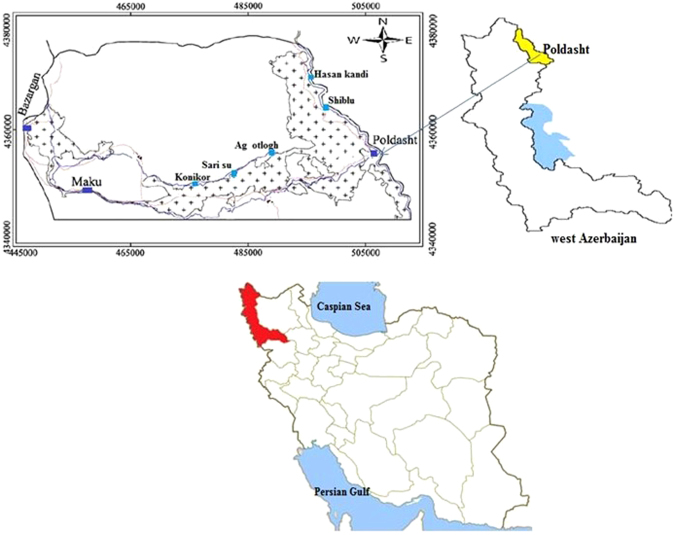
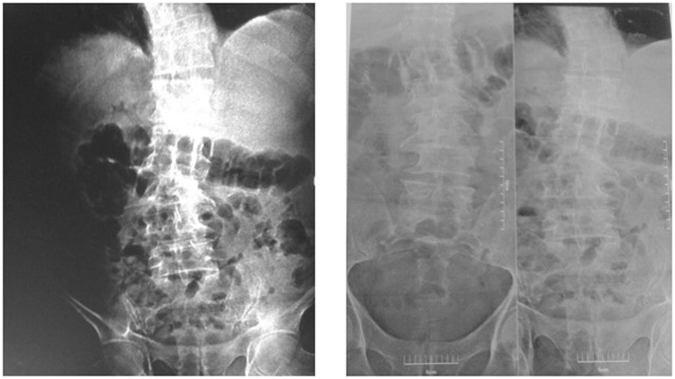
Skeletal fluorosis resulting from high fluoride level in drinking water is a major public health problem. The present study evaluated the association between exposures to drinking water fluoride and skeletal fluorosis in 5 villages of Poldasht County, Iran. All the data and information on the prevalence of bone diseases were obtained from the Health Record Department, Poldasht Health Centre. To obtain the odds ratio of bone disease problem in different risk factors, when considering the cluster effect of rural area, logistic regression in a multilevel model was used. Results showed that skeletal fluorosis of people who live in areas with high fluoride concentration is 18.1% higher than that of individuals who live in areas with low fluoride concentration. Skeletal fluorosis (54.5%) was observed in the age group of 71 years and above, and was more commonly found in females than males. According to Unadjusted, individuals who consume ≤3 unit milk and dairy products per week have almost the same level of bone diseases as compared to those that consume more than 3 units. This study indicated that, skeletal fluorosis is a general health problem in these rural areas because the results revealed that high percentage of the studied population had symptoms of skeletal fluorosis.
Overview
The claims and statistics of this paper haven’t been checked yet.
Free: it reads the open-access text and checks the first 5 claims that cite a source we can check. Create a free account to check every claim.
Integrity signals
Registry
Cites
Statistics
Figures
Verification
Claims the paper makes
The claims and statistics of this paper haven’t been checked yet.
Free: it reads the open-access text and checks the first 5 claims that cite a source we can check. Create a free account to check every claim.
Claims other papers make about this one
Each is checked against this paper’s own text: does it say what the citing paper says it does?
The source backs part of the claim, not all of it — or backs it for a different population, condition or comparison.
In the citing paper
“Excess fluoride, or fluorosis, is most commonly linked to bone malformations and dental staining, but development or exacerbation of anemia has also been documented in humans and experimental animals [119, 120].”
From Environmental Contaminants, Iron Deficiency, and Iron‐Deficiency Anemia: A Review of the Literature (2025) · cites this paper as [120]
Experimental — accuracy not yet measured
Self-check
Percentages, sums and reported differences re-computed from the paper’s own numbers.
The self-check needs the paper’s full text.
Citations
Cites
Journal Of Clinical and Diagnostic Research
(2014) · Wilderness & Environmental Medicine · doi:10.1016/j.wem.2013.09.006 · Cited by 763
Fluoride: a Review of Use and Effects on Health
Kanduti, D., Sterbenk, P., & Artnik, A. (2016) · Materia Socio Medica · doi:10.5455/msm.2016.28.133-137 · Cited by 301
Endemic fluorosis in southern Rajasthan, India
Choubisa, S. L. (2001) · Fluoride · Cited by 131
Susheela, A. K., Kumar, A. R., Bhatnagar, M., & Bahudur, R. (1993) · Cited by 116
Sun, L., Gao, Y., Liu, H., Zhang, W., Ding, Y., Li, B., Li, M., & Sun, D. (2012) · The Science of The Total Environment · doi:10.1016/j.scitotenv.2012.11.021 · Cited by 89
Liu, H., Gao, Y., Sun, L., Li, M., Li, B., & Sun, D. (2013) · International Journal of Hygiene and Environmental Health · doi:10.1016/j.ijheh.2013.08.001 · Cited by 87
Monitoring of Fluoride in Groundwater Resources of Iran
Mesdaghinia, A., Vaghefi, K. A., Montazeri, A., Mohebbi, M. R., & Saeedi, R. (2010) · Bulletin of Environmental Contamination and Toxicology · doi:10.1007/s00128-010-9950-y · Cited by 83
Resposta brasileira à tuberculose: contexto, desafios e perspectivas
Rodrigues, L. C., Barreto, M. L., Kramer, M., & Barata, R. B. (2007) · Revista de Saúde Pública · doi:10.1590/s0034-89102007000800001 · Cited by 77
Mohammadi, A. A., Yaghmaeian, K., Faraji, H., Nabizadeh, R., Dehghani, M. H., Khaili, J. K., & Mahvi, A. H. (2017) · Desalination and Water Treatment · doi:10.5004/dwt.2017.20341 · Cited by 70
Self-citationAmouei, A., Mahvi, A. H., Mohammadi, A., Asgharnia, H., Fallah, H., & Khafajeh, A. A. (2012) · PubMed · Cited by 69
Self-citationRelação entre níveis de fluoreto na água de abastecimento público e fluorose dental
Catani, D. B., Hugo, F. N., Cypriano, S., de Sousa, M. D. L. R., & Cury, J. A. (2007) · Revista de Saúde Pública · doi:10.1590/s0034-89102007000500007 · Cited by 69
Skeletal Fluorosis from Brewed Tea
Izuora, K., Twombly, J. G., Whitford, G. M., Demertzis, J., Pacifici, R., & Whyte, M. P. (2011) · The Journal of Clinical Endocrinology & Metabolism · doi:10.1210/jc.2010-2891 · Cited by 62
Faraji, H., Mohammadi, A. A., Akbari‐adergani, B., Saatloo, N. V., Lashkarboloki, G., & Mahvi, A. H. (2014) · PubMed Central · Cited by 56
Self-citationMohammadi, A. A., Yousefi, M., & Mahvi, A. H. (2017) · Data in Brief · doi:10.1016/j.dib.2017.05.045 · Cited by 56
Self-citationInfluence of exposure to various fluoride technologies on the prevalence of dental fluorosis
Clark, D. C., Hann, H. J., Williamson, M. F., & Berkowitz, J. (1994) · Community Dentistry And Oral Epidemiology · doi:10.1111/j.1600-0528.1994.tb00798.x · Cited by 55
Choubisa, S. L., Choubisa, L., & Choubisa, D. (2009) · Fluoride · Cited by 47
Karthikeyan, G., Pius, A., & Apparao, B. V. (1996) · Cited by 46
Skeletal Fluorosis Due to Excessive Tea Drinking
Kakumanu, N., & Rao, S. D. (2013) · New England Journal of Medicine · doi:10.1056/nejmicm1200995 · Cited by 44
Determination of fluoride concentration in powdered milk in Iran 2010
Mahvi, A. H., Ghanbarian, M., Ghanbarian, M., Khosravi, A., & Ghanbarian, M. (2011) · British Journal Of Nutrition · doi:10.1017/s0007114511003941 · Cited by 31
Self-citationAghaei, M., Derakhshani, R., Raoof, M., Dehghani, M., & Mahvi, A. H. (2015) · Utrecht University Repository (Utrecht University) · doi:10.13140/rg.2.1.2919.0484 · Cited by 27
Self-citationThe Association Between Water-borne Fluoride and Bone Mineral Density in Older Adults
Phipps, K. R., ORWOLL, E. S., & Bevan, L. (1998) · Journal of Dental Research · doi:10.1177/00220345980770091001 · Cited by 25
Asawa, K., Singh, A., Bhat, N. N., Tak, M., Shinde, K., & Jain, S. (2015) · JOURNAL OF CLINICAL AND DIAGNOSTIC RESEARCH · doi:10.7860/jcdr/2015/15807.6958 · Cited by 24
SKELETAL FLUOROSIS FROM INDOOR BURNING OF COAL IN SOUTHWESTERN CHINA
Watanabe, T., Kondo, T., Asanuma, S., Ando, M., Tamura, K., Sakuragi, S., Rongdi, J., & Chaoke, L. (2000) · Cited by 24
Grobler, S. R., Louw, A., Chikte, U. M. E., Rossouw, R. J., & Kotze, T. (2009) · The Open Dentistry Journal · doi:10.2174/1874210600903010048 · Cited by 18
Physical and chemical quality assessment of potable groundwater in Rural Areas of Khaf
Mohammadi, A., Mahvi, A., Amouei, A., fallah, S., Asgharnia, H., & Khafajeh, A. A. (2014) · طلوع بهداشت یزد · Cited by 16
Self-citationRelationship Between Fluoride Levels In The Public Water Supply And Dental Fluorosis
Catani, D. B., Hugo, F. N., Cypriano, S., et al. (2007) · Scopus · Cited by 15
Influence of selected anions on fluoride removal in electrocoagulation/electroflotation
Maleki, A., Mahvi, A. H., Daraei, H., Rezaei, R., Meihami, N., Mohammadi, K., & Zandi, S. (2015) · Cited by 14
Self-citation
Research works printed but not linked: 7
- Edmunds, M & Smedley, P. L. Fluoride in natural waters Essentials of medical geology. Elsevier Academic Press, Burlington, 2005; 301–29.
- Karimzade S Aghaei M Mahvi AH Investigation of intelligence quotient in 9–12-year-old children exposed to high and low-drinking water fluoride in west Azerbaijan province, Iran Fluoride. 2014 47 9 14
- Aghaei M hypertension and fluoride in drinking water: case study from west Azerbaijan, Iran Research report Fluoride. 2015 48 252 258
- Shamsollahi HR Zolghadr Z Mahvi AH Hosseini SS Mossavic SN The Effect of temperature, water hardness, and exposure time on Fluoride toxicity in the Aquatic Environment Fluoride. 2015 48 338 44
- Poureslami HR Khazaeli P Faryabi A Mahvi AH Fluoride levels and dental fluorosis in deciduous teeth of students residing in Koohbanan, Iran, a city with high-fluoride water and food Fluoride. 2013 46 224 9
- Shanthi M Thimma Reddy BV Shivani K Health Impact to Different Concentrations of Fluoride in Drinking Water of South India Int J Sci Stud. 2014 2 2 5
- Choubisa SL Modasiya V Bahura CK Sheikh Z Toxicity of Fluoride in Cattle of The Indian Thar Desert Rajasthan, India, Research report Fluoride. 2012 45 371 376
Cited by
Fluoride in Drinking Water and Skeletal Fluorosis: a Review of the Global Impact
Srivastava, S., & Flora, S. J. S. (2020) · Current Environmental Health Reports · doi:10.1007/s40572-020-00270-9 · Cited by 420
Abbasnia, A., Yousefi, N., Mahvi, A. H., Nabizadeh, R., Radfard, M., Yousefi, M., & Alimohammadi, M. (2019) · Human and Ecological Risk Assessment: An International Journal · doi:10.1080/10807039.2018.1458596 · Cited by 385
Self-citationAlarcón-Herrera, M. T., Martin-Alarcon, D. A., Gutiérrez, M., Reynoso-Cuevas, L., Martín-Domínguez, A., Olmos-Márquez, M. A., & Bundschuh, J. (2020) · Science of The Total Environment · doi:10.1016/j.scitotenv.2019.134168 · Cited by 234
Engineered nanomaterials for water decontamination and purification: From lab to products
Khan, S. T., & Malik, A. (2019) · Journal of Hazardous Materials · doi:10.1016/j.jhazmat.2018.09.091 · Cited by 202
Radfard, M., Yunesian, M., Nabizadeh, R., Biglari, H., Nazmara, S., Hadi, M., Yousefi, N., Yousefi, M., Abbasnia, A., & Mahvi, A. H. (2019) · Human and Ecological Risk Assessment: An International Journal · doi:10.1080/10807039.2018.1458210 · Cited by 176
“Fluoride is a micro-essential element for humans that protects teeth against microbial attack, especially in childhood (KazemiMoghadam et al. 2018; Yousefi et al. 2018; Mohammadi et al. 2017; Neisi et al. 2018; Mirzabeygi et al. 2018).”
BackgroundSelf-citation
Metadata
- Authors
- Mohammadi, A. A., Yousefi, M., Yaseri, M., Jalilzadeh, M., & Mahvi, A. H.
- Affiliations
- University of Neyshabur (IR)
- Tehran University of Medical Sciences (IR)
- Urmia University of Medical Sciences (IR)
- Center for Solid Waste Research (IR)
- Corresponding author
- Mahvi, Amir Hossein
- Venue
- Scientific Reports
- Published
- 2017-12-11
- Volume
- 7
- Issue
- 1
- Pages
- 17300-17300
- ISSN
- 2045-2322 (ISSN-L)
- PMC
- PMC5725489
- OpenAlex
- W2773871819
- Cited by
- 180
- References
- 28
- Citations by year
- 2026: 10 · 2025: 12 · 2024: 17 · 2023: 25 · 2022: 20 · 2021: 22 · 2020: 16 · 2019: 27 · 2018: 31
- FWCI
- 10.80
- Type
- journal article
- Language
- en
- Open access
- gold
- doi.org
- Licence
- cc-by
- creativecommons.org/licenses/by/4.0 (tdm)
- creativecommons.org/licenses/by/4.0 (vor)
- Locations
- Scientific Reports (publishedVersion, cc-by)
- Europe PMC (PubMed Central) (publishedVersion, cc-by)
- PubMed Central (publishedVersion, cc-by)
- PubMed (publishedVersion)
- DOAJ (DOAJ: Directory of Open Access Journals) (submittedVersion)
- Funders
- Tehran University of Medical Sciences and Health Services
- Topics
- Physical Sciences › Environmental Science › Water Science and Technology › Fluoride Effects and Removal
- Physical Sciences › Environmental Science › Environmental Chemistry › Arsenic contamination and mitigation
- Physical Sciences › Physics and Astronomy › Radiation › Radioactivity and Radon Measurements
- Keywords
- skeletal fluorosis, drinking water fluoride, fluoride exposure, bone disease, rural population, West Azerbaijan, dairy consumption, age and sex differences, multilevel models
- MeSH terms
- Adult, Aged, Bone Diseases, Metabolic, Female, Fluorides, Humans, Iran, Male, Middle Aged, Fluorosis, Dental, Risk Factors, Water Supply, Prevalence, Drinking Water
About these checks
Registry, retraction, Cites and statistics results are computed, not judged, with one exception: a printed reference that no index lists is read once by a model before it counts as a citation error. Claims are extracted by a model and kept only when their quote appears verbatim in the text; each cited source is then checked, with a model’s help, for whether it says what the claim relies on. Those verdicts can be wrong — read the claim’s quote and the cited source before relying on one.
Statistics and arithmetic are recomputed, not judged.
Confidence bands are shown only for fields calibrated on our annotated test set. None is calibrated yet, so no band is shown.
What counts as a claim ›How we measure confidence ›How we check this ›
Are you an author, or do you see a problem with this page? Request a review
Data sources
Bibliographic data: Semantic Scholar, OpenAlex, Crossref.
Contains information from the Semantic Scholar Academic Graph Datasets, made available under the ODC Attribution License (ODC-BY 1.0).
Semantic Scholar’s data is described in: Kinney, R., et al. (2023). The Semantic Scholar Open Data Platform. arXiv:2301.10140.
