

The DOI matches its Crossref record; the references it cites are not checked yet.
Interactive effects of compost and pre-planting soil moisture on plant biomass, nutrition and formation of mycorrhizas: a context dependent response
Open accessAbstract
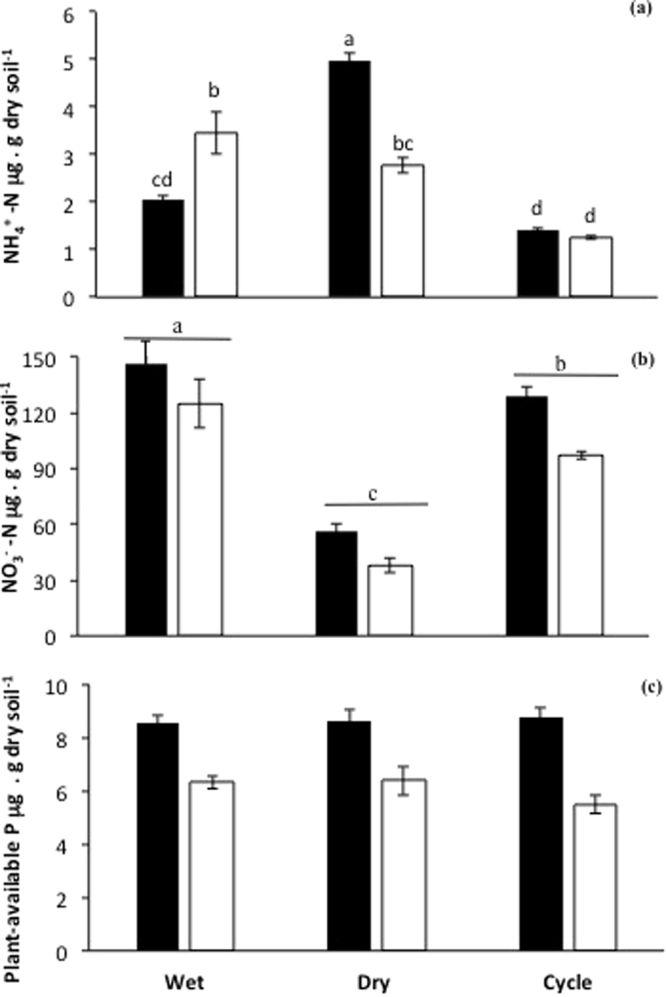
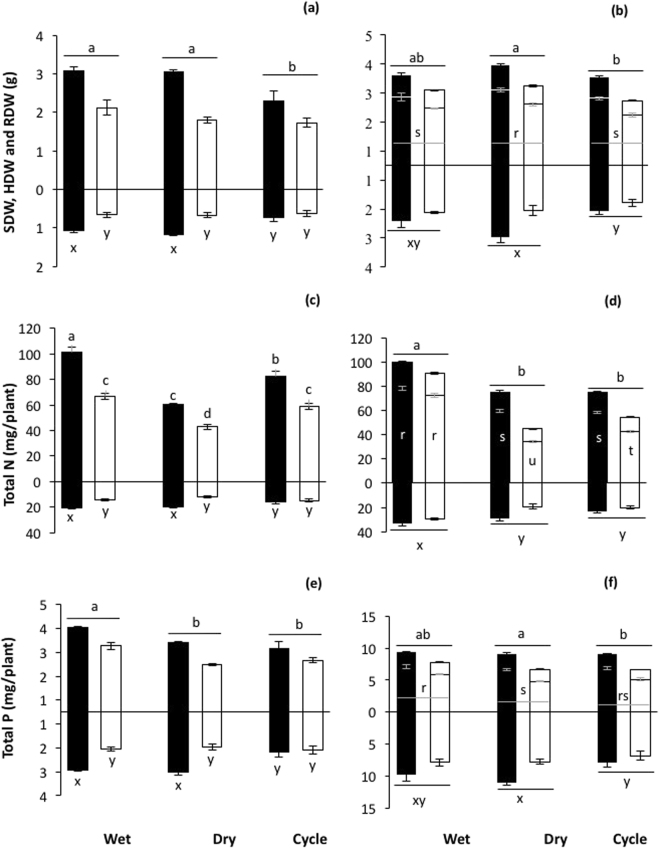
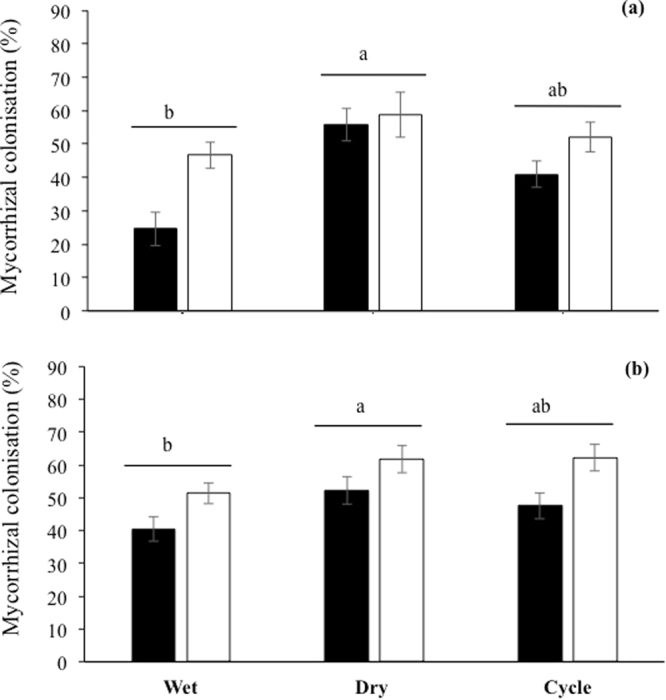
We aimed to investigate the combined impacts of compost addition and pre-planting soil moisture conditions, on plant-available nutrients, and subsequent impacts on the biomass, nutrition and formation of AM by two important crop species. A glasshouse study was undertaken in which wheat and tomato plants were grown in compost amended or un-amended soil that was subjected to different moisture regimes prior to planting. The availability of P was strongly influenced by compost addition, but not pre-planting moisture conditions. In contrast, mineral N pools were affected by compost addition and pre-planting soil moisture conditions in complex ways. These changes in nutrient availability affected plant biomass, nutrient uptake and formation of AM. In general, plant performance was better where pre-planting soil moisture conditions were wet or dry, and worse where they involved a wet/dry cycle, and mycorrhizal colonisation was lower where compost was added to the soil. That pre-planting moisture conditions affect the biomass of subsequent crops is an important finding, the potential implications of which are considered here.
Overview
The claims and statistics of this paper haven’t been checked yet.
Run the check — free, no account needed. It reads the open-access text and checks the sources it cites.
Integrity signals
Registry
Cites
Statistics
Figures
Verification
Claims the paper makes
The claims and statistics of this paper haven’t been checked yet.
Run the check — free, no account needed. It reads the open-access text and checks the sources it cites.
Claims other papers make about this one
Each is checked against this paper’s own text: does it say what the citing paper says it does?
The source backs part of the claim, not all of it — or backs it for a different population, condition or comparison.
In the citing paper
“Mycorrhizal colonization of tomato and wheat was also reduced in another pot experiment with greenwaste compost application due to P delivery from compost which is known to inhibit AMF.”
From Comparing straw, compost, and biochar regarding their suitability as agricultural soil amendments to affect soil structure, nutrient leaching, microbial communities, and the fate of pesticides (2021) · cites this paper as Ngo and Cavagnaro, 2018
Experimental — accuracy not yet measuredThe cited source says what the claim attributes to it.
In the citing paper
“Nevertheless, N and P contents of above and belowground plant tissue was increased with compost application (Ngo and Cavagnaro, 2018).”
From Comparing straw, compost, and biochar regarding their suitability as agricultural soil amendments to affect soil structure, nutrient leaching, microbial communities, and the fate of pesticides (2021) · cites this paper as Ngo and Cavagnaro, 2018
Self-check
Percentages, sums and reported differences re-computed from the paper’s own numbers.
The self-check needs the paper’s full text.
Citations
The citation lists haven’t been fetched yet
References 43 · Cited by 27
Research works printed but not linked: 44
- Mikha, M. M., Rice, C. W. & Milliken, G. A. Carbon and nitrogen mineralization as affected by drying and wetting cycles. Soil Biol. Biochem. 37, 339–347, https://doi.org/10.1016/j.soilbio.2004.08.003 (2005). · DOI
- Borken, W. & Matzner, E. Reappraisal of drying and wetting effects on C and N mineralization and fluxes in soils. Globe. Change Biol. 15, 808–824 (2009). · DOI
- Seneviratne, S. I. et al. Investigating soil moisture–climate interactions in a changing climate: a review. Earth-Sci. Rev. 99, 125–161, https://doi.org/10.1016/j.earscirev.2010.02.004 (2010). · DOI
- Kaiser, M., Kleber, M. & Berhe, A. A. How air-drying and rewetting modify soil organic matter characteristics: An assessment to improve data interpretation and inference. Soil Biol. Biochem. 80, 324–340, https://doi.org/10.1016/j.soilbio.2014.10.018 (2015). · DOI
- Warren, C. R. Response of osmolytes in soil to drying and rewetting. Soil Biol. Biochem. 70, 22–32, https://doi.org/10.1016/j.soilbio.2013.12.008 (2014). · DOI
- Johnson, C. B. Physiological processes limiting plant productivity. (Elsevier, 2013).
- Kirkham, M. B. Principles of soil and plant water relations. (Academic Press, 2014).
- Jackson, L. E., Burger, M. & Cavagnaro, T. R. Roots, nitrogen transformations, and ecosystem services. Ann. Rev. Plant Biol. 59, 341 (2008). · DOI
- Yu, Z., Wang, G. & Marschner, P. Drying and rewetting - Effect of frequency of cycles and length of moist period on soil respiration and microbial biomass. Europe. J Soil Biol. 62, 132–137, https://doi.org/10.1016/j.ejsobi.2014.03.007 (2014). · DOI
- Cavagnaro, T. R. Soil moisture legacy effects: Impacts on soil nutrients, plants and mycorrhizal responsiveness. Soil Biol. Biochem. 95, 173–179, https://doi.org/10.1016/j.soilbio.2015.12.016 (2016). · DOI
- Burger, M. et al. Microbial responses and nitrous oxide emissions during wetting and drying of organically and conventionally managed soil under tomatoes. BIol. Fert. Soil. 42, 109–118 (2005). · DOI
- Watts-Williams, S. J. & Cavagnaro, T. R. Nutrient interactions and arbuscular mycorrhizas: a meta-analysis of a mycorrhiza-defective mutant and wild-type tomato genotype pair. Plant Soil 384, 79–92 (2014). · DOI
- Verzeaux, J., Hirel, B., Dubois, F., Lea, P. J. & Tétu, T. Agricultural practices to improve nitrogen use efficiency through the use of arbuscular mycorrhizae: basic and agronomic aspects. Plant Science, in press, avaliable online, https://doi.org/10.1016/j.plantsci.2017.08.004 (2017). · DOI
- Gattinger, A. et al. Enhanced top soil carbon stocks under organic farming. Proc. Nat. Acad. Sci 109, 18226–18231 (2012). · DOI
- Piccolo, A. In Carbon Sequestration in Agricultural Soils 1–19 (Springer, 2012). · DOI
- Donn, S., Wheatley, R. E., McKenzie, B. M., Loades, K. W. & Hallett, P. D. Improved soil fertility from compost amendment increases root growth and reinforcement of surface soil on slopes. Ecol. Eng. 71, 458–465, https://doi.org/10.1016/j.ecoleng.2014.07.066 (2014). · DOI
- Cavagnaro, T. R. Biologically regulated nutrient supply systems: compost and arbuscular mycorrhizasd - a review. Advance. Agron. 129, 293–321 (2015). · DOI · Paper page
- Abdou, G. et al. Nutrient release patterns of compost and its implication on crop yield under Sahelian conditions of Niger. Nutr. Cycl. Agroecosys. 105, 117–128, https://doi.org/10.1007/s10705-016-9779-9 (2016). · DOI
- Requejo, M. I. et al. Nitrogen mineralisation in soil after addition of wine distillery waste compost: laboratory and field evaluation. Soil Res. 54, 144–153, https://doi.org/10.1071/SR15031 (2016). · DOI
- D’Hose, T. et al. The positive relationship between soil quality and crop production: A case study on the effect of farm compost application. Appl. Soil Ecol. 75, 189–198, https://doi.org/10.1016/j.apsoil.2013.11.013 (2014). · DOI
- Nguyen, T.-T., Fuentes, S. & Marschner, P. Growth and Water Use Efficiency of Capsicum annuum in a Silt Loam Soil Treated Three Years Previously With a Single Compost Application and Repeatedly Dried. Int. J. Veg. Sci. 20, 187–196, https://doi.org/10.1080/19315260.2013.764508 (2014). · DOI
- Stark, J. M. & Firestone, M. K. Mechanisms for Soil Moisture Effects on Activity of Nitrifying Bacteria. Appl. Env. Microb. 61, 218–221 (1995). · DOI
- Zhalnina, K., de Quadros, P. D., Camargo, F. A. O. & Triplett, E. W. Drivers of archaeal ammonia-oxidizing communities in soil. Front. Microb. 3, 210, https://doi.org/10.3389/fmicb.2012.00210 (2012). · DOI
- Dividson, E. A., Stark, J. M. & Firestone, M. K. Microbial Production and Consumpution of Nitrate in an Annual Grassland. Ecology 71, 1968–1975, https://doi.org/10.2307/1937605 (1990). · DOI
- Austin, A. T. et al. Water pulses and biogeochemical cycles in arid and semiarid ecosystems. Oecologia 141, 221–235 (2004). · DOI
- Cui, M. & Caldwell, M. M. A large ephemeral release of nitrogen upon wetting of dry soil and corresponding root responses in the field. Plant Soil 191, 291–299, https://doi.org/10.1023/A:1004290705961 (1997). · DOI
- Butterly, C. R., McNeill, A. M., Baldock, J. A. & Marschner, P. Changes in water content of two agricultural soils does not alter labile P and C pools. Plant Soil, 1–17, https://doi.org/10.1007/s11104-011-0931-7 (2011). · DOI
- Nguyen, T. T., Fuentes, S. & Marschner, P. Effect of incorporated or mulched compost on leaf nutrient concentrations and performance of Vitis vinifera cv. Merlot. J. Soil Sci. Plant Nut. 13, 485–497 (2013).
- Duong, T. T., Penfold, C. & Marschner, P. Amending soils of different texture with six compost types: impact on soil nutrient availability, plant growth and nutrient uptake. Plant Soil 354, 197–209 (2012). · DOI · Paper page
- Hargreaves, J. C., Adl, M. S. & Warman, P. R. A review of the use of composted municipal solid waste in agriculture. Ag. Ecosys. Environ. 123, 1–14, https://doi.org/10.1016/j.agee.2007.07.004 (2008). · DOI
- Corrêa, A., Cruz, C., Pérez-Tienda, J. & Ferrol, N. Shedding light onto nutrient responses of arbuscular mycorrhizal plants: Nutrient interactions may lead to unpredicted outcomes of the symbiosis. Plant Sci. 221, 29–41 (2014). · DOI
- Santiago, L. S. et al. Tropical tree seedling growth responses to nitrogen, phosphorus and potassium addition. J of Ecol. 100, 309–316 (2012). · DOI
- Baon, J. B., Smith, S. E., Alston, A. M. & Wheeler, R. D. Phosphorus efficiency of three cereals as related to indigenous mycorrhizal infection. Aust. J. Ag. Res. 43, 479–491 (1992). · DOI
- Giovannetti, M., Sbrana, C. & Avio, L. In Mycorrhizal technology in agriculture 49–58 (Springer, 2002). · DOI
- Giovannetti, M., Sbrana, C. & Avio, L. In Mycorrhizal Technology in Tropical Agriculture (eds S. Gianinazzi, H. Schüepp, J. M. Barea, & K. Haselwandter) 49–58 (Birkhäuser Basel, 2002). · DOI
- Herman, D. J., Firestone, M. K., Nuccio, E. & Hodge, A. Interactions between an arbuscular mycorrhizal fungus and a soil microbial community mediating litter decomposition. FEMS Microbiol. Ecol. 80, 236–247 (2012). · DOI
- Mackay, J. E., Macdonald, L. M., Smermik, R. J. & Cavagnaro, T. R. Organic amendments as phosphorus fertilisers: chemical analyses, biological processes and plant P uptake. Soil Biol. Biochem. 107, 50–59 (2017). · DOI
- Cavagnaro, T. R. Impacts of compost application on the formation and functioning of arbuscular mycorrhizas. Soil Biol. Biochem. 78, 38–44 (2014). · DOI
- Miranda, K. M., Espey, M. G. & Wink, D. A. A rapid, simple spectrophotometric method for simultaneous detection of nitrate and nitrite. Nitric oxide 5, 62–71 (2001). · DOI
- Forster, J. Soil nitrogen. Methods in applied soil microbiology and biochemistry. (pp. 79–87. Academic Press, London, 1995).
- Murphy, J. & Riley, J. P. A modified single solution method for the determination of phosphate in natural waters. Analytica chimica acta 27, 31–36 (1962). · DOI
- Vierheilig, H., Coughlan, A. P., Wyss, U. & Piché, Y. Ink and vinegar, a simple staining technique for arbuscular-mycorrhizal fungi. Appl. Env. Microb. 64, 5004–5007 (1998). · DOI
- Giovannetti, M. & Mosse, B. An evaluation of techniques for measuring vesicular arbuscular mycorrhizal infection in roots. New Phytol. 84, 489–500 (1980). · DOI
- Hanson, W. The photometric determination of phosphorus in fertilizers using the phosphovanado‐molybdate complex. J. Sci. Food Ag. 1, 172–173 (1950). · DOI
Metadata
- Authors
- Ngo, H. T. T., & Cavagnaro, T. R.
- Affiliations
- The University of Adelaide (AU)
- Corresponding author
- Cavagnaro, T. R.
- ORCID
- Cavagnaro, T. R.
- Venue
- Scientific Reports
- Published
- 2018-01-24
- Volume
- 8
- Issue
- 1
- Pages
- 1509-1509
- ISSN
- 2045-2322 (ISSN-L)
- PMC
- PMC5784012
- OpenAlex
- W2794557448
- Cited by
- 27
- References
- 43
- Citations by year
- 2026: 2 · 2025: 2 · 2024: 2 · 2023: 5 · 2022: 4 · 2021: 7 · 2020: 4 · 2019: 1
- FWCI
- 2.81
- Type
- journal article
- Language
- en
- Open access
- gold
- doi.org
- Locations
- Scientific Reports (publishedVersion, cc-by)
- PubMed Central (publishedVersion, cc-by)
- PubMed (publishedVersion)
- Adelaide Research & Scholarship (AR&S) (University of Adelaide) (submittedVersion, cc-by)
- DOAJ (DOAJ: Directory of Open Access Journals) (submittedVersion)
- Funders
- University of Adelaide
- Australian Research Council (FT120100463)
- Topics
- Life Sciences › Agricultural and Biological Sciences › Soil Science › Soil Carbon and Nitrogen Dynamics
- Life Sciences › Agricultural and Biological Sciences › Plant Science › Mycorrhizal Fungi and Plant Interactions
- Life Sciences › Agricultural and Biological Sciences › Soil Science › Agricultural Science and Fertilization
- Keywords
- compost, arbuscular mycorrhizal fungi, mycorrhizal colonization, wheat, tomato, phosphorus availability, inorganic nitrogen, plant nutrient uptake, plant biomass, soil amendment
- MeSH terms
- Composting, Soil, Soil Microbiology, Water, Triticum, Biomass, Solanum lycopersicum, Mycorrhizae, Plant Development
About these checks
Registry, retraction, Cites and statistics results are computed, not judged, with one exception: a printed reference that no index lists is read once by a model before it counts as a citation error. Claims are extracted by a model and kept only when their quote appears verbatim in the text; each cited source is then checked, with a model’s help, for whether it says what the claim relies on. Those verdicts can be wrong — read the claim’s quote and the cited source before relying on one.
Statistics and arithmetic are recomputed, not judged.
Confidence bands are shown only for fields calibrated on our annotated test set. None is calibrated yet, so no band is shown.
What counts as a claim ›How we measure confidence ›How we check this ›
Are you an author, or do you see a problem with this page? Request a review
How to cite
Cite CoChat for the checks on this page, and the paper for its own findings.
- This page
- CoChat. (2026). Citation check: Interactive effects of compost and pre-planting soil moisture on plant biomass, nutrition and formation of mycorrhizas: a context dependent response. https://app.cochat.ai/papers/10.1038/s41598-017-18780-2
- The paper
- Ngo, H. T. T., & Cavagnaro, T. R. (2018). Interactive effects of compost and pre-planting soil moisture on plant biomass, nutrition and formation of mycorrhizas: a context dependent response. Scientific Reports. https://doi.org/10.1038/s41598-017-18780-2
