

Predicting optimum crop designs using crop models and seasonal climate forecasts
Open accessThe DOI matches its Crossref record; 41 of the 41 references it cites were found in a registry or an index.
Abstract
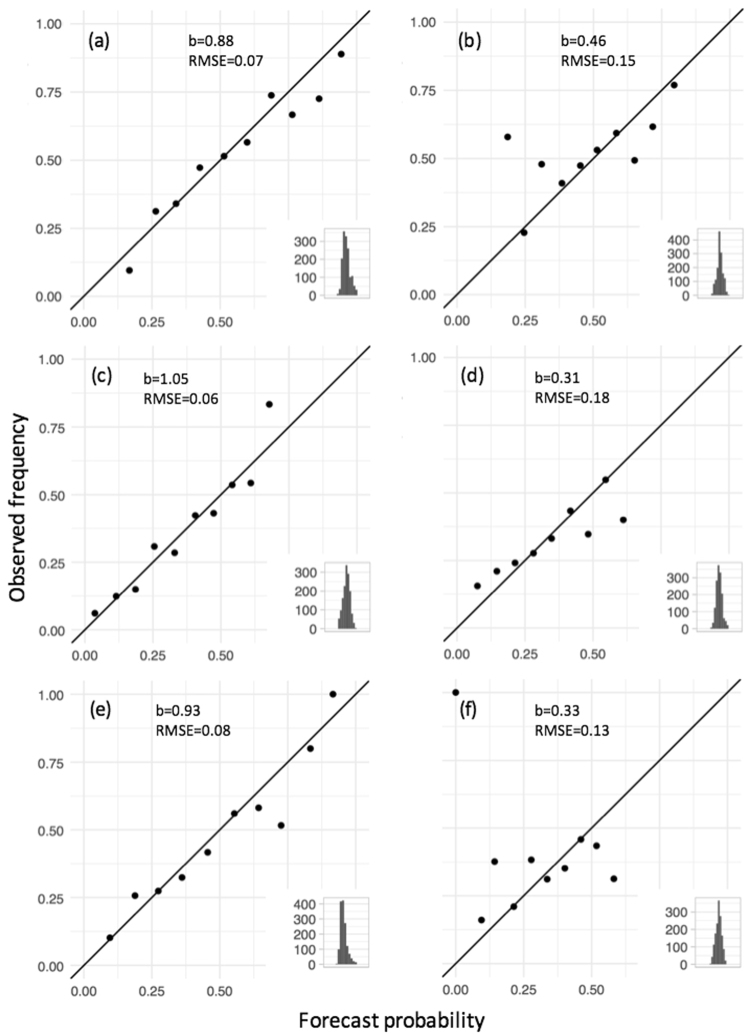
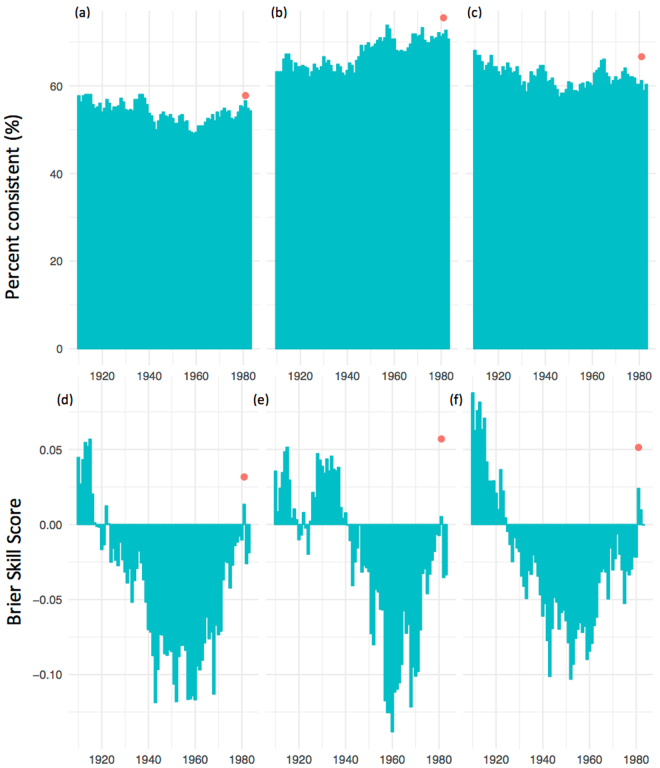
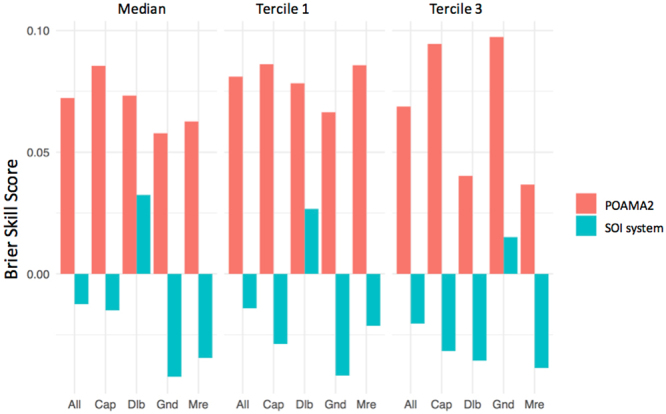
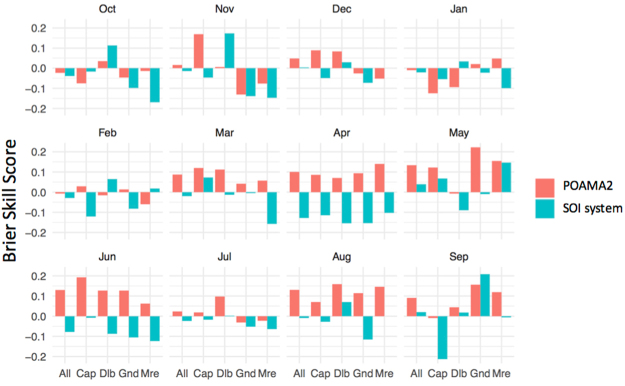
Expected increases in food demand and the need to limit the incorporation of new lands into agriculture to curtail emissions, highlight the urgency to bridge productivity gaps, increase farmers profits and manage risks in dryland cropping. A way to bridge those gaps is to identify optimum combination of genetics (G), and agronomic managements (M) i.e. crop designs (GxM), for the prevailing and expected growing environment (E). Our understanding of crop stress physiology indicates that in hindsight, those optimum crop designs should be known, while the main problem is to predict relevant attributes of the E, at the time of sowing, so that optimum GxM combinations could be informed. Here we test our capacity to inform that “hindsight”, by linking a tested crop model (APSIM) with a skillful seasonal climate forecasting system, to answer “What is the value of the skill in seasonal climate forecasting, to inform crop designs?” Results showed that the GCM POAMA-2 was reliable and skillful, and that when linked with APSIM, optimum crop designs could be informed. We conclude that reliable and skillful GCMs that are easily interfaced with crop simulation models, can be used to inform optimum crop designs, increase farmers profits and reduce risks.
Overview
The claims and statistics of this paper haven’t been checked yet.
Free: it reads the open-access text and checks the first 5 claims that cite a source we can check. Create a free account to check every claim.
Integrity signals
Registry
Cites
Statistics
Figures
Verification
Claims the paper makes
The claims and statistics of this paper haven’t been checked yet.
Free: it reads the open-access text and checks the first 5 claims that cite a source we can check. Create a free account to check every claim.
Claims other papers make about this one
Each is checked against this paper’s own text: does it say what the citing paper says it does?
The source backs part of the claim, not all of it — or backs it for a different population, condition or comparison.
In the citing paper
“Moreover, the studies focusing on G × E × M interactions have all used simulation studies via crop growth models, and to our knowledge, there has been no attempt to explain the presence of G × E × M interaction from experimental work independent of assumptions about the functional relationships between ECs and the trait of interest.”
From Incorporating environmental covariates to explore genotype × environment × management (G × E × M) interactions: A one-stage predictive model (2023) · cites this paper as Rodriguez et al., 2018
Experimental — accuracy not yet measuredThe cited source says what the claim attributes to it.
In the citing paper
“When working in agronomic research, the impact of management practice (M) on genotypic performance is also a key objective (Rodriguez et al., 2018).”
From Incorporating environmental covariates to explore genotype × environment × management (G × E × M) interactions: A one-stage predictive model (2023) · cites this paper as Rodriguez et al., 2018
Self-check
Percentages, sums and reported differences re-computed from the paper’s own numbers.
The self-check needs the paper’s full text.
Citations
Cites
The quiet revolution of numerical weather prediction
Bauer, P., Thorpe, A., & Brunet, G. (2015) · Nature · doi:10.1038/nature14956 · Cited by 2,729
APSIM – evolution towards a new generation of agricultural systems simulation
Holzworth, D. P., Huth, N. I., deVoil, P. G., Zurcher, E. J., Herrmann, N. I., McLean, G., Chenu, K., van Oosterom, E. J., Snow, V., Murphy, C., et al. (2014) · Environmental Modelling & Software · doi:10.1016/j.envsoft.2014.07.009 · Cited by 1,756
Sustainable Intensification in Agriculture: Premises and Policies
Garnett, T., Appleby, M. C., Balmford, A., Bateman, I. J., Benton, T. G., Bloomer, P., Burlingame, B., Dawkins, M., Dolan, L., Fraser, D., et al. (2013) · Science · doi:10.1126/science.1234485 · Cited by 1,741
Yield gap analysis with local to global relevance—A review
van Ittersum, M. K., Cassman, K. G., Grassini, P., Wolf, J., Tittonell, P., & Hochman, Z. (2013) · Field Crops Research · doi:10.1016/j.fcr.2012.09.009 · Cited by 1,652
Crop Yield Gaps: Their Importance, Magnitudes, and Causes
Lobell, D. B., Cassman, K. G., & Field, C. B. (2009) · Annual Review of Environment and Resources · doi:10.1146/annurev.environ.041008.093740 · Cited by 1,523
van Dijk, A. I. J. M., Beck, H. E., Crosbie, R. S., de Jeu, R. A. M., Liu, Y. Y., Podger, G. M., Timbal, B., & Viney, N. R. (2013) · Water Resources Research · doi:10.1002/wrcr.20123 · Cited by 1,357
Food security and sustainable intensification
Godfray, H. C. J., & Garnett, T. (2014) · Philosophical Transactions of the Royal Society B: Biological Sciences · doi:10.1098/rstb.2012.0273 · Cited by 1,100 · cited 3×
“= − Value Profit Profit (2) optSCF GxM GxM optSCF optS”
BackgroundOn the Remote Drivers of Rainfall Variability in Australia
Risbey, J. S., Pook, M. J., McIntosh, P. C., Wheeler, M. C., & Hendon, H. H. (2009) · Monthly Weather Review · doi:10.1175/2009mwr2861.1 · Cited by 810
Current approaches to seasonal to interannual climate predictions
Goddard, L., Mason, S. J., Zebiak, S. E., Ropelewski, C. F., Basher, R., & Cane, M. A. (2001) · International Journal of Climatology · doi:10.1002/joc.636 · Cited by 588
Prediction of global rainfall probabilities using phases of the Southern Oscillation Index
Stone, R. C., Hammer, G. L., & Marcussen, T. (1996) · Nature · doi:10.1038/384252a0 · Cited by 382
Cited by
Anthropogenic climate change is worsening North American pollen seasons
Anderegg, W. R. L., Abatzoglou, J. T., Anderegg, L. D. L., Bielory, L., Kinney, P. L., & Ziska, L. (2021) · Proceedings of the National Academy of Sciences · doi:10.1073/pnas.2013284118 · Cited by 302
“…compared to spring integrals due to a “ seasonal compensation ” effect whereby some decreases in summer pollen integrals may dampen the total annual signal ( SI Appendix , Table S3), likely indicative of shifting phenology of plant species to earlier in the year in many regions (14, 29, 30).”
Crop traits and production under drought
Vadez, V., Grondin, A., Chenu, K., Henry, A., Laplaze, L., Millet, E. J., & Carminati, A. (2024) · Nature Reviews Earth & Environment · doi:10.1038/s43017-023-00514-w · Cited by 248
Issues for cropping and agricultural science in the next 20 years
Fischer, R. A., & Connor, D. J. (2018) · Field Crops Research · doi:10.1016/j.fcr.2018.03.008 · Cited by 206
Noort, M. W. J., Renzetti, S., Linderhof, V. G. M., du Rand, G. E., Marx‐Pienaar, N., de Kock, H. L., Magano, N., & Taylor, J. R. N. (2022) · Foods · doi:10.3390/foods11020135 · Cited by 219
Integrating genetic gain and gap analysis to predict improvements in crop productivity
Cooper, M., Tang, T., Gho, C., Hart, T., Hammer, G., & Messina, C. (2020) · Crop Science · doi:10.1002/csc2.20109 · Cited by 130
Baral, N. R., Sundstrom, E. R., Das, L., Gladden, J., Eudes, A., Mortimer, J. C., Singer, S. W., Mukhopadhyay, A., & Scown, C. D. (2019) · ACS Sustainable Chemistry & Engineering · doi:10.1021/acssuschemeng.9b01229 · Cited by 132
Cooper, M., Voss-Fels, K. P., Messina, C. D., Tang, T., & Hammer, G. L. (2021) · Theoretical and Applied Genetics · doi:10.1007/s00122-021-03812-3 · Cited by 119
“Beyond the hybrid-by-density maize example above, a few studies have demonstrated effective improvement and utilisation of positive G × M interactions: improvement of sorghum yield for drought-prone environments in Australia (Hammer et al.”
BackgroundInfluentialMonzón, J. P., Calviño, P., Sadras, V. O., Zubiaurre, J. B., & Andrade, F. H. (2018) · European Journal of Agronomy · doi:10.1016/j.eja.2018.06.011 · Cited by 127
Crop models and their use in assessing crop production and food security: A review
Rita, Y. L., Papalexiou, S. M., Li, Y., ELSHORBAGY, A. A., Li, Z., & Schuster‐Wallace, C. J. (2023) · Food and Energy Security · doi:10.1002/fes3.503 · Cited by 136
“In addition, it can be coupled with other models to broaden is applicability (Peng et al., 2018; Rodriguez et al., 2018).”
BackgroundDesigning high-yielding maize ideotypes to adapt changing climate in the North China Plain
Xiao, D., Liu, D. L., Wang, B., Feng, P., & Waters, C. (2020) · Agricultural Systems · doi:10.1016/j.agsy.2020.102805 · Cited by 94
Seasonal climate forecasts provide more definitive and accurate crop yield predictions
Brown, J. N., Hochman, Z., Holzworth, D. P., & Horan, H. (2018) · Agricultural and Forest Meteorology · doi:10.1016/j.agrformet.2018.06.001 · Cited by 93
Self-citationJavadinejad, S., Hannah, D. M., Ostad‐Ali‐Askari, K., Krause, S., Zalewski, M., & Boogaard, F. C. (2019) · Water Conservation Science and Engineering · doi:10.1007/s41101-019-00069-2 · Cited by 73
Cooper, M., Messina, C. D., Tang, T., Gho, C., Powell, O. M., Podlich, D. W., Technow, F., & Hammer, G. L. (2022) · Plant Breeding Reviews · doi:10.1002/9781119874157.ch8 · Cited by 56
Ecological forecasts to inform near‐term management of threats to biodiversity
TULLOCH, A. I. T., Hagger, V., & Greenville, A. C. (2020) · Global Change Biology · doi:10.1111/gcb.15272 · Cited by 59
“…of iterative and near-term ecological forecasts now exist in a range of fields from fisheries management (Hobday et al., 2016), to crop designs (Rodriguez et al., 2018), to managing human disease spread (Shaman & Karspeck, 2012), there has been limited effort to track the different ecological…”
BackgroundMeier, E. A., Hunt, J., & Hochman, Z. (2020) · Field Crops Research · doi:10.1016/j.fcr.2020.108017 · Cited by 52
Shin, J., Kim, K. R., & Ha, J.-C. (2019) · Agricultural and Forest Meteorology · doi:10.1016/j.agrformet.2019.107858 · Cited by 57
Untangling genotype x management interactions in multi-environment on-farm experimentation
Rotili, D. H., de Voil, P., Eyre, J., Serafin, L., Aisthorpe, D., Maddonni, G. Á., & Rodríguez, D. (2020) · Field Crops Research · doi:10.1016/j.fcr.2020.107900 · Cited by 44
Self-citationManschadi, A. M., & Soltani, A. (2021) · Field Crops Research · doi:10.1016/j.fcr.2021.108211 · Cited by 46
Morari, F., Zanella, V., Gobbo, S., Bindi, M., Sartori, L., Pasqui, M., Mosca, G., & Ferrise, R. (2020) · Precision Agriculture · doi:10.1007/s11119-020-09730-6 · Cited by 43
Mungbean: A Preview of Disease Management Challenges for an Alternative U.S. Cash Crop
Batzer, J. C., Singh, A., Rairdin, A. M., Chiteri, K. O., & Mueller, D. S. (2021) · Journal of Integrated Pest Management · doi:10.1093/jipm/pmab044 · Cited by 45
Weed–Insect Interactions in Annual Cropping Systems
Barbercheck, M. E., & Wallace, J. M. (2021) · Annals of the Entomological Society of America · doi:10.1093/aesa/saab002 · Cited by 49
Clarke, S. J., McLean, J., George-Jaeggli, B., McLean, G., de Voil, P., Eyre, J. X., & Rodriguez, D. (2019) · Field Crops Research · doi:10.1016/j.fcr.2018.10.010 · Cited by 35
How to create an operational multi-model of seasonal forecasts?
Hemri, S., Bhend, J., Liniger, M. A., Manzanas, R., Siegert, S., Stephenson, D. B., Gutiérrez, J. M., Brookshaw, A., & Doblas-Reyes, F. J. (2020) · Climate Dynamics · doi:10.1007/s00382-020-05314-2 · Cited by 39
Morel, J., Kumar, U., Ahmed, M., Bergkvist, G., Lana, M., Halling, M., & Parsons, D. (2021) · Frontiers in Sustainable Food Systems · doi:10.3389/fsufs.2021.665025 · Cited by 40
The value of seasonal climate forecasts for Australian agriculture
Parton, K. A., Crean, J., & Hayman, P. T. (2019) · Agricultural Systems · doi:10.1016/j.agsy.2019.04.005 · Cited by 42
Self-citationBriak, H., & Kebede, F. (2021) · Scientific Reports · doi:10.1038/s41598-021-02668-3 · Cited by 36
The Value of Tactical Adaptation to El Niño–Southern Oscillation for East Australian Wheat
Zheng, B., Chapman, S. C., & Chenu, K. (2018) · Climate · doi:10.3390/cli6030077 · Cited by 26
Use of seasonal forecasting to manage weather risk in ecological restoration
Hagger, V., Dwyer, J. M., Shoo, L. P., & Wilson, K. A. (2018) · Ecological Applications · doi:10.1002/eap.1769 · Cited by 31
Wanthanaporn, U., Supit, I., Chaowiwat, W., & Hutjes, R. (2024) · Agricultural and Forest Meteorology · doi:10.1016/j.agrformet.2024.110001 · Cited by 24
“Forecasting crop production is increasingly important for reliable crop prediction and bridging productivity yield gaps (Rodriguez et al., 2018; Semenov and Doblas-Reyes, 2007; Cantelaube and Terres, 2005).”
BackgroundMumford, M. H., Forknall, C. R., Rodriguez, D., Eyre, J. X., & Kelly, A. M. (2023) · Field Crops Research · doi:10.1016/j.fcr.2023.109133 · Cited by 22
Borrell, A. K., van Oosterom, E. J., George‐Jaeggli, B., Rodríguez, D., Eyre, J., Jordan, D. R., Mace, E., Singh, V., Vadez, V., Bell, M., et al. (2021) · Elsevier eBooks · doi:10.1016/b978-0-12-819194-1.00005-0 · Cited by 28
Potgieter, A. B., Schepen, A., Brider, J., & Hammer, G. (2022) · Agricultural and Forest Meteorology · doi:10.1016/j.agrformet.2022.109116 · Cited by 24
Evaluating the performance of the CCCI-CNI index for estimating N status of winter wheat
Palka, M., Manschadi, A. M., Koppensteiner, L. J., Neubauer, T., & Fitzgerald, G. J. (2021) · European Journal of Agronomy · doi:10.1016/j.eja.2021.126346 · Cited by 23
Vogeler, I., Cichota, R., Thomsen, I. K., Bruun, S., Jensen, L. S., & Pullens, J. W. M. (2019) · Soil and Tillage Research · doi:10.1016/j.still.2019.104358 · Cited by 21
Schepen, A., Everingham, Y. L., & Wang, Q. J. (2020) · Agricultural and Forest Meteorology · doi:10.1016/j.agrformet.2020.107991 · Cited by 23
Insights into the value of seasonal climate forecasts to agriculture
Darbyshire, R., Crean, J., Cashen, M., Anwar, M. R., Broadfoot, K. M., Simpson, M., Cobon, D. H., Pudmenzky, C., Kouadio, L. A., & Kodur, S. (2020) · Australian Journal of Agricultural and Resource Economics · doi:10.1111/1467-8489.12389 · Cited by 23
Carcedo, A. J. P., Cejas, E., & Gambín, B. L. (2021) · in silico Plants · doi:10.1093/insilicoplants/diab007 · Cited by 21
The plasticity of root traits and their effects on crop yield and yield stability
Zhao, D., de Voil, P. G., Sadras, V. O., Palta, J. A., & Rodríguez, D. (2025) · Plant and Soil · doi:10.1007/s11104-024-07185-6 · Cited by 34
“Information on these trade-offs and how alternative G × M combinations can be expected to affect crop fitness in specific environments is valuable to both breeding and agronomy (Hammer et al. 2009; Rodriguez et al. 2018).”
Doi, T., Sakurai, G., & Iizumi, T. (2020) · Frontiers in Sustainable Food Systems · doi:10.3389/fsufs.2020.00084 · Cited by 21
“Therefore, seasonal climate predictions linked to a crop simulation model can provide potentially useful information for stakeholders to reduce risks related to crop failure (Hansen and Indeje, 2004; Crane et al., 2010; Hayashi et al., 2018; Rodriguez et al., 2018).”
BackgroundAn-Vo, D.-A., Reardon‐Smith, K., Mushtaq, S., Cobon, D. H., Kodur, S., & Stone, R. C. (2019) · The Rangeland Journal · doi:10.1071/rj18004 · Cited by 16
A Pathway towards Climate Services for the Agricultural Sector
Charalampopoulos, I., & Droulia, F. E. (2024) · Climate · doi:10.3390/cli12020018 · Cited by 20
Climate risk management for the rainfed rice yield in Lao PDR using APCC MME seasonal forecasts
Park, S., Chun, J. A., Kim, D., & Sitthikone, M. (2022) · Agricultural Water Management · doi:10.1016/j.agwat.2022.107976 · Cited by 13
Lessons from integrated seasonal forecast-crop modelling in Africa: A systematic review
Mkuhlani, S., Zinyengere, N., Kumi, N., & Crespo, O. (2022) · Open Life Sciences · doi:10.1515/biol-2022-0507 · Cited by 14
“Facilitating and demonstrating the usefulness of coupling seasonal forecasts with crop impact models can support the creation of location-specific, timely and relevant information, thereby increasing the value and chances of uptake by farmers [17,18].”
BackgroundAgronomic adaptations to heat stress: Sowing summer crops earlier
Rodríguez, D., Serafin, L., de Voil, P. G., Mumford, M. H., Zhao, D., Aisthorpe, D., Auer, J., Broad, I., Eyre, J., & Hellyer, M. (2024) · Field Crops Research · doi:10.1016/j.fcr.2024.109592 · Cited by 43
Mitchell, P. J., Waldner, F., Horan, H., Brown, J. N., & Hochman, Z. (2022) · Agricultural and Forest Meteorology · doi:10.1016/j.agrformet.2022.108932 · Cited by 15
Self-citationXie, Z., Kong, J., Tang, M., Luo, Z., Li, D., Liu, R., Feng, S., & Zhang, C. (2023) · Agronomy · doi:10.3390/agronomy13020367 · Cited by 16
A century of farming systems. Part 1: Concepts and evolution
Dixon, J., Li, L., & Amede, T. (2023) · Farming System · doi:10.1016/j.farsys.2023.100055 · Cited by 18
A shift towards temperature-dominated droughts in agricultural basins of Türkiye
Khandandel, M., Copty, N. K., & Çetinkaya, İ. D. (2025) · Natural Hazards · doi:10.1007/s11069-025-07633-1 · Cited by 10
“In addition to these measures, medium-term drought forecasting can aid in selecting and rotating crops based on anticipated water availability (Brown et al. 2018 ; Rodriguez et al. 2018 ).”
Li, M., & Jin, H. (2020) · Theoretical and Applied Climatology · doi:10.1007/s00704-020-03268-3 · Cited by 10
Lacasa, J., Messina, C. D., & Ciampitti, I. A. (2023) · Environmental Research Letters · doi:10.1088/1748-9326/acd8d1 · Cited by 13
Li, M., Jin, H., & Brown, J. N. (2020) · Journal of Applied Meteorology and Climatology · doi:10.1175/jamc-d-19-0093.1 · Cited by 9
“…(APSIM) model (Keating et al. 2003)] inform the optimum combination of crop genetics and agronomic managements, and the quantification of associated possible profits and risks for famers or farming practice (Brown et al. 2018; McCrea et al. 2005; Meinke and Stone 2005; Rodriguez et al. 2018).”
BackgroundSelf-citationMcBeath, T. M., Meier, E. A., Ware, A. H., Kirkegaard, J. A., Moodie, M., Davoren, B., & Hunt, E. (2020) · Australian Journal of Agricultural Research · doi:10.1071/cp20226 · Cited by 11
Sorghum straw pellets: A dispatchable energy source for renewable energy transition
Moreira, B. R. D. A., Hine, D. C., Godwin, I. D., & Yadav, S. (2025) · Energy Conversion and Management X · doi:10.1016/j.ecmx.2025.100893 · Cited by 13
Kim, D., Chun, J. A., & Inthavong, T. (2021) · Agricultural Water Management · doi:10.1016/j.agwat.2021.107073 · Cited by 9
Pathways towards Net Zero emissions in grain cropping farms
Tan, Z., de Voil, P. G., Zhao, J., Zhao, D., McGowan, H. A., Xiao, L., & Rodríguez, D. (2025) · Agricultural Systems · doi:10.1016/j.agsy.2025.104401 · Cited by 5
Key drivers of phosphorus use efficiency (PUE) in a dryland cropping system
Das, B. T., Schmidt, S., Harrison, M. T., Hunt, I., Biggs, J. S., & Huth, N. I. (2023) · Agronomy for Sustainable Development · doi:10.1007/s13593-023-00929-1 · Cited by 6
“When parameterised appropriately, models such as the Agricultural Production Systems sIMulator (APSIM) accurately identify the interaction between soil, climate, and crop genetics according to management systems at the field scale (Gaydon et al. 2017; Peake et al. 2020; Rodriguez et al. 2018;).”
MethodCrop Modeling Under Climate Change
Butt, A. A., & Ahmed, Z. (2025) · Springer eBooks · doi:10.1007/978-981-96-4499-5_5 · Cited by 4
Prediction of Crops Cycle with Seasonal Forecasts to Support Decision-Making
Garcia, D., Silva, N., Rolim, J., Ferreira, A., Santos, J. A., Cameira, M. D. R., & Paredes, P. (2025) · Agronomy · doi:10.3390/agronomy15061291 · Cited by 9
Aparecido, L. E. D. O., Torsoni, G. B., Mesquita, D. Z., de Meneses, K. C., & de Moraes, J. R. D. S. C. (2020) · Revista Brasileira de Climatologia · doi:10.5380/abclima.v26i0.69183 · Cited by 4
Climate drivers provide valuable insights into late season prediction of Australian wheat yield
Dayal, K., Brown, J. N., Waldner, F., Lawes, R., Hochman, Z., Donohue, R. J., Horan, H., & Chen, Y. (2020) · Agricultural and Forest Meteorology · doi:10.1016/j.agrformet.2020.108202 · Cited by 4
Self-citationBeyá-Marshall, V., Reginato, G. H., & Pinto, C. (2022) · Acta Horticulturae · doi:10.17660/actahortic.2022.1346.20 · Cited by 4
Palka, M., & Manschadi, A. M. (2024) · Precision Agriculture · doi:10.1007/s11119-024-10175-4 · Cited by 6
“…weather and therefore crop forecast performance yields more accurate predictions, especially early during the season when major N-management measures are implemented (Asseng et al., 2016; Bauer et al., 2015; Brown et al., 2018; Ceglar & Toreti, 2021; Johnson et al., 2019; Rodriguez et al., 2018).”
The Added Value of Statistical Seasonal Forecasts
Krikken, F., Geertsema, G., Nielsen, K., & Troccoli, A. (2024) · Climate · doi:10.3390/cli12060083 · Cited by 4
Romillac, N., Slezack‐Deschaumes, S., Amiaud, B., & Piutti, S. (2023) · Agronomy · doi:10.3390/agronomy13010180 · Cited by 5
RETRACTED ARTICLE: Forecast of agricultural water resources demand based on particle swarm algorithm
Yi, W. (2021) · Acta Agriculturae Scandinavica Section B - Soil & Plant Science · doi:10.1080/09064710.2021.1990386 · Cited by 3
“Various computational and scienti fi c methods are being used to verify the pro fi tabil-ity of ML algorithms and machine learning techniques in farming (Rodriguez et al. 2018).”
MethodRetractedPotgieter, A. B., Brider, J., Ashourloo, D., Schepen, A., Zhao, Y., Jiang, R., Chapman, S. C., Zhang, M., Wu, B., Russell, K., et al. (2026) · in silico Plants · doi:10.1093/insilicoplants/diag018 · Cited by 2
A Copulas Approach for Forecasting the Rainfall
Zoglat, A., Amar, A., Badaoui, F., & Hassou, L. A. (2019) · Advances in intelligent systems and computing · doi:10.1007/978-3-030-11881-5_20 · Cited by 2
Simple model for predicting hourly air temperatures inside Chinese solar greenhouses
Qiaoxue, D., Jiechang, L., & Mei, Q. (2023) · International journal of agricultural and biological engineering · doi:10.25165/j.ijabe.20231605.6922 · Cited by 2
Garba, I. I., Fernández, J. A., Chen, Q., Gho, C., de Voil, P. G., Cooper, M., & Chapman, S. C. (2025) · Field Crops Research · doi:10.1016/j.fcr.2025.109858 · Cited by 5
“Drivers” da previsão climática sazonal: uma revisão da literatura
Reboita, M. S., Kuki, C. A. C., Ferreira, G. W. D. S., Torres, F. L. R., Lima, L. M. M., & Lima, J. W. M. (2022) · Revista Brasileira de Climatologia · doi:10.55761/abclima.v31i18.15235 · Cited by 5
Luo, Q., Li, W., Cowan, T., & Schilling, D. (2024) · Agricultural and Forest Meteorology · doi:10.1016/j.agrformet.2024.110005 · Cited by 2
Zhao, Y., Philip, T., Brider, J., Schepen, A., & Potgieter, A. B. (2026) · in silico Plants · doi:10.1093/insilicoplants/diag017 · Cited by 2
Tiwari, K., & Chong, N. Y. (2019) · Elsevier eBooks · doi:10.1016/b978-0-12-817607-8.00014-9 · Cited by 1
3. A simple web-based tool for optimizing nitrogen variable rate application in durum wheat
Ferrise, R., Trombi, G., Padovan, G., Costafreda-Aumedes, S., Giuseppe, E. D., Pasqui, M., Moretto, J., & Morari, F. (2021) · Wageningen Academic Publishers eBooks · doi:10.3920/978-90-8686-916-9_3 · Cited by 1
Zhao, D., de Voil, P. G., Rognoni, B. G., Wilkus, E. L., Eyre, J. X., Broad, I., & Rodrı́guez, D. (2023) · bioRxiv (Cold Spring Harbor Laboratory) · doi:10.1101/2023.09.10.557017 · Cited by 1
Seasonal and subseasonal forecasts : overview and applications for economics
Roberts, J. (2018) · NOAA Institutional Repository · doi:10.7289/v5/sg-ncrl-18-17
Romillac, N., Slezack‐Deschaumes, S., Amiaud, B., & Piutti, S. (2022) · SSRN Electronic Journal · doi:10.2139/ssrn.4000299
Castaldo, F., Francipane, A., Treppiedi, D., & Noto, L. (2026) · Journal of Hydrology Regional Studies · doi:10.1016/j.ejrh.2026.103271
The Essence of Chemistry. Chemistry and Agriculture
Hanley, B. (2026) · Springer eBooks · doi:10.1007/978-3-032-21491-1_2
Sarkar, S., Gaydon, D. S., Mainuddin, M., Maniruzzaman, M., Hossain, M. B., Maji, B., Sarangi, S. K., Dhar, A., Dey, S., Bell, R. W., et al. (2026) · Australian Journal of Agricultural Research · doi:10.1071/cp26175
Espelet, F., Palmero, F., Hernández, C. M., Rotili, D. H., D’Andrea, K. E., Giorno, A., Granieri, L., Sörenson, F., Ermácora, M., Carabaca, L. S., et al. (2026) · Field Crops Research · doi:10.1016/j.fcr.2026.110772
Metadata
- Authors
- Rodriguez, D., de Voil, P., Hudson, D., Brown, J. N., Hayman, P., Marrou, H., & Meinke, H.
- Affiliations
- Bureau of Meteorology (AU)
- Commonwealth Scientific and Industrial Research Organisation (AU)
- South Australian Research and Development Institute (AU)
- Institut Agro Montpellier (FR)
- University of Tasmania (AU)
- Venue
- Scientific Reports
- Published
- 2018-02-02
- Volume
- 8
- Issue
- 1
- Pages
- 2231-2231
- ISSN
- 2045-2322 (ISSN-L)
- PMC
- PMC5797250
- OpenAlex
- W2788833444
- Cited by
- 82
- References
- 41
- Citations by year
- 2026: 6 · 2025: 7 · 2024: 7 · 2023: 9 · 2022: 9 · 2021: 13 · 2020: 16 · 2019: 8 · 2018: 7
- FWCI
- 9.27
- Type
- journal article
- Language
- en
- Open access
- gold
- doi.org
- Licence
- cc-by
- creativecommons.org/licenses/by/4.0 (tdm)
- creativecommons.org/licenses/by/4.0 (vor)
- Locations
- Scientific Reports (publishedVersion, cc-by)
- PubMed Central (publishedVersion, cc-by)
- PubMed (publishedVersion)
- UTAS Research Repository (acceptedVersion)
- eCite Digital Repository (University of Tasmania) (submittedVersion, cc-by)
- HAL (submittedVersion, cc-by)
- DOAJ (DOAJ: Directory of Open Access Journals) (submittedVersion)
- Figshare (submittedVersion)
- Funders
- Australian Government
- Grains Research and Development Corporation (UQ00074)
- Rehabilitation Research and Development Service
- Topics
- Life Sciences › Agricultural and Biological Sciences › Agronomy and Crop Science › Climate change impacts on agriculture
- Physical Sciences › Environmental Science › Global and Planetary Change › Climate variability and models
- Life Sciences › Agricultural and Biological Sciences › Agronomy and Crop Science › Agricultural Productivity and Crop Improvement
- Keywords
- crop design, seasonal climate forecasting, crop simulation models, APSIM, dryland cropping, genotype-by-management interaction, forecast skill, farmer profit, climate risk management, crop yield prediction
- MeSH terms
- Agriculture, Australia, Climate, Forecasting, Models, Biological, Seasons, Crops, Agricultural, Sorghum, Climate Change
About these checks
Registry, retraction, Cites and statistics results are computed, not judged, with one exception: a printed reference that no index lists is read once by a model before it counts as a citation error. Claims are extracted by a model and kept only when their quote appears verbatim in the text; each cited source is then checked, with a model’s help, for whether it says what the claim relies on. Those verdicts can be wrong — read the claim’s quote and the cited source before relying on one.
Statistics and arithmetic are recomputed, not judged.
Confidence bands are shown only for fields calibrated on our annotated test set. None is calibrated yet, so no band is shown.
What counts as a claim ›How we measure confidence ›How we check this ›
Are you an author, or do you see a problem with this page? Request a review
Data sources
Bibliographic data: Semantic Scholar, OpenAlex, Crossref.
Contains information from the Semantic Scholar Academic Graph Datasets, made available under the ODC Attribution License (ODC-BY 1.0).
Semantic Scholar’s data is described in: Kinney, R., et al. (2023). The Semantic Scholar Open Data Platform. arXiv:2301.10140.
