

The DOI matches its Crossref record.
Red Blood Cell Membrane Bioengineered Zr-89 Labelled Hollow Mesoporous Silica Nanosphere for Overcoming Phagocytosis
Open accessAbstract
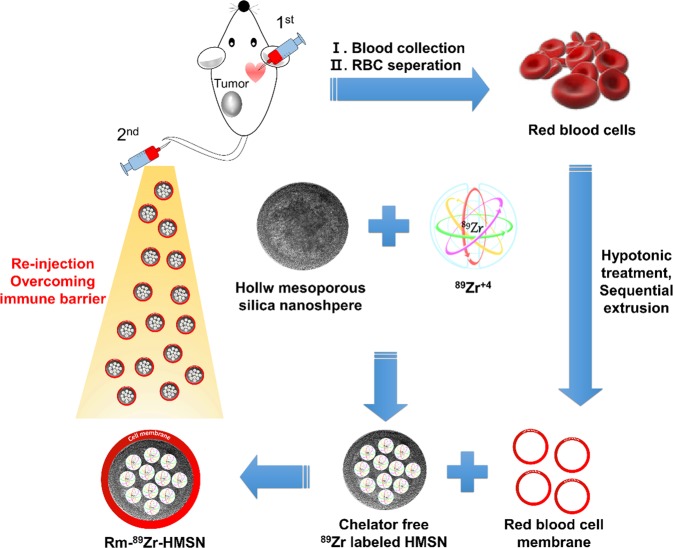
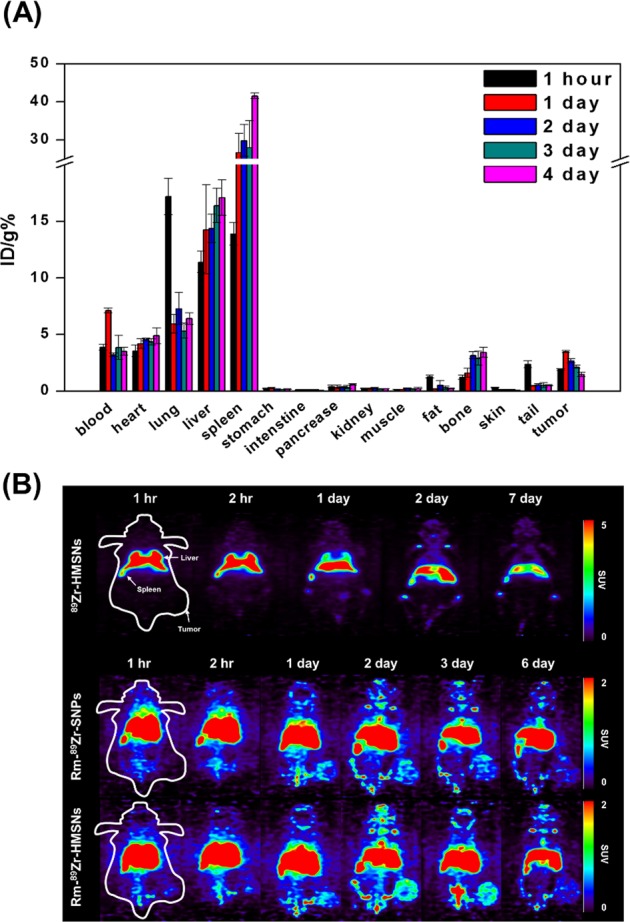
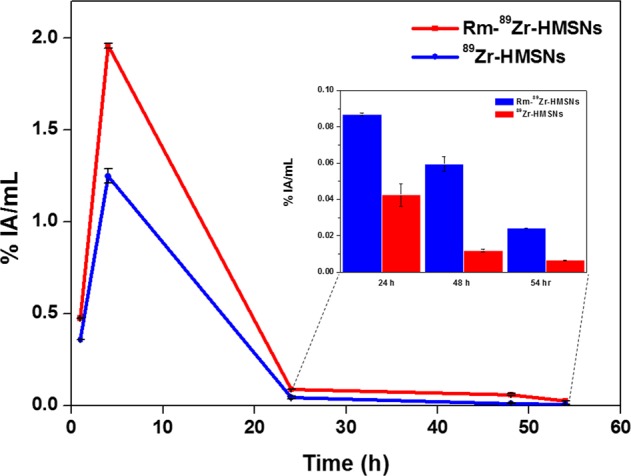
Abstract Biomimetic nanoparticles (NPs) have been actively studied for their biological compatibility due to its distinguished abilities viz. long-term circulation, low toxicity, ease for surface modification, and its ability to avoid phagocytosis of NPs by macrophages. Coating the NPs with a variety of cell membranes bearing the immune control proteins increases drug efficacy while complementing the intrinsic advantages of the NPs. In this study, efforts were made to introduce oxophilic radiometal 89Zr with hollow mesoporous silica nanospheres (HMSNs) having abundant silanol groups and were bioengineered with red blood cell membrane (Rm) having cluster of differentiation 47 (CD47) protein to evaluate its long-term in vivo behavior. We were successful in demonstrating the increased in vivo stability of synthesized Rm-camouflaged, 89Zr-labelled HMSNs with the markedly reduced 89Zr release. Rm camouflaged 89Zr-HMSNs effectively accumulated in the tumor by avoiding phagocytosis of macrophages. In addition, re-injecting the Rm isolated using the blood of the same animal helped to overcome the immune barrier. This novel strategy can be applied extensively to identify the long-term in vivo behavior of nano-drugs while enhancing their biocompatibility.
Overview
The claims and statistics of this paper haven’t been checked yet.
Run the check — free, no account needed. It reads the open-access text and checks the sources it cites.
Integrity signals
Registry
Cites
Statistics
Figures
Verification
Claims the paper makes
The claims and statistics of this paper haven’t been checked yet.
Run the check — free, no account needed. It reads the open-access text and checks the sources it cites.
Claims other papers make about this one
Each is checked against this paper’s own text: does it say what the citing paper says it does?
The source backs part of the claim, not all of it — or backs it for a different population, condition or comparison.
In the citing paper
“CD47 proteins rich on the red cell membrane ensure red cell membrane-coated systems can circulate almost 100–120 days without being cleared by macrophages.”
From The blood–brain barrier: Structure, regulation and drug delivery (2023) · cites this paper as [196]
Experimental — accuracy not yet measured
Self-check
Percentages, sums and reported differences re-computed from the paper’s own numbers.
The self-check needs the paper’s full text.
Citations
Cites
Still being checked.
Research works printed but not linked: 52
- Honary, S. & Zahir, F. In Tropical Journal of Pharmaceutical Research Vol. 12, 255–264 (2013). · DOI
- He, C., Hu, Y., Yin, L., Tang, C. & Yin, C. Effects of particle size and surface charge on cellular uptake and biodistribution of polymeric nanoparticles. Biomaterials 31, 3657–3666 (2010). · DOI · Paper page
- Oh, N. & Park, J.-H. Endocytosis and exocytosis of nanoparticles in mammalian cells. International journal of nanomedicine 9, 51 (2014).
- Yu, T., Hubbard, D., Ray, A. & Ghandehari, H. In vivo biodistribution and pharmacokinetics of silica nanoparticles as a function of geometry, porosity and surface characteristics. Journal of controlled release 163, 46–54 (2012). · DOI
- Tang, L. & Cheng, J. Nonporous silica nanoparticles for nanomedicine application. Nano today 8, 290–312 (2013). · DOI
- Watermann, A. & Brieger, J. Mesoporous silica nanoparticles as drug delivery vehicles in cancer. Nanomaterials 7, 189 (2017). · DOI
- Wani, A. et al. Surface PEGylation of Mesoporous Silica Nanorods (MSNR): Effect on loading, release, and delivery of mitoxantrone in hypoxic cancer cells. Scientific reports 7, 2274 (2017). · DOI
- Eshete, M., Bailey, K., Nguyen, T. D. T., Aryal, S. & Choi, S.-O. Interaction of Immune System Protein with PEGylated and Un-PEGylated Polymeric Nanoparticles. Advances in Nanoparticles 6, 103 (2017). · DOI
- Suk, J. S., Xu, Q., Kim, N., Hanes, J. & Ensign, L. M. PEGylation as a strategy for improving nanoparticle-based drug and gene delivery. Advanced drug delivery reviews 99, 28–51 (2016). · DOI · Paper page
- Lázaro, I. A. et al. Selective Surface PEGylation of UiO-66 Nanoparticles for Enhanced Stability, Cell Uptake, and pH-Responsive. Drug Delivery. Chem 2, 561–578 (2017).
- Su, J. et al. Long Circulation Red‐Blood‐Cell‐Mimetic Nanoparticles with Peptide‐Enhanced Tumor Penetration for Simultaneously Inhibiting Growth and Lung Metastasis of Breast Cancer. Advanced Functional Materials 26, 1243–1252 (2016). · DOI
- Hu, C.-M. J. et al. Marker-of-self functionalization of nanoscale particles through a top-down cellular membrane coating approach. Nanoscale 5, 2664–2668 (2013). · DOI
- Zhai, Y. et al. Preparation and application of cell membrane-camouflaged nanoparticles for cancer therapy. Theranostics 7, 2575 (2017). · DOI
- Rao, L. et al. Red blood cell membrane as a biomimetic nanocoating for prolonged circulation time and reduced accelerated blood clearance. Small 11, 6225–6236 (2015). · DOI
- Tárnok, A. Flow and image cytometry side by side for the new frontiers in quantitative single‐cell analysis. Cytometry Part A: The Journal of the International Society for Advancement of Cytometry 75, 169–171 (2009). · DOI
- Huang, Y. X. et al. Restoring the youth of aged red blood cells and extending their lifespan in circulation by remodelling membrane sialic acid. Journal of cellular and molecular medicine 20, 294–301 (2016). · DOI
- Khandelwal, S., Van Rooijen, N. & Saxena, R. K. Reduced expression of CD47 during murine red blood cell (RBC) senescence and its role in RBC clearance from the circulation. Transfusion 47, 1725–1732 (2007). · DOI
- Tsai, R. K., Rodriguez, P. L. & Discher, D. E. Self inhibition of phagocytosis: the affinity of ‘marker of self’ CD47 for SIRPα dictates potency of inhibition but only at low expression levels. Blood Cells, Molecules, and Diseases 45, 67–74 (2010). · DOI
- Qie, Y. et al. Surface modification of nanoparticles enables selective evasion of phagocytic clearance by distinct macrophage phenotypes. Scientific reports 6, 26269 (2016). · DOI
- Zheleznyak, A. et al. Imaging of CD47 Expression in Xenograft and Allograft Tumor Models. Molecular Imaging 12, 1–10 (2013). · DOI
- Willingham, S. B. et al. The CD47-signal regulatory protein alpha (SIRPa) interaction is a therapeutic target for human solid tumors. Proceedings of the National Academy of Sciences 109, 6662–6667 (2012). · DOI
- Shi, S., Chen, F. & Cai, W. Biomedical applications of functionalized hollow mesoporous silica nanoparticles: focusing on molecular imaging. Nanomedicine 8, 2027–2039 (2013). · DOI
- Chen, Y., Chen, H.-R. & Shi, J.-L. Construction of homogenous/heterogeneous hollow mesoporous silica nanostructures by silica-etching chemistry: principles, synthesis, and applications. Accounts of chemical research 47, 125–137 (2013). · DOI
- Li, M., Zhang, C., Yang, X.-L. & Xu, H.-B. Controllable synthesis of hollow mesoporous silica nanoparticles templated by kinetic self-assembly using a gemini surfactant. RSC Advances 3, 16304–16307 (2013). · DOI
- Lee, S. B. et al. Mesoporous Silica Nanoparticle Pretargeting for PET Imaging Based on a Rapid Bioorthogonal Reaction in a Living Body. Angewandte Chemie 52, 10549–10552 (2013). · DOI
- Chen, F. et al. Engineering of hollow mesoporous silica nanoparticles for remarkably enhanced tumor active targeting efficacy. Scientific reports 4, 5080 (2014). · DOI
- Li, Y. et al. Hollow mesoporous silica nanoparticles with tunable structures for controlled drug delivery. ACS applied materials & interfaces 9, 2123–2129 (2017). · DOI
- Kamkaew, A. et al. Cerenkov radiation induced photodynamic therapy using chlorin e6-loaded hollow mesoporous silica nanoparticles. ACS applied materials & interfaces 8, 26630–26637 (2016). · DOI
- Chen, F. et al. In vivo integrity and biological fate of chelator-free zirconium-89-labelled mesoporous silica nanoparticles. ACS nano 9, 7950–7959 (2015). · DOI
- Shaffer, T. M. et al. Silica nanoparticles as substrates for chelator-free labeling of oxophilic radioisotopes. Nano letters 15, 864–868 (2015). · DOI
- O’Farrell, A., Shnyder, S., Marston, G., Coletta, P. & Gill, J. Non‐invasive molecular imaging for preclinical cancer therapeutic development. British journal of pharmacology 169, 719–735 (2013). · DOI
- Buck, A. K. et al. Economic evaluation of PET and PET/CT in oncology: evidence and methodologic approaches. Journal of nuclear medicine technology 38, 6–17 (2010). · DOI
- Wadas, T. J., Wong, E. H., Weisman, G. R. & Anderson, C. J. Coordinating radiometals of copper, gallium, indium, yttrium, and zirconium for PET and SPECT imaging of disease. Chemical reviews 110, 2858–2902 (2010). · DOI
- Holland, J. P., Williamson, M. J. & Lewis, J. S. Unconventional nuclides for radiopharmaceuticals. Molecular imaging 9, 7290.2010. 00008 (2010). · DOI
- Holland, J. P., Sheh, Y. & Lewis, J. S. Standardized methods for the production of high specific-activity zirconium-89. Nuclear medicine and biology 36, 729–739 (2009). · DOI
- Fang, X., Chen, C., Liu, Z., Liu, P. & Zheng, N. A cationic surfactant assisted selective etching strategy to hollow mesoporous silica spheres. Nanoscale 3, 1632–1639 (2011). · DOI
- Dean, J. A. Lange’s handbook of chemistry. Material and manufacturing process 5, 687–688 (1990). · DOI
- Kim, T.-H., Lee, J. Y., Kim, M.-K., Park, J. H. & Oh, J.-M. Radioisotope Co-57 incorporated layered double hydroxide nanoparticles as a cancer imaging agent. RSC Advances 6, 48415–48419 (2016). · DOI
- Liang, S., Jin, X., Ma, Y., Guo, J. & Wang, H. Folic acid-conjugated BSA nanocapsule (n-BSA–FA) for cancer targeted radiotherapy and imaging. RSC Advances 5, 88560–88566 (2015). · DOI
- Kong, M. et al. Biodegradable hollow mesoporous silica nanoparticles for regulating tumor microenvironment and enhancing antitumor efficiency. Theranostics 7, 3276 (2017). · DOI · Paper page
- Tian, Y. et al. Redox stimuli-responsive hollow mesoporous silica nanocarriers for targeted drug delivery in cancer therapy. Nanoscale Horizons 1, 480–487 (2016). · DOI
- Baas, J., Senninger, N. & Elser, H. The reticuloendothelial system. An overview of function, pathology and recent methods of measurement. Zeitschrift fur Gastroenterologie 32, 117–123 (1994).
- Tsai, R. K. & Discher, D. E. Inhibition of “self” engulfment through deactivation of myosin-II at the phagocytic synapse between human cells. The Journal of cell biology 180, 989–1003 (2008). · DOI · Paper page
- Gardai, S. J. et al. Cell-surface calreticulin initiates clearance of viable or apoptotic cells through trans-activation of LRP on the phagocyte. Cell 123, 321–334 (2005). · DOI · Paper page
- Gustafson, H. H., Holt-Casper, D., Grainger, D. W. & Ghandehari, H. Nanoparticle uptake: the phagocyte problem. Nano today 10, 487–510 (2015). · DOI
- Hak, S. et al. The effect of nanoparticle polyethylene glycol surface density on ligand-directed tumor targeting studied in vivo by dual modality imaging. ACS nano 6, 5648–5658 (2012). · DOI
- Jauw, Y. W. et al. Immuno-positron emission tomography with zirconium-89-labelled monoclonal antibodies in oncology: what can we learn from initial clinical trials? Frontiers in pharmacology 7, 131 (2016). · DOI
- Kasbollah, A., Eu, P., Cowell, S. & Deb, P. Review on production of 89Zr in a medical cyclotron for PET radiopharmaceuticals. Journal of nuclear medicine technology, jnmt. 112.111377 (2013). · DOI
- Van de Watering, F. C. et al. Zirconium-89 labelled antibodies: a new tool for molecular imaging in cancer patients. BioMed research international 2014 (2014). · DOI
- Vera, D. R. B. et al. Immuno-PET imaging of tumor-infiltrating lymphocytes using zirconium-89 radiolabelled anti-CD3 antibody in immune-competent mice bearing syngeneic tumors. PloS one 13, e0193832 (2018). · DOI
- Stöber, W., Fink, A. & Bohn, E. Controlled growth of monodisperse silica spheres in the micron size range. Journal of colloid and interface science 26, 62–69 (1968). · DOI
- Liu, J. et al. Hollow mesoporous silica nanoparticles facilitated drug delivery via cascade pH stimuli in tumor microenvironment for tumor therapy. Biomaterials 83, 51–65 (2016). · DOI
Cited by
Sorted by citations
The blood–brain barrier: Structure, regulation and drug delivery
Wu, D., Chen, Q., Chen, X., Han, F., Chen, Z., & Wang, Y. (2023) · Signal Transduction and Targeted Therapy · doi:10.1038/s41392-023-01481-w · Cited by 1,906
“196 Lu et al. used a facile method of avidin-biotin chemistry to modify the red blood cell membrane with CDX peptide, which shows high bond towards nicotinic acetylcholine receptors.”
Method
Metadata
- Authors
- Lee, J. Y., Vyas, C. K., Kim, G. G., Choi, P. S., Hur, M. G., Yang, S. D., Kong, Y. B., Lee, E. J., & Park, J. H.
- Affiliations
- Korea Atomic Energy Research Institute (KR)
- Corresponding author
- Park, Jeong Hoon
- ORCID
- Venue
- Scientific Reports
- Published
- 2019-05-15
- Volume
- 9
- Issue
- 1
- Pages
- 7419-7419
- ISSN
- 2045-2322 (ISSN-L)
- PMC
- PMC6520393
- OpenAlex
- W2946219025
- Cited by
- 47
- References
- 0
- Citations by year
- 2026: 2 · 2025: 6 · 2024: 6 · 2023: 6 · 2022: 7 · 2021: 9 · 2020: 9 · 2019: 2
- FWCI
- 1.91
- Type
- journal article
- Language
- en
- Open access
- gold
- doi.org
- Locations
- Scientific Reports (publishedVersion, cc-by)
- PubMed Central (publishedVersion, cc-by)
- PubMed (publishedVersion)
- DOAJ (DOAJ: Directory of Open Access Journals) (submittedVersion)
- Funders
- National Research Foundation of Korea (2018M2A2B3A02071348, 2017M2A2A6A05016600)
- Topics
- Physical Sciences › Materials Science › Biomaterials › Nanoparticle-Based Drug Delivery
- Health Sciences › Medicine › Radiology, Nuclear Medicine and Imaging › Radiopharmaceutical Chemistry and Applications
- Physical Sciences › Engineering › Biomedical Engineering › Nanoplatforms for cancer theranostics
- Keywords
- erythrocyte membrane, biomimetic nanoparticles, CD47, macrophage recognition, tumor accumulation, radiopharmaceuticals, in vivo stability, immune evasion, silanol groups
- MeSH terms
- Animals, Erythrocyte Membrane, Female, Mice, Inbred BALB C, Phagocytosis, Radioisotopes, Silicon Dioxide, Zirconium, Biomimetic Materials, Cell Line, Tumor, Mice, Nanospheres, Bioengineering
About these checks
Registry, retraction, Cites and statistics results are computed, not judged, with one exception: a printed reference that no index lists is read once by a model before it counts as a citation error. Claims are extracted by a model and kept only when their quote appears verbatim in the text; each cited source is then checked, with a model’s help, for whether it says what the claim relies on. Those verdicts can be wrong — read the claim’s quote and the cited source before relying on one.
Statistics and arithmetic are recomputed, not judged.
Confidence bands are shown only for fields calibrated on our annotated test set. None is calibrated yet, so no band is shown.
What counts as a claim ›How we measure confidence ›How we check this ›
Are you an author, or do you see a problem with this page? Request a review
