

The DOI matches its Crossref record.
The biomass accumulation and nutrient storage of five plant species in an in-situ phytoremediation experiment in the Ningxia irrigation area
Open accessAbstract
Phytoremediation has been widely used and is considered an environmentally friendly and efficient method for mitigating nitrogen (N) and phosphorus (P) loads. However, the technique is rarely employed in the Ningxia irrigation area, which suffers from serious N and P pollution. To investigate ways of protecting the aquatic environment in this region, we conducted in-situ experiments along an agricultural ditch in 2014 and 2015. During the pre-experiment in 2014, five single species floating-bed systems (Zizania latifolia, Oryza sativa, Ipomoea aquatica, Lactuca sativa and Typha latifolia) and one multi-species floating-bed system with three replicates were evaluated over about two months. I. aquatica performed best with respect to biomass accumulation and nutrient storage among all plant systems. Multi-species system was not superior to single species systems: 42% and 37% of the N and P storage in the multi-species system were achieved by I. aquatica. In the formal experiment during 2015, I. aquatica was tested again and performed excellently with respect to biomass production (1.06 kg/m 2), N (27.58 g/m 2) and P (2.34 g/m 2) uptake. Thus, this study demonstrated that I. aquatica could be used to reduce N and P loads under saline and alkaline conditions in the Ningxia irrigation area.
Overview
The claims and statistics of this paper haven’t been checked yet.
Run the check — free, no account needed. It reads the open-access text and checks the sources it cites.
Integrity signals
Registry
Cites
Statistics
Figures
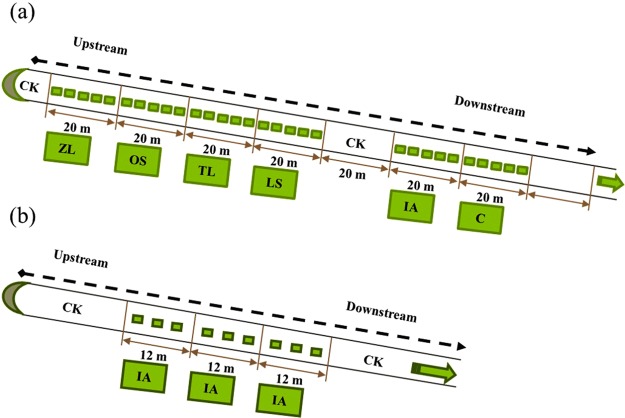
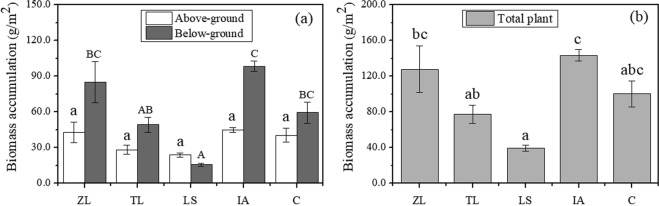
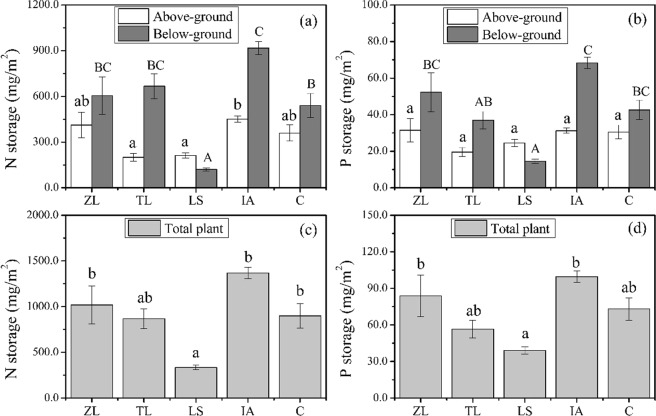
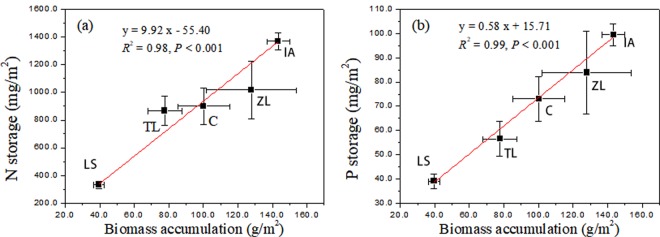
Verification
Claims the paper makes
The claims and statistics of this paper haven’t been checked yet.
Run the check — free, no account needed. It reads the open-access text and checks the sources it cites.
Claims other papers make about this one
Each is checked against this paper’s own text: does it say what the citing paper says it does?
The source backs part of the claim, not all of it — or backs it for a different population, condition or comparison.
In the citing paper
“The biomass produced by phytoremediation of HMs can be utilized for numerous practical purposes (Chen et al., 2019).”
From Sustainability of phytoremediation: Post-harvest stratagems and economic opportunities for the produced metals contaminated biomass (2023) · cites this paper as Chen et al., 2019
Experimental — accuracy not yet measured
Self-check
Percentages, sums and reported differences re-computed from the paper’s own numbers.
The self-check needs the paper’s full text.
Citations
Cites
No references could be resolved yet.
Research works printed but not linked: 53
- Abe, K., Kato, K. & Ozaki, Y. Vegetation-based wastewater treatment technologies for rural areas in Japan. Jan Agr Resh Q 44, 231–242 (2010). · DOI
- Min, J. & Shi, W. Nitrogen discharge pathways in vegetable production as non-point sources of pollution and measures to control it. Sci Total Environ 123, 613–614 (2017).
- Van Bochove, E. et al. Temporal trends of risk of water contamination by phosphorus from agricultural land in the great lakes watersheds of Canada. Can J Soil Sci 9, 443–453 (2017).
- Vu, M. T., Raghavan, S. V. & Liong, S. Y. SWAT use of gridded observations for simulating runoff-a Vietnam river basin study. Hydrol Earth Syst Sc 8, 10679–10705 (2011). · DOI
- Wu, L. et al. Modeling impacts of sediment delivery ratio and land management on adsorbed non-point source nitrogen and phosphorus load in a mountainous basin of the three gorges reservoir area, China. Environ Earth Sci 70, 1405–1422 (2013). · DOI
- Alexander, R. B. et al. Differences in phosphorus and nitrogen delivery to the Gulf of Mexico from the Mississippi river Basin. Environ Sci Technol 42, 822–830 (2008). · DOI
- Lena, B. V. Nutrient preserving in riverine transitional strip. J Humn Environ 3, 342–347 (1994).
- Ongley, E. D., Zhang, X. L. & Yu, T. Current status of agricultural and rural non-point source pollution assessment in China. Environ Pollut 158, 1159–1168 (2010). · DOI
- Liu, W. & Qiu, R. L. Water eutrophication in China and the combating strategies. J Chem Technol Biot 82, 781–786 (2007). · DOI
- Huang, J. et al. Nitrogen and phosphorus losses and eutrophication potential associated with fertilizer application to cropland in China. J Clean Prod 159, 171–179 (2017). · DOI · Paper page
- Fu, D. F. et al. Nutrient mitigation capacity of agricultural drainage ditches in Tai lake basin. Ecol Eng 71, 101–107 (2014). · DOI
- Moore, M. T. et al. Nutrient mitigation capacity in Mississippi Delta, USA drainage ditches. Environ Pollut 158, 175–184 (2010). · DOI
- Roley, S. S. et al. How cost-effective are cover crops, wetlands, and two-stage ditches for nitrogen removal in the Mississippi River Basin? Water Resources and Economics 15, 43–56 (2016). · DOI
- Brix, H. Do macrophytes play a role in constructed treatment wetlands? Water Sci Technol 35, 11–17 (1997). · DOI · Paper page
- Ma, L. et al. Nitrogen and phosphorus transformations and balance in a pond-ditch circulation system for rural polluted water treatment. Ecol Eng 94, 117–126 (2016). · DOI
- Wu, Q. et al. Microbial mechanisms of using enhanced ecological floating beds for eutrophic water improvement. Bioresource Technol 211, 451–456 (2016). · DOI
- Bu, F. P. & Xu, X. Y. Planted floating bed performance in treatment of eutrophic river water. Environ Monit Assess 185, 9651–9662 (2013). · DOI
- Qin, H. J., Zhang, Z. Y. & Liu, M. H. Site test of phytoremediation of an open pond contaminated with domestic sewage using water hyacinth and water lettuce. Ecol Eng 95, 753–762 (2016). · DOI
- Chen, C. J. et al. Performance of five plant species in removal of nitrogen and phosphorus from an experimental phytoremediation system in the Ningxia irrigation area. Environ Monit Assess 189, 497 (2017). · DOI
- Ge, Z. G. et al. Seasonal applicability of three vegetation constructed floating treatment wetlands for nutrient removal and harvesting strategy in urban stormwater retention ponds. Int Biodeter Biodegr 112, 80–87 (2016). · DOI
- Kumwimba, M. N., Zhu, B. & Muyembe, D. K. Assessing the influence of different plant species in drainage ditches on mitigation of non-point source pollutants (N, P, and sediments) in the Purple Sichuan Basin. Environ Monit Assess 189, 267 (2017). · DOI
- Wang, Z. et al. Nitrogen removal from Lake Caohai, a typical ultra-eutrophic lake in China with large scale confined growth of Eichhornia crassipes. Chemosphere 92, 177–183 (2013). · DOI
- Sinha, A. K. & Sinha, R. K. Sewage management by aquatic weeds (water hyacinth and duckweed): Economically viable and ecologically sustainable bio-mechanical technology. Environ Educ Inform 19, 215–226 (2000).
- Kröger, R. et al. Evaluating the influence of wetland vegetation on chemical residence time in Mississippi Delta drainage ditches. Agr water manage 96, 1175–1179 (2009). · DOI
- Tyler, H. L., Moore, M. T. & Locke, M. A. Influence of three aquatic macrophytes on mitigation of nitrogen species from agricultural runoff. Water Air Soil Poll 223, 3227–3236 (2012a). · DOI
- Tyler, H. L., Moore, M. T. & Locke, M. A. Potential for phosphate mitigation from agricultural runoff by three aquatic macrophytes. Water Air Soil Poll 223, 4557–4564 (2012b). · DOI
- Lucas, W. C. & Greenway, M. Nutrient retention in mature vegetated bioretention systems under elevated nutrient loads. Proceedings of the World Environmental and Water Resources Congress, 4 (2008). · DOI
- Duan, J. J., Feng, Y. F. & Yu, Y. L. Differences in the treatment efficiency of a cold-resistant floating bed plant receiving two types of low-pollution wastewater. Environ Monit Assess 188, 283 (2016). · DOI
- Huang, W. et al. Vertical distribution and retention mechanism of nitrogen and phosphorus in soils with different macrophytes of a natural river mouth wetland. Environ Monit Assess 187, 1–10 (2015). · DOI
- Wang, H. Y., Zhang, H. L. & Cai, G. Q. An application of phytoremediation to rive pollution remediation. Procedia Environ Sci 10, 1904–1907 (2011). · DOI
- Liu, Y. Q., Fu, Z. S., Zou, G. Y. & Kong, L. B. Effects of the ecological floating bed system (EFBS) on the water ecosystem of polluted river in Ningxia Yellow-River irrigating area. Acta Agric Shanghai 32, 92–99 (2016).
- Li, H. et al. A study of countermeasures for prevention and control of rural non-point source pollution in Ningxia. Ningxia Journal of Agriculture and Forestry Science and Technology 56, 47–49 (in Chinese) (2015).
- Liu, G. Q., & Yang, S. Q. Analyzed on present situation of subsiding water form cropland in Ningxia irrigation area from the Huanghe River. Journal of Irrigation and Drainage 29, 104–108 (in Chinese) (2010).
- Reddy, K. R. et al. Phosphorus retention in streams and wetlands: a review. Crit Rev Env Sci Tec 29, 83–146 (1999). · DOI
- Faulwetter, J. L. et al. Microbial processes influencing performance of treatment wetlands: a review. Ecol Eng 35, 987–1004 (2009). · DOI
- Stewart, F. M. et al. Floating islands as an alternative to constructed wetlands for treatment of excess nutrients form agricultural and municipal wastes-results of laboratory-scale tests. Land Contam Reclamat 16, 25–33 (2008). · DOI
- Li, X. N. et al. An integrated ecological floating-bed employing plant, freshwater clam and biofilm carrier for purification of eutrophic water. Ecol Eng 36, 382–390 (2010). · DOI
- Reddy, K. R. & Busk, W. F. D. Nutrient removal potential of selected aquatic macrophytes. J Environ Qual 14, 459–462 (1985). · DOI
- Li, M. et al. Enhanced nitrogen and phosphorus removal from eutrophic lake water by Ipomoea aquatica with low-energy ion implantation. Water Res 43, 1247–1256 (2009). · DOI
- Tanner, C. C. & Headley, T. R. Components of floating emergent macrophyte treatment wetlands influencing removal of stormwater pollutants. Ecol Eng 37, 474–486 (2011). · DOI
- Zhao, F. L. et al. Purifying eutrophic river waters with integrated floating island systems. Ecol Eng 40, 53–60 (2012). · DOI
- Zhu, L. D., Li, Z. H. & Ketola, T. Biomass accumulations and nutrient uptake of plants cultivated on artificial floating beds in China’s rural area. Ecol Eng 37, 1460–1466 (2011). · DOI
- Hu, M. H. et al. Treating eutrophic water for nutrient reduction using an aquatic macrophyte (Ipomoea aquatica Forsskal) in a deep flow technique system. Agr Water Manage 95, 607–615 (2008). · DOI
- Jusoh, A. Effect of flow rate on water quality parameters and plant growth of water spinach (Ipomoea aquatica) in an aquaponic recirculating system. Desalin Water Treat 5, 19–28 (2009). · DOI
- Jampeetong, A., Brix, H. & Kantawanichkul, S. Effects of inorganic nitrogen forms on growth, morphology, nitrogen uptake capacity and nutrient allocation of four tropical aquatic macrophytes (Salvinia cucullata, Ipomoea aquatica, Cyperus involucratus and Vetiveria zizanioides). Aquat Bot 97, 10–16 (2012). · DOI
- Fox, L. J. et al. Nitrogen phytoremediation by water hyacinth (Eichhornia crassipes (Mart.) Solms). Water Air Soil Poll 194, 199–207 (2008). · DOI
- Lu, Q. et al. Phytoremediation to remove nutrients and improve eutrophic stormwaters using water lettuce (Pistia stratiotes L.). Environ Sci Pollut R 17, 84–96 (2010). · DOI
- Tripathi, B. D. & Upadhyay, A. R. Dairy effluent polishing by aquatic macrophytes. Water Air Soil Poll 143, 377–385 (2003). · DOI
- Picard, C. R., Fraser, L. H. & Steer, D. The interacting effects of temperature and plant community type on nutrient removal in wetland microcosms. Bioresource Technol 96, 1039–1047 (2005). · DOI
- Lin, Q. C. et al. Purification efficiencies of two kinds of aquatic plants and their combination on eutrophication of urban river in low temperature season. Journal of Anhui Agriculture Sciences 40, 16765–16767 (in Chinese) (2012).
- Wang, Z. X. & Calderon, M. M. Environment and economic analysis of application of water hyacinth for eutrophic water treatment coupled with biogas production. J Environ Manage 110, 246–253 (2012). · DOI
- Yang, S. C. et al. Water purification and productivity of Ipomoea aquatica grown on river water flowing to Xingyun Lake in Yunnan Province. Journal of Agro-Environment Science 34, 370–376 (in Chinese) (2015).
- Lu, R. K. Soil agricultural chemical analysis method. China Agricultural Science and Technology Press. Beijing, (in Chinese) (2000).
Cited by
Sorted by citations
Khan, A. H. A., Kiyani, A., Santiago-Herrera, M., Ibáñez, J., Yousaf, S., Iqbal, M., Martel-Martín, S., & Barros, R. (2023) · Journal of Environmental Management · doi:10.1016/j.jenvman.2022.116700 · Cited by 105
Metadata
- Authors
- Chen, C., Wang, F., Hong, Y., Liu, R., & Luo, L.
- Affiliations
- Tianjin University (CN)
- Ningxia Academy of Agriculture and Forestry Sciences (CN)
- Chinese Academy of Agricultural Sciences (CN)
- Corresponding author
- Luo, Liangguo
- Venue
- Scientific Reports
- Published
- 2019-08-06
- Volume
- 9
- Issue
- 1
- Pages
- 11365-11365
- ISSN
- 2045-2322 (ISSN-L)
- PMC
- PMC6684586
- OpenAlex
- W2964519615
- Cited by
- 17
- References
- 0
- Citations by year
- 2026: 1 · 2025: 2 · 2024: 2 · 2023: 5 · 2022: 3 · 2021: 1 · 2020: 3
- FWCI
- 1.34
- Type
- journal article
- Language
- en
- Open access
- gold
- doi.org
- Locations
- Scientific Reports (publishedVersion, cc-by)
- Europe PMC (PubMed Central) (publishedVersion, cc-by)
- PubMed Central (publishedVersion, cc-by)
- PubMed (publishedVersion)
- DOAJ (DOAJ: Directory of Open Access Journals) (submittedVersion)
- Funders
- National Nature Science Foundation of China
- Topics
- Physical Sciences › Environmental Science › Waste Management and Disposal › Constructed Wetlands for Wastewater Treatment
- Physical Sciences › Environmental Science › Environmental Chemistry › Soil and Water Nutrient Dynamics
- Physical Sciences › Environmental Science › Environmental Chemistry › Aquatic Ecosystems and Phytoplankton Dynamics
- Keywords
- phytoremediation, nitrogen removal, phosphorus removal, water spinach, biomass accumulation, nutrient uptake, irrigation water contamination, Zizania latifolia, Typha latifolia, rice, lettuce
- MeSH terms
- Biodegradation, Environmental, Poaceae, Nitrogen, Phosphorus, Oryza, Biomass, Asteraceae, Ipomoea, Typhaceae
About these checks
Registry, retraction, Cites and statistics results are computed, not judged, with one exception: a printed reference that no index lists is read once by a model before it counts as a citation error. Claims are extracted by a model and kept only when their quote appears verbatim in the text; each cited source is then checked, with a model’s help, for whether it says what the claim relies on. Those verdicts can be wrong — read the claim’s quote and the cited source before relying on one.
Statistics and arithmetic are recomputed, not judged.
Confidence bands are shown only for fields calibrated on our annotated test set. None is calibrated yet, so no band is shown.
What counts as a claim ›How we measure confidence ›How we check this ›
Are you an author, or do you see a problem with this page? Request a review
