

The DOI matches its Crossref record; 68 of the 69 references it cites were found in a registry or an index.
Knowledge on exotic mosquitoes in Germany, and public acceptance and effectiveness of Bti and two self-prepared insecticides against Aedes japonicus japonicus
Open accessAbstract
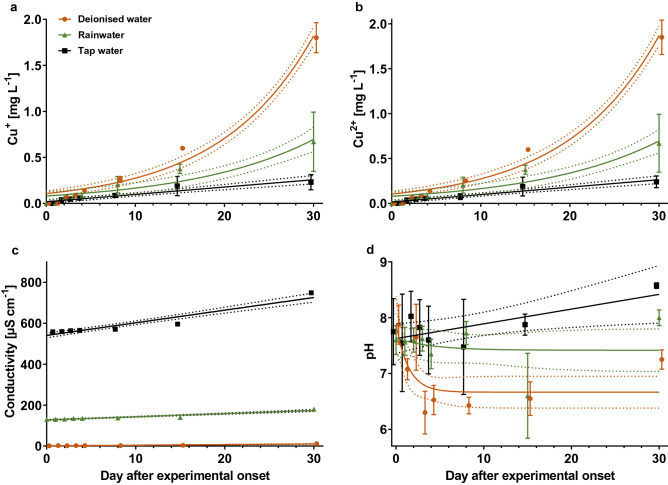
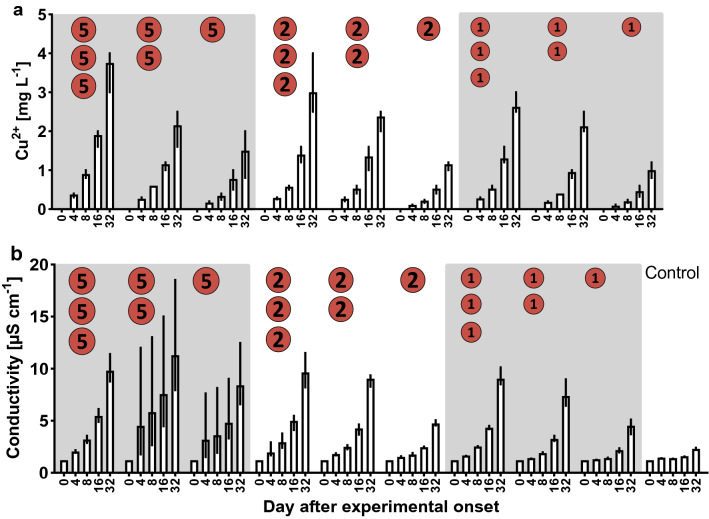
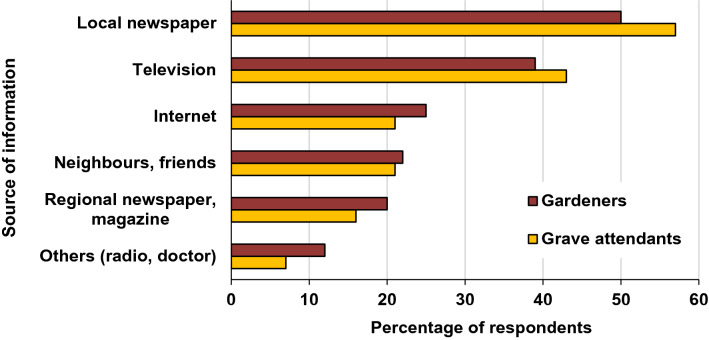
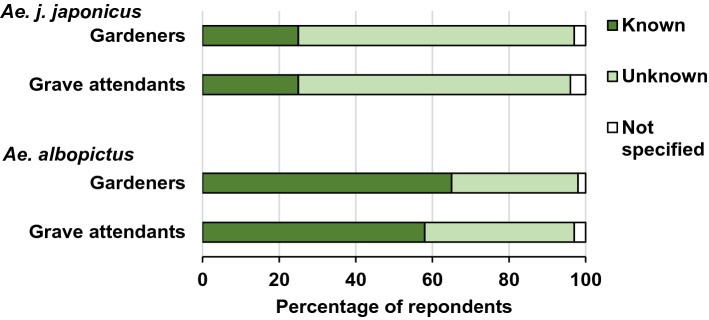
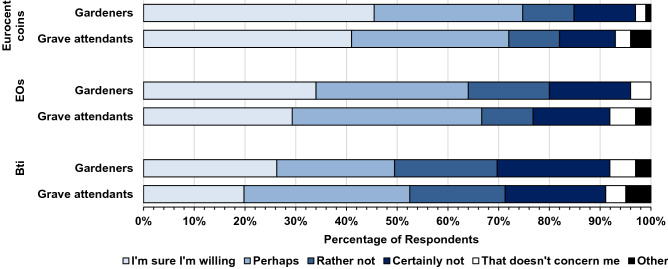
Abstract Mosquito-borne diseases are a continuous challenge to public health. To prevent transmission, Integrated Vector Management (IVM) applies preventive, control, and communicational strategies that should be feasible, environmentally benign, and sustainable. IVM shows higher efficiency when being supported by local communities. Accordingly, we applied a social-ecological approach to identify the public acceptance of control measures and effectiveness of Eurocent coins containing copper, clove essential oil (EO) and Bacillus thuringiensis israelensis (Bti). We performed field and laboratory experiments to demonstrate the toxicity of alternative substances against Aedes japonicus japonicus. In expert interviews, we asked for (1) knowledge on exotic mosquitoes in Germany, (2) potential chances of alternative substances in future mosquito control, and (3) their needs for further clarification before application. We assessed potential users’ (4) awareness of exotic mosquitoes and (5) willingness to apply the substances. Self-prepared copper coins and EO were clearly preferred by potential users over Bti. However, 100% mortality of the sensitive first stage could not be reached with the number of ten 5-Eurocent coins showing limited toxicity. Clove EO was shown to work as oviposition deterrent and larvicide with a LC 50 of 17 mg l −1 (95% CI: 15–19 mg l −1 ). This study shows the importance of potential users’ perspectives in IVM and the need for authorised insecticides.
Overview
The claims and statistics of this paper haven’t been checked yet.
Run the check — free, no account needed. It reads the open-access text and checks the sources it cites.
Integrity signals
Registry
Cites
Statistics
Figures
Verification
Claims the paper makes
The claims and statistics of this paper haven’t been checked yet.
Run the check — free, no account needed. It reads the open-access text and checks the sources it cites.
Claims other papers make about this one
Each is checked against this paper’s own text: does it say what the citing paper says it does?
The source backs part of the claim, not all of it — or backs it for a different population, condition or comparison.
In the citing paper
“The oviposition-deterrent activity of CEO can be found in other mosquito species (Anopheles stephensi, An. subpictus, Ae. aegypti, C. pipiens, Ae. albopictus, Culex quinquefasciatus, and Cx. tritaeniorhynchus) [105,107].”
From Clove essential oil (Syzygium aromaticum L. Myrtaceae): Extraction, chemical composition, food applications, and essential bioactivity for human health (2021) · cites this paper as [107]
Experimental — accuracy not yet measuredThe cited source says what the claim attributes to it.
In the citing paper
“Reuss et al. [107] observed that CEO functions as an oviposition repellent and a larvicide, with an LC50 of 17 mg/L.”
From Clove essential oil (Syzygium aromaticum L. Myrtaceae): Extraction, chemical composition, food applications, and essential bioactivity for human health (2021) · cites this paper as [107]
The cited source says what the claim attributes to it.
In the citing paper
“CEO has shown repellent action in the laboratory and field settings against adult Ae. aegypti, Ae. cinereus, and Ae. communis [105,107].”
From Clove essential oil (Syzygium aromaticum L. Myrtaceae): Extraction, chemical composition, food applications, and essential bioactivity for human health (2021) · cites this paper as [107]
Self-check
Percentages, sums and reported differences re-computed from the paper’s own numbers.
The self-check needs the paper’s full text.
Citations
Cites
More than 75 percent decline over 27 years in total flying insect biomass in protected areas
Hallmann, C. A., Sorg, M., Jongejans, E., Siepel, H., Hofland, N., Schwan, H., Stenmans, W., Müller, A., Sumser, H., Hörren, T., et al. (2017) · PLOS ONE · doi:10.1371/journal.pone.0185809 · Cited by 3,499
Past and future spread of the arbovirus vectors Aedes aegypti and Aedes albopictus
Kraemer, M. U. G., Reiner, R. C., Brady, O. J., Messina, J. P., Gilbert, M., Pigott, D. M., Yi, D., Johnson, K. B., Earl, L., Marczak, L. B., et al. (2019) · Nature Microbiology · doi:10.1038/s41564-019-0376-y · Cited by 1,393
Insecticide Resistance in Mosquitoes: Impact, Mechanisms, and Research Directions
Liu, N. (2015) · Annual Review of Entomology · doi:10.1146/annurev-ento-010814-020828 · Cited by 1,087
Essential oils for the development of eco-friendly mosquito larvicides: A review
Pavela, R. (2015) · Industrial Crops and Products · doi:10.1016/j.indcrop.2015.06.050 · Cited by 803
A Review of the Invasive Mosquitoes in Europe: Ecology, Public Health Risks, and Control Options
Medlock, J. M., Hansford, K. M., Schaffner, F., Versteirt, V., Hendrickx, G., Zeller, H. G., & Bortel, W. V. (2012) · Vector-Borne and Zoonotic Diseases · doi:10.1089/vbz.2011.0814 · Cited by 700
Han, W., Tian, Y., & Shen, X. (2017) · Chemosphere · doi:10.1016/j.chemosphere.2017.10.149 · Cited by 475
Alternative strategies for mosquito-borne arbovirus control
Achee, N. L., Grieco, J. P., Vatandoost, H., Seixas, G., Pinto, J., Ching-NG, L., Martins, A. J., Juntarajumnong, W., Corbel, V., Gouagna, L., et al. (2019) · PLoS neglected tropical diseases · doi:10.1371/journal.pntd.0006822 · Cited by 365
Insecticide use: Contexts and ecological consequences
Devine, G. J., & Furlong, M. J. (2007) · Agriculture and Human Values · doi:10.1007/s10460-007-9067-z · Cited by 335
Controlling vector-borne diseases by releasing modified mosquitoes
Flores, H. A., & O’Neill, S. L. (2018) · Nature Reviews Microbiology · doi:10.1038/s41579-018-0025-0 · Cited by 326
Benelli, G. (2015) · Parasitology Research · doi:10.1007/s00436-015-4656-z · Cited by 318
Public health significance of invasive mosquitoes in Europe
Schaffner, F., Medlock, J. M., & Bortel, W. V. (2013) · Clinical Microbiology and Infection · doi:10.1111/1469-0691.12189 · Cited by 317
Integrated Aedes management for the control of Aedes-borne diseases
Roiz, D., Wilson, A. L., Scott, T. W., Fonseca, D. M., Jourdain, F., Müller, P., Velayudhan, R., & Corbel, V. (2018) · PLoS neglected tropical diseases · doi:10.1371/journal.pntd.0006845 · Cited by 266
Kramer, W. L., & Mulla, M. S. (1979) · Environmental Entomology · doi:10.1093/ee/8.6.1111 · Cited by 239
Invasion Biology of Aedes japonicus japonicus (Diptera: Culicidae)
Kaufman, M. G., & Fonseca, D. M. (2014) · Annual Review of Entomology · doi:10.1146/annurev-ento-011613-162012 · Cited by 219
Exploiting the potential of vector control for disease prevention.
Townson, H., Nathan, M. B., Zaim, M., Guillet, P., Manga, L., Bos, R., & Kindhauser, M. K. (2005) · Europe PMC (PubMed Central) · Cited by 187
Akıner, M. M., Demırcı, B., Babuadze, G. G., Robert, V., & Schaffner, F. (2016) · PLoS neglected tropical diseases · doi:10.1371/journal.pntd.0004664 · Cited by 174
Red flag for green spray: adverse trophic effects of Bti on breeding birds
Poulin, B., Lefebvre, G., & Leiza, L. P. (2010) · Journal of Applied Ecology · doi:10.1111/j.1365-2664.2010.01821.x · Cited by 170
Healy, K., Ünlü, I., Obenauer, P. J., Hughes, T. H., Healy, S. P., Crepeau, T. N., Farajollahi, A., Kesavaraju, B., Fonseca, D. M., Schoeler, G. B., et al. (2012) · Journal of Medical Entomology · doi:10.1603/me11031 · Cited by 158
Kitron, U., & Spielman, A. (1989) · Clinical Infectious Diseases · doi:10.1093/clinids/11.3.391 · Cited by 151
Kampen, H., & Werner, D. (2014) · Parasites & Vectors · doi:10.1186/1756-3305-7-59 · Cited by 137
Insect repellents and associated personal protection for a reduction in human disease
Debboun, M., & Strickman, D. (2012) · Medical and Veterinary Entomology · doi:10.1111/j.1365-2915.2012.01020.x · Cited by 135
Exploiting Intimate Relationships: Controlling Mosquito-Transmitted Disease with Wolbachia
Caragata, E. P., Dutra, H. L. C., & Moreira, L. A. (2015) · Trends in Parasitology · doi:10.1016/j.pt.2015.10.011 · Cited by 133
Sardelis, M. R., & Turell, M. J. (2001) · PubMed · Cited by 131
Takashima, I., & Rosen, L. (1989) · Journal of Medical Entomology · doi:10.1093/jmedent/26.5.454 · Cited by 126
ECDC guidelines for the surveillance of invasive mosquitoes in Europe.
Rakotoarivony, L., & Schaffner, F. (2012) · PubMed · Cited by 119
Control of Mosquito-Borne Infectious Diseases: Sex and Gene Drive
Adelman, Z. N., & Tu, Z. J. (2016) · Trends in Parasitology · doi:10.1016/j.pt.2015.12.003 · Cited by 115
Cantrell, C. L., Klun, J. A., Bryson, C. T., Kobaisy, M., & Duke, S. (2005) · Journal of Agricultural and Food Chemistry · doi:10.1021/jf0509308 · Cited by 108
Vector competence of Aedes japonicus for chikungunya and dengue viruses
Schaffner, F., Vazeille, M., Kaufmann, C., Failloux, A., & Mathis, A. (2011) · Zurich Open Repository and Archive (University of Zurich) · doi:10.5167/uzh-53052 · Cited by 99
Ünlü, I., Farajollahi, A., Strickman, D. A., & Fonseca, D. M. (2013) · PLoS ONE · doi:10.1371/journal.pone.0077999 · Cited by 96
Abramides, G. C., Roiz, D., Guitart, R., Quintana, S., Guerrero, I., & Giménez, N. (2011) · Transactions of the Royal Society of Tropical Medicine and Hygiene · doi:10.1016/j.trstmh.2011.01.003 · Cited by 89
Scott, M. J., Gould, F. L., Lorenzen, M. D., Grubbs, N., Edwards, O. R., & O’Brochta, D. A. (2017) · Journal of Responsible Innovation · doi:10.1080/23299460.2017.1410343 · Cited by 88
Ritchie, S. A., van den Hurk, A. F., Smout, M. J., Staunton, K. M., & Hoffmann, A. A. (2018) · Trends in Parasitology · doi:10.1016/j.pt.2017.11.011 · Cited by 86
Fayemiwo, K. A., Adeleke, M. A., Okoro, O. P., Awojide, S. H., & Awoniyi, I. O. (2013) · Asian Pacific Journal of Tropical Biomedicine · doi:10.1016/s2221-1691(14)60204-5 · Cited by 81
Healy, K., Hamilton, G. C., Crepeau, T. N., Healy, S. P., Ünlü, I., Farajollahi, A., & Fonseca, D. M. (2014) · PLoS ONE · doi:10.1371/journal.pone.0108504 · Cited by 78
Efficacy of plant extracts and oils as mosquito repellents
Thorsell, W., Mikiver, A., Malander, I., & Tunón, H. (1998) · Phytomedicine · doi:10.1016/s0944-7113(98)80072-x · Cited by 78
Community participation in the prevention and control of dengue: thepatio limpiostrategy in Mexico
TAPIA-CONYER, R. C., Méndez-Galván, J. F., & Burciaga-Zúñiga, P. (2012) · Paediatrics and International Child Health · doi:10.1179/2046904712z.00000000047 · Cited by 73
Koban, M. B., Kampen, H., Scheuch, D. E., Früh, L., Kuhlisch, C., Janssen, N., Steidle, J. L. M., Schaub, G. A., & Werner, D. (2019) · Parasites & Vectors · doi:10.1186/s13071-019-3349-3 · Cited by 64
Thomas, A., Mazigo, H. D., Manjurano, A. M., Morona, D., & Kweka, E. J. (2017) · Parasites & Vectors · doi:10.1186/s13071-017-2355-6 · Cited by 63
Benelli, G., Rajeswary, M., & Govindarajan, M. (2016) · Environmental Science and Pollution Research · doi:10.1007/s11356-016-8146-3 · Cited by 61
Neighbors help neighbors control urban mosquitoes
Johnson, B. J., Brosch, D., Christiansen, A., Wells, E., Wells, M., Bhandoola, A. F., Milne, A., Garrison, S., & Fonseca, D. M. (2018) · Scientific Reports · doi:10.1038/s41598-018-34161-9 · Cited by 61
Allgeier, S., Friedrich, A., & Brühl, C. A. (2019) · The Science of The Total Environment · doi:10.1016/j.scitotenv.2019.05.358 · Cited by 59
Jakob, C., & Poulin, B. (2016) · Insect Conservation and Diversity · doi:10.1111/icad.12155 · Cited by 55
Pfitzner, W. P., Lehner, A., Hoffmann, D. E., Czajka, C., & Becker, N. (2018) · Parasites & Vectors · doi:10.1186/s13071-018-3199-4 · Cited by 52
Reuss, F., Wieser, A., Niamir, A., Bálint, M., Kuch, U., Pfenninger, M., & Müller, R. (2018) · Parasites & Vectors · doi:10.1186/s13071-018-2659-1 · Cited by 50
An integrated pest control strategy against the Asian tiger mosquito in northern Italy: a case study
Baldacchino, F., Bussola, F., Arnoldi, D., Marcantonio, M., Montarsi, F., Capelli, G., Rosà, R., & Rizzoli, A. P. (2016) · Pest Management Science · doi:10.1002/ps.4417 · Cited by 49
Müller, R., Reuss, F., Kendrovski, V., & Montag, D. (2019) · Springer eBooks · doi:10.1007/978-3-030-02318-8_4 · Cited by 48
Kampen, H., Kuhlisch, C., Fröhlich, A., Scheuch, D. E., & Walther, D. (2016) · PLoS ONE · doi:10.1371/journal.pone.0167948 · Cited by 39
Bodner, D., LaDeau, S. L., Biehler, D. D., Kirchoff, N. S., & Leisnham, P. T. (2016) · PLoS ONE · doi:10.1371/journal.pone.0155011 · Cited by 37
Pichler, V., Malandruccolo, C., Serini, P., Bellini, R., Severini, F., Toma, L., Luca, M. D., Montarsi, F., Ballardini, M., Manica, M., et al. (2019) · Pest Management Science · doi:10.1002/ps.5369 · Cited by 34
Thangam, T. S., & Kathiresan, K. (1997) · Pharmaceutical Biology · doi:10.1076/phbi.35.1.69.13263 · Cited by 32
Wolfram, G., Wenzl, P., & Jerrentrup, H. (2018) · Environmental Monitoring and Assessment · doi:10.1007/s10661-018-7084-6 · Cited by 30
Damiens, D. D., Ayrinhac, A., Bortel, W. V., Versteirt, V., Dekoninck, W., & Hance, T. (2014) · PLoS ONE · doi:10.1371/journal.pone.0089358 · Cited by 29
Wieser, A., Reuss, F., Niamir, A., Müller, R., O’Hara, R. B., & Pfenninger, M. (2019) · Parasites & Vectors · doi:10.1186/s13071-019-3366-2 · Cited by 27
Heym, E. C., Schröder, J., Kampen, H., & Walther, D. (2017) · Frontiers in Public Health · doi:10.3389/fpubh.2017.00278 · Cited by 22
Timmermann, U., & Becker, N. (2017) · Bulletin of Entomological Research · doi:10.1017/s0007485317000141 · Cited by 21
Sun, M.-L., Wang, Y., Song, Z., & Fang, G. (2007) · Journal of Forestry Research · doi:10.1007/s11676-007-0011-2 · Cited by 20
First Data on Resistance to Pyrethroids in Wild Populations of Aedes albopictus from Spain
Bengoa, M., Eritja, R., Delacour‐Estrella, S., Chueca, M. Á. M., Sureda, A., & Lucientes, J. (2017) · Journal of the American Mosquito Control Association · doi:10.2987/17-6636r.1 · Cited by 17
Regional Survey of Mosquito Control Knowledge and Usage In North Carolina
Richards, S. L., Balanay, J. A. G., Byrd, B. D., Reiskind, M. H., & Styers, D. M. (2017) · Journal of the American Mosquito Control Association · doi:10.2987/17-6669.1 · Cited by 17
Romi, R., Luca, M. D., Raineri, W., Pesce, M., Rey, A., Giovannangeli, S., Zanasi, F., & Bella, A. (2000) · Journal of Medical Entomology · doi:10.1603/0022-2585-37.2.281 · Cited by 14
Reduced mosquito production in cemetery vases with copper liners.
Gf, O., Evans, L. F., & Ad, G. (1992) · PubMed · Cited by 13
Possible utilization of metallic copper to inhibit Aedes Albopictus (Skuse) larval development.
Bellini, R., Carrieri, M., Bacchi, M., Fonti, P., & Celli, G. (1998) · PubMed · Cited by 12
Metallic copper spray – a new control technique to combat invasive container-inhabiting mosquitoes
Becker, N., Oo, T. T., & Schork, N. (2015) · Parasites & Vectors · doi:10.1186/s13071-015-1180-z · Cited by 11
Kolimenakis, A., Bithas, K., Latinopoulos, D., & Richardson, C. (2019) · PLoS neglected tropical diseases · doi:10.1371/journal.pntd.0007467 · Cited by 10
Does Bti (Bacillus thuringiensis var. israelensis) affect Rana temporaria tadpoles?
Schweizer, M., Miksch, L., Köhler, H., & Triebskorn, R. A. (2019) · Ecotoxicology and Environmental Safety · doi:10.1016/j.ecoenv.2019.05.080 · Cited by 10
On Surface Tension of Water in Relation to Behavior of Anopheles Larvae 1
Russell, P. F., & Rao, T. R. (1941) · American Journal of Tropical Medicine and Hygiene · doi:10.4269/ajtmh.1941.s1-21.767 · Cited by 8
Larvicidal and ovipositional preference test of copper solution for mosquitoes
Reza, M., Yamamoto, D. S., & Matsuoka, H. (2014) · Medical Entomology and Zoology · doi:10.7601/mez.65.147 · Cited by 7
“Looking over the Backyard Fence”: Householders and Mosquito Control
Mainali, S., Lamichhane, R., Clark, K., BEATTY, S. E., Fatouros, M., Neville, P. J., & Oosthuizen, J. D. (2017) · International Journal of Environmental Research and Public Health · doi:10.3390/ijerph14030246 · Cited by 7
Lamichhane, R. S., Neville, P. J., Oosthuizen, J., Clark, K., Mainali, S., Fatouros, M., & BEATTY, S. E. (2017) · Frontiers in Public Health · doi:10.3389/fpubh.2017.00292 · Cited by 5
Research works printed but not linked: 3
- Takken, W. & van den Berg, H. Manual on Prevention of Establishment and Control of Mosquitoes of Public Health Importance in the WHO European Region (with Special Reference to Invasive Mosquitoes) (World Health Organization, Geneva, 2018).
- World Health Organisation (WHO). Global Strategic Framework for Integrated Vector Management (WHO, Geneva, 2004).
- Becker, N. The use of Bacillus thuringiensis subsp. israelensis (Bti) against mosquitoes, with special emphasis on the ecological impact. Isr. J. Entomol. 32, 63–69 (1998).
Cited by
Sorted by citations
Haro-González, J. N., Castillo-Herrera, G. A., Martínez-Velázquez, M., & Espinosa-Andrews, H. (2021) · Molecules · doi:10.3390/molecules26216387 · Cited by 463
Bacterial Toxins Active against Mosquitoes: Mode of Action and Resistance
Silva‐Filha, M. H. N. L., Romão, T. P., Rezende, T. M. T., Carvalho, K. D. S., Menezes, H. S. G., do Nascimento, N. A., Soberón, M., & Bravo, A. (2021) · Toxins · doi:10.3390/toxins13080523 · Cited by 127
Müller, R., Bálint, M., Hardes, K., Hollert, H., Klimpel, S., Knorr, E., Kochmann, J., Lee, K., Mehring, M., Pauls, S. U., et al. (2023) · Biotechnology Advances · doi:10.1016/j.biotechadv.2023.108167 · Cited by 20
Schneider, F. D., Matias, D. M., Burkhart, S., Drees, L., Fickel, T., Hummel, D., Liehr, S., Schramm, E., & Mehring, M. (2021) · Global Sustainability · doi:10.1017/sus.2021.11 · Cited by 8
Vanslembrouck, A., Scheers, K., Vermeersch, X., Hendrickx, R., Schneider, A., Witte, J. D., Deblauwe, I., Bortel, W. V., Reuss, F., & Müller, R. (2024) · NeoBiota · doi:10.3897/neobiota.94.121987 · Cited by 5
Metadata
- Authors
- Reuss, F., Kreß, A., Braun, M., Magdeburg, A., Pfenninger, M., Müller, R., & Mehring, M.
- Affiliations
- Senckenberg Biodiversity and Climate Research Centre (DE)
- Goethe University Frankfurt (DE)
- Johannes Gutenberg University Mainz (DE)
- Corresponding author
- Reuss, Friederike
- Venue
- Scientific Reports
- Published
- 2020-11-03
- Volume
- 10
- Issue
- 1
- Pages
- 18901-18901
- ISSN
- 2045-2322 (ISSN-L)
- PMC
- PMC7641113
- OpenAlex
- W3094715528
- Cited by
- 12
- References
- 69
- Citations by year
- 2026: 3 · 2025: 2 · 2024: 1 · 2023: 1 · 2022: 2 · 2021: 3
- FWCI
- 2.00
- Type
- journal article
- Language
- en
- Open access
- gold
- doi.org
- Locations
- Scientific Reports (publishedVersion, cc-by)
- PubMed Central (publishedVersion, cc-by)
- PubMed (publishedVersion)
- Publication Server of Goethe University Frankfurt am Main (Goethe University Frankfurt) (submittedVersion, cc-by)
- Funders
- Centre on Climate Change and Adaptation of the Hessian Agency for Nature Conservation, Environment and Geology
- Federal Ministry of Education and Research of Germany (AECO (number 01Kl1717))
- Leibniz-Gemeinschaft
- Projekt DEAL
- Topics
- Health Sciences › Medicine › Public Health, Environmental and Occupational Health › Dengue and Mosquito Control Research
- Health Sciences › Medicine › Public Health, Environmental and Occupational Health › Mosquito-borne diseases and control
- Life Sciences › Agricultural and Biological Sciences › Plant Science › Insect Pest Control Strategies
- Keywords
- Aedes japonicus japonicus, exotic mosquitoes, Bacillus thuringiensis var. israelensis, clove oil, copper coins, mosquito control, integrated vector management, public acceptance, oviposition deterrent, larvicidal toxicity, socio-ecological approach, mosquito-borne diseases
- MeSH terms
- Aedes, Animals, Bacillus thuringiensis, Consumer Behavior, Copper, Germany, Insect Control, Insecticides, Numismatics, Oils, Volatile, Pest Control, Biological, Plant Oils, Syzygium
About these checks
Registry, retraction, Cites and statistics results are computed, not judged, with one exception: a printed reference that no index lists is read once by a model before it counts as a citation error. Claims are extracted by a model and kept only when their quote appears verbatim in the text; each cited source is then checked, with a model’s help, for whether it says what the claim relies on. Those verdicts can be wrong — read the claim’s quote and the cited source before relying on one.
Statistics and arithmetic are recomputed, not judged.
Confidence bands are shown only for fields calibrated on our annotated test set. None is calibrated yet, so no band is shown.
What counts as a claim ›How we measure confidence ›How we check this ›
Are you an author, or do you see a problem with this page? Request a review
