

The DOI matches its Crossref record.
Excessive application of chemical fertilizer and organophosphorus pesticides induced total phosphorus loss from planting causing surface water eutrophication
Open accessAbstract
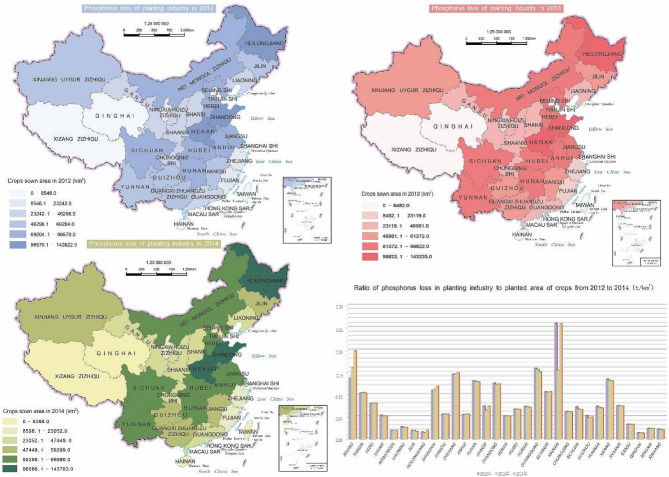
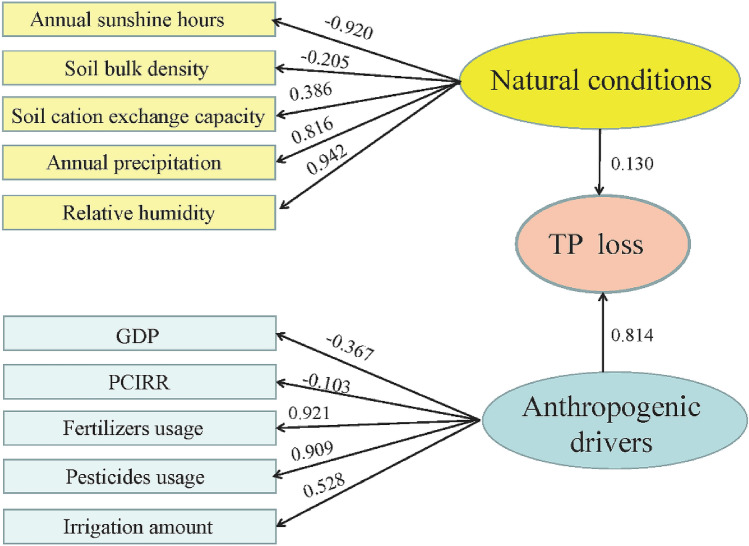
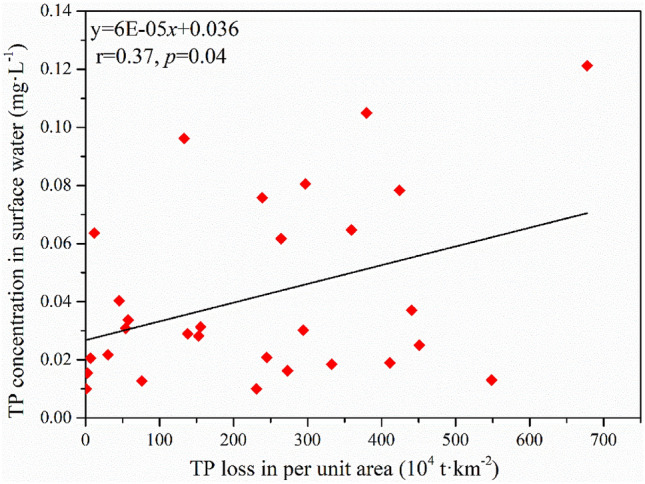
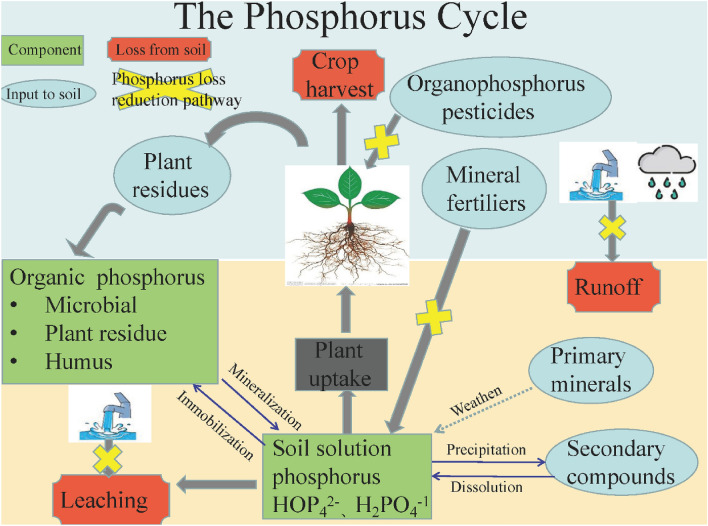
Total phosphorus (TP) loss from planting was one of the resources causing agricultural non-point source pollution. It is significant to clarify the factors influencing TP loss, as well as explore the relationship between TP loss from planting and surface water eutrophication for making recommendations on the reduction of environmental pollution. In this study, the minimum and maximum of average TP loss was appeared in Qinghai and Shandong province with the TP loss of 7.7 × 10 2 t and 7.5 × 10 3 t from 2012 to 2014, respectively. The results of structural equation model (SEM) indicating that the effect of anthropogenic drivers on TP loss was more important than natural conditions due to the higher path coefficient of anthropogenic drivers (0.814) than that of natural conditions (0.130). For anthropogenic drivers, the path coefficients of usage of fertilizer and pesticides, which was often excessively applied in China, were 0.921 and 0.909, respectively causing they the two dominant factors affecting TP loss. Annual precipitation and relative humidity, which were belongs to natural conditions, increased TP loss by enhancing leaching and surface runoff. However, light duration could reduce TP loss by promoting crop growth and increasing TP absorption of crops, with a path coefficient of − 0.920. TP loss of each province in per unit area from planting was significantly correlated with TP concentration of its surface water (p < 0.05), suggesting that TP loss from planting was the main factor causing surface water eutrophication. This study targeted presented three proposals to reduce the TP loss from planting, including promotion of scientific fertilization technologies, restriction of organophosphorus pesticides, and popularization of water saving irrigation technologies. These findings as well as suggestions herein would provide direction for the reduction of TP loss from planting.
Overview
The claims and statistics of this paper haven’t been checked yet.
Run the check — free, no account needed. It reads the open-access text and checks the sources it cites.
Integrity signals
Registry
Cites
Statistics
Figures
Verification
Claims the paper makes
The claims and statistics of this paper haven’t been checked yet.
Run the check — free, no account needed. It reads the open-access text and checks the sources it cites.
Claims other papers make about this one
Each is checked against this paper’s own text: does it say what the citing paper says it does?
The cited source says what the claim attributes to it.
In the citing paper
“and eutrophication of the water environment (Walling and Vaneeckhaute 2020;Liu et al. 2021).”
From Recycling municipal, agricultural and industrial waste into energy, fertilizers, food and construction materials, and economic feasibility: a review (2023) · cites this paper as Liu et al. 2021
Self-check
Percentages, sums and reported differences re-computed from the paper’s own numbers.
The self-check needs the paper’s full text.
Citations
Cites
Still being checked.
Research works printed but not linked: 56
- Li, W., Ya, L., Lu, H. & Huang, Z. Recycling of phosphorus-containing plastic based on the dual effects of switchable hydrophilicity solvents. Chemosphere 259, 127402. https://doi.org/10.1016/j.chemosphere.2020.127402 (2020). · DOI
- Liu, X. et al. Historic trends and future prospects of waste generation and recycling in China’s phosphorus cycle. Environ. Sci. Technol. 54, 5131–5139. https://doi.org/10.1021/acs.est.9b05120 (2020). · DOI
- Bai, Z. et al. Changes in phosphorus use and losses in the food chain of China during 1950–2010 and forecasts for 2030. Nutr. Cycl. Agroecosyst. 104, 361–372. https://doi.org/10.1007/s10705-015-9737-y (2016). · DOI
- Schoumans, O. et al. Mitigation options to reduce phosphorus losses from the agricultural sector and improve surface water quality: A review. Sci. Total Environ. 468, 1255–1266. https://doi.org/10.1016/j.scitotenv.2013.08.061 (2014). · DOI · Paper page
- Huang, J., Xu, C., Bradley, G., Wang, X. & Ren, P. Nitrogen and phosphorus losses and eutrophication potential associated with fertilizer application to cropland in China. J. Clean. Prod. 159, 171–179. https://doi.org/10.1016/j.jclepro.2017.05.008 (2017). · DOI · Paper page
- Ni, Z., Wang, S. & Wang, Y. Characteristics of bioavailable organic phosphorus in sediment and its contribution to lake eutrophication in China. Environ. Pollut. 219, 537–544. https://doi.org/10.1016/j.envpol.2016.05.087 (2016). · DOI
- Mcdowell, R. & David, N. A review of the cost-effectiveness and suitability of mitigation strategies to prevent phosphorus loss from dairy farms in New Zealand and Australia. J. Environ. Qual. 41, 680–693. https://doi.org/10.2134/jeq2011.0041 (2012). · DOI
- Mockler, E. et al. Sources of nitrogen and phosphorus emissions to Irish rivers and coastal waters: Estimates from a nutrient load apportionment framework. Sci. Total Environ. 601, 326–339. https://doi.org/10.1016/j.scitotenv.2017.05.186 (2017). · DOI
- Bragina, L. et al. Spatial and temporal variability in costs and effectiveness in phosphorus loss mitigation at farm scale: A scenario analysis. J. Environ. Manag. 245, 330–337. https://doi.org/10.1016/j.jenvman.2019.05.080 (2019). · DOI
- Wang, M. et al. Hotspots for nitrogen and phosphorus losses from food production in China: A county-scale analysis. Environ. Sci. Technol. 52, 5782–5791. https://doi.org/10.1021/acs.est.7b06138 (2018). · DOI
- Wu, H., Yuan, Z., Gao, L., Zhang, L. & Zhang, Y. Life-cycle phosphorus management of the crop production–consumption system in China, 1980–2012. Sci. Total Environ. 502, 706–721. https://doi.org/10.1016/j.scitotenv.2014.09.056 (2015). · DOI
- Yuan, Z. et al. Human perturbation of the global phosphorus cycle: Changes and consequences. Environ. Sci. Technol. 52, 2438–2450. https://doi.org/10.1016/j.scitotenv.2014.09.056 (2018). · DOI
- Schindler, D., Stephen, R., Steven, C., Robert, E. & Diane, M. Reducing phosphorus to curb lake eutrophication is a success. Environ. Sci. Technol. 50, 8923–8929. https://doi.org/10.1021/acs.est.7b03910 (2016). · DOI
- Marianne, B., Inga, G. & Anne, F. Implementation of mitigation measures to reduce phosphorus losses: The vestre vansjø pilot catchment. Agriculture 9, 15. https://doi.org/10.3390/agriculture9010015 (2019). · DOI
- Zhu, X. et al. Phosphorus fertilizer effect in sugarcane red soil and its loss risk assessment under different phosphorus application rates. Agric. Sci. Technol. 18, 2372–2377. https://doi.org/10.16175/j.cnki.1009-4229.2017.12.040 (2017). · DOI
- Cassidy, R., Donnacha, G. & Catherine, J. Impact of legacy soil phosphorus on losses in drainage and overland flow from grazed grasslands soils. Environ. Sci. Technol. 57, 474–484. https://doi.org/10.1016/j.scitotenv.2016.07.063 (2017). · DOI
- Wu, L., Long, T., Liu, X. & Guo, J. Impacts of climate and land-use changes on the migration of non-point source nitrogen and phosphorus during rainfall-runoff in the Jialing river watershed, China. J. Hydrol. 475, 26–41. https://doi.org/10.1016/j.jhydrol.2012.08.022 (2012). · DOI
- Zhang, M., Li, D. & Zhou, Y. Effects of rainfall intensity and slope gradient on soil erosion, nitrogen and potassium loss on loess slope. J. Soil Water Conserv. 32, 85–90. https://doi.org/10.1007/s00477-014-0896-1 (2018). · DOI
- Li, H., Erwin, K. & Roland, B. Enhanced soil aggregate stability limits colloidal phosphorus loss potentials in agricultural systems. Environ. Sci. Eur. 32, 1–14. https://doi.org/10.1186/s12302-020-0299-5 (2020). · DOI
- Vero, S., Erin, S. & Donnacha, D. Evidence and perception of phosphorus loss risk factors in farmyards. Environ. Sci. Policy 114, 542–548. https://doi.org/10.1016/j.envsci.2020.09.025 (2020). · DOI
- Zhang, Y. et al. Structural equation modeling of PAHs in ambient air, dust fall, soil, and cabbage in vegetable bases of northern China. Environ. Pollut. 239, 13–20. https://doi.org/10.1016/j.envpol.2018.03.084 (2018). · DOI
- Yang, T. et al. Impact of nitrogen fertilizer, greenhouse, and crop species on yield-scaled nitrous oxide emission from vegetable crops: A meta-analysis. Ecol. Indic. 105, 717–726. https://doi.org/10.1016/j.ecolind.2019.02.001 (2019). · DOI
- Bovill, W., Huang, C. & Glenn, M. Genetic approaches to enhancing phosphorus-use efficiency (PUE) in crops: Challenges and directions. Crop Pasture Sci. 64, 179–198. https://doi.org/10.1071/CP13135 (2013). · DOI
- Yang, W., Xia, Y., Jiang, X. & Yan, X. Influencing factors and estimation of total phosphorus runoff from farmlands in China. J. Agro-Environ. Sci. 34, 319–325. https://doi.org/10.11654/jaes.2015.02.016 (2015). · DOI
- Tian, W., Peng, B., Wang, K., Liang, K. & Liu, C. Simulating the change of precipitation-runoff relationship during drought years in the eastern monsoon region of China. Sci. Total Environ. 723, 138172. https://doi.org/10.1016/j.scitotenv.2020.138172 (2020). · DOI
- Liu, L., Zheng, X., Peng, C., Li, J. & Xu, Y. Driving forces and future trends on total nitrogen loss of planting in China. Environ. Pollut. 267, 115660. https://doi.org/10.1016/j.envpol.2020.115660 (2020). · DOI
- Hua, K. & Zhu, B. Phosphorus loss through surface runoff and leaching in response to the long-term application of different organic amendments on sloping croplands. J. Soil. Sediment. 20, 3459–3471. https://doi.org/10.1007/s11368-020-02675-3 (2020). · DOI
- Wang, N., Liu, L., Sun, K. & Duan, S. Analysis of structure–activity relationship and toxicity of organophosphorus pesticide to plankton. Ecol. Environ. 21, 118–123. https://doi.org/10.3969/j.issn.1674-5906.2012.01.021 (2012). · DOI
- Tian, W., Liu, X., Liu, C. & Bai, P. Investigation and simulations of changes in the relationship of precipitation-runoff in drought years. J. Hydrol. 565, 95–105. https://doi.org/10.1016/j.jhydrol.2018.08.015 (2018). · DOI
- Zhi, X. et al. Light spatial distribution in the canopy and crop development in cotton. PLoS One 9, E113409. https://doi.org/10.1371/journal.pone.0113409 (2014). · DOI
- Yu, H., Yang, P., Lin, H., Ren, S. & He, X. Effects of sodic soil reclamation using flue gas desulphurization gypsum on soil pore characteristics, bulk density, and saturated hydraulic conductivity. Soil Sci. Soc. Am. J. 78, 1201–1213. https://doi.org/10.2136/sssaj2013.08.0352 (2014). · DOI
- Abbas, M., Shah, J., Irfan, M. & Memon, M. Remobilization and utilization of phosphorus in wheat cultivars under induced phosphorus deficiency. J. Plant Nutr. 41, 1–12. https://doi.org/10.1080/01904167.2018.1458871 (2018). · DOI
- Wu, F. et al. Effects of phosphate solubilizing bacteria on the growth, photosynthesis, and nutrient uptake of Camellia oleifera abel. Forests 10(348), 2019. https://doi.org/10.3390/f10040348 (2019). · DOI
- Wang, Y., Zhu, Y., Zhang, S. & Wang, Y. What could promote farmers to replace chemical fertilizers with organic fertilizers?. J. Clean. Prod. 199, 882–890. https://doi.org/10.1016/j.jclepro.2018.07.222 (2018). · DOI
- Wu, Q. Mechanisms of Difference in Phosphorus Availability and Fertilizer P Use Efficiency in Three Soils Under Long-Term Fertilization (China Agricultural University, 2014).
- Kamel, A. et al. Oxidation of selected organophosphate pesticides during chlorination of simulated drinking water. Water Res. 43, 522–534. https://doi.org/10.1016/j.watres.2008.10.038 (2009). · DOI
- Chu, Y., Li, Y., Wang, Y., Li, B. & Zhang, Y. Investigation of interaction modes involved in alkaline phosphatase and organophosphorus pesticides via molecular simulations. Food Chem. 254, 80–86. https://doi.org/10.1016/j.foodchem.2018.01.187 (2018). · DOI
- Sun, K., Wang, N., Liu, L. & Duan, S. Ecological risks assessment of organophosphorus pesticides based on response of Scenedesmus quadricanda. China Environ. Sci. 33, 868–873 (2013).
- Gray, G., McDowell, R., Carrick, S. & Thomas, S. The effect of irrigation and urine application on phosphorus losses to subsurface flow from a stony soil. Agric. Ecosyst. Environ. 233, 425. https://doi.org/10.1016/j.agee.2016.09.040 (2016). · DOI
- Ye, Y., Liang, X., Li, L., Yuan, J. & Zhu, S. Effects of different water and nitrogen managements on phosphorus loss via runoff and leaching from paddy fields in Taihu lake basin. Acta Sci. Circum. 35, 1125–1135. https://doi.org/10.13671/j.hjkxxb.2014.0811 (2015). · DOI
- Fan, Z. et al. Conventional flooding irrigation causes an overuse of nitrogen fertilizer and low nitrogen use efficiency in intensively used solar greenhouse vegetable production. Agric. Water Manag. 144, 11–19. https://doi.org/10.1016/j.agwat.2014.05.010 (2014). · DOI
- Zhu, J., Li, X., Christie, P. & Li, J. Environmental implications of low nitrogen use efficiency in excessively fertilized hot pepper (Capsicum frutescens L.) cropping systems. Agric. Ecosyst. Environ. 111, 70–80. https://doi.org/10.1016/j.agee.2005.04.025 (2015). · DOI
- Ren, T., Christie, P., Wang, J., Chen, Q. & Zhang, F. Root zone soil nitrogen management to maintain high tomato yields and minimum nitrogen losses to the environment. Sci. Hortic. 125, 25–33. https://doi.org/10.1016/j.scienta.2010.02.014 (2010). · DOI
- Gu, B. et al. Cleaning up nitrogen pollution may reduce future carbon sinks. Glob. Environ. Change. 48, 56–66. https://doi.org/10.1016/j.gloenvcha.2017.10.007 (2018). · DOI
- He, S. & Katherine, D. Microbiology of “Candidatus Accumulibacter” in activated sludge. Microb. Biotechnol. 4, 603–619. https://doi.org/10.1111/j.1751-7915.2011.00248.x (2011). · DOI
- Devlin, T., Biase, A., Wei, V., Elektorowicz, M. & Oleszkiewicz, J. Removal of soluble phosphorus from surface water using iron (Fe–Fe) and aluminum (Al–Al) electrodes. Environ. Sci. Technol. 51, 13825–13833. https://doi.org/10.1021/acs.est.7b02353 (2017). · DOI
- Huang, G., Liu, C., Zhang, Y. & Chen, Z. Groundwater is important for the geochemical cycling of phosphorus in rapidly urbanized areas: A case study in the pearl river delta. Environ. Pollut. 260, 114079. https://doi.org/10.1016/j.envpol.2020.114079 (2020). · DOI
- Zhao, Y., Deng, X., Zhan, J., Xi, B. & Lu, Q. Progress on preventing and controlling strategies of lake eutrophication in China. Environ. Sci. Technol. 33, 92–98. https://doi.org/10.1111/j.1744-7917.2010.01338.x (2010). · DOI
- Xu, H. et al. Long-term nutrient trends and harmful cyanobacterial bloom potential in hypertrophic lake Taihu, China. Hydrobiologia 787, 229–242. https://doi.org/10.1007/s10750-016-2967-4 (2017). · DOI
- Li, Q. & Li, D. Factors driving the decline of fertilizer application intensity in China in context of green development: Based on spatial panel data model. J. Agro-For. Econ. Manag. 18, 462–471. https://doi.org/10.16195/j.cnki.cn36-1328/f.2019.04.50 (2019). · DOI
- Lu, W. Effects of fertilization patterns on chemical forms of nitrogen in dark brown soil and its distribution in different aggregates. Agric. Sci. Technol. 15, 1910–1913. https://doi.org/10.16175/j.cnki.1009-4229.2014.11.020 (2014). · DOI
- Wang, S. et al. Phosphorus loss potential and phosphatase activity under phosphorus fertilization in long-term paddy wetland agroecosystems. Soil Sci. Soc. Am. J. 76, 161–167. https://doi.org/10.2136/sssaj2011.0078 (2012). · DOI
- He, H. The current situation and development trend of organophosphorus pesticide industry. World Pestic. 30, 29–33. https://doi.org/10.3969/j.issn.1009-6485.2008.06.005 (2008). · DOI
- Yuan, S. et al. Screening of lactic acid bacteria for degrading organophosphorus pesticides and their potential protective effects against pesticide toxicity. Food Sci. Technol. 147, 111672. https://doi.org/10.1016/j.lwt.2021.111672 (2021). · DOI
- Yan, J., Wu, Q., Zhu, J., Zhang, L. & Li, J. Experimental research on nitrogen management based on emission controlling for paddy field. J. Soil Water Conserv. 32, 229–236. https://doi.org/10.13870/j.cnki.stbcxb.2018.02.034 (2018). · DOI
- Zhang, L. et al. Effects of irrigation and fertilization on nitrogen and phosphorus runoff from paddy field. J. Soil Water Conserv. 25, 7–12. https://doi.org/10.13870/j.cnki.stbcxb.2011.06.010 (2011). · DOI
Cited by
Sorted by citations
Peng, X., Jiang, Y., Chen, Z., Osman, A. I., Farghali, M., Rooney, D. W., & Yap, P.-S. (2023) · Environmental Chemistry Letters · doi:10.1007/s10311-022-01551-5 · Cited by 333
Metadata
- Authors
- Liu, L., Zheng, X., Wei, X., Kai, Z., & Xu, Y.
- Affiliations
- Beijing Academy of Agriculture and Forestry Sciences (CN)
- Agro-Environmental Protection Institute (CN)
- Corresponding author
- Xu, Yan
- Venue
- Scientific Reports
- Published
- 2021-11-26
- Volume
- 11
- Issue
- 1
- Pages
- 23015-23015
- ISSN
- 2045-2322 (ISSN-L)
- PMC
- PMC8626514
- OpenAlex
- W3217269926
- Cited by
- 258
- References
- 0
- Citations by year
- 2026: 69 · 2025: 87 · 2024: 57 · 2023: 32 · 2022: 13
- FWCI
- 9.66
- Type
- journal article
- Language
- en
- Open access
- gold
- doi.org
- Locations
- Scientific Reports (publishedVersion, cc-by)
- PubMed Central (publishedVersion, cc-by)
- PubMed (publishedVersion)
- DOAJ (DOAJ: Directory of Open Access Journals) (submittedVersion, cc-by-sa)
- Funders
- The National Key Research and Development Program of China (2016YFD0201200)
- Topics
- Physical Sciences › Environmental Science › Environmental Chemistry › Soil and Water Nutrient Dynamics
- Life Sciences › Agricultural and Biological Sciences › Soil Science › Agricultural Science and Fertilization
- Physical Sciences › Environmental Science › Environmental Chemistry › Aquatic Ecosystems and Phytoplankton Dynamics
- Keywords
- surface water eutrophication, chemical fertilizer overuse, organophosphorus pesticides, agricultural non-point source pollution, anthropogenic factors, natural conditions, light duration, phosphorus leaching, surface runoff, scientific fertilization, water-saving irrigation, provincial comparison
About these checks
Registry, retraction, Cites and statistics results are computed, not judged, with one exception: a printed reference that no index lists is read once by a model before it counts as a citation error. Claims are extracted by a model and kept only when their quote appears verbatim in the text; each cited source is then checked, with a model’s help, for whether it says what the claim relies on. Those verdicts can be wrong — read the claim’s quote and the cited source before relying on one.
Statistics and arithmetic are recomputed, not judged.
Confidence bands are shown only for fields calibrated on our annotated test set. None is calibrated yet, so no band is shown.
What counts as a claim ›How we measure confidence ›How we check this ›
Are you an author, or do you see a problem with this page? Request a review
How to cite
Cite CoChat for the checks on this page, and the paper for its own findings.
- This page
- CoChat. (2026). Citation check: Excessive application of chemical fertilizer and organophosphorus pesticides induced total phosphorus loss from planting causing surface water eutrophication. https://app.cochat.ai/papers/10.1038/s41598-021-02521-7
- The paper
- Liu, L., Zheng, X., Wei, X., Kai, Z., & Xu, Y. (2021). Excessive application of chemical fertilizer and organophosphorus pesticides induced total phosphorus loss from planting causing surface water eutrophication. Scientific Reports. https://doi.org/10.1038/s41598-021-02521-7
