

TNFα promotes oral cancer growth, pain, and Schwann cell activation
Open accessThe DOI matches its Crossref record; 66 of the 67 references it cites were found in a registry or an index.
Abstract
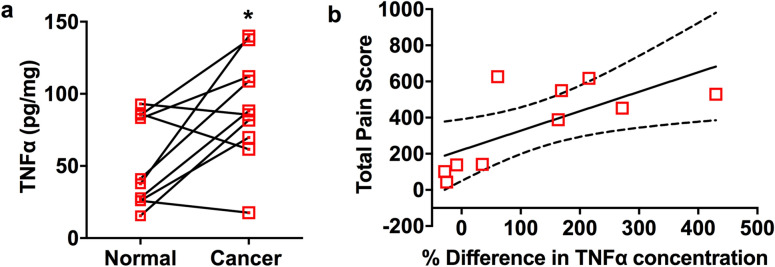
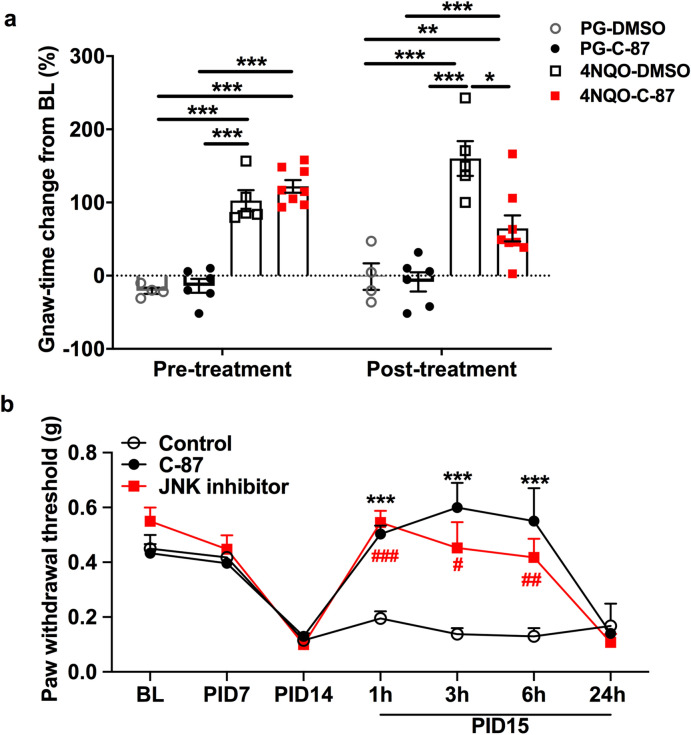
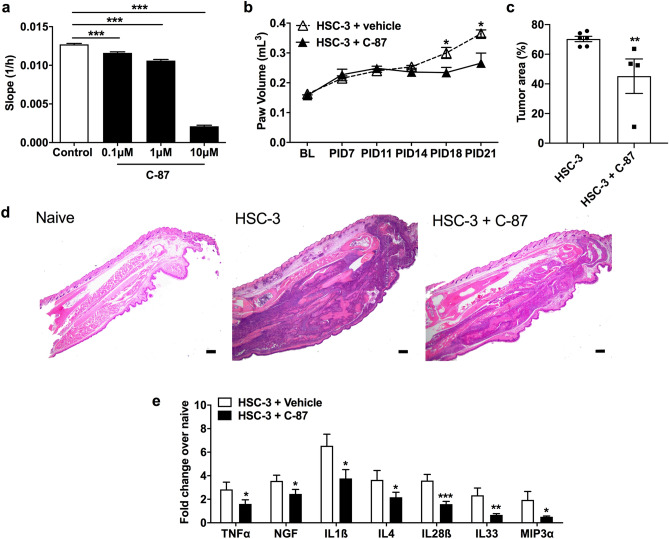
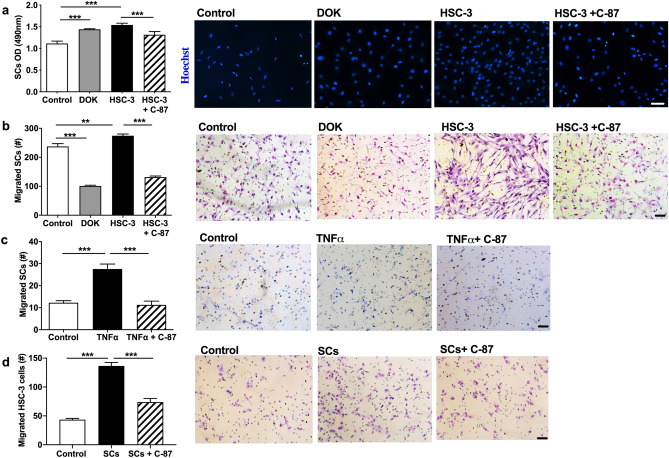
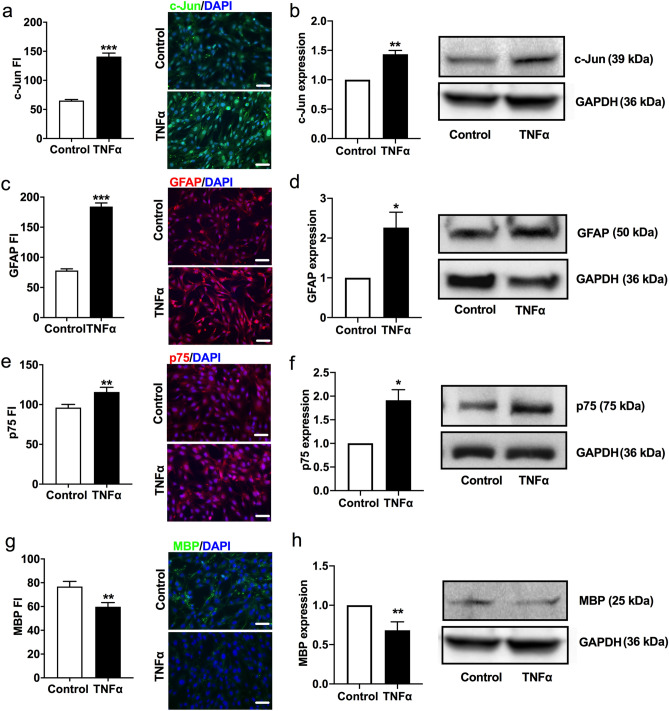
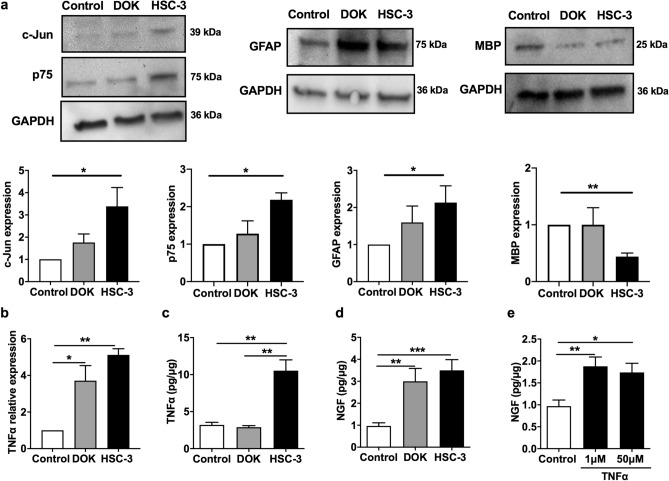
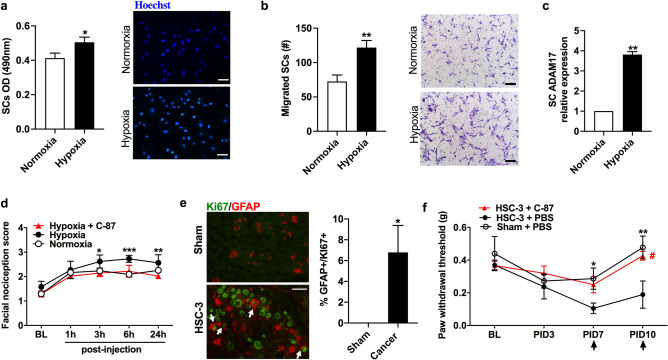
Oral cancer is very painful and impairs a patient’s ability to eat, talk, and drink. Mediators secreted from oral cancer can excite and sensitize sensory neurons inducing pain. Cancer mediators can also activate Schwann cells, the peripheral glia that regulates neuronal function and repair. The contribution of Schwann cells to oral cancer pain is unclear. We hypothesize that the oral cancer mediator TNFα activates Schwann cells, which further promotes cancer progression and pain. We demonstrate that TNFα is overexpressed in human oral cancer tissues and correlates with increased self-reported pain in patients. Antagonizing TNFα reduces oral cancer proliferation, cytokine production, and nociception in mice with oral cancer. Oral cancer or TNFα alone increases Schwann cell activation (measured by Schwann cell proliferation, migration, and activation markers), which can be inhibited by neutralizing TNFα. Cancer- or TNFα-activated Schwann cells release pro-nociceptive mediators such as TNFα and nerve growth factor (NGF). Activated Schwann cells induce nociceptive behaviors in mice, which is alleviated by blocking TNFα. Our study suggests that TNFα promotes cancer proliferation, progression, and nociception at least partially by activating Schwann cells. Inhibiting TNFα or Schwann cell activation might serve as therapeutic approaches for the treatment of oral cancer and associated pain.
Overview
The claims and statistics of this paper haven’t been checked yet.
Free: it reads the open-access text and checks the first 5 claims that cite a source we can check. Create a free account to check every claim.
Integrity signals
Registry
Cites
Statistics
Figures
Verification
Claims the paper makes
The claims and statistics of this paper haven’t been checked yet.
Free: it reads the open-access text and checks the first 5 claims that cite a source we can check. Create a free account to check every claim.
Claims other papers make about this one
Each is checked against this paper’s own text: does it say what the citing paper says it does?
The check wasn’t confident either way, so it gives no verdict — never disputed.
In the citing paper
“TNF also induces the formation of cancer stem-like phenotypes in oral squamous cell carcinoma (44, 45).”
From Tumor-Induced Inflammatory Cytokines and the Emerging Diagnostic Devices for Cancer Detection and Prognosis (2021) · cites this paper as [45]
Experimental — accuracy not yet measured
Self-check
Percentages, sums and reported differences re-computed from the paper’s own numbers.
The self-check needs the paper’s full text.
Citations
Cites
Prevalence of pain in patients with cancer: a systematic review of the past 40 years
van den Beuken-van Everdingen, M. H. J., de Rijke, J. M., Kessels, A. G., Schouten, H. C., van Kleef, M., & Patijn, J. (2007) · Annals of Oncology · doi:10.1093/annonc/mdm056 · Cited by 1,923
Methods Used to Evaluate Pain Behaviors in Rodents
Deuis, J. R., Dvorakova, L. S., & Vetter, I. (2017) · Frontiers in Molecular Neuroscience · doi:10.3389/fnmol.2017.00284 · Cited by 1,249
Arthur-Farraj, P. J., Latouche, M., Wilton, D. K., Quintes, S., Chabrol, E., Banerjee, A., Woodhoo, A., Jenkins, B., Rahman, M., Turmaine, M., et al. (2012) · Neuron · doi:10.1016/j.neuron.2012.06.021 · Cited by 857
The pivotal role of tumour necrosis factor α in the development of inflammatory hyperalgesia
Cunha, F. Q., Poole, S., Lorenzetti, B. B., & Ferreira, S. H. (1992) · British Journal of Pharmacology · doi:10.1111/j.1476-5381.1992.tb14503.x · Cited by 792
ADAM17: a molecular switch to control inflammation and tissue regeneration
Scheller, J., Chalaris, A., Garbers, C., & Rose-John, S. (2011) · Trends in Immunology · doi:10.1016/j.it.2011.05.005 · Cited by 526
Molecular mechanisms of cancer pain
Mantyh, P. W., Clohisy, D. R., Koltzenburg, M., & Hunt, S. P. (2002) · Nature Reviews Cancer · doi:10.1038/nrc747 · Cited by 477
Oral Cavity and Esophageal Carcinogenesis Modeled in Carcinogen-Treated Mice
Tang, X.-H., Knudsen, B., Bemis, D., Tickoo, S., & Gudas, L. J. (2004) · Clinical Cancer Research · doi:10.1158/1078-0432.ccr-0999-3 · Cited by 390
A Prospective Study of Quality of Life in Head and Neck Cancer Patients. Part II: Longitudinal Data
Bjordal, K., Ahlner‐Elmqvist, M., Hammerlid, E., Boysen, M., Evensen, J. F., Biörklund, A., Jannert, M., Westin, T., & Kaasa, S. (2001) · The Laryngoscope · doi:10.1097/00005537-200108000-00022 · Cited by 318
Schwann cells induce cancer cell dispersion and invasion
Deborde, S., Omelchenko, T., Lyubchik, A., Zhou, Y., He, S., McNamara, W. F., Chernichenko, N., Lee, S.-Y., Barajas, F., Chen, C.-H., et al. (2016) · Journal of Clinical Investigation · doi:10.1172/jci82658 · Cited by 290
Neural plasticity in pancreatitis and pancreatic cancer
Demir, I. E., Friess, H., & Ceyhan, G. O. (2015) · Nature Reviews Gastroenterology & Hepatology · doi:10.1038/nrgastro.2015.166 · Cited by 255
Cited by
Kartikasari, A. E. R., Huertas, C. S., Mitchell, A., & Plebanski, M. (2021) · Frontiers in Oncology · doi:10.3389/fonc.2021.692142 · Cited by 343
“TNF also induces the formation of cancer stem-like phenotypes in oral squamous cell carcinoma (44, 45).”
BackgroundProliferation and Apoptosis Pathways and Factors in Oral Squamous Cell Carcinoma
He, S., Chakraborty, R., & Ranganathan, S. (2022) · International Journal of Molecular Sciences · doi:10.3390/ijms23031562 · Cited by 113
“[94] TNFR1 (CD120a) Related to oral cancer pain and inflammation Scheff et al.”
BackgroundPhysical Cue‐Based Strategies on Peripheral Nerve Regeneration
Wei, Z., Jin, F., Li, T., Qian, L., Zheng, W., Wang, T., & Feng, Z. (2022) · Advanced Functional Materials · doi:10.1002/adfm.202209658 · Cited by 57
Advances in Head and Neck Cancer Pain
Ye, Y., Jensen, D. D., Viet, C. T., Pan, H., Campana, W. M., Amit, M., & Boada, M. D. (2022) · Journal of Dental Research · doi:10.1177/00220345221088527 · Cited by 52
“The role of fibroblast, macrophages, endothelial cells, T cells, and muscle cells in oral cancer pain is unknown. β-endo, β-endorphin; A2BR, adenosine receptor 2B; ADO, adenosine; MOPr, µ-opioid receptor; TNF, tumor necrosis factor α; TNFR1, tumor necrosis factor receptor 1.”
BackgroundInfluentialSelf-citationThe Role of Schwann Cells in Cancer
Deborde, S., & Wong, R. J. (2022) · Advanced Biology · doi:10.1002/adbi.202200089 · Cited by 57
Digesting the Role of JAK-STAT and Cytokine Signaling in Oral and Gastric Cancers
Ni, Y., Low, J. T., Silke, J., & O’Reilly, L. A. (2022) · Frontiers in Immunology · doi:10.3389/fimmu.2022.835997 · Cited by 54
Glia and Orofacial Pain: Progress and Future Directions
Ye, Y., Salvo, E., Romero‐Reyes, M., Akerman, S., Shimizu, E., Kobayashi, Y., Michot, B., & Gibbs, J. L. (2021) · International Journal of Molecular Sciences · doi:10.3390/ijms22105345 · Cited by 49
Self-citationSchwann Cells in the Tumor Microenvironment: Need More Attention
Sun, L., Chen, S., & Chen, M. (2022) · Journal of Oncology · doi:10.1155/2022/1058667 · Cited by 51
Management of pain in patients with bone metastases
Jing, D., Zhao, Q., Zhao, Y., Lu, X., Feng, Y., Zhao, B., & Zhao, X. (2023) · Frontiers in Oncology · doi:10.3389/fonc.2023.1156618 · Cited by 47
“Injection of a TNF-a antagonist can partly block the mechanical hyperalgesia in oral cancer (95, 96).”
BackgroundScheff, N. N., Wall, I. M., Nicholson, S., Williams, H., Chen, E., Tu, N. H., Dolan, J. C., Liu, C., Janal, M. N., Bunnett, N. W., et al. (2022) · Scientific Reports · doi:10.1038/s41598-022-08005-6 · Cited by 42
Self-citationSympathetic nerve signaling rewires the tumor microenvironment: a shift in “microenvironmental-ity”
Sattler, A. L., Korzun, T., Gupta, K. R., Diba, P., Kyprianou, N., & Eksi, S. E. (2025) · Cancer and Metastasis Reviews · doi:10.1007/s10555-025-10241-x · Cited by 40
“In the TME, Schwann cells are activated by TNF-α [92] and IL-6 [93] signaling and chemo attracted to tumor cell-secreted NGF, artemin [94], and CXCL12 [95].”
Atherton, M. A., Park, S., Horan, N. L., Nicholson, S. J., Dolan, J. C., Schmidt, B. L., & Scheff, N. N. (2022) · Pain · doi:10.1097/j.pain.0000000000002655 · Cited by 32
Self-citationKruglov, O., Vats, K., Soman, V., Tyurin, V. A., Tyurina, Y. Y., Wang, J., Williams, L., Zhang, J., Carey, C. D., Jaklitsch, E. L., et al. (2023) · OncoImmunology · doi:10.1080/2162402x.2023.2192098 · Cited by 33
Nerves at Play: The Peripheral Nervous System in Extracranial Malignancies
Vermeer, P. D., Restaino, A. C., Barr, J. L., Yaniv, D., & Amit, M. (2025) · Cancer Discovery · doi:10.1158/2159-8290.cd-23-0397 · Cited by 37
The impact of tumor immunogenicity on cancer pain phenotype using syngeneic oral cancer mouse models
Horan, N. L., McIlvried, L. A., Atherton, M. A., Yuan, M. M., Dolan, J. C., & Scheff, N. N. (2022) · Frontiers in Pain Research · doi:10.3389/fpain.2022.991725 · Cited by 31
“We and others have previously utilized the dolognawmeter assay to measure oral cancer-induced nociceptive behavior in both acute (40, 41) and chronic (13, 23, 40) oral cancer pain models, however, the dolognawmeter assay and device has not been used previously in a syngeneic transplant oral cancer model.”
MethodSelf-citationSchwann cells as a target cell for the treatment of cancer pain
Zhang, W.-J., Wu, C., & Liu, J. (2023) · Glia · doi:10.1002/glia.24391 · Cited by 30
Entangled cellular and molecular relationships at the sensory neuron-cancer interface
Sur, D., Zeng, Y., Kobayashi, H. H., Zhi, X., Goetz, M. R., Müller, C., Zavitsanou, A., Picoli, C. C., Matos, A. A. M., Pareja, J. R., et al. (2025) · Neuron · doi:10.1016/j.neuron.2025.07.017 · Cited by 34
Self-citationHariharan, K., Mehta, T. A., Shah, J., Dave, H. V., Sami, A., & Omri, A. (2023) · International Journal of Pharmaceutics · doi:10.1016/j.ijpharm.2023.123144 · Cited by 24
Tissue-resident glial cells associate with tumoral vasculature and promote cancer progression
Rocha, B. G. S., Picoli, C. C., Gonçalves, B. Ô. P., da Silva, W. N., Costa, A. C., Moraes, M. M., Costa, P. A. C., Santos, G. S. P., Almeida, M. R., Silva, L. M., et al. (2022) · Angiogenesis · doi:10.1007/s10456-022-09858-1 · Cited by 26
Schwann Cells in Peripheral Cancers: Bystanders or Promoters?
Yurteri, Ü., Çifcibaşı, K., Friess, H., Ceyhan, G. O., Istvánffy, R., & Demir, İ. E. (2022) · Advanced Biology · doi:10.1002/adbi.202200033 · Cited by 30
The role of the neuronal microenvironment in sensory function and pain pathophysiology
Starobova, H., Alshammari, A., Winkler, I. G., & Vetter, I. (2022) · Journal of Neurochemistry · doi:10.1111/jnc.15724 · Cited by 22
“SCs have been studied in the context of neuronal injury and pain development, maintenance, and resolution (Chen et al., 2021; De Logu et al., 2021 ; Salvo et al., 2021 ).”
A pilot study to improve pain phenotyping in head and neck cancer patients
Ye, Y., Cardoso, D. D. M., Kayahara, G. M., & Bernabé, D. G. (2023) · Frontiers in Pain Research · doi:10.3389/fpain.2023.1146667 · Cited by 22
Self-citationSanti, M. D., Zhang, M., Asam, K. R., Yu, G., Dong, P. M., Sheehan, D. H., Aouizerat, B. E., Thomas, C. M., Viet, C. T., & Ye, Y. (2024) · Journal of Pain · doi:10.1016/j.jpain.2024.104615 · Cited by 18
Self-citationGregory, E., Powers, I., Jamshidi‐Parsian, A., Griffin, R. J., & Song, Y. H. (2025) · In vitro models · doi:10.1007/s44164-025-00083-w · Cited by 20
“IL-6 and IL-1β are also documented in supporting SC activation in PNI and other neurodegenerative diseases [27, 56–60].”
Cancer neuroscience in head and neck: interactions, modulation, and therapeutic strategies
Wang, H., Song, X., Shen, H., Liu, W., Wang, Y., Zhang, M., Yang, T., Mou, Y., Ren, C., & Song, X. (2025) · Molecular Cancer · doi:10.1186/s12943-025-02299-6 · Cited by 22
“Salvo et al. found that a significant increase in TNF-α in cancer stimulates SCs to produce neurosen-sitizing mediators for the enhancement of oral cancer-associated nociceptive receptor responses [105].”
Cytokines secreted by inflamed oral mucosa: implications for oral cancer progression
Danella, E. B., de Medeiros, M. C., & D’Silva, N. J. (2023) · Oncogene · doi:10.1038/s41388-023-02649-y · Cited by 19
“TNFα is upregulated in SCC, and is associated with severity of pain [40, 41].”
BackgroundSchwann cells in the normal and pathological lung microenvironment
Shurin, M. R., Wheeler, S., Shurin, G. V., Zhong, H. M., & Zhou, Y. (2024) · Frontiers in Molecular Biosciences · doi:10.3389/fmolb.2024.1365760 · Cited by 17
Huang, Z., Sharma, M., Dave, A., Yang, Y., Chen, Z., & Radhakrishnan, R. A. (2022) · Frontiers in Pharmacology · doi:10.3389/fphar.2022.888280 · Cited by 15
“Several mast cell released factors like serotonin, kallikrein, histamine, tryptase, Substance-p, prostaglandins, TNF-α, IL-1 are the mediators of inflammatory pain (Sharma, 2005; Roman et al., 2014; Kempuraj et al., 2019; Paredes et al., 2019; Mailhot et al., 2020; Alexander et al., 2021; Salvo et al., 2021).”
BackgroundSchwann Cells Induce Phenotypic Changes in Oral Cancer Cells
Santi, M. D., Zhang, M., Salvo, E., Asam, K. R., Viet, C. T., Xie, T., Amit, M., Aouizerat, B. E., & Ye, Y. (2022) · Advanced Biology · doi:10.1002/adbi.202200187 · Cited by 15
Self-citationGao, H., Shen, H., Zhang, X., Liu, Y., Shang, Y., Sun, S., Guan, W., Gu, X., Yang, Y., & Li, G. (2025) · Bioactive Materials · doi:10.1016/j.bioactmat.2025.06.003 · Cited by 33
Schwann cells modulate nociception in neurofibromatosis 1
Raut, N. G. R., Maile, L. A., Oswalt, L. M., Mitxelena, I., Adlakha, A., Sprague, K. L., Rupert, A. R., Bokros, L., Hofmann, M. C., Cram, J. P., et al. (2024) · JCI Insight · doi:10.1172/jci.insight.171275 · Cited by 15
“SCs can modulate nociception by releasing different factors including chemokines, growth factors and cytokines [7, 10, 42, 50, 51, 63, 84-86].”
BackgroundSchwann Cells in Digestive System Disorders
Goluba, K., Kunrade, L., Riekstiņa, U., & Parfejevs, V. (2022) · Cells · doi:10.3390/cells11050832 · Cited by 14
“TNFα overexpression is found in oral cancer tissues and is indeed correlated with elevated pain, while supernatants from activated SCs can increase facial allodynia in mice [59].”
BackgroundInfluentialTargeted therapy for head and neck squamous cell carcinoma microenvironment
Guo, Z., Li, K., Liu, P., Zhang, X., Lv, J., Zeng, X., & Zhang, P. (2023) · Frontiers in Medicine · doi:10.3389/fmed.2023.1257898 · Cited by 15
“Furthermore, TNF-α is a mediator of pain perception and inflammation in oral cancer, and TNF-α blockade can potentially alleviate oral cancer-related pain (74, 75).”
BackgroundNeurotrophomodulatory effect of TNF-α through NF-κB in rat cortical astrocytes
Langhnoja, J., Lipi, B., & Prakash, P. (2025) · Cytotechnology · doi:10.1007/s10616-024-00698-z · Cited by 18
“…regulation of TNF-α and NGF expression between glial cells and neurons further supports the hypothesis that TNF-α, while primarily inflammatory, may also contribute to neuroprotection under certain conditions (Takei and Laskey 2008; Takei and L.R., 2008; Allan and Rothwell 2001; Salvo et al. 2021).”
Repurposing EGFR Inhibitors for Oral Cancer Pain and Opioid Tolerance
Santi, M. D., Zhang, M., Liu, N., Viet, C. T., Xie, T., Jensen, D. D., Amit, M., Pan, H., & Ye, Y. (2023) · Pharmaceuticals · doi:10.3390/ph16111558 · Cited by 13
Self-citationUnraveling the peripheral nervous System's role in tumor: A Double-edged Sword
Wang, Y.-H., Xuan, Y., Liu, C., Wang, X., & Yu, K. (2025) · Cancer Letters · doi:10.1016/j.canlet.2025.217451 · Cited by 9
Tumor-associated Schwann cells as new therapeutic target in non-neurological cancers
Huang, L., Qi, G., Chen, G., Duan, J., Cao, D., Lu, Y., & Zhou, Q. (2025) · Cancer Letters · doi:10.1016/j.canlet.2025.217748 · Cited by 12
Pathologic and Therapeutic Schwann Cells
Shurin, M. R., Wheeler, S., Zhong, H. M., & Zhou, Y. (2025) · Cells · doi:10.3390/cells14171336 · Cited by 11
Li, S., & Xiao, H. (2025) · Frontiers in Immunology · doi:10.3389/fimmu.2025.1719675 · Cited by 9
Xiong, F., Xiao, B.-L., Wang, Q., Liu, K., Wu, H.-W., Jing, C., Tong, K.-N., Zhang, Z., & Guo, W. (2025) · Molecular Medicine · doi:10.1186/s10020-025-01333-z · Cited by 12
“TNF-α further upregulates NGF expression and increases the distribution of NE receptors, which are sensitive to proinflammatory sympathetic signals and unduly increase NGF production in response, aggravating chronic injuries and pain (Wijaya et al. 2020a, b).”
InfluentialWang, X., Pan, Y., Zhou, Y., Tang, T., Li, F., & Li, H. (2025) · Critical Reviews in Oncology/Hematology · doi:10.1016/j.critrevonc.2025.104871 · Cited by 9
Animal models of neuropathic pain
Casaril, A. M., Gaffney, C. M., & Shepherd, A. J. (2024) · International review of neurobiology · doi:10.1016/bs.irn.2024.10.004 · Cited by 8
TRPV4 activation in Schwann cells mediates mechanically induced pain of oral cancer
Mulpuri, Y., Tu, N. H., Inoue, K., Harden, G., Nicholson, S. J., Seenauth, A., Huang, Y., Escobar, K. G., Moayedi, Y., Bunnett, N. W., et al. (2025) · Frontiers in Pain Research · doi:10.3389/fpain.2025.1532885 · Cited by 7
“Oral cancer-activated Schwann cells induce nociceptive behaviors in mice, which has been attributed to the release of nociceptive mediators from the activated Schwann cells (22, 23).”
Self-citationKhan, S., & Tao, F. (2025) · Biomedicines · doi:10.3390/biomedicines13020434 · Cited by 7
“The Schwann cells reciprocate with cancer cells and increase adenosine production with enhanced secretion of IL-6, TNF α and NGF, which ultimately have an augmenting effect on cancer proliferation, migration and invasion [24,25].”
Antonangeli, F., Arcuri, E., & Santoni, A. (2025) · Frontiers in Immunology · doi:10.3389/fimmu.2025.1694567 · Cited by 4
“Additionally, Schwann cells have been reported to reciprocally interact with cells of oral squamous cell carcinoma in both mice and humans via adenosine and TNF-a , with the result of increasing the pro-nociceptive mediators IL-6 and NGF (144, 145).”
Hydrogels in head and neck cancer: Innovations and translational advances in research and therapy
Wu, Z., Wu, Y., Alam, J., Viet, C. T., Dharmaraj, N., Molina, A. H., Sunga, G. M., Young, S., Amit, M., Li, X., et al. (2026) · Biomaterials · doi:10.1016/j.biomaterials.2026.124049 · Cited by 4
Self-citationPatton, E. A., Cunningham, P., Noneman, M. T., Helms, H. P., Martínez-Muñiz, G. A., Sumal, A. S., Dhameja, M. K., Unger, C. A., Alahdami, A. K., Enos, R. T., et al. (2023) · Nutrients · doi:10.3390/nu15071559 · Cited by 3
“TNF α has been shown to play a role in the promotion of cancer pain, and exhibits upregulated expression in the later stages of colorectal cancer [17–20].”
BackgroundKuk, S. K., Kim, K. T., Lee, J. I., & Pang, K. (2024) · Scientific Reports · doi:10.1038/s41598-024-52745-6 · Cited by 4
Antonisamy, A. J., Rajendran, K., & Dhanaraj, P. (2024) · Journal of Biomolecular Structure and Dynamics · doi:10.1080/07391102.2024.2316771 · Cited by 7
“Overexpression of TNF a was also correlated with elevated pain and enormous cancer growth in those patients (Salvo et al., 2021).”
Crispim, J. G., Silva, C. N. P., Rêgo, M. J. B. D. M., & da Rosa, M. M. (2026) · European Journal of Pharmacology · doi:10.1016/j.ejphar.2026.178829 · Cited by 5
Song, M., Barone, A., Xu, S., Li, C., Gigli, G., Frati, G., Lorenzo, C. D., Coppola, G., & Cortese, B. (2026) · The Journal of Headache and Pain · doi:10.1186/s10194-026-02357-4 · Cited by 3
“Notably, studies of cancer pain have shown that increased Schwann cell migration represents a hyper-activated cellular state that contributes directly to pain amplification [75].”
Su, X., Wang, B., Zhou, Z., Li, Z., Tong, S., Chen, S., Zhang, N., Liu, S., & Zhang, M. (2022) · The Korean journal of pain · doi:10.3344/kjp.22277 · Cited by 3
Cancer pain: current practice and emerging targets
Ye, Y., Chwistek, M., Gong, Z., Uzonwanne, V. O., Shi, X., & SZALLASI, A. (2026) · British Journal of Pharmacology · doi:10.1111/bph.70410 · Cited by 5
Self-citationZhang, M., Liu, N., Asam, K. R., Meng, C., Aouizerat, B. E., & Ye, Y. (2025) · Cells · doi:10.3390/cells14221749 · Cited by 3
Self-citationYang, T., Zhao, W.-W., Zhang, X., Zhang, W.-J., & Zou, R. (2026) · Life Sciences · doi:10.1016/j.lfs.2026.124416 · Cited by 2
Pilot Investigation on p75ICD Expression in Laryngeal Squamous Cell Carcinoma
Triaca, V., Fico, E., Rosso, P., Ralli, M., Corsi, A., Severini, C., Crevenna, Á. H., Agostinelli, E., Rullo, E., Riminucci, M., et al. (2022) · Cancers · doi:10.3390/cancers14112622 · Cited by 2
“Although the exact mechanism is not clear, it is highly likely that p75NTR may predispose tumor cells to perineural invasion, conferring responsivity to NGF-producing Schwann cells and neurons, as reported in oral cancer and pancreatic cancer [32,33].”
BackgroundAdamov, A., Bolyarova, T., Stanimirov, P., Aleksiev, E., Kandilarova, S. M., Miteva, M., Yankova, P. S., Ishkitiev, N., & Mihaylova, Z. (2024) · Biotechnology & Biotechnological Equipment · doi:10.1080/13102818.2024.2423777 · Cited by 1
“There is evidence in the literature revealing increased tissue expression of TNFα in oral potentially malignant lesions [54] and in oral carcinoma [55, 56].”
Villalba‐Riquelme, E., Zhang, C., Sikandar, S., He, Y., Lavand'homme, P. M., Wood, J. N., Logu, F. D., & Nassini, R. (2026) · Nature Reviews Disease Primers · doi:10.1038/s41572-026-00730-w · Cited by 1
“In practice, this means an individualized plan might include opioid and non-opioid analgesics alongside nerve blocks or neuraxial infusions (for regional pain control), plus rehabilitative and complementary therapies.”
Reprogrammed Schwann Cells in Cancer
Deborde, S., & Wong, R. J. (2023) · Springer eBooks · doi:10.1007/978-3-031-32429-1_9 · Cited by 1
Triptans reprogram Schwann cells to drive medication-overuse headache via β-glycan/TGF-β3 signalingPreprint
Chieca, M., Marini, M., Baragli, M., Bellantoni, E., Bonacchi, L., Cesaris, F. D., Tassorelli, C., Icco, R. D., Greco, R., Timotei, L., et al. (2026) · bioRxiv (Cold Spring Harbor Laboratory) · doi:10.64898/2026.04.24.720547 · Cited by 1
Nervous System Interactions with Nonimmune Elements in Cancer Microenvironment: A Missing Piece?
Çifcibaşı, K., Reyes, C. M., Istvánffy, R., & Demir, İ. E. (2023) · Springer eBooks · doi:10.1007/978-3-031-32429-1_8
Cancer Induced Remodeling of the Peripheral Nervous System
Restaino, A. C., & Vermeer, P. D. (2023) · Springer eBooks · doi:10.1007/978-3-031-32429-1_5
Adamov, A., & Stamatov, K. (2024) · Journal of Medical and Dental Practice · doi:10.18044/medinform.2024111.1793
“TNFα salivary level correlate with the severity of the pain syndrome in OSCC patients [31].”
BackgroundVats, R., Yadav, P., Bano, A., Wadhwa, S., Narwal, A., & Bhardwaj, R. (2024) · Biomarkers in Medicine · doi:10.1080/17520363.2024.2403327
Schwann cells drive tumor progression through neuro-tumor crosstalk
Yang, L., Zheng, Y.-X., Liu, J., Xu, Y., Zhu, F.-Q., Zhang, W.-J., & Zou, R. (2025) · International Journal of Surgery · doi:10.1097/js9.0000000000003721 · Cited by 2
The Role of Proinflammatory Biomarkers in Oral Cancer Pathophysiology
Yılmaz, B., & Ozpolat, B. (2025) · Advances in experimental medicine and biology · doi:10.1007/978-3-032-03176-1_17 · Cited by 1
陈, 光. (2026) · Advances in Clinical Medicine · doi:10.12677/acm.2026.162524
Raut, N. G. R., Sprague, K. L., Adlakha, A., Rupert, A. R., Hofmann, M. C., Queme, L. F., Ratner, N., & Jankowski, M. P. (2026) · Science Signaling · doi:10.1126/scisignal.aee5174
Khan, M. M., Hossain, M. A., Hossain, M. S., Gupta, D. D., Showrov, N. A., & Parvin, S. (2026) · Computers in Biology and Medicine · doi:10.1016/j.compbiomed.2026.111854
Ahmad, I., Kanchon, M. R., Mim, T. J., Rahman, M. F., Bashar, T. K., Medha, S. R., Monsur, S., & Akter, S. T. (2026) · Molecular Biology Reports · doi:10.1007/s11033-026-12644-7
“TNF-α increases neuronal sensitivity to pain stimuli and supports tumour growth by facilitating cancer cell survival and migration [13].”
Peripheral neuron circuitry mediating pain in head and neck cancer
Sharma, G., & Ruparel, S. B. (2026) · Current Opinion in Supportive and Palliative Care · doi:10.1097/spc.0000000000000829
Metadata
- Authors
- Salvo, E., Tu, N. H., Scheff, N. N., Dubeykovskaya, Z. A., Chavan, S. A., Aouizerat, B. E., & Ye, Y.
- Affiliations
- New York University (US)
- University of Pittsburgh (US)
- Corresponding author
- Ye, Yi
- Venue
- Scientific Reports
- Published
- 2021-01-19
- Volume
- 11
- Issue
- 1
- Pages
- 1840-1840
- ISSN
- 2045-2322 (ISSN-L)
- PMC
- PMC7815837
- OpenAlex
- W3123628395
- Cited by
- 71
- References
- 67
- Citations by year
- 2026: 12 · 2025: 19 · 2024: 9 · 2023: 12 · 2022: 17 · 2021: 2
- FWCI
- 6.28
- Type
- journal article
- Language
- en
- Open access
- gold
- doi.org
- Licence
- cc-by
- creativecommons.org/licenses/by/4.0 (tdm)
- creativecommons.org/licenses/by/4.0 (vor)
- Locations
- Scientific Reports (publishedVersion, cc-by)
- PubMed Central (publishedVersion, cc-by)
- PubMed (publishedVersion)
- DOAJ (DOAJ: Directory of Open Access Journals) (submittedVersion, cc-by-sa)
- Funders
- National Institute of Dental and Craniofacial Research (R01DE029493)
- Rita Allen Foundation
- Topics
- Health Sciences › Medicine › Physiology (medical) › Pain Mechanisms and Treatments
- Life Sciences › Biochemistry, Genetics and Molecular Biology › Cancer Research › Cancer, Stress, Anesthesia, and Immune Response
- Life Sciences › Neuroscience › Sensory Systems › Ion Channels and Receptors
- Keywords
- TNF-α, oral cancer, cancer pain, Schwann cell activation, peripheral glia, nociception, nerve growth factor, tumor progression, sensory neuron sensitization
- MeSH terms
- Cancer Pain, Animals, Humans, Mouth Neoplasms, Pain Measurement, Schwann Cells, Tumor Necrosis Factor-alpha, Disease Progression, Nerve Growth Factor, Cell Proliferation, Mice
About these checks
Registry, retraction, Cites and statistics results are computed, not judged, with one exception: a printed reference that no index lists is read once by a model before it counts as a citation error. Claims are extracted by a model and kept only when their quote appears verbatim in the text; each cited source is then checked, with a model’s help, for whether it says what the claim relies on. Those verdicts can be wrong — read the claim’s quote and the cited source before relying on one.
Statistics and arithmetic are recomputed, not judged.
Confidence bands are shown only for fields calibrated on our annotated test set. None is calibrated yet, so no band is shown.
What counts as a claim ›How we measure confidence ›How we check this ›
Are you an author, or do you see a problem with this page? Request a review
Data sources
Bibliographic data: Semantic Scholar, OpenAlex, Crossref.
Contains information from the Semantic Scholar Academic Graph Datasets, made available under the ODC Attribution License (ODC-BY 1.0).
Semantic Scholar’s data is described in: Kinney, R., et al. (2023). The Semantic Scholar Open Data Platform. arXiv:2301.10140.
