

Acetyl-cholinesterase-inhibitors slow cognitive decline and decrease overall mortality in older patients with dementia
Open accessThe DOI matches its Crossref record; 38 of the 38 references it cites were found in a registry or an index.
Abstract
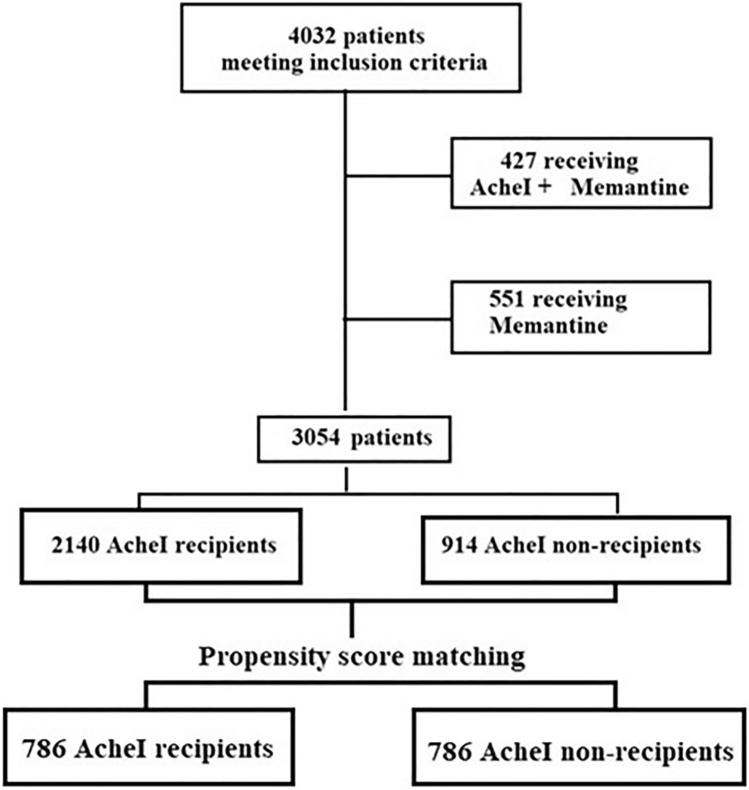
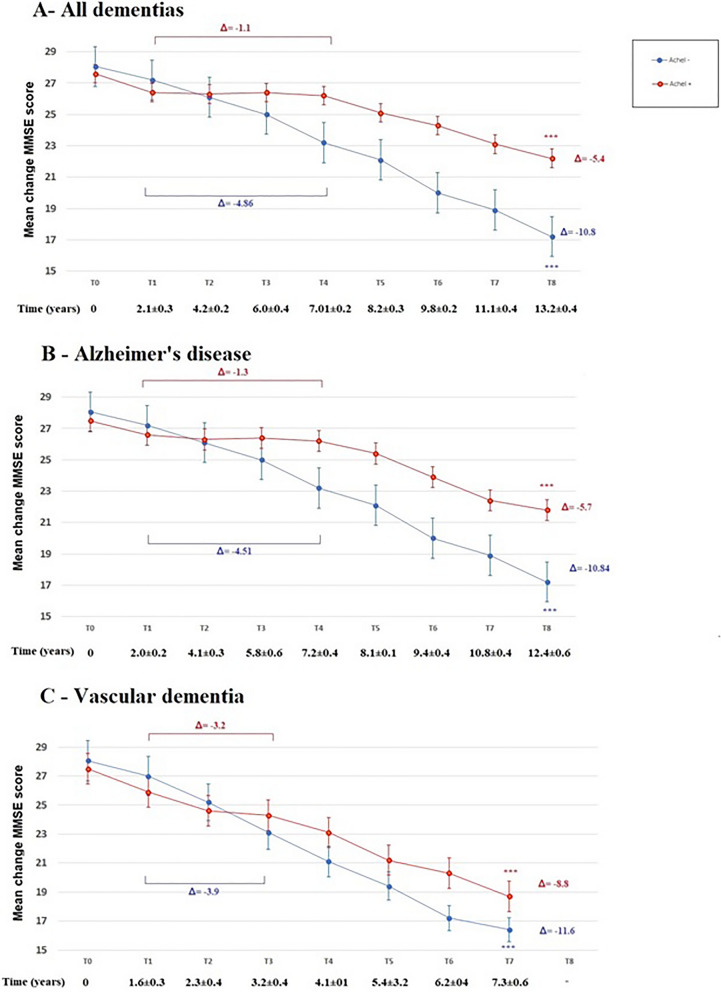
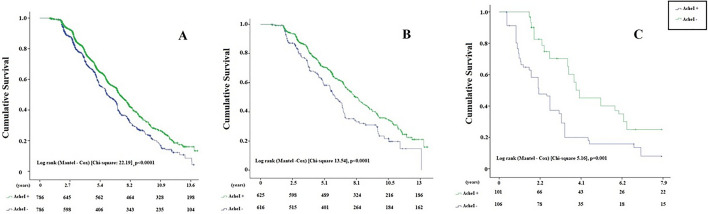
We evaluated the effect of Acetyl-cholinesterase-inhibitors (AChEIs) on cognitive decline and overall survival in a large sample of older patients with late onset Alzheimer’s disease (LOAD), vascular dementia (VD) or Lewy body disease (LBD) from a real world setting. Patients with dementia enrolled between 2005 and 2020 by the "Alzheimer's Disease Research Centers" were analysed; the mean follow-up period was 7.9 years. A 1:1 propensity score matching was performed generating a cohort of 1.572 patients (786 treated [AChEIs +] and 786 not treated [AChEIs-] with AChEIs. The MMSE score was almost stable during the first 6 years of follow up in AChEIs + and then declined, while in AChEIs− it progressively declined so that at the end of follow-up (13.6 years) the average decrease in MMSE was 10.8 points in AChEIs- compared with 5.4 points in AChEIs + ( p < 0.001). This trend was driven by LOAD (Δ-MMSE:−10.8 vs. −5.7 points; p < 0.001), although a similar effect was observed in VD (Δ-MMSE:−11.6 vs. −8.8; p < 0.001). No effect on cognitive status was found in LBD. At multivariate Cox regression analysis (adjusted for age, gender, dependency level and depression) a strong association between AChEIs therapy and lower all-cause mortality was observed (H.R.:0.59; 95%CI: 0.53–0.66); this was confirmed also in analyses separately conducted in LOAD, VD and LBD. Among older people with dementia, treatment with AChEIs was associated with a slower cognitive decline and with reduced mortality, after a mean follow-up of almost eight years. Our data support the effectiveness of AChEIs in older patients affected by these types of dementia.
Overview
The claims and statistics of this paper haven’t been checked yet.
Free: it reads the open-access text and checks the first 5 claims that cite a source we can check. Create a free account to check every claim.
Integrity signals
Registry
Cites
Statistics
Figures
Verification
Claims the paper makes
The claims and statistics of this paper haven’t been checked yet.
Free: it reads the open-access text and checks the first 5 claims that cite a source we can check. Create a free account to check every claim.
Claims other papers make about this one
Each is checked against this paper’s own text: does it say what the citing paper says it does?
The source backs part of the claim, not all of it — or backs it for a different population, condition or comparison.
In the citing paper
“A similar propensity-matched, more long term study reported larger differences between people who did and did not take ChEIs; in 1,572 patients with dementia, the average decrease in MMSE in those taking ChEIs was 5.4 points and 10.8 points in those not at the end of 13.6 years follow-up (p < 0.001).(495)”
From Dementia prevention, intervention, and care: 2024 report of the Lancet standing Commission (2024) · cites this paper as [495]
Experimental — accuracy not yet measuredThe cited source says what the claim attributes to it.
In the citing paper
“There was a strong association between ChEIs and lower all-cause mortality (HR 0.59, 0.53 -0.66).”
From Dementia prevention, intervention, and care: 2024 report of the Lancet standing Commission (2024) · cites this paper as [495]
Self-check
Percentages, sums and reported differences re-computed from the paper’s own numbers.
The self-check needs the paper’s full text.
Citations
Cites
McKhann, G., Drachman, D., Folstein, M., Katzman, R., Price, D., & Stadlan, E. M. (1984) · Neurology · doi:10.1212/wnl.34.7.939 · Cited by 27,915
Austin, P. C. (2011) · Multivariate Behavioral Research · doi:10.1080/00273171.2011.568786 · Cited by 12,242
The global prevalence of dementia: a systematic review and metaanalysis.
Prince, M., Bryce, R., Albanese, E., Wimo, A., Ribeiro, W., & Ferri, C. P. (2013) · Alzheimer's & Dementia · doi:10.1016/j.jalz.2012.11.007 · Cited by 4,941
Román, G. C., Tatemichi, T. K., Erkinjuntti, T., Cummings, J. L., Masdeu, J. C., Garcia, J. H., Amaducci, L., Orgogozo, J.-M., Brun, A., Hofman, A., et al. (1993) · Neurology · doi:10.1212/wnl.43.2.250 · Cited by 4,921
Cholinesterase inhibitors for Alzheimer's disease
Birks, J. S. (2006) · Cochrane Database of Systematic Reviews · doi:10.1002/14651858.cd005593 · Cited by 1,906
Diagnosis and Management of Dementia: Review
Arvanitakis, Z., Shah, R. C., & Bennett, D. A. (2019) · JAMA · doi:10.1001/jama.2019.4782 · Cited by 1,403
Efficacy of acetylcholinesterase inhibitors in Alzheimer’s disease.
Marucci, G., Buccioni, M., Ben, D. D., Lambertucci, C., Volpini, R., & Amenta, F. (2021) · Neuropharmacology · doi:10.1016/j.neuropharm.2020.108352 · Cited by 1,147
Kennedy-Martin, T., Curtis, S., Faries, D., Robinson, S., & Johnston, J. (2015) · Trials · doi:10.1186/s13063-015-1023-4 · Cited by 878
Erkinjuntti, T., Kurz, A., Gauthier, S., Bullock, R., Lilienfeld, S., & Damaraju, C. V. (2002) · The Lancet · doi:10.1016/s0140-6736(02)08267-3 · Cited by 752
McKeith, I. G. (2006) · Journal of Alzheimer's Disease · doi:10.3233/jad-2006-9s347 · Cited by 625
Research works printed but not linked: 2
- Kumar A, Sharma S. Donepezil. [Updated 2020 Aug 22]. In: StatPearls [Internet]. Treasure Island (FL): StatPearls Publishing; 2021 Jan-. Available from: https://www.ncbi.nlm.nih.gov/books/NBK513257/
- Nelson PT Kryscio RJ Abner EL Schmitt FA Jicha GA Mendiondo MS Cooper G Smith CB Markesbery WR Acetylcholinesterase inhibitor treatment is associated with relatively slow cognitive decline in patients with alzheimer's disease and AD + DLB J Alzheimers Dis. 2009 16 1 29 34 10.3233/JAD-2009-0926 19158418 PMC2682919 · DOI · Paper page
Cited by
Dementia prevention, intervention, and care: 2024 report of the Lancet standing Commission
Livingston, G., Huntley, J., Liu, K. Y., Costafreda, S. G., Selbæk, G., Alladi, S., Ames, D., Banerjee, S., Burns, A., Brayne, C., et al. (2024) · The Lancet · doi:10.1016/s0140-6736(24)01296-0 · Cited by 3,860
Dementia Prevention and Treatment: A Narrative Review
Reuben, D. B., Kremen, S., & Maust, D. T. (2024) · JAMA Internal Medicine · doi:10.1001/jamainternmed.2023.8522 · Cited by 202
Pathological mechanisms and treatment progression of Alzheimer’s disease
Zhang, J., Kong, G., Yang, J., Pang, L., & Li, X. (2025) · European journal of medical research · doi:10.1186/s40001-025-02886-9 · Cited by 304
Couteur, D. G. L., Hilmer, S. N., Glasgow, N., Naganathan, V., & Cumming, R. G. (2025) · Wiley eBooks · doi:10.1002/9781119870203.mpg006.pub2 · Cited by 59
Zuliani, G., Zuin, M., Romagnoli, T., Polastri, M., Cervellati, C., & Brombo, G. (2024) · Aging Clinical and Experimental Research · doi:10.1007/s40520-023-02675-6 · Cited by 54
“In 2022, Zuin et al. evaluated the effect of AChEI on cognitive decline and overall mortality in a sample of older patients with AD, VD or LBD enrolled between 2005 and 2020 by the National Alzheimer’s Coordinating Center Uni-form Data Set [31].”
BackgroundMethodSelf-citationMadhav, H., Abdel‐Rahman, S. A., Hashmi, M. A., Rahman, M. A., Rehan, M., Pal, K., Nayeem, S. M., Gabr, M. T., & Hoda, N. (2023) · European Journal of Medicinal Chemistry · doi:10.1016/j.ejmech.2023.115354 · Cited by 29
Devi, G. (2023) · Frontiers in Aging Neuroscience · doi:10.3389/fnagi.2023.1213968 · Cited by 30
Ye, Y., Tong, H. Y. K., Chong, W. H., Li, Z., Tam, P. K. H., Baptista‐Hon, D. T., & Monteiro, O. (2024) · Scientific Reports · doi:10.1038/s41598-024-54553-4 · Cited by 28
“The authors suggested that the deterioration in the antibiotic-treated group was due to a loss of effect of cholinesterase inhibitors, a drug that 94% of the tested population was taking, and a known cognitive enhancer 41 .”
Devi, G. (2023) · Handbook of clinical neurology · doi:10.1016/b978-0-323-98817-9.00015-6 · Cited by 33
Lecanemab: A Humanized Monoclonal Antibody for the Treatment of Early Alzheimer Disease
Park, J., Simpson, C., & Patel, K. (2023) · Annals of Pharmacotherapy · doi:10.1177/10600280231218253 · Cited by 26
Xu, H., Habich, A., Ferreira, D., Londos, E., Westman, E., & Eriksdotter, M. (2024) · Alzheimer s & Dementia · doi:10.1002/alz.14118 · Cited by 24
“22 previous study showed that in patients with DLBandParkinsons’sdiseasewithdementia,youngerageatdiagnosis, female sex, lower MMSE, and apolipoprotein E (APOE) ε 4 carriership werelinkedtoexcessivemortalityrelativetothegeneralpopulation.”
BackgroundMethodFeunaing, R. T., Tamfu, A. N., Yaya, A. J. G., Küçükaydın, S., Tchamgoue, J., Lannang, A. M., Lenta, B. N., Kouam, S. F., Duru, M. E., Anouar, E. H., et al. (2024) · Molecules · doi:10.3390/molecules29112456 · Cited by 24
“Alzheimer’s disease (AD) is a fatal dementia that, according to the cholinergic hypothesis, results from low levels of neurotransmitters caused by cholinesterase, which hydrolyze acetylcholine, making cholinesterase inhibitors suitable therapeutics [5,6].”
BackgroundAyoup, M. S., Ghanem, M., Abdel‐Hamid, H., Abu-Serie, M. M., Masoud, A. A., Ghareeb, D. A., Hawsawi, M. B., Sonousi, A. S. M., & Kassab, A. E. (2024) · BMC Chemistry · doi:10.1186/s13065-024-01235-x · Cited by 26
“Simultaneously, the glutamate regulator memantine and a combination of memantine and donepezil were authorized for the treatment of moderate-to-severe AD [24].”
BackgroundMitochondrial and ER stress crosstalk in TBI: mechanistic insights and therapeutic opportunities
Wenzhe, L., Boyang, X., Yuchao, G., Bimcle, R., & Yue, Y. (2025) · Frontiers in Cellular Neuroscience · doi:10.3389/fncel.2025.1697060 · Cited by 19
“Similarly, aberrant histone modifications, including deacetylation of histone H3 and methylation of H3K9, lead to chromatin condensation and reduced transcriptional accessibility of neuroplasticity-associated genes (Zyryanova et al., 2021).”
Kim, J., & Yang, Y. (2023) · Frontiers in Neuroscience · doi:10.3389/fnins.2023.1327886 · Cited by 13
Liang, C., Nguyen, G. A. H., Danh, T. B., Sandhu, A. K., Melkonyan, L. L., Syed, A. U., & Mukherjee, J. (2023) · Synapse · doi:10.1002/syn.22265 · Cited by 11
“Treatment with acetylcholinergic inhibitors (AChEI) has been found to slow the decline in AD (Zuin et al., 2022).”
BackgroundAntidementia Medication Use in Nursing Home Residents
Ott, B. R., Hollins, C., Tjia, J., Baek, J., Chen, Q., Lapane, K. L., & Alcusky, M. J. (2023) · Journal of Geriatric Psychiatry and Neurology · doi:10.1177/08919887231202948 · Cited by 10
Henrotin, Y. E., Duque, S., Dıraçoğlu, D., Franco, G., Briganti, G., Longe, S., Piotrowicz, K., Cruz-Jentoft, A. J., Cederholm, T., & Ortiz, L. F. A. (2025) · Ageing Research Reviews · doi:10.1016/j.arr.2025.102847 · Cited by 9
Lane, H., Wang, S., & Lin, C. (2023) · Psychiatry Research · doi:10.1016/j.psychres.2023.115461 · Cited by 8
Dissecting the immune response of CD4+ T cells in Alzheimer’s disease
Kostić, M. S., Živković, N., Cvetanović, A., Bašić, J., & Stojanović, I. R. (2024) · Reviews in the Neurosciences · doi:10.1515/revneuro-2024-0090 · Cited by 8
Singh, M. P., Karthikeyan, C., Waiker, D. K., Tiwari, A. K., Shrivastava, S. K., Sousa, S. F., Kiriwan, D., Martins, F. G., & Moorthy, N. S. H. N. (2025) · 3 Biotech · doi:10.1007/s13205-025-04295-5 · Cited by 6
“Cholinergic dysfunction involving declined cholinergic transmission and Aβ-aggregation, is one of the most explored areas in AD pathogenesis (Zuin et al. 2022).”
Karim, F., Ngo, A., Danh, T. B., Delaney, B. A., Liang, C., Serrano, G. E., Beach, T. G., & Mukherjee, J. (2025) · Brain Research · doi:10.1016/j.brainres.2025.149600 · Cited by 8
Risk factors for mortality in individuals with dementia: a systematic review and meta-analysis
Tang, L., Feng, Z., Liu, W., Zhang, W., Liu, Y., Xiong, N., Chen, W., Wu, X., Yang, J., & Dai, W. (2025) · Archives of Gerontology and Geriatrics · doi:10.1016/j.archger.2025.105951 · Cited by 6
Ölmez, N. A., Noma, S. A. A., Kaya, Y., & Osman, B. (2024) · Medicinal Chemistry Research · doi:10.1007/s00044-024-03316-x · Cited by 5
“Simultaneously, the glutamate regulator memantine and a combination of memantine and donepezil were approved for the treatment of moderate-to-severe AD [17].”
Petkova-Kirova, P. S., Anastassova, N., Minchev, B., Uzunova, D. N., Grigorova, V., Tsvetanova, E. R., Georgieva, A. P., Alexandrova, A., Stefanova, M. O., Yancheva, D. Y., et al. (2024) · Molecules · doi:10.3390/molecules29235711 · Cited by 5
“AChE, being the major enzyme degrading ACh, is crucial for proper cholinergic transmission and numerous studies have demonstrated that its inhibition improves memory and slows cognitive decline in patients with various types of dementia and in AD [31,72,73].”
Liang, C., Okamoto, A. A., Karim, F., Kawauchi, S., Melkonyan, L., Danh, T. B., & Mukherjee, J. (2025) · NeuroImage · doi:10.1016/j.neuroimage.2025.121092 · Cited by 5
“Because of this deficiency, treatment with acetylcholinergic inhibitors (AChEI) has been found beneficial in the treatment of early onset AD (Zuin et al., 2022; Marucci et al., 2021).”
Stępnik, K. E., Kukula-Koch, W. A., & Płaziński, W. (2023) · Biomolecules · doi:10.3390/biom13091357 · Cited by 5
“3 of 18 The Analytes The chemical structures of the investigated oleanane-type triterpenes and their gly-cosides The chemical structures of the investigated oleanane-type triterpenes and their gly-cosides”
Gruendel, M. S., Brenneisen, W., Wollborn, J., Haaker, G., Meersch, M., Gurlit, S., & Goebel, U. (2024) · BMC Geriatrics · doi:10.1186/s12877-023-04627-1 · Cited by 7
Reichau, K., Crouzier, L., Gehrig, T., Flake, A., Schaller, E., Meunier, J., Bertrand‐Gaday, C., Chatonnet, A., Zvejniece, L., Sotriffer, C., et al. (2025) · European Journal of Medicinal Chemistry · doi:10.1016/j.ejmech.2025.118486 · Cited by 4
Zuliani, G., Brombo, G., Romagnoli, T., Polastri, M., Dario, F. D. P., & Zuin, M. (2025) · GeroScience · doi:10.1007/s11357-025-02052-3 · Cited by 4
“As regards AChEI, the mechanisms proposed to underlie survival benefits in earlier disease stages include reduced cardiovascular risk, delayed frailty progression, improved neuropsychiatric symptoms (reducing the need for antipsychotics), and stabilization of cognitive functions [4, 5, 28].”
Self-citationNgo, A., Karim, F., Keerthisinghe, O. V., Danh, T. B., Liang, C., & Mukherjee, J. (2025) · Receptors · doi:10.3390/receptors4010007 · Cited by 5
“Some benefit of AChEIs in late-onset AD (LOAD) has been observed [41].”
Yin, N., Tang, Z., Yang, Y., Li, X., Duan, R., Xu, G., & Lv, P. (2025) · European journal of medical research · doi:10.1186/s40001-025-02681-6 · Cited by 3
“…shift towards an aging population and the rising incidence of stroke have contributed to an escalating prevalence of VD. Vascular cognitive impairment and dementia have emerged as increasingly prevalent ailments among older adults, imposing a formidable burden on society and families [10–13].”
Kwiatkowski, B., Biedroń, N., Gawryś, U., Tochman, W., Szklarska, A., & Luchowska-Kocot, D. (2025) · Psychopharmacology · doi:10.1007/s00213-025-06856-1 · Cited by 3
“Its action is based on improving cognitive functions in patients, general functioning abilities, activities of daily living, and delaying the onset of behavioral disorders (Marucci et al. 2021; Zuin et al. 2022).”
Singh, N. K., & Varshney, N. (2025) · Current Neurovascular Research · doi:10.2174/0115672026423088251205120807 · Cited by 5
Nazli, D., Ipekgil, D., Poyraz, Y. K., Can, K., Okmen, I., Turhanlar‐Sahin, E., Serdar, B. S., Koçtürk, S., & Ozhan, G. (2026) · Journal of Neuroscience Research · doi:10.1002/jnr.70119 · Cited by 3
Wu, H., Sun, Z., Gan, J., Chen, W., Shi, Z., Liu, S., & Ji, Y. (2025) · Journal of Alzheimer s Disease · doi:10.1177/13872877251330902 · Cited by 2
“12 The purpose of this study was to assess cognitive changes in DLB patients treated with ChEIs in a real-world setting.”
Abouelmagd, M. E., Almosilhy, N. A., Makhlouf, H. A., Hassan, A. K., Osman, A. S. A., Hindawi, M. D., Elshahat, A., Alnajjar, A. Z., Mustafa, M. M. M., Abdelsalam, O. K., et al. (2025) · Systematic Reviews · doi:10.1186/s13643-025-02961-6 · Cited by 3
Dhawan, A., Choudhary, S., Gupta, S., Chander, A., & Dhanawat, M. (2023) · Current Drug Therapy · doi:10.2174/1574885519666230913105725 · Cited by 2
Rodríguez-Espinosa, N., Harmand, M. G., & Miguel, M. A. M. (2023) · Revista Española de Geriatría y Gerontología · doi:10.1016/j.regg.2023.101446 · Cited by 2
Alzheimer's disease: part 2 – the present
Nitríni, R. (2024) · Arquivos de Neuro-Psiquiatria · doi:10.1055/s-0044-1791755 · Cited by 6
“55 It was shown that treatment with ChEIs was associated with a slower cognitive decline and with reduced mortality, after a mean follow-up of almost 8 years.”
Heo, R. J., Negida, A., Barrett, M. J., Chrenka, E. A. B., Bayram, E., Kane, J. P. M., Werner, A. M., Rossom, R. C., & Wyman‐Chick, K. A. (2026) · Journal of Alzheimer s Disease · doi:10.1177/13872877251411418 · Cited by 2
“26 Use of ChEIs in AD is supported by numerous clinical trials, and ChEIs are FDA-approved for mild, moderate, and severe AD.”
Reichau, K., Crouzier, L., Poeta, E., Gehrig, T., Schaller, E., Zvejniece, L., Meunier, J., Sotriffer, C., Monti, B., Maurice, T., et al. (2026) · ACS Chemical Neuroscience · doi:10.1021/acschemneuro.5c00921 · Cited by 2
Lin, Y., Hsu, T., Kao, Y., Thompson, T., Carvalho, A. F., Stubbs, B., Tseng, P., Hsu, C., Yang, F.-C., Tsai, C., et al. (2026) · Journal of Neurology Neurosurgery & Psychiatry · doi:10.1136/jnnp-2025-336691 · Cited by 1
“32 To ensure a level playing field when indirectly comparing mAB trials with AChEI trials, we deliberately restricted the AChEI evidence base to early AD and excluded trials enrolling mild- to-moderate or later-stage dementia (eg, the 24-week donepezil study by Rogers et al ), 33 where faster…”
Zuliani, G., Cervellati, C., Zuin, M., & Brombo, G. (2026) · Aging Clinical and Experimental Research · doi:10.1007/s40520-026-03353-z · Cited by 1
Self-citationMonoclonal antibodies and small molecules: on the cutting edge of Alzheimer’s disease therapy
Ouro, A., Ben-Dor, G. A., Debasa‐Mouce, M., Gulkarov, S., Leon, J. D., Castro‐Mosquera, M., Sobrino, T., Bougea, A. M., & Reiss, A. B. (2026) · Frontiers in Cell and Developmental Biology · doi:10.3389/fcell.2026.1766762 · Cited by 1
Kalam, S., Stellman, J., Bell, R. D., Ruiz, C. A., & Weil, R. S. (2026) · The Lancet Neurology · doi:10.1016/s1474-4422(26)00231-0 · Cited by 2
Ahmed, S., Allam, A. T., Eid, O., Zaki, E. S., Shaheen, A. M., Al-Nazer, M. A., Shalaby, M. E., El‐Dessouki, A. M., Kotb, S. S., El‐Shiekh, R. A., et al. (2026) · Scientific African · doi:10.1016/j.sciaf.2026.e03640 · Cited by 1
Annual Wellness Visits and New Dementia Medication Prescriptions Among US Medicare Beneficiaries
Milani, S. A., Kuo, Y., Shan, Y., Park, E., Sotade, A., Tzeng, H., & Raji, M. A. (2026) · JAMA Network Open · doi:10.1001/jamanetworkopen.2026.40804 · Cited by 1
Golden, J. C., Murphy, K. S., & Tampi, R. R. (2026) · Journal of International Medical Research · doi:10.1177/03000605261417092 · Cited by 2
“29 The proposed mechanism of xanomeline in AD is therefore to enhance cholinergic neuro-transmission by targeting M1 muscarinic postsynaptic receptors in the cerebral cortex and hippocampus and M4 muscarinic receptors in the cortex, hippocampus, and striatum.”
Acetylcholinesteraseinhibitoren: Wichtiger als gedacht
Quante, A. (2023) · PSYCH up2date · doi:10.1055/a-2007-4345
Pharmacological Treatment of Cognitive and Behavioral Disorders in Dementia
Trotta, F. M., Biscetti, L., & Cherubini, A. (2023) · Practical issues in geriatrics · doi:10.1007/978-3-031-28061-0_20
Self-citationGibbs, D. (2024) · Cambridge University Press eBooks · doi:10.1017/9781009430067.020
Reporting on the Safety of Dementia Care for 2010-2021 in South KoreaPreprint
Lee, J. (2024) · Research Square · doi:10.21203/rs.3.rs-4222939/v1
Govoni, S. M., Rosi, A., Preda, S., Lanni, C., Cappa, S. F., & Allegri, N. (2024) · Frontiers in Pharmacology · doi:10.3389/fphar.2024.1474986 · Cited by 1
Clinical trials for neurodegenerative diseases
Paneyala, S., Yambao, P. E. L., Syed, J. M., Pura, M. A. B., & Roque, J. C. V. (2024) · Elsevier eBooks · doi:10.1016/b978-0-443-28822-7.00022-2
Nathania, N., Kusumaningrum, S. C., I’tishom, R., Kumalasari, F., & Margiana, R. (2024) · Folia Medica Indonesiana · doi:10.20473/fmi.v60i4.62182
Javelot, H., & Rousseau, A. (2025) · L Encéphale · doi:10.1016/j.encep.2025.01.010
Anti-Amyloid Agents: A Self-Fulfilling prophecy
Giannakis, A., & Konitsiotis, S. (2025) · Journal of Clinical Neuroscience · doi:10.1016/j.jocn.2025.111338
The crystal structure of 1-(acridin-9-yl)pyrrolidine-2,5-dione, C 17 H 22 N 2 O 2
Zhou, D., Li, H., Kan, Y. Q., & Li, W. (2025) · Zeitschrift für Kristallographie - New Crystal Structures · doi:10.1515/ncrs-2025-0225
Athukorala, V. D., Faries, M., Silva, U. A. D., Garusinghe, P. S., Gunaratne, K. S., Jayasekara, A. H., Weragoda, T. H., Perera, D. N., Rathnayake, N. D. N. B., Wijerathne, S. K., et al. (2025) · Research Square · doi:10.21203/rs.3.rs-7407618/v1
Ayoup, M. S., Ghanem, M., Abdel-Hamid, H., Abu-Serie, M. M., Masoud, A. A., Ghareeb, D. A., Hawsawi, M. B., Sonousi, A. S. M., & Kassab, A. E. (2024) · Figshare · doi:10.6084/m9.figshare.26748980
Zhang, L., Lu, T., Hua, Z., Peng, S., Du, H., Zhai, X., Cai, Z., Hua, J., & Ma, X. (2026) · International Journal of Molecular Sciences · doi:10.3390/ijms27031257 · Cited by 2
HOANG, P. L., Tran, T. D., Gilbert, J., Sakoff, J. A., Scarlett, C. J., & Vuong, Q. V. (2026) · Biocatalysis and Agricultural Biotechnology · doi:10.1016/j.bcab.2026.104069
Li, J., Wu, K., Wang, X., Tao, R., Ma, Y., Lv, H., Zhao, X., Lan, Y., Li, L., & Wang, L. (2026) · BioData Mining · doi:10.1186/s13040-026-00562-0
Nguyen, H.-H., Wattanathorn, J., Thukham-mee, W., Muchimapura, S., & Paholpak, P. (2026) · Foods · doi:10.3390/foods15142461
“According to this study, we selected AChEI as the primary outcome for the dose calculation because acetylcholinesterase inhibitors (AChEIs) are the current first-line treatment for mild-to-moderate Alzheimer’s disease and other dementias [22,23].”
Alessi, K., Sarria, C., Chauhan, N., Pandya, N., & Parmar, M. S. (2026) · SN Comprehensive Clinical Medicine · doi:10.1007/s42399-026-02517-2
“A 2022 real-world study showed early acetylcholinesterase inhibi - tor (AChEIs) treatment slowed cognitive decline (MMSE proxy for ADLs: −5.4 vs. −10.8 pts over 13y) compared to untreated patients [74].”
InfluentialTHERAPY FOR ALZHEIMER’S DISEASE - FOCUS ON LECANEMAB
Jońca, M., Majchrowicz, G., Kurys, N., Piekarska, W., Litke, S., & Gołacka, K. (2026) · International Journal of Innovative Technologies in Social Science · doi:10.31435/ijitss.3(51).2026.5795
Ambamba, B. D. A., Jonathan, M. M. N., Marc, A. F. Y., Sandrine, N. M., Reine, N. M. I., Emmanuel, N., Laurent, N. A., Blonde, N. E. M. L., Alexandra, E. E. F., Ella, F. A., et al. (2026) · IBRO Neuroscience Reports · doi:10.1016/j.ibneur.2026.08.007
Cholinesterase inhibitors and cardiac risk in dementia with Lewy bodies: keep the patient at heart
Goldman, J. G. (2026) · The Lancet Neurology · doi:10.1016/s1474-4422(26)00289-9
COBENFY - A NEW ANTIPSYCHOTIC DRUG
Majchrowicz, G., Jońca, M., Kurys, N., Litke, S., Gołacka, K., Lorent, A., & Piekarska, W. (2026) · International Journal of Innovative Technologies in Social Science · doi:10.31435/ijitss.3(51).2026.6311
Solute carrier membrane transporters: emerging targets in CNS disorders
Law, Y. K., Glück, S., Girardi, E., Bensimon, A., Angermayr, S. A., & Superti‐Furga, G. (2026) · Nature Reviews Drug Discovery · doi:10.1038/s41573-026-01513-4
Metadata
- Authors
- Zuin, M., Cherubini, A., Volpato, S., Ferrucci, L., & Zuliani, G.
- Affiliations
- University of Ferrara (IT)
- Istituto Nazionale di Riposo e Cura per Anziani (IT)
- National Institutes of Health (US)
- Corresponding author
- Zuliani, Giovanni
- Venue
- Scientific Reports
- Published
- 2022-07-16
- Volume
- 12
- Issue
- 1
- Pages
- 12214-12214
- ISSN
- 2045-2322 (ISSN-L)
- PMC
- PMC9288483
- OpenAlex
- W4285588825
- Semantic Scholar
- 7db39b22804d5462f5c60e0130782c4db1f91430
- Cited by
- 72
- References
- 38
- Citations by year
- 2026: 20 · 2025: 20 · 2024: 19 · 2023: 13
- FWCI
- 8.47
- Type
- journal article
- Language
- en
- Open access
- gold
- doi.org
- Licence
- cc-by
- creativecommons.org/licenses/by/4.0 (tdm)
- creativecommons.org/licenses/by/4.0 (vor)
- Locations
- Scientific Reports (publishedVersion, cc-by)
- PubMed Central (publishedVersion, cc-by)
- PubMed (publishedVersion)
- DOAJ (DOAJ: Directory of Open Access Journals) (submittedVersion, cc-by-sa)
- Università Politecnica delle Marche (Università Politecnica delle Marche) (submittedVersion, cc-by)
- Institutional Research Information System University of Ferrara (University of Ferrara) (submittedVersion, cc-by)
- Funders
- NIA/NIH (U01 AG016976)
- Topics
- Health Sciences › Medicine › Psychiatry and Mental health › Dementia and Cognitive Impairment Research
- Health Sciences › Medicine › Pharmacology (medical) › Cholinesterase and Neurodegenerative Diseases
- Life Sciences › Neuroscience › Cellular and Molecular Neuroscience › Alzheimer's disease research and treatments
- Keywords
- acetylcholinesterase inhibitors, dementia, cognitive decline, all-cause mortality, late-onset Alzheimer's disease, vascular dementia, Lewy body disease, older adults, Mini-Mental State Examination, real-world effectiveness
- MeSH terms
- Aged, Alzheimer Disease, Cholinesterase Inhibitors, Cholinesterases, Humans, Lewy Body Disease, Cognitive Dysfunction
About these checks
Registry, retraction, Cites and statistics results are computed, not judged, with one exception: a printed reference that no index lists is read once by a model before it counts as a citation error. Claims are extracted by a model and kept only when their quote appears verbatim in the text; each cited source is then checked, with a model’s help, for whether it says what the claim relies on. Those verdicts can be wrong — read the claim’s quote and the cited source before relying on one.
Statistics and arithmetic are recomputed, not judged.
Confidence bands are shown only for fields calibrated on our annotated test set. None is calibrated yet, so no band is shown.
What counts as a claim ›How we measure confidence ›How we check this ›
Are you an author, or do you see a problem with this page? Request a review
Data sources
Bibliographic data: Semantic Scholar, OpenAlex, Crossref.
Contains information from the Semantic Scholar Academic Graph Datasets, made available under the ODC Attribution License (ODC-BY 1.0).
Semantic Scholar’s data is described in: Kinney, R., et al. (2023). The Semantic Scholar Open Data Platform. arXiv:2301.10140.
