

The DOI matches its Crossref record; the references it cites are not checked yet.
Wireless power transfer system for deep-implanted biomedical devices
Open accessAbstract
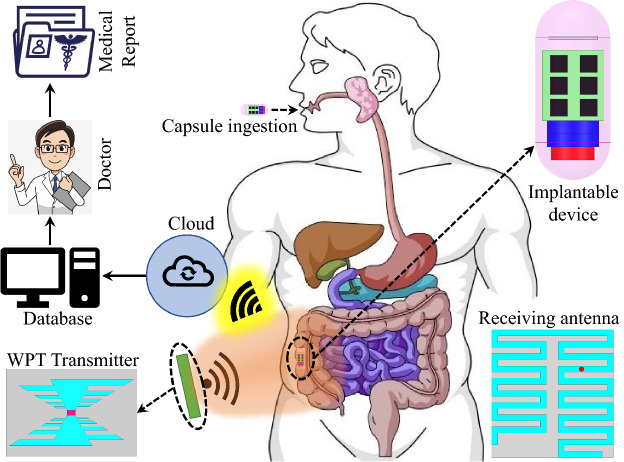
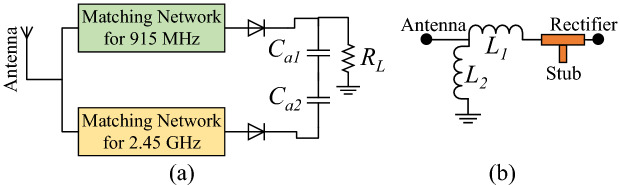
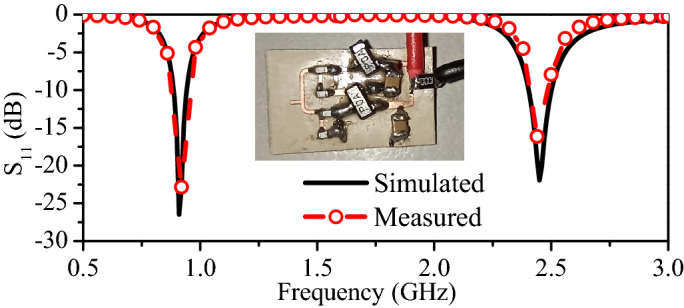
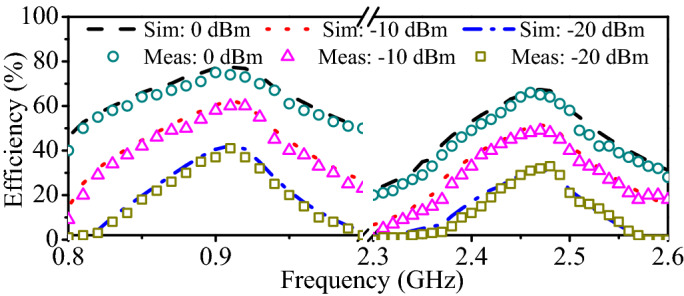
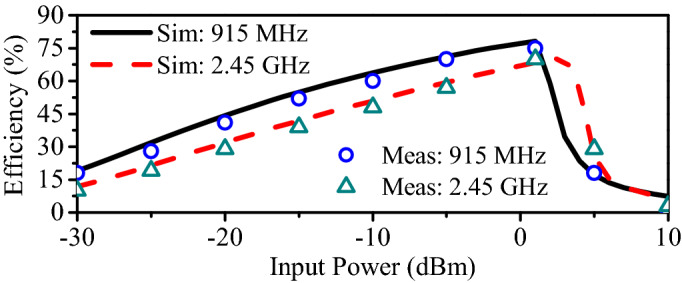
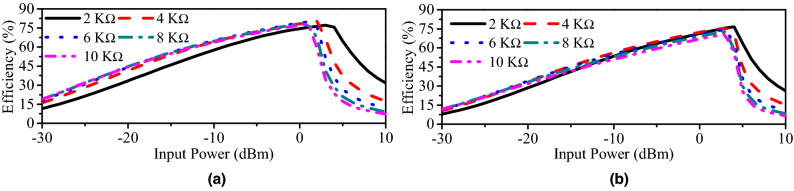
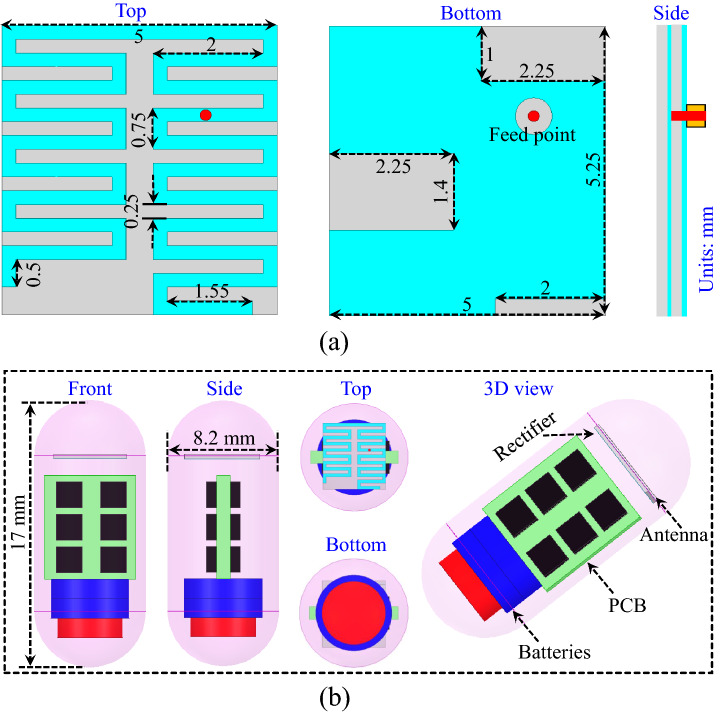
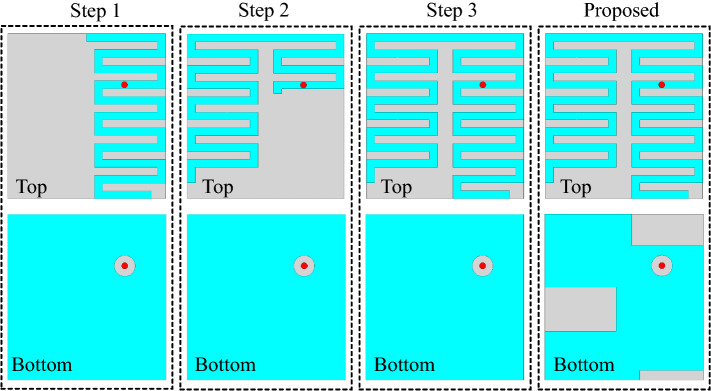
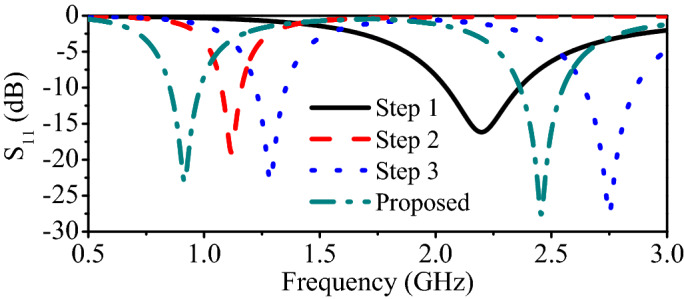
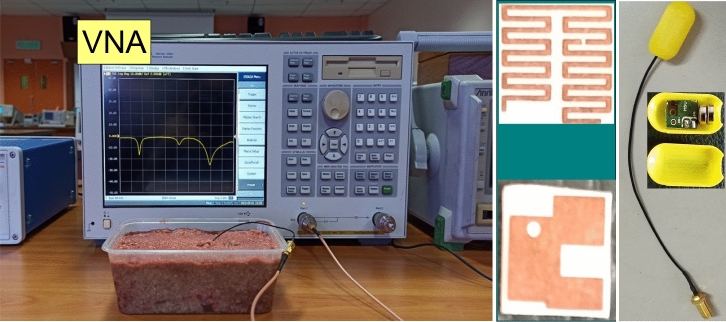
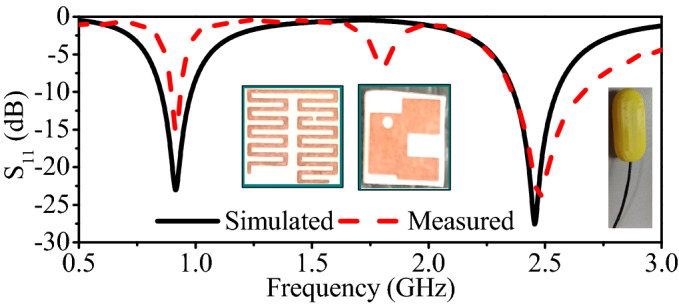
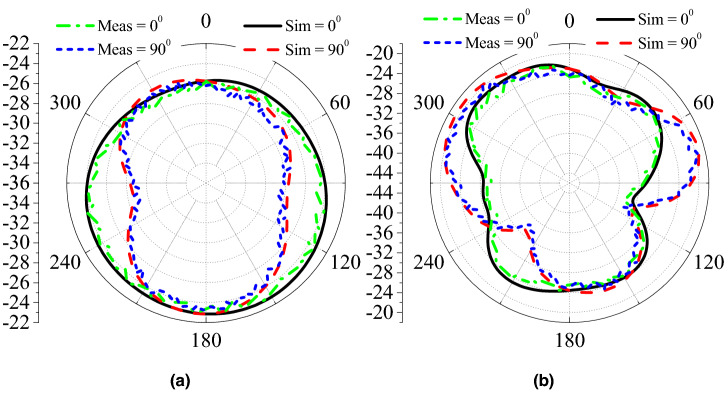
In this paper, a dual-band implantable rectenna is proposed for recharging and operating biomedical implantable devices at 0.915 and 2.45 GHz. The rectenna system consists of a compact dual-band antenna based on a meandered-resonator as well as efficient dual-band rectifier circuit. Both components (antenna and rectifier) are integrated inside a capsule device to simulate and experimentally validate the rectenna. The antenna occupies lower volume ( $$5 \times 5.25 \times 0.25$$ 5 × 5.25 × 0.25 $$\hbox {mm}^{3}$$ mm 3 ), where compactness is achieved using meandered geometry and a slotted ground plane. It maintains quasi-omnidirectional radiation patterns and peak realized gains of −22.1 dBi (915 MHz) and −19.6 dBi (2.45 GHz); thus, its capability is enhanced to harvest the ambient energy from multiple directions. Moreover, a dual-band rectifier is designed using a dual-branch matching network (an L-matching network and open-circuited stub in each branch) with a radio frequency (RF) to direct current (DC) conversion efficiency of 79.9% for the input power of 1 dBm (lower band: 0.915 GHz) and 72.8% for the input power of 3 dBm (upper band: 2.45 GHz). To validate the concept of the rectenna, the implantable antenna and rectifier are fabricated and attached together inside a capsule device, with the measured results verifying the simulated responses. The proposed rectenna efficiently rectifies two RF signals and effectively superimposes on a single load, thus, providing a distinct advantage compared to single-band rectennas. To the best of the authors’ knowledge, this is the first-ever implantable rectenna to perform dual-band RF signal rectification.
Overview
The claims and statistics of this paper haven’t been checked yet.
Run the check — free, no account needed. It reads the open-access text and checks the sources it cites.
Integrity signals
Registry
Cites
Statistics
Figures
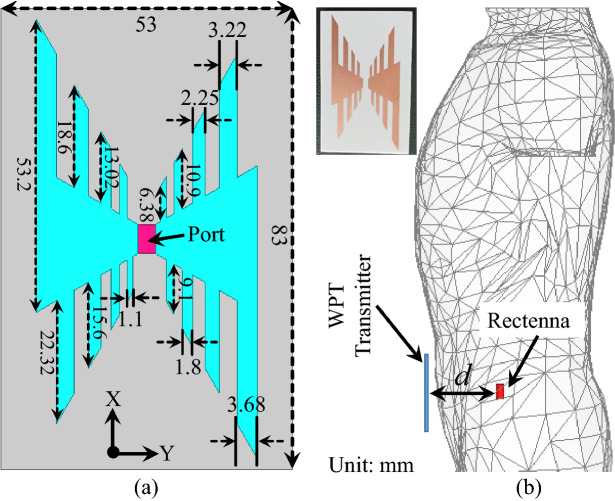
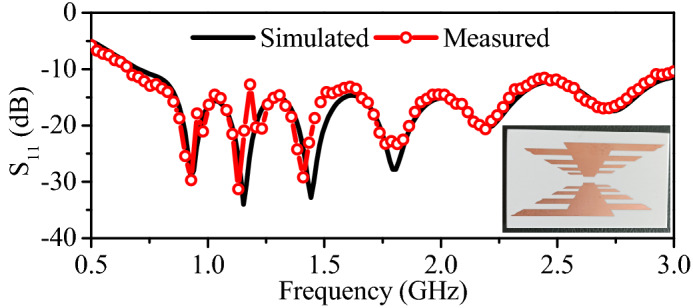
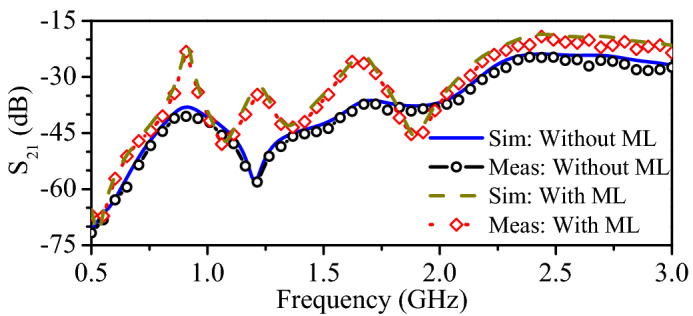
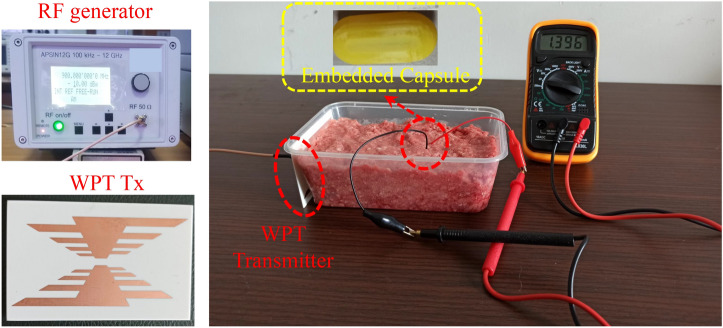
Verification
Claims the paper makes
The claims and statistics of this paper haven’t been checked yet.
Run the check — free, no account needed. It reads the open-access text and checks the sources it cites.
Claims other papers make about this one
Each is checked against this paper’s own text: does it say what the citing paper says it does?
The source backs part of the claim, not all of it — or backs it for a different population, condition or comparison.
In the citing paper
“One research initiative presented a bimodal implantable rectenna that operates at frequencies of 0.915 and 2.45 GHz, achieving radio frequency to direct current (RF-to-DC) conversion efficiencies of 79.9 and 72.8%, correspondingly.”
From Comparative analysis of energy transfer mechanisms for neural implants (2024) · cites this paper as Iqbal et al., 2022
Experimental — accuracy not yet measuredThe source backs part of the claim, not all of it — or backs it for a different population, condition or comparison.
In the citing paper
“Another reported an RF-to-DC efficiency of 42% at −10 dBm for skin-implanted devices, with PTE enhanced by the use of a high-permittivity dielectric layer on the body (Iqbal et al., 2022).”
From Comparative analysis of energy transfer mechanisms for neural implants (2024) · cites this paper as Iqbal et al., 2022
Experimental — accuracy not yet measuredThe source backs part of the claim, not all of it — or backs it for a different population, condition or comparison.
In the citing paper
“This rectenna’s antenna and rectifying elements were encapsulated within a capsule-sized device, measuring a mere 5 × 5.25 × 0.25 mm, highlighting its potential applicability in neural implant technologies (Iqbal et al., 2022).”
From Comparative analysis of energy transfer mechanisms for neural implants (2024) · cites this paper as Iqbal et al., 2022
Experimental — accuracy not yet measuredThe cited source says what the claim attributes to it.
In the citing paper
“The dual-frequency antenna employed a meandered resonator design, coupled with an optimized rectification circuit, to minimize dimensions without compromising functionality.”
From Comparative analysis of energy transfer mechanisms for neural implants (2024) · cites this paper as Iqbal et al., 2022
The cited source says what the claim attributes to it.
In the citing paper
“Another reported an RF-to-DC efficiency of 42% at −10 dBm for skin-implanted devices, with PTE enhanced by the use of a high-permittivity dielectric layer on the body (Iqbal et al., 2022).”
From Comparative analysis of energy transfer mechanisms for neural implants (2024) · cites this paper as Iqbal et al., 2022
Self-check
Percentages, sums and reported differences re-computed from the paper’s own numbers.
The self-check needs the paper’s full text.
Citations
The citation lists haven’t been fetched yet
References 39 · Cited by 105
Research works printed but not linked: 41
- Wu, L., Du, X., Guizani, M. & Mohamed, A. Access control schemes for implantable medical devices: a survey. IEEE Internet Things J. 4, 1272–1283. https://doi.org/10.1109/JIOT.2017.2708042 (2017). · DOI
- Yang, Y. et al. Lab-on-a-fish: Wireless, miniaturized, fully integrated, implantable biotelemetric tag for real-time in vivo monitoring of aquatic animals. IEEE Internet Things J. 9, 10751–10762. https://doi.org/10.1109/JIOT.2021.3126614 (2022). · DOI
- Zada, M., Shah, I. A., Basir, A. & Yoo, H. Simultaneous wireless power transfer and data telemetry using dual-band smart contact lens. IEEE Trans. Antennas Propag. 70, 2990–3001. https://doi.org/10.1109/TAP.2021.3125389 (2021). · DOI
- Hosain, M. K. et al. Development of a compact rectenna for wireless powering of a head-mountable deep brain stimulation device. IEEE J. Transl. Eng. Health Med. 2, 1–13 (2014). · DOI
- Zada, M., Shah, I. A., Basir, A. & Yoo, H. Ultra-compact implantable antenna with enhanced performance for leadless cardiac pacemaker system. IEEE Trans. Antennas Propag. 69, 1152–1157. https://doi.org/10.1109/TAP.2020.3008070 (2021). · DOI
- Karacolak, T., Hood, A. Z. & Topsakal, E. Design of a dual-band implantable antenna and development of skin mimicking gels for continuous glucose monitoring. IEEE Trans. Microw. Theory Tech. 56, 1001–1008 (2008). · DOI
- Basir, A., Zada, M. & Yoo, H. Compact and flexible wideband antenna for intraoral tongue-drive system for people with disabilities. IEEE Trans. Antennas Propag. 68, 2405–2409 (2019). · DOI
- Basir, A., Zada, M., Cho, Y. & Yoo, H. A dual-circular-polarized endoscopic antenna with wideband characteristics and wireless biotelemetric link characterization. IEEE Trans. Antennas Propag. 68, 6953–6963. https://doi.org/10.1109/TAP.2020.2998874 (2020). · DOI
- Wagih, M., Hilton, G. S., Weddell, A. S. & Beeby, S. Millimeter wave power transmission for compact and large-area wearable iot devices based on a higher-order mode wearable antenna. IEEE Internet Things J. 9, 5229–5239. https://doi.org/10.1109/JIOT.2021.3107594 (2022). · DOI
- Hossain, A. N. M. S., Erfani, R., Mohseni, P. & Lavasani, H. M. On the non-idealities of a capacitive link for wireless power transfer to biomedical implants. IEEE Trans. Biomed. Circuits Syst. 15, 314–325. https://doi.org/10.1109/TBCAS.2021.3069842 (2021). · DOI
- Harb, A. Energy harvesting: state-of-the-art. Renew. Energy 36, 2641–2654 (2011). · DOI
- Rotenberg, S. A. et al. Efficient rectifier for wireless power transmission systems. IEEE Trans. Microw. Theory Tech. 68, 1921–1932 (2020). · DOI
- DeLong, B.. J., Kiourti, A. & Volakis, J.. L. A radiating near-field patch rectenna for wireless power transfer to medical implants at 2.4 GHz. IEEE J. Electromagn. RF Microwaves Med. Biol. 2, 64–69 (2018). · DOI
- Marian, V., Allard, B., Vollaire, C. & Verdier, J. Strategy for microwave energy harvesting from ambient field or a feeding source. IEEE Trans. Power Electron. 27, 4481–4491 (2012). · DOI
- Wang, Q., Che, W., Mongiardo, M. & Monti, G. Wireless power transfer system with high misalignment tolerance for bio-medical implants. IEEE Trans. Circuits Syst. II Express Briefs 67, 3023–3027 (2020).
- Ullah, S., Zada, M., Basir, A. & Yoo, H. Wireless, battery-free, and fully implantable micro-coil system for 7 T brain MRI. IEEE Trans. Biomed. Circuits Syst. 16, 430–441. https://doi.org/10.1109/TBCAS.2022.3179839 (2022). · DOI
- Yeatman, E. M. Advances in power sources for wireless sensor nodes. In Proceedings of International Workshop Wearable and Implantable Body Sensor Networks, 20–21 (2004).
- Hosain, M. K., Kouzani, A. Z., Samad, M. F. & Tye, S. J. A miniature energy harvesting rectenna for operating a head-mountable deep brain stimulation device. IEEE Access 3, 223–234 (2015). · DOI
- Huang, F.-J. et al. Rectenna application of miniaturized implantable antenna design for triple-band biotelemetry communication. IEEE Trans. Antennas Propag. 59, 2646–2653 (2011). · DOI
- Asif, S. M. et al. Design and in vivo test of a batteryless and fully wireless implantable asynchronous pacing system. IEEE Trans. Biomed. Eng. 63, 1070–1081 (2015). · DOI
- Abdi, A. & Aliakbarian, H. A miniaturized uhf-band rectenna for power transmission to deep-body implantable devices. IEEE J. Translat. Eng. Health Med. 7, 1–11 (2019). · DOI
- Bakogianni, S. & Koulouridis, S. A dual-band implantable rectenna for wireless data and power support at sub-GHz region. IEEE Trans. Antennas Propag. 67, 6800–6810 (2019). · DOI
- Ding, S., Koulouridis, S. & Pichon, L. Implantable wireless transmission rectenna system for biomedical wireless applications. IEEE Access 8, 195551–195558 (2020). · DOI
- Liu, C., Zhang, Y. & Liu, X. Circularly polarized implantable antenna for 915 MHz ism-band far-field wireless power transmission. IEEE Antennas Wirel. Propag. Lett. 17, 373–376 (2018). · DOI
- Liu, C., Guo, Y.-X., Sun, H. & Xiao, S. Design and safety considerations of an implantable rectenna for far-field wireless power transfer. IEEE Trans. Antennas Propag. 62, 5798–5806 (2014). · DOI
- Shah, S. A. A. & Yoo, H. Radiative near-field wireless power transfer to scalp-implantable biotelemetric device. IEEE Trans. Microw. Theory Tech. 68, 2944–2953 (2020). · DOI
- Basir, A. & Yoo, H. Efficient wireless power transfer system with a miniaturized quad-band implantable antenna for deep-body multitasking implants. IEEE Trans. Microw. Theory Tech. 68, 1943–1953 (2020). · DOI
- Pavone, D., Buonanno, A., D’Urso, M. & Della Corte, F. Design considerations for radio frequency energy harvesting devices. Progress Electromagn. Res. 45, 19–35 (2012). · DOI · Paper page
- Freeman, D. K. & Byrnes, S. J. Optimal frequency for wireless power transmission into the body: efficiency versus received power. IEEE Trans. Antennas Propag. 67, 4073–4083 (2019). · DOI
- Nikolayev, D., Zhadobov, M., Karban, P. & Sauleau, R. Electromagnetic radiation efficiency of body-implanted devices. Phys. Rev. Appl. 9, 024033 (2018). · DOI
- Soares, I. V. et al. Physical bounds on implant powering efficiency using body-conformal wpt systems. In 2021 IEEE Wireless Power Transfer Conference (WPTC), 1–4 (organization IEEE, 2021). · DOI
- Nguyen, N., Ha-Van, N. & Seo, C. Midfield wireless power transfer for deep-tissue biomedical implants. IEEE Antennas Wirel. Propag. Lett. 19, 2270–2274 (2020). · DOI
- Gabriel, S., Lau, R. & Gabriel, C. The dielectric properties of biological tissues: Ii. measurements in the frequency range 10 Hz to 20 GHz. Phys. Med. Biol. 41, 2251 (1996). · DOI
- Divakaran, S. K. & Krishna, D. D. Rf energy harvesting systems: an overview and design issues. Int. J. RF Microwave Comput. Aided Eng. 29, e21633 (2019). · DOI
- Chi, P.-L., Waterhouse, R. & Itoh, T. Antenna miniaturization using slow wave enhancement factor from loaded transmission line models. IEEE Trans. Antennas Propag. 59, 48–57 (2010). · DOI
- Das, R. & Yoo, H. A multiband antenna associating wireless monitoring and nonleaky wireless power transfer system for biomedical implants. IEEE Trans. Microw. Theory Tech. 65, 2485–2495. https://doi.org/10.1109/TMTT.2017.2647945 (2017). · DOI
- Zheng, Z., Fang, X., Zheng, Y. & Feng, H. A wireless power transfer system based on dual-band metamaterials. IEEE Microw. Wirel. Compon. Lett. 32, 615–618. https://doi.org/10.1109/LMWC.2022.3140535 (2022). · DOI
- Zhang, K., Wang, Y., Burokur, S. N. & Wu, Q. Generating dual-polarized vortex beam by detour phase: From phase gradient metasurfaces to metagratings. IEEE Trans. Microw. Theory Tech. 70, 200–209 (2021). · DOI
- Wang, Y. et al. Perfect control of diffraction patterns with phase-gradient metasurfaces. ACS Appl. Mater. Interfaces 14, 16856–16865 (2022). · DOI
- Lee, D. et al. Hyperbolic metamaterials: fusing artificial structures to natural 2d materials. ELight 2, 1–23 (2022). · DOI
- Agrawal, D. R. et al. Conformal phased surfaces for wireless powering of bioelectronic microdevices. Nat. Biomed. Eng. 1, 1–9 (2017). · DOI
Metadata
- Authors
- Iqbal, A., Sura, P. R., Al-Hasan, M., Mabrouk, I. B., & Denidni, T. A.
- Affiliations
- Al Ain University (AE)
- Institut National de la Recherche Scientifique (CA)
- Durham University (GB)
- Corresponding author
- Iqbal, Amjad
- Venue
- Scientific Reports
- Published
- 2022-08-11
- Volume
- 12
- Issue
- 1
- Pages
- 13689-13689
- ISSN
- 2045-2322 (ISSN-L)
- PMC
- PMC9372142
- OpenAlex
- W4291608066
- Cited by
- 105
- References
- 39
- Citations by year
- 2026: 19 · 2025: 40 · 2024: 29 · 2023: 16 · 2022: 1
- FWCI
- 5.89
- Type
- journal article
- Language
- en
- Open access
- gold
- doi.org
- Locations
- Scientific Reports (publishedVersion, cc-by)
- PubMed Central (publishedVersion, cc-by)
- PubMed (publishedVersion)
- Durham Research Online (Durham University) (acceptedVersion, cc-by)
- Durham Research Online (Durham University) (submittedVersion, cc-by)
- DOAJ (DOAJ: Directory of Open Access Journals) (submittedVersion, cc-by-sa)
- Funders
- Department of Education and Knowledge (AARE19-245)
- Topics
- Physical Sciences › Engineering › Electrical and Electronic Engineering › Energy Harvesting in Wireless Networks
- Physical Sciences › Engineering › Biomedical Engineering › Wireless Body Area Networks
- Physical Sciences › Engineering › Electrical and Electronic Engineering › Wireless Power Transfer Systems
- Keywords
- wireless power transfer, dual-band rectifier, slotted ground plane, RF-to-DC conversion efficiency, 915 MHz, 2.45 GHz, ambient energy harvesting
- MeSH terms
- Electricity, Equipment Design, Radio Waves, Prostheses and Implants, Wireless Technology
About these checks
Registry, retraction, Cites and statistics results are computed, not judged, with one exception: a printed reference that no index lists is read once by a model before it counts as a citation error. Claims are extracted by a model and kept only when their quote appears verbatim in the text; each cited source is then checked, with a model’s help, for whether it says what the claim relies on. Those verdicts can be wrong — read the claim’s quote and the cited source before relying on one.
Statistics and arithmetic are recomputed, not judged.
Confidence bands are shown only for fields calibrated on our annotated test set. None is calibrated yet, so no band is shown.
What counts as a claim ›How we measure confidence ›How we check this ›
Are you an author, or do you see a problem with this page? Request a review
How to cite
Cite CoChat for the checks on this page, and the paper for its own findings.
- This page
- CoChat. (2026). Citation check: Wireless power transfer system for deep-implanted biomedical devices. https://app.cochat.ai/papers/10.1038/s41598-022-18000-6
- The paper
- Iqbal, A., Sura, P. R., Al-Hasan, M., Mabrouk, I. B., & Denidni, T. A. (2022). Wireless power transfer system for deep-implanted biomedical devices. Scientific Reports. https://doi.org/10.1038/s41598-022-18000-6
