

A deep learning model based on whole slide images to predict disease-free survival in cutaneous melanoma patients
Open accessThe DOI matches its Crossref record; 43 of the 43 references it cites were found in a registry or an index.
Abstract
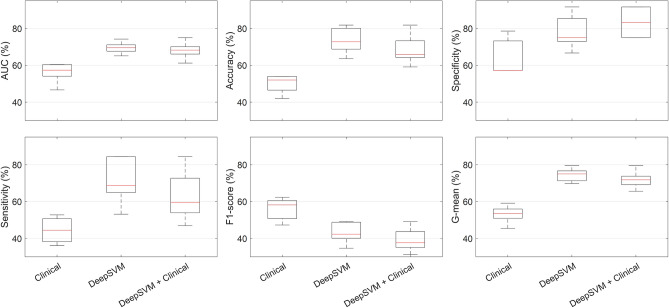
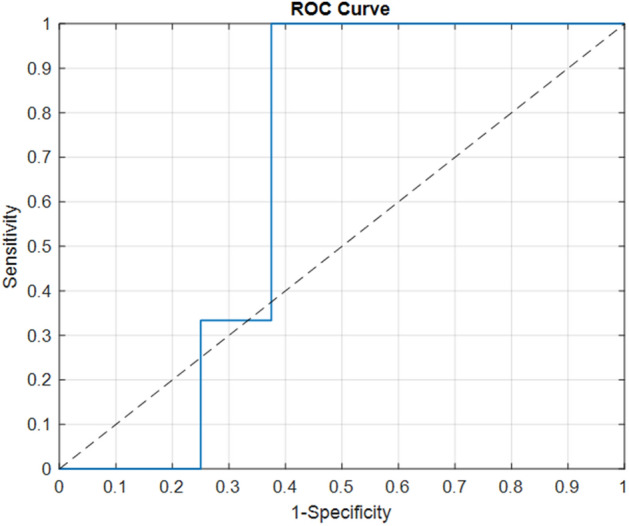
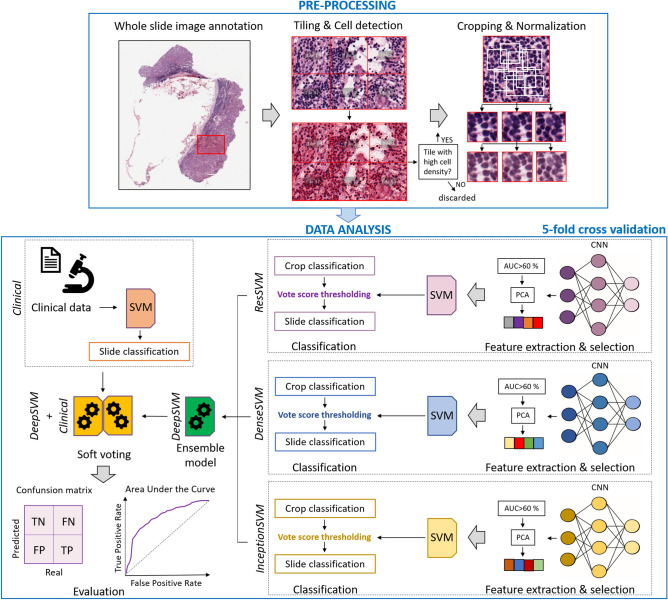
The application of deep learning on whole-slide histological images (WSIs) can reveal insights for clinical and basic tumor science investigations. Finding quantitative imaging biomarkers from WSIs directly for the prediction of disease-free survival (DFS) in stage I–III melanoma patients is crucial to optimize patient management. In this study, we designed a deep learning-based model with the aim of learning prognostic biomarkers from WSIs to predict 1-year DFS in cutaneous melanoma patients. First, WSIs referred to a cohort of 43 patients (31 DF cases, 12 non-DF cases) from the Clinical Proteomic Tumor Analysis Consortium Cutaneous Melanoma (CPTAC-CM) public database were firstly annotated by our expert pathologists and then automatically split into crops, which were later employed to train and validate the proposed model using a fivefold cross-validation scheme for 5 rounds. Then, the model was further validated on WSIs related to an independent test, i.e. a validation cohort of 11 melanoma patients (8 DF cases, 3 non-DF cases), whose data were collected from Istituto Tumori ‘Giovanni Paolo II’ in Bari, Italy. The quantitative imaging biomarkers extracted by the proposed model showed prognostic power, achieving a median AUC value of 69.5% and a median accuracy of 72.7% on the public cohort of patients. These results remained comparable on the validation cohort of patients with an AUC value of 66.7% and an accuracy value of 72.7%, respectively. This work is contributing to the recently undertaken investigation on how treat features extracted from raw WSIs to fulfil prognostic tasks involving melanoma patients. The promising results make this study as a valuable basis for future research investigation on wider cohorts of patients referred to our Institute.
Overview
The claims and statistics of this paper haven’t been checked yet.
Free: it reads the open-access text and checks the first 5 claims that cite a source we can check. Create a free account to check every claim.
Integrity signals
Registry
Cites
Statistics
Figures
Verification
Claims the paper makes
The claims and statistics of this paper haven’t been checked yet.
Free: it reads the open-access text and checks the first 5 claims that cite a source we can check. Create a free account to check every claim.
Claims other papers make about this one
Each is checked against this paper’s own text: does it say what the citing paper says it does?
The source backs part of the claim, not all of it — or backs it for a different population, condition or comparison.
In the citing paper
“AI-driven predictive analytics are increasingly applied to prognostication in melanoma, where models are trained on histopathology can predict outcomes such as disease-specific survival by quantifying features like tumor thickness, mitotic rate, lymphocytic infiltration, and nuclear morphology [48].”
From Artificial Intelligence in Dermatopathology: An Update and Review of the Current Literature (2026) · cites this paper as [48]
Experimental — accuracy not yet measured
Self-check
Percentages, sums and reported differences re-computed from the paper’s own numbers.
The self-check needs the paper’s full text.
Citations
Cites
LeCun, Y., Bengio, Y., & Hinton, G. (2015) · Nature · doi:10.1038/nature14539 · Cited by 84,126
Densely Connected Convolutional Networks
Huang, G., Liu, Z., Van Der Maaten, L., & Weinberger, K. Q. (2017) · 2017 IEEE Conference on Computer Vision and Pattern Recognition (CVPR) · doi:10.1109/cvpr.2017.243 · Cited by 48,566
Rethinking the Inception Architecture for Computer Vision
Szegedy, C., Vanhoucke, V., Ioffe, S., Shlens, J., & Wojna, Z. (2016) · 2016 IEEE Conference on Computer Vision and Pattern Recognition (CVPR) · doi:10.1109/cvpr.2016.308 · Cited by 32,138
An introduction to ROC analysis
Fawcett, T. (2006) · Pattern Recognition Letters · doi:10.1016/j.patrec.2005.10.010 · Cited by 21,879 · cited 1×
“…the receiver operating Curve (AUC), which accounts for the general discriminative capability of each feature with respect to a binary classification problem: this metric takes percentage values ranging from 50 to 100%, indicating random guess and perfect discriminatory ability, respectively 43 .”
BackgroundA Tutorial on Support Vector Machines for Pattern Recognition
Burges, C. J. C. (1998) · Data Mining and Knowledge Discovery · doi:10.1023/a:1009715923555 · Cited by 16,429
On a Test of Whether one of Two Random Variables is Stochastically Larger than the Other
Mann, H. B., & Whitney, D. R. (1947) · The Annals of Mathematical Statistics · doi:10.1214/aoms/1177730491 · Cited by 14,320
Barredo Arrieta, A., Díaz-Rodríguez, N., Del Ser, J., Bennetot, A., Tabik, S., Barbado, A., Garcia, S., Gil-Lopez, S., Molina, D., Benjamins, R., et al. (2020) · Information Fusion · doi:10.1016/j.inffus.2019.12.012 · Cited by 10,423
QuPath: Open source software for digital pathology image analysis
Bankhead, P., Loughrey, M. B., Fernández, J. A., Dombrowski, Y., McArt, D. G., Dunne, P. D., McQuaid, S., Gray, R. T., Murray, L. J., Coleman, H. G., et al. (2017) · Scientific Reports · doi:10.1038/s41598-017-17204-5 · Cited by 8,908
The Cancer Imaging Archive (TCIA): Maintaining and Operating a Public Information Repository
Clark, K., Vendt, B., Smith, K., Freymann, J., Kirby, J., Koppel, P., Moore, S., Phillips, S., Maffitt, D., Pringle, M., et al. (2013) · Journal of Digital Imaging · doi:10.1007/s10278-013-9622-7 · Cited by 4,599 · cited 1×
“The predicted model was designed and firstly validated by exploiting data from CPTAC-CM public database 26 , which is part of The Cancer Imaging Archive (TCIA) 27 .”
MethodIpilimumab plus Dacarbazine for Previously Untreated Metastatic Melanoma
Robert, C., Thomas, L., Bondarenko, I., O'Day, S., Weber, J., Garbe, C., Lebbe, C., Baurain, J.-F., Testori, A., Grob, J.-J., et al. (2011) · New England Journal of Medicine · doi:10.1056/nejmoa1104621 · Cited by 4,496
Deep Convolutional and LSTM Recurrent Neural Networks for Multimodal Wearable Activity Recognition
Ordóñez, F., & Roggen, D. (2016) · Sensors · doi:10.3390/s16010115 · Cited by 2,761
Han, S. S., Kim, M. S., Lim, W., Park, G. H., Park, I., & Chang, S. E. (2018) · Journal of Investigative Dermatology · doi:10.1016/j.jid.2018.01.028 · Cited by 713
Handling limited datasets with neural networks in medical applications: A small-data approach
Shaikhina, T., & Khovanova, N. A. (2017) · Artificial Intelligence in Medicine · doi:10.1016/j.artmed.2016.12.003 · Cited by 296
Hekler, A., Utikal, J. S., Enk, A. H., Solass, W., Schmitt, M., Klode, J., Schadendorf, D., Sondermann, W., Franklin, C., Bestvater, F., et al. (2019) · European Journal of Cancer · doi:10.1016/j.ejca.2019.06.012 · Cited by 285 · cited 1×
“As example, classification of histopathological melanoma images has been performed by means of deep learning methods 21,22 .”
MethodMelanoma epidemiology, biology and prognosis
Ali, Z., Yousaf, N., & Larkin, J. (2013) · European Journal of Cancer Supplements · doi:10.1016/j.ejcsup.2013.07.012 · Cited by 278
Immune Checkpoint Inhibitor Toxicity in 2018
Johnson, D. B., Chandra, S., & Sosman, J. A. (2018) · JAMA · doi:10.1001/jama.2018.13995 · Cited by 239
Pathologist-level classification of histopathological melanoma images with deep neural networks
Hekler, A., Utikal, J. S., Enk, A. H., Berking, C., Klode, J., Schadendorf, D., Jansen, P., Franklin, C., Holland-Letz, T., Krahl, D., et al. (2019) · European Journal of Cancer · doi:10.1016/j.ejca.2019.04.021 · Cited by 231 · cited 1×
“As example, classification of histopathological melanoma images has been performed by means of deep learning methods 21,22 .”
MethodGerami, P., Cook, R. W., Russell, M. C., Wilkinson, J., Amaria, R. N., Gonzalez, R., Lyle, S., Jackson, G. L., Greisinger, A. J., Johnson, C. E., et al. (2015) · Journal of the American Academy of Dermatology · doi:10.1016/j.jaad.2015.01.009 · Cited by 167
Pandis, N. (2016) · American Journal of Orthodontics and Dentofacial Orthopedics · doi:10.1016/j.ajodo.2016.08.009 · Cited by 153
Kulkarni, P. M., Robinson, E. J., Sarin Pradhan, J., Gartrell-Corrado, R. D., Rohr, B. R., Trager, M. H., Geskin, L. J., Kluger, H. M., Wong, P. F., Acs, B., et al. (2020) · Clinical Cancer Research · doi:10.1158/1078-0432.ccr-19-1495 · Cited by 124 · cited 2×
“Whether WSI analysis can improve the prediction of prognostic tasks related to melanoma with respect to considering clinical data alone is currently under scrutiny within the scientific community 23–25, 31, 32 .”
BackgroundSequential Feature Selection for Classification
Rückstieß, T., Osendorfer, C., & van der Smagt, P. (2011) · Lecture notes in computer science · doi:10.1007/978-3-642-25832-9_14 · Cited by 103 · cited 1×
“…algorithms: Random Forest which computes Gini impurity to identify the most important features 29 ; forward sequential feature selection algorithm 30 , which selected features over the training set during cross validation until there is no improvement in prediction of an SVM classifier over the…”
MethodŽižka, J., Dařena, F., & Svoboda, A. (2019) · CRC Press eBooks · doi:10.1201/9780429469275-8 · Cited by 91
Hu, J., Cui, C., Yang, W., Huang, L., Yu, R., Liu, S., & Kong, Y. (2021) · Translational Oncology · doi:10.1016/j.tranon.2020.100921 · Cited by 75
Comes, M. C., Fanizzi, A., Bove, S., Didonna, V., Diotaiuti, S., Forgia, D. L., Latorre, A., Martinelli, E., Mencattini, A., Nardone, A., et al. (2021) · Scientific Reports · doi:10.1038/s41598-021-93592-z · Cited by 73 · cited 1×
“The accomplishment of a specific task can be achieved either by defining an ad hoc CNNs based on a huge amount of imaging data 18 or by using the so-called transfer learning technique based on relatively small-size datasets 19,20 .”
MethodSelf-citationSivendran, S., Chang, R. R., Pham, L., Phelps, R. G., Harcharik, S., Hall, L., Bernardo, S. G., Moskalenko, M. M., Sivendran, M., Fu, Y., et al. (2014) · Journal of Investigative Dermatology · doi:10.1038/jid.2014.85 · Cited by 70
Guida, M., Strippoli, S., Maule, M. M., Quaglino, P., Ramondetta, A., Chiarion‐Sileni, V., Cappellini, G. A., Queirolo, P., Ridolfi, L., Vecchio, M. D., et al. (2021) · ESMO Open · doi:10.1016/j.esmoop.2021.100064 · Cited by 67 · cited 1×
“Whether WSI analysis can improve the prediction of prognostic tasks related to melanoma with respect to considering clinical data alone is currently under scrutiny within the scientific community 23–25, 31, 32 .”
BackgroundSelf-citationBrinker, T. J., Kiehl, L., Schmitt, M., Jutzi, T. B., Krieghoff-Henning, E. I., Krahl, D., Kutzner, H., Gholam, P., Haferkamp, S., Klode, J., et al. (2021) · European Journal of Cancer · doi:10.1016/j.ejca.2021.05.026 · Cited by 65 · cited 2×
“Whether WSI analysis can improve the prediction of prognostic tasks related to melanoma with respect to considering clinical data alone is currently under scrutiny within the scientific community 23–25, 31, 32 .”
BackgroundA Further Step to Perfect Accuracy by Training CNN with Larger Data
Uchida, S., Ide, S., Iwana, B. K., & Zhu, A. (2016) · International Conference on Frontiers in Handwriting Recognition · doi:10.1109/icfhr.2016.0082 · Cited by 61 · cited 1×
“The accomplishment of a specific task can be achieved either by defining an ad hoc CNNs based on a huge amount of imaging data 18 or by using the so-called transfer learning technique based on relatively small-size datasets 19,20 .”
MethodComes, M. C., Forgia, D. L., Didonna, V., Fanizzi, A., Giotta, F., Latorre, A., Martinelli, E., Mencattini, A., Paradiso, A., Tamborra, P., et al. (2021) · Cancers · doi:10.3390/cancers13102298 · Cited by 56 · cited 1×
“The accomplishment of a specific task can be achieved either by defining an ad hoc CNNs based on a huge amount of imaging data 18 or by using the so-called transfer learning technique based on relatively small-size datasets 19,20 .”
MethodSelf-citationIdentification of risk in cutaneous melanoma patients: Prognostic and predictive markers
Hyams, D. M., Cook, R. W., & Buzaid, A. C. (2018) · Journal of Surgical Oncology · doi:10.1002/jso.25319 · Cited by 45
New paradigm for stage III melanoma: from surgery to adjuvant treatment
Ascierto, P. A., Borgognoni, L., Botti, G., Guida, M., Marchetti, P., D, S. M. M., Muto, P., Palmieri, G., Patuzzo, R., Quaglino, P., et al. (2019) · Journal of Translational Medicine · doi:10.1186/s12967-019-2012-2 · Cited by 42
Self-citationImmunohistological analysis of the lymphoid infiltrate in cutaneous malignant melanomas
Ralfkiaer, E. M., HOU-JENSEN, K., Gatter, K. C., Drzewiecki, K. T., & Mason, D. Y. (1987) · Archiv für Pathologische Anatomie und Physiologie und für Klinische Medicin · doi:10.1007/bf00711292 · Cited by 38
The MAGIC-5 project: medical applications on a grid infrastructure connection
Bellotti, R., Bagnasco, S., Bottigli, U., Castellano, M., Cataldo, R., Catanzariti, E., Cerello, P., Cheran, S. C., Carlo, F. D., Delogu, P., et al. (2005) · IEEE Symposium Conference Record Nuclear Science 2004. · doi:10.1109/nssmic.2004.1462616 · Cited by 30
Self-citationMetastatic melanoma: the new era of targeted therapy
Guida, M., Pisconti, S., & Colucci, G. (2012) · Expert Opinion on Therapeutic Targets · doi:10.1517/14728222.2011.645807 · Cited by 27
Self-citationTopographic classification of EEG patterns in Huntington's disease.
Bellotti, R., Carlo, F. D., Massafra, R., de Tommaso, M., & Sciruicchio, V. (2004) · PubMed · Cited by 27
Self-citationIncreasing Morbidity with Extent of Lymphadenectomy for Primary Malignant Melanoma
Renner, P., Torzewski, M., Zeman, F., Babilas, P., Kroemer, A., Schlitt, H. J., & Dahlke, M. H. (2017) · Lymphatic Research and Biology · doi:10.1089/lrb.2016.0018 · Cited by 27
Trinidad, C., Torres-Cabala, C. A., Curry, J. L., Prieto, V. G., & Aung, P. P. (2018) · Journal of Clinical Pathology · doi:10.1136/jclinpath-2018-205417 · Cited by 25
Pastorfide, G. C., Kibbi, A., de Roa, A. L., Barnhill, R. L., Sober, A. J., Mihm, M. C., & Byers, H. R. (1992) · Journal of Cutaneous Pathology · doi:10.1111/j.1600-0560.1992.tb00611.x · Cited by 24
Comparison of seventh and eighth edition of AJCC staging system in melanomas at locoregional stage
Teterycz, P., Lugowska, I. A., Koseła-Paterczyk, H., & Rutkowski, P. L. (2019) · World Journal of Surgical Oncology · doi:10.1186/s12957-019-1669-6 · Cited by 22 · cited 1×
“Anyway, this difference does not create bias in our analysis, since the two editions differ among each other for the evaluation of the only patients with T1 melanoma 28 .”
BackgroundPeng, Y., Chu, Y., Chen, Z., Zhou, W., Wan, S., Xiao, Y., Zhang, Y., & Li, J. (2020) · World Journal of Surgical Oncology · doi:10.1186/s12957-020-01909-5 · Cited by 21 · cited 2×
“Whether WSI analysis can improve the prediction of prognostic tasks related to melanoma with respect to considering clinical data alone is currently under scrutiny within the scientific community 23–25, 31, 32 .”
BackgroundMethodCost differential of immuno-oncology therapy delivered at community versus hospital clinics.
Gordan, L., Blazer, M. A., Saundankar, V., Kazzaz, D., Weidner, S. M., & Eaddy, M. T. (2019) · PubMed · Cited by 8
Tensor principal component analysis
Zhou, P., Lu, C., & Lin, Z. (2022) · Elsevier eBooks · doi:10.1016/b978-0-12-824447-0.00012-1 · Cited by 7
(1950) · doi:10.1002/1097-0142(1950)3:1<32::aid-cncr2820030106>3.0.co;2-3
Research works printed but not linked: 3
- Farahani N Parwani AV Pantanowitz L Whole slide imaging in pathology: Advantages, limitations and emerging perspectives Pathol. Lab Med. Int. 2015 7 23 33
- Macenko M., Niethammer M, Marron J.S. et al. A method for normalizing histology slides for quantitative analysis 3 Statistics and Operations Research, 4 Lineberger Comprehensive Cancer Center, 5 Renaissance Computing Institute, 6 Pathology and Laboratory Medicine, 7 Dermatology University of Nor. IEEE Int Symp Biomed Imaging 1107–1110 (2009).
- Akosa JS Predictive accuracy: A misleading performance measure for highly imbalanced data SAS Glob. Forum 2017 942 1 12
Cited by
Nahhas, O. E. E., van Treeck, M., Wölflein, G., Unger, M., Ligero, M., Lenz, T., Wagner, S. J., Hewitt, K., Khader, F., Foersch, S., et al. (2024) · Nature Protocols · doi:10.1038/s41596-024-01047-2 · Cited by 125
“An acceptable performance is dependent on the problem defined in Steps 1–6, where predicting MSI status is known to be accurately predicted 15,32,33 , whereas predicting survival is a relatively more complex problem to model 61,62 , which is reflected in the performance metrics.”
A Multi-Stage Approach to Breast Cancer Classification Using Histopathology Images
Bagchi, A., Pramanik, P., & Sarkar, R. (2022) · Diagnostics · doi:10.3390/diagnostics13010126 · Cited by 53
“Therefore, the production of automated and precise methods of histopathological image analysis is a crucial area of research [9], and computer-aided analysis of histopathological images plays a significant role in the diagnosis of breast cancer and its prognosis [10,11].”
MethodYacob, F., Siarov, J., Villiamsson, K., Suvilehto, J. T., Sjöblom, L., Kjellberg, M., & Neittaanmäki, N. (2023) · Scientific Reports · doi:10.1038/s41598-023-33863-z · Cited by 36
“However, there is a significant inter-pathologist variability when grading tumors 8 and reporting the subtype 9,10 .”
BackgroundFanizzi, A., Fadda, F., Comes, M. C., Bove, S., Catino, A., Benedetto, E. F. D., Milella, A., Montrone, M., Nardone, A., Soranno, C., et al. (2023) · Scientific Reports · doi:10.1038/s41598-023-48004-9 · Cited by 37
Self-citationConnor, C. M. O., Carr, Q. L., Sweazy, A., McMasters, K. M., & Hao, H. (2025) · Cancers · doi:10.3390/cancers17040707 · Cited by 31
“This personalized approach can enhance patient outcomes and represents a significant advancement in the treatment method and care for patients with melanoma [167,168].”
Metadata
- Authors
- Comes, M. C., Fucci, L., Mele, F., Bove, S., Cristofaro, C., De Risi, I., Fanizzi, A., Milella, M., Strippoli, S., Zito, A., Guida, M., & Massafra, R.
- Affiliations
- Istituto Tumori Bari (IT)
- Corresponding author
- Bove, Samantha
- Fanizzi, Annarita
- ORCID
- Venue
- Scientific Reports
- Published
- 2022-11-27
- Volume
- 12
- Issue
- 1
- Pages
- 20366-20366
- ISSN
- 2045-2322 (ISSN-L)
- PMC
- PMC9701687
- OpenAlex
- W4310273766
- Semantic Scholar
- f6fd94b56837e7c62dbbfcf1b9e9b1da96b8c309
- Cited by
- 33
- References
- 43
- Citations by year
- 2026: 7 · 2025: 9 · 2024: 10 · 2023: 6 · 2022: 1
- FWCI
- 2.14
- Type
- journal article
- Language
- en
- Open access
- gold
- doi.org
- Licence
- cc-by
- creativecommons.org/licenses/by/4.0 (tdm)
- creativecommons.org/licenses/by/4.0 (vor)
- Locations
- Scientific Reports (publishedVersion, cc-by)
- PubMed Central (publishedVersion, cc-by)
- PubMed (publishedVersion)
- DOAJ (DOAJ: Directory of Open Access Journals) (submittedVersion, cc-by-sa)
- Funders
- Ministero della Salute (RC2022)
- Topics
- Physical Sciences › Computer Science › Artificial Intelligence › AI in cancer detection
- Health Sciences › Medicine › Oncology › Cutaneous Melanoma Detection and Management
- Health Sciences › Medicine › Radiology, Nuclear Medicine and Imaging › Radiomics and Machine Learning in Medical Imaging
- Keywords
- cutaneous melanoma, disease-free survival, whole slide images, prognostic factors, quantitative imaging biomarkers, deep learning, histopathology, survival prediction
- MeSH terms
- Deep Learning, Melanoma, Cutaneous Malignant, Cutaneous Malignant Melanoma, Humans, Melanoma, Skin Neoplasms, Disease-Free Survival, Proteomics
About these checks
Registry, retraction, Cites and statistics results are computed, not judged, with one exception: a printed reference that no index lists is read once by a model before it counts as a citation error. Claims are extracted by a model and kept only when their quote appears verbatim in the text; each cited source is then checked, with a model’s help, for whether it says what the claim relies on. Those verdicts can be wrong — read the claim’s quote and the cited source before relying on one.
Statistics and arithmetic are recomputed, not judged.
Confidence bands are shown only for fields calibrated on our annotated test set. None is calibrated yet, so no band is shown.
What counts as a claim ›How we measure confidence ›How we check this ›
Are you an author, or do you see a problem with this page? Request a review
Data sources
Bibliographic data: Semantic Scholar, OpenAlex, Crossref.
Contains information from the Semantic Scholar Academic Graph Datasets, made available under the ODC Attribution License (ODC-BY 1.0).
Semantic Scholar’s data is described in: Kinney, R., et al. (2023). The Semantic Scholar Open Data Platform. arXiv:2301.10140.
