

The DOI matches its Crossref record; 27 of the 27 references it cites were found in a registry or an index.
Acoustic projectors make covert bioacoustic chirplet signals discoverable
Open accessAbstract
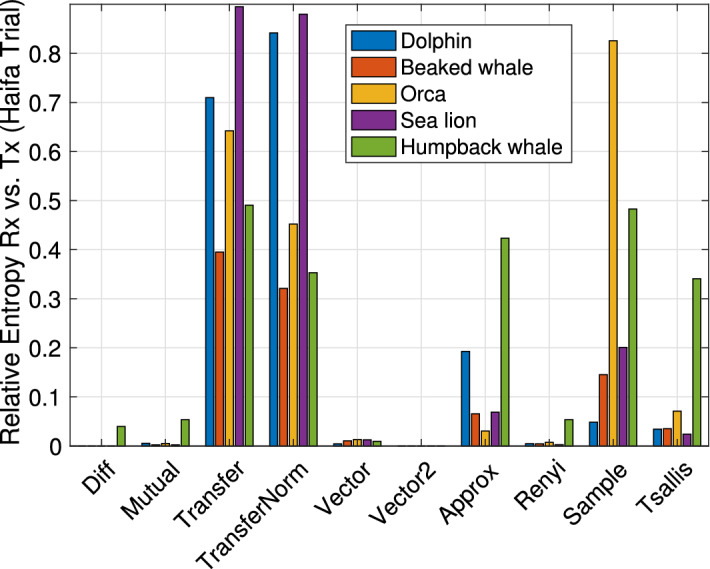
To disguise man-made communications as natural signals, underwater transceivers have the option to pre-record animal vocalizations, and play them back in a way that carries meaningful information for a trained receiver. This operation, known as biomimicking, has been used to perform covert communications and to emit broadband signals for localization, either by playing pre-recorded animal sounds back into the environment, or by designing artificial waveforms whose spectrum is close to that of bioacoustic sounds.However, organic sound-emitting body structures in animals have very different trans-characteristics with respect to electro-acoustic transducers used in underwater acoustic transceivers. In this paper, we observe the distortion induced by transmitting pre-recorded animal vocalization through a transducer’s front-end, and argue that such distortion can be detected via appropriate entropy metrics. We test ten different metrics for this purpose, both via emulated transmission and in two field experiments. Our result indicate which signals and entropy metrics lead to the highest probability of detecting transducer-originated distortions, thus exposing ongoing covert communications. Our research emphasizes the limitations that man-made equipment incurs when reproducing bioacoustic sounds, and prompts for the choice of biomimicking signals that are possibly suboptimal for communications or localization, but help avoid exposing disguised transmissions.
Overview
The claims and statistics of this paper haven’t been checked yet.
Run the check — free, no account needed. It reads the open-access text and checks the sources it cites.
Integrity signals
Registry
Cites
Statistics
Figures
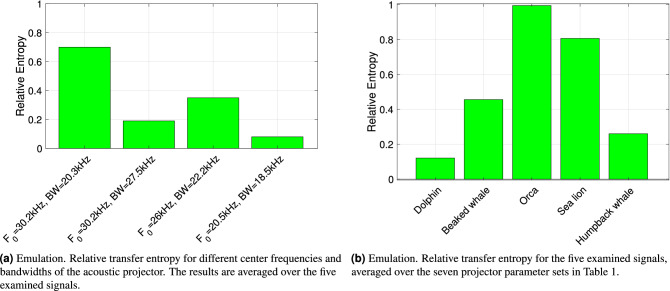
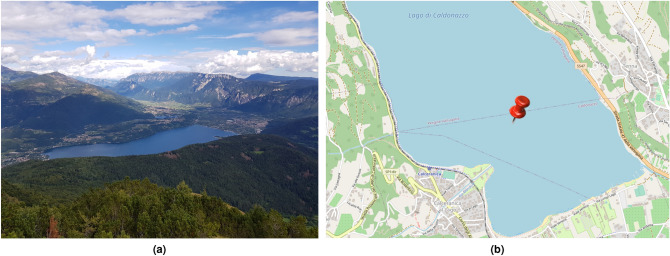
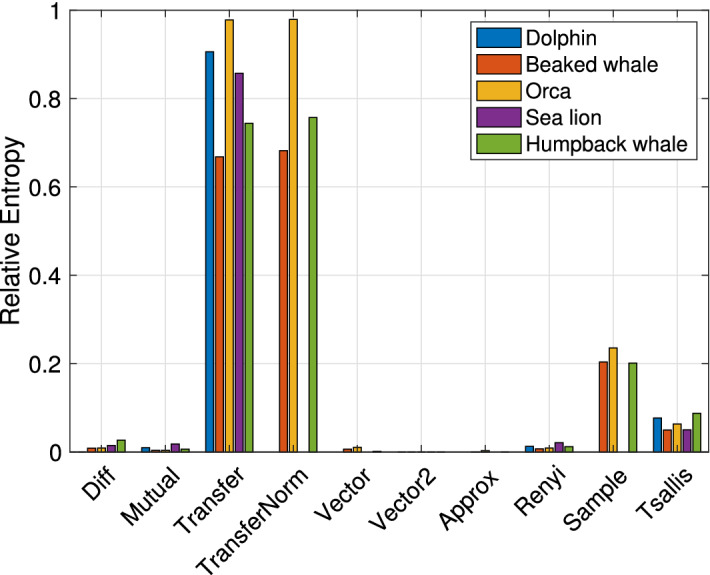
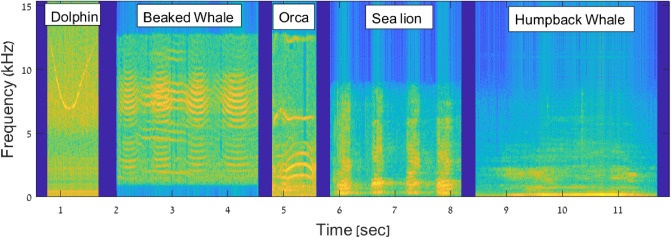
Verification
Claims the paper makes
The claims and statistics of this paper haven’t been checked yet.
Run the check — free, no account needed. It reads the open-access text and checks the sources it cites.
Claims other papers make about this one
Each is checked against this paper’s own text: does it say what the citing paper says it does?
In the citing paper
“Research in biomimetic communications and underwater acoustics (Caleffi et al. 2015; Casari et al. 2023) offers the technical crossover needed to make these simulations credible.”
From Listening forward: emerging roles of bioacoustics in ecology, evolution, and conservation (2026) · cites this paper as Casari et al. 2023
Self-check
Percentages, sums and reported differences re-computed from the paper’s own numbers.
The self-check needs the paper’s full text.
Citations
Cites
Discrete-time Signal Processing
Williamson, D. (1999) · Advanced textbooks in control and signal processing · doi:10.1007/978-1-4471-0541-1 · Cited by 4,927
Staniek, M., & Lehnertz, K. (2008) · Physical Review Letters · doi:10.1103/physrevlett.100.158101 · Cited by 591
Entropic nonextensivity: a possible measure of complexity
Tsallis, C. (2002) · Chaos, Solitons & Fractals · doi:10.1016/s0960-0779(01)00019-4 · Cited by 231
Mutual information: a measure of dependency for nonlinear time series
Dionisio, A., Menezes, R., & Mendes, D. A. (2004) · Physica A: Statistical Mechanics and its Applications · doi:10.1016/j.physa.2004.06.144 · Cited by 213
Goria, M. N., Leonenko, N. N., Mergel, V., & Inverardi, P. L. N. (2005) · Journal of nonparametric statistics · doi:10.1080/104852504200026815 · Cited by 176
Rényi’s information transfer between financial time series
Jizba, P., Kleinert, H. M., & Shefaat, M. (2012) · Physica A Statistical Mechanics and its Applications · doi:10.1016/j.physa.2011.12.064 · Cited by 162
A review of entropy measures for uncertainty quantification of stochastic processes
Namdari, A., & Li, Z. (. (2019) · Advances in Mechanical Engineering · doi:10.1177/1687814019857350 · Cited by 126
Low Probability of Detection for Underwater Acoustic Communication: A Review
Diamant, R., & Lampe, L. (2018) · IEEE Access · doi:10.1109/access.2018.2818110 · Cited by 114
Self-citationCovert underwater acoustic communication using dolphin sounds
Liu, S., Qiao, G., & Ismail, A. (2013) · The Journal of the Acoustical Society of America · doi:10.1121/1.4795219 · Cited by 89
Approximate Entropy as an Irregularity Measure for Financial Data
Pincus, S. M. (2008) · Econometric Reviews · doi:10.1080/07474930801959750 · Cited by 88
Biologically inspired covert underwater acoustic communication by mimicking dolphin whistles
Liu, S., Ma, T., Qiao, G., Ma, L., & Yin, Y. (2017) · Applied Acoustics · doi:10.1016/j.apacoust.2017.01.018 · Cited by 77
Differential Entropy and Dynamics of Uncertainty
Garbaczewski, P. (2006) · Journal of Statistical Physics · doi:10.1007/s10955-006-9058-2 · Cited by 54
Biologically inspired covert underwater acoustic communication—A review
Qiao, G., Bilal, M., Liu, S., Babar, Z., & Ma, T. (2018) · Physical Communication · doi:10.1016/j.phycom.2018.07.007 · Cited by 54
Bounds for Low Probability of Detection for Underwater Acoustic Communication
Diamant, R., Lampe, L., & Gamroth, E. (2016) · IEEE Journal of Oceanic Engineering · doi:10.1109/joe.2016.2550278 · Cited by 52
Self-citationA frequency hopping pattern inspired bionic underwater acoustic communication
Qiao, G., Ma, T., Liu, S., & Bilal, M. (2021) · Physical Communication · doi:10.1016/j.phycom.2021.101288 · Cited by 49
An underwater acoustic communication scheme exploiting biological sounds
ElMoslimany, A., Zhou, M., Duman, T. M., & Papandreou‐Suppappola, A. (2016) · Wireless Communications and Mobile Computing · doi:10.1002/wcm.2676 · Cited by 45
Bionic Morse Coding Mimicking Humpback Whale Song for Covert Underwater Communication
Bilal, M., Liu, S., Qiao, G., Wan, L., & Tao, Y. (2019) · Applied Sciences · doi:10.3390/app10010186 · Cited by 32
Covert underwater acoustic communication using whale noise masking on DSSS signal
Liu, S., Qiao, G., Ismail, A., Liu, B., & Zhang, L. (2013) · MTS/IEEE OCEANS Conference (OCEANS) · doi:10.1109/oceans-bergen.2013.6608007 · Cited by 31
Dolphin Sounds-Inspired Covert Underwater Acoustic Communication and Micro-Modem
Qiao, G., Zhao, Y., Liu, S., & Bilal, M. (2017) · Sensors · doi:10.3390/s17112447 · Cited by 31
Jiang, J., Wang, X., Duan, F., Fu, X., Li, C., & Sun, Z. (2020) · IEEE Access · doi:10.1109/access.2020.2970746 · Cited by 29
Ahn, J., Lee, H., Kim, Y., Lee, S., & Chung, J. (2019) · Japanese Journal of Applied Physics · doi:10.7567/1347-4065/ab14d2 · Cited by 24
Bio-Inspired Covert Active Sonar Detection Method Based on the Encoding of Sperm Whale Clicks
Sun, Z., Jiang, J., Li, Y., Wang, X., Li, C., Li, Z., Yu, M., Fu, X., & Duan, F. (2021) · IEEE Sensors Journal · doi:10.1109/jsen.2021.3130634 · Cited by 23
Ahn, J., Lee, H., Kim, Y., Kim, W., & Chung, J. (2020) · Sensors · doi:10.3390/s20216166 · Cited by 19
Bio-Inspired Covert Active Sonar Strategy
Jiang, J., Wang, X., Duan, F., Li, C., Fu, X., Huang, T., Bu, L., Ma, L., & Sun, Z. (2018) · Sensors · doi:10.3390/s18082436 · Cited by 15
Xie, L., Zhu, J., Jia, Y., & Chen, H. (2022) · Entropy · doi:10.3390/e24050720 · Cited by 14
Baek, C.-U., Jung, J.-W., & Do, D.-W. (2018) · Applied Sciences · doi:10.3390/app8010058 · Cited by 9
Detection of Dolphin Whistle-Like Biomimicking Signals by Phase Analysis
Davidesco, I., & Diamant, R. (2022) · IEEE Access · doi:10.1109/access.2022.3165058 · Cited by 9
Self-citation
Research works printed but not linked: 2
- Dol, H., Quesson, B. & Benders, F. Covert underwater communication with marine mammal sounds. In Proceeding of UDT (2008).
- Hu, X., Jiang, J., Cao, D. & Egardt, B. Battery health prognosis for electric vehicles using sample entropy and sparse Bayesian predictive modeling. IEEE Trans. Ind. Electron. 63, 2645–2656 (2015).
Cited by
Sorted by citations
Analysis of Research Trends and Technological Maturity of Biomimetic Underwater Communication
Ahn, J., Park, G., Kim, W., Kim, H.-M., & Lee, D. (2025) · IEEE Journal of Oceanic Engineering · doi:10.1109/joe.2025.3553982 · Cited by 8
Bilal, M., Zuberi, H. H., Jaffar, A. Y., Riaz, W., Khan, M. A., Alharbi, A., Miyajan, A., & Liu, S. (2026) · Scientific Reports · doi:10.1038/s41598-025-34297-5 · Cited by 7
Interception of bio-mimicked underwater acoustic communications
Mishali, T., & Diamant, R. (2023) · MTS/IEEE OCEANS Conference (OCEANS) · doi:10.1109/oceanslimerick52467.2023.10244632 · Cited by 4
Self-citationExtension of the Covert Performance Evaluation System for Underwater Spread Spectrum Communication
Hu, Y., Han, S., Zhao, H., Han, Y., Xu, J., & Yang, G. Q. (2023) · International Conference on Electronic Information Engineering and Computer Technology (EIECT) · doi:10.1109/eiect60552.2023.10442269 · Cited by 3
Evaluation of the Covertness of Sound Signals Mimicking Those of Marine Mammals
Jiang, S. Y., Wang, J., Niu, Q., & Shi, W. (2025) · IEEE Journal of Oceanic Engineering · doi:10.1109/joe.2024.3508036 · Cited by 2
Metadata
- Authors
- Casari, P., Neasham, J., Gubnitsky, G., Eccher, D., & Diamant, R.
- Affiliations
- University of Trento (IT)
- University of Haifa (IL)
- Corresponding author
- Casari, Paolo
- Venue
- Scientific Reports
- Published
- 2023-02-14
- Volume
- 13
- Issue
- 1
- Pages
- 2591-2591
- ISSN
- 2045-2322 (ISSN-L)
- PMC
- PMC9929283
- OpenAlex
- W4320727230
- Cited by
- 12
- References
- 27
- Citations by year
- 2026: 4 · 2025: 3 · 2024: 3 · 2023: 2
- FWCI
- 1.46
- Type
- journal article
- Language
- en
- Open access
- gold
- doi.org
- Locations
- Scientific Reports (publishedVersion, cc-by)
- PubMed Central (publishedVersion, cc-by)
- PubMed (publishedVersion)
- Iris (University of Trento) (submittedVersion, cc-by)
- DOAJ (DOAJ: Directory of Open Access Journals) (submittedVersion, cc-by-sa)
- Newcastle University ePrints (Newcastle Univesity) (cc-by)
- Funders
- NATO Science for Peace and Security (G5884)
- Ministero dell’Economia e delle Finanze,Italy (ECS 00000043)
- Topics
- Physical Sciences › Engineering › Ocean Engineering › Underwater Vehicles and Communication Systems
- Physical Sciences › Earth and Planetary Sciences › Oceanography › Underwater Acoustics Research
- Physical Sciences › Environmental Science › Ecology › Marine animal studies overview
- Keywords
- entropy measures, sound localization
- MeSH terms
- Acoustics, Animals, Communication, Sound, Vocalization, Animal
About these checks
Registry, retraction, Cites and statistics results are computed, not judged, with one exception: a printed reference that no index lists is read once by a model before it counts as a citation error. Claims are extracted by a model and kept only when their quote appears verbatim in the text; each cited source is then checked, with a model’s help, for whether it says what the claim relies on. Those verdicts can be wrong — read the claim’s quote and the cited source before relying on one.
Statistics and arithmetic are recomputed, not judged.
Confidence bands are shown only for fields calibrated on our annotated test set. None is calibrated yet, so no band is shown.
What counts as a claim ›How we measure confidence ›How we check this ›
Are you an author, or do you see a problem with this page? Request a review
