

The DOI matches its Crossref record; 8 of the 8 references it cites were found in a registry or an index.
Toward surface defect detection in electronics manufacturing by an accurate and lightweight YOLO-style object detector
Open accessAbstract
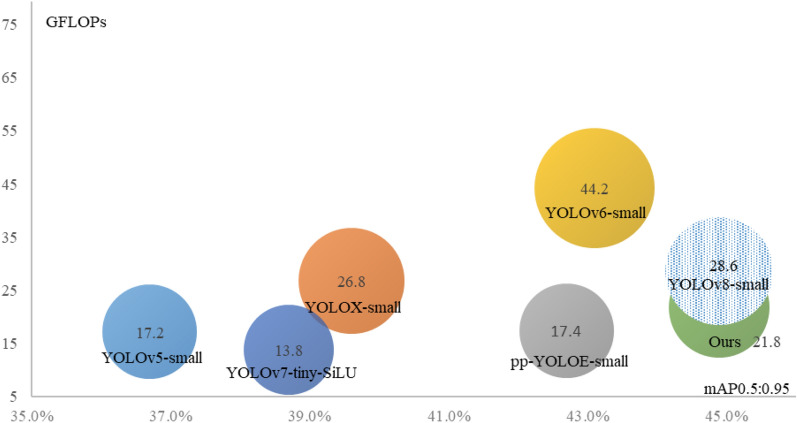
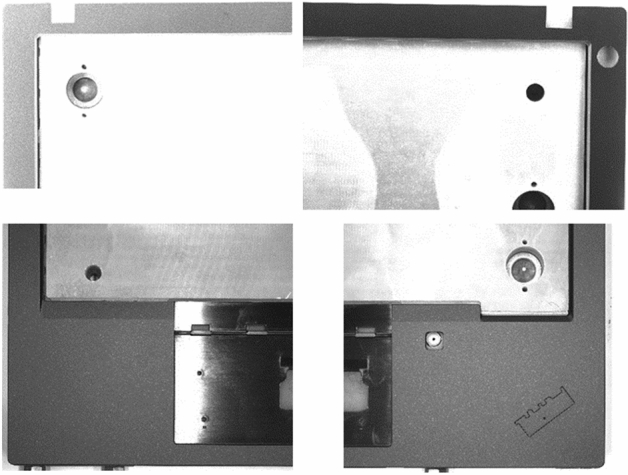
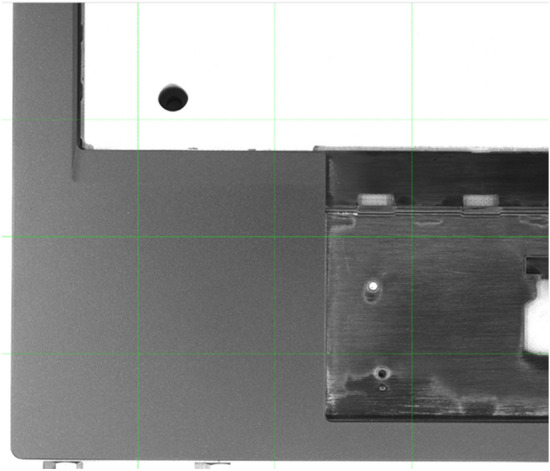
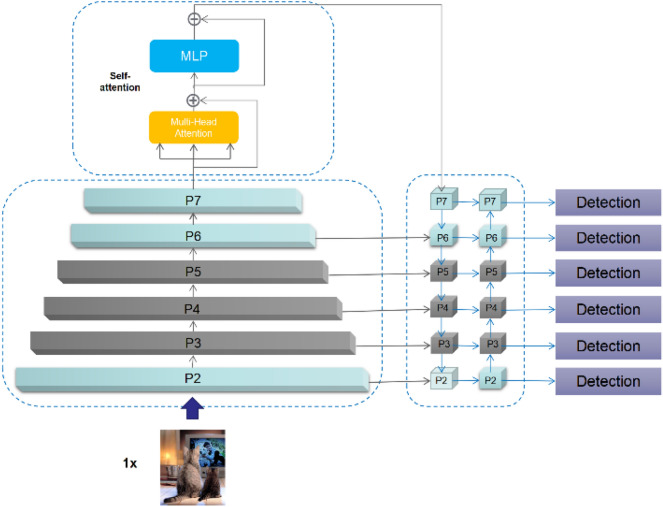
In electronics manufacturing, surface defect detection is very important for product quality control, and defective products can cause severe customer complaints. At the same time, in the manufacturing process, the cycle time of each product is usually very short. Furthermore, high-resolution input images from high-resolution industrial cameras are necessary to meet the requirements for high quality control standards. Hence, how to design an accurate object detector with real-time inference speed that can accept high-resolution input is an important task. In this work, an accurate YOLO-style object detector was designed, ATT-YOLO, which uses only one self-attention module, many-scale feature extraction and integration in the backbone and feature pyramid, and an improved auto-anchor design to address this problem. There are few datasets for surface detection in electronics manufacturing. Hence, we curated a dataset consisting of 14,478 laptop surface defects, on which ATT-YOLO achieved 92.8% mAP0.5 for the binary-class object detection task. We also further verified our design on the COCO benchmark dataset. Considering both computation costs and the performance of object detectors, ATT-YOLO outperforms several state-of-the-art and lightweight object detectors on the COCO dataset. It achieves a 44.9% mAP score and 21.8 GFLOPs, which is better than the compared models including YOLOv8-small (44.9%, 28.6G), YOLOv7-tiny-SiLU (38.7%, 13.8G), YOLOv6-small (43.1%, 44.2G), pp-YOLOE-small (42.7%, 17.4G), YOLOX-small (39.6%, 26.8G), and YOLOv5-small (36.7%, 17.2G). We hope that this work can serve as a useful reference for the utilization of attention-based networks in real-world situations.
Overview
The claims and statistics of this paper haven’t been checked yet.
Run the check — free, no account needed. It reads the open-access text and checks the sources it cites.
Integrity signals
Registry
Cites
Statistics
Figures
Verification
Claims the paper makes
The claims and statistics of this paper haven’t been checked yet.
Run the check — free, no account needed. It reads the open-access text and checks the sources it cites.
Claims other papers make about this one
Each is checked against this paper’s own text: does it say what the citing paper says it does?
The source backs part of the claim, not all of it — or backs it for a different population, condition or comparison.
In the citing paper
“ATT-YOLO, inspired by transformers, performed well on surface detection tasks in electronic manufacturing, achieving an mAP of 49.9% with 21.8 GFLOPS.”
From The YOLO Framework: A Comprehensive Review of Evolution, Applications, and Benchmarks in Object Detection (2024) · cites this paper as [119]
Experimental — accuracy not yet measured
Self-check
Percentages, sums and reported differences re-computed from the paper’s own numbers.
The self-check needs the paper’s full text.
Citations
Cites
An Image is Worth 16x16 Words: Transformers for Image Recognition at Scale
Dosovitskiy, A., Beyer, L., Kolesnikov, A., Weissenborn, D., Zhai, X., Unterthiner, T., Dehghani, M., Minderer, M., Heigold, G., Gelly, S., et al. (2020) · arXiv · doi:10.48550/arxiv.2010.11929 · Cited by 47,472
Swin Transformer: Hierarchical Vision Transformer using Shifted Windows
Liu, Z., Lin, Y., Cao, Y., Hu, H., Wei, Y., Zhang, Z., Lin, S., & Guo, B. (2021) · 2021 IEEE/CVF International Conference on Computer Vision (ICCV) · doi:10.1109/iccv48922.2021.00986 · Cited by 35,534
YOLOv7: Trainable bag-of-freebies sets new state-of-the-art for real-time object detectors
Wang, C.-Y., Bochkovskiy, A., & Liao, H.-Y. M. (2022) · arXiv · doi:10.48550/arxiv.2207.02696 · Cited by 13,205
YOLOv7: Trainable Bag-of-Freebies Sets New State-of-the-Art for Real-Time Object Detectors
Wang, C.-Y., Bochkovskiy, A., & Liao, H.-Y. M. (2023) · 2023 IEEE/CVF Conference on Computer Vision and Pattern Recognition (CVPR) · doi:10.1109/cvpr52729.2023.00721 · Cited by 13,198
CSPNet: A New Backbone that can Enhance Learning Capability of CNN
Wang, C.-Y., Mark Liao, H.-Y., Wu, Y.-H., Chen, P.-Y., Hsieh, J.-W., & Yeh, I.-H. (2020) · 2020 IEEE/CVF Conference on Computer Vision and Pattern Recognition Workshops (CVPRW) · doi:10.1109/cvprw50498.2020.00203 · Cited by 5,265
Swin Transformer V2: Scaling Up Capacity and Resolution
Liu, Z., Hu, H., Lin, Y., Yao, Z., Xie, Z., Wei, Y., Ning, J., Cao, Y., Zhang, Z., Dong, L., et al. (2021) · arXiv · doi:10.48550/arxiv.2111.09883 · Cited by 2,679
YOLOv6: A Single-Stage Object Detection Framework for Industrial Applications
Li, C., Li, L., Jiang, H., Weng, K., Geng, Y., Li, L., Ke, Z., Li, Q., Cheng, M., Nie, W., et al. (2022) · arXiv · doi:10.48550/arxiv.2209.02976 · Cited by 1,792 · cited 3×
“In contrast, object detectors using only convolution operations usually converge within 300 epochs 14,25 .”
BackgroundDINO: DETR with Improved DeNoising Anchor Boxes for End-to-End Object Detection
Zhang, H., Li, F., Liu, S., Zhang, L., Su, H., Zhu, J., Ni, L. M., & Shum, H.-Y. (2022) · arXiv · Cited by 1,154
Research works printed but not linked: 34
- Redmon, J., Divvala, S., Girshick, R. & Farhadi, A. in Proceedings of the IEEE conference on computer vision and pattern recognition. 779–788.
- Redmon, J. & Farhadi, A. in IEEE Conference on Computer Vision & Pattern Recognition. 6517–6525.
- Tian, Z., Shen, C., Chen, H., He, T. J. I. T. o. P. A. & Intelligence, M. FCOS: A simple and strong anchor-free object detector. 1–1 (2020). · DOI
- Tian, Z., Shen, C., Chen, H. & He, T. in 2019 IEEE/CVF International Conference on Computer Vision (ICCV).
- Chen, Z. et al. Plant disease recognition model based on improved YOLOv5. Agronomy 12, 365 (2022). · DOI
- Dewi, C., Chen, R.-C., Yu, H. & Jiang, X. Robust detection method for improving small traffic sign recognition based on spatial pyramid pooling. J. Ambient Intell. Hum. Comput. 1–18 (2021). · DOI
- Dewi, C., Chen, R.-C., Zhuang, Y.-C. & Christanto, H. J. Yolov5 series algorithm for road marking sign identification. Big Data Cogn. Comput. 6, 149 (2022). · DOI
- Mekhalfi, M. L. et al. Contrasting YOLOv5, transformer, and EfficientDet detectors for crop circle detection in desert. IEEE Geosci. Remote Sens. Lett. 19, 1–5 (2021). · DOI
- Zhang, H., Tian, M., Shao, G., Cheng, J. & Liu, J. Target detection of forward-looking sonar image based on improved yolov5. IEEE Access 10, 18023–18034 (2022). · DOI
- Xu, Z., Zhang, Y., Cheng, J. & Ge, G. in Journal of Physics: Conference Series. 012038 (IOP Publishing).
- Yao, J. et al. A real-time detection algorithm for Kiwifruit defects based on YOLOv5. Electronics 10, 1711 (2021). · DOI
- Dewi, C., Chen, R.-C., Liu, Y.-T., Jiang, X. & Hartomo, K. D. Yolo V4 for advanced traffic sign recognition with synthetic training data generated by various GAN. IEEE Access 9, 97228–97242 (2021). · DOI
- Zhu, X., Lyu, S., Wang, X. & Zhao, Q. in Proceedings of the IEEE/CVF International Conference on Computer Vision. 2778–2788.
- Lin, T. Y., Maire, M., Belongie, S., Hays, J. & Zitnick, C. L. J. S. I. P. Microsoft COCO: Common Objects in Context. (2014). · DOI · Paper page
- Misra, D. Mish: A self regularized non-monotonic neural activation function. Preprint https://arxiv.org/abs/1908.086814, 10.48550 (2019).
- Du, S., Zhang, B., Zhang, P. & Xiang, P. in 2021 IEEE 2nd International Conference on Pattern Recognition and Machine Learning (PRML). 92–98 (IEEE).
- Wang, C. Y., Liao, H., Wu, Y. H., Chen, P. Y. & Yeh, I. H. in 2020 IEEE/CVF Conference on Computer Vision and Pattern Recognition Workshops (CVPRW).
- He, K., Zhang, X., Ren, S. & Sun, J. Spatial pyramid pooling in deep convolutional networks for visual recognition. IEEE Trans. Pattern Anal. Mach. Intell. 37, 1904–1916 (2015). · DOI · Paper page
- Liu, S., Qi, L., Qin, H., Shi, J. & Jia, J. in 2018 IEEE/CVF Conference on Computer Vision and Pattern Recognition (CVPR).
- Nair, V., Chatterjee, M., Tavakoli, N., Namin, A. S. & Snoeyink, C. Fast Fourier transformation for optimizing convolutional neural networks in object recognition. Preprint https://arxiv.org/abs/2010.04257 (2020). · arXiv
- Riaz, H. U. M., Benbarka, N. & Zell, A. in 2020 25th International Conference on Pattern Recognition (ICPR). 7833–7840 (IEEE).
- Wei, Y. et al. in Proceedings of the IEEE conference on computer vision and pattern recognition. 7268–7277.
- Carion, N. et al. in European conference on computer vision. 213–229 (Springer).
- Zhu, X. et al. in International Conference on Learning Representations.
- Ho, S.-Y., Shu, L.-S. & Chen, J.-H. Intelligent evolutionary algorithms for large parameter optimization problems. IEEE Trans. Evol. Comput. 8, 522–541 (2004). · DOI
- Ho, S. Y., Chen, J. H. & Huang, M. H. Inheritable genetic algorithm for biobjective 0/1 combinatorial optimization problems and its applications. IEEE Trans. Syst. Man Cybern. Part B Cybern. 34, 609–620 (2004). · DOI
- Ho, S.-Y. in Proc. Genetic and Evolutionary Computation Conference, Orlando, Florida, USA, 1999.
- Wang, J.-R. et al. ESA-UbiSite: accurate prediction of human ubiquitination sites by identifying a set of effective negatives. Bioinformatics 33, 661–668 (2017). · DOI
- Tsai, M.-J. et al. GREMA: modelling of emulated gene regulatory networks with confidence levels based on evolutionary intelligence to cope with the underdetermined problem. Bioinformatics 36, 3833–3840 (2020). · DOI
- Ho, S.-Y. & Huang, H.-L. Facial modeling from an uncalibrated face image using a coarse-to-fine genetic algorithm. Pattern Recogn. 34, 1015–1031 (2001). · DOI
- Yerukala Sathipati, S. & Ho, S.-Y. Identifying a miRNA signature for predicting the stage of breast cancer. Sci. Rep. 8, 1–11 (2018). · DOI
- Zhou, D., Fang, J., Song, X., Guan, C. & Yang, R. J. I. IoU Loss for 2D/3D Object Detection. (2019). · DOI
- Gevorgyan, Z. SIoU Loss: More Powerful Learning for Bounding Box Regression. Preprint https://arxiv.org/abs/2205.12740 (2022). · arXiv
- Du, S., Zhang, B. & Zhang, P. Scale-sensitive IOU loss: An improved regression loss function in remote sensing object detection. IEEE Access 9, 141258–141272 (2021). · DOI
Cited by
Sorted by citations
Ali, M. L., & Zhang, Z. (2024) · Computers · doi:10.3390/computers13120336 · Cited by 383
Metadata
- Authors
- Wang, J., Dai, H., Chen, T., Liu, H., Zhang, X., Zhong, Q., & Lu, R.
- Affiliations
- Tsinghua University (CN)
- Hefei University of Technology (CN)
- Corresponding author
- Lu, Rongsheng
- Venue
- Scientific Reports
- Published
- 2023-05-01
- Volume
- 13
- Issue
- 1
- Pages
- 7062-7062
- ISSN
- 2045-2322 (ISSN-L)
- PMC
- PMC10151317
- OpenAlex
- W4367598088
- Cited by
- 46
- References
- 8
- Citations by year
- 2026: 10 · 2025: 8 · 2024: 24 · 2023: 4
- FWCI
- 6.10
- Type
- journal article
- Language
- en
- Open access
- gold
- doi.org
- Locations
- Scientific Reports (publishedVersion, cc-by)
- PubMed Central (publishedVersion, cc-by)
- PubMed (publishedVersion)
- DOAJ (DOAJ: Directory of Open Access Journals) (submittedVersion, cc-by-sa)
- Funders
- The School of Instrument Science and Opto-electronics Engineering at Hefei University of Technology
- LCFC (Hefei) Electronics Technology Co., Ltd.
- Hefei LCFC Information Technology Co., Ltd.
- Anhui Province postdoctoral research personnel scientific research activity fund (2022B636)
- Topics
- Physical Sciences › Engineering › Industrial and Manufacturing Engineering › Industrial Vision Systems and Defect Detection
- Physical Sciences › Computer Science › Computer Vision and Pattern Recognition › Advanced Neural Network Applications
- Physical Sciences › Engineering › Civil and Structural Engineering › Infrastructure Maintenance and Monitoring
- Keywords
- surface defect detection, electronics manufacturing, lightweight object detection, self-attention, feature pyramid, defect dataset, real-time inference, manufacturing quality control
About these checks
Registry, retraction, Cites and statistics results are computed, not judged, with one exception: a printed reference that no index lists is read once by a model before it counts as a citation error. Claims are extracted by a model and kept only when their quote appears verbatim in the text; each cited source is then checked, with a model’s help, for whether it says what the claim relies on. Those verdicts can be wrong — read the claim’s quote and the cited source before relying on one.
Statistics and arithmetic are recomputed, not judged.
Confidence bands are shown only for fields calibrated on our annotated test set. None is calibrated yet, so no band is shown.
What counts as a claim ›How we measure confidence ›How we check this ›
Are you an author, or do you see a problem with this page? Request a review
