

Attention and impulsivity assessment using virtual reality games
Open accessThe DOI matches its Crossref record; 49 of the 49 references it cites were found in a registry or an index.
Abstract
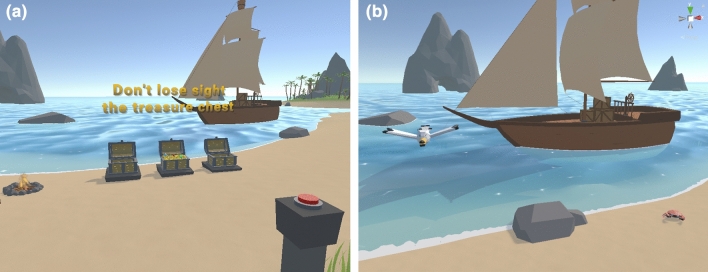
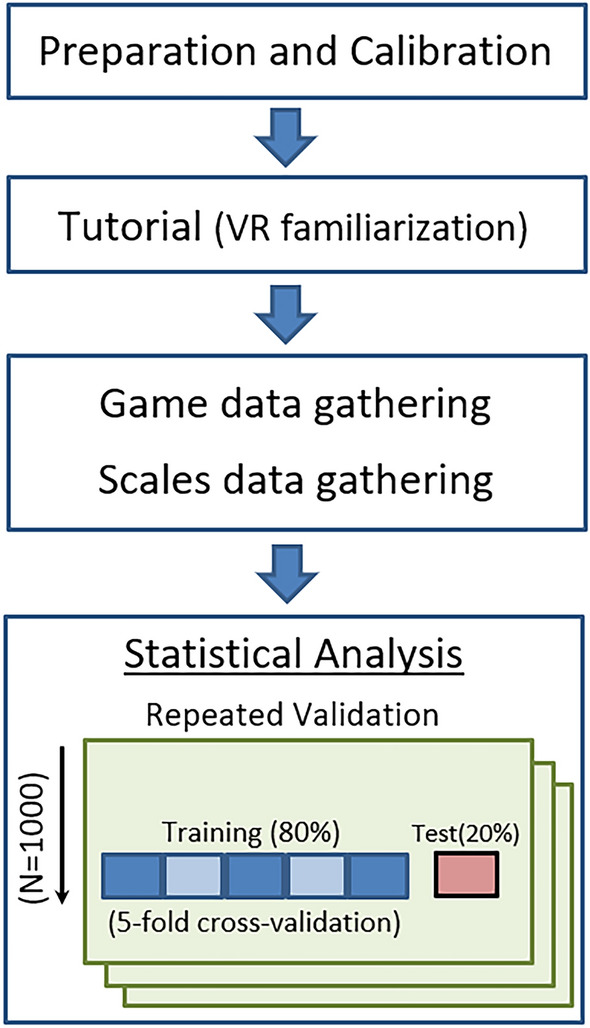
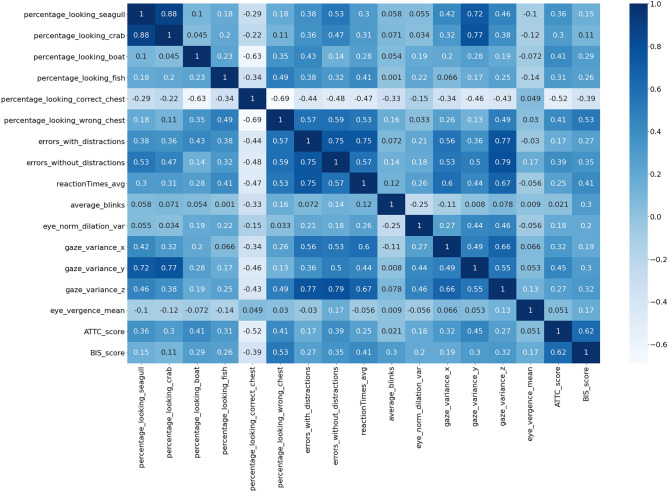
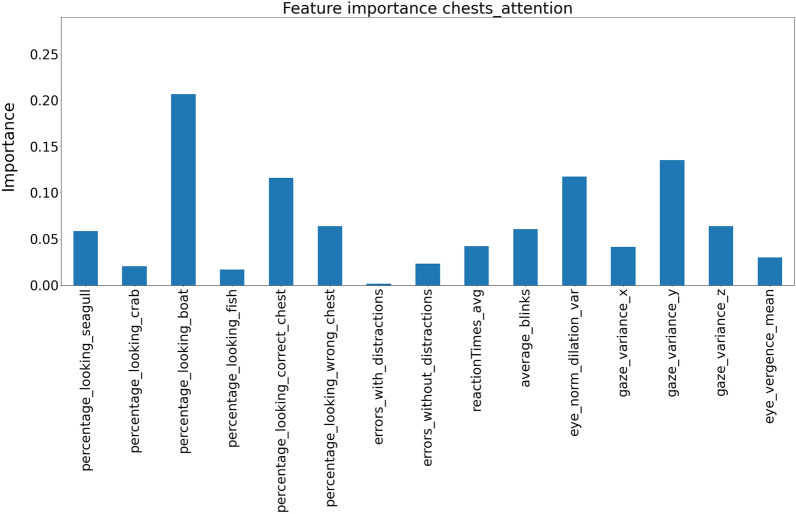
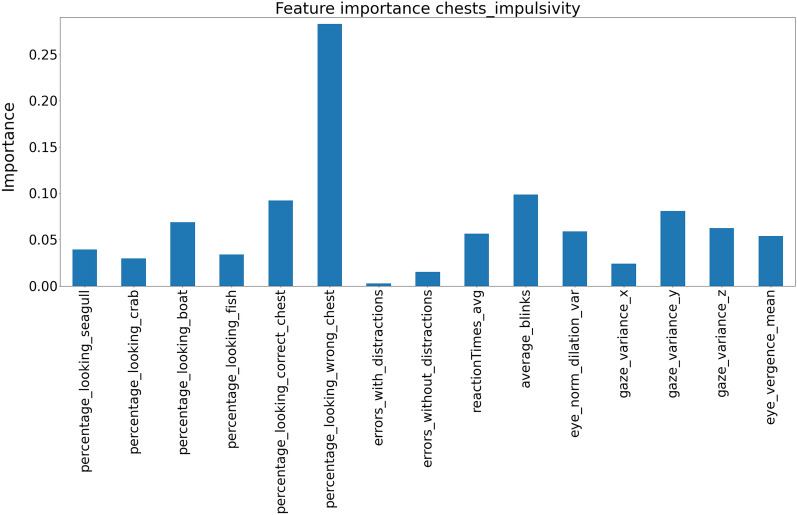
The assessment of cognitive functions is mainly based on standardized neuropsychological tests, widely used in various fields such as personnel recruitment, education, or health. This paper presents a virtual reality game that allows collecting continuous measurements of both the performance and behaviour of the subject in an immersive, controllable, and naturalistic experience. The application registers variables related to the user’s eye movements through the use of virtual reality goggles, as well as variables of the game performance. We study how virtual reality can provide data to help predict scores on the Attention Control Scale Test and the Barratt Impulsiveness Scale. We design the application and test it with a pilot group. We build a random forest regressor model to predict the attention and impulsivity scales’ total score. When evaluating the performance of the model, we obtain a positive correlation with attention (0.434) and with impulsivity (0.382). In addition, our model identified that the most significant variables are the time spent looking at the target or at distractors, the eye movements variability, the number of blinks and the pupil dilation in both attention and impulsivity. Our results are consistent with previous results in the literature showing that it is possible to use data collected in virtual reality to predict the degree of attention and impulsivity.
Overview
The claims and statistics of this paper haven’t been checked yet.
Free: it reads the open-access text and checks the first 5 claims that cite a source we can check. Create a free account to check every claim.
Integrity signals
Registry
Cites
Statistics
Figures
Verification
Claims the paper makes
The claims and statistics of this paper haven’t been checked yet.
Free: it reads the open-access text and checks the first 5 claims that cite a source we can check. Create a free account to check every claim.
Claims other papers make about this one
Each is checked against this paper’s own text: does it say what the citing paper says it does?
The source backs part of the claim, not all of it — or backs it for a different population, condition or comparison.
In the citing paper
“VR tasks to assess ADHD have recently emerged; however, many of them focus on sustained attention tasks in unrealistic settings [34].”
From Enhancing Ecological Validity: Virtual Reality Assessment of Executive Functioning in Children and Adolescents with ADHD (2024) · cites this paper as [34]
Experimental — accuracy not yet measured
Self-check
Percentages, sums and reported differences re-computed from the paper’s own numbers.
The self-check needs the paper’s full text.
Citations
Cites
A continuous performance test of brain damage
Rosvold, H. E., Mirsky, A. F., Sarason, I., Bransome, E. D., & Beck, L. H. (1956) · Journal of Consulting Psychology · doi:10.1037/h0043220 · Cited by 2,261 · cited 1×
“The CPTs have been used in a variety of settings, for instance, to test the attention of brain-damaged patients 12 , or to test the skills of radar operators 30 .”
MethodAnxiety-related attentional biases and their regulation by attentional control.
Derryberry, D., & Reed, M. A. (2002) · Journal of Abnormal Psychology · doi:10.1037/0021-843x.111.2.225 · Cited by 1,729 · cited 2×
“A self-report scale widely used to measure attention control 25 is the Attention Control Scale (ATTC) questionnaire 26 .”
MethodFifty years of the Barratt Impulsiveness Scale: an update and review
Stanford, M. S., Mathias, C. W., Dougherty, D. M., Lake, S. L., Anderson, N. E., & Patton, J. H. (2009) · Personality and Individual Differences · doi:10.1016/j.paid.2009.04.008 · Cited by 1,609 · cited 8×
“In this work, we have proposed the Treasure Hunt VR application that gathers performance and behavioural data that are then used to accurately predict the scores of the ATTC and BIS-11 self-report scales.”
MethodInfluentialThe role of impulsivity in the development of substance use and eating disorders
Dawe, S., & Loxton, N. J. (2004) · Neuroscience & Biobehavioral Reviews · doi:10.1016/j.neubiorev.2004.03.007 · Cited by 944
Updated European Consensus Statement on diagnosis and treatment of adult ADHD
Kooij, J. J. S., Bijlenga, D., Salerno, L., Jaeschke, R., Bitter, I., Balázs, J., Thome, J., Dom, G., Kasper, S., Nunes Filipe, C., et al. (2019) · European Psychiatry · doi:10.1016/j.eurpsy.2018.11.001 · Cited by 686
Lumsden, J., Edwards, E. A., Lawrence, N. S., Coyle, D., & Munafò, M. R. (2016) · JMIR Serious Games · doi:10.2196/games.5888 · Cited by 555
Relations between preschool attention span-persistence and age 25 educational outcomes
McClelland, M. M., Acock, A. C., Piccinin, A., Rhea, S. A., & Stallings, M. C. (2013) · Early Childhood Research Quarterly · doi:10.1016/j.ecresq.2012.07.008 · Cited by 477
Developmental Normative Data on The Test of Variables of Attention (T.O.V.A.™)
Greenberg, L. M., & Waldmant, I. D. (1993) · Journal of Child Psychology and Psychiatry · doi:10.1111/j.1469-7610.1993.tb01105.x · Cited by 446 · cited 5×
“Rodriguez et al. 38 found that Aula Nesplora, another VR-CPT solution within a virtual class, is a better predictor of ADHD than TOVA.”
MethodInfluentialThe d2 Test of Attention: Construct validity and extensions in scoring techniques
BATES, M. E., & LEMAY, E. P. (2004) · Journal of the International Neuropsychological Society · doi:10.1017/s135561770410307x · Cited by 355 · cited 5×
“After the game is over, and in order to determine how well our application is capable of predicting the degree of attention and impulsivity, we administered the Attention Control Scale (ATTC) questionnaire 26 and the Barratt Impulsiveness Scale (BIS-11) 27 .”
MethodInfluentialBruchmüller, K., Margraf, J., & Schneider, S. (2012) · Journal of Consulting and Clinical Psychology · doi:10.1037/a0026582 · Cited by 354
Parsons, T. D., Bowerly, T., Buckwalter, J. G., & Rizzo, A. A. (2007) · Child Neuropsychology · doi:10.1080/13825580600943473 · Cited by 291 · cited 1×
“For example, some studies claim that distractors help to assess ADHD 19,45 .”
BackgroundRethinking Impulsivity in Suicide
Klonsky, E. D., & May, A. (2010) · Suicide and Life-Threatening Behavior · doi:10.1521/suli.2010.40.6.612 · Cited by 283
Inattention, hyperactivity and impulsiveness: Their impact on academic achievement and progress
Merrell, C., & Tymms, P. B. (2001) · British Journal of Educational Psychology · doi:10.1348/000709901158389 · Cited by 234
The Go—No‐Go paradigm in attention deficit disorder
Trommer, B. L., Hoeppner, J. B., Lorber, R., & Armstrong, K. J. (1988) · Annals of Neurology · doi:10.1002/ana.410240504 · Cited by 216
Peñuelas‐Calvo, I., Jiang-Lin, L. K., Serrano, B. G., Delgado‐Gómez, D., Navarro-Jimenez, R., Baca‐García, E., & Porras‐Segovia, A. (2020) · European Child & Adolescent Psychiatry · doi:10.1007/s00787-020-01557-w · Cited by 173 · cited 1×
“In order to improve participation in the assessment process and increase their ecological validity 39 , serious games and gamification have been exploited to enhance existing CPTs or to create new assessment alternatives.”
BackgroundIntegration of an EEG biomarker with a clinician's ADHD evaluation
Snyder, S. M., Rugino, T. A., Hornig, M., & Stein, M. A. (2015) · Brain and Behavior · doi:10.1002/brb3.330 · Cited by 156 · cited 1×
“Snyder et al. 37 affirm that electroencephalographic (EEG)-based assessment obtained while participants conduct CPTs can be used to improve the accuracy of ADHD diagnosis.”
MethodPollak, Y., Weiss, P. L., Rizzo, A. A., Weizer, M., Shriki, L., Shalev, R. S., & Gross-Tsur, V. (2009) · Journal of Developmental & Behavioral Pediatrics · doi:10.1097/dbp.0b013e3181969b22 · Cited by 133
A Serious Game for Clinical Assessment of Cognitive Status: Validation Study
Tong, T., Chignell, M., Tierney, M. C., & Lee, J. (2016) · JMIR Serious Games · doi:10.2196/games.5006 · Cited by 132
Edwards, M. C., Gardner, E. S., Chelonis, J. J., Schulz, E. G., Flake, R. A., & Diaz, P. F. (2007) · Journal of Abnormal Child Psychology · doi:10.1007/s10802-007-9098-3 · Cited by 120 · cited 1×
“However, they differ on some key points 33 , where Conners CPT uses a “response inhibition” paradigm (90% target and 10% non-target), TOVA uses a mix of this and a “rare target” paradigm (22.5% targets and 77.5% non-targets).”
MethodInfluential(2016) · Archives of Clinical Neuropsychology · doi:10.1093/arclin/acw101 · Cited by 118 · cited 9×
“Rodriguez et al. 38 found that Aula Nesplora, another VR-CPT solution within a virtual class, is a better predictor of ADHD than TOVA.”
BackgroundInfluentialParsons, T. D., Duffield, T. C., & Asbee, J. (2019) · Neuropsychology Review · doi:10.1007/s11065-019-09407-6 · Cited by 118 · cited 1×
“First of all, errors are the most common predictors in the literature 43 .”
BackgroundPupil size tracks attentional performance in Attention-Deficit/Hyperactivity disorder
Wainstein, G., Rojas-Líbano, D., Crossley, N. A., Carrasco, X., Aboitiz, F., & Ossandón, T. (2017) · Scientific Reports · doi:10.1038/s41598-017-08246-w · Cited by 116
Hay, D. A., Bennett, K., Lévy, F., Sergeant, J. A., & Swanson, J. M. (2006) · Biological Psychiatry · doi:10.1016/j.biopsych.2006.04.040 · Cited by 114 · cited 1×
“The authors found a link between the jump distance and omissions with the Strengths and Weaknesses of ADHD-Symptoms and Normal-Behavior (SWAN) scale 41 .”
BackgroundConners’ Continuous Performance Test (2nd ed.; CCPT-II)
Homack, S., & Riccio, C. A. (2006) · Journal of Attention Disorders · doi:10.1177/1087054705283578 · Cited by 95 · cited 10×
“Some works included the CPT in VR applications.”
MethodInfluentialBioulac, S., Micoulaud-Franchi, J.-A., Maire, J., Bouvard, M. P., Rizzo, A. A., Sagaspe, P., & Philip, P. (2020) · Journal of Attention Disorders · doi:10.1177/1087054718759751 · Cited by 91
Objective diagnosis of ADHD using IMUs
O’Mahony, N., Florentino-Liaño, B., Carballo, J. J., Baca‐García, E., & Rodríguez, A. A. (2014) · Medical Engineering & Physics · doi:10.1016/j.medengphy.2014.02.023 · Cited by 86 · cited 1×
“For example, O’Mahony et al. 34 used wrist and ankle trackers while performing the TOVA test.”
MethodEye Tracking During a Continuous Performance Test: Utility for Assessing ADHD Patients
Lev, A., Braw, Y., Elbaum, T., WAGNER, M. G., & Rassovsky, Y. (2020) · Journal of Attention Disorders · doi:10.1177/1087054720972786 · Cited by 81 · cited 1×
“Lev et al. 47 found that ADHD patients spent more time gazing at irrelevant regions.”
BackgroundThe d'measure of signal detectability in vigilancelike situations.
Mackworth, J. F., & Taylor, M. M. (1963) · Canadian Journal of Psychology/Revue Canadienne de Psychologie · doi:10.1037/h0092885 · Cited by 80
Ijaz, K., Ahmadpour, N., Naismith, S. L., & Calvo, R. A. (2019) · JMIR Mental Health · doi:10.2196/13887 · Cited by 79
Rodríguez, C., Areces, D., García, T., Cueli, M., & González-Castro, P. (2018) · International Journal of Clinical and Health Psychology · doi:10.1016/j.ijchp.2018.06.003 · Cited by 75 · cited 2×
“Rodriguez et al. 38 found that Aula Nesplora, another VR-CPT solution within a virtual class, is a better predictor of ADHD than TOVA.”
BackgroundComparison among Various Methods of Assessment of Impulsiveness
Carrillo-de-la-Peña, M. T., Otero, J. M., & Romero, E. (1993) · Perceptual and Motor Skills · doi:10.2466/pms.1993.77.2.567 · Cited by 62 · cited 1×
“The Familiar Figures Matching Test (MFF20) 29 is a matching task where the participant must select a target, from a set of six perceptually similar pictures, that exactly matches the sample.”
BackgroundAttentional blink in adolescents with varying levels of impulsivity
Li, C. R., Chen, S., Lin, W., & Yang, Y. (2004) · Journal of Psychiatric Research · doi:10.1016/j.jpsychires.2004.06.003 · Cited by 56
A comprehensive review of attention tests: can we assess what we exactly do not understand?
Nasiri, E., Khalilzad, M., Hakimzadeh, Z., Isari, A., Faryabi-Yousefabad, S., Sadigh‐Eteghad, S., & Naseri, A. (2023) · The Egyptian Journal of Neurology Psychiatry and Neurosurgery · doi:10.1186/s41983-023-00628-4 · Cited by 53
Clinical Validation of Eye Vergence as an Objective Marker for Diagnosis of ADHD in Children
Varela Casal, P., Lorena Esposito, F., Morata Martínez, I., Capdevila, A., Solé Puig, M., de la Osa, N., Ezpeleta, L., Perera i Lluna, A., Faraone, S. V., Ramos-Quiroga, J. A., et al. (2019) · Journal of Attention Disorders · doi:10.1177/1087054717749931 · Cited by 52
Hirsch, O., & Christiansen, H. (2018) · Journal of Attention Disorders · doi:10.1177/1087054715596577 · Cited by 40 · cited 1×
“We then use all these data to create a model to predict the scores obtained on the ATTC and BIS-11 tests, related to attention and impulsivity.”
MethodFaraone, S. V., Newcorn, J. H., Antshel, K. M., Adler, L. A., Roots, K., & Heller, M. D. (2016) · Journal of Child and Adolescent Psychopharmacology · doi:10.1089/cap.2015.0174 · Cited by 40
Developing Serious Video Games to Treat Attention Deficit Hyperactivity Disorder: Tutorial Guide
Sújar, A., Martín-Moratinos, M., Rodrigo-Yanguas, M., Bella-Fernández, M., González, C., Delgado‐Gómez, D., & Blasco-Fontecilla, H. (2022) · JMIR Serious Games · doi:10.2196/33884 · Cited by 40 · cited 1×
“However, we recommend developers of therapeutic, diagnostic or assessment games to be very specific about which constructs or executive functions they wish to measure or improve 18 .”
MethodPeijnenborgh, J., Hurks, P. P. M., Aldenkamp, A. P., van der Spek, E. D., Rauterberg, M., Vles, J. S. H., & Hendriksen, J. G. M. (2016) · JMIR Serious Games · doi:10.2196/games.5997 · Cited by 37 · cited 2×
“Previous studies showed that there is a clear relationship between the number of errors and the level of inattention and impulsivity 21,40,44 .”
BackgroundClarke, P. J. F., & Todd, J. (2021) · Cognition and Emotion · doi:10.1080/02699931.2021.1987861 · Cited by 37
Delgado‐Gómez, D., Sújar, A., Ardoy‐Cuadros, J., Bejarano-Gómez, A., Aguado, D., Miguélez‐Fernández, C., Blasco-Fontecilla, H., & Peñuelas‐Calvo, I. (2020) · Brain Sciences · doi:10.3390/brainsci10100716 · Cited by 30 · cited 3×
“On the other hand, assessment can also be done with other types of games that mimic the look and feel of other commercial games, providing a more natural and familiar experience 23,24 .”
BackgroundCosic, K., Popovic, S., Sarlija, M., Mijic, I., Kokot, M., Kesedzic, I., Strangman, G., Ivkovic, V., & Zhang, Q. (2019) · IEEE Access · doi:10.1109/access.2019.2957357 · Cited by 29
Delgado‐Gómez, D., Peñuelas‐Calvo, I., Masó-Besga, A. E., Vallejo-Oñate, S., Baltasar-Tello, I., Arrua-Duarte, E., Vera-Varela, C., Carballo, J. J., & Baca‐García, E. (2017) · Journal of Medical Internet Research · doi:10.2196/jmir.6985 · Cited by 23
The Use of a Serious Game to Assess Inhibition Mechanisms in Children
Crepaldi, M., Colombo, V. M., Mottura, S., Baldassini, D., Sacco, M., Cancer, A., & Antonietti, A. (2020) · Frontiers in Computer Science · doi:10.3389/fcomp.2020.00034 · Cited by 23 · cited 3×
“Previous studies showed that there is a clear relationship between the number of errors and the level of inattention and impulsivity 21,40,44 .”
BackgroundFlynn, R. M., Colon-Acosta, N., Zhou, J., & Bower, J. D. (2019) · Journal of Autism and Developmental Disorders · doi:10.1007/s10803-019-03881-w · Cited by 21
Sújar, A., Bayona, S., Delgado‐Gómez, D., Miguélez‐Fernández, C., Ardoy‐Cuadros, J., Peñuelas‐Calvo, I., Baca‐García, E., & Blasco-Fontecilla, H. (2022) · Brain Sciences · doi:10.3390/brainsci12070877 · Cited by 16
Self-citationFirst video game to treat disease gains FDA okay
Waltz, E. (2020) · Nature Biotechnology · doi:10.1038/s41587-020-0726-6 · Cited by 12 · cited 1×
“already established instrument 21,22 .”
Traits of Personality and Preferred Values among Fearless and Courageous Policemen
Próchniak, P. (2012) · International Journal of Psychological Studies · doi:10.5539/ijps.v4n4p113 · Cited by 10
Ковалев, А. И., Wainstein, D., Vakhrushev, V., Gago, R., Soldera, F., Endrino, J. L., Fox‐Rabinovich, G., & Veldhuis, S. C. (2017) · Scientific Reports · doi:10.1038/s41598-017-17291-4 · Cited by 4
A Novel Pupillometric-Based Application for the Automated Detection of ADHD Using Machine Learning
Das, W., & Khanna, S. (2020) · ACM International Conference on Bioinformatics, Computational Biology, and Health Informatics (ACM-BCB) · doi:10.1145/3388440.3412427 · Cited by 4 · cited 1×
“This result seems at odds with some others in the literature 48,49 but this can be due to the fact that the task in those studies was different since it was a visuospatial working memory task.”
Result
Research works printed but not linked: 1
- Cutler A Cutler DR Stevens JR Random Forests 2012 Springer
Cited by
Romero-Ayuso, D., del Pino-González, A., Torres-Jiménez, A., Juan-González, J., Celdrán, F. J., Franchella, M. C., Ortega-López, N., Triviño-Juárez, J. M., Garach-Gómez, A., Arrabal-Fernández, L., et al. (2024) · Children · doi:10.3390/children11080986 · Cited by 20
“…found between the results of the neuropsychological tests administered and the performance of SmartAction-VR (Table 5), there was a significant negative correlation between accuracy and the total errors, omissions, and commissions. these findings are also supported by other authors [34,43].”
BackgroundResultCognitive Load Inference Using Physiological Markers in Virtual Reality
Wei, J., Siegel, E. H., Sundaramoorthy, P., Gomes, A., Zhang, S., Vankipuram, M., Smathers, K., Ghosh, S., Horii, H., Bailenson, J. N., et al. (2025) · IEEE Conference on Virtual Reality and 3D User Interfaces (VR) · doi:10.1109/vr59515.2025.00098 · Cited by 36
“The cognitive load inference is also widely used by academic researchers to study areas such as virtual commerce in VR [60], VR gaming [36], and virtual assistant in driving [61].”
Liao, K.-L., Huang, M., Shi, J., Chen, M., & Yang, R. (2025) · IEEE Transactions on Visualization and Computer Graphics · doi:10.1109/tvcg.2025.3549543 · Cited by 18
“Emerging technologies, such as eye-tracking, offer more granular insights by directly measuring where and how often a patient’s gaze aligns with crucial elements of the therapeutic activity, providing real-time feedback that is invaluable for adjusting treatments to maximize efficacy [34,44–47].”
Zaheer, A., & Akhtar, A. (2025) · Child Neuropsychology · doi:10.1080/09297049.2025.2468411 · Cited by 19
Prié, Y., Vigier, T., Acier, D., Bonneville, H., Georges, M., Thévenet, S., & Bulteau, S. (2025) · Frontiers in Virtual Reality · doi:10.3389/frvir.2025.1545569 · Cited by 6
Metadata
- Authors
- Mendez-Encinas, D., Sujar, A., Bayona, S., & Delgado-Gomez, D.
- Affiliations
- Universidad Carlos III de Madrid (ES)
- ORCID
- Sujar, Aaron
- Venue
- Scientific Reports
- Published
- 2023-08-22
- Volume
- 13
- Issue
- 1
- Pages
- 13689-13689
- ISSN
- 2045-2322 (ISSN-L)
- PMC
- PMC10444747
- OpenAlex
- W4386068442
- Cited by
- 15
- References
- 49
- Citations by year
- 2026: 6 · 2025: 6 · 2024: 3
- FWCI
- 2.60
- Type
- journal article
- Language
- en
- Open access
- gold
- doi.org
- Licence
- cc-by
- creativecommons.org/licenses/by/4.0 (tdm)
- creativecommons.org/licenses/by/4.0 (vor)
- Locations
- Scientific Reports (publishedVersion, cc-by)
- PubMed Central (publishedVersion, cc-by)
- PubMed (publishedVersion)
- BURJC Digital (King Juan Carlos University) (submittedVersion, cc-by)
- DOAJ (DOAJ: Directory of Open Access Journals) (submittedVersion, cc-by-sa)
- Hispana (submittedVersion, cc-by)
- Funders
- European Commission (MCIN /AEI/ 10.13039/501100011033, 10.13039/501100011033, 13039/501100011033, 501100011033)
- Universidad Carlos III de Madrid
- Instituto de Salud Carlos III (DTS21/00091)
- Agencia Estatal de Investigación (AEI//10.13039/501100011033/, 501100011033, 10.13039/501100011033, MCIN/AEI/10.13039/501 100 011 033, 13039, .13039/501100011033, 10.13039)
- NextGenerationEU
- Topics
- Physical Sciences › Computer Science › Human-Computer Interaction › Gaze Tracking and Assistive Technology
- Physical Sciences › Computer Science › Human-Computer Interaction › Virtual Reality Applications and Impacts
- Life Sciences › Neuroscience › Cognitive Neuroscience › EEG and Brain-Computer Interfaces
- Keywords
- attention, impulsivity, virtual reality games, eye tracking, Barratt Impulsiveness Scale, pupil dilation, eye blink detection, random forest regression, cognitive assessment, game-based assessment
- MeSH terms
- Virtual Reality, Cognition, Educational Status, Eye Movements, Impulsive Behavior
About these checks
Registry, retraction, Cites and statistics results are computed, not judged, with one exception: a printed reference that no index lists is read once by a model before it counts as a citation error. Claims are extracted by a model and kept only when their quote appears verbatim in the text; each cited source is then checked, with a model’s help, for whether it says what the claim relies on. Those verdicts can be wrong — read the claim’s quote and the cited source before relying on one.
Statistics and arithmetic are recomputed, not judged.
Confidence bands are shown only for fields calibrated on our annotated test set. None is calibrated yet, so no band is shown.
What counts as a claim ›How we measure confidence ›How we check this ›
Are you an author, or do you see a problem with this page? Request a review
Data sources
Bibliographic data: Semantic Scholar, OpenAlex, Crossref.
Contains information from the Semantic Scholar Academic Graph Datasets, made available under the ODC Attribution License (ODC-BY 1.0).
Semantic Scholar’s data is described in: Kinney, R., et al. (2023). The Semantic Scholar Open Data Platform. arXiv:2301.10140.
