

The DOI matches its Crossref record; 2 of the 2 references it cites were found in a registry or an index.
YOLO_Bolt: a lightweight network model for bolt detection
Open accessAbstract
Accurate, fast, and intelligent workpiece identification is of great significance to industrial production. To cope with the limited hardware resources of factory equipment, we have made lightweight improvements based on You Only Look Once v5 (YOLOv5) and proposed a lightweight YOLO named YOLO_Bolt. First, ghost bottleneck lightweight deep convolution is added to the backbone module and neck module of the YOLOv5 detection algorithm to reduce the model volume. Second, the asymptotic feature pyramid network is added to enhance the feature utilization ability, suppress interference information, and improve detection accuracy. Finally, the relationship between the loss function and the decoupling head structure was focused on, and the number of decoupling head layers was redesigned according to different tasks to further improve the detection accuracy of the workpiece detection model. We conducted experimental verification on the MSCOCO 2017 dataset and the homemade bolt dataset. The experimental results show that compared with YOLOv5s, the number of model parameters is only 6.8 M, which is half that of the original model. On the MSCOCO 2017 dataset, the mAP increased by 2.4%. FPS increased by 104 frames/s. On the homemade dataset, the mAP 0.5 increased by 4.2%, and our proposed method is 1.2% higher than the latest YOLOv8s. The improved network can provide effective auxiliary technical support for workpiece detection.
Overview
The claims and statistics of this paper haven’t been checked yet.
Run the check — free, no account needed. It reads the open-access text and checks the sources it cites.
Integrity signals
Registry
Cites
Statistics
Figures
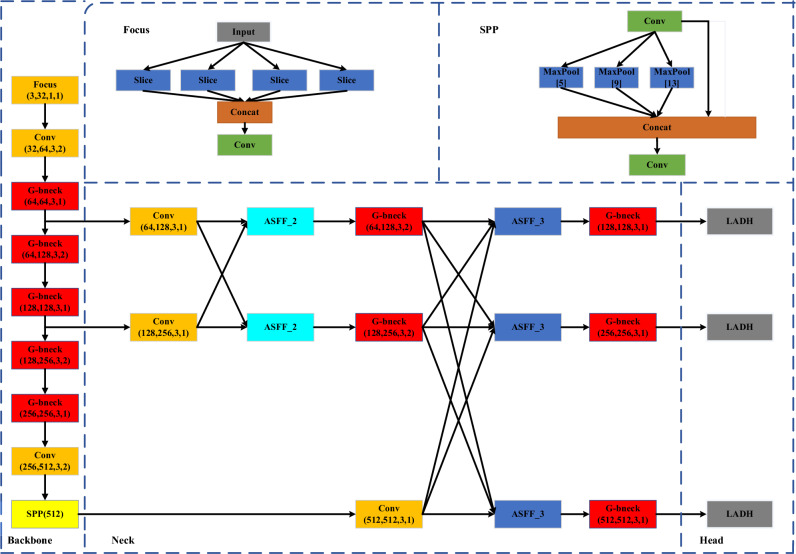
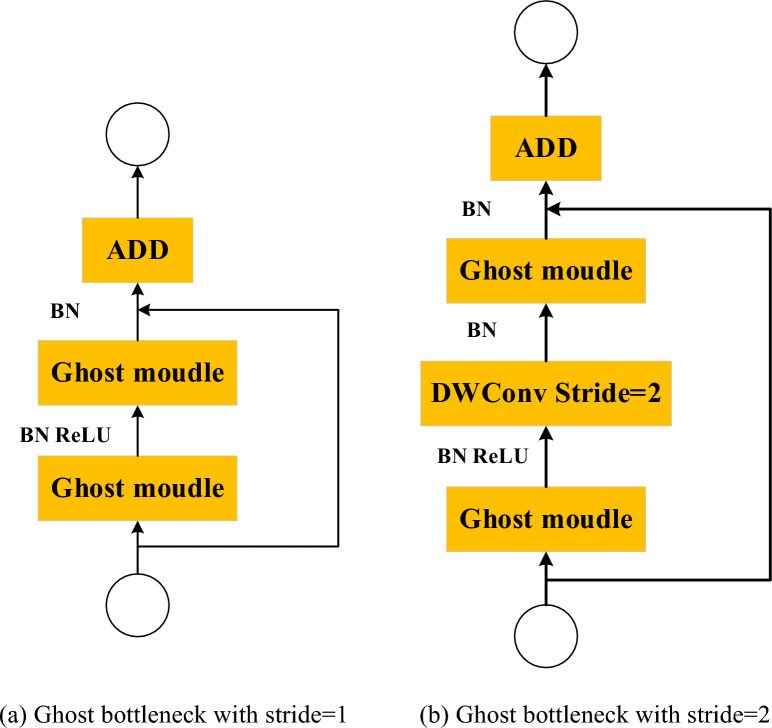
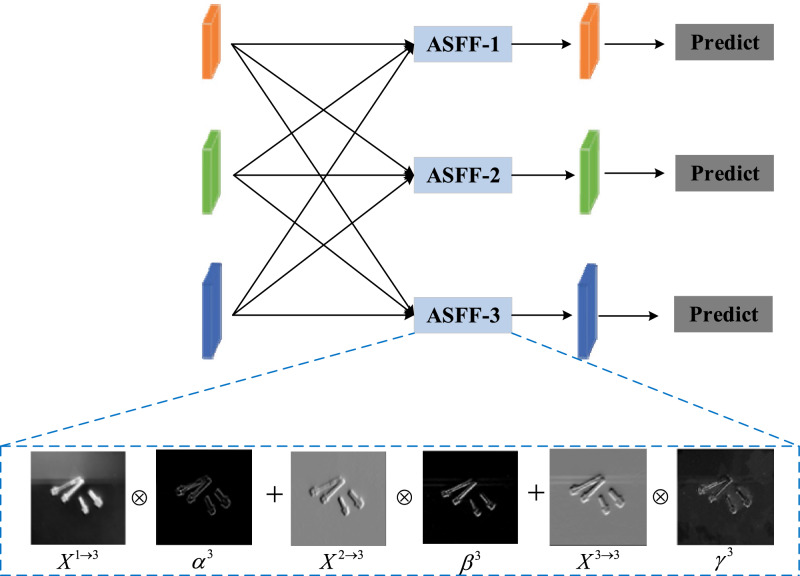
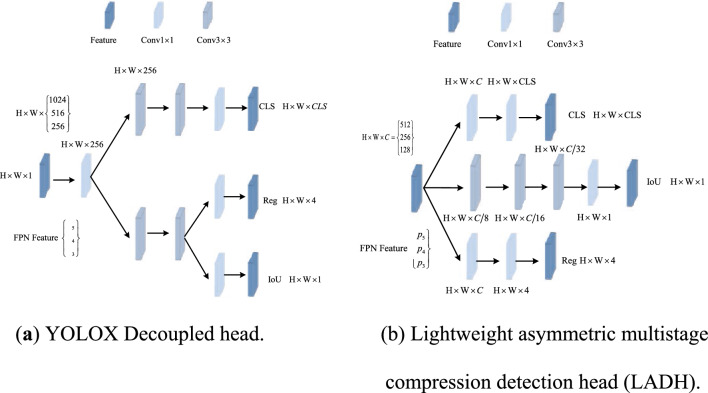
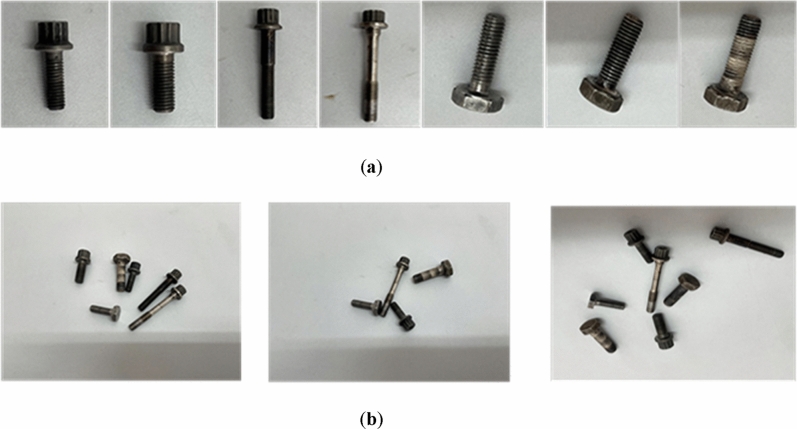
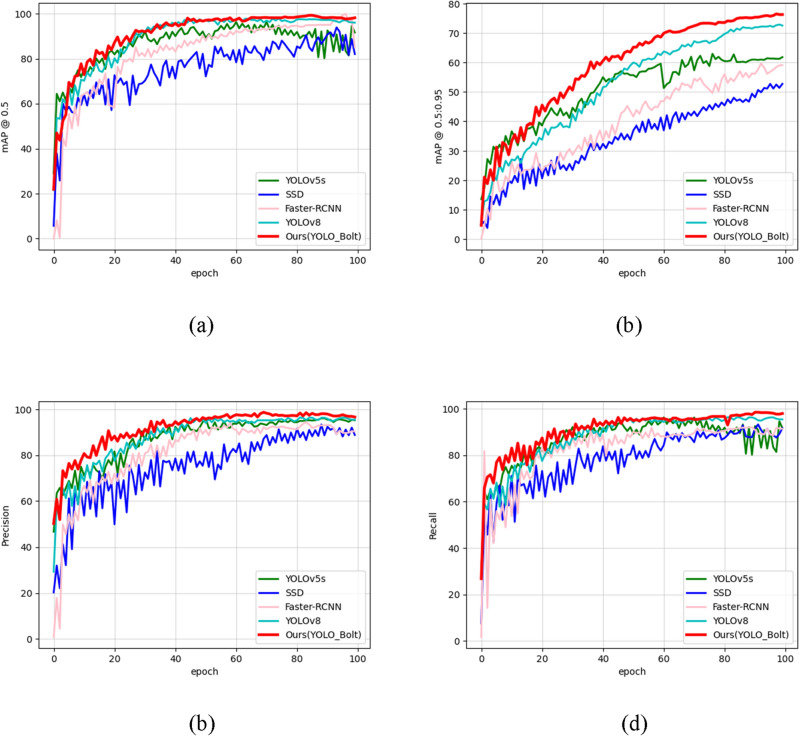
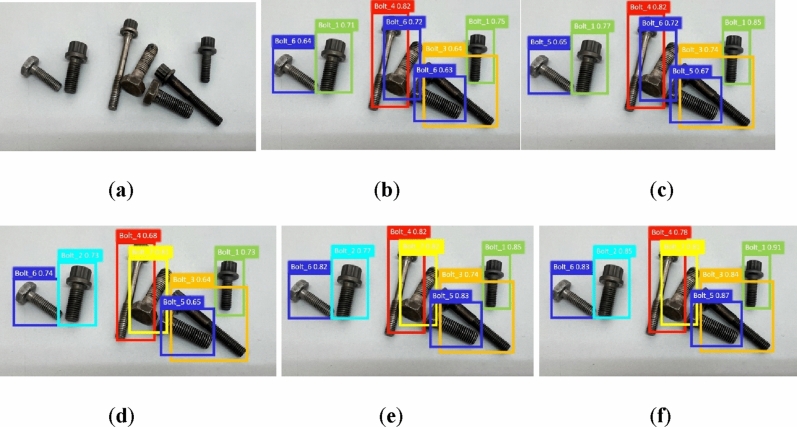
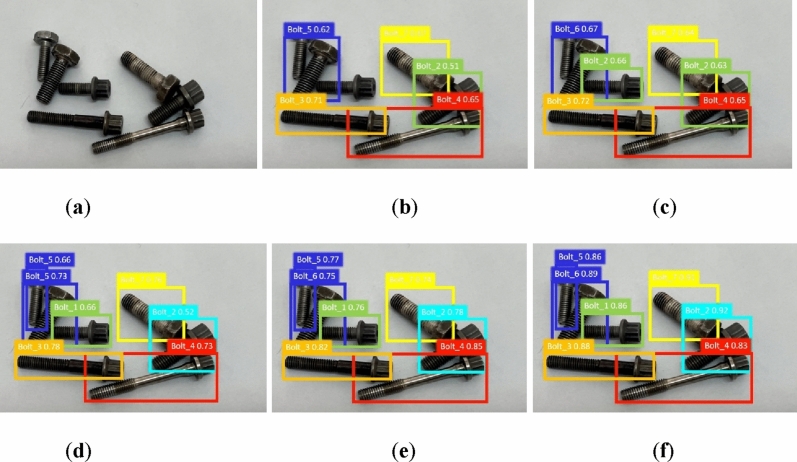
Verification
Claims the paper makes
The claims and statistics of this paper haven’t been checked yet.
Run the check — free, no account needed. It reads the open-access text and checks the sources it cites.
Claims other papers make about this one
Each is checked against this paper’s own text: does it say what the citing paper says it does?
The cited source says what the claim attributes to it.
In the citing paper
“Enhanced YOLOv5 for detecting workpieces on production lines. Improved mAP on COCO dataset by 2.4% and on custom data by 4.2% using ghost bottleneck lightweight deep convolution.”
From The YOLO Framework: A Comprehensive Review of Evolution, Applications, and Benchmarks in Object Detection (2024) · cites this paper as [123]
Self-check
Percentages, sums and reported differences re-computed from the paper’s own numbers.
The self-check needs the paper’s full text.
Citations
Cites
Faster R-CNN: Towards Real-Time Object Detection with Region Proposal Networks
Ren, S., He, K., Girshick, R., & Sun, J. (2017) · IEEE Transactions on Pattern Analysis and Machine Intelligence · doi:10.1109/tpami.2016.2577031 · Cited by 73,472
A Survey of Automated Visual Inspection
Newman, T. S., & Jain, A. K. (1995) · Computer Vision and Image Understanding · doi:10.1006/cviu.1995.1017 · Cited by 619
Research works printed but not linked: 14
- Jarvis, J. F. Research directions in industrial machine vision: A workshop summary. Computer 15, 55–61 (1982). · DOI
- Guo, C., Fan, B., Zhang, Q., Xiang, S. & Pan, C. Augfpn: Improving multiscale feature learning for object detection. In Proceedings of the IEEE/CVF Conference on Computer Vision and Pattern Recognition (ed. Guo, C.) 12595–12604 (IEEE, 2020).
- Wong, F. & Hu, H. Adaptive learning feature pyramid for object detection. IET Comput. Vis. 13, 742–748 (2019). · DOI
- Li, J., Gu, J., Huang, Z. & Wen, J. Application research of improved YOLO V3 algorithm in PCB electronic component detection. Appl. Sci. 9, 3750 (2019). · DOI
- Ju, M. et al. Improved YOLO V3 algorithm and its application in small target detection. Acta Opt. Sin. 39, 0715004 (2019). · DOI
- Liu, G., Nouaze, J. C., Mbouembe, P. L. T. & Kim, J. H. YOLO-tomato: A robust algorithm for tomato detection based on YOLOv3. Sensors 20, 2145 (2020). · DOI
- He, W., Huang, Z., Wei, Z., Li, C. & Guo, B. TF-YOLO: an improved incremental network for real-time object detection. Appl. Sci. 9, 3225 (2019). · DOI
- Xing, Z. et al. Coal resources under carbon peak: Segmentation of massive laser point clouds for coal mining in underground dusty environments using integrated graph deep learning model. Energy 285, 128771 (2023). · DOI
- Wu, Y. et al. Detection of Foreign Objects Intrusion Into Transmission Lines Using Diverse Generation Model. IEEE Trans. Power Deliv. https://doi.org/10.1109/TPWRD.2023.3279891 (2023). · DOI
- Han, K. et al. GhostNets on heterogeneous devices via cheap operations. Int. J. Comput. Vis. 130, 1050–1069 (2022). · DOI
- Yang, Guoyu, et al. AFPN: Asymptotic Feature Pyramid Network for Object Detection. Preprint at https://arXiv.org/quant-ph/2306.15988 (2023). · DOI
- Huang L, Li W, Shen L, et al. YOLOCS: Object Detection based on Dense Channel Compression for Feature Spatial Solidification. Preprint at https://arXiv.org/quant-ph/2305.04170 (2023).
- Yang, G. et al. AFPN: asymptotic feature pyramid network for object detection. Preprint at https://arXiv.org/quant-ph/2306.15988 (2023). · DOI
- Liu, S., Huang, D. & Wang, Y. Learning spatial fusion for single-shot object detection. Preprint at https://arXiv.org/quant-ph/1911.09516 (2019).
Cited by
Ali, M. L., & Zhang, Z. (2024) · Computers · doi:10.3390/computers13120336 · Cited by 383
Metadata
- Authors
- Liu, Z., & Lv, H.
- Affiliations
- Shenyang University of Technology (CN)
- Corresponding author
- Lv, Haoyuan
- ORCID
- Liu, Zhenyu
- Venue
- Scientific Reports
- Published
- 2024-01-05
- Volume
- 14
- Issue
- 1
- Pages
- 656-656
- ISSN
- 2045-2322 (ISSN-L)
- PMC
- PMC10770306
- OpenAlex
- W4390618392
- Cited by
- 25
- References
- 2
- Citations by year
- 2026: 10 · 2025: 8 · 2024: 7
- FWCI
- 3.50
- Type
- journal article
- Language
- en
- Open access
- gold
- doi.org
- Locations
- Scientific Reports (publishedVersion, cc-by)
- PubMed Central (publishedVersion, cc-by)
- PubMed (publishedVersion)
- DOAJ (DOAJ: Directory of Open Access Journals) (submittedVersion, cc-by-sa)
- Topics
- Physical Sciences › Computer Science › Computer Vision and Pattern Recognition › Advanced Neural Network Applications
- Physical Sciences › Engineering › Industrial and Manufacturing Engineering › Industrial Vision Systems and Defect Detection
- Physical Sciences › Computer Science › Artificial Intelligence › Domain Adaptation and Few-Shot Learning
- Keywords
- lightweight object detection, YOLOv5, Ghost Bottleneck, feature pyramid network, decoupled head, industrial vision, model compression, real-time detection
About these checks
Registry, retraction, Cites and statistics results are computed, not judged, with one exception: a printed reference that no index lists is read once by a model before it counts as a citation error. Claims are extracted by a model and kept only when their quote appears verbatim in the text; each cited source is then checked, with a model’s help, for whether it says what the claim relies on. Those verdicts can be wrong — read the claim’s quote and the cited source before relying on one.
Statistics and arithmetic are recomputed, not judged.
Confidence bands are shown only for fields calibrated on our annotated test set. None is calibrated yet, so no band is shown.
What counts as a claim ›How we measure confidence ›How we check this ›
Are you an author, or do you see a problem with this page? Request a review
