

The DOI matches its Crossref record; the references it cites are not checked yet.
Evaluation of calcium carbide residue and fly ash as sustainable binders for environmentally friendly loess soil stabilization
Open accessAbstract
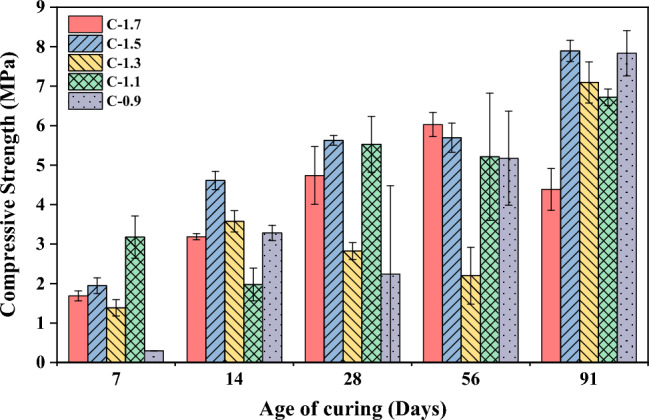
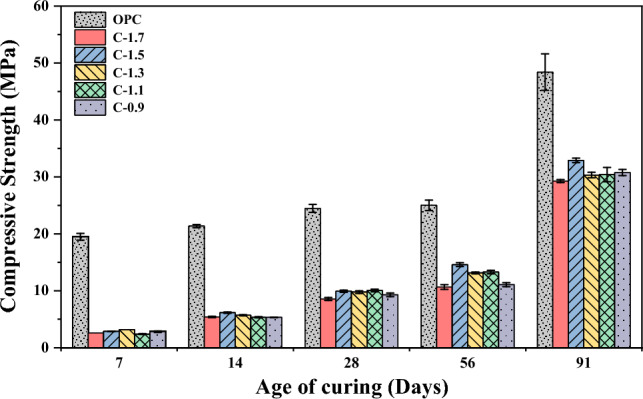
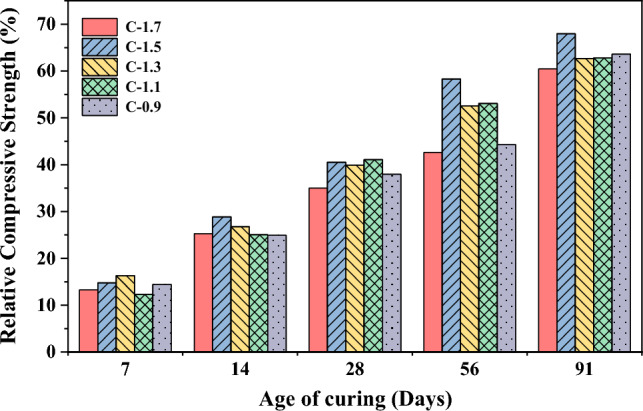
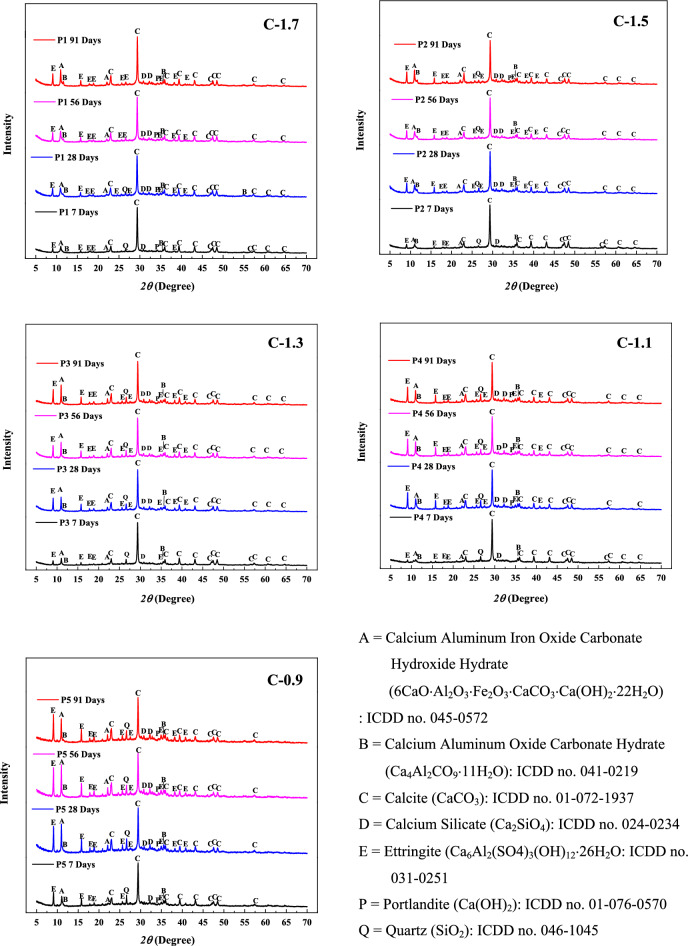
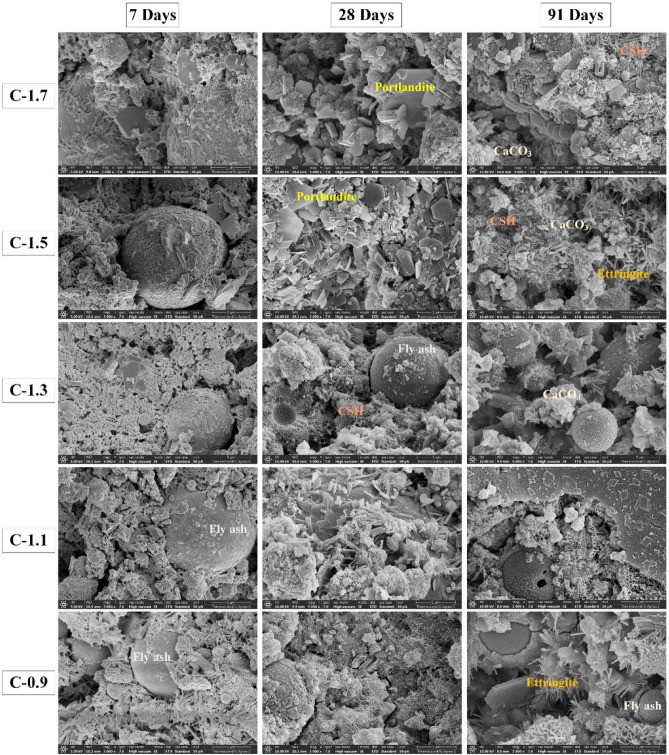
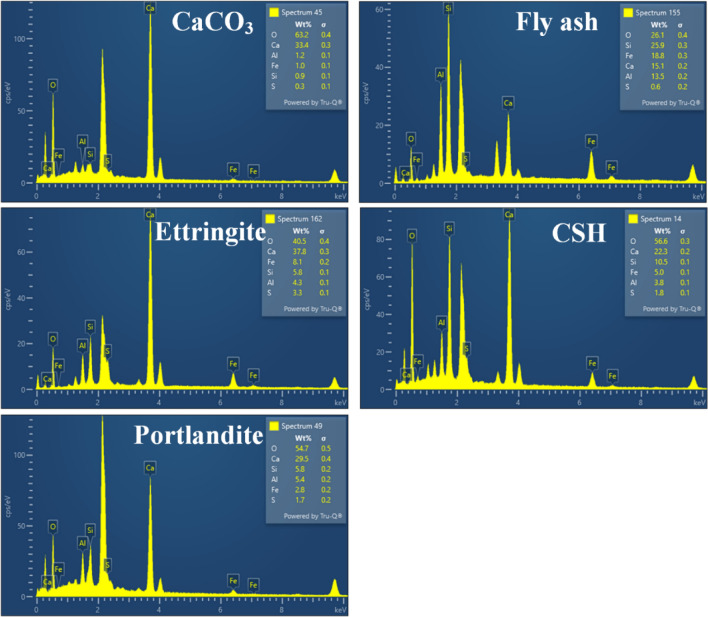
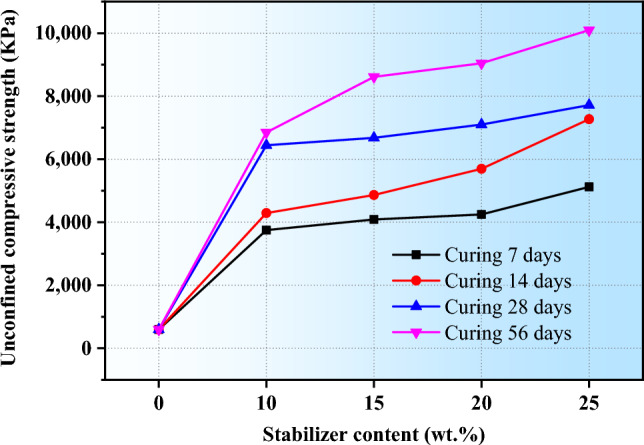
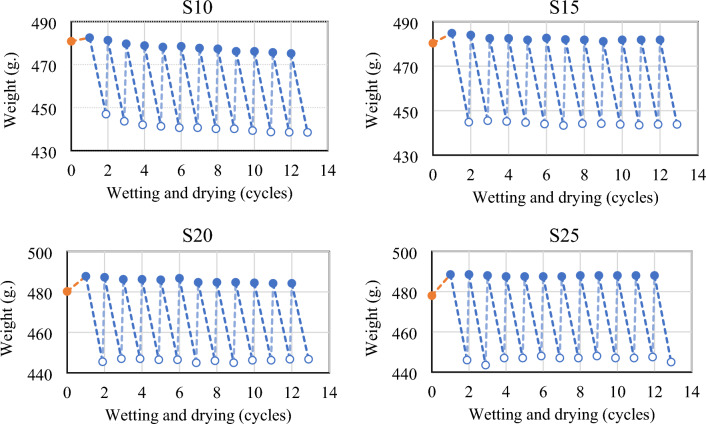
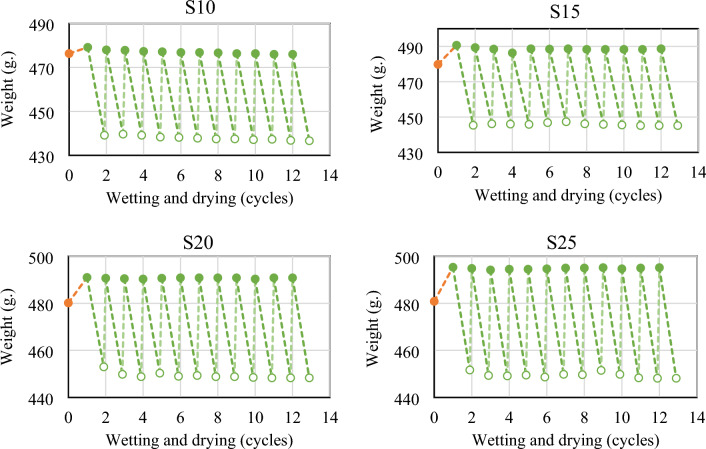
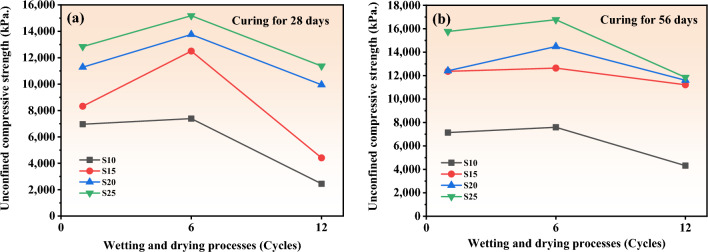
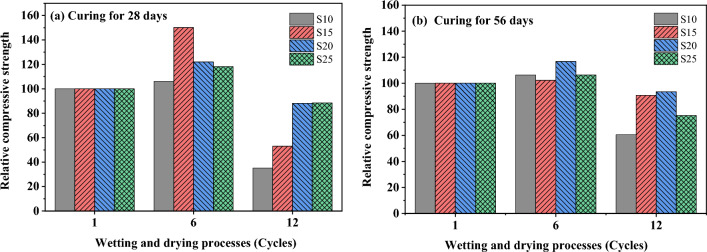
The incorporation of waste materials into cementitious binders serves as a strategy to diminish waste volume and lower carbon emissions. This study presents an in-depth evaluation of calcium carbide residue and coal fly ash as alternative binders. The assessment of raw materials emphasized their chemical composition and potential for pozzolanic reactions. Based on these factors, the optimal ratio of Ca/(SiO 2 + Al 2 O 3 ) in the raw materials was determined to be 1.5. Therefore, this study was designed to vary the raw material composition with a CaO/(SiO 2 + Al 2 O 3 ) ratio ranging from 1.7 to 0.9. Upon investigating the effect of the raw material proportion on the compressive strength of pastes and mortars, the composition yielding the highest compressive strength was selected for its potential application as a stabilizer for loess soil. A mixture of calcium carbide residue and coal fly ash with a Ca/(SiO 2 + Al 2 O 3 ) ratio of 1.5 resulted in the highest compressive strength at long curing periods in both pastes and mortars. Mineralogical and microstructural analyses revealed several products, beyond those formed from the pozzolanic reactions, that occurred and enhanced the compressive strength of samples. The highest performing mixture of carbide residue and coal fly ash was then used to stabilize loess soil at 10–25 wt%. The unconfined compressive strength, along with mass and strength loss due to wetting and drying cycles, was also studied. It was observed that the unconfined compressive strength of the stabilized soils remained consistent after six wet-dry cycles but decreased after twelve cycles due to microcracks. The findings suggest that carefully designed mixtures based on the chemical interactions of calcium carbide residue and coal fly ash can offer a sustainable, efficient approach for soil stabilization, potentially revolutionizing construction practices.
Overview
The claims and statistics of this paper haven’t been checked yet.
Run the check — free, no account needed. It reads the open-access text and checks the sources it cites.
Integrity signals
Registry
Cites
Statistics
Figures
Verification
Claims the paper makes
The claims and statistics of this paper haven’t been checked yet.
Run the check — free, no account needed. It reads the open-access text and checks the sources it cites.
Self-check
Percentages, sums and reported differences re-computed from the paper’s own numbers.
The self-check needs the paper’s full text.
Citations
The citation lists are queued
They are fetched later and appear here then.
References 44 · Cited by 85
Research works printed but not linked: 44
- Dulaimi, A., Shanbara, H. K. & Al-Rifaie, A. The mechanical evaluation of cold asphalt emulsion mixtures using a new cementitious material comprising ground-granulated blast-furnace slag and a calcium carbide residue. Constr. Build. Mater. 250, 118808. https://doi.org/10.1016/j.conbuildmat.2020.118808 (2020). · DOI
- Hanjitsuwan, S., Phoo-ngernkham, T., Li, L.-Y., Damrongwiriyanupap, N. & Chindaprasirt, P. Strength development and durability of alkali-activated fly ash mortar with calcium carbide residue as additive. Constr. Build. Mater. 162, 714–723. https://doi.org/10.1016/j.conbuildmat.2017.12.034 (2018). · DOI
- Guo, W., Zhang, Z., Zhao, Q., Song, R. & Liu, J. Mechanical properties and microstructure of binding material using slag-fly ash synergistically activated by wet-basis soda residue-carbide slag. Constr. Build. Mater. 269, 121301. https://doi.org/10.1016/j.conbuildmat.2020.121301 (2021). · DOI
- Yang, J. et al. Low-carbon wet-ground fly ash geopolymer activated by single calcium carbide slag. Constr. Build. Mater. 353, 129084. https://doi.org/10.1016/j.conbuildmat.2022.129084 (2022). · DOI
- Horpibulsuk, S., Munsrakest, V., Udomchai, A., Chinkulkijniwat, A. & Arulrajah, A. Strength of sustainable non-bearing masonry units manufactured from calcium carbide residue and fly ash. Constr. Build. Mater. 71, 210–215. https://doi.org/10.1016/j.conbuildmat.2014.08.033 (2014). · DOI
- Namarak, C., Satching, P., Tangchirapat, W. & Jaturapitakkul, C. Improving the compressive strength of mortar from a binder of fly ash-calcium carbide residue. Constr. Build. Mater. 147, 713–719. https://doi.org/10.1016/j.conbuildmat.2017.04.167 (2017). · DOI
- Amnadnua, K., Tangchirapat, W. & Jaturapitakkul, C. Strength, water permeability, and heat evolution of high strength concrete made from the mixture of calcium carbide residue and fly ash. Mater. Design 51, 894–901. https://doi.org/10.1016/j.matdes.2013.04.099 (2013). · DOI
- Duan, D. et al. Solid waste-based dry-mix mortar using fly ash, carbide slag, and flue gas desulfurization gypsum. J. Mater. Res. Technol. 21, 3636–3649. https://doi.org/10.1016/j.jmrt.2022.10.157 (2022). · DOI
- Yan, S., Pan, D., Dan, J., Wang, J. & Yu, Y. Calcium carbide residue and Glauber’s salt as composite activators for fly ash-based geopolymer. Cem. Concr. Compos. 140, 105081. https://doi.org/10.1016/j.cemconcomp.2023.105081 (2023). · DOI
- Yang, J. et al. Heat-cured cement-based composites with wet-grinded fly ash and carbide slag slurry: Hydration, compressive strength and carbonation. Constr. Build. Mater. 307, 124916. https://doi.org/10.1016/j.conbuildmat.2021.124916 (2021). · DOI
- Makaratat, N., Jaturapitakkul, C., Namarak, C. & Sata, V. Effects of binder and CaCl2 contents on the strength of calcium carbide residue-fly ash concrete. Cem. Concr. Compos. 33, 436–443. https://doi.org/10.1016/j.cemconcomp.2010.12.004 (2011). · DOI
- Yu, X. & Zhang, Z. Calcium carbide sludge activated fly ash mixture for offshore construction and its crack repair using seawater-mixed bioslurry cement. J. Clean. Prod. 395, 136456. https://doi.org/10.1016/j.jclepro.2023.136456 (2023). · DOI
- Khongpermgoson, P., Abdulmatin, A., Tangchirapat, W. & Jaturapitakkul, C. Evaluation of compressive strength and resistance of chloride ingress of concrete using a novel binder from ground coal bottom ash and ground calcium carbide residue. Constr. Build. Mater. 214, 631–640. https://doi.org/10.1016/j.conbuildmat.2019.04.145 (2019). · DOI
- Rattanashotinunt, C., Thairit, P., Tangchirapat, W. & Jaturapitakkul, C. Use of calcium carbide residue and bagasse ash mixtures as a new cementitious material in concrete. Mater. Design 1980–2015(46), 106–111. https://doi.org/10.1016/j.matdes.2012.10.028 (2013). · DOI
- Horpibulsuk, S., Phetchuay, C., Chinkulkijniwat, A. & Cholaphatsorn, A. Strength development in silty clay stabilized with calcium carbide residue and fly ash. Soils Found. 53, 477–486. https://doi.org/10.1016/j.sandf.2013.06.001 (2013). · DOI
- Jiang, T., Zhao, J.-D. & Zhang, J.-R. Splitting tensile strength and microstructure of xanthan gum-treated loess. Sci. Rep. 12, 9921. https://doi.org/10.1038/s41598-022-14058-4 (2022). · DOI
- Mozejko, C. A. & Francisca, F. M. Enhanced mechanical behavior of compacted clayey silts stabilized by reusing steel slag. Constr. Build. Mater. 239, 117901. https://doi.org/10.1016/j.conbuildmat.2019.117901 (2020). · DOI
- Fatima, B. et al. Sustainable incorporation of Plaster of Paris kiln dust for stabilization of dispersive soil: A potential solution for construction industry. Constr. Build. Mater. 397, 132459. https://doi.org/10.1016/j.conbuildmat.2023.132459 (2023). · DOI
- Konovalova, N. et al. Road soil concrete based on stone grinder waste and wood waste modified with environmentally safe stabilizing additive. Case Stud. Constr. Mater. 19, e02318. https://doi.org/10.1016/j.cscm.2023.e02318 (2023). · DOI
- Jalal, F. E. et al. Isolated effect and sensitivity of agricultural and industrial waste Ca-based stabilizer materials (CSMs) in evaluating swell shrink nature of palygorskite-rich clays. Adv. Civ. Eng. 2021, 7752007. https://doi.org/10.1155/2021/7752007 (2021). · DOI
- Duan, Z. et al. Study on the structure and strength characteristics of loess under the action of sodium sulfate. Environ. Sci. Pollut. Res. https://doi.org/10.1007/s11356-023-31038-x (2023). · DOI
- Yuan, K., Ni, W., Zhao, L. & Wang, H. Silica fume stabilized loess: Mechanical properties, microstructural evolution and environmental analysis. Sustain. Mater. Technol. 36, e00604. https://doi.org/10.1016/j.susmat.2023.e00604 (2023). · DOI
- Reiterman, P., Mondschein, P., Doušová, B., Davidová, V. & Keppert, M. Utilization of concrete slurry waste for soil stabilization. Case Stud. Constr. Mater. 16, e00900. https://doi.org/10.1016/j.cscm.2022.e00900 (2022). · DOI
- Pei, X., Zhang, F., Wu, W. & Liang, S. Physicochemical and index properties of loess stabilized with lime and fly ash piles. Appl. Clay Sci. 114, 77–84. https://doi.org/10.1016/j.clay.2015.05.007 (2015). · DOI
- Gu, K. & Chen, B. Loess stabilization using cement, waste phosphogypsum, fly ash and quicklime for self-compacting rammed earth construction. Constr. Build. Mater. 231, 117195. https://doi.org/10.1016/j.conbuildmat.2019.117195 (2020). · DOI
- Cardoso, F. A., Fernandes, H. C., Pileggi, R. G., Cincotto, M. A. & John, V. M. Carbide lime and industrial hydrated lime characterization. Powder Technol. 195, 143–149. https://doi.org/10.1016/j.powtec.2009.05.017 (2009). · DOI
- Li, Y., Li, J., Cui, J., Shan, Y. & Niu, Y. Experimental study on calcium carbide residue as a combined activator for coal gangue geopolymer and feasibility for soil stabilization. Constr. Build. Mater. 312, 125465. https://doi.org/10.1016/j.conbuildmat.2021.125465 (2021). · DOI
- Horkoss, S., Escadeillas, G., Rizk, T. & Lteif, R. The effect of the source of cement SO3 on the expansion of mortars. Case Stud. Constr. Mater. 4, 62–72. https://doi.org/10.1016/j.cscm.2015.12.004 (2016). · DOI
- Berenguer, R. et al. Cement-based materials: Pozzolanic activities of mineral additions are compromised by the presence of reactive oxides. J. Build. Eng. 41, 102358. https://doi.org/10.1016/j.jobe.2021.102358 (2021). · DOI
- Golewski, G. L. The role of pozzolanic activity of siliceous fly ash in the formation of the structure of sustainable cementitious composites. Sustain. Chem. 3, 520–534 (2022). · DOI
- Tchamo Leussa, C. C., Libessart, L., Djelal, C., Njiomou Djangang, C. & Elimbi, A. Pozzolanic activity of kaolins containing aluminum hydroxide. Sci. Rep. 10, 13230. https://doi.org/10.1038/s41598-020-70146-3 (2020). · DOI
- Zhang, D., Zhao, J., Wang, D., Wang, Y. & Ma, X. Influence of pozzolanic materials on the properties of natural hydraulic lime based mortars. Constr. Build. Mater. 244, 118360. https://doi.org/10.1016/j.conbuildmat.2020.118360 (2020). · DOI
- Guerrero, A., Hernández, M. S. & Goñi, S. The role of the fly ash pozzolanic activity in simulated sulphate radioactive liquid waste. Waste Manage. 20, 51–58. https://doi.org/10.1016/S0956-053X(99)00300-1 (2000). · DOI
- Ma, B., Li, H., Li, X., Mei, J. & Lv, Y. Influence of nano-TiO2 on physical and hydration characteristics of fly ash–cement systems. Constr. Build. Mater. 122, 242–253. https://doi.org/10.1016/j.conbuildmat.2016.02.087 (2016). · DOI
- Cao, Y., Wang, Y., Zhang, Z., Ma, Y. & Wang, H. Turning sandstone clay into supplementary cementitious material: Activation and pozzolanic reactivity evaluation. Compos. Part B: Eng. 223, 109137. https://doi.org/10.1016/j.compositesb.2021.109137 (2021). · DOI
- Hollanders, S., Adriaens, R., Skibsted, J., Cizer, Ö. & Elsen, J. Pozzolanic reactivity of pure calcined clays. Appl. Clay Sci. 132–133, 552–560. https://doi.org/10.1016/j.clay.2016.08.003 (2016). · DOI
- Fernandez, R., Martirena, F. & Scrivener, K. L. The origin of the pozzolanic activity of calcined clay minerals: A comparison between kaolinite, illite and montmorillonite. Cem. Concr. Res. 41, 113–122. https://doi.org/10.1016/j.cemconres.2010.09.013 (2011). · DOI
- Uzal, B., Turanli, L., Yücel, H., Goncuoglu, M. & Çulfaz, A. Pozzolanic activity of clinoptilolite: A comparative study with silica fume, fly ash and a non-zeolitic natural pozzolan. Cem. Concr. Res. 40, 398–404. https://doi.org/10.1016/j.cemconres.2009.10.016 (2010). · DOI
- Zhu, Z., Wang, Z., Zhou, Y., Chen, Y. & Wu, K. Identification of chemical bonds and microstructure of hydrated tricalcium silicate (C3S) by a coupled micro-Raman/BSE-EDS evaluation. Materials 14, 5144 (2021). · DOI
- Hoy, M. et al. Wetting-drying durability performance of cement-stabilized recycled materials and lateritic soil using natural rubber latex. Constr Build Mater. 403, 133108. https://doi.org/10.1016/j.conbuildmat.2023.133108 (2023). · DOI
- Xu, X.-T. et al. Effect of wet-dry cycles on shear strength of residual soil. Soils Found 61, 782–797. https://doi.org/10.1016/j.sandf.2021.03.001 (2021). · DOI
- Wang, X. et al. Influence of dry-wet cycles on the structure and shear strength of loess. Sustainability 15, 9280 (2023). · DOI
- Ye, H., Chu, C., Xu, L., Guo, K. & Li, D. Experimental studies on drying-wetting cycle characteristics of expansive soils improved by industrial wastes. Adv. Civ. Eng. 2018, 2321361. https://doi.org/10.1155/2018/2321361 (2018). · DOI
- Nie, Y. et al. The influence of drying-wetting cycles on the suction stress of compacted loess and the associated microscopic mechanism. Water 13, 1809 (2021). · DOI
Metadata
- Authors
- Julphunthong, P., Joyklad, P., Manprom, P., Chompoorat, T., Palou, M.-T., & Suriwong, T.
- Affiliations
- Naresuan University (TH)
- Srinakharinwirot University (TH)
- University of Phayao (TH)
- Slovak Academy of Sciences (SK)
- Corresponding author
- Suriwong, Tawat
- ORCID
- Venue
- Scientific Reports
- Published
- 2024-01-05
- Volume
- 14
- Issue
- 1
- Pages
- 671-671
- ISSN
- 2045-2322 (ISSN-L)
- PMC
- PMC10770180
- OpenAlex
- W4390618382
- Cited by
- 85
- References
- 44
- Citations by year
- 2026: 30 · 2025: 41 · 2024: 14
- FWCI
- 13.36
- Type
- journal article
- Language
- en
- Open access
- gold
- doi.org
- Locations
- Scientific Reports (publishedVersion, cc-by)
- PubMed Central (publishedVersion, cc-by)
- PubMed (publishedVersion)
- DOAJ (DOAJ: Directory of Open Access Journals) (submittedVersion, cc-by-sa)
- Greater South Information System
- Funders
- Naresuan University through Global Frontier Research program (R2567C001)
- Srinakharinwirot University research grant (599/2564)
- Naresuan University (NU) and National Science, Research and Innovation Fund (R2567B001)
- Topics
- Physical Sciences › Engineering › Civil and Structural Engineering › Geotechnical Engineering and Soil Stabilization
- Physical Sciences › Engineering › Civil and Structural Engineering › Concrete and Cement Materials Research
- Physical Sciences › Engineering › Building and Construction › Recycling and utilization of industrial and municipal waste in materials production
- Keywords
- calcium carbide residue, coal fly ash, pozzolanic reaction, waste binders, compressive strength, wetting-drying cycles, microcracking, sustainable construction materials, cementitious binders
About these checks
Registry, retraction, Cites and statistics results are computed, not judged, with one exception: a printed reference that no index lists is read once by a model before it counts as a citation error. Claims are extracted by a model and kept only when their quote appears verbatim in the text; each cited source is then checked, with a model’s help, for whether it says what the claim relies on. Those verdicts can be wrong — read the claim’s quote and the cited source before relying on one.
Statistics and arithmetic are recomputed, not judged.
Confidence bands are shown only for fields calibrated on our annotated test set. None is calibrated yet, so no band is shown.
What counts as a claim ›How we measure confidence ›How we check this ›
Are you an author, or do you see a problem with this page? Request a review
How to cite
Cite CoChat for the checks on this page, and the paper for its own findings.
- This page
- CoChat. (2026). Citation check: Evaluation of calcium carbide residue and fly ash as sustainable binders for environmentally friendly loess soil stabilization. https://app.cochat.ai/papers/10.1038/s41598-024-51326-x
- The paper
- Julphunthong, P., Joyklad, P., Manprom, P., Chompoorat, T., Palou, M.-T., & Suriwong, T. (2024). Evaluation of calcium carbide residue and fly ash as sustainable binders for environmentally friendly loess soil stabilization. Scientific Reports. https://doi.org/10.1038/s41598-024-51326-x
