

The DOI matches its Crossref record.
Application of the performance of machine learning techniques as support in the prediction of school dropout
Open accessAbstract
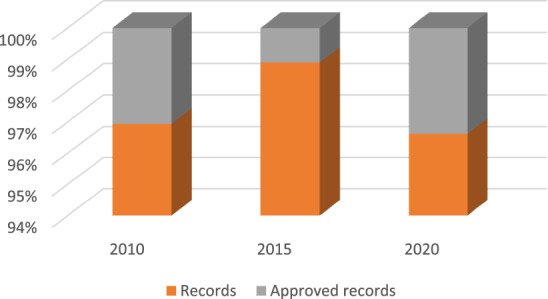
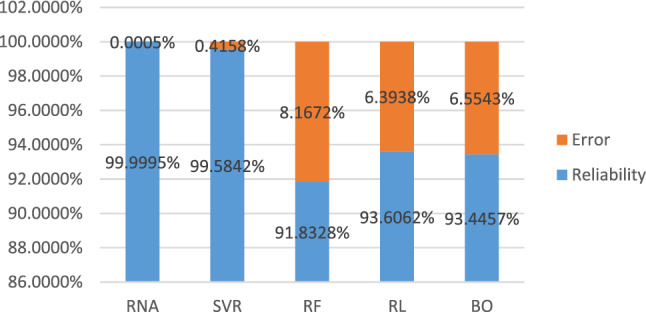
This article presents a study, intending to design a model with 90% reliability, which helps in the prediction of school dropouts in higher and secondary education institutions, implementing machine learning techniques. The collection of information was carried out with open data from the 2015 Intercensal Survey and the 2010 and 2020 Population and Housing censuses carried out by the National Institute of Statistics and Geography, which contain information about the inhabitants and homes. in the 32 federal entities of Mexico. The data were homologated and twenty variables were selected, based on the correlation. After cleaning the data, there was a sample of 1,080,782 records in total. Supervised learning was used to create the model, automating data processing with training and testing, applying the following techniques, Artificial Neural Networks, Support Vector Machines, Linear Ridge and Lasso Regression, Bayesian Optimization, Random Forest, the first two with a reliability greater than 99% and the last with 91%.
Overview
The claims and statistics of this paper haven’t been checked yet.
Run the check — free, no account needed. It reads the open-access text and checks the sources it cites.
Integrity signals
Registry
Cites
Statistics
Figures
Verification
Claims the paper makes
The claims and statistics of this paper haven’t been checked yet.
Run the check — free, no account needed. It reads the open-access text and checks the sources it cites.
Claims other papers make about this one
Each is checked against this paper’s own text: does it say what the citing paper says it does?
The cited source says what the claim attributes to it.
In the citing paper
“Jiménez-Gutiérrez et al. (2024) presentan un modelo de machine learning con más del 90% de fiabilidad en la predicción de abandono escolar en nivel medio, integrando variables académicas y socioeconómicas para orientar estrategias preventivas [14].”
From Avances, Retos Éticos y Perspectivas de la Inteligencia Artificial (IA) en la Educación de América Latina (2025) · cites this paper as [14]
Self-check
Percentages, sums and reported differences re-computed from the paper’s own numbers.
The self-check needs the paper’s full text.
Citations
Cites
No references could be resolved yet.
Research works printed but not linked: 14
- Himmel, E. Modelo de Análisis de la Deserción estudiantil en la Educación Superior. Calidad en la Educación 17, 91–108 (2002). · DOI
- Torres, C. & Ramos, C. M. J. Estudio de variables que influyen en la deserción de estudiantes universitarios de primer año, mediante Minería de datos. Ciencia Amazónica (Iquitos) 6(1), 73–84. https://doi.org/10.22386/ca.v6i1.110 (2016). · DOI
- OCDE. Panorama de la Educación 2017. Indicadores de la OCDE, Fundación Santillana. https://doi.org/10.1787/eag-2017-es. (2018). · DOI
- Román, M. Factores asociados al abandono y la deserción escolar en América Latina: una mirada en conjunto. REICE. Revista Iberoamericana sobre Calidad, Eficacia y Cambio en Educación 11(2), 33–59 (2013).
- Rodríguez, N., Jiménez, A., Reyes, L., Suarez, B. y Ruiz, J. Data mining: a scholar dropout predictive model. IEEE Mexican Humanitarian Technology Conference (MHTC), 89–93. https://doi.org/10.1109/MHTC.2017.8006421 (2017). · DOI
- Cuji, B., Gavilanes, W. & Sánchez, R. Modelo predictivo de deserción estudiantil basado en arboles de decisión. Espacios 38(55), 17 (2017).
- López, Q., Albino, F., Salas, L. & Moreno, L. Ensamble de clasificadores para determinar el perfil académico del estudiante usando árboles de decisión y Redes Neuronales. Res. Comput. Sci. 147, 255–267 (2018). · DOI
- Martínez, J. & Mateus, S. Propuesta de un Modelo Predictivo utilizando Aprendizaje Profundo para el análisis de deserción estudiantil en Universidades Colombianas Virtuales. Revista Innovación Digital y Desarrollo Sostenible-IDS 1(1), 51–57 (2020). · DOI
- Miranda García, B., González Bárcenas, V., Reyes Nava, A., Alejo Eleuterio, R. & Rendón Lara, E. Procesamiento de bases de datos escolares por medio de redes neuronales artificiales. CIENCIA Ergo-Sum 27(3), 1. https://doi.org/10.30878/ces.v27n3a11 (2020). · DOI
- Barrón-Estrada, M., Zatarain-Cabada, R., Ramírez-Ávila, S., Oramas-Bustillos, R. & Graff-Guerrero, M. Uso de analizador de emociones en sistemas educativos inteligentes. Res. Comput. Sci. 147(6), 179–188 (2018). · DOI
- Felgaer, P. Optimización de redes bayesianas basado en técnicas de aprendizaje por inducción. Reportes Técnicos en Ingeniería del Software 6(2), 64–69 (2004).
- Khalilian, M., Mustapha, N., Sulaiman, M. & Mamat, A. Intrusion detection system with data mining approach: A review. Glob. J. Comput. Sci. Technol. 11(5), 1 (2011).
- Márquez-Vera, C., Cano, A., Romero, C. & Ventura, S. Predicting student failure at school using genetic programming and different data mining approaches with high dimensional and imbalanced data. Appl. Intell. Spring. Appl. Intell. 38(3), 315–330. https://doi.org/10.1007/S10489-012-0374-8 (2013). · DOI
- Romero Morales, C.; Márquez Vera, C., Ventura Soto, S. Predicción del Fracaso Escolar Mediante Técnicas de Minería de Datos. Iee-Rita, 7(3), 109–117. (2012).
Cited by
Sorted by citations
Cabrera-Fuentes, A., Martínez Pérez, D. Z., & Rementeria Fuentes, J. J. (2025) · Ciencia Latina Revista Científica Multidisciplinar · doi:10.37811/cl_rcm.v9i4.18603 · Cited by 4
Metadata
- Authors
- Jiménez-Gutiérrez, A. L., Mota-Hernández, C. I., Mezura-Montes, E., & Alvarado-Corona, R.
- Affiliations
- Universidad de Guadalajara (MX)
- Universidad del Valle de México (MX)
- Corresponding author
- Jiménez-Gutiérrez, Auria Lucia
- Venue
- Scientific Reports
- Published
- 2024-02-17
- Volume
- 14
- Issue
- 1
- Pages
- 3957-3957
- ISSN
- 2045-2322 (ISSN-L)
- PMC
- PMC10874415
- OpenAlex
- W4391913445
- Cited by
- 14
- References
- 0
- Citations by year
- 2026: 5 · 2025: 5 · 2024: 4
- FWCI
- 5.27
- Type
- journal article
- Language
- en
- Open access
- gold
- doi.org
- Locations
- Scientific Reports (publishedVersion, cc-by)
- PubMed Central (publishedVersion, cc-by)
- PubMed (publishedVersion)
- DOAJ (DOAJ: Directory of Open Access Journals) (submittedVersion, cc-by-sa)
- Funders
- Universidad de Guadalajara
- Topics
- Physical Sciences › Computer Science › Computer Science Applications › Online Learning and Analytics
- Social Sciences › Education › Educational Outcomes and Influences
- Physical Sciences › Computer Science › Information Systems › Data Mining and Machine Learning Applications
- Keywords
- student dropout prediction, student retention, higher education, secondary education, census data, supervised learning, artificial neural networks, support vector machine, random forest, ridge regression, LASSO, Bayesian optimization, Mexico
- MeSH terms
- Machine Learning, Bayes Theorem, Humans, Student Dropouts, Reproducibility of Results, Neural Networks, Computer, Support Vector Machine
About these checks
Registry, retraction, Cites and statistics results are computed, not judged, with one exception: a printed reference that no index lists is read once by a model before it counts as a citation error. Claims are extracted by a model and kept only when their quote appears verbatim in the text; each cited source is then checked, with a model’s help, for whether it says what the claim relies on. Those verdicts can be wrong — read the claim’s quote and the cited source before relying on one.
Statistics and arithmetic are recomputed, not judged.
Confidence bands are shown only for fields calibrated on our annotated test set. None is calibrated yet, so no band is shown.
What counts as a claim ›How we measure confidence ›How we check this ›
Are you an author, or do you see a problem with this page? Request a review
How to cite
Cite CoChat for the checks on this page, and the paper for its own findings.
- This page
- CoChat. (2026). Citation check: Application of the performance of machine learning techniques as support in the prediction of school dropout. https://app.cochat.ai/papers/10.1038/s41598-024-53576-1
- The paper
- Jiménez-Gutiérrez, A. L., Mota-Hernández, C. I., Mezura-Montes, E., & Alvarado-Corona, R. (2024). Application of the performance of machine learning techniques as support in the prediction of school dropout. Scientific Reports. https://doi.org/10.1038/s41598-024-53576-1
