

The DOI matches its Crossref record; 2 of the 2 references it cites were found in a registry or an index.
A modified generative adversarial networks with Yolov5 for automated forest health diagnosis from aerial imagery and Tabu search algorithm
Open accessAbstract
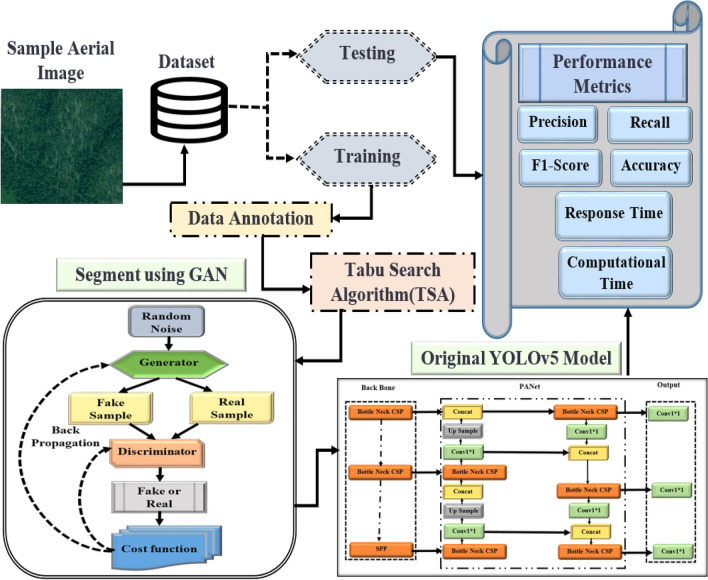
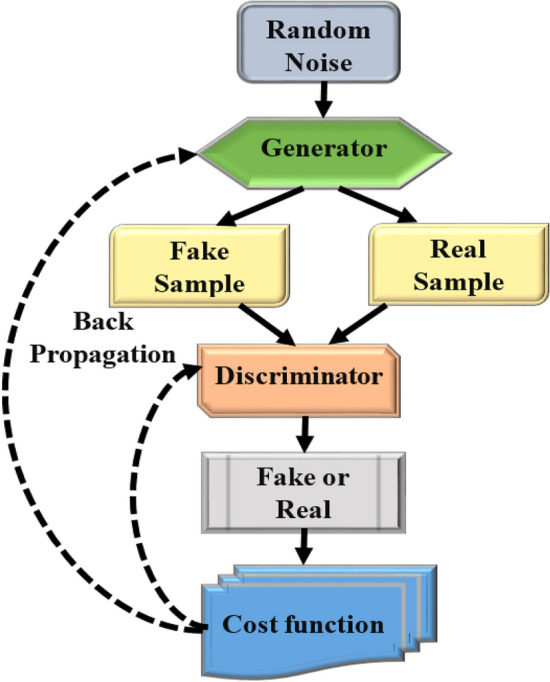
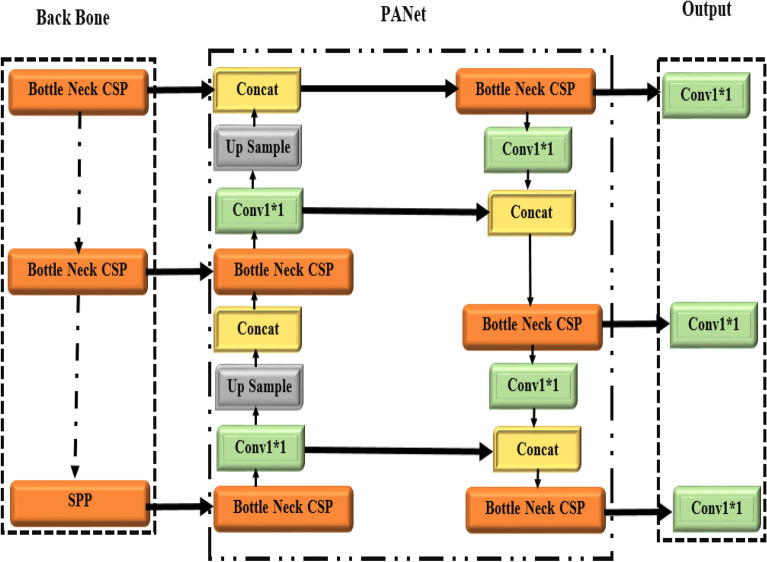
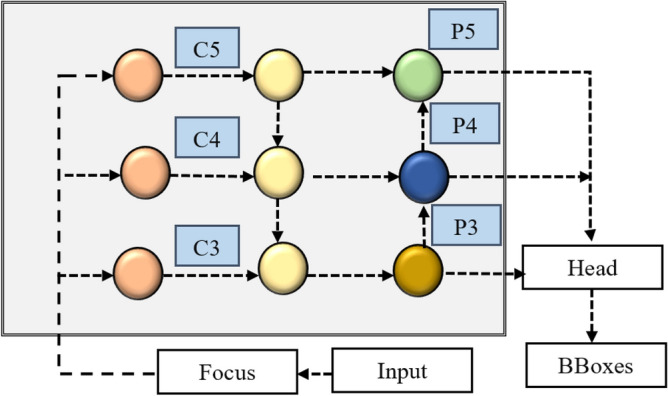
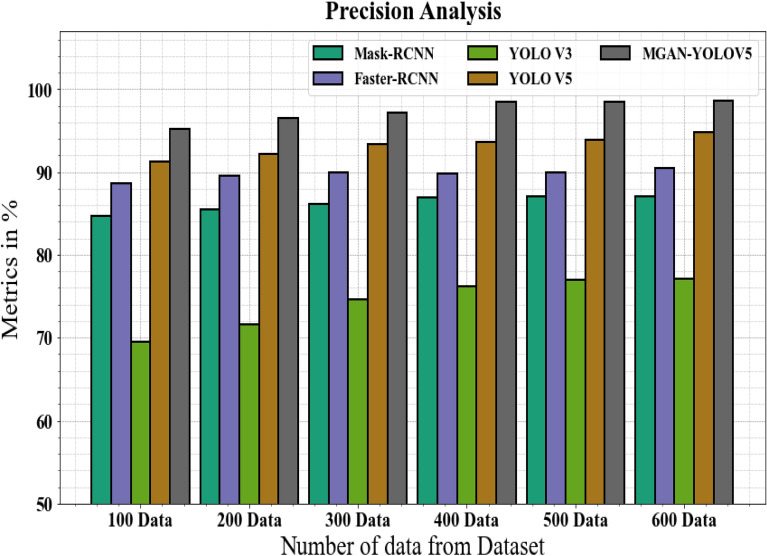
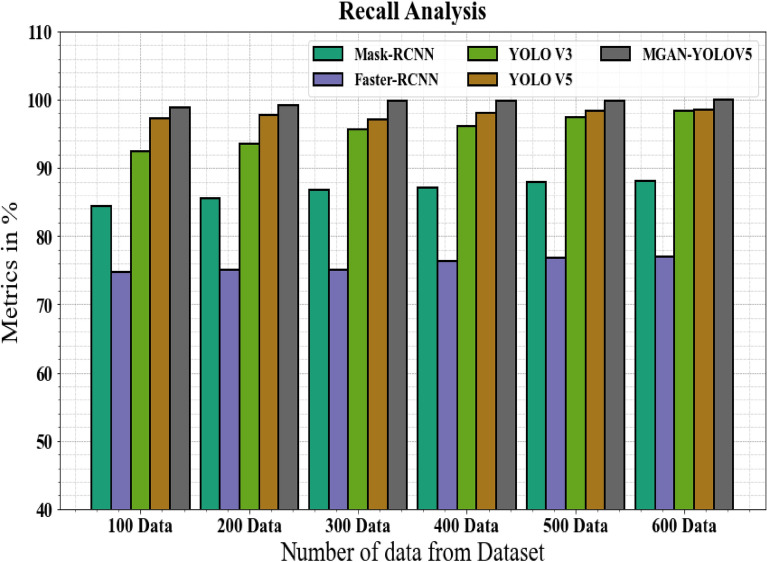
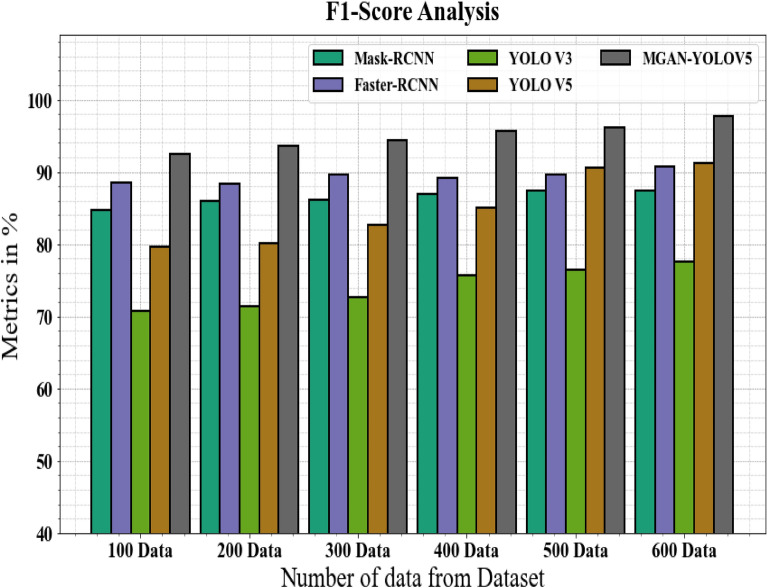
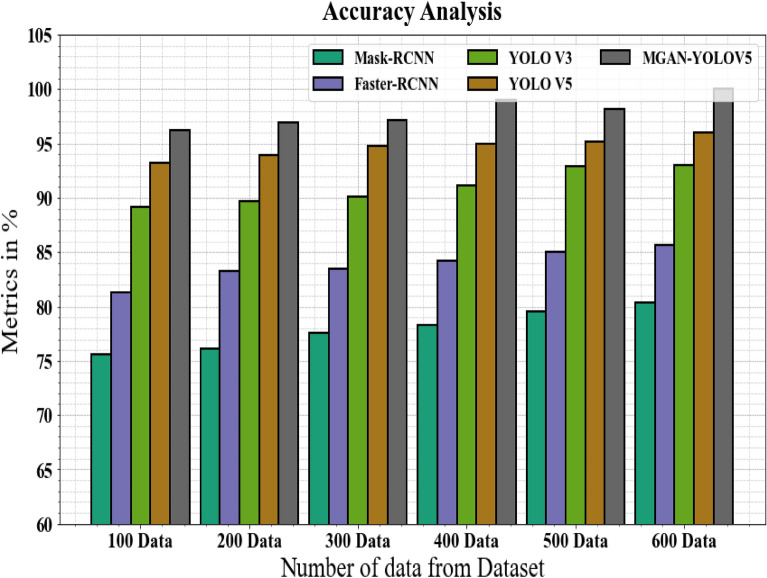
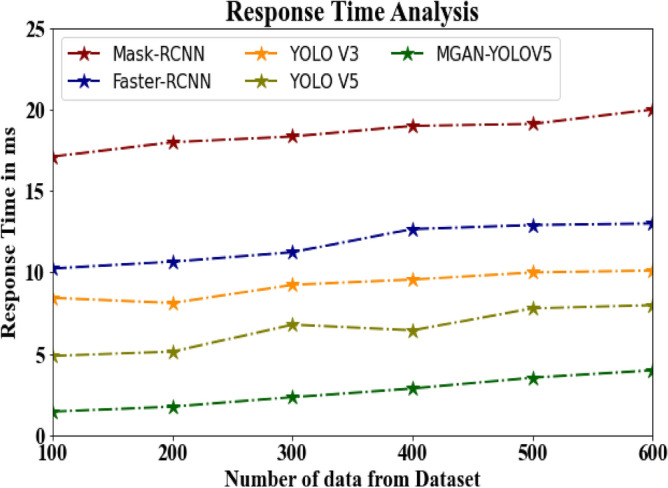
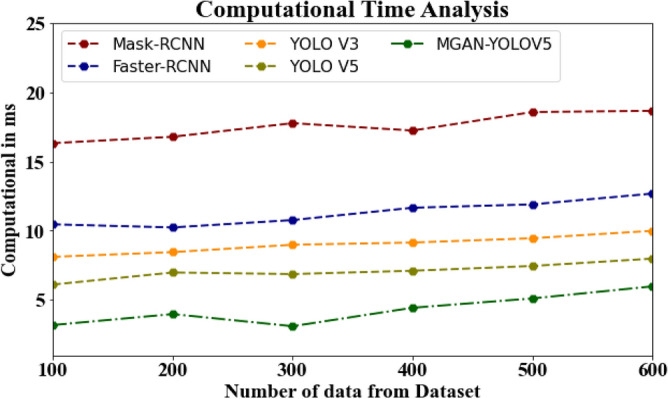
Our environment has been significantly impacted by climate change. According to previous research, insect catastrophes induced by global climate change killed many trees, inevitably contributing to forest fires. The condition of the forest is an essential indicator of forest fires. Analysis of aerial images of a forest can detect deceased and living trees at an early stage. Automated forest health diagnostics are crucial for monitoring and preserving forest ecosystem health. Combining Modified Generative Adversarial Networks (MGANs) and YOLOv5 (You Only Look Once version 5) is presented in this paper as a novel method for assessing forest health using aerial images. We also employ the Tabu Search Algorithm (TSA) to enhance the process of identifying and categorizing unhealthy forest areas. The proposed model provides synthetic data to supplement the limited labeled dataset, thereby resolving the frequent issue of data scarcity in forest health diagnosis tasks. This improvement enhances the model's ability to generalize to previously unobserved data, thereby increasing the overall precision and robustness of the forest health evaluation. In addition, YOLOv5 integration enables real-time object identification, enabling the model to recognize and pinpoint numerous tree species and potential health issues with exceptional speed and accuracy. The efficient architecture of YOLOv5 enables it to be deployed on devices with limited resources, enabling forest-monitoring applications on-site. We use the TSA to enhance the identification of unhealthy forest areas. The TSA method effectively investigates the search space, ensuring the model converges to a near-optimal solution, improving disease detection precision and decreasing false positives. We evaluated our MGAN-YOLOv5 method using a large dataset of aerial images of diverse forest habitats. The experimental results demonstrated impressive performance in diagnosing forest health automatically, achieving a detection precision of 98.66%, recall of 99.99%, F1 score of 97.77%, accuracy of 99.99%, response time of 3.543 ms and computational time of 5.987 ms. Significantly, our method outperforms all the compared target detection methods showcasing a minimum improvement of 2% in mAP.
Overview
The claims and statistics of this paper haven’t been checked yet.
Run the check — free, no account needed. It reads the open-access text and checks the sources it cites.
Integrity signals
Registry
Cites
Statistics
Figures
Verification
Claims the paper makes
The claims and statistics of this paper haven’t been checked yet.
Run the check — free, no account needed. It reads the open-access text and checks the sources it cites.
Claims other papers make about this one
Each is checked against this paper’s own text: does it say what the citing paper says it does?
The source backs part of the claim, not all of it — or backs it for a different population, condition or comparison.
In the citing paper
“This advancement has far-reaching implications, allowing farmers and environmental researchers to monitor vast landscapes, particularly in remote or difficult-to-access areas, with unprecedented accuracy and speed [104].”
From The YOLO Framework: A Comprehensive Review of Evolution, Applications, and Benchmarks in Object Detection (2024) · cites this paper as [104]
Experimental — accuracy not yet measured
Self-check
Percentages, sums and reported differences re-computed from the paper’s own numbers.
The self-check needs the paper’s full text.
Citations
Cites
Faster R-CNN: Towards Real-Time Object Detection with Region Proposal Networks
Ren, S., He, K., Girshick, R., & Sun, J. (2017) · IEEE Transactions on Pattern Analysis and Machine Intelligence · doi:10.1109/tpami.2016.2577031 · Cited by 73,472
Clustered Object Detection in Aerial Images
Yang, F., Fan, H., Chu, P., Blasch, E., & Ling, H. (2019) · 2019 IEEE/CVF International Conference on Computer Vision (ICCV) · doi:10.1109/iccv.2019.00840 · Cited by 506 · cited 1×
“In aerial images, targets have been seen to congregate in groups, according to Yang et al. 20 .”
Method
Research works printed but not linked: 28
- Sun, H., Zhou, Y. T., Li, X. D., Zhang, Y. Z. & Wang, Y. Occurrence of major forest pests in 2020 and prediction of occurrence trend in 2021 in China. Forest Pest Dis. https://doi.org/10.19688/j.cnki.issn1671-0886.20210004 (2021). · DOI
- Xiao, Z. et al. A2S-Det: Efficiency anchor matching in aerial image oriented object detection. Remote. Sens. 13, 73 (2021). · DOI
- Abbasi, S. & Rezaeian, M. Visual object tracking using similarity transformation and adaptive optical flow. Multimed. Tools Appl. 1, 1–19 (2021).
- Guo, S. et al. Spatiotemporal changes of glacier and seasonal snow fluctuations over the Namcha Barwa-Gyala Peri massif using object-based classification from Landsat time series. ISPRS J. Photogram. Remote Sens. 177, 21–37. https://doi.org/10.1016/J.ISPRSJPRS.2021.04.018 (2021). · DOI
- Tian, Y. et al. Can we quantify the aquatic environmental plastic load from aquaculture. Water Res. 219, 118551 (2022). · DOI
- Gopi, R. et al. IoT based disease prediction using mapreduce and LSQN 3 techniques. Intell. Autom. Soft Comput. 34, 1215–1230 (2022). · DOI
- Ranjith, C. P., Mohideen, M. S. K., Raj, N. N. & Robert, N. R. Robust deep learning empowered real time object detection for unmanned aerial vehicles based surveillance applications. J. Mobile Multimed. 1, 451–476 (2022).
- Subramani, N., Sathishkumar, V. E., Malliga, S. & Velmurugan, S. A gradient boosted decision tree-based influencer prediction in social network analysis. Big Data Cogn. Comput. 7, 1–18 (2023).
- Sani-Mohammed, A., Yao, W. & Heurich, M. Instance segmentation of standing dead trees in dense forest from aerial imagery using deep learning. ISPRS Open J. Photogram. Remote Sens. 6, 1–18 (2022).
- Martin, A. R., Domke, G. M., Doraisami, M. & Thomas, S. C. Carbon fractions in the world’s dead wood. Nat. Commun. 12, 1–9. https://doi.org/10.1038/s41467-021-21149-9 (2021). · DOI
- Zhang, Y. et al. Characterizing spatial patterns of pine wood nematode outbreaks in subtropical zone in China. Rem. Sens. 13, 4682. https://doi.org/10.3390/rs13224682 (2021). · DOI
- Chiang, C.-Y., Barnes, C., Angelov, P. & Jiang, R. Deep learning-based automated forest health diagnosis from aerial images. IEEE Access 8, 144064–144076 (2020). · DOI
- Natesan, S., Armenakis, C. & Vepakomma, U. Resnet-based tree species classification using uav images. ISPRS Int Arch. Photogramm. Remote Sens. Spat. Inf. Sci. 13, 475–481. https://doi.org/10.5194/isprs-archives-XLII-2-W13-475-2019 (2019). · DOI
- Modica, G., Messina, G., De Luca, G., Fiozzo, V. & Praticò, S. Monitoring the vegetation vigor in heterogeneous citrus and olive orchards: A multiscale object-based approach to extract trees’ crowns from UAV multispectral imagery. Comput. Electron. Agr. 1, 1. https://doi.org/10.1016/j.compag.2020.105500 (2020). · DOI
- Barmpoutis, P., Papaioannou, P., Dimitropoulos, K. & Grammalidis, N. A review on early forest fire detection systems using optical remote sensing. Sensors 20, 6442 (2020). · DOI
- Qingyun, F., Dapeng, H., & Zhaokui, W. Cross-modality fusion transformer for multispectral object detection. arXiv 2021, arXiv:2111.00273. · arXiv
- Liang, X., Zhang, J., Zhuo, L., Li, Y. & Tian, Q. Small object detection in unmanned aerial vehicle images using feature fusion and scaling-based single shot detector with spatial context analysis. IEEE Trans. Circuits Syst. Video Technol. 30, 1758–1770 (2019). · DOI
- Jiao, L. et al. A survey of deep learning-based object detection. IEEE Access 7, 128837–128868 (2019). · DOI
- Tamilselvi, M., Baghavathi Priya, S. & Eric Ofori, M. Deep learning-based wildfire image detection and classification systems for controlling biomass. Int. J. Intell. Syst. 2023, 1–18 (2023).
- Prajapati V. K., Jain, M., & Chouhan, L. Tabu Search Algorithm (TSA): A comprehensive survey. In 2020 3rd International Conference on Emerging Technologies in Computer Engineering: Machine Learning and Internet of Things (ICETCE), Jaipur, India, pp. 1–8 (2020). · DOI
- Wang, C. Y., Liao, H. Y. M., Wu, Y. H., Chen, P. Y., Hsieh, J. W., & Yeh, I. H. CSPNet: A new backbone that can enhance learning capability of CNN. In Proceedings of the IEEE Conference on Computer Vision and Pattern Recognition (CVPR 2020), Washington, DC, USA, 14–19; pp. 390–391 (2020). · DOI · Paper page
- Liu, S., Qi, L., Qin, H., Shi, J. & Jia, J. Path aggregation network for instance segmentation. In Proceedings of the IEEE Conference on Computer Vision and Pattern Recognition, Salt Lake City, UT, USA 18–23, 8759–8768 (2018).
- Hofinger, P., Klemmt, H. J., Ecke, S., Rogg, S. & Dempewolf, J. Application of YOLOv5 for point label based object detection of black pine trees with vitality losses in UAV data. Remote Sens. 15, 1964 (2023). · DOI
- Ahmed, M. A., Ananthi, S. N., Gowri, G. & Sureka, V. Adopting blockchain technologies in cloud for efficient data storage and enhanced security. Int. J. Recent Technol. Eng. 8, 1295–1297 (2019).
- Hardas, B. M. & Pokle, S. B. Optimization of peak to average power reduction in OFDM. J. Commun. Technol. Electron. 62, 1388–1395 (2017). · DOI
- Raghavendra, S., Geetha, B. T., Asha, S. M. R. & Roberts, M. K. Artificial humming bird with data science enabled stability prediction model for smart grids. Sustain. Comput. Inf. Syst. 36, 100821 (2022).
- Mardani, A., Mishra, A. R. & Ezhumalai, P. A fuzzy logic and DEEC protocol-based clustering routing method for wireless sensor networks. AIMS Math. 8(4), 8310–8331 (2023). · DOI
- Paulraj, D., Sethukarasi, T. & Baburaj, E. An efficient hybrid job scheduling optimization (EHJSO) approach to enhance resource search using Cuckoo and Grey Wolf Job Optimization for cloud environment. Plos one 18, e0282600 (2023). · DOI
Cited by
Sorted by citations
Ali, M. L., & Zhang, Z. (2024) · Computers · doi:10.3390/computers13120336 · Cited by 383
Metadata
- Authors
- Jayagopal, P., Purushothaman Janaki, K., Mohan, P., Kondapaneni, U. B., Periyasamy, J., Mathivanan, S. K., & Dalu, G. T.
- Affiliations
- Vellore Institute of Technology University (IN)
- Bharath University (IN)
- Galgotias University (IN)
- Haramaya University (ET)
- Corresponding author
- Dalu, Gemmachis Teshite
- Venue
- Scientific Reports
- Published
- 2024-02-27
- Volume
- 14
- Issue
- 1
- Pages
- 4814-4814
- ISSN
- 2045-2322 (ISSN-L)
- PMC
- PMC10899584
- OpenAlex
- W4392189094
- Cited by
- 13
- References
- 2
- Citations by year
- 2026: 2 · 2025: 7 · 2024: 4
- FWCI
- 3.17
- Type
- journal article
- Language
- en
- Open access
- gold
- doi.org
- Locations
- Scientific Reports (publishedVersion, cc-by)
- PubMed Central (publishedVersion, cc-by)
- PubMed (publishedVersion)
- DOAJ (DOAJ: Directory of Open Access Journals) (submittedVersion, cc-by-sa)
- Topics
- Life Sciences › Agricultural and Biological Sciences › Plant Science › Smart Agriculture and AI
- Physical Sciences › Computer Science › Computer Vision and Pattern Recognition › Remote-Sensing Image Classification
- Physical Sciences › Computer Science › Computer Vision and Pattern Recognition › Advanced Neural Network Applications
- Keywords
- aerial imagery, YOLOv5, tabu search, tree disease detection, synthetic data generation, data scarcity, wildfire monitoring, object detection, tree identification, real-time detection
- MeSH terms
- Algorithms, Trees, Ecosystem, Climate Change, Forests
About these checks
Registry, retraction, Cites and statistics results are computed, not judged, with one exception: a printed reference that no index lists is read once by a model before it counts as a citation error. Claims are extracted by a model and kept only when their quote appears verbatim in the text; each cited source is then checked, with a model’s help, for whether it says what the claim relies on. Those verdicts can be wrong — read the claim’s quote and the cited source before relying on one.
Statistics and arithmetic are recomputed, not judged.
Confidence bands are shown only for fields calibrated on our annotated test set. None is calibrated yet, so no band is shown.
What counts as a claim ›How we measure confidence ›How we check this ›
Are you an author, or do you see a problem with this page? Request a review
How to cite
Cite CoChat for the checks on this page, and the paper for its own findings.
- This page
- CoChat. (2026). Citation check: A modified generative adversarial networks with Yolov5 for automated forest health diagnosis from aerial imagery and Tabu search algorithm. https://app.cochat.ai/papers/10.1038/s41598-024-54399-w
- The paper
- Jayagopal, P., Purushothaman Janaki, K., Mohan, P., Kondapaneni, U. B., Periyasamy, J., Mathivanan, S. K., & Dalu, G. T. (2024). A modified generative adversarial networks with Yolov5 for automated forest health diagnosis from aerial imagery and Tabu search algorithm. Scientific Reports. https://doi.org/10.1038/s41598-024-54399-w
