

The DOI matches its Crossref record; the references it cites are not checked yet.
Biocatalytic synthesis of oxa(thia)diazole aryl thioethers
Open accessAbstract
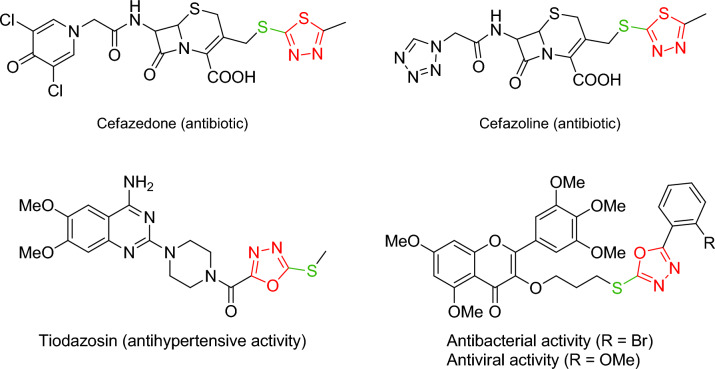
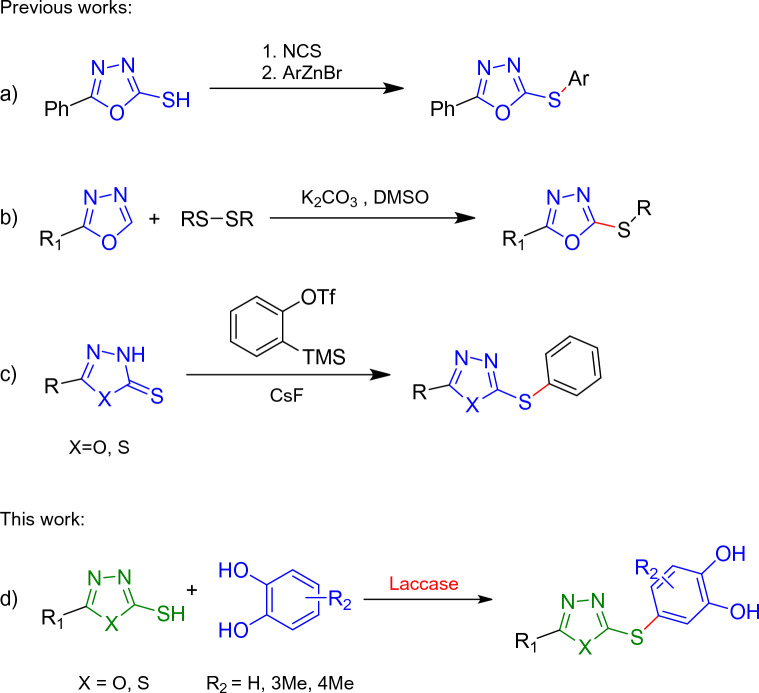
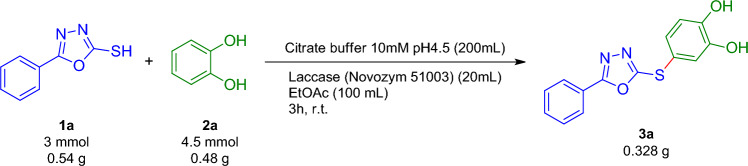
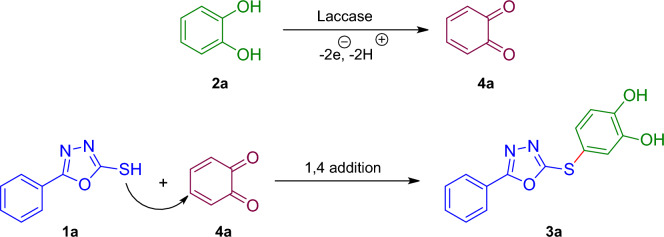
A novel approach for the synthesis of 1,3,4-oxa(thia)diazole aryl thioethers through a biocatalytic strategy has been introduced. By leveraging Myceliophthora thermophila laccase (Novozym 51003) as a catalyst, catechol undergoes oxidation to ortho-quinone, facilitating subsequent 1,4-thia-Michael addition reactions. The method offers efficiency and mild reaction conditions, demonstrating promise for sustainable synthesis pathways in organic chemistry. Using this approach, 13 new derivatives of 2,5-disubstituted-1,3,4-oxa(thia)diazole aryl thioethers, with a yield of 46-94%, were synthesized.
Overview
The claims and statistics of this paper haven’t been checked yet.
Run the check — free, no account needed. It reads the open-access text and checks the sources it cites.
Integrity signals
Registry
Cites
Statistics
Figures
Verification
Claims the paper makes
The claims and statistics of this paper haven’t been checked yet.
Run the check — free, no account needed. It reads the open-access text and checks the sources it cites.
Self-check
Percentages, sums and reported differences re-computed from the paper’s own numbers.
The self-check needs the paper’s full text.
Citations
The citation lists haven’t been fetched yet
References 74 · Cited by 5
Research works printed but not linked: 76
- Ram, V. J., Sethi, A., Nath, M. & Pratap, R. The Chemistry of Heterocycles: Nomenclature and Chemistry of Three to Five Membered Heterocycles (Elsevier, 2019).
- Pearce, S. The importance of heterocyclic compounds in anti-cancer drug design. Drug Discov. 2017, 67 (2017).
- Arunachalapandi, M. & Roopan, S. M. Ultrasound/visible lightmediated synthesis of N-heterocycles using g-C3N4/Cu3TiO4 as sonophotocatalyst. Res. Chem. Intermed. 47, 3363–3378 (2021). · DOI
- Sompalle, R. & Roopan, S. M. Microwave assisted synthesis of ring junction heterocyclic antioxidants. Res. Chem. Intermed. 42, 5353–5366 (2016). · DOI
- Manjupriya, R. & Roopan, S. M. Carbon dots-based catalyst for various organic transformations. J. Mater. Sci. 56, 17369–17410 (2021). · DOI
- Li, Y., Geng, J., Liu, Y., Yu, S. & Zhao, G. Thiadiazole—A promising structure in medicinal chemistry. ChemMedChem 8, 27–41 (2013). · DOI
- Liu, Y. et al. Fabrication of magnetic amino-functionalized nanoparticles for S-arylation of heterocyclic thiols. RSC Adv. 4, 48980–48985 (2014). · DOI
- Desai, N. et al. Synthesis, biological evaluation and molecular docking study of some novel indole and pyridine based 1, 3, 4-oxadiazole derivatives as potential antitubercular agents. Bioorg. Med. Chem. Lett. 26, 1776–1783 (2016). · DOI
- Ladani, G. G. & Patel, M. P. Novel 1, 3, 4-oxadiazole motifs bearing a quinoline nucleus: Synthesis, characterization and biological evaluation of their antimicrobial, antitubercular, antimalarial and cytotoxic activities. New J. Chem. 39, 9848–9857 (2015). · DOI
- Fioravanti, R. et al. Synthesis and biological evaluation of N-substituted-3, 5-diphenyl-2-pyrazoline derivatives as cyclooxygenase (COX-2) inhibitors. Eur. J. Med. Chem. 45, 6135–6138 (2010). · DOI
- Bekhit, A. A., Ashour, H. M., Ghany, Y. S. A., Bekhit, A.E.-D.A. & Baraka, A. Synthesis and biological evaluation of some thiazolyl and thiadiazolyl derivatives of 1H-pyrazole as anti-inflammatory antimicrobial agents. Eur. J. Med. Chem. 43, 456–463 (2008). · DOI
- Ahmad, M., Siddiqui, H. L., Zia-ur-Rehman, M. & Parvez, M. Anti-oxidant and anti-bacterial activities of novel N′-arylmethylidene-2-(3, 4-dimethyl-5, 5-dioxidopyrazolo [4, 3-c][1, 2] benzothiazin-2 (4H)-yl) acetohydrazides. Eur. J. Med. Chem. 45, 698–704 (2010). · DOI
- Neissari, N. et al. Biocatalytic synthesis of oxadiazole thioethers and evaluation of their antitumor activity. Org. Biomol. Chem. 21, 4846–4853 (2023). · DOI
- Khan, M.-U.-H., Akhtar, T., Al-Masoudi, N., Stoeckli-Evans, H. & Hameed, S. Synthesis, crystal structure and anti-HIV activity of 2-adamantyl/adamantylmethyl-5-aryl-1, 3, 4-oxadiazoles. Med. Chem. 8, 1190–1197 (2012).
- Zhang, K. et al. Synthesis and antitumor activities of novel hybrid molecules containing 1, 3, 4-oxadiazole and 1, 3, 4-thiadiazole bearing Schiff base moiety. Bioorg. Med. Chem. Lett. 24, 5154–5156 (2014). · DOI
- Yan, L. et al. Synthesis of N-pyrimidin [1, 3, 4] oxadiazoles and N-pyrimidin [1, 3, 4]-thiadiazoles from 1, 3, 4-oxadiazol-2-amines and 1, 3, 4-thiadiazol-2-amines via Pd-catalyzed heteroarylamination. Tetrahedron Letters 60, 1359–1362 (2019). · DOI
- Karabanovich, G. et al. Development of 3, 5-dinitrobenzylsulfanyl-1, 3, 4-oxadiazoles and thiadiazoles as selective antitubercular agents active against replicating and nonreplicating Mycobacterium tuberculosis. J. Med. Chem. 59, 2362–2380 (2016). · DOI
- Hamama, W. S., Gouda, M. A., Badr, M. H. & Zoorob, H. H. Synthesis, antioxidant, and antitumor evaluation of certain new N-substituted-2-amino-1, 3, 4-thiadiazoles. Med. Chem. Res. 22, 3556–3565 (2013). · DOI
- Khan, I. et al. Synthesis of benzimidazole based thiadiazole and carbohydrazide conjugates as glycogen synthase kinase-3β inhibitors with anti-depressant activity. Bioorg. Med. Chem. Lett. 26, 4020–4024 (2016). · DOI
- Pattan, S. et al. Synthesis and evaluation of some novel 1, 3, 4-thiadiazoles for antidiabetic activity. ChemInform 42, 30 (2011). · DOI
- Er, M. et al. Synthesis, characterization, preliminary SAR and molecular docking study of some novel substituted imidazo [2, 1-b][1, 3, 4] thiadiazole derivatives as antifungal agents. Med. Chem. Res. 26, 615–630 (2017). · DOI
- Dunbar, K. L., Scharf, D. H., Litomska, A. & Hertweck, C. Enzymatic carbon–sulfur bond formation in natural product biosynthesis. Chem. Rev. 117, 5521–5577 (2017). · DOI
- Ilardi, E. A., Vitaku, E. & Njardarson, J. T. Data-mining for sulfur and fluorine: An evaluation of pharmaceuticals to reveal opportunities for drug design and discovery: Miniperspective. J. Med. Chem. 57, 2832–2842 (2014). · DOI
- Liu, L. et al. SAR of 3, 4-Dihydropyrido [3, 2-d] pyrimidone p38 Inhibitors. Bioorg. Med. Chem. Lett. 13, 3979–3982 (2003). · DOI
- Zhao, C., Rakesh, K., Ravidar, L., Fang, W.-Y. & Qin, H.-L. Pharmaceutical and medicinal significance of sulfur (SVI)-Containing motifs for drug discovery: A critical review. Eur. J. Med. Chem. 162, 679–734 (2019). · DOI
- De Martino, G. et al. Arylthioindoles, potent inhibitors of tubulin polymerization. J. Med. Chem. 47, 6120–6123 (2004). · DOI
- Alcaraz, M.-L. et al. Efficient syntheses of AZD4407 via thioether formation by nucleophilic attack of organometallic species on sulphur. Org. Process Res. Dev. 9, 555–569 (2005). · DOI
- Nielsen, S. F., Nielsen, E. Ø., Olsen, G. M., Liljefors, T. & Peters, D. Novel potent ligands for the central nicotinic acetylcholine receptor: Synthesis, receptor binding, and 3D-QSAR analysis. J. Med. Chem. 43, 2217–2226 (2000). · DOI
- Samanta, S., Ray, S., Ghosh, A. B. & Biswas, P. 3, 6-Di (pyridin-2-yl)-1, 2, 4, 5-tetrazine (pytz) mediated metal-free mild oxidation of thiols to disulfides in aqueous medium. RSC Adv. 6, 39356–39363 (2016). · DOI
- El-Masry, R. M., Kadry, H. H., Taher, A. T. & Abou-Seri, S. M. Comparative study of the synthetic approaches and biological activities of the bioisosteres of 1, 3, 4-oxadiazoles and 1, 3, 4-thiadiazoles over the past decade. Molecules 27, 2709 (2022). · DOI
- Yu, Q. et al. Novel 1, 3, 4-oxadiazole hybrids of 3-n-butylphthalide derivatives as potential anti-ischemic stroke agents. Bioorg. Chem. 143, 107034 (2024). · DOI
- Yonova, I. M., Osborne, C. A., Morrissette, N. S. & Jarvo, E. R. Diaryl and heteroaryl sulfides: Synthesis via sulfenyl chlorides and evaluation as selective anti-breast-cancer agents. J. Org. Chem. 79, 1947–1953 (2014). · DOI
- Zhang, F. et al. Synthesis, molecular modeling and biological evaluation of N-benzylidene-2-((5-(pyridin-4-yl)-1, 3, 4-oxadiazol-2-yl) thio) acetohydrazide derivatives as potential anticancer agents. Bioorg. Med. Chem. 22, 468–477 (2014). · DOI
- Polkam, N., Malthum, S., Anireddy, J., Brahma, U. & Naidu-Vegi, G. Design, synthesis, and anticancer evaluation of new 1, 3, 4-oxadiazole thioether derivatives. Russian Chem. Bull. 70, 580–584 (2021). · DOI
- Boddapati, S. M., Talari, S., Kola, A. E. & Chalapaka, B. Synthesis of 2-aryl-5-(arylsulfonyl)-1, 3, 4-oxadiazoles as potent antibacterial andantioxidant agents. Turk. J. Chem. 46, 766–776 (2022). · DOI
- Hamoud, M. M. et al. Design and synthesis of novel 1, 3, 4-oxadiazole and 1, 2, 4-triazole derivatives as cyclooxygenase-2 inhibitors with anti-inflammatory and antioxidant activity in LPS-stimulated RAW264. 7 macrophages. Bioorg. Chem. 124, 105808 (2022). · DOI
- Migita, T. et al. The palladium catalyzed nucleophilic substitution of aryl halides by thiolate anions. Bull. Chem. Soc. Jpn. 53, 1385–1389 (1980). · DOI
- Percec, V., Bae, J.-Y. & Hill, D. H. Aryl mesylates in metal catalyzed homocoupling and cross-coupling reactions. 2. Suzuki-type nickel-catalyzed cross-coupling of aryl arenesulfonates and aryl mesylates with arylboronic acids. J. Org. Chem. 60, 6895–6903 (1995). · DOI
- Zhang, Y., Ngeow, K. C. & Ying, J. Y. The first N-heterocyclic carbene-based nickel catalyst for C− S coupling. Org. Lett. 9, 3495–3498 (2007). · DOI
- Ranjit, S. et al. Copper-mediated C-H activation/C–S cross-coupling of heterocycles with thiols. J. Org. Chem. 76, 8999–9007 (2011). · DOI
- Dai, C., Xu, Z., Huang, F., Yu, Z. & Gao, Y.-F. Lewis acid-catalyzed, copper (II)-mediated synthesis of heteroaryl thioethers under base-free conditions. J. Org. Chem. 77, 4414–4419 (2012). · DOI
- Petrosyan, A., Ayvazyan, A., Ghochikyan, T. & Galstyan, A. Ligand-free Cu (0) catalyzed C-S cross-coupling ullmann-type reaction: S-arylation of 5, 4-disubstituted-2, 4-dihydro-3h-1, 2, 4-triazole-3-thiones. Eur. J. Org. Chem. 2024, e202400199 (2024). · DOI
- Wong, Y.-C., Jayanth, T. T. & Cheng, C.-H. Cobalt-catalyzed aryl−sulfur bond formation. Org. Lett. 8, 5613–5616 (2006). · DOI
- Correa, A., Carril, M. & Bolm, C. Iron-catalyzed Sonogashira reactions. Angew. Chem. Int. Ed. 47, 2880–2883 (2008). · DOI
- Correa, A., Mancheño, O. G. & Bolm, C. Iron-catalysed carbon–heteroatom and heteroatom–heteroatom bond forming processes. Chem. Soc. Rev. 37, 1108–1117 (2008). · DOI
- Reddy, V. P., Swapna, K., Kumar, A. V. & Rao, K. R. Indium-catalyzed C− S cross-coupling of aryl halides with thiols. J. Org. Chem. 74, 3189–3191 (2009). · DOI
- Reddy, V. P., Kumar, A. V., Swapna, K. & Rao, K. R. Nano indium oxide as a recyclable catalyst for C− S cross-coupling of thiols with aryl halides under ligand free conditions. Org. Lett. 11, 1697–1700 (2009). · DOI
- Mispelaere-Canivet, C., Spindler, J.-F., Perrio, S. & Beslin, P. Pd2 (dba) 3/Xantphos-catalyzed cross-coupling of thiols and aryl bromides/triflates. Tetrahedron 61, 5253–5259 (2005). · DOI
- Itoh, T. & Mase, T. A general palladium-catalyzed coupling of aryl bromides/triflates and thiols. Org. Lett. 6, 4587–4590 (2004). · DOI
- Zheng, N., McWilliams, J. C., Fleitz, F. J., Armstrong, J. D. & Volante, R. Palladium-catalyzed synthesis of aryl sulfides from aryl triflates. J. Org. Chem. 63, 9606–9607 (1998). · DOI
- Savarin, C., Srogl, J. & Liebeskind, L. S. A mild, nonbasic synthesis of thioethers. The copper-catalyzed coupling of boronic acids with N-thio (alkyl, aryl, heteroaryl) imides. Org. Lett. 4, 4309–4312 (2002). · DOI
- Herradura, P. S., Pendola, K. A. & Guy, R. K. Copper-mediated cross-coupling of aryl boronic acids and alkyl thiols. Org. Lett. 2, 2019–2022 (2000). · DOI
- Louie, J. & Hartwig, J. F. Transmetalation, involving organotin aryl, thiolate, and amide compounds. An unusual type of dissociative ligand substitution reaction. J. Am. Chem. Soc. 117, 11598–11599 (1995). · DOI
- Jha, K. K. et al. Design, synthesis and biological evaluation of 1, 3, 4-oxadiazole derivatives. Eur. J. Med. Chem. 45, 4963–4967 (2010). · DOI
- Parikh, P. K., Marvaniya, H. M. & Sen, D. J. Synthesis and biological evaluation of 1, 3, 4-oxadiazole derivatives as potential antibacterial and antifungal agents. Int. J. Drug Dev. Res. 3, 248–255 (2011).
- Rafique, J., Saba, S., Rosario, A. R., Zeni, G. & Braga, A. L. K 2 CO 3-mediated, direct C-H bond selenation and thiolation of 1, 3, 4-oxadiazoles in the absence of metal catalyst: An eco-friendly approach. RSC Adv. 4, 51648–51652 (2014). · DOI
- An, Y. et al. Efficient formation of C-S bond using heterocyclic thiones and arynes. Tetrahedron 79, 131829 (2021). · DOI
- Wu, Q., Xu, J. M., Xia, L., Wang, J. L. & Lin, X. F. Promiscuous zinc-dependent acylase-mediated one-pot synthesis of monosaccharide-containing pyrimidine derivatives in organic medium. Adv. Synth. Catal. 351, 1833–1841 (2009). · DOI
- Li, C. et al. Promiscuous protease-catalyzed aldol reactions: A facile biocatalytic protocol for carbon–carbon bond formation in aqueous media. J. Biotechnol. 150, 539–545 (2010). · DOI
- Baldrian, P. Fungal laccases–occurrence and properties. FEMS Microbiol. Rev. 30, 215–242 (2006). · DOI
- Abdel-Mohsen, H. T., Conrad, J. R. & Beifuss, U. Laccase-catalyzed domino reaction between catechols and 6-substituted 1, 2, 3, 4-tetrahydro-4-oxo-2-thioxo-5-pyrimidinecarbonitriles for the synthesis of pyrimidobenzothiazole derivatives. J. Org. Chem. 78, 7986–8003 (2013). · DOI
- Wellington, K. W., Bokako, R., Raseroka, N. & Steenkamp, P. A one-pot synthesis of 1, 4-naphthoquinone-2, 3-bis-sulfides catalysed by a commercial laccase. Green Chem. 14, 2567–2576 (2012). · DOI
- Cannatelli, M. D. & Ragauskas, A. J. Ecofriendly syntheses of phenothiazones and related structures facilitated by laccase–a comparative study. Tetrahedron Lett. 57, 3749–3753 (2016). · DOI
- Witayakran, S. & Ragauskas, A. J. Synthetic applications of laccase in green chemistry. Adv. Synth. Catal. 351, 1187–1209 (2009). · DOI
- González-Sabín, J. et al. Laccase-catalysed biotransformation of collismycin derivatives. A novel enzymatic approach for the cleavage of oximes. Green Chem. 18, 989–994 (2016). · DOI
- Llevot, A., Grau, E., Carlotti, S., Grelier, S. & Cramail, H. Selective laccase-catalyzed dimerization of phenolic compounds derived from lignin: Towards original symmetrical bio-based (bis) aromatic monomers. J. Mol. Catal. B: Enzym. 125, 34–41 (2016). · DOI
- Emirdağ-Öztürk, S., Hajdok, S., Conrad, J. & Beifuss, U. Laccase-catalyzed reaction of 3-tert-butyl-1H-pyrazol-5 (4H)-one with substituted catechols using air as an oxidant. Tetrahedron 69, 3664–3668 (2013). · DOI
- Hahn, V., Mikolasch, A., Kuhlisch, C. & Schauer, F. Laccase-mediated multi-step homo-and heteromolecular reactions of ortho-dihydroxylated aromatic compounds and mono-or diaminated substances resulting in CC, CO and CN bonds. J. Mol. Catal. B: Enzym. 122, 56–63 (2015). · DOI
- Abdel-Mohsen, H. T., Conrad, J. & Beifuss, U. Laccase-catalyzed synthesis of catechol thioethers by reaction of catechols with thiols using air as an oxidant. Green Chem. 16, 90–95 (2014). · DOI
- Witayakran, S. & Ragauskas, A. J. One-pot synthesis of 1, 4-naphthoquinones and related structures with laccase. Green Chem. 9, 475–480 (2007). · DOI
- Abdel-Mohsen, H., Conrad, J., Harms, K., Nohr, D. & Beifuss, U. Laccase-catalyzed green synthesis and cytotoxic activity of novel pyrimidobenzothiazoles and catechol thioethers. RSC Adv. 7, 17427–17441 (2017). · DOI
- Hahn, V. et al. Ring-closure mechanisms mediated by laccase to synthesize phenothiazines, phenoxazines, and phenazines. ACS Omega 5, 14324–14339 (2020). · DOI
- Eggert, C., Temp, U., Dean, J. F. & Eriksson, K.-E.L. Laccase-mediated formation of the phenoxazinone derivative, cinnabarinic acid. FEBS Lett. 376, 202–206 (1995). · DOI
- Cannatelli, M. D. & Ragauskas, A. J. Laccase-catalyzed synthesis of 2, 3-ethylenedithio-1, 4-quinones. J. Mol. Catal. B: Enzym. 119, 85–89 (2015). · DOI
- Shahedi, M. et al. Diarylation of thiazolopyrimidines by laccase and their in vitro evaluation as antitumor agents. Sci. Rep. 12, 22326 (2022). · DOI
- Shahedi, M. et al. Biocatalytic stereoselective synthesis of pyrrolidine-2, 3-diones containing all-carbon quaternary stereocenters. Org. Biomol. Chem. 21, 2742–2747 (2023). · DOI
Metadata
- Authors
- Mottaghi Amlashi, D., Mobini, S., Shahedi, M., Habibi, Z., Bavandi, H., & Yousefi, M.
- Affiliations
- Shahid Beheshti University (IR)
- Academic Center for Education, Culture and Research (IR)
- Corresponding author
- Yousefi, Maryam
- Venue
- Scientific Reports
- Published
- 2024-08-22
- Volume
- 14
- Issue
- 1
- Pages
- 19468-19468
- ISSN
- 2045-2322 (ISSN-L)
- PMC
- PMC11341560
- OpenAlex
- W4401818575
- Cited by
- 5
- References
- 74
- Citations by year
- 2026: 3 · 2025: 2
- FWCI
- 0.68
- Type
- journal article
- Language
- en
- Open access
- gold
- doi.org
- Licence
- Locations
- Scientific Reports (publishedVersion, cc-by-nc-nd)
- PubMed Central (publishedVersion, cc-by-nc-nd)
- PubMed (publishedVersion)
- DOAJ (DOAJ: Directory of Open Access Journals) (submittedVersion)
- Topics
- Life Sciences › Biochemistry, Genetics and Molecular Biology › Molecular Biology › Enzyme Catalysis and Immobilization
- Physical Sciences › Chemistry › Organic Chemistry › Sulfur-Based Synthesis Techniques
- Physical Sciences › Chemistry › Organic Chemistry › Structural and Chemical Analysis of Organic and Inorganic Compounds
- Keywords
- enzymatic synthesis, catechol oxidation, ortho-quinones, heterocyclic synthesis, sustainable organic synthesis
About these checks
Registry, retraction, Cites and statistics results are computed, not judged, with one exception: a printed reference that no index lists is read once by a model before it counts as a citation error. Claims are extracted by a model and kept only when their quote appears verbatim in the text; each cited source is then checked, with a model’s help, for whether it says what the claim relies on. Those verdicts can be wrong — read the claim’s quote and the cited source before relying on one.
Statistics and arithmetic are recomputed, not judged.
Confidence bands are shown only for fields calibrated on our annotated test set. None is calibrated yet, so no band is shown.
What counts as a claim ›How we measure confidence ›How we check this ›
Are you an author, or do you see a problem with this page? Request a review
How to cite
Cite CoChat for the checks on this page, and the paper for its own findings.
- This page
- CoChat. (2026). Citation check: Biocatalytic synthesis of oxa(thia)diazole aryl thioethers. https://app.cochat.ai/papers/10.1038/s41598-024-70239-3
- The paper
- Mottaghi Amlashi, D., Mobini, S., Shahedi, M., Habibi, Z., Bavandi, H., & Yousefi, M. (2024). Biocatalytic synthesis of oxa(thia)diazole aryl thioethers. Scientific Reports. https://doi.org/10.1038/s41598-024-70239-3
