

Identifying fabricated networks within authorship-for-sale enterprises
Open accessThe DOI matches its Crossref record; 38 of the 38 references it cites were found in a registry or an index; 5 of the 43 sources its claims cite were checked for support.
Abstract
It is estimated that 2% of all journal submissions across all disciplines originate from paper mills, both creating significant risk that the body of research that we rely on to progress becomes corrupted, and placing undue burden on the submission process to reject these articles. By understanding how the business of paper mills—the technological approaches that they adopt, as well as the social structures that they require to operate—the research community can be empowered to develop strategies that make it harder, or ideally impossible for them to operate. Most of the contemporary work in paper-mill detection has focused on identifying the signals that have been left behind inside the text or structure of fabricated papers that result from the technological approaches that paper mills employ. As technologies employed by paper mills advance, these signals will become harder to detect. Fabricated papers do not just need text, images, and data however, they also require a fabricated or partially fabricated network of authors. Most ‘authors’ on a fabricated paper have not been associated with the research, but rather are added through a transaction. This lack of deeper connection means that there is a low likelihood that co-authors on fabricated papers will ever appear together on the same paper more than once. This paper constructs a model that encodes some of the key characteristics of this activity in an ‘authorship-for-sale’ network with the aim to create a robust method to detect this type of activity. A characteristic network fingerprint arises from this model that provides a robust statistical approach to the detection of paper-mill networks. The model suggested in this paper detects networks that have a statistically significant overlap with other approaches that principally rely on textual analysis for the detection of fraudulent papers. Researchers connected to networks identified using the methodology outlined in this paper are shown to be connected with 37% of papers identified through the tortured-phrase and clay-feet methods deployed in the Problematic Paper Screener website. Finally, methods to limit the expansion and propagation of these networks is discussed both in technological and social terms.
Overview
CoChat Summary
TL;DR
The paper models authorship-for-sale paper mills as fabricated co-authorship networks and shows that unusual network shapes—young publication age, low egocentric clustering, high annual output, and a connected component—can flag likely paper-mill activity. It validates the network signal against the Problematic Paper Screener and Retraction Watch, finding substantial overlap and low false-positive rates in random samples.
Key findings
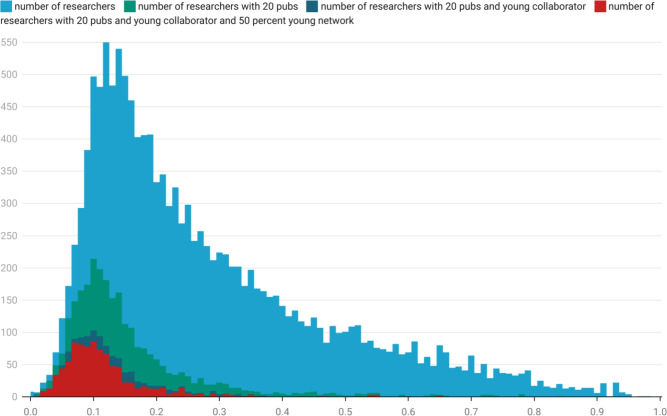
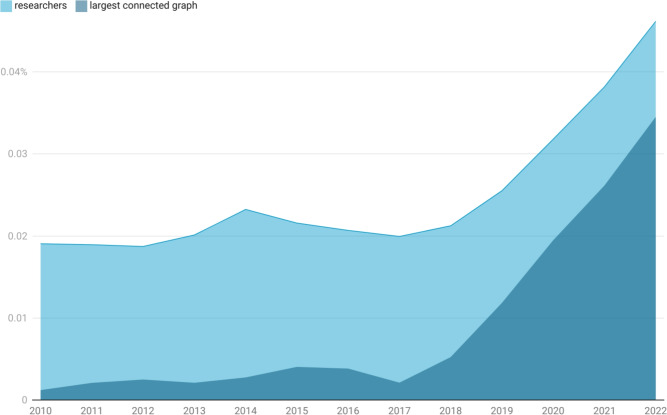
- In 2022, only 0.10% of Stage I and 0.43% of Stage II researchers had network shapes repeated fewer than 10 times; the unusual-author cohort was 0.020% of Stage I/II researchers before 2018, doubling over four years from 2018, with the largest connected component rising from 0.002% of authors (2010–2017) to 0.034% in 2022 (about 75% of unusual authors).
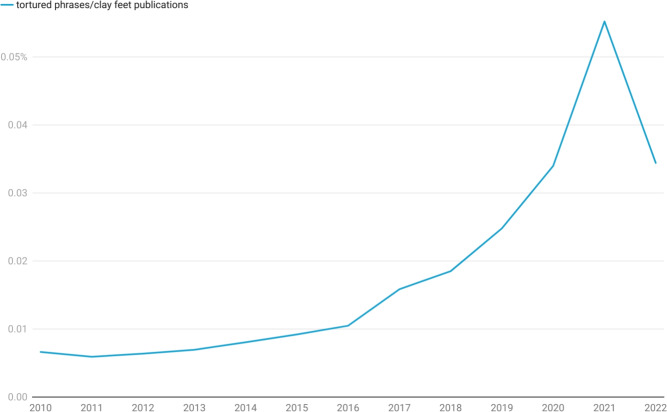
- For 2020–2022, 2,056 researchers met the unusual-author criteria. Of 3,739 Problematic Paper Screener publications, 10% (367) included a researcher in the authorship-for-sale profile and 37% (1,371) included a co-author of one; 72% of the cohort connected back to the tortured-phrase dataset versus 16% direct authors. Random samples had 1.2% direct and 16% collaborator overlap.
- Unusual authors appeared on 7.43% of 1,858 Retraction Watch research articles (2020–2022), over six times the random rate. Among 741 Stage I/II researchers with >250 ORCID peer reviews, 8.2% were in the cohort and 51% had co-authored with someone in it, representing 218,907 claimed reviews.
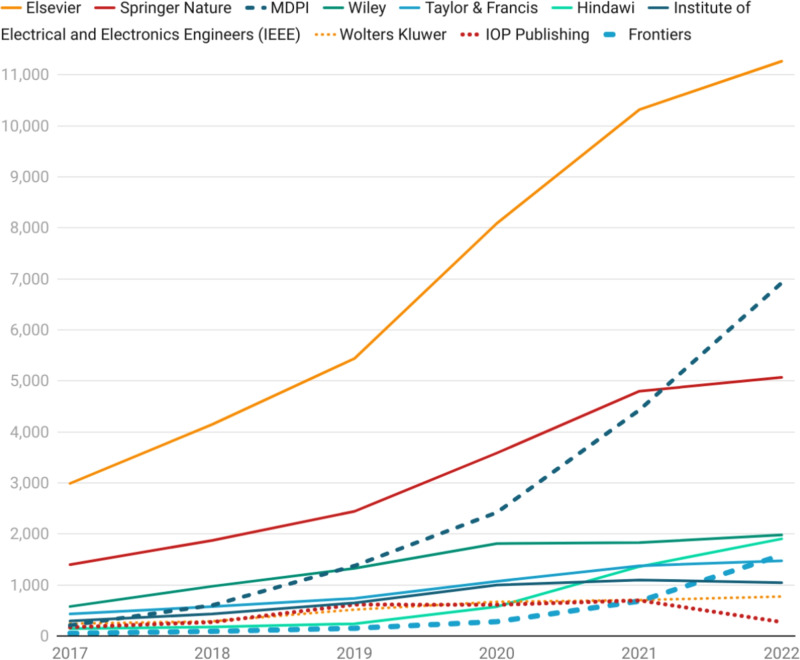
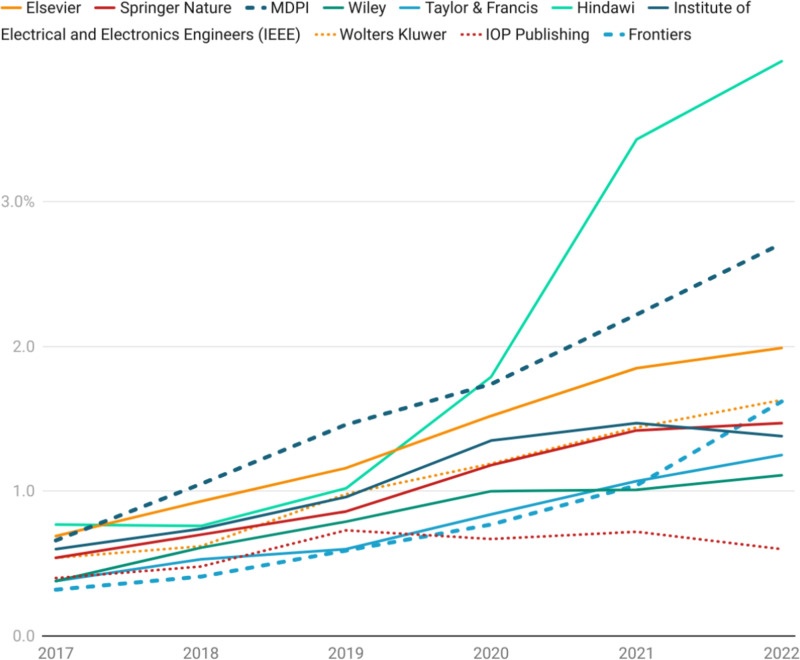
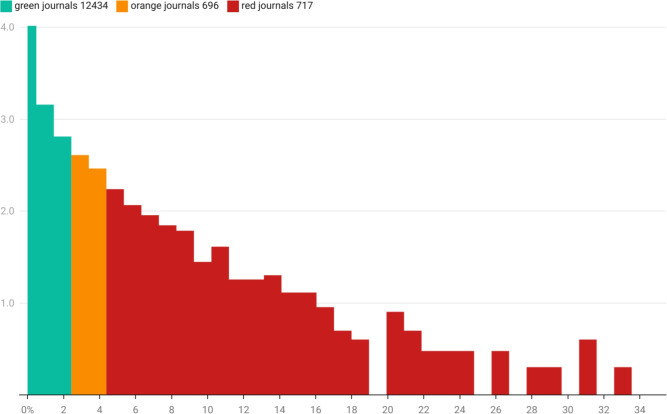
- By 2022, Elsevier had >11,000 implicated publications, MDPI just under 7,000, and Springer Nature over 5,000; Hindawi’s risk profile doubled to 4%, MDPI climbed to just under 3%, and most publishers sustained 1–2%. 12,434 journals had <2% exposure, 696 had 2–4%, and 717 had >4%. Saudi Arabia had 1.2% of its Stage I–II workforce identified, corresponding to 22.6% of research articles and reviews.
Methods
- Used Dimensions (Digital Science) data on Google BigQuery, with researcher disambiguation, ORCID, Retraction Watch, and Problematic Paper Screener tortured-phrase/clay-feet datasets. Defined publication age and network shape; clustering coefficient C = E / possible edges after removing the central node.
- Filtered to research articles, excluded >20 authors, assigned career stages in 5-year publication-age increments, restricted to >20 publications in the same calendar year, most frequent collaborator Stage I–III, >50% network Stage I–II, and largest connected component per publication year plus following year; graph calculations used NetworkX.
- Validated against PPS tortured-phrase/clay-feet papers, Retraction Watch, ORCID high-volume peer reviewers, and Monte Carlo random samples matched in size and period.
Limitations
- The paper states author disambiguation is hardest for young researchers and some writing systems, with false positives unavoidable due to merged or split profiles; all flagged authors need human curation, and ORCID adoption is recommended. It also states the method only identifies statistical outliers, not proof, and individual investigation is required.
- The paper states it only detects “outside-the-tent” misconduct; inside-the-tent image manipulation, plagiarism, data fabrication, or purchasing entire papers will not be detected. It also notes exclusions (>20 authors, single publication year) may miss activity, and brokered authorship-for-sale connects to organic networks so not all connected researchers are culpable.
- Evident from the text: reliance on Dimensions disambiguation and ORCID/PPS data quality; PPS false positives remain and papers with <5 tortured phrases are not public; ORCID peer-review counts may double count; GDPR limits direct data sharing.
Model-written summary. Check it against the paper before relying on it.
Integrity signals
Registry
Cites
Statistics
Figures
Verification
Claims the paper makes
3 Valid · 7 Not valid · 30 Not checked · 201 Own results and interpretations
None of the sources cited for this claim have been checked yet.
In the paper
“Most of the contemporary work in paper-mill detection has focused on identifying the signals that have been left behind inside the text or structure of fabricated papers that result from the technological approaches that paper mills employ.”
- Also stated in: § Introduction · plain
“Most of the contemporary work in paper-mill detection has focused on identifying the signals that have been left behind inside the text or structure of fabricated papers that result from the technological approaches that paper mills employ.”
§ Identifying fabricated networks within authorship-for-sale enterprises > Abstract
What the sources say
- Not checked yetcites [2] Cabanac, G., Labbéé C. & Magazinov, A. The ’Problematic Paper Screener’ automatically selects suspect publications for post-publication (re)assessment. arxiv2210.04895 (2022).
- Not checked yetcites [3] Graham, F. Daily briefing: Publishers put paper-mill detectors to the test. Nature [SPACE]10.1038/d41586-022-04367-z (2022). 36474052 source
- Could not verifycites [4] Bik, E. M., Casadevall, A. & Fang, F. C. The prevalence of inappropriate image duplication in biomedical research publications. mBio7, e00809–16, 10.1128/mbio.00809-16 (2016). PMC4941872 27273827 sourceExperimental — accuracy not yet measured
The Visual screening section describes inspecting images for duplication or manipulation, and the Discussion describes the study as an assessment of inappropriate image duplication. Neither passage addresses paper-mill detection, signals in fabricated papers’ text or structure, or what most contemporary detection work focuses on (searched: paper mills, fabricated papers, detection signals). (LLM, conf=0.76)
plain- Asserted: passes — The authors put it forward as true.
- Checkable: passes — It can be checked against evidence.
- Load-bearing: passes — The paper’s conclusions depend on it.
- Based: passes — The paper gives a reason why it holds.
- Also stated in: § Introduction · plain
The cited sources support only part of this claim — read each source’s verdict below.
In the paper
“This property has been observed empirically in an investigation of a Russian paper mill, where it was found that potential paper-mill papers exhibited an elevated average of 3.9 authors per paper, compared with an overall discipline average of 2.6 authors per paper20,21.”
§ Identifying fabricated networks within authorship-for-sale enterprises > Introduction > Principal attributes of networking exhibiting paper-mill activity
What the sources say
- Partly supportedcites [20] Abalkina, A. Publication and collaboration anomalies in academic papers originating from a paper mill: Evidence from a Russia?based paper mill. Learn. Publish. 36, 689–702. 10.1002/leap.1574 (2023). sourceExperimental — accuracy not yet measured
The 'Co-authorship-specific patterns' section confirms the first half: papers potentially originating from 'International Publisher' LLC average 3.9 co-authors per article (with 3.2 affiliations). However, the comparator is misrepresented: the 2.6 figure in our copy is the average number of AFFILIATIONS per publication (rising from 2.2 in 2012 to 2.6 in 2016) for 21 universities of the Russian University Excellence Initiative (Project 5-100), reported by Matveeva et al. (2021) and cited by Abalkina, not an average number of authors per paper nor an 'overall discipline average'. So the elevated 3.9 authors is supported, while the 2.6-as-authors-per-paper comparison is not. (LLM, conf=0.85)
- Not checked yetcites [21] Matveeva, N., Sterligov, I. & Yudkevich, M. The effect of Russian University Excellence Initiative on publications and collaboration patterns. J. Informet. 15, 101110. 10.1016/j.joi.2020.101110 (2021). source
plainstates an association- Asserted: passes — The authors put it forward as true.
- Checkable: passes — It can be checked against evidence.
- Load-bearing: passes — The paper’s conclusions depend on it.
- Based: passes — The paper gives a reason why it holds.
- Partly supported
The cited sources support only part of this claim — read each source’s verdict below.
In the paper
“Relatively low ORCiD adoption rates43,44 are effectively keeping a low bar for paper-mill activity.”
§ Identifying fabricated networks within authorship-for-sale enterprises > Discussion > Limitations
What the sources say
- Partly supportedcites [43] Porter, S. J. Measuring research information citizenship across ORCID practice. Front. Res. Met. Anal. 7, 779097. 10.3389/frma.2022.779097 (2022). PMC8996239 35419503 sourceExperimental — accuracy not yet measured
The Results (§3.2; page unavailable) report ORCID adoption rates of 25–45% across disciplines, supporting the observation that adoption is limited. Neither that section nor the Discussion (§4.2; page unavailable) links low adoption to paper-mill activity or says it lowers the barrier to such activity. (LLM, conf=0.85)
- Partly supportedcites [44] Heusse, M. & Cabanac, G. ORCID growth and field?wise dynamics of adoption: A case study of the Toulouse scientific area. Learn. Publ. 35, 454–466. 10.1002/leap.1451 (2022). sourceExperimental — accuracy not yet measured
The Abstract reports 41.8% ORCID adoption among staff in the Toulouse scientific area. The section ‘ORCID PROFILE: CREATION, UPDATE AND VISIBILITY SETTINGS’ also reports abusive profile creation by paper mills, citing Teixeira da Silva (2021). Neither passage says that low adoption makes paper-mill activity easier, so the claimed connection is unsupported. (LLM, conf=0.85)
plainstates a cause- Asserted: passes — The authors put it forward as true.
- Checkable: passes — It can be checked against evidence.
- Load-bearing: passes — The paper’s conclusions depend on it.
- Based: passes — The paper gives a reason why it holds.
- Partly supported
A result the paper reports from its own data — it cites no other source for it, so there is none to check. The quote shows it is in the paper.
In the paper
“The model suggested in this paper detects networks that have a statistically significant overlap with other approaches that principally rely on textual analysis for the detection of fraudulent papers.”
§ Identifying fabricated networks within authorship-for-sale enterprises > Abstract
plainstates an association- Asserted: passes — The authors put it forward as true.
- Checkable: passes — It can be checked against evidence.
- Load-bearing: passes — The paper’s conclusions depend on it.
- Based: passes — The paper gives a reason why it holds.
A result the paper reports from its own data — it cites no other source for it, so there is none to check. The quote shows it is in the paper.
In the paper
“Researchers connected to networks identified using the methodology outlined in this paper are shown to be connected with 37% of papers identified through the tortured-phrase and clay-feet methods deployed in the Problematic Paper Screener website.”
§ Identifying fabricated networks within authorship-for-sale enterprises > Abstract
plainstates an association- Asserted: passes — The authors put it forward as true.
- Checkable: passes — It can be checked against evidence.
- Load-bearing: passes — The paper’s conclusions depend on it.
- Based: passes — The paper gives a reason why it holds.
96 more claims
Create a free account to see all 241 claims and to verify the 38 references still open.
- Probably not a substantial claim. 100
- It may state two separate claims as one. 64
- The quote only partly states this claim. 1
Claims other papers make about this one
Each is checked against this paper’s own text: does it say what the citing paper says it does?
The source backs part of the claim, not all of it — or backs it for a different population, condition or comparison.
In the citing paper
“Paper mills, predatory journals, and brokers likely operate under a number of author procurement models (75), including models where local scholars are targeted (resulting in a lack of international collaboration in authorship lists) (72) and models where authorship slots are sold to scholars worldwide (resulting in implausible international collaborations) (61).”
From The entities enabling scientific fraud at scale are large, resilient, and growing rapidly (2025) · cites this paper as [75]
Experimental — accuracy not yet measured
Self-check
Percentages, sums and reported differences re-computed from the paper’s own numbers.
Each contradiction between two passages listed here was confirmed by an independent check.
Rated minor: it would not touch a result — a value no result rests on, a p-value that stays on the same side of the significance level, or a conflict that is clerical, resolved elsewhere in the paper, or outside its own findings.
In the paper
§ Identifying fabricated networks within authorship-for-sale enterprises > Results and analysis > Applications
“Of Saudi Arabia’s Stage I-II workforce, 1.2% have been identified as having an unusual author profile, corresponding to 22.6% percent of research articles and reviews.”
§ Identifying fabricated networks within authorship-for-sale enterprises > Results and analysis > Applications
“| Saudi Arabia | 354 | 32 | 1.13 | 22.54 |”
Rated minor: it would not touch a result — a value no result rests on, a p-value that stays on the same side of the significance level, or a conflict that is clerical, resolved elsewhere in the paper, or outside its own findings.
In the paper
§ Identifying fabricated networks within authorship-for-sale enterprises > Results and analysis > Assessing the effectiveness of the ‘authorship-for-sale profile’ to identify authors that participate in questionable research
“The highest rates were for Saudi Arabia, and Pakistan (94% and 93%) (Table 3).”
§ Identifying fabricated networks within authorship-for-sale enterprises > Results and analysis > Assessing the effectiveness of the ‘authorship-for-sale profile’ to identify authors that participate in questionable research
“| Pakistan | 266 | 251 | 94 | | Saudi Arabia | 345 | 317 | 92 |”
Rated minor: it would not touch a result — a value no result rests on, a p-value that stays on the same side of the significance level, or a conflict that is clerical, resolved elsewhere in the paper, or outside its own findings.
In the paper
§ Identifying fabricated networks within authorship-for-sale enterprises > Results and analysis
“this Figure only depicts data relating to the 0.53% of researchers identified in the top-left cells of Table 2.”
§ Identifying fabricated networks within authorship-for-sale enterprises > Results and analysis
“Thus, only 0.10% of Stage I researchers, and 0.43% of Stage II researchers have network shapes that have been repeated fewer than 10 times.”
Rated minor: it would not touch a result — a value no result rests on, a p-value that stays on the same side of the significance level, or a conflict that is clerical, resolved elsewhere in the paper, or outside its own findings.
In the paper
§ Identifying fabricated networks within authorship-for-sale enterprises > Results and analysis
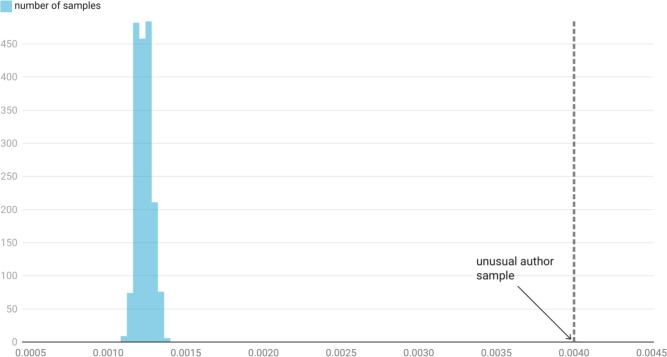
“When compared with other equivalent samples of researchers in 2021 (Fig. 3), with a cluster coefficient of greater than 0.4, and publications greater than 20”
§ Identifying fabricated networks within authorship-for-sale enterprises > Results and analysis
“Figure: Fig. 3 Histogram of the graph density of the co authorship networks of random samples of researchers with clustering coefficients of less than 0.4 and greater than 20 publications.”
Citations
Cites
1 retracted
Abalkina, A. (2023) · Learned Publishing · doi:10.1002/leap.1574 · Cited by 101
RetractedCollective dynamics of ‘small-world’ networks
Watts, D. J., & Strogatz, S. H. (1998) · Nature · doi:10.1038/30918 · Cited by 43,060 · cited 1×
“More formally, for a researcher who is heavily engaged with authorship-for-sale networks, their personal network (their egocentric network) of co-authors will have a low clustering coefficient [48], with the only connection be-tween the different papers being the researcher themselves.”
Neocortex size as a constraint on group size in primates
Dunbar, R. I. M. (1992) · Journal of Human Evolution · doi:10.1016/0047-2484(92)90081-j · Cited by 2,542 · cited 2×
“As Dunbar [14] points out, there is a limit to the number of friendships that we can maintain at different levels of intensity.”
Fortunato, S., Bergstrom, C. T., Börner, K., Evans, J. A., Helbing, D., Milojević, S., Petersen, A. M., Radicchi, F., Sinatra, R., Uzzi, B., et al. (2018) · Science · doi:10.1126/science.aao0185 · Cited by 1,497 · cited 1×
“Specifically, we believe that practices fundamental to the business models of paper mills leave a collaboration fingerprint that can be identified using techniques familiar to the ‘Science of Science’ [22].”
Misconduct accounts for the majority of retracted scientific publications
Fang, F. C., Steen, R. G., & Casadevall, A. (2012) · Proceedings of the National Academy of Sciences · doi:10.1073/pnas.1212247109 · Cited by 1,232 · cited 1×
“This percentage is also in broad agreement with previous partial studies in 2012, and 2016 [19, 37] 3.”
Edwards, M. A., & Roy, S. (2017) · Environmental Engineering Science · doi:10.1089/ees.2016.0223 · Cited by 688 · cited 1×
“It is argued [16] that undesirable behaviours associated with paper mills are driven by the precise systems put in place to ensure that research is well-regulated.”
Frieze, A., & Karoński, M. (2015) · doi:10.1017/cbo9781316339831 · Cited by 576
McNutt, M. K., Bradford, M., Drazen, J. M., Hanson, B., Howard, B., Jamieson, K. H., Kiermer, V., Marcus, E., Pope, B. K., Schekman, R., et al. (2018) · Proceedings of the National Academy of Sciences · doi:10.1073/pnas.1715374115 · Cited by 392 · cited 2×
“The call for system wide change with regard to ORCiD is not new [35], but it is certainly now more urgent.”
Dimensions: Building Context for Search and Evaluation
Hook, D. W., Porter, S. J., & Herzog, C. (2018) · Frontiers in Research Metrics and Analytics · doi:10.3389/frma.2018.00023 · Cited by 325 · cited 2×
“Dimensions is well-positioned for the analysis that we perform here as: (a) Dimensions ’ inclusion criteria is based on an output having a unique identifier rather than on an editorial policy [27] and hence does not implicitly limit the range of publication venues that can be analysed.”
Self-citationMasspersonal communication: A model bridging the mass-interpersonal divide
O’Sullivan, P. B., & Carr, C. T. (2018) · New Media & Society · doi:10.1177/1461444816686104 · Cited by 314 · cited 1×
“At one level this is perhaps a little reminiscent of some social networking behaviour [41], but this is not how research tends to work.”
Research works printed but not linked: 7
- Chawla, D. S. Exposing a most unscrupulous journal (2023).
- Barbour, B. & Stell, B. M. Gaming the Metrics (The MIT Press, London, 2020).
- Montenegro, A. ORCID Public Data File 2023. Tech. Rep., ORCID (2023). 10.23640/07243.24204912.v1. · DOI
- {Millman”], [”Gaël Varoquaux and Travis Vaught and Jarrod} (ed.). Exploring Network Structure, Dynamics, and Function using NetworkX (2008).
- FLYNN, J. Guest Post-Addressing Paper Mills and a Way Forward for Journal Security.
- Flintoft, L., MacCallum, S. P. D. a. W. C. J., Streeter, D. o. F. S. R. a. W. M., Flanagan, Director of Research Integrity Strategy and Policy at Wiley Dave & Ferguson, S. D. o. D. S. a. W. L. Tackling publication manipulation at scale: Hindawi’s journey and lessons for academic publishing. Tech. Rep., Hindawi (2023).
- Hub, S. I. Springer Nature unveils two new AI tools to protect research integrity (2024).
Cited by
The entities enabling scientific fraud at scale are large, resilient, and growing rapidly
Richardson, R. A. K., Hong, S. S., Byrne, J. A., Stoeger, T., & Amaral, L. A. N. (2025) · Proceedings of the National Academy of Sciences · doi:10.1073/pnas.2420092122 · Cited by 129
‘Stamp out paper mills’ — science sleuths on how to fight fake research
Abalkina, A., Aquarius, R., Bik, E., Bimler, D., Bishop, D., Byrne, J., Cabanac, G., Day, A., Labbé, C., & Wise, N. (2025) · Nature · doi:10.1038/d41586-025-00212-1 · Cited by 59
The Drain of Scientific PublishingPreprint
Beigel, F., Brockington, D., Crosetto, P., Derrick, G., Fyfe, A., Barreiro, P. G., Hanson, M. A., Haustein, S., Larivière, V., NOE, C., et al. (2025) · arXiv (Cornell University) · doi:10.48550/arxiv.2511.04820 · Cited by 46
Scancar, B., Byrne, J. A., Causeur, D., & Barnett, A. G. (2026) · BMJ · doi:10.1136/bmj-2025-087581 · Cited by 39
Exclusive: These universities have the most retracted scientific articles
Noorden, R. V. (2025) · Nature · doi:10.1038/d41586-025-00455-y · Cited by 28
A proposed framework to address metric inflation in research publications
Móra, P., & Pilia, S. (2024) · Accountability in Research · doi:10.1080/08989621.2024.2445280 · Cited by 10
“This trend closely mirrors the countries with the highest numbers of retractions (Van Noorden 2023), and highest numbers of unusual papers 1 detected in 2020, 2021 and 2022 (Porter and McIntosh 2024), suggesting that some prolific authors may be manipulating the publication process.”
The Black Market of Publications in Peru: Paper Mills and Authorship for Sale
Alhuay‐Quispe, J., & Yupari, V. Y. (2025) · Learned Publishing · doi:10.1002/leap.2014 · Cited by 7
Lendvai, G. F., & Sasvári, P. (2026) · Journal of Information Science · doi:10.1177/01655515251362383 · Cited by 6
“These operations have disproportionately affected countries with high publication pressure and limited regulatory oversight [58–61].”
Combating Fake Science in the Age of Generative Artificial Intelligence: A Biomedical Perspective.
Jian, X., & Yaeger, L. H. (2025) · PubMed Central · Cited by 5
Forensic Scientometrics -- An emerging discipline to protect the scholarly recordPreprint
McIntosh, L. D., & Vitale, C. H. (2024) · arXiv (Cornell University) · doi:10.48550/arxiv.2404.00478 · Cited by 5
Self-citationBuyTheBy: A dataset of 18,710 text-based paper mill advertisements with 51,812 timestamped pricesPreprint
Richardson, R. A. K., Hong, S. S., & Abalkina, A. (2026) · arXiv (Cornell University) · doi:10.48550/arxiv.2604.24576 · Cited by 6
Research integrity, thick and thin
Vincent, M., & Hooper, M. (2025) · Synthese · doi:10.1007/s11229-025-05157-6 · Cited by 4
“‘Trust marker’, of course, is just another way of saying ‘a proxy for trust’, and identifying patterns between trust markers has proven to be a valuable mechanism for monitoring integrity across large publication data sets (Porter & McIntosh, 2024).”
Dony, C. (2025) · Canadian Journal of Information and Library Science · doi:10.5206/cjils-rcsib.v48i1.22212 · Cited by 4
Opening Pandora’s box: Paper mills in conference proceedings
Kunešová, A. A. M., Kunešová, M., Öztürk, Y., & Pirelli, S. (2026) · Accountability in Research · doi:10.1080/08989621.2026.2733727 · Cited by 4
“…network and scientometric approaches, statistical similarity and clustering techniques, automated text analysis, and identification of field-specific issues, such as incorrect nucleotide sequences (Labbé et al., 2019; Porter & McIntosh, 2024; González-Márquez et al., 2024; Scancar et al., 2026).”
Exploring ORCID adoption and metadata presence in Spain’s research landscape
Arroyo‐Machado, W., Vargas‐Quesada, B., Muñoz-Écija, T., & Chinchilla‐Rodríguez, Z. (2025) · Scientometrics · doi:10.1007/s11192-025-05248-8 · Cited by 3
“This approach aligns with methodologies proposed by Porter and McIntosh (2024), enhanced by OpenAlex data, to improve transparency and traceability in scholarly contri‑ butions, thus strengthening the credibility of academic work.”
The Emerging AI Paper-Review Arms Race: Adversarial Co-Evolution in Scholarly PublishingPreprint
Wang, C., Li, M., Braimah, A., Fan, C., Wang, T., Guan, W., Zhang, R., Zhou, T., & Zhou, D. (2026) · arXiv (Cornell University) · doi:10.48550/arxiv.2609.07713 · Cited by 3
“Before generative AI, its most visible problematic form was industrialized production through paper mills and related authorship-for-sale practices (Porter and McIntosh, 2024; Abalkina, 2023).”
Marcelino, R. (2026) · Research Integrity and Peer Review · doi:10.1186/s41073-026-00197-z · Cited by 2
Shining Light on “Dark Science”: Mapping the Field of Science Watchdog Journalism
Schapals, A. K., Riedlinger, M. E., Montaña-Niño, S. X., & Rednikin, A. (2026) · Media and Communication · doi:10.17645/mac.12392 · Cited by 2
“For example, Nature has published a series of news features on fraudulent publication infrastructures (e.g., Porter & McIntosh, 2024) and the work of “science sleuths” (e.g., Kwon, 2025), as well as analyses of systemic misconduct trends (Kozlov, 2026).”
Exploitation of intellectual property systems for the manipulation of academic reputations
Richardson, R. A. K., Wise, N. H., Hong, S. S., Draper, M. J., & Fackrell, S. (2025) · International Journal for Educational Integrity · doi:10.1007/s40979-025-00185-8 · Cited by 2
“This invites the use of signature-based risk detection in IP systems, similar to analyses routinely employed in cybersecurity (Liao et al. 2013) and recently employed for identifying publication fraud (Cabanac et al. 2022; Porter and McIntosh 2024).”
Fake research papers flagged by analysing authorship trends
Chawla, D. S. (2024) · Nature · doi:10.1038/d41586-024-00344-w · Cited by 2
Genomic Data Are Not Commodities: Advocating for Collective Responsibility in Open Science
Amaral, D. T., Fentanes‐Machado, J. R., & Bonatelli, I. A. S. (2025) · Journal of Biogeography · doi:10.1111/jbi.70062 · Cited by 1
Addressing free rider issues in academic authorship in medical education
Lewis, K. O., Foong, C. C., & Fatima, S. S. (2026) · Annals of Medicine · doi:10.1080/07853890.2026.2625580 · Cited by 1
The Role of Institutional Context in Shaping Migrant Scientists’ New Research Collaborations
Paul, A. M., Hamid, Z., Kuehne, K. W., Sahakyan, M., & AlShebli, B. (2026) · Journal of the Knowledge Economy · doi:10.1007/s13132-026-03340-9 · Cited by 1
“Additionally, some Saudi institutions have been linked to the use of “paper mills” to boost publication output (Conroy, 2023 ; Porter & McIntosh, 2024).”
McIntosh, L. D., Sinclair, A. J., & Linacre, S. (2026) · arXiv (Cornell University) · doi:10.48550/arxiv.2602.14793 · Cited by 1
Self-citationThe Rise and Fall of the Initial EraPreprint
Porter, S., & Hook, D. W. (2024) · arXiv (Cornell University) · doi:10.48550/arxiv.2404.06500
“And, in a world where nefarious actors are on the rise [50], understanding the provenance of research often relies on understanding identity.”
BackgroundSelf-citationChen, K., Wei, E., Mitanoska, A., Gearhart, M. D., Kyba, M., & Bosnakovski, D. (2025) · Cells · doi:10.3390/cells14100695
The Dark Sides of Modern Science: Knowledge Production and AuthoringPreprint
Sochi, T. (2025) · OSF Preprints (OSF Preprints) · doi:10.31219/osf.io/ua2yg_v1
Kamel, R., & Ghassemi-Barghi, N. (2025) · Trends in Scholarly Publishing · doi:10.21124/tsp.2025.81.87 · Cited by 2
The phenomenon of ‘value extraction’ in Open Access
Spitale, G., Germani, F., & Biller‐Andorno, N. (2026) · Accountability in Research · doi:10.1080/08989621.2026.2661668
“…here we suggest that to evaluate the broad relevance of value extraction in OA, bibliometric and network-based screening approaches could be used (Porter and McIntosh 2024); bibliometrics can help flag unconventional or questionable authorship patterns, including structures consistent with…”
Farquhar, H. (2026) · Research Square · doi:10.21203/rs.3.rs-9511063/v1
Gayen, A., De, A., Mukhopadhya, S., Saha, P., & Jana, A. (2026) · SSRN Electronic Journal · doi:10.2139/ssrn.6981435
Understanding the Quartile Conundrum: Research Evaluation in Spain and Latin America
Chacón-Luna, A. E., Álvarez-Muñoz, P., Mariño-Arreaga, A., Herrera, A. C. R., & Faytong‐Haro, M. (2026) · Publications · doi:10.3390/publications14030039
“…international literature on paper mills and authorship markets shows that fabricated manuscripts, sold authorship slots, and abnormal collaboration networks are real problems in highly metricized environments (Byrne & Christopher, 2020; Abalkina, 2023; Parker et al., 2024; Porter & McIntosh, 2024).”
The Challenges of Scientific Publishing: An Editor‐In‐Chief's Perspective
Zimmer, L., & Bousquet, P. (2026) · Fundamental and Clinical Pharmacology · doi:10.1111/fcp.70105
Hayashi, M. C. P. I., Guimarães, J. A. C., Rego-Piva, L. M., & Silva, A. M. D. S. (2026) · AtoZ novas práticas em informação e conhecimento · doi:10.5380/atoz.v15.99036
Samarek, R., & Martinek, R. (2026) · arXiv (Cornell University) · doi:10.48550/arxiv.2608.10774
“…self-citation profiles were identified by Van Noorden [Van Noorden and Singh Chawla, 2019], retractions associated with paper mills are rising [Candal-Pedreira et al., 2022, Van Noorden, 2023], and fabricated co-authorship networks can be identified topologically [Porter and McIntosh, 2024].”
Tracing high-profile attention to questionable research as a case for funder due diligencePreprint
Silvi, F., & McIntosh, L. D. (2026) · arXiv (Cornell University) · doi:10.48550/arxiv.2608.30613
“Unless grant and ethics identifiers are consistently recorded in structured, auditable form, neither funders nor institutions can verify which of their acknowledged outputs warrant closer scrutiny [27].”
InfluentialSelf-citationPaper mills in dermatology: a cross-sectional study of retracted publications
Tan, E., Epstein, R. J., Ahmed, S., & Williams, H. C. (2026) · British Journal of Dermatology · doi:10.1093/bjd/ljag381 · Cited by 1
Irwansyah, I., Syahputri, I. W., & Syahputra, I. W. (2026) · European Science Editing · doi:10.3897/ese.2026.e191171
Porter, S. (2026) · arXiv (Cornell University) · doi:10.48550/arxiv.2610.40745
“…platforms that match researchers to policy-engagement opportunities [43] to integrity screens that flag anomalous publication behaviour [27, 47], and all these applications broadly take author identities as given and author disambiguation if not as a solved problem then a sufficiently…”
Self-citationSerzhenko, A. (2026) · Филология научные исследования · doi:10.7256/2454-0749.2026.10.82417
Metadata
- Authors
- Porter, S. J., & McIntosh, L. D.
- Affiliations
- Digital Science (United Kingdom) (GB)
- Corresponding author
- Porter, Simon J.
- Venue
- Scientific Reports
- Published
- 2024-11-28
- Volume
- 14
- Issue
- 1
- Pages
- 29569-29569
- ISSN
- 2045-2322 (ISSN-L)
- PMC
- PMC11604963
- OpenAlex
- W4404830201
- Cited by
- 22
- References
- 34
- Citations by year
- 2026: 8 · 2025: 11 · 2024: 3
- FWCI
- 9.09
- Type
- journal article
- Language
- en
- Open access
- gold
- doi.org
- Licence
- cc-by
- creativecommons.org/licenses/by/4.0 (tdm)
- creativecommons.org/licenses/by/4.0 (vor)
- Locations
- Scientific Reports (publishedVersion, cc-by)
- PubMed Central (publishedVersion, cc-by)
- PubMed (publishedVersion)
- arXiv (Cornell University) (submittedVersion, cc-by)
- DOAJ (DOAJ: Directory of Open Access Journals) (submittedVersion, cc-by-sa)
- arXiv (Cornell University) (cc-by)
- Topics
- Social Sciences › Education › Academic integrity and plagiarism
- Social Sciences › Library and Information Sciences › scientometrics and bibliometrics research
- Physical Sciences › Physics and Astronomy › Statistical and Nonlinear Physics › Complex Network Analysis Techniques
- Keywords
- paper mills, authorship fraud, network fingerprinting, co-authorship networks, research integrity
About these checks
Registry, retraction, Cites and statistics results are computed, not judged, with one exception: a printed reference that no index lists is read once by a model before it counts as a citation error. Claims are extracted by a model and kept only when their quote appears verbatim in the text; each cited source is then checked, with a model’s help, for whether it says what the claim relies on. Those verdicts can be wrong — read the claim’s quote and the cited source before relying on one.
The claim verdicts this report counts are experimental: their accuracy is not yet measured.
A language model drew the claims from the paper on 2026-10-05, under version 3 of the claim definition (model deepseek-v4.1-flash, prompt extract-v3).
A second model labelled each claim on 2026-10-05 (model jev-1.13-20260917, definition revision gold-guideline-v0.2).
Cited sources are checked with a language model’s help (gpt-6-sol and qwen3.8-omni-flash).
Statistics and arithmetic are recomputed, not judged.
Confidence bands are shown only for fields calibrated on our annotated test set. None is calibrated yet, so no band is shown.
What counts as a claim ›How we measure confidence ›How we check this ›
Are you an author, or do you see a problem with this page? Request a review
Data sources
Bibliographic data: Semantic Scholar, OpenAlex, Crossref.
Contains information from the Semantic Scholar Academic Graph Datasets, made available under the ODC Attribution License (ODC-BY 1.0).
Semantic Scholar’s data is described in: Kinney, R., et al. (2023). The Semantic Scholar Open Data Platform. arXiv:2301.10140.
