

High precision characterization of RCCX rearrangements in a 21-hydroxylase deficiency Latin American cohort using oxford nanopore long read sequencing
Open accessPublished version of a preprint
The DOI matches its Crossref record; 52 of the 52 references it cites were found in a registry or an index.
Abstract
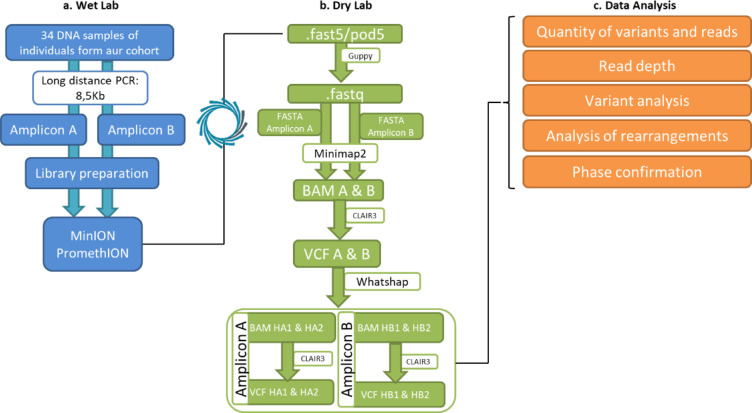
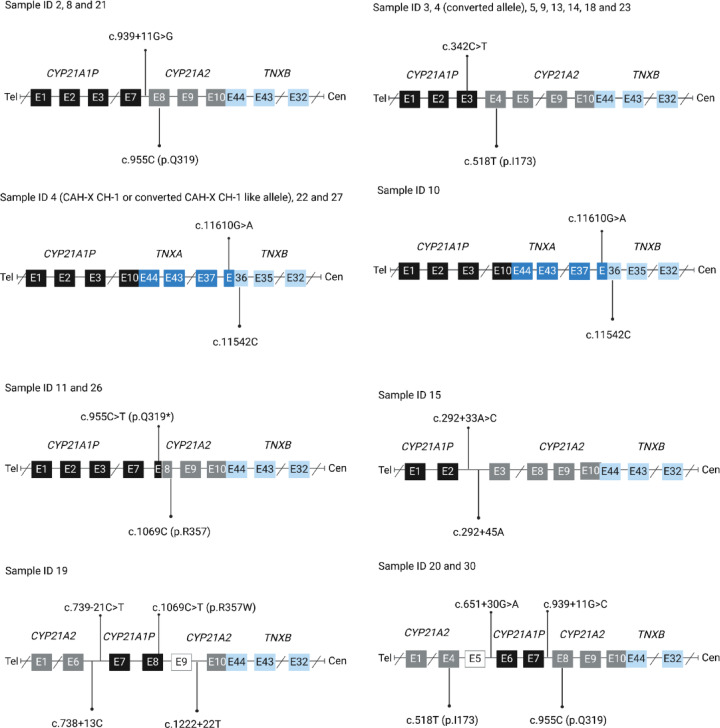
The CYP21A2 gene, mapped to the RCCX module in 6p21.3, is responsible for 21-hydroxylase deficiency (21-HD). In this work, we leveraged Oxford Nanopore Technology (ONT) Long Read sequencing (LRS) to analyze samples from an Argentinian cohort of 21-HD. A total of 34 samples were sequenced in 2 amplicons of 8.5 Kb covering the centromeric and telomeric RCCX modules. The number of variants found varied between 3 and 106 and all expected pathogenic variants and new ones were obtained with the LR sequencing workflow developed. We defined with higher accuracy the breakpoints of the rearrangements allowing the reclassification of chimeras and/or converted genes in 18.75% of the samples, some of them with clinical implications. By addressing the study of the telomeric RCCX module/s in depth, we found 19 genetic variants (GVs) for CYP21A1P and 29 GVs for TNXA not previously described in Latin American populations. This study may represent the first application of ONT LRS for clinical evaluation of Latin American subjects, highlighting the importance of LRS as a high-resolution method of diagnosis. It would allow a better understanding of the diversity of the RCCX modules and improve our knowledge of the variation of genetic mechanisms behind the disease.
Overview
The claims and statistics of this paper haven’t been checked yet.
Free: it reads the open-access text and checks the first 5 claims that cite a source we can check. Create a free account to check every claim.
Integrity signals
Registry
Cites
Statistics
Figures
Verification
Claims the paper makes
The claims and statistics of this paper haven’t been checked yet.
Free: it reads the open-access text and checks the first 5 claims that cite a source we can check. Create a free account to check every claim.
Claims other papers make about this one
Each is checked against this paper’s own text: does it say what the citing paper says it does?
The source backs part of the claim, not all of it — or backs it for a different population, condition or comparison.
In the citing paper
“In contrast, Oxford Nanopore Technologies (ONT) provides more cost-effective and portable sequencing solutions and has already been successfully applied to CYP21A2 genotyping, demonstrating its feasibility for complex loci analysis.”
From Evolution of molecular diagnostic strategies for 21-hydroxylase deficiency: from classical methods to advanced genomic techniques (2026) · cites this paper as [90]
Experimental — accuracy not yet measuredThe source backs part of the claim, not all of it — or backs it for a different population, condition or comparison.
In the citing paper
“Remaining challenges mainly relate to data analysis and standardization rather than technical applicability (90).”
From Evolution of molecular diagnostic strategies for 21-hydroxylase deficiency: from classical methods to advanced genomic techniques (2026) · cites this paper as [90]
Experimental — accuracy not yet measured
Self-check
Percentages, sums and reported differences re-computed from the paper’s own numbers.
The self-check needs the paper’s full text.
Citations
Cites
Richards, S., Aziz, N., Bale, S., Bick, D., Das, S., Gastier-Foster, J., Grody, W. W., Hegde, M., Lyon, E., Spector, E., et al. (2015) · Genetics in Medicine · doi:10.1038/gim.2015.30 · Cited by 32,594
Minimap2: Pairwise alignment for nucleotide sequences
Li, H. (2018) · Bioinformatics · doi:10.1093/bioinformatics/bty191 · Cited by 14,807
dbSNP: the NCBI database of genetic variation
Sherry, S. T. (2001) · Nucleic Acids Research · doi:10.1093/nar/29.1.308 · Cited by 7,502
ClinVar: public archive of relationships among sequence variation and human phenotype
Landrum, M. J., Lee, J. M., Riley, G. R., Jang, W., Rubinstein, W. S., Church, D. M., & Maglott, D. R. (2014) · Nucleic Acids Research · doi:10.1093/nar/gkt1113 · Cited by 3,516
DECIPHER: Database of Chromosomal Imbalance and Phenotype in Humans Using Ensembl Resources
Firth, H. V., Richards, S. M., Bevan, A. P., Clayton, S., Corpas, M., Rajan, D., Vooren, S. V., Moreau, Y., Pettett, R. M., & Carter, N. P. (2009) · The American Journal of Human Genetics · doi:10.1016/j.ajhg.2009.03.010 · Cited by 1,990
A genomic mutational constraint map using variation in 76,156 human genomes
Chen, S., Francioli, L. C., Goodrich, J. K., Collins, R. L., Kanai, M., Wang, Q., Alföldi, J., Watts, N. A., Vittal, C., Gauthier, L. D., et al. (2024) · Nature · doi:10.1038/s41586-023-06045-0 · Cited by 1,727
HGVS Recommendations for the Description of Sequence Variants: 2016 Update
den Dunnen, J. T., Dalgleish, R., Maglott, D. R., Hart, R. K., Greenblatt, M. S., McGowan-Jordan, J., Roux, A.-F., Smith, T., Antonarakis, S. E., Taschner, P. E. M., et al. (2016) · Human Mutation · doi:10.1002/humu.22981 · Cited by 1,653
ClinGen — The Clinical Genome Resource
Rehm, H. L., Berg, J. S., Brooks, L. D., Bustamante, C. D., Evans, J. P., Landrum, M. J., Ledbetter, D. H., Maglott, D. R., Martin, C. L., Nussbaum, R. L., et al. (2015) · New England Journal of Medicine · doi:10.1056/nejmsr1406261 · Cited by 1,496
Structure of human steroid 21-hydroxylase genes.
White, P. C., New, M. I., & Dupont, B. (1986) · Proceedings of the National Academy of Sciences · doi:10.1073/pnas.83.14.5111 · Cited by 569
Congenital Adrenal Hyperplasia—Current Insights in Pathophysiology, Diagnostics, and Management
Claahsen - van der Grinten, H. L., Speiser, P. W., Ahmed, S. F., Arlt, W., Auchus, R. J., Falhammar, H., Flück, C. E., Guasti, L., Huebner, A., Kortmann, B. B. M., et al. (2022) · Endocrine Reviews · doi:10.1210/endrev/bnab016 · Cited by 556
The rules and impact of nonsense-mediated mRNA decay in human cancers
Lindeboom, R. G. H., Supek, F., & Lehner, B. (2016) · Nature Genetics · doi:10.1038/ng.3664 · Cited by 545
WhatsHap: fast and accurate read-based phasing
Martin, M., Patterson, M., Garg, S., O Fischer, S., Pisanti, N., Klau, G. W., Schöenhuth, A., & Marschall, T. (2016) · bioRxiv (Cold Spring Harbor Laboratory) · doi:10.1101/085050 · Cited by 449
Symphonizing pileup and full-alignment for deep learning-based long-read variant calling
Zheng, Z., Li, S., Su, J., Leung, A. W.-S., Lam, T.-W., & Luo, R. (2022) · Nature Computational Science · doi:10.1038/s43588-022-00387-x · Cited by 405
Real-time selective sequencing using nanopore technology
Loose, M., Malla, S., & Stout, M. (2016) · Nature Methods · doi:10.1038/nmeth.3930 · Cited by 399 · cited 1×
“Nevertheless, and for a more accurate definition of the configuration of the modules, adaptive sampling developed by ONT may be a more suitable option 35,36 .”
Targeted long-read sequencing identifies missing disease-causing variation
Miller, D. E., Sulovari, A., Wang, T., Loucks, H., Hoekzema, K., Munson, K. M., Lewis, A. P., Fuerte, E. P. A., Paschal, C. R., Walsh, T., et al. (2021) · The American Journal of Human Genetics · doi:10.1016/j.ajhg.2021.06.006 · Cited by 223 · cited 1×
“Nevertheless, and for a more accurate definition of the configuration of the modules, adaptive sampling developed by ONT may be a more suitable option 35,36 .”
Late-onset steroid 21-hydroxylase deficiency: a variant of classical congenital adrenal hyperplasia
KOHN, B., LEVINE, L. S., POLLACK, M. S., PANG, S., LORENZEN, F., LEVY, D., LERNER, A. J., RONDANINI, G. F., DUPONT, B., & NEW, M. I. (1982) · The Journal of Clinical Endocrinology & Metabolism · doi:10.1210/jcem-55-5-817 · Cited by 204
Higashi, Y., Tanae, A., Inoue, H., & Fujii-Kuriyama, Y. (1988) · Europe PMC (PubMed Central) · Cited by 188
Frequent deletion and duplication of the steroid 21-hydroxylase genes.
WERKMEISTER, J. W., New, M. I., Dupont, B., & White, P. C. (1986) · PubMed Central · Cited by 142
MinION-based long-read sequencing and assembly extends the Caenorhabditis elegans reference genome
Tyson, J. R., O'Neil, N. J., Jain, M., Olsen, H. E., Hieter, P., & Snutch, T. P. (2018) · Genome Research · doi:10.1101/gr.221184.117 · Cited by 135
Gene Conversion in Salt-Losing Congenital Adrenal Hyperplasia with Absent Complement C4B Protein*
DONOHOUE, P. A., VAN DOP, C., McLEAN, R. H., WHITE, P. C., JOSPE, N., & MIGEON, C. J. (1986) · The Journal of Clinical Endocrinology & Metabolism · doi:10.1210/jcem-62-5-995 · Cited by 124
CYP21A2 mutation update: Comprehensive analysis of databases and published genetic variants
Simonetti, L., Bruque, C. D., Fernández, C. S., Benavides-Mori, B., Delea, M., Kolomenski, J. E., Espeche, L. D., Buzzalino, N. D., Nadra, A. D., & Dain, L. (2018) · Human Mutation · doi:10.1002/humu.23351 · Cited by 122
Self-citation(1981) · PubMed · Cited by 97
Parajes, S., Quinteiro, C., Domínguez, F., & Loidi, L. (2008) · PLoS ONE · doi:10.1371/journal.pone.0002138 · Cited by 87
Junction Site Analysis of Chimeric CYP21A1P/CYP21A2 Genes in 21-Hydroxylase Deficiency
Chen, W., Xu, Z., Sullivan, A., Finkielstain, G. P., Van Ryzin, C., Merke, D. P., & McDonnell, N. B. (2012) · Clinical Chemistry · doi:10.1373/clinchem.2011.174037 · Cited by 86
Rearrangement of 21-hydroxylase genes in disease-associated MHC supratypes
Garlepp, M. J., Wilton, A. N., Dawkins, R. L., & White, P. C. (1986) · Immunogenetics · doi:10.1007/bf00377968 · Cited by 85 · cited 1×
“Note, however, that the results may also be interpreted as a bimodular arrangement and homozygosity for amplicon B. Likewise, it is well documented that p.V282L is part of a known conserved haplotype with a pseudogene duplication 15–19 .”
Comprehensive analysis of congenital adrenal hyperplasia using long-read sequencing
Liu, Y., Chen, M., Liu, J., Mao, A., Teng, Y., Yan, H., Zhu, H., Li, Z., Liang, D., & Wu, L. (2022) · Clinical Chemistry · doi:10.1093/clinchem/hvac046 · Cited by 80
Laron, Z., Pollack, M. S., Zamir, R., Roitman, A., Dickerman, Z., Levine, L. S., LORENZEN, F., O’Neill, G. J., PANG, S., New, M. I., et al. (1980) · Human Immunology · doi:10.1016/0198-8859(80)90009-9 · Cited by 72 · cited 1×
“Note, however, that the results may also be interpreted as a bimodular arrangement and homozygosity for amplicon B. Likewise, it is well documented that p.V282L is part of a known conserved haplotype with a pseudogene duplication 15–19 .”
Tenascin-X, Congenital Adrenal Hyperplasia, and the CAH-X Syndrome
Miller, W. L., & Merke, D. P. (2018) · Hormone Research in Paediatrics · doi:10.1159/000481911 · Cited by 61 · cited 2×
“Likewise, samples 11 and 26 have been previously genotyped as having a converted allele and a chimera, both of them involving a CYP21A1P / CYP21A 2 rearrangement up to p.L308Ffs*6 GV as tested by MLPA.”
Koppens, P. F. J. (2002) · Human Molecular Genetics · doi:10.1093/hmg/11.21.2581 · Cited by 57 · cited 1×
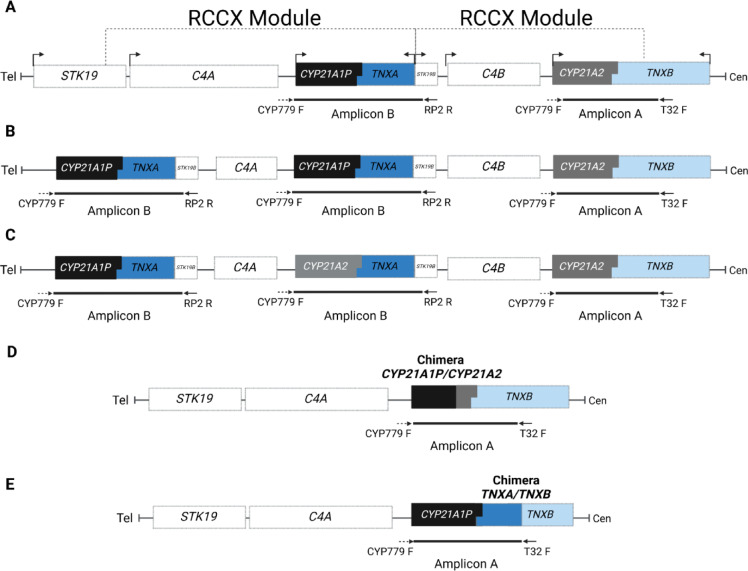
“As it was mentioned above, chimeras and gene conversions represent a significant number of disease-causing alleles in 21-HD and in CAH-X as well 30,34 .”
PCR-based detection of the CYP21 deletion and TNXA/TNXB hybrid in the RCCX module
Lee, H.-H., Lee, Y., & Lin, C.-Y. (2004) · Genomics · doi:10.1016/j.ygeno.2003.11.006 · Cited by 52
Genes and Pseudogenes: Complexity of the RCCX Locus and Disease
Carrozza, C., Foca, L., De Paolis, E., & Concolino, P. (2021) · Frontiers in Endocrinology · doi:10.3389/fendo.2021.709758 · Cited by 37 · cited 1×
“In addition, 5 different types of TNXA / TNXB chimeras have been reported 9,10 .”
Tsai, L., Cheng, C., Chuang, S.-H., & Lee, H.-H. (2011) · Analytical Biochemistry · doi:10.1016/j.ab.2011.02.016 · Cited by 30 · cited 1×
“…observed that this homozygosity involved the entire CYP21A2 gene in a considerable number of patients, and after LRS we confirm that it extends at least to the neighboring region of the TNXB gene that was analyzed in this study (exon 32–44) but not to the RCCX module containing the pseudogenes.”
FORGE: A tool to discover cell specific enrichments of GWAS associated SNPs in regulatory regions
Dunham, I., Kulesha, E., Iotchkova, V., Morganella, S., & Birney, E. (2015) · F1000Research · doi:10.12688/f1000research.6032.1 · Cited by 26
Cantürk, C., Baade, U., Salazar, R., Storm, N., Pörtner, R., & Höppner, W. (2011) · Clinical Chemistry · doi:10.1373/clinchem.2010.156893 · Cited by 23 · cited 2×
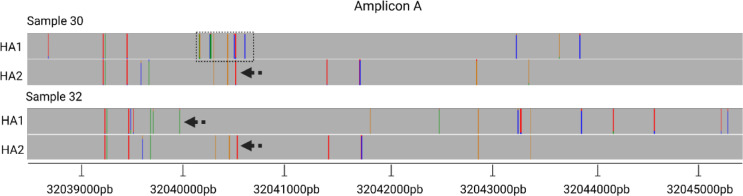
“After analyzing LR sequencing of some samples with this genotype (samples 12, 16, 28, 31, and 33), we conclude that the entire amplicon A presented homozygosity and thus phasing and haplotyping suggested the existence of only one allele.”
Li, H., Zhu, X., Yang, Y., Wang, W., Mao, A., Li, J., Bao, S., & Li, J. (2023) · Clinica Chimica Acta · doi:10.1016/j.cca.2023.117419 · Cited by 23 · cited 1×
“Likewise, samples 11 and 26 have been previously genotyped as having a converted allele and a chimera, both of them involving a CYP21A1P / CYP21A 2 rearrangement up to p.L308Ffs*6 GV as tested by MLPA.”
Genes, pseudogenes and like genes: The case of 21-hydroxylase in Italian population
Concolino, P., Mello, E., Minucci, A., Giardina, B., & Capoluongo, E. (2013) · Clinica Chimica Acta · doi:10.1016/j.cca.2013.05.019 · Cited by 21 · cited 2×
“After analyzing LR sequencing of some samples with this genotype (samples 12, 16, 28, 31, and 33), we conclude that the entire amplicon A presented homozygosity and thus phasing and haplotyping suggested the existence of only one allele.”
Chen, W., Xu, Z., Nishitani, M., Van Ryzin, C., McDonnell, N. B., & Merke, D. P. (2012) · Human Genetics · doi:10.1007/s00439-012-1217-8 · Cited by 18 · cited 2×
“Although 2/3 of the chromosomes analyzed have a duplicated RCCX module, monomeric arrangements and up to four copies of the module have been described 30 .”
Adachi, E., Nakagawa, R., Tsuji-Hosokawa, A., Gau, M., Kirino, S., Yogi, A., Nakatani, H., Takasawa, K., Yamaguchi, T., Kosho, T., et al. (2024) · The Journal of Clinical Endocrinology & Metabolism · doi:10.1210/clinem/dgad577 · Cited by 16
Long-Read Sequencing Solves Complex Structure of CYP21A2 in a Large 21-Hydroxylase Deficiency Cohort
Wang, R., Luo, X., Sun, Y., Liang, L., Mao, A., Lu, D., Zhang, K., Yang, Y., Sun, Y., Sun, M., et al. (2024) · The Journal of Clinical Endocrinology & Metabolism · doi:10.1210/clinem/dgae519 · Cited by 16
Tantirukdham, N., Sahakitrungruang, T., Chaisiwamongkol, R., Pongpanich, M., Srichomthong, C., Assawapitaksakul, A., Buasong, A., Tongkobpetch, S., Yeetong, P., & Shotelersuk, V. (2022) · The Journal of Clinical Endocrinology & Metabolism · doi:10.1210/clinem/dgac187 · Cited by 14 · cited 1×
“This represents an advantage of the inclusion of the analysis of the telomeric module/s (amplicon B) in our algorithm compared to other works analyzing only the module containing the active CYP21A2 gene 8,24 .”
Zhang, X., Gao, Y., Lü, L., Cao, Y., Zhang, W., Sun, B., Wu, X., Tong, A., Chen, S., Wang, X., et al. (2023) · Journal of Endocrinological Investigation · doi:10.1007/s40618-023-02197-y · Cited by 14
Zhang, R., Cui, D., Song, C., Ma, X., Cai, N., Zhang, Y., Feng, M., Cao, Y., Chen, L., & Qiang, R. (2024) · Clinica Chimica Acta · doi:10.1016/j.cca.2024.117820 · Cited by 13 · cited 2×
“Indeed, most of the other reports that may include LRS of the RCCX module containing the pseudogenes do not present data of their GVs 20–29 .”
Yuan, D., Cai, R., Mao, A., Tan, J., Zhong, Q., Zeng, D., Tang, N., Wei, X., Huang, J., Zhang, Y., et al. (2024) · The Journal of Molecular Diagnostics · doi:10.1016/j.jmoldx.2024.05.009 · Cited by 13 · cited 1×
“After analyzing LR sequencing of some samples with this genotype (samples 12, 16, 28, 31, and 33), we conclude that the entire amplicon A presented homozygosity and thus phasing and haplotyping suggested the existence of only one allele.”
Lan, T., Jin, W., Chen, K., Zhang, J., Chen, X., & Yao, H. J. (2024) · Frontiers in Genetics · doi:10.3389/fgene.2024.1472516 · Cited by 13
Wang, Y., Zhu, G., Li, D., Pan, Y., Li, R., Zhou, T., Mao, A., Chen, L., Zhu, J., & Zhu, M. (2025) · Human Genomics · doi:10.1186/s40246-024-00696-4 · Cited by 13 · cited 2×
“These results are in accordance with a recent report comparing standard molecular analysis and targeted LRS in CAH patients, improving the definition and classification of chimeras in 41.46% of 82 probands 21 .”
InfluentialKaraoğlan, M., Nacarkahya, G., Aytaç, E. H., & Keskın, M. (2021) · Journal of Endocrinological Investigation · doi:10.1007/s40618-021-01546-z · Cited by 11
Lee, H.-H., Lee, Y., & Chao, M. (2009) · Analytical Biochemistry · doi:10.1016/j.ab.2009.11.037 · Cited by 9 · cited 2×
“In addition, 5 different types of TNXA / TNXB chimeras have been reported 9,10 .”
Lao, Q., Burkardt, D. D., Kollender, S., Faucz, F. R., & Merke, D. P. (2023) · Molecular Genetics & Genomic Medicine · doi:10.1002/mgg3.2195 · Cited by 8
Genetic characterization of a large cohort of Argentine 21‐hydroxylase Deficiency
Fernández, C. S., Taboas, M., Bruque, C. D., Benavides‐Mori, B., Belli, S., Stivel, M., Oneto, A., Pasqualini, T., Delea, M., Espeche, L. D., et al. (2020) · Clinical Endocrinology · doi:10.1111/cen.14190 · Cited by 7 · cited 4×
“After analyzing LR sequencing of some samples with this genotype (samples 12, 16, 28, 31, and 33), we conclude that the entire amplicon A presented homozygosity and thus phasing and haplotyping suggested the existence of only one allele.”
InfluentialSelf-citationZhang, X., Gao, Y., Lü, L., Cao, Y., Zhang, W., Wu, X., Tong, A., Chen, S., Wang, X., Mao, J., et al. (2025) · The Journal of Clinical Endocrinology & Metabolism · doi:10.1210/clinem/dgae819 · Cited by 6 · cited 2×
“Indeed, most of the other reports that may include LRS of the RCCX module containing the pseudogenes do not present data of their GVs 20–29 .”
Claps, A., Kolomenski, J. E., Fernández, F. D., et al. (2024) · medRxiv · doi:10.1101/2024.11.14.24317161 · Cited by 1
Self-citationShao, W., Yang, K., Lu, D., Gao, Y., Zhang, J., & Zhang, Y. Q. (2025) · The Journal of Clinical Endocrinology & Metabolism · doi:10.1210/clinem/dgaf344 · Cited by 1
Research works printed but not linked: 3
- Welcome to Oxford Nanopore Technologies. Oxford Nanopore Technologies https://nanoporetech.com/.
- ALFA. Allele Frequency Aggregator. www.ncbi.nlm.nih.gov/snp/docs/gsr/alfa/.
- Claps, A. et al. High precision characterization of RCCX rearrangements in 21-hydroxylase Argentine patients using Oxford nanopore long read sequencing. Revista Med. Vol. 83, 64 (2023). PMC12246410 40640193
Cited by
Miranda, M. C. D., Oliveira, A. C. M. D., Soares, G. J., Batatinha, J. A. P., Latronico, A. C., Mendonca, B. B., & Bachega, T. A. S. S. (2026) · Frontiers in Endocrinology · doi:10.3389/fendo.2026.1770274 · Cited by 2
Filipovic-Sadic, S., Parker, C. A., Mihailovic, M. K., Milligan, J. N., Turner, J., Borel, S. L., Le, V., Markulin, T., Janovsky, J., Killinger, B., et al. (2026) · bioRxiv (Cold Spring Harbor Laboratory) · doi:10.64898/2026.05.14.725224
Sen, A., Bock, D. J., Foster, T., Fleming, R. I., & Hodgkiss, J. M. (2026) · RSC Advances · doi:10.1039/d6ra08018a
Metadata
- Authors
- Claps, A., Kolomenski, J. E., Fernández, F., Macchiaroli, N., Ingravidi, M. L., Delea, M., Fernández, C., Castro, T., Laiseca, J., Kamenetzky, L., Taboas, M., & Dain, L.
- Affiliations
- Administración Nacional de Laboratorios e Institutos de Salud (AR)
- Universidad de Buenos Aires (AR)
- National Agricultural Technology Institute (AR)
- ORCID
- Venue
- Scientific Reports
- Published
- 2025-07-10
- Volume
- 15
- Issue
- 1
- Pages
- 24983-24983
- ISSN
- 2045-2322 (ISSN-L)
- PMC
- PMC12246410
- OpenAlex
- W4412167205
- Cited by
- 3
- References
- 52
- Citations by year
- 2026: 2 · 2025: 1
- FWCI
- 0.90
- Type
- journal article
- Language
- en
- Open access
- gold
- doi.org
- Licence
- cc-by-nc-nd
- creativecommons.org/licenses/by-nc-nd/4.0 (tdm)
- creativecommons.org/licenses/by-nc-nd/4.0 (vor)
- Locations
- Scientific Reports (publishedVersion, cc-by-nc-nd)
- medRxiv (acceptedVersion)
- PubMed Central (publishedVersion, cc-by-nc-nd)
- PubMed (publishedVersion)
- Conicet (submittedVersion, cc-by-nc-sa)
- DOAJ (DOAJ: Directory of Open Access Journals) (submittedVersion, cc-by-sa)
- Funders
- Administración Nacional de Laboratorios e Institutos de Salud (FOCANLIS 2022, NRU:2022-5)
- National Agency for the Promotion of Science and Technology (ANPCyT, PICT-2021-CAT-II-00018)
- Universidad de Buenos Aires (PIDAE 2020)
- Topics
- Health Sciences › Medicine › Endocrinology, Diabetes and Metabolism › Sexual Differentiation and Disorders
- Life Sciences › Biochemistry, Genetics and Molecular Biology › Genetics › Genomics and Rare Diseases
- Life Sciences › Biochemistry, Genetics and Molecular Biology › Genetics › Genomic variations and chromosomal abnormalities
- Keywords
- 21-hydroxylase deficiency, CYP21A2, long-read sequencing, fusion genes, novel genetic variants, Latin American populations, 6p21.3, genetic diagnosis
- MeSH terms
- Nanopore Sequencing, Adrenal Hyperplasia, Congenital, Argentina, Female, Humans, Male, Steroid 21-Hydroxylase, Gene Rearrangement, Cohort Studies, High-Throughput Nucleotide Sequencing
About these checks
Registry, retraction, Cites and statistics results are computed, not judged, with one exception: a printed reference that no index lists is read once by a model before it counts as a citation error. Claims are extracted by a model and kept only when their quote appears verbatim in the text; each cited source is then checked, with a model’s help, for whether it says what the claim relies on. Those verdicts can be wrong — read the claim’s quote and the cited source before relying on one.
Statistics and arithmetic are recomputed, not judged.
Confidence bands are shown only for fields calibrated on our annotated test set. None is calibrated yet, so no band is shown.
What counts as a claim ›How we measure confidence ›How we check this ›
Are you an author, or do you see a problem with this page? Request a review
Data sources
Bibliographic data: Semantic Scholar, OpenAlex, Crossref.
Contains information from the Semantic Scholar Academic Graph Datasets, made available under the ODC Attribution License (ODC-BY 1.0).
Semantic Scholar’s data is described in: Kinney, R., et al. (2023). The Semantic Scholar Open Data Platform. arXiv:2301.10140.
