

The DOI matches its Crossref record; 1 of the 1 references it cites were found in a registry or an index.
Co-inoculation of arbuscular mycorrhizal fungi and Bacillus subtilis enhances morphological traits, growth, and nutrient uptake in maize under limited phosphorus availability
Open accessAbstract
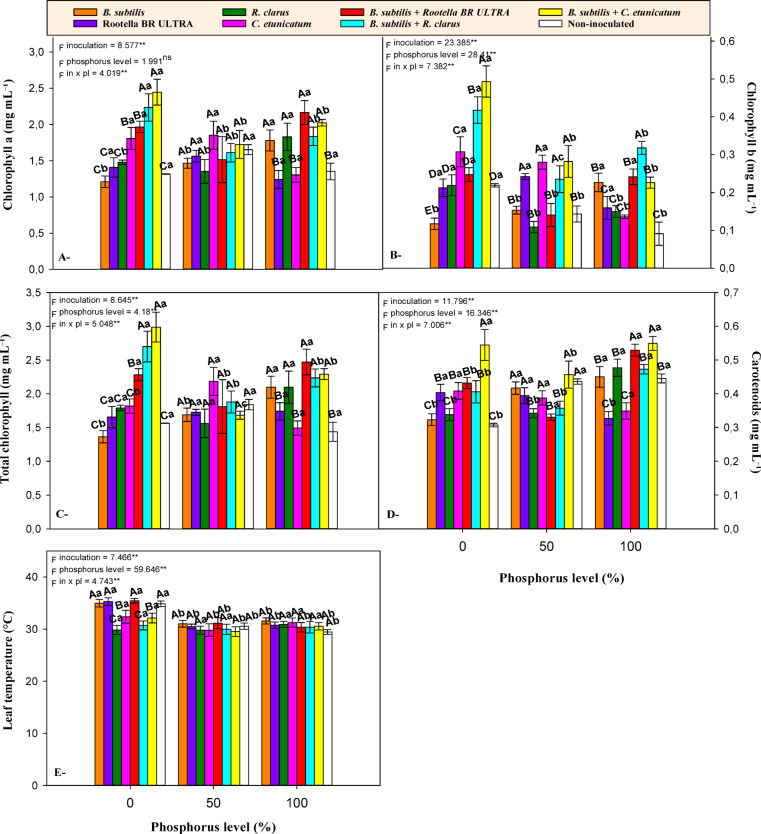
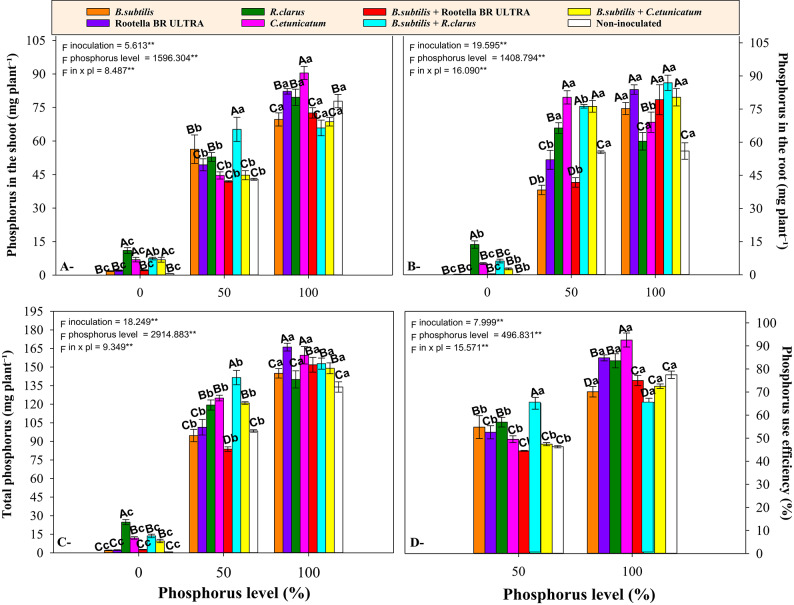
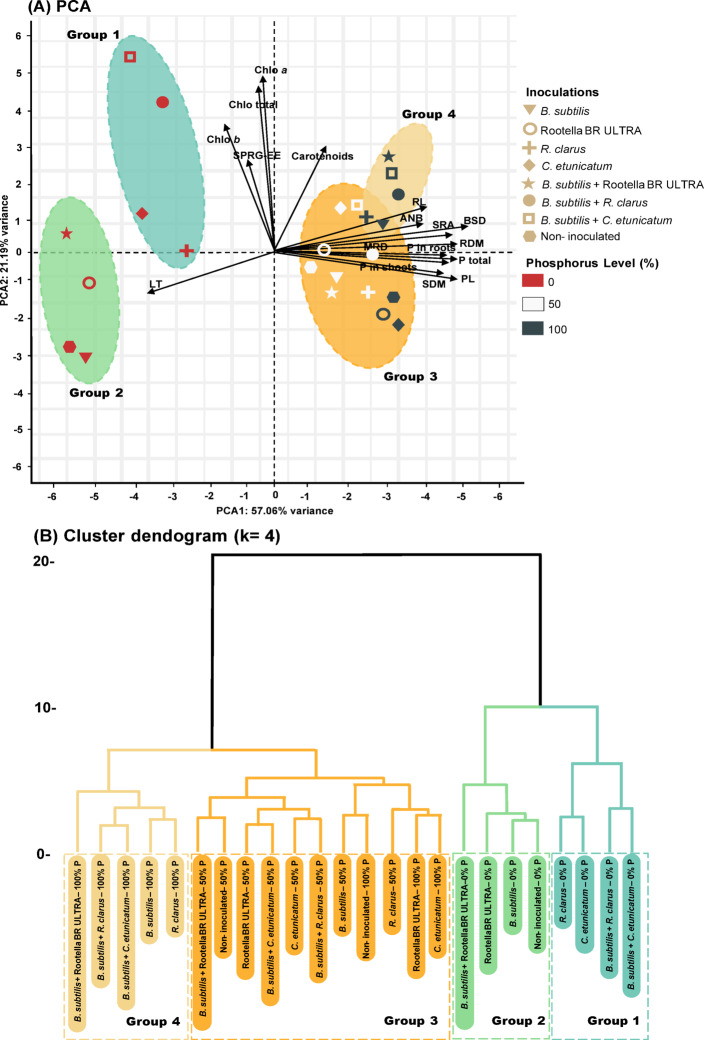
The use of beneficial microorganisms to enhance phosphate fertilizer use efficiency and solubilize residual phosphorus (P) is a promising strategy to improve soil P availability for plants. This study tested the hypothesis that inoculation with arbuscular mycorrhizal fungi, either alone or in combination with Bacillus subtilis, enhances maize growth and optimizes nutrient availability, particularly phosphorus. The experiment was conducted under greenhouse conditions with four replications, following an 8 × 3 factorial design. Treatments included individual inoculations with Bacillus subtilis (IPACC26), Rhizophagus clarus (RJN102A), Claroideoglomus etunicatum (SCT101A), and a commercial inoculant of Rhizophagus intraradices (Rootella BR ULTRA), as well as three co-inoculations (IPACC26 combined with each fungus) and a non-inoculated control. These treatments were combined with three levels of phosphate fertilization (0, 50, and 100% of the recommended P level). Mycorrhizal colonization improved root architecture and increased photosynthetic pigments and uptake of P and other nutrients, resulting in greater plant growth and biomass production. The most pronounced effects were observed in plants inoculated with R. clarus and C. etunicatum, either alone or in combination with B. subtilis, at the 0 and 50% P levels. At 0% P, inoculated plants accumulated significantly more biomass, with root and shoot dry mass up to 3,000% and 680% higher, respectively, than those of uninoculated plants; this effect was associated with a 1,700% increase in shoot P accumulation compared to the control. These findings highlight the potential of these inoculants as biofertilizers for more sustainable and efficient phosphorus management in maize cultivation.
Overview
The claims and statistics of this paper haven’t been checked yet.
Run the check — free, no account needed. It reads the open-access text and checks the sources it cites.
Integrity signals
Registry
Cites
Statistics
Figures
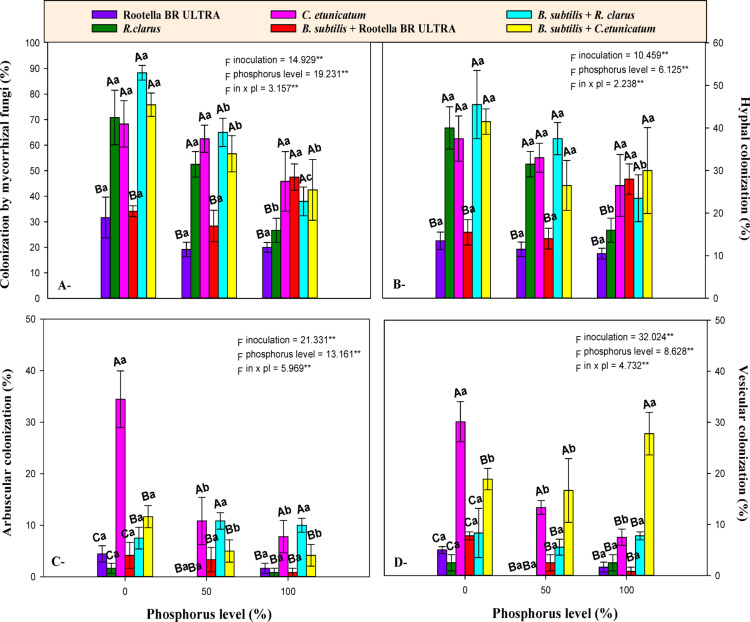
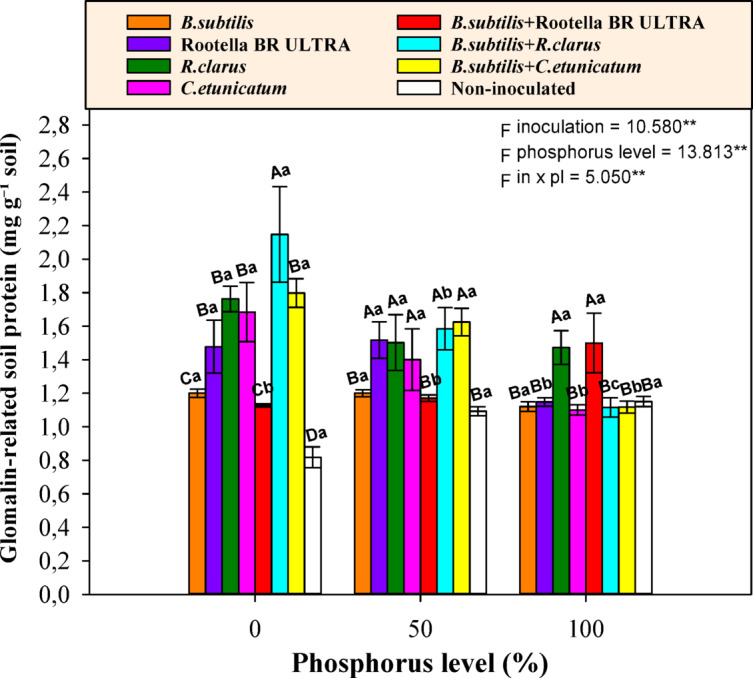
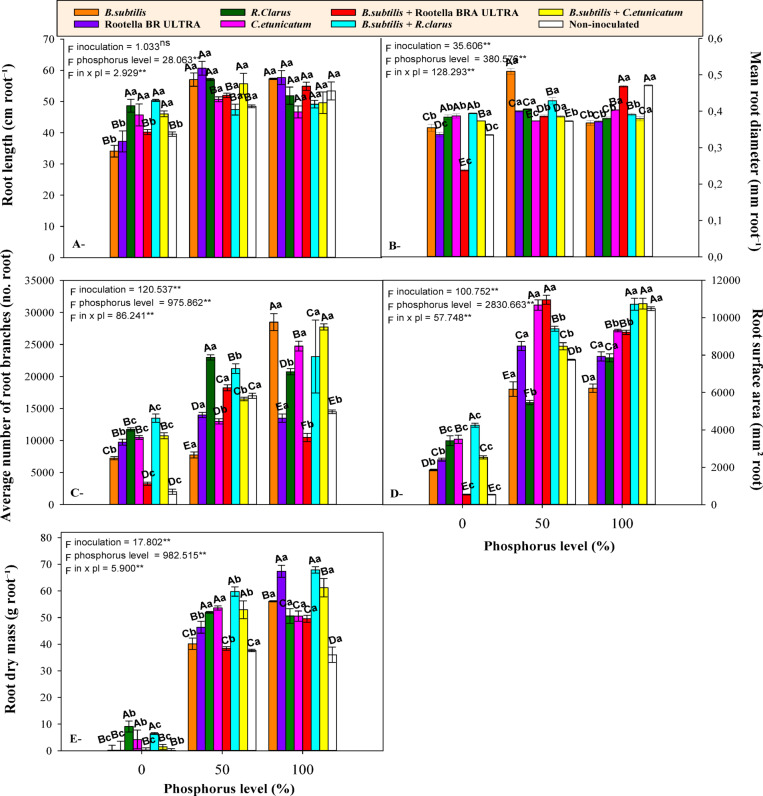
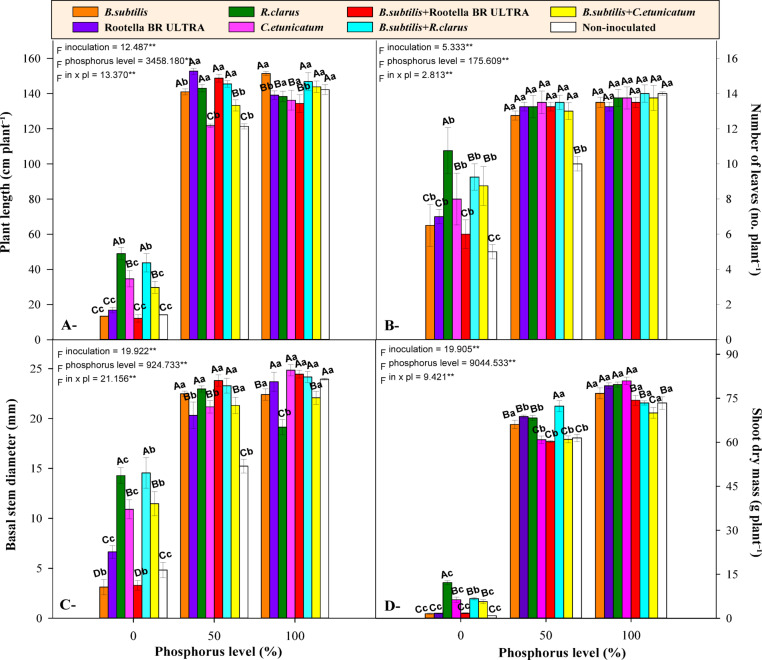
Verification
Claims the paper makes
The claims and statistics of this paper haven’t been checked yet.
Run the check — free, no account needed. It reads the open-access text and checks the sources it cites.
Self-check
Percentages, sums and reported differences re-computed from the paper’s own numbers.
The self-check needs the paper’s full text.
Citations
Cites
Photosynthesis under stressful environments: An overview
Ashraf, M., & Harris, P. J. C. (2013) · Photosynthetica · doi:10.1007/s11099-013-0021-6 · Cited by 2,028 · cited 1×
“Under P deficiency, maize plants typically exhibit reduced photosynthetic pigments 32,33 .”
Research works printed but not linked: 40
- Wang, N et al. Impacts of nitrogen (N), phosphorus (P), and potassium (K) fertilizers on maize yields, nutrient use efficiency, and soil nutrient balance: insights from a long-term diverse NPK omission experiment in the North China plain. Field Crops Res. 318, 109616; https://doi.org/10.1016/j.fcr.2024.109616 (2024). · DOI
- Paiva, M et al. Phosphorus in alkaline soils of the semiarid region, brazil: inorganic fractions, capacity factor, and availability. Int. J. Phytoremediation 25, 965–980; https://doi.org/10.1080/15226514.2022.2124232 (2022). · DOI
- Szerlag, KD et al. Systematic study of legacy phosphorus (P) desorption mechanisms in high-P agricultural soils. Minerals 12(4), 458; https://doi.org/10.3390/min12040458 (2022). · DOI
- Bedassa, M. Fractionation and distribution of phosphorus in acid soils: review. Int. J. Hortic. Food Sci. 5(1), 64–70; https://doi.org/10.33545/26631067.2023.v5.i1b.159 (2023). · DOI
- Obianuju, CE & Olubukola, OB. Productivity and quality of horticultural crops through co-inoculation of arbuscular mycorrhizal fungi and plant growth promoting bacteria. Microbiol. Res. 239, 126569; https://doi.org/10.1016/j.micres.2020.126569 (2020). · DOI
- Ezawa, T & Saito, K. How do arbuscular mycorrhizal fungi handle phosphate? New insight into fine-tuning of phosphate metabolism. New Phytol. 220(4), 1116–1121; https://doi.org/10.1111/nph.15187 (2018). · DOI
- Rocha, I et al. Seed coating with inocula of arbuscular mycorrhizal fungi and plant growth promoting rhizobacteria for nutritional enhancement of maize under different fertilization regimes. Arch. Agron. Soil Sci. 65(1), 31–43; https://doi.org/10.1080/03650340.2018.1479061 (2018). · DOI
- Silvestrini, GR et al. Potential use of phosphate-solubilizing bacteria in soybean culture. AgriEngineering 5(3), 1544–1554; https://doi.org/10.3390/agriengineering5030095 (2023). · DOI
- Cui, K et al. Siderophores, a potential phosphate solubilizer from the endophyte Streptomyces sp. Cot10, improved phosphorus mobilization for host plant growth and rhizosphere modulation. J. Clean. Prod. 367, 133110367; https://doi.org/10.1016/j.jclepro.2022.133110 (2022). · DOI
- Song, C et al. Mycorrhizosphere bacteria and plant-plant interactions facilitate maize P acquisition in an intercropping system. J. Clean. Prod. 314, 127993; https://doi.org/10.1016/j.jclepro.2021.127993 (2021). · DOI
- Liu, W et al. Arbuscular mycorrhizal fungi in soil and roots respond differently to phosphorus inputs in an intensively managed calcareous agricultural soil. Sci. Rep. 6(24902), 1–11; https://doi.org/10.1038/srep24902 (2016). · DOI
- Battini, F, Gronlund, M, Agnolucci, M, Giovannetti, M & Jakobsen, I. Facilitation of phosphorus uptake in maize plants by mycorrhizosphere bacteria. Sci. Rep. 7(4686); https://doi.org/10.1038/s41598-017-04959-0 (2017). · DOI
- Santos, HG. Sistema Brasileiro de Classificação de Solos (5ª ed.) 180–181 (Embrapa, 2018).
- Aquino, JPA et al. Plant growth-promoting bacteria improve growth and nitrogen metabolism in maize and sorghum. Theor. Exp. Plant Physiol. 33, 249–260; https://doi.org/10.1007/s40626-021-00209-x (2021). · DOI
- Phillips, JM & Hayman, DS. Improved procedures for clearing roots and staining parasitic and vesicular-arbuscular mycorrhizal fungi for rapid assessment of infection. Trans. Brit. Mycol. Soc. 55(18), 158–161; https://doi.org/10.1016/S0007-1536(70)80110-3 (1970). · DOI
- Mcgonigle, TP, Miller, MH, Evans, DG, Fairchild, GL & Swan, JA. A new method which gives an objective measure of colonization of roots by vesicular-arbuscular mycorrhizal fungi. New Phytol. 115(3), 495–501; 10.1111/j.1469-8137.1990.tb00476.x (1990). · DOI
- Giovannetti, M & Mosse, B. An evaluation of techniques for measuring vesicular-arbuscular mycorrhizal infection in roots. New Phytol. 84(3), 489–500; https://doi.org/10.1111/j.1469-8137.1980.tb04556.x (1980). · DOI
- Bradford, MM. A rapid and sensitive method for the quantification of microgram quantities of protein utilizing the principle of protein-dye binding. Anal. Biochem. 72(1–2), 248–254; https://doi.org/10.1016/0003-2697(76)90527-3 (1976). · DOI · Paper page
- Wright, SF & Upadhyaya, A. A survey of soils for aggregate stability and glomalin, a glycoprotein produced by hyphae of arbuscular mycorrhizal fungi. Plant and Soil 198, 97–107; https://doi.org/10.1023/A:1004347701584 (1998). · DOI
- Prado, RM. Nutrição De Plantas (2ª ed.) (Editora Unesp, 2020).
- Silva, FC. Manual De Análises Químicas De Solos, Plantas E Fertilizantes (2ª ed.) 627 (Embrapa Informação Tecnológica & Embrapa Solos, 2009).
- Syers, JK, Johnston, A & Curtin, D. Efficiency of soil and fertilizer phosphorus use: reconciling changing concepts of soil phosphorus behaviour with agronomic information. Preprint at https://www.fao.org/4/a1595e/a1595e00.htm
- Wellburn, AR. The spectral determination of chlorophylls a and b, as well as total carotenoids, using various solvents with spectrophotometers of different resolution. J. Plant Physiol.144(3), 307–313; https://doi.org/10.1016/S0176-1617(11)81192-2 (1994). · DOI
- Nguyen, T, Cavagnaro, T & Watts-Williams, S. The effects of soil phosphorus and zinc availability on plant responses to mycorrhizal fungi: a physiological and molecular assessment. Sci. Rep. 9(14880); https://doi.org/10.1038/s41598-019-51369-5 (2019). · DOI
- Chen, P et al. Strigolactones shape the assembly of root-associated microbiota in response to phosphorus availability. mSystems 9(6), e0112423; https://doi.org/10.1128/msystems.01124-23 (2024). · DOI
- Lucic-Mercy, E, Mercy, L, Jeschke, A, Schneider, C & Franken, P. Short-term artificial adaptation of Rhizoglomus irregulare to high phosphate levels and its implications for fungal-plant interactions: phenotypic and transcriptomic insights. Front. Plant Sci. 15; https://doi.org/10.3389/fpls.2024.1385245 (2024). · DOI
- Lovelock, C, Wright, S, Clark, D & Ruess, R. Soil stocks of glomalin produced by arbuscular mycorrhizal fungi across a tropical rain forest landscape. J. Ecol. 92(2), 278–287; https://doi.org/10.1111/j.0022-0477.2004.00855.x (2004). · DOI
- Rillig, MC, Ramsey, PW, Morris, S & Paul, EA. Glomalin, an arbuscular-mycorrhizal fungal soil protein, responds to land-use change. Plant Soil 253, 293–299; https://doi.org/10.1023/A:1024807820579 (2003). · DOI
- Driver, JD, Holben, WE, Rilling, MC. Characterization of glomalin as a hyphal wall component of arbuscular mycorrhizal fungi. Soil Biol. Biochem. 37(1), 101–106; https://doi.org/10.1016/j.soilbio.2004.06.011 (2005). · DOI
- Sun, Y et al. Phosphorus partitioning contribute to phosphorus use efficiency during grain filling in Zea mays. Front. Plant Sci. 14; https://doi.org/10.3389/fpls.2023.1223532 (2023). · DOI
- Verlinden, MS et al. Phosphorus stress strongly reduced plant physiological activity, but only temporarily, in a mesocosm experiment with Zea mays colonized by arbuscular mycorrhizal fungi, Biogeosciences, 19, 2353–2364; https://doi.org/10.5194/bg-19-2353-2022 (2022). · DOI
- Santana, LR et al. Arbuscular mycorrhizal fungi associated with maize plants during hydric deficit. Sci. Rep. 13(1519); https://doi.org/10.1038/s41598-023-28744-4 (2023). · DOI
- Sandmann, G. Carotenoids and their biosynthesis in Fungi. Molecules 27(4), 1431; https://doi.org/10.3390/molecules27041431 (2022). · DOI
- Baslam, M & Goicoechea, N. Water deficit improved the capacity of arbuscular mycorrhizal fungi (AMF) for inducing the accumulation of antioxidant compounds in lettuce leaves. Mycorrhiza 22(5), 347–359; https://doi.org/10.1007/s00572-011-0408-9 (2012). · DOI
- Mathur, S., Sharma, M. P., & Jajoo, A. Improved photosynthetic efficacy of maize (Zea mays) plants with arbuscular mycorrhizal Fungi (AMF) under high temperature stress. J. Photochem. Photobiol. B: Biol.180, 149–154; https://doi.org/10.1016/j.jphotobiol.2018.02.002. (2018). · DOI
- Smith, S, Jakobsen, I, Gronlund, M & Smith, F. Roles of arbuscular mycorrhizas in plant phosphorus nutrition: interactions between pathways of phosphorus uptake in arbuscular mycorrhizal roots have important implications for Understanding and manipulating plant phosphorus acquisition. Plant Physiol. 156(1050), 1057; https://doi.org/10.1104/pp.111.174581 (2011). · DOI
- Singh, A et al. Arbuscular mycorrhizal fungi efficiency on plant growth and nutrient acquisition: a comprehensive review. Microbiol. Res. J. Int. 34(8), 13–22; https://doi.org/10.9734/mrji/2024/v34i81466 (2024). · DOI
- Pang, F et al. Soil phosphorus transformation and plant uptake driven by phosphate-solubilizing microorganisms. Front. Microbiol. 15; https://doi.org/10.3389/fmicb.2024.1383813 (2024). · DOI
- Saia, S et al. Growth-promoting bacteria and arbuscular mycorrhizal fungi differentially benefit tomato and corn depending upon the supplied form of phosphorus. Mycorrhiza 30, 133–147; https://doi.org/10.1007/s00572-019-00927-w (2019). · DOI
- Stoffel, SCG, Soares, CRFS, Meyer, E, Lovato, PE & Giachini, AJ. Yield increase of corn inoculated with a commercial arbuscular mycorrhizal inoculant in Brazil. Cienc. Rural 50(7), e20200109; https://doi.org/10.1590/0103-8478cr20200109 (2020). · DOI
Metadata
- Authors
- Severo, H. C. D. A. R., de Santana Arauco, A. M., Nunes, R. W. F., Monteiro, G. N., Duarte, M. H. F., da Silva, A. P. M., de Castro Ferreira, A., Luz, M. R., de Souza Miranda, R., de Araújo, A. S. F., & da Costa, E. M.
- Affiliations
- Universidade Federal do Piauí (BR)
- Corresponding author
- da Costa, Elaine Martins
- ORCID
- Venue
- Scientific Reports
- Published
- 2025-07-15
- Volume
- 15
- Issue
- 1
- Pages
- 25448-25448
- ISSN
- 2045-2322 (ISSN-L)
- PMC
- PMC12260011
- OpenAlex
- W4412402560
- Cited by
- 15
- References
- 1
- Citations by year
- 2026: 12 · 2025: 3
- FWCI
- 8.11
- Type
- journal article
- Language
- en
- Open access
- gold
- doi.org
- Licence
- Locations
- Scientific Reports (publishedVersion, cc-by-nc-nd)
- Europe PMC (PubMed Central) (publishedVersion, cc-by-nc-nd)
- PubMed Central (publishedVersion, cc-by-nc-nd)
- PubMed (publishedVersion)
- DOAJ (DOAJ: Directory of Open Access Journals) (submittedVersion, cc-by-sa)
- Funders
- Coordenação de Aperfeiçoamento de Pessoal de Nível Superior
- Topics
- Life Sciences › Agricultural and Biological Sciences › Plant Science › Mycorrhizal Fungi and Plant Interactions
- Life Sciences › Agricultural and Biological Sciences › Plant Science › Plant-Microbe Interactions and Immunity
- Life Sciences › Agricultural and Biological Sciences › Plant Science › Agriculture, Plant Science, Crop Management
- Keywords
- arbuscular mycorrhizal fungi, Bacillus subtilis, co-inoculation, maize, phosphorus limitation, phosphate solubilization, biofertilizers, Rhizophagus clarus, Claroideoglomus etunicatum, Glomus intraradices, mycorrhizal colonization, root architecture, photosynthetic pigments, phosphorus uptake, biomass production
- MeSH terms
- Nutrients, Bacillus subtilis, Zea mays, Fertilizers, Phosphorus, Soil, Plant Roots, Biomass, Mycorrhizae
About these checks
Registry, retraction, Cites and statistics results are computed, not judged, with one exception: a printed reference that no index lists is read once by a model before it counts as a citation error. Claims are extracted by a model and kept only when their quote appears verbatim in the text; each cited source is then checked, with a model’s help, for whether it says what the claim relies on. Those verdicts can be wrong — read the claim’s quote and the cited source before relying on one.
Statistics and arithmetic are recomputed, not judged.
Confidence bands are shown only for fields calibrated on our annotated test set. None is calibrated yet, so no band is shown.
What counts as a claim ›How we measure confidence ›How we check this ›
Are you an author, or do you see a problem with this page? Request a review
How to cite
Cite CoChat for the checks on this page, and the paper for its own findings.
- This page
- CoChat. (2026). Citation check: Co-inoculation of arbuscular mycorrhizal fungi and Bacillus subtilis enhances morphological traits, growth, and nutrient uptake in maize under limited phosphorus availability. https://app.cochat.ai/papers/10.1038/s41598-025-10038-6
- The paper
- Severo, H. C. D. A. R., de Santana Arauco, A. M., Nunes, R. W. F., Monteiro, G. N., Duarte, M. H. F., da Silva, A. P. M., de Castro Ferreira, A., Luz, M. R., de Souza Miranda, R., de Araújo, A. S. F., & da Costa, E. M. (2025). Co-inoculation of arbuscular mycorrhizal fungi and Bacillus subtilis enhances morphological traits, growth, and nutrient uptake in maize under limited phosphorus availability. Scientific Reports. https://doi.org/10.1038/s41598-025-10038-6
