

The DOI matches its Crossref record; the references it cites are not checked yet.
Effect of 1,3,4-oxadiazoles on expression of biofilm-associated bap gene in clinical isolates of multidrug-resistant Acinetobacter baumannii
Open accessAbstract
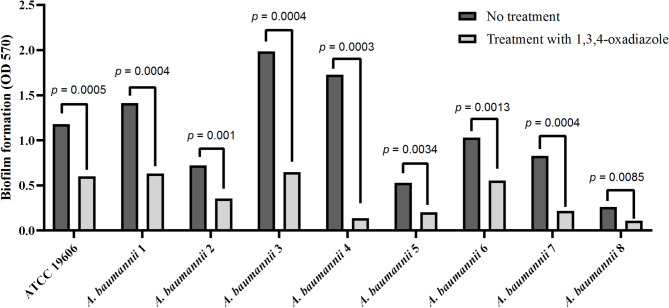
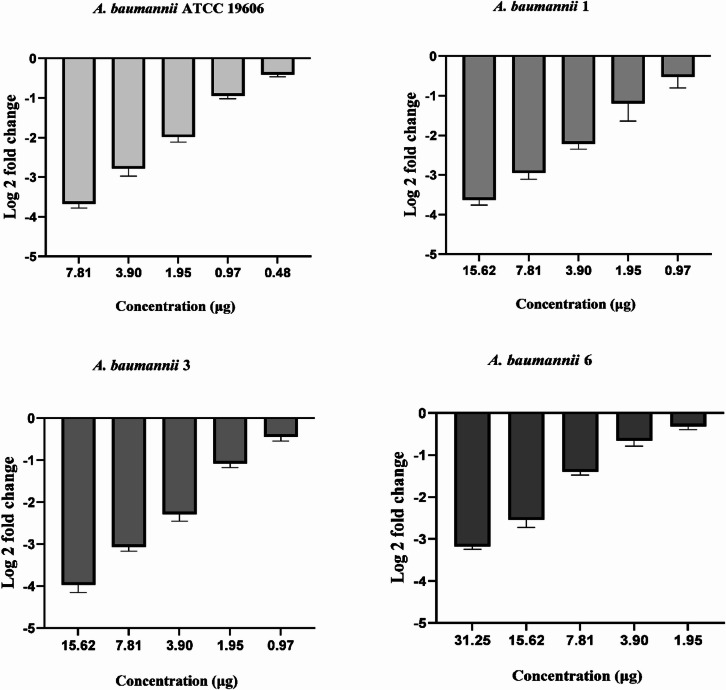
The rise of multidrug-resistant (MDR) pathogens, particularly Acinetobacter baumannii, poses a significant threat to global health due to its resistance to multiple antibiotics, biofilm-forming capacity, and associated poor clinical outcomes. This study aimed to evaluate the antibacterial and antibiofilm efficacy of 1,3,4-oxadiazole against A. baumannii, focusing on biofilm-related challenges and gene expression. A one-step, high-yield method was used to synthesize the 1,3,4-oxadiazoles. Thirteen A. baumannii isolates were collected from clinical samples and assessed for biofilm formation using microtiter plate assays. Antimicrobial susceptibility was determined via the Kirby-Bauer disk diffusion method, while the minimum inhibitory concentration (MIC) and minimum bactericidal concentration (MBC) of 1,3,4-oxadiazole were evaluated following CLSI guidelines. PCR was used to detect the presence of biofilm-associated (bap) gene. The inhibitory effect of 1,3,4-oxadiazole on biofilm formation and bap gene expression (using RT-qPCR) was assessed, alongside cytotoxicity testing on the A549 lung cancer cell line. Among eight selected clinical isolates, 100% were MDR, exhibiting high resistance to gentamicin, ciprofloxacin, and imipenem. Biofilm assays classified the isolates as strong, moderate, or weak producers, with the presence of the bap gene significantly associated with biofilm formation (p < 0.05). MIC and MBC values of 1,3,4-oxadiazole ranged from 7.81–31.25 µg/ml and 7.81–62.5 µg/ml, respectively. Sub-MIC concentrations significantly inhibited biofilm formation (43–79% reduction) and downregulated bap expression (log2-fold change: 0.24–4.13). Cytotoxicity analysis confirmed no significant effects on A549 cells at 15.62 and 7.81 µg (p = 0.085). 1,3,4-Oxadiazole exhibits significant antibacterial and antibiofilm properties against MDR A. baumannii, effectively targeting biofilm-associated genes and demonstrating a favorable safety profile. These findings highlight the potential of 1,3,4-oxadiazole as a promising candidate for combating MDR infections and biofilm-related complications.
Overview
The claims and statistics of this paper haven’t been checked yet.
Run the check — free, no account needed. It reads the open-access text and checks the sources it cites.
Integrity signals
Registry
Cites
Statistics
Figures
Verification
Claims the paper makes
The claims and statistics of this paper haven’t been checked yet.
Run the check — free, no account needed. It reads the open-access text and checks the sources it cites.
Self-check
Percentages, sums and reported differences re-computed from the paper’s own numbers.
The self-check needs the paper’s full text.
Citations
The citation lists haven’t been fetched yet
References 31 · Cited by 1
Research works printed but not linked: 34
- Fereshteh, S. et al. New putative vaccine candidates against Acinetobacter baumannii using the reverse vaccinology method. Microb. Pathog. 143, 104114 (2020). · DOI
- Beig, M., Sholeh, M., Moradkasani, S., Shahbazi, B. & Badmasti, F. Development of a multi-epitope vaccine against Acinetobacter baumannii: A comprehensive approach to combating antimicrobial resistance. PLoS ONE 20(3), e0319191 (2025). · DOI
- Nazari, M., Youzbashi, Z., Khaledi, M., Fathi, J. & Afkhami, H. Detection of carbapenem resistance and virulence genes among Acinetobacter baumannii isolated from hospital environments in center of Iran. J Curr Biomed Rep. 2(1), 14 (2021). · DOI
- Nazari, M. et al. Emergence of carbapenem resistant Acinetobacter baumannii clonal complexes CC2 and CC10 among fecal carriages in an educational hospital. Int. J. Environ. Health Res. 32(7), 1478–1488 (2022). · DOI
- Nazari, M. et al. Exploring fluoroquinolone resistance mechanisms and the effects of carbonyl cyanide 3-chlorophenylhydrazone (CCCP) in Acinetobacter baumannii. Front. Med. 12, fmed-12 (2025). · DOI
- Law, S. K. K. & Tan, H. S. The role of quorum sensing, biofilm formation, and iron acquisition as key virulence mechanisms in Acinetobacter baumannii and the corresponding anti-virulence strategies. Microbiol. Res. 260, 127032 (2022). · DOI
- Monem, S. et al. Mechanisms protecting Acinetobacter baumannii against multiple stresses triggered by the host immune response, antibiotics and outside-host environment. Int. J. Mol. Sci. 21(15), 5498 (2020). · DOI
- Nowak, P., Paluchowska, P. & Budak, A. Distribution of blaOXA genes among carbapenem-resistant Acinetobacter baumannii nosocomial strains in Poland. New Microbiol. 35(3), 317–325 (2012).
- Hamami, E. et al. Identification of determinants that allow maintenance of high-level fluoroquinolone resistance in Acinetobacter baumannii. MBio 16(1), e03221 (2014).
- Verma, S. K. et al. A key review on oxadiazole analogs as potential methicillin-resistant Staphylococcus aureus (MRSA) activity: Structure-activity relationship studies. Eur. J. Med. Chem. 219, 113442 (2021). · DOI
- Pace, A., Buscemi, S., Piccionello, A. P. & Pibiri, I. Recent advances in the chemistry of 1, 2, 4-oxadiazoles. Adv. Heterocycl. Chem. 116, 85–136 (2015). · DOI
- Abhari, S. S., Badmasti, F., Modiri, L., Aslani, M. M. & Asmar, M. Circulation of imipenem-resistant Acinetobacter baumannii ST10, ST2 and ST3 in a university teaching hospital from Tehran Iran. J. Med. Microbiol. 68(6), 860–865 (2019). · DOI
- Tamma PD, Heil EL, Justo JA, Mathers AJ, Satlin MJ, Bonomo RA. Infectious diseases Society of America 2024 guidance on the treatment of antimicrobial-resistant gram-negative infections. Clinical infectious diseases. 2024: ciae403. · DOI
- Nazari, M., Hemmati, J. & Asghari, B. Comprehensive analysis of virulence genes, antibiotic resistance, biofilm formation, and sequence types in clinical isolates of klebsiella pneumoniae. Canad. J. Infect. Dis. Med. Microbiol. 2024(1), 1403019 (2024). · DOI
- Hemmati, J. et al. In vitro evaluation of biofilm phenotypic and genotypic characteristics among clinical isolates of Pseudomonas aeruginosa in Hamadan, West of Iran. J. Appl. Genet. 65(1), 213–222 (2024). · DOI
- Mirzaei, R., Esmaeili Gouvarchin Ghaleh, H. & Ranjbar, R. Antibiofilm effect of melittin alone and in combination with conventional antibiotics toward strong biofilm of MDR-MRSA and-Pseudomonas aeruginosa. Front. Microbiol. 14, 1030401 (2023). · DOI
- Hemmati, J., Chiani, M., Chegini, Z., Seifalian, A. & Arabestani, M. R. Surface modified niosomal quercetin with cationic lipid: an appropriate drug delivery system against Pseudomonas aeruginosa Infections. Sci. Rep. 14(1), 13362 (2024). · DOI
- Akhgari, Z., Nazari, R., Zargar, M. & Tanomand, A. Antibacterial and antibiofilm properties of Acroptilon repens (L.) Dc extract and its effect on exotoxin a gene expression of Pseudomonas aeruginosa. Gene Rep. 25, 101357 (2021). · DOI
- Nazari, M., Taheri, M., Nouri, F., Bahmanzadeh, M. & Alikhani, M. Y. The antimicrobial and antibiofilm effects of gentamicin, imipenem, and fucoidan combinations against dual-species biofilms of Staphylococcus aureus and Acinetobacter baumannii isolated from diabetic foot ulcers. Ann. Clin. Microbiol. Antimicrob. 23(1), 101 (2024). · DOI
- Elizondo-Gonzalez, R. et al. In vitro characterization of the antiviral activity of fucoidan from Cladosiphon okamuranus against newcastle disease virus. Virol. J. 9, 1–9 (2012). · DOI
- Nazari, M., Shokoohizadeh, L. & Taheri, M. Natural products in the treatment of diabetic foot infection. Eur. J. Med. Res. 30(1), 1–17 (2025). · DOI
- Reynolds, D. et al. The threat of multidrug-resistant/extensively drug-resistant Gram-negative respiratory infections: another pandemic. Eur. Respir. Rev. 31(166), 220068 (2022). · DOI
- Hale, J. D. & Hancock, R. E. Alternative mechanisms of action of cationic antimicrobial peptides on bacteria. Expert Rev. Anti. Infect. Ther. 5(6), 951–959 (2007). · DOI
- Maddila, S., Gorle, S. & Jonnalagadda, S. B. Drug screening of rhodanine derivatives for antibacterial activity. Expert Opin. Drug Discov. 15(2), 203–229 (2020). · DOI
- Guo, Y. et al. Design and synthesis of new norfloxacin-1, 3, 4-oxadiazole hybrids as antibacterial agents against methicillin-resistant Staphylococcus aureus (MRSA). Eur. J. Pharm. Sci. 136, 104966 (2019). · DOI
- Hofny, H. A. et al. Design, synthesis, and antibacterial evaluation of new quinoline-1, 3, 4-oxadiazole and quinoline-1, 2, 4-triazole hybrids as potential inhibitors of DNA gyrase and topoisomerase IV. Bioorg. Chem. 112, 104920 (2021). · DOI
- Datoussaid, Y., Othman, A. & Kirsch, G. Synthesis and antibacterial activity of some 5, 5’-(1, 4-phenylene)-bis-1, 3, 4-oxadiazole and bis-1, 2, 4-triazole derivatives as precursors of new S-nucleosides. S. Afr. J. Chem. 65, 30–35 (2012).
- Makvandi, P. et al. Bioengineered materials with selective antimicrobial toxicity in biomedicine. Mil. Med. Res. 10(1), 8 (2023).
- Dante Formagio, M. et al. New 1, 3, 4-oxadiazole compound with effective antibacterial and antibiofilm activity against Staphylococcus aureus. Lett. Appl. Microbiol. 75(4), 957–966 (2022). · DOI
- Zheng, Z. et al. Antimicrobial activity of 1, 3, 4-oxadiazole derivatives against planktonic cells and biofilm of Staphylococcus aureus. Future Med. Chem. 10(3), 283–296 (2018). · DOI
- Nadar, S., Khan, T., Patching, S. G. & Omri, A. Development of antibiofilm therapeutics strategies to overcome antimicrobial drug resistance. Microorganisms. 10(2), 303 (2022). · DOI
- Buommino, E. et al. Synergistic effect of abietic acid with oxacillin against methicillin-resistant Staphylococcus pseudintermedius. Antibiotics. 10(1), 80 (2021). · DOI
- Sepahvand, S. et al. Molecular evaluation of colistin-resistant gene expression changes in Acinetobacter baumannii with real-time polymerase chain reaction. Infect. Drug Resist. 10, 455–462 (2017). · DOI
- Brossard, K. A. & Campagnari, A. A. The Acinetobacter baumannii biofilm-associated protein plays a role in adherence to human epithelial cells. Infect. Immun. 80(1), 228–233 (2012). · DOI
Metadata
- Authors
- Rahimbakhsh, A., Seyfahmadi, M., Souldozi, A., Hakimelahi, R., Alikhani, M. Y., & Kafilzadeh, F.
- Affiliations
- Islamic Azad University, Jahrom Branch (IR)
- Islamic Azad University of Urmia (IR)
- Hamedan University of Medical Sciences (IR)
- Corresponding author
- Alikhani, Mohammad Yousef
- Kafilzadeh, Farshid
- Venue
- Scientific Reports
- Published
- 2025-11-11
- Volume
- 15
- Issue
- 1
- Pages
- 39543-39543
- ISSN
- 2045-2322 (ISSN-L)
- PMC
- PMC12606102
- OpenAlex
- W4416114295
- Cited by
- 1
- References
- 31
- Citations by year
- 2026: 1
- FWCI
- 0.30
- Type
- journal article
- Language
- en
- Open access
- gold
- doi.org
- Licence
- Locations
- Scientific Reports (publishedVersion, cc-by-nc-nd)
- Europe PMC (PubMed Central) (publishedVersion, cc-by-nc-nd)
- PubMed (publishedVersion)
- DOAJ (DOAJ: Directory of Open Access Journals) (submittedVersion, cc-by-sa)
- Topics
- Life Sciences › Biochemistry, Genetics and Molecular Biology › Molecular Biology › Bacterial biofilms and quorum sensing
- Health Sciences › Medicine › Microbiology (medical) › Antibiotic Resistance in Bacteria
- Physical Sciences › Chemistry › Organic Chemistry › Structural and Chemical Analysis of Organic and Inorganic Compounds
- Keywords
- Acinetobacter baumannii, multidrug resistance, biofilm formation, bap gene, biofilm genes, antibiofilm activity, antibacterial activity, minimum inhibitory concentration, minimum bactericidal concentration, cytotoxicity, clinical isolates, gentamicin resistance
- MeSH terms
- Acinetobacter Infections, Anti-Bacterial Agents, Bacterial Proteins, Humans, Microbial Sensitivity Tests, Oxadiazoles, Gene Expression Regulation, Bacterial, Biofilms, Drug Resistance, Multiple, Bacterial, Acinetobacter baumannii
About these checks
Registry, retraction, Cites and statistics results are computed, not judged, with one exception: a printed reference that no index lists is read once by a model before it counts as a citation error. Claims are extracted by a model and kept only when their quote appears verbatim in the text; each cited source is then checked, with a model’s help, for whether it says what the claim relies on. Those verdicts can be wrong — read the claim’s quote and the cited source before relying on one.
Statistics and arithmetic are recomputed, not judged.
Confidence bands are shown only for fields calibrated on our annotated test set. None is calibrated yet, so no band is shown.
What counts as a claim ›How we measure confidence ›How we check this ›
Are you an author, or do you see a problem with this page? Request a review
How to cite
Cite CoChat for the checks on this page, and the paper for its own findings.
- This page
- CoChat. (2026). Citation check: Effect of 1,3,4-oxadiazoles on expression of biofilm-associated bap gene in clinical isolates of multidrug-resistant Acinetobacter baumannii. https://app.cochat.ai/papers/10.1038/s41598-025-23260-z
- The paper
- Rahimbakhsh, A., Seyfahmadi, M., Souldozi, A., Hakimelahi, R., Alikhani, M. Y., & Kafilzadeh, F. (2025). Effect of 1,3,4-oxadiazoles on expression of biofilm-associated bap gene in clinical isolates of multidrug-resistant Acinetobacter baumannii. Scientific Reports. https://doi.org/10.1038/s41598-025-23260-z
