

A tiny inertial transformer for human activity recognition via multimodal knowledge distillation and explainable AI
Open accessPublished version of a preprint
The DOI matches its Crossref record; 55 of the 56 references it cites were found in a registry or an index; 1 of the 12 sources its claims cite were checked for support.
Abstract
Human activity recognition (HAR) is essential for applications such as healthcare monitoring, fitness tracking, and smart environments, yet deploying accurate and interpretable models on resource-constrained devices remains challenging. In this paper, we propose XTinyHAR, a lightweight, transformer-based unimodal framework trained via cross-modal knowledge distillation from a multimodal teacher. Our model incorporates temporal positional embeddings and attention rollout to enhance sequential feature extraction and interpretability. Evaluated on UTD-MHAD and MM-Fit, XTinyHAR achieves test accuracies of 98.71% and 98.55% with F1-scores that match these results and Cohen's Kappa above 0.98. The model remains lightweight (2.45 MB) with fast inference (3.1 ms on CPU, 1.2 ms on GPU) and low computational cost (11.3M FLOPs). Extensive ablation studies confirm the contribution of each component, and subject-wise evaluations demonstrate strong generalization across users. These results highlight XTinyHAR's potential as a high-performance, interpretable, and deployable solution for real-time HAR on edge devices. Our codes are available at: https://github.com/Ism-ail11/XTinyHAR.
Overview
CoChat Summary
## TL;DR
XTinyHAR is a lightweight inertial-only transformer for human activity recognition trained by distilling knowledge from a multimodal skeleton+inertial teacher. On UTD-MHAD and MM-Fit, it reports 98.71% and 98.55% test accuracy, respectively, while staying small and fast enough for edge deployment.
## Key findings
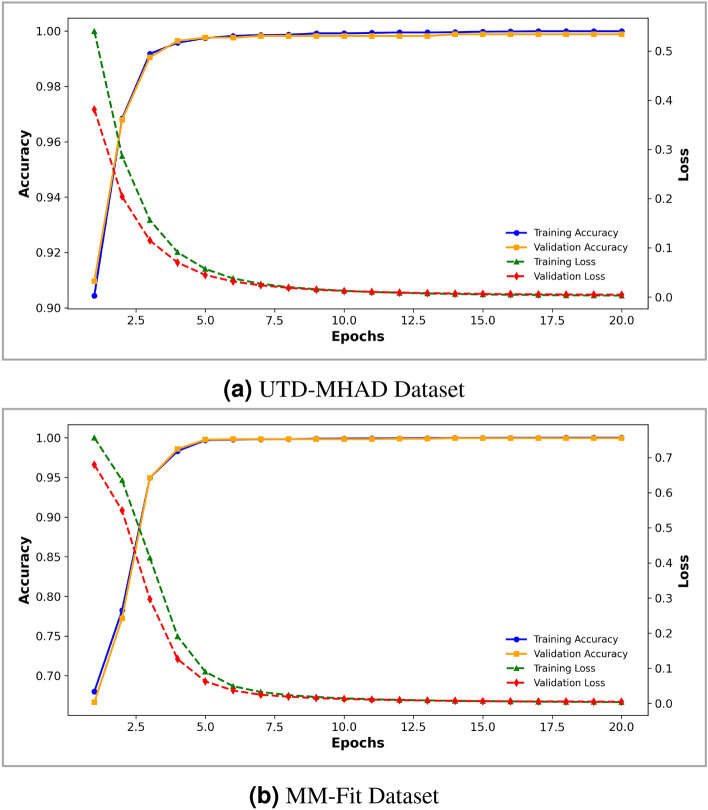
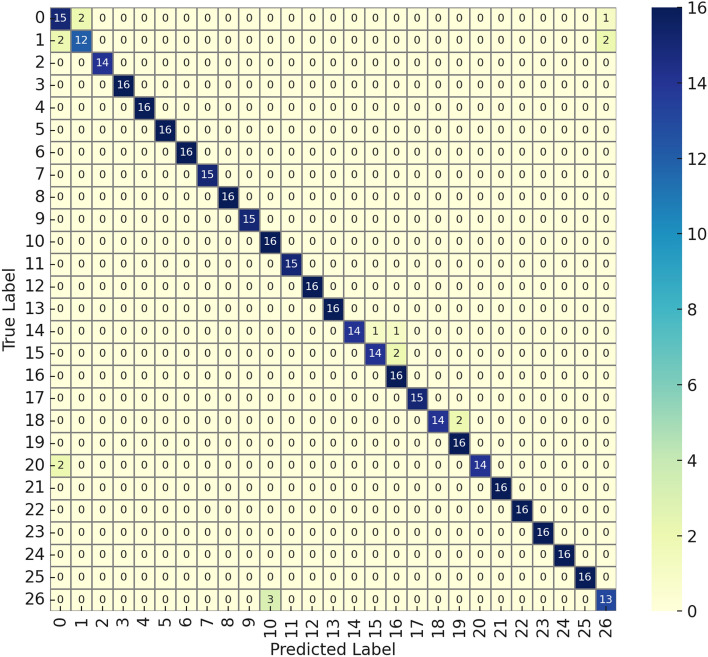
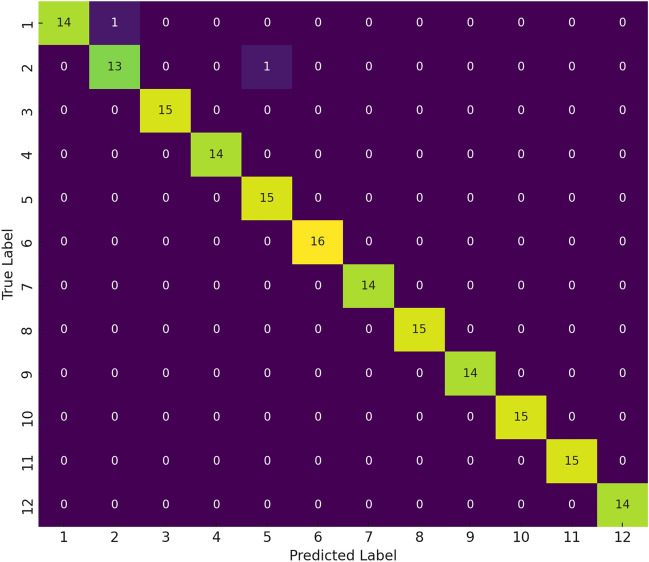
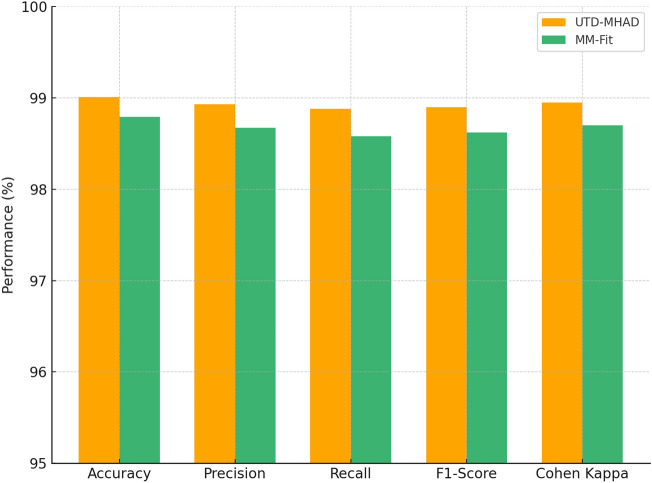
- XTinyHAR achieves test accuracies of 98.71% on UTD-MHAD and 98.55% on MM-Fit; the abstract also reports F1-scores that match these results and Cohen’s Kappa above 0.98.
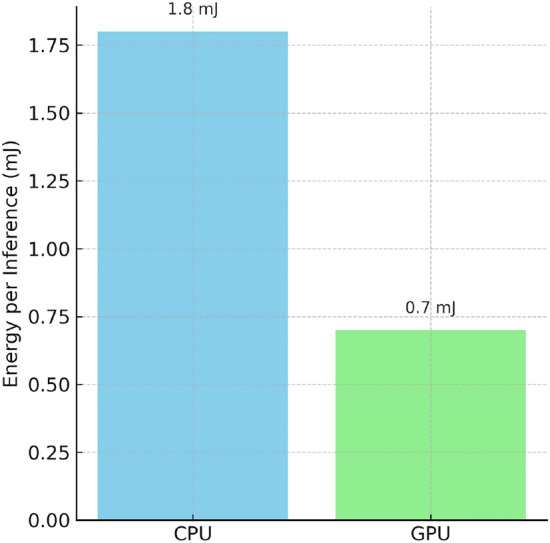
- The model is reported as 2.45 MB with 11.3M FLOPs, and inference time is 3.1 ms on CPU and 1.2 ms on GPU.
- In an ablation on UTD-MHAD, removing knowledge distillation reduces accuracy from 98.71% to 96.84%; removing positional embeddings reduces it to 97.42%; removing attention rollout reduces it to 98.11%.
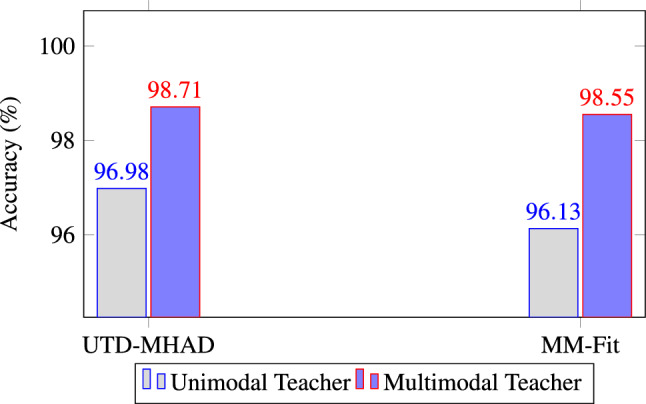
- Distilling from a multimodal teacher outperforms a unimodal teacher: student accuracy improves by 1.5–2.4% absolute, with 98.71% vs 96.98% on UTD-MHAD and 98.55% vs 96.13% on MM-Fit.
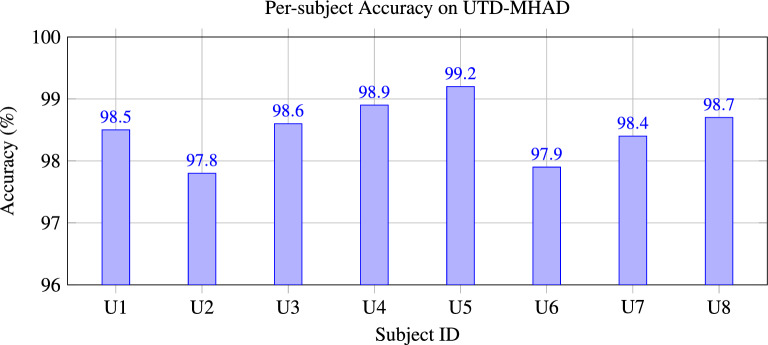
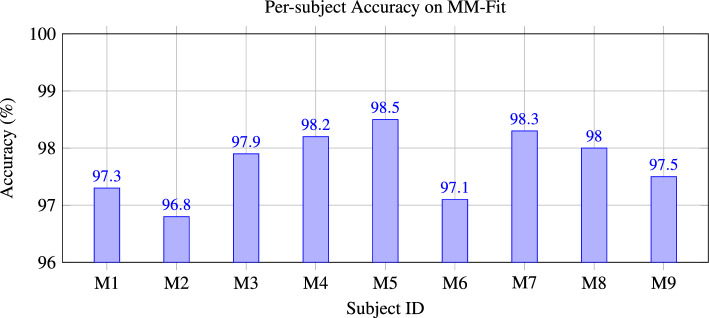
- Subject-wise evaluation reports accuracies ranging from 97.8% to 99.2% on UTD-MHAD and 96.8% to 98.5% on MM-Fit, with standard deviations of 0.54% and 0.52%, respectively.
## Methods
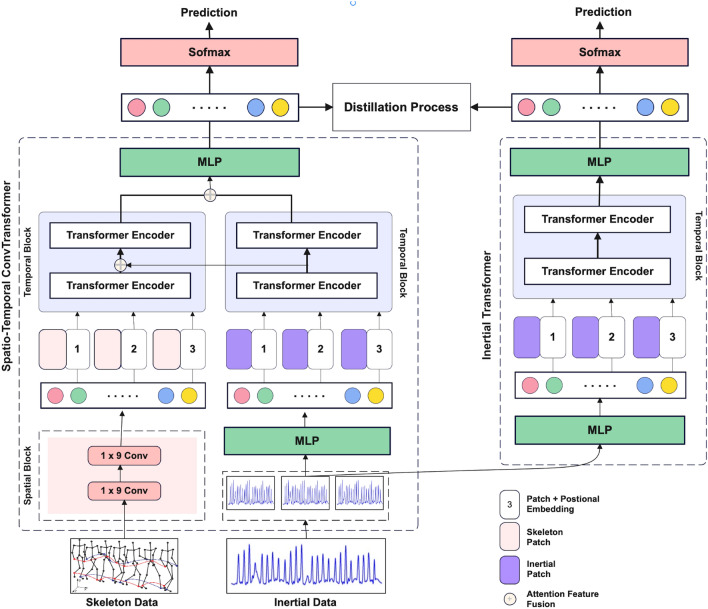
- The paper proposes XTinyHAR, an inertial-only student transformer trained via offline multimodal-to-unimodal knowledge distillation from a multimodal teacher (ST-ConvT) that uses skeleton and inertial streams.
- Experiments are run on UTD-MHAD (8 subjects, 27 actions, 861 labeled samples) and MM-Fit (more than 70 participants, 12 exercises), using subject-independent evaluation; UTD-MHAD uses leave-one-subject-out, and MM-Fit uses a fixed subject-wise split.
- Inputs are segmented into 3-second windows with 50% overlap, inertial signals are resampled to 50 Hz and z-score normalized, and the student uses a patch-based Transformer with L = 2 encoder layers, D = 128, and P = 20.
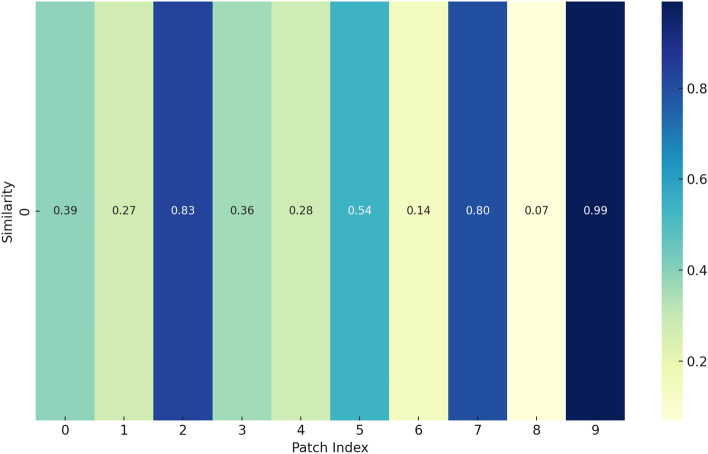
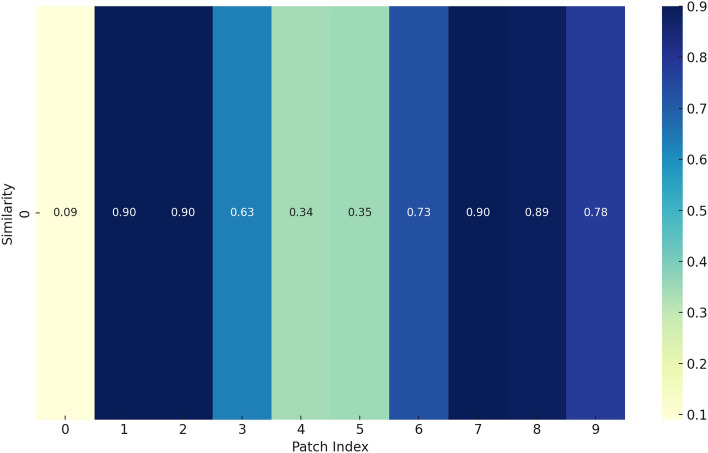
- Main analysis includes classification metrics, ablation studies, subject-wise testing, noise/missing-data robustness, edge-device deployment tests on Raspberry Pi 4B and Jetson Nano, and XAI methods: attention analysis, Integrated Gradients, attention rollout, and attention similarity.
## Limitations
- The paper states that UTD-MHAD and MM-Fit lack diversity in age and physical ability; in MM-Fit, subjects aged 60+ show a 3.2% accuracy drop.
- The model is designed for fixed wrist-mounted IMUs; simulated sensor-placement shifts in MM-Fit cause performance degradation of up to 5.6%.
- The paper notes a lack of personalization mechanisms for individual sensor variation and routines.
- The text makes evident, and the paper states, that no cross-dataset generalization experiments were conducted (for example, training on UTD-MHAD and testing on MM-Fit).
- The paper also states that true deployment on ultra-constrained platforms such as Cortex-M microcontrollers was not covered.
Model-written summary. Check it against the paper before relying on it.
Integrity signals
Registry
Cites
Statistics
Figures
Verification
Claims the paper makes
1 Valid · 6 Not valid · 11 Not checked · 199 Own results and interpretations
A result the paper states — it cites no source for it, so there is none to check. The quote shows it is in the paper.
In the paper
“The proposed Inertial Transformer (IT) is compact (0.62M parameters), fast (1.2 ms latency), and suitable for edge deployment on resource-constrained devices.”
§ A tiny inertial transformer for human activity recognition via multimodal knowledge distillation and explainable AI > Introduction
plain- Asserted: passes — The authors put it forward as true.
- Checkable: passes — It can be checked against evidence.
- Load-bearing: passes — The paper’s conclusions depend on it.
- Based: passes — The paper gives a reason why it holds.
A result the paper reports from its own data — it cites no other source for it, so there is none to check. The quote shows it is in the paper.
In the paper
“XTinyHAR achieves 98.71% on UTD-MHAD and 98.55% on MM-Fit datasets using only inertial data, closely matching the multimodal teacher while significantly reducing hardware requirements.”
§ A tiny inertial transformer for human activity recognition via multimodal knowledge distillation and explainable AI > Introduction
plainstates an association- Asserted: passes — The authors put it forward as true.
- Checkable: passes — It can be checked against evidence.
- Load-bearing: passes — The paper’s conclusions depend on it.
- Based: passes — The paper gives a reason why it holds.
- Rests on an assumption not shown here.
A result the paper reports from its own data — it cites no other source for it, so there is none to check. The quote shows it is in the paper.
In the paper
“Evaluated on UTD-MHAD and MM-Fit, XTinyHAR achieves test accuracies of 98.71% and 98.55% with F1-scores that match these results and Cohen’s Kappa above 0.98.”
§ A tiny inertial transformer for human activity recognition via multimodal knowledge distillation and explainable AI > Abstract
plain- Asserted: passes — The authors put it forward as true.
- Checkable: passes — It can be checked against evidence.
- Load-bearing: passes — The paper’s conclusions depend on it.
- Based: passes — The paper gives a reason why it holds.
A result the paper reports from its own data — it cites no other source for it, so there is none to check. The quote shows it is in the paper.
In the paper
“Evaluated on UTD-MHAD and MM-Fit, XTinyHAR achieves test accuracies of 98.71% and 98.55% with F1-scores that match these results and Cohen’s Kappa above 0.98.”
- Also stated in: § Introduction · plain
“XTinyHAR achieves 98.71% on UTD-MHAD and 98.55% on MM-Fit datasets using only inertial data, closely matching the multimodal teacher while significantly reducing hardware requirements.”
§ A tiny inertial transformer for human activity recognition via multimodal knowledge distillation and explainable AI > Abstract
plain- Asserted: passes — The authors put it forward as true.
- Checkable: passes — It can be checked against evidence.
- Load-bearing: passes — The paper’s conclusions depend on it.
- Based: passes — The paper gives a reason why it holds.
- Also stated in: § Introduction · plain
A result the paper reports from its own data — it cites no other source for it, so there is none to check. The quote shows it is in the paper.
In the paper
“XTinyHAR achieves 98.71% on UTD-MHAD and 98.55% on MM-Fit datasets using only inertial data, closely matching the multimodal teacher while significantly reducing hardware requirements.”
§ A tiny inertial transformer for human activity recognition via multimodal knowledge distillation and explainable AI > Introduction
plain- Asserted: passes — The authors put it forward as true.
- Checkable: passes — It can be checked against evidence.
- Load-bearing: passes — The paper’s conclusions depend on it.
- Based: passes — The paper gives a reason why it holds.
104 more claims
Create a free account to see all 217 claims and to verify the 11 references still open.
- It may state two separate claims as one. 73
- Probably not a substantial claim. 44
Citations
Cites
Knowledge Distillation: A Survey
Gou, J., Yu, B., Maybank, S. J., & Tao, D. (2021) · International Journal of Computer Vision · doi:10.1007/s11263-021-01453-z · Cited by 3,931 · cited 1×
“In the proposed XTinyHAR framework, we adopt an offline knowledge distillation 45 paradigm where the multimodal teacher is pre-trained and fixed prior to student training 46 .”
Transformers in Vision: A Survey
Khan, S., Naseer, M., Hayat, M., Zamir, S. W., Khan, F. S., & Shah, M. (2022) · ACM Computing Surveys · doi:10.1145/3505244 · Cited by 3,595
Transformers in Vision: A Survey
Khan, S., Naseer, M., Hayat, M., Zamir, S. W., Khan, F. S., & Shah, M. (2021) · arXiv · doi:10.48550/arxiv.2101.01169 · Cited by 3,594
Explainable AI (XAI): Core Ideas, Techniques, and Solutions
Dwivedi, R., Dave, D., Naik, H., Singhal, S., Omer, R., Patel, P., Qian, B., Wen, Z., Shah, T., Morgan, G., et al. (2023) · ACM Computing Surveys · doi:10.1145/3561048 · Cited by 1,386 · cited 1×
“Given that XTinyHAR is designed to function solely with inertial data in a lightweight and deployable manner, it becomes imperative to incorporate Explainable AI (XAI) techniques 51 that provide transparency into the model’s internal reasoning.”
Transformer Interpretability Beyond Attention Visualization
Chefer, H., Gur, S., & Wolf, L. (2021) · 2021 IEEE/CVF Conference on Computer Vision and Pattern Recognition (CVPR) · doi:10.1109/cvpr46437.2021.00084 · Cited by 903
Chen, C., Jafari, R., & Kehtarnavaz, N. (2015) · 2015 IEEE International Conference on Image Processing (ICIP) · doi:10.1109/icip.2015.7350781 · Cited by 765 · cited 1×
“The UTD-MHAD dataset 31 is a benchmark dataset designed for HAR tasks involving multiple sensing modalities.”
Human Action Recognition From Various Data Modalities: A Review
Sun, Z., Ke, Q., Rahmani, H., Bennamoun, M., Wang, G., & Liu, J. (2022) · IEEE Transactions on Pattern Analysis and Machine Intelligence · doi:10.1109/tpami.2022.3183112 · Cited by 601
Opportunities and Challenges in Explainable Artificial Intelligence (XAI): A Survey
Das, A., & Rad, P. (2020) · arXiv · doi:10.48550/arxiv.2006.11371 · Cited by 504
Recent trends in machine learning for human activity recognition—A survey
Ramasamy Ramamurthy, S., & Roy, N. (2018) · WIREs Data Mining and Knowledge Discovery · doi:10.1002/widm.1254 · Cited by 299
A Deep-Learned Embedding Technique for Categorical Features Encoding
Dahouda, M. K., & Joe, I. (2021) · IEEE Access · doi:10.1109/access.2021.3104357 · Cited by 294
Deep CNN-LSTM With Self-Attention Model for Human Activity Recognition Using Wearable Sensor
Khatun, M. A., Yousuf, M. A., Ahmed, S., Uddin, M. Z., Alyami, S. A., Al-Ashhab, S., Akhdar, H. F., Khan, A., Azad, A., & Moni, M. A. (2022) · IEEE Journal of Translational Engineering in Health and Medicine · doi:10.1109/jtehm.2022.3177710 · Cited by 288 · cited 2×
“…deep learning approaches such as CNN-LSTM hybrids, attention-enhanced recurrent networks, and self-supervised convolutional models have achieved strong results, with reported accuracies ranging from 90.89 to 99.93% across datasets like MHEALTH, UCI-HAR, and custom sensor-based benchmarks 19–23 .”
InfluentialA Survey on Deep Learning for Human Activity Recognition
Gu, F., Chung, M.-H., Chignell, M., Valaee, S., Zhou, B., & Liu, X. (2022) · ACM Computing Surveys · doi:10.1145/3472290 · Cited by 272
Human Activity Recognition via Hybrid Deep Learning Based Model
Khan, I. U., Afzal, S., & Lee, J. W. (2022) · Sensors · doi:10.3390/s22010323 · Cited by 256 · cited 1×
“Khan et al. 20 developed a hybrid deep learning approach combining CNN and LSTM to address the challenges of HAR.”
Wearable inertial sensors for human movement analysis: a five-year update
Picerno, P., Iosa, M., D’Souza, C., Benedetti, M. G., Paolucci, S., & Morone, G. (2021) · Expert Review of Medical Devices · doi:10.1080/17434440.2021.1988849 · Cited by 181 · cited 1×
“measurement units (IMUs), embedded in ubiquitous devices such as smartphones and smartwatches, offer a scalable and cost-effective sensing modality 14 .”
Toward human activity recognition: a survey
Saleem, G., Bajwa, U. I., & Raza, R. H. (2022) · Neural Computing and Applications · doi:10.1007/s00521-022-07937-4 · Cited by 180
Vision Transformers for Image Classification: A Comparative Survey
Wang, Y., Deng, Y., Zheng, Y., Chattopadhyay, P., & Wang, L. (2025) · Technologies · doi:10.3390/technologies13010032 · Cited by 174
Noor, M. H. M., Salcic, Z. A., & Wang, K. I. (2016) · Pervasive and Mobile Computing · doi:10.1016/j.pmcj.2016.09.009 · Cited by 165 · cited 1×
“(1) Sliding window segmentation 33 All sensor sequences are segmented into fixed-length windows using a sliding window approach with partial overlap.”
Wang, Y.-A., & Chen, Y.-N. (2020) · Conference on Empirical Methods in Natural Language Processing · doi:10.48550/arxiv.2010.04903 · Cited by 127
Video-Based Human Activity Recognition Using Deep Learning Approaches
Surek, G. A. S., Seman, L. O., Stefenon, S. F., Mariani, V. C., & Coelho, L. D. S. (2023) · Sensors · doi:10.3390/s23146384 · Cited by 94
Al‐qaness, M. A. A., Dahou, A., Elaziz, M. A., & Helmi, A. M. (2024) · Biomedical Signal Processing and Control · doi:10.1016/j.bspc.2024.106412 · Cited by 91 · cited 2×
“These include hybrid models using spectrogram features 25 , contrastive learning 26 , RFID-based inference 27 , skeleton-aware ViTs 28 , and lightweight student-teacher transformer frameworks 29,30 , with accuracies as high as 99.1% on select benchmarks.”
InfluentialFrom CNNs to Transformers in Multimodal Human Action Recognition: A Survey
Shaikh, M. B., Chai, D., Islam, S. M. S., & Akhtar, N. (2024) · ACM Transactions on Multimedia Computing Communications and Applications · doi:10.1145/3664815 · Cited by 88
Vision + X: A Survey on Multimodal Learning in the Light of Data
Zhu, Y., Wu, Y., Sebe, N., & Yan, Y. (2024) · IEEE Transactions on Pattern Analysis and Machine Intelligence · doi:10.1109/tpami.2024.3420239 · Cited by 80 · cited 1×
“The challenge, however, is how to distill the discriminative knowledge captured from multimodal data during training into lightweight models that operate solely on inertial inputs during inference without sacrificing accuracy or generalizability 15 .”
Wang, Y.-A., & Chen, Y.-N. (2020) · Proceedings of the 2020 Conference on Empirical Methods in Natural Language Processing (EMNLP) · doi:10.18653/v1/2020.emnlp-main.555 · Cited by 78 · cited 1×
“(2) Class token and positional embedding 41 Following the transformer formulation, a learnable class token x class is appended to the beginning of the patch embedding sequence.”
A Comprehensive Survey on Tiny Machine Learning for Human Behavior Analysis
Lamaakal, I., Essahraui, S., Maleh, Y., Makkaoui, K. E., Ouahbi, I., Bouami, M. F., El‐Latif, A. A. A., Almousa, M., Peng, J., & Niyato, D. T. (2025) · IEEE Internet of Things Journal · doi:10.1109/jiot.2025.3565688 · Cited by 76 · cited 1×
“As HAR systems become more prevalent in domains such as health monitoring, fitness coaching, and assistive living 50 , interpretability is no longer optional it is essential.”
Self-citationGradient based Feature Attribution in Explainable AI: A Technical Review
Wang, Y., Zhang, T., Guo, X., & Shen, Z. (2024) · arXiv · doi:10.48550/arxiv.2403.10415 · Cited by 74
MM-Fit: Multimodal Deep Learning for Automatic Exercise Logging across Sensing Devices
Strömbäck, D., Huang, S., & Radu, V. (2020) · Proceedings of the ACM on Interactive, Mobile, Wearable and Ubiquitous Technologies · doi:10.1145/3432701 · Cited by 73
Vision Transformers: State of the Art and Research ChallengesPreprint
Ruan, B.-K., Shuai, H.-H., & Cheng, W.-H. (2022) · arXiv (Cornell University) · doi:10.48550/arxiv.2207.03041 · Cited by 62
Lamaakal, I., Maleh, Y., El Makkaoui, K., Ouahbi, I., Pławiak, P., Alfarraj, O., Almousa, M., & Abd El-Latif, A. A. (2025) · Sensors · doi:10.3390/s25051318 · Cited by 60
Self-citationAn Efficient Human Activity Recognition Using Hybrid Features and Transformer Model
Saidani, O., Alsafyani, M., Alroobaea, R., Alturki, N. M., Jahangir, R., & Jamel, L. (2023) · IEEE Access · doi:10.1109/access.2023.3314492 · Cited by 59 · cited 2×
“These include hybrid models using spectrogram features 25 , contrastive learning 26 , RFID-based inference 27 , skeleton-aware ViTs 28 , and lightweight student-teacher transformer frameworks 29,30 , with accuracies as high as 99.1% on select benchmarks.”
InfluentialX-CHAR: A Concept-based Explainable Complex Human Activity Recognition Model
Jeyakumar, J. V., Sarker, A., Garcia, L. A., & Srivastava, M. B. (2023) · Proceedings of the ACM on Interactive Mobile Wearable and Ubiquitous Technologies · doi:10.1145/3580804 · Cited by 58 · cited 1×
“Current transformer-based HAR models provide little transparency into their inner workings 18 , making them difficult to interpret or debug in practice.”
Human Activity Recognition (HAR) in Healthcare
Bibbò, L., & Vellasco, M. M. B. R. (2023) · Applied Sciences · doi:10.3390/app132413009 · Cited by 54 · cited 1×
“As these systems are increasingly adopted in sensitive applications such as elderly care or physical rehabilitation, stakeholders must trust and understand the system’s decisions 17 .”
A human activity recognition method based on Vision Transformer
Han, H., Zeng, H., Kuang, L., Han, X., & Xue, H. (2024) · Scientific Reports · doi:10.1038/s41598-024-65850-3 · Cited by 54 · cited 2×
“These include hybrid models using spectrogram features 25 , contrastive learning 26 , RFID-based inference 27 , skeleton-aware ViTs 28 , and lightweight student-teacher transformer frameworks 29,30 , with accuracies as high as 99.1% on select benchmarks.”
InfluentialThakur, D., Dangi, S., & Lalwani, P. (2024) · Biomedical Signal Processing and Control · doi:10.1016/j.bspc.2024.106870 · Cited by 51 · cited 2×
“Thakur et al. 23 designed a novel approach for HAR that integrates a RNN and a CNN with a hybrid Grey Wolf Optimizer–Whale Optimization Algorithm (GWO-WOA) for feature selection.”
InfluentialLiteHAR: Lightweight Human Activity Recognition from WIFI Signals with Random Convolution Kernels
Salehinejad, H., & Valaee, S. (2022) · IEEE International Conference on Acoustics Speech and Signal Processing · doi:10.1109/icassp43922.2022.9746803 · Cited by 47
Essahraui, S., Lamaakal, I., Maleh, Y., Makkaoui, K. E., Bouami, M. F., Ouahbi, I., El‐Latif, A. A. A., Almousa, M., & Rodrigues, J. J. P. C. (2025) · IEEE Access · doi:10.1109/access.2025.3589938 · Cited by 47
Self-citationUnderstanding Self-attention Mechanism via Dynamical System Perspective
Huang, Z., Liang, M., Qin, J., Zhong, S., & Lin, L. (2023) · 2023 IEEE/CVF International Conference on Computer Vision (ICCV) · doi:10.1109/iccv51070.2023.00136 · Cited by 44
Liu, Y., Huang, W., Jiang, S., Zhao, B., Wang, S., Wang, S., & Zhang, Y. (2023) · Defence Technology · doi:10.1016/j.dt.2023.02.021 · Cited by 41 · cited 2×
“These include hybrid models using spectrogram features 25 , contrastive learning 26 , RFID-based inference 27 , skeleton-aware ViTs 28 , and lightweight student-teacher transformer frameworks 29,30 , with accuracies as high as 99.1% on select benchmarks.”
InfluentialTransition-aware human activity recognition using an ensemble deep learning framework
Khan, S. I., Dawood, H., Khan, M. A., Issa, G. F., Hussain, A., Alnfiai, M. M., & Khan, M. A. (2024) · Computers in Human Behavior · doi:10.1016/j.chb.2024.108435 · Cited by 37 · cited 2×
“Khan et al. 24 introduced an ensemble deep learning framework for transition-aware HAR, combining 1D-CNN and LSTM networks to improve the detection of both static and dynamic activities as well as postural transitions.”
Karim, M. F. A., Khalid, S., Lee, S., Almutairi, S. S., Namoun, A., & Abohashrh, M. (2025) · IEEE Access · doi:10.1109/access.2025.3590073 · Cited by 37
Joudaki, M., Imani, M., & Arabnia, H. R. (2025) · Technologies · doi:10.3390/technologies13020053 · Cited by 35 · cited 1×
“Joudaki et al. 22 introduced a novel hybrid technique for HAR that combines a two-dimensional convolutional restricted Boltzmann machine (2D Conv-RBM) with a LSTM network, enhanced by an optimized frame selection mechanism.”
Dynamic Temperature Knowledge DistillationPreprint
Wei, Y., & Bai, Y. (2024) · arXiv (Cornell University) · doi:10.48550/arxiv.2404.12711 · Cited by 35
Lamaakal, I., Ouahbi, I., El Makkaoui, K., Maleh, Y., Pławiak, P., & Alblehai, F. (2024) · IEEE Access · doi:10.1109/access.2024.3406631 · Cited by 34
Self-citationA Survey of Model Compression Techniques for TinyML Applications
Lamaakal, I., Yahyati, C., Ouahbi, I., Makkaoui, K. E., & Maleh, Y. (2025) · International Conference on Circuit, Systems and Communication (ICCSC) · doi:10.1109/iccsc66714.2025.11135279 · Cited by 34 · cited 1×
“(1) Distillation setup and input modalities The knowledge distillation 47 begins only after the teacher model has been fully trained using multimodal inputs.”
Self-citationA TinyML Model for Gesture-Based Air Handwriting Arabic Numbers Recognition
Lamaakal, I., Makkaoui, K. E., Ouahbi, I., & Maleh, Y. (2024) · Procedia Computer Science · doi:10.1016/j.procs.2024.05.070 · Cited by 33
Self-citationTriplet Attention: Rethinking the Similarity in Transformers
Zhou, H., Li, J., Peng, J., Zhang, S., & Zhang, S. (2021) · ACM SIGKDD Conference on Knowledge Discovery and Data Mining (KDD) · doi:10.1145/3447548.3467241 · Cited by 28
Babel: A Scalable Pre-trained Model for Multi-Modal Sensing via Expandable Modality Alignment
Dai, S., Jiang, S., Yang, Y., Cao, T., Li, M., Banerjee, S., & Qiu, L. (2025) · ACM Conference on Embedded Networked Sensor Systems (SenSys) · doi:10.1145/3715014.3722068 · Cited by 27 · cited 1×
“(3) Modality alignment and resampling 35 In real-world multimodal HAR datasets like MM-Fit, different modalities (e.g., IMUs and OpenPose-based skeletons) are often captured at different frame rates and are not inherently synchronized.”
Sun, Y., Xu, X., Tian, X., Zhou, L., & Li, Y. (2024) · Engineering Applications of Artificial Intelligence · doi:10.1016/j.engappai.2024.108705 · Cited by 26 · cited 2×
“These include hybrid models using spectrogram features 25 , contrastive learning 26 , RFID-based inference 27 , skeleton-aware ViTs 28 , and lightweight student-teacher transformer frameworks 29,30 , with accuracies as high as 99.1% on select benchmarks.”
InfluentialLamaakal, I., Maleh, Y., Ouahbi, I., El Makkaoui, K., & Abd El-Latif, A. A. (2024) · Lecture Notes in Networks and Systems · doi:10.1007/978-3-031-68675-7_4 · Cited by 20
Self-citationStandard of things, first step: Understanding and normalizing sensor signals
Monte, G. E., Huang, V., Liscovsky, P., et al. (2013) · doi:10.1109/iecon.2013.6699121 · Cited by 19 · cited 1×
“(2) Signal normalization 34 Inertial sensor readings, especially accelerometer and gyroscope values, are sensitive to variations in device placement, orientation, and subject dynamics.”
Attribution rollout: a new way to interpret visual transformer
Xu, L., Yan, X., Ding, W., & Liu, Z. (2022) · Journal of Ambient Intelligence and Humanized Computing · doi:10.1007/s12652-022-04354-2 · Cited by 19
Efficient Gesture-Based Recognition of Tifinagh Characters in Air Handwriting with a TinyDL Model
Lamaakal, I., El Mourabit, N., El Makkaoui, K., Ouahbi, I., & Maleh, Y. (2024) · 2024 Sixth International Conference on Intelligent Computing in Data Sciences (ICDS) · doi:10.1109/icds62089.2024.10756483 · Cited by 14
Self-citationDistilled mid-fusion transformer networks for multi-modal human activity recognition
Li, J., Yao, L., Li, B., & Sammut, C. (2025) · Knowledge-Based Systems · doi:10.1016/j.knosys.2025.114160 · Cited by 14
ConvTransformer Attention Network for temporal action detection
Cui, D., Chang, X., Wu, L., & Wang, X. (2024) · Knowledge-Based Systems · doi:10.1016/j.knosys.2024.112264 · Cited by 12 · cited 3×
“The architecture incorporates a compact Inertial Transformer student model trained under the supervision of a multimodal teacher network (ST-ConvT) that integrates skeleton and inertial features via spatio-temporal attention mechanisms.”
InfluentialTinyHAR: Benchmarking Human Activity Recognition Systems in Resource Constrained Devices
Nooruddin, S., Islam, M. M., & Karray, F. O. (2022) · doi:10.1109/wf-iot54382.2022.10152039 · Cited by 8
STFT: Spatial and temporal feature fusion for transformer tracker
Zhang, H., Piao, Y., & Qi, N. (2023) · IET Computer Vision · doi:10.1049/cvi2.12233 · Cited by 7 · cited 1×
“(3) Transformer encoder and temporal feature extraction 42 The embedded sequence is processed by a stack of L transformer encoder layers.”
On Adaptive Knowledge Distillation with Generalized KL-Divergence Loss for Ranking Model Refinement
Yang, Y., He, S., & Yang, T. (2024) · ACM SIGIR International Conference on Theory of Information Retrieval (ICTIR) · doi:10.1145/3664190.3672522 · Cited by 3 · cited 1×
“…student’s prediction y stud and the ground-truth label y gt , and (2) the KL-divergence loss between the student’s and teacher’s soft predictions 49 : L KD = L cross ( y gt , y stud ) + L kl ( P teacher , P student ) (20) This combined loss ensures that the student model is both accurate with…”
Research works printed but not linked: 3
- Bastola, A., Luitel, N., Wang, H., Paudel, D. P., Poudel, R. & Razi, A. RobustFormer: Noise-Robust Pre-Training for Images and Videos. arXiv preprint arXiv:2411.13040 (2024). · arXiv
- Zhu, J. Comparative study of sequence-to-sequence models: From RNNs to transformers. Appl. Comput. Eng. 42 (67), 2755–2721 (2023).
- Lin, J. et al. MCUNet: Tiny deep learning on IoT devices. Adv. Neural Inf. Process. Syst. (NeurIPS) 33, 11711–11722 (2020).
Cited by
Lamaakal, I., Yahyati, C., Maleh, Y., Makkaoui, K. E., & Ouahbi, I. (2026) · Internet of Things · doi:10.1016/j.iot.2026.101889 · Cited by 11
Self-citationLamaakal, I., Yahyati, C., Maleh, Y., Makkaoui, K. E., & Ouahbi, I. (2026) · Scientific Reports · doi:10.1038/s41598-026-38478-8 · Cited by 17
Self-citationA Comprehensive Survey of TinyML-Based Biometric Recognition for IoT Edge Devices
Essahraui, S., & Lamaakal, I. (2026) · IEEE Internet of Things Journal · doi:10.1109/jiot.2026.3656932 · Cited by 21
“Beyond e ffi ciency, on-device processing confers security and privacy advantages by minimizing raw biometric data movement and enabling template protection mechanisms to reside within a trusted boundary [13], [14].”
Self-citationYahyati, C., Lamaakal, I., Maleh, Y., Makkaoui, K. E., & Ouahbi, I. (2026) · IEEE Access · doi:10.1109/access.2026.3656854 · Cited by 7
“As a result, Tiny Machine Learning (TinyML) models [7], [8], [12], [20], [37] that execute end-to-end on-device with integer arithmetic and small, deterministic memory footprints has emerged as the most appropriate paradigm for DMS at the edge.”
Self-citationLamaakal, I., Yahyati, C., Maleh, Y., Makkaoui, K. E., & Ouahbi, I. (2026) · Machine Learning and Knowledge Extraction · doi:10.3390/make8030055 · Cited by 12
Self-citation
Metadata
- Authors
- Lamaakal, I., Yahyati, C., Maleh, Y., El Makkaoui, K., Ouahbi, I., El-Latif, A. A. A., Zomorodi, M., & El-Rahiem, B. A.
- Affiliations
- Mohamed I University (MA)
- Université Sultan Moulay Slimane (MA)
- Menoufia University (EG)
- Corresponding author
- Maleh, Yassine
- El-Rahiem, Basma Abd
- Venue
- Scientific Reports
- Published
- 2025-11-27
- Volume
- 15
- Issue
- 1
- Pages
- 42335-42335
- ISSN
- 2045-2322 (ISSN-L)
- PMC
- PMC12660865
- OpenAlex
- W4416740529
- Cited by
- 26
- References
- 49
- Citations by year
- 2026: 25 · 2025: 1
- FWCI
- 9.08
- Type
- journal article
- Language
- en
- Open access
- gold
- doi.org
- Licence
- cc-by-nc-nd
- creativecommons.org/licenses/by-nc-nd/4.0 (tdm)
- creativecommons.org/licenses/by-nc-nd/4.0 (vor)
- Locations
- Scientific Reports (publishedVersion, cc-by-nc-nd)
- Research Square (acceptedVersion, cc-by)
- Europe PMC (PubMed Central) (publishedVersion, cc-by-nc-nd)
- PubMed (publishedVersion)
- DOAJ (DOAJ: Directory of Open Access Journals) (submittedVersion, cc-by-sa)
- Funders
- Research, Development, and Innovation Authority (13325-psu-2023-PSNU-R-3-1-EF)
- Topics
- Physical Sciences › Computer Science › Computer Vision and Pattern Recognition › Context-Aware Activity Recognition Systems
- Physical Sciences › Computer Science › Computer Vision and Pattern Recognition › Human Pose and Action Recognition
- Physical Sciences › Engineering › Biomedical Engineering › Gait Recognition and Analysis
- Keywords
- human activity recognition, inertial sensors, lightweight transformer, cross-modal knowledge distillation, explainable AI, attention rollout, edge deployment, resource-constrained devices, real-time activity recognition
- MeSH terms
- Algorithms, Artificial Intelligence, Humans, Human Activities
About these checks
Registry, retraction, Cites and statistics results are computed, not judged, with one exception: a printed reference that no index lists is read once by a model before it counts as a citation error. Claims are extracted by a model and kept only when their quote appears verbatim in the text; each cited source is then checked, with a model’s help, for whether it says what the claim relies on. Those verdicts can be wrong — read the claim’s quote and the cited source before relying on one.
The claim verdicts this report counts are experimental: their accuracy is not yet measured.
A language model drew the claims from the paper on 2026-10-11, under version 3 of the claim definition (model deepseek-v4.1-flash, prompt extract-v3).
A second model labelled each claim on 2026-10-11 (model jev-1.13-20260917, definition revision gold-guideline-v0.2).
Statistics and arithmetic are recomputed, not judged.
Confidence bands are shown only for fields calibrated on our annotated test set. None is calibrated yet, so no band is shown.
What counts as a claim ›How we measure confidence ›How we check this ›
Are you an author, or do you see a problem with this page? Request a review
Data sources
Bibliographic data: Semantic Scholar, OpenAlex, Crossref.
Contains information from the Semantic Scholar Academic Graph Datasets, made available under the ODC Attribution License (ODC-BY 1.0).
Semantic Scholar’s data is described in: Kinney, R., et al. (2023). The Semantic Scholar Open Data Platform. arXiv:2301.10140.
