

Radiosensitizing effects of silver nanoparticles targeting angiogenesis and matrix metalloproteinase signaling in triple negative breast cancer cell lines
Open accessThe DOI matches its Crossref record; 55 of the 55 references it cites were found in a registry or an index.
Abstract
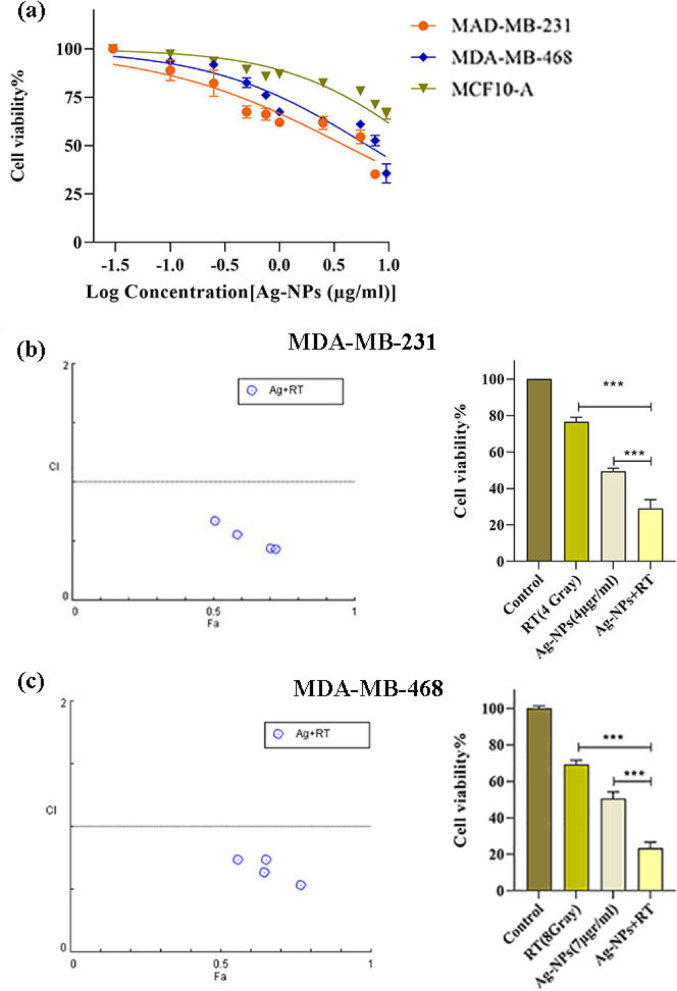
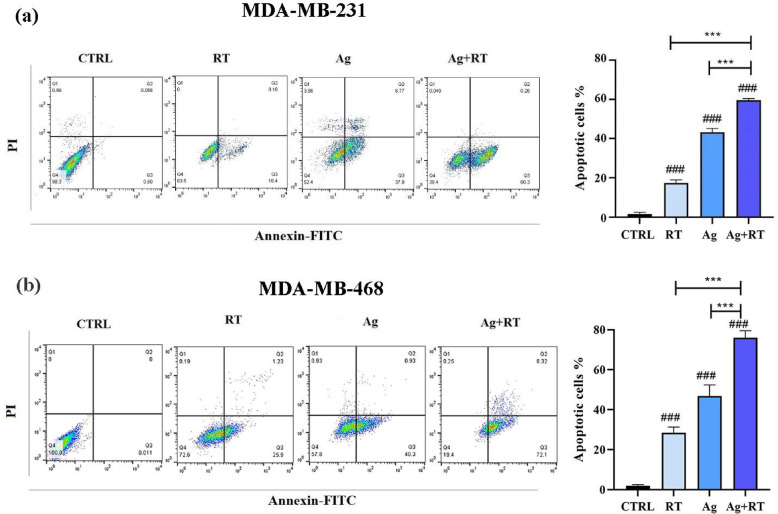
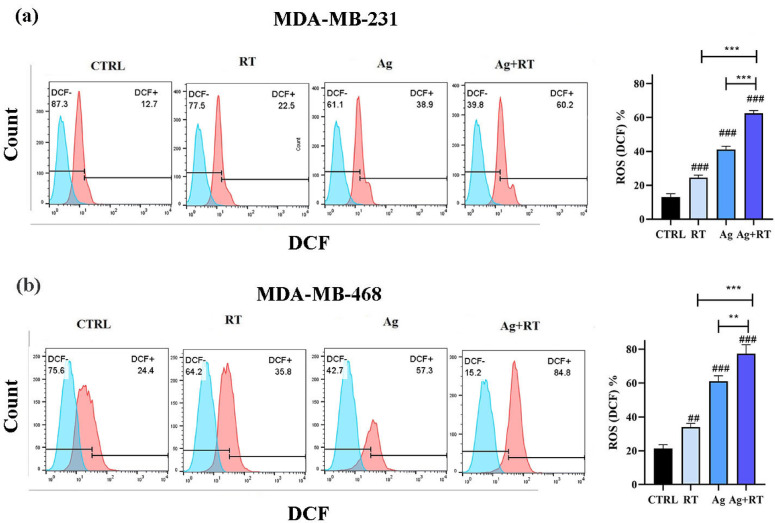
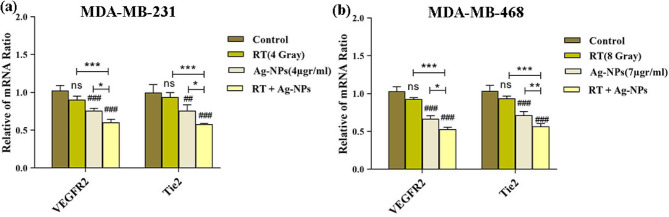
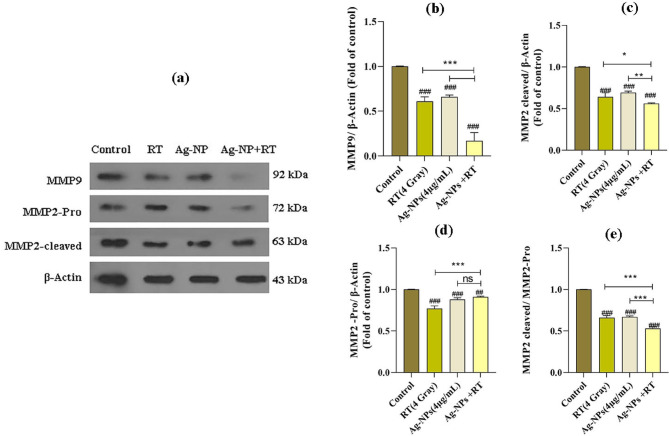
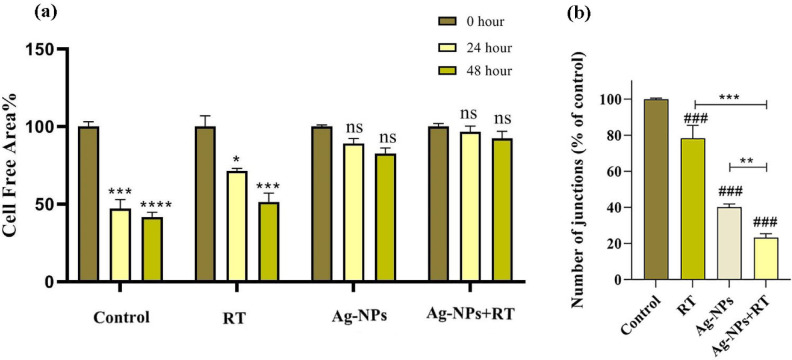
Triple-negative breast cancer (TNBC) is a highly aggressive subtype with few treatment options and limited response to radiation therapy due to radioresistance. This study explores the anti-angiogenic and anti-migratory potential of silver nanoparticles (Ag-NPs) as radiosensitizers in TNBC cell lines (MDA-MB-231 and MDA-MB-468). Cells were exposed to Ag-NPs and RT. Cell viability was assessed by MTT and trypan blue exclusion assay. Apoptosis and intracellular reactive oxygen species (ROS) were detected by flow cytometry. Angiogenesis-related genes were evaluated by qPCR, while MMP2 and MMP9 protein levels were determined by western blotting. Cell migration and tube formation were assessed using a scratch assay and an endothelial tube formation assay, respectively. Combination of Ag-NPs with RT exhibited strong synergistic anticancer effects in TNBC cell lines. The combinational treatment significantly enhanced apoptosis and ROS production compared to control and individual treatments. It also reduced VEGFR2 and Tie2 gene expression in both cell lines and decreased MMP2 and MMP9 protein levels in MDA-MB-231 cells. Cell migration and tube formation were significantly impaired in MDA-MB-231 cells exposed to combination therapy. Ag-NPs enhanced the cytotoxic effects of RT in TNBC cell lines by increasing apoptosis and ROS, and suppressing cell migration and angiogenic activity, suggesting their potential as a radiosensitizer to improve therapeutic strategies.
Overview
The claims and statistics of this paper haven’t been checked yet.
Free: it reads the open-access text and checks the first 5 claims that cite a source we can check. Create a free account to check every claim.
Integrity signals
Registry
Cites
Statistics
Figures
Verification
Claims the paper makes
The claims and statistics of this paper haven’t been checked yet.
Free: it reads the open-access text and checks the first 5 claims that cite a source we can check. Create a free account to check every claim.
Claims other papers make about this one
Each is checked against this paper’s own text: does it say what the citing paper says it does?
The source backs part of the claim, not all of it — or backs it for a different population, condition or comparison.
In the citing paper
“However, the overall magnitude of radiotherapy enhancement is not determined by atomic number alone but is also influenced by nanoparticle composition, size, surface functionalization, intracellular localization, and other physicochemical and biological characteristics [17,21,31,87].”
From Nanoparticle-Mediated Radiosensitization in Breast Cancer: A Systematic Review of Preclinical Evidence and Translational Challenges (2026) · cites this paper as [31]
Experimental — accuracy not yet measuredThe source backs part of the claim, not all of it — or backs it for a different population, condition or comparison.
In the citing paper
“In catalytic and chemodynamic systems, sustained intracellular ROS production can maintain oxidative stress beyond the initial irradiation event, promoting persistent DNA damage, delaying repair processes, and increasing the probability of irreversible reproductive cell death [17,31,68,77,87,90].”
From Nanoparticle-Mediated Radiosensitization in Breast Cancer: A Systematic Review of Preclinical Evidence and Translational Challenges (2026) · cites this paper as [31]
Experimental — accuracy not yet measuredThe source backs part of the claim, not all of it — or backs it for a different population, condition or comparison.
In the citing paper
“In addition to physical dose amplification, several contemporary nanoplatforms incorporate catalytic or chemodynamic mechanisms capable of sustaining oxidative stress through endogenous hydrogen peroxide conversion and glutathione depletion [31,87,90].”
From Nanoparticle-Mediated Radiosensitization in Breast Cancer: A Systematic Review of Preclinical Evidence and Translational Challenges (2026) · cites this paper as [31]
Experimental — accuracy not yet measuredThe source backs part of the claim, not all of it — or backs it for a different population, condition or comparison.
In the citing paper
“Several studies further describe catalytic or redox-responsive systems capable of sustaining oxidative injury through glutathione depletion and endogenous hydroxyl radical generation [31,87,90].”
From Nanoparticle-Mediated Radiosensitization in Breast Cancer: A Systematic Review of Preclinical Evidence and Translational Challenges (2026) · cites this paper as [31]
Experimental — accuracy not yet measuredThe source backs part of the claim, not all of it — or backs it for a different population, condition or comparison.
In the citing paper
“Consequently, the therapeutic benefit of these systems may derive not only from amplification of the initial radiation-induced oxidative insult, but also from prolonged disruption of redox homeostasis that reinforces radiation-associated cellular damage over time [17,21,31,68,77,87,90].”
From Nanoparticle-Mediated Radiosensitization in Breast Cancer: A Systematic Review of Preclinical Evidence and Translational Challenges (2026) · cites this paper as [31]
Experimental — accuracy not yet measured
8 more claims about this paper
Create a free account to see every claim other papers make about this one.
Self-check
Percentages, sums and reported differences re-computed from the paper’s own numbers.
The self-check needs the paper’s full text.
Citations
Cites
Extracellular matrix remodelling: the role of matrix metalloproteinases
Stamenkovic, I. (2003) · The Journal of Pathology · doi:10.1002/path.1400 · Cited by 1,140 · cited 1×
“MMP-2 and MMP-9 play a pivotal role in the degradation of the extracellular matrix, which is a critical initial step in the complex process of breast cancer invasion and metastasis, making their examination essential for understanding tumor progression mechanisms in this study 37 .”
Role of reactive oxygen species in apoptosis: implications for cancer therapy
Matés, J. M., & Sánchez-Jiménez, F. M. (2000) · The International Journal of Biochemistry & Cell Biology · doi:10.1016/s1357-2725(99)00088-6 · Cited by 771 · cited 1×
“Apoptosis is the preferred form of cell death in cancer cells, and ROS plays a key role in its induction 35 .”
Pathogenesis of Triple-Negative Breast Cancer
Derakhshan, F., & Reis-Filho, J. S. (2022) · Annual Review of Pathology: Mechanisms of Disease · doi:10.1146/annurev-pathol-042420-093238 · Cited by 714
The Role of Angiogenesis in Cancer Treatment
Rajabi, M., & Mousa, S. (2017) · Biomedicines · doi:10.3390/biomedicines5020034 · Cited by 656
Triple‑negative breast cancer therapy: Current and future perspectives (Review)
Won, K., & Spruck, C. (2020) · International Journal of Oncology · doi:10.3892/ijo.2020.5135 · Cited by 527
A history of exploring cancer in context
Maman, S., & Witz, I. P. (2018) · Nature Reviews Cancer · doi:10.1038/s41568-018-0006-7 · Cited by 502
VEGF-A/VEGFR2 signaling network in endothelial cells relevant to angiogenesis
Abhinand, C. S., Raju, R., Soumya, S. J., Arya, P. S., & Sudhakaran, P. R. (2016) · Journal of Cell Communication and Signaling · doi:10.1007/s12079-016-0352-8 · Cited by 502
Molecular Mechanisms and Future Implications of VEGF/VEGFR in Cancer Therapy
Patel, S. A., Nilsson, M. B., Le, X., Cascone, T., Jain, R. K., & Heymach, J. V. (2023) · Clinical Cancer Research · doi:10.1158/1078-0432.ccr-22-1366 · Cited by 481
Application of Radiosensitizers in Cancer Radiotherapy
Gong, L., Zhang, Y., Liu, C., Zhang, M., & Han, S. (2021) · International Journal of Nanomedicine · doi:10.2147/ijn.s290438 · Cited by 479
Wild‐Bode, C., Weller, M., Rimner, A., DICHGANS, J., & Wick, W. (2001) · PubMed · Cited by 464
Kim, S., & Ryu, D. (2013) · Journal of Applied Toxicology · doi:10.1002/jat.2792 · Cited by 390
Progress in cancer mortality, incidence, and survival: a global overview
Santucci, C., Carioli, G., Bertuccio, P., Malvezzi, M., Pastorino, U., Boffetta, P., Negri, E., Bosetti, C., & La Vecchia, C. (2020) · European Journal of Cancer Prevention · doi:10.1097/cej.0000000000000594 · Cited by 339
Kalaivani, R., Maruthupandy, M., Muneeswaran, T., Hameedha Beevi, A., Anand, M., Ramakritinan, C. M., & Kumaraguru, A. K. (2018) · Frontiers in Laboratory Medicine · doi:10.1016/j.flm.2018.04.002 · Cited by 336
Jiang, H., & Li, H. (2021) · BMC Cancer · doi:10.1186/s12885-021-07860-2 · Cited by 261
Angiogenesis in Breast Cancer Progression, Diagnosis, and Treatment
Madu, C. O., Wang, S., Madu, C. O., & Lu, Y. (2020) · Journal of Cancer · doi:10.7150/jca.44313 · Cited by 249 · cited 2×
“A high level of angiogenesis is correlated with a decreased survival rate in breast cancer patients 39 .”
Clustered DNA Double-Strand Breaks: Biological Effects and Relevance to Cancer Radiotherapy
Nickoloff, J. A., Sharma, N., & Taylor, L. (2020) · Genes · doi:10.3390/genes11010099 · Cited by 196 · cited 1×
“All quantitative data were analyzed using GraphPad Prism software version 8.”
Radiosensitizing high-Z metal nanoparticles for enhanced radiotherapy of glioblastoma multiforme
Choi, J., Kim, G., Cho, S. B., & Im, H.-J. (2020) · Journal of Nanobiotechnology · doi:10.1186/s12951-020-00684-5 · Cited by 195 · cited 1×
“These secondary electrons enhance ROS generation, which amplifies DNA and cellular damage, improving the radiation-induced cytotoxicity 42,43 .”
Radiation-enhanced cell migration/invasion process: A review
Moncharmont, C., Levy, A., Guy, J.-B., Falk, A. T., Guilbert, M., Trone, J.-C., Alphonse, G., Gilormini, M., Ardail, D., Toillon, R.-A., et al. (2014) · Critical Reviews in Oncology/Hematology · doi:10.1016/j.critrevonc.2014.05.006 · Cited by 180 · cited 1×
“While sub-lethal doses of RT can enhance angiogenesis and metastatic potential in some cancers 52,53 , higher doses are more likely to damage tumor vasculature and suppress metastasis 54 .”
Molecular Mechanisms and Emerging Therapeutic Targets of Triple-Negative Breast Cancer Metastasis
Neophytou, C., Boutsikos, P., & Papageorgis, P. (2018) · Frontiers in Oncology · doi:10.3389/fonc.2018.00031 · Cited by 173 · cited 1×
“Given the significant role of cell migration in cancer metastasis 38 , we conducted a wound-healing assay to investigate the impact of Ag-NPs, RT, and their combination on cell migration.”
Cancer Therapy by Silver Nanoparticles: Fiction or Reality?
Kovács, D., Igaz, N., Gopisetty, M. K., & Kiricsi, M. (2022) · International Journal of Molecular Sciences · doi:10.3390/ijms23020839 · Cited by 162 · cited 1×
“Ag-NPs inhibit cell growth by eliciting apoptosis in cancer cells 44,45 .”
The mechanism of cell death induced by silver nanoparticles is distinct from silver cations
Rohde, M. M., Snyder, C. M., Sloop, J., Solst, S. R., Donati, G. L., Spitz, D. R., Furdui, C. M., & Singh, R. (2021) · Particle and Fibre Toxicology · doi:10.1186/s12989-021-00430-1 · Cited by 159
Radiotherapy in triple-negative breast cancer: Current situation and upcoming strategies
He, M. Y., Rancoule, C., Rehailia-Blanchard, A., Espenel, S., Trone, J.-C., Bernichon, E., Guillaume, E., Vallard, A., & Magné, N. (2018) · Critical Reviews in Oncology/Hematology · doi:10.1016/j.critrevonc.2018.09.004 · Cited by 151
Ayoub, N. M., Jaradat, S. K., Al-Shami, K. M., & Alkhalifa, A. E. (2022) · Frontiers in Pharmacology · doi:10.3389/fphar.2022.838133 · Cited by 148
Schlüter, A., Weller, P., Kanaan, O., Nel, I., Heusgen, L., Höing, B., Haßkamp, P., Zander, S., Mandapathil, M., Dominas, N., et al. (2018) · BMC Cancer · doi:10.1186/s12885-018-4180-5 · Cited by 118 · cited 1×
“CD31 is a well-established endothelial marker used to visualize and quantify angiogenic structures 34 .”
Overview of advances in vasculogenic mimicry – a potential target for tumor therapy
Ge, H., & Luo, H. (2018) · Cancer Management and Research · doi:10.2147/cmar.s164675 · Cited by 110
Montazersaheb, S., Eftekhari, A., Shafaroodi, A., Tavakoli, S., Jafari, S., Baran, M. F., Baran, M. F., Jafari, S., & Ahmadian, E. (2024) · Cancer Nanotechnology · doi:10.1186/s12645-024-00285-z · Cited by 91 · cited 4×
“RT doses of 4 and 8 Gray were applied in accordance with established protocols 26,27 .”
InfluentialSelf-citationNanosoldiers: A promising strategy to combat triple negative breast cancer
Pawar, A., & Prabhu, P. S. (2018) · Biomedicine & Pharmacotherapy · doi:10.1016/j.biopha.2018.11.122 · Cited by 85
Adibkia, K., Ehsani, A., Jodaei, A., Fathi, E., Farahzadi, R., & Barzegar-Jalali, M. (2021) · Beilstein Journal of Nanotechnology · doi:10.3762/bjnano.12.62 · Cited by 83 · cited 2×
“As described in a previous publication by this group, the size of Ag-NPs is 50–80 nm with a purity of 99% 24 .”
Self-citationPisani, C., Ramella, M., Boldorini, R. L., Loi, G., Billia, M., Boccafoschi, F., Volpe, A., & Krengli, M. (2020) · Scientific Reports · doi:10.1038/s41598-020-64062-9 · Cited by 80
Sun, H., Yao, N., Siqi, C., Linqi, L., Shiqi, L., Zhao, Y., Guanjie, S., Danfang, Z., & Zhi, Y. (2019) · Cancer Biology and Medicine · doi:10.20892/j.issn.2095-3941.2018.0209 · Cited by 78
Farahzadi, R., Valipour, B., Fathi, E., Pirmoradi, S., Molavi, O., Montazersaheb, S., & Sanaat, Z. (2023) · Stem Cell Research & Therapy · doi:10.1186/s13287-023-03571-6 · Cited by 72
Self-citationVEGF-Independent Angiogenic Factors: Beyond VEGF/VEGFR2 Signaling
Eguchi, R., Kawabe, J.-I., & Wakabayashi, I. (2022) · Journal of Vascular Research · doi:10.1159/000521584 · Cited by 70
Radiation therapy-induced metastasis: radiobiology and clinical implications
Blyth, B. J., Cole, A., MacManus, M. P., & Martin, O. A. (2017) · Clinical & Experimental Metastasis · doi:10.1007/s10585-017-9867-5 · Cited by 65 · cited 1×
“Although several preclinical models have demonstrated radiation-induced enhancement of metastatic disease, clinical evidence in humans remains inconsistent, likely due to tumor heterogeneity and context-dependent biological responses 55 .”
MMP-2, MMP-9, VEGF and CA 15.3 in breast cancer.
Quaranta, M., Daniele, A., Coviello, M., Venneri, M. T., Abbate, I., Caringella, M. E., Tardo, S. D., Divella, R., Trerotoli, P., Gennaro, M., et al. (2007) · PubMed · Cited by 60
Values of MMP-2 and MMP-9 in Tumor Tissue of Basal-Like Breast Cancer Patients
Radenković, S., Konjević, G. M., Jurišić, V., Karadžić, K., Nikitović, M., & Gopčević, K. (2013) · Cell Biochemistry and Biophysics · doi:10.1007/s12013-013-9701-x · Cited by 55 · cited 1×
“Among them, MMP-9 and MMP-2 are the most prominent members of MMPs that play integral roles in ECM remodeling, which enables cancer cell migration and metastatic spread 51 .”
Novel Pathways for Targeting Tumor Angiogenesis in Metastatic Breast Cancer
Harry, J. A., & Ormiston, M. L. (2021) · Frontiers in Oncology · doi:10.3389/fonc.2021.772305 · Cited by 53
Application of High-Z Nanoparticles to Enhance Current Radiotherapy Treatment
Jackson, N., Cecchi, D., Beckham, W., & Chithrani, D. B. (2024) · Molecules · doi:10.3390/molecules29112438 · Cited by 52 · cited 1×
“These secondary electrons enhance ROS generation, which amplifies DNA and cellular damage, improving the radiation-induced cytotoxicity 42,43 .”
Angiogenetic axis angiopoietins/Tie2 and VEGF in familial breast cancer
Danza, K., Pilato, B., Lacalamita, R., Addati, T., Giotta, F., Bruno, A., Paradiso, A., & Tommasi, S. (2012) · European Journal of Human Genetics · doi:10.1038/ejhg.2012.273 · Cited by 48 · cited 1×
“Although Tie2 and VEGFR2 are primarily expressed on endothelial cells, aggressive TNBC cells can aberrantly express these angiogenic receptors 48 .”
Montazersaheb, S., Kabiri, F., Saliani, N., Nourazarian, A., Avcı, Ç. B., Rahbarghazi, R., & Charoudeh, H. N. (2018) · Biomedicine & Pharmacotherapy · doi:10.1016/j.biopha.2018.09.135 · Cited by 45 · cited 2×
“All experiments were performed in triplicate 29,30 .”
Self-citationRadiosensitivity enhancement of Fe 3 O 4 @Ag nanoparticles on human glioblastoma cells
Zhang, X., Liu, Z., Lou, Z., Chen, F., Chang, S., Miao, Y., Zhou, Z. L., Hu, X., Feng, J., Ding, Q., et al. (2018) · Artificial Cells Nanomedicine and Biotechnology · doi:10.1080/21691401.2018.1439843 · Cited by 43
Zhang, J., Lu, Y., Zhang, N., Yu, Z., Li, H., He, R., Mao, Y., & Zhu, B. (2023) · Cancer Reports · doi:10.1002/cnr2.1827 · Cited by 38
Montazersaheb, S., Farahzadi, R., Fathi, E., Alizadeh, M., Amir, S. A., Ardakan, A. K., & Jafari, S. (2024) · Heliyon · doi:10.1016/j.heliyon.2024.e26959 · Cited by 36 · cited 2×
“In our previous study 25 ; the IC₅₀ value of Ag-NPs for MDA-MB-231 cells was determined to be 3.99 ± 0.51 µg/ml using the MTT assay.”
InfluentialSelf-citationBabaye Abdollahi, B., Ghorbani, M., Hamishehkar, H., Malekzadeh, R., & Farajollahi, A. (2023) · BioImpacts · doi:10.34172/bi.2022.23682 · Cited by 29
Jafari, S., Dabiri, S., Aghdam, E. M., Fathi, E., Saeedi, N., Montazersaheb, S., & Farahzadi, R. (2023) · Clinical & Translational Oncology · doi:10.1007/s12094-023-03141-5 · Cited by 29
Self-citationHe, M., Dong, C., Ren, R., Yuan, D., Xie, Y., Pan, Y., & Shao, C. (2013) · Radiation Research · doi:10.1667/rr3355.1 · Cited by 27
Vascular mimicry: A potential therapeutic target in breast cancer
Chavoshi, H., Poormolaie, N., Vahedian, V., Kazemzadeh, H., Mir, A., Nejabati, H. R., Behroozi, J., Isazadeh, A., Hajezimian, S., Nouri, M., et al. (2022) · Pathology - Research and Practice · doi:10.1016/j.prp.2022.153922 · Cited by 26
Fathi, E., Valipour, B., & Farahzadi, R. (2020) · ACTA MEDICA IRANICA · doi:10.18502/acta.v58i5.3952 · Cited by 25
Self-citationFarahzadi, R., Sanaat, Z., Movassaghpour, A. A., Fathi, E., & Montazersaheb, S. (2023) · Regenerative Therapy · doi:10.1016/j.reth.2023.06.014 · Cited by 22 · cited 1×
“All experiments were performed in triplicate 29,30 .”
Self-citationRenoprotective effects of prazosin on ischemia-reperfusion injury in rats
Rahimi, M., Bagheri, A., Bagheri, Y., Fathi, E., Bagheri, S., Nia, A., Jafari, S., & Montazersaheb, S. (2021) · Human & Experimental Toxicology · doi:10.1177/0960327121993224 · Cited by 21 · cited 1×
“Primer sequences used in the study. intensity of each protein was determined using ImageJ 1.6 and normalized to the corresponding β-actin control 32,33 .”
InfluentialSelf-citationHeidari, H. R., Fathi, E., Montazersaheb, S., et al. (2021) · PubMed · doi:10.22088/ijmcm.bums.10.2.113 · Cited by 20 · cited 2×
“Primer sequences used in the study. intensity of each protein was determined using ImageJ 1.6 and normalized to the corresponding β-actin control 32,33 .”
InfluentialSelf-citationRadiogenomics: the utility in patient selection
Forte, G. I., Minafra, L., Bravatà, V., Cammarata, F. P., Lamia, D., Pisciotta, P., Cirrone, G. A. P., Cuttone, G., Gilardi, M. C., & Russo, G. I. (2017) · Translational Cancer Research · doi:10.21037/tcr.2017.06.47 · Cited by 18
Effect of nanoparticles on the expression and activity of matrix metalloproteinases
Matysiak‐Kucharek, M., Czajka, M., Sawicki, K., Kruszewski, M. K., & Kapka‐Skrzypczak, L. (2018) · Nanotechnology Reviews · doi:10.1515/ntrev-2018-0110 · Cited by 18
Kadhim, M. A., Mayah, A., & Brooks, S. A. (2020) · Cancers · doi:10.3390/cancers12010236 · Cited by 14
Radiation therapy may increase metastatic potential in alveolar rhabdomyosarcoma
Woods, G. M., Bondra, K. M., Chronowski, C., Leasure, J., Singh, M., Hensley, L. A., Cripe, T. P., Chakravarti, A., & Houghton, P. J. (2015) · Pediatric Blood & Cancer · doi:10.1002/pbc.25516 · Cited by 13
Masunaga, S., Matsumoto, Y., Kashino, G., Hirayama, R., Liu, Y., Tanaka, H., Sakurai, Y., Suzuki, M., Kinashi, Y., Maruhashi, A., et al. (2010) · British Journal of Radiology · doi:10.1259/bjr/57015642 · Cited by 12 · cited 1×
“While sub-lethal doses of RT can enhance angiogenesis and metastatic potential in some cancers 52,53 , higher doses are more likely to damage tumor vasculature and suppress metastasis 54 .”
Research works printed but not linked: 1
- Jyoti, K., Singh, A., Fekete, G. & Singh, T. Cytotoxic and radiosensitizing potential of silver nanoparticles against HepG-2 cells prepared by biosynthetic route using Picrasma quassioides leaf extract. J. Drug Deliv. Sci. Technol. 55, 101479 (2020).
Cited by
Current Perspectives on Radiosensitizers in Cancer Radiotherapy
Ruan, H., Li, Y., & Chen, S. (2026) · International Journal of Nanomedicine · doi:10.2147/ijn.s602677 · Cited by 4
Lunca, S., Morarasu, S., & Dimofte, G. M. (2026) · International Journal of Molecular Sciences · doi:10.3390/ijms27146522 · Cited by 2
“Subsequently, catalytic and microenvironment-responsive systems emerged to modulate tumor hypoxia, redox balance, and oxidative stress dy-https namics, thereby extending radiosensitization beyond simple physical dose amplification [17,19,21,31,53].”
InfluentialAdvances in gold and silver nanoplatforms for photon therapies in breast cancer
Santos, A. L. F., Salvego, C. D. A., Silva, C. R., Honorio, J. A. S., Martinez, J. J. M., Silva, S. L., Ribeiro, M. S., & Fontes, A. (2026) · Biophysical Reviews · doi:10.1007/s12551-026-01459-2 · Cited by 1
Alamri, M. A., Afzal, M., Uniyal, P., Afzal, O., Akela, M. A., & Phalak, P. J. (2026) · Journal of Trace Elements in Medicine and Biology · doi:10.1016/j.jtemb.2026.127947
Munegowda, G., Senadeerage, U. K., Poyya, J., Joshi, C. G., Karunakara, N., & Parashiva, G. K. (2026) · Journal of Molecular Structure · doi:10.1016/j.molstruc.2026.147604
Metadata
- Authors
- Montazersaheb, S., Farahzadi, R., Mansouri, E., Jafari, S., & Fathi, E.
- Affiliations
- Tabriz University of Medical Sciences (IR)
- University of Tabriz (IR)
- Corresponding author
- Jafari, Sevda
- Fathi, Ezzatollah
- Venue
- Scientific Reports
- Published
- 2026-01-31
- Volume
- 16
- Issue
- 1
- Pages
- 6820-6820
- ISSN
- 2045-2322 (ISSN-L)
- PMC
- PMC12917104
- OpenAlex
- W7126415109
- Cited by
- 5
- References
- 49
- Citations by year
- 2026: 5
- FWCI
- 23.55
- Type
- journal article
- Language
- en
- Open access
- gold
- doi.org
- Licence
- cc-by-nc-nd
- creativecommons.org/licenses/by-nc-nd/4.0 (tdm)
- creativecommons.org/licenses/by-nc-nd/4.0 (vor, 18 d)
- Locations
- Scientific Reports (publishedVersion, cc-by-nc-nd)
- PubMed (publishedVersion)
- PubMed Central (publishedVersion, cc-by-nc-nd)
- DOAJ (DOAJ: Directory of Open Access Journals) (submittedVersion, cc-by-sa)
- Funders
- Tabriz University of Medical Sciences
- University of Tabriz
- Topics
- Physical Sciences › Physics and Astronomy › Radiation › Radiation Therapy and Dosimetry
- Physical Sciences › Materials Science › Materials Chemistry › Nanoparticles: synthesis and applications
- Life Sciences › Biochemistry, Genetics and Molecular Biology › Molecular Biology › Angiogenesis and VEGF in Cancer
- Keywords
- silver nanoparticles, radiosensitization, triple-negative breast cancer, radioresistance (biology), angiogenesis, MMP-2, MMP-9, VEGFR2, Tie2, reactive oxygen species, apoptosis, cell migration, tube formation, combination therapy
- MeSH terms
- MDA-MB-231 Cells, Angiogenesis, Cell Movement, Female, Humans, Radiation-Sensitizing Agents, Silver, Blotting, Western, Signal Transduction, Apoptosis, Reactive Oxygen Species, Matrix Metalloproteinase 2, Matrix Metalloproteinase 9, Matrix Metalloproteinases, Cell Line, Tumor, Metal Nanoparticles, Real-Time Polymerase Chain Reaction, Triple Negative Breast Neoplasms
About these checks
Registry, retraction, Cites and statistics results are computed, not judged, with one exception: a printed reference that no index lists is read once by a model before it counts as a citation error. Claims are extracted by a model and kept only when their quote appears verbatim in the text; each cited source is then checked, with a model’s help, for whether it says what the claim relies on. Those verdicts can be wrong — read the claim’s quote and the cited source before relying on one.
Statistics and arithmetic are recomputed, not judged.
Confidence bands are shown only for fields calibrated on our annotated test set. None is calibrated yet, so no band is shown.
What counts as a claim ›How we measure confidence ›How we check this ›
Are you an author, or do you see a problem with this page? Request a review
Data sources
Bibliographic data: Semantic Scholar, OpenAlex, Crossref.
Contains information from the Semantic Scholar Academic Graph Datasets, made available under the ODC Attribution License (ODC-BY 1.0).
Semantic Scholar’s data is described in: Kinney, R., et al. (2023). The Semantic Scholar Open Data Platform. arXiv:2301.10140.
