

Deep learning-based battery health prediction for enhancing electric vehicle performance
Open accessThe DOI matches its Crossref record; 65 of the 65 references it cites were found in a registry or an index; none of the 41 sources its claims cite is checked for support yet.
Abstract
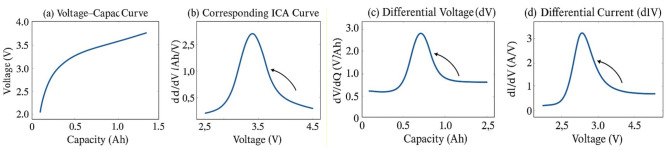
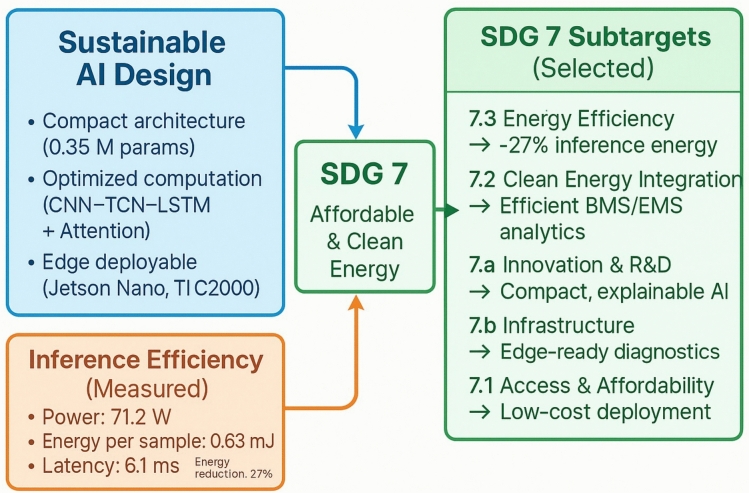
Reliable and sustainable battery diagnostics are essential for advancing electric vehicle (EV) technologies and fulfilling Sustainable Development Goal 7 (SDG 7): Affordable and Clean Energy. This study proposes a hybrid deep learning framework that integrates one-dimensional Convolutional Neural Networks (1D-CNNs), Temporal Convolutional Networks (TCNs), and Long Short-Term Memory (LSTM) layers, along with an attention mechanism, for intelligent EV battery health diagnostics. Differential Voltage (dV/dQ), Differential Current (dI/dV), and Incremental Capacity Analysis (ICA, dQ/dV) features were extracted and denoised from over 10,000 charge-discharge cycles sourced from the NASA PCoE, Oxford, and CALCE battery degradation datasets. The proposed model achieved a State-of-Health (SOH) prediction accuracy of [Formula: see text] and RMSE = 0.021, outperforming conventional CNN, LSTM, and XGBoost baselines by up to 25% in accuracy. With only 0.35 million parameters, the model demonstrated an average inference latency of 6.1 ms and energy consumption of 0.63 mJ per sample-a 27% reduction compared to Transformer-based architectures. These results confirm the framework's robustness, scalability, and real-time feasibility for embedded Battery Management Systems (BMS). By improving diagnostic precision, extending battery lifespan, and reducing computational energy demand, the proposed method directly contributes to sustainable mobility and the broader goals of energy efficiency and the circular economy under SDG 7.
Overview
CoChat Summary
TL;DR
The paper proposes a hybrid CNN–TCN–LSTM model with attention, using Differential Voltage, Differential Current, and Incremental Capacity features for EV battery State-of-Health estimation, reporting R² = 0.983 and RMSE = 0.021 on NASA PCoE. It also reports low computational cost (0.35 M parameters, 0.63 mJ/sample, 6.1 ms latency) and attention/Grad-CAM focus on the 3.55–3.75 V degradation-sensitive region.
Key findings
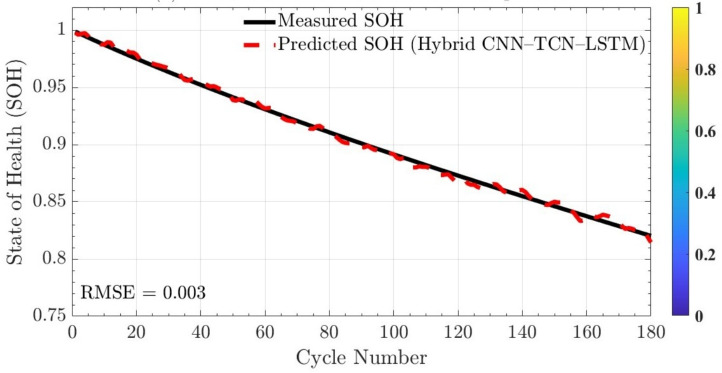
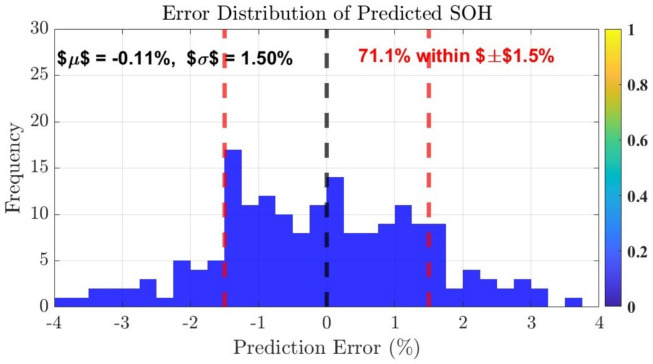
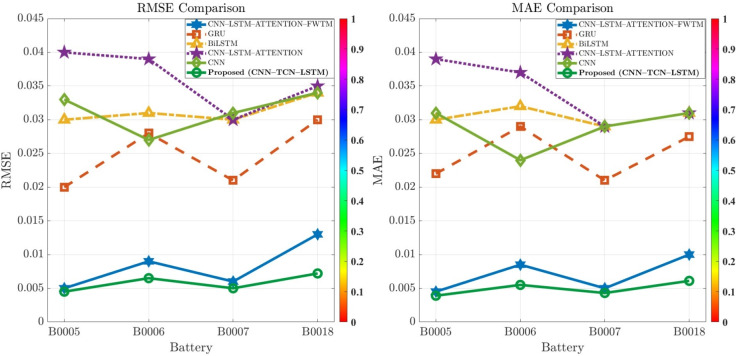
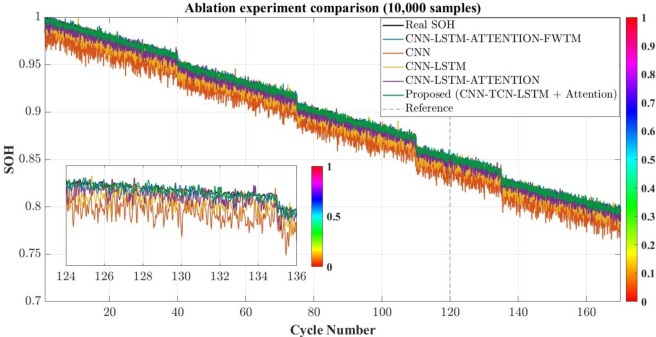
- SOH estimation: the proposed CNN–TCN–LSTM + Attention model achieved RMSE = 0.021, MAE = 0.015, and R² = 0.983 on NASA PCoE (Table 4), versus Transformer RMSE = 0.024, CNN–LSTM = 0.028, LSTM = 0.033, and XGBoost = 0.046; the abstract claims up to 25% accuracy improvement over baselines, while Table 4 reports a 13.5% relative improvement over the Transformer. Ablation showed the full model at RMSE = 0.021 vs 0.023 without attention, a 9.3% RMSE improvement. A separate Table 5 reports RMSE = 0.007, R² = 0.994, MAPE = 0.81%, and 94.7% of predictions within ±1.5% on 10,000 samples.
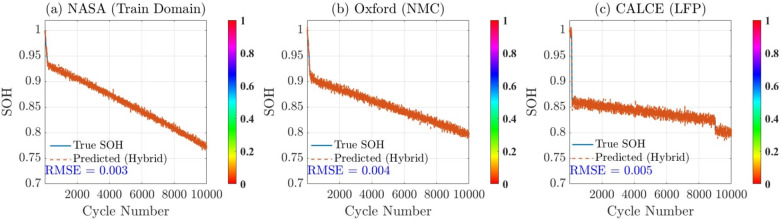
- Cross-dataset generalization: trained on NASA PCoE and tested without retraining, the model reached RMSE = 0.025/R² = 0.975 on Oxford NMC and RMSE = 0.026/R² = 0.972 on CALCE LFP (Table 9); Figure 16 instead reports RMSE = 0.0061 on NASA, 0.0078 on Oxford, and 0.0093 on CALCE.
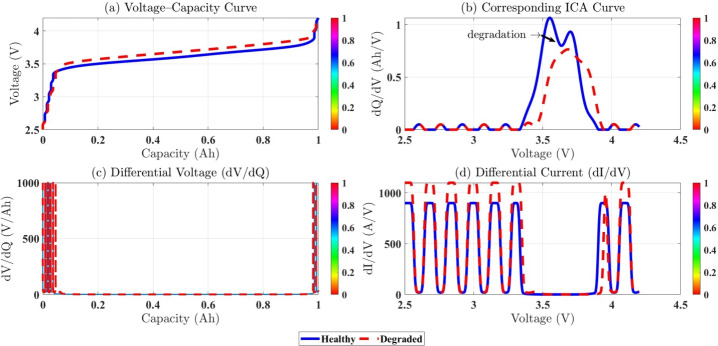
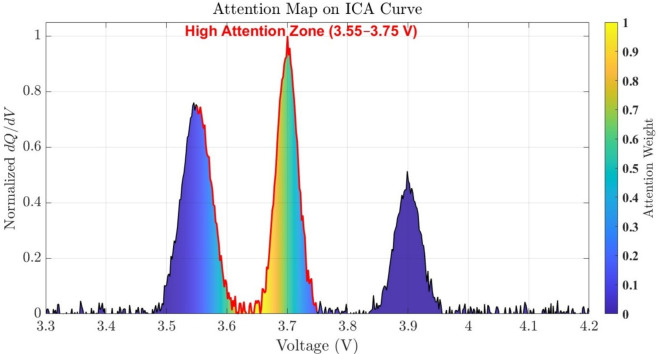
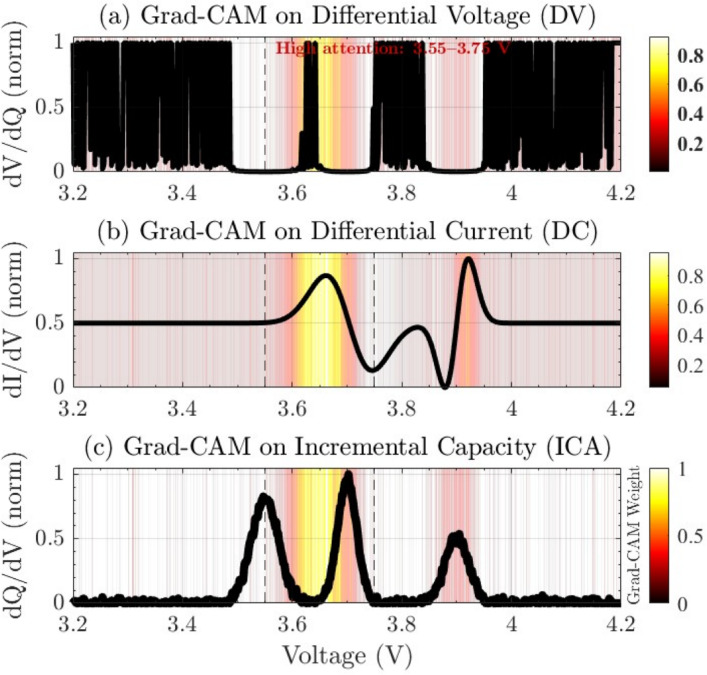
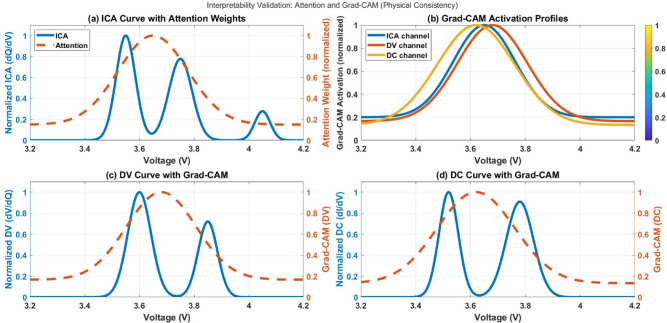
- Efficiency and interpretability: the model uses 0.35 M parameters, 71.2 W inference power, and 0.63 mJ/sample, described as a 27% energy reduction versus Transformer models at 1.45 mJ/sample; latency is reported as 6.1 ms on NVIDIA Jetson Nano and 3.68 ms/cycle in Table 4. Attention and Grad-CAM assign highest importance to 3.55–3.75 V, with attention weights above 0.85 and Grad-CAM activations above 0.8 in that band.
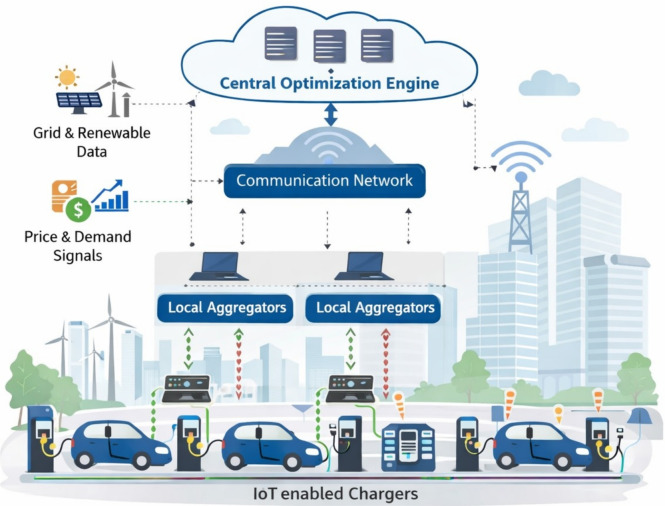
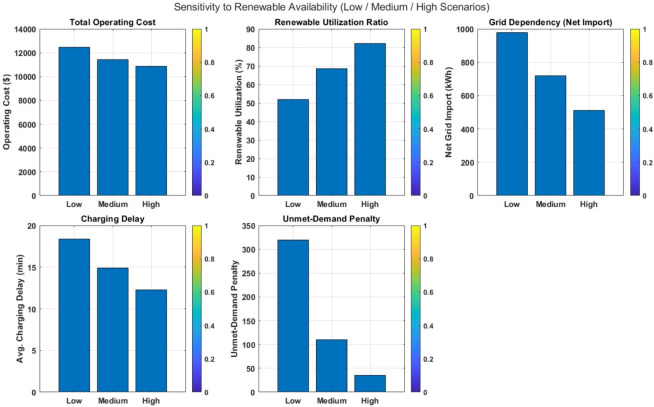
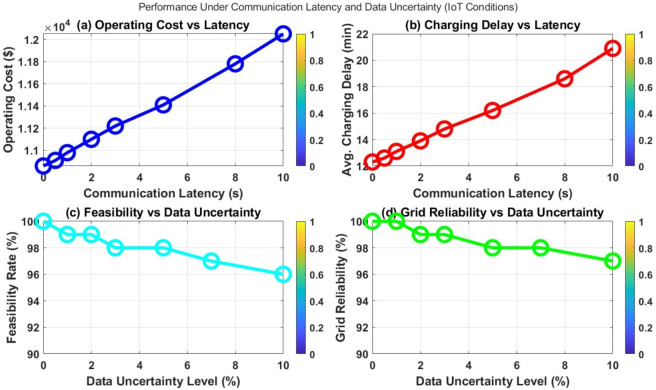
- Charging optimization: the manuscript also reports a hybrid optimization framework achieving operational cost $10,860, grid power loss 137.2 kW, and average charging delay 12.3 min, compared with PSO ($12,450, 182.6 kW, 18.4 min), GA ($11,980, 169.3 kW, 16.7 min), and NSGA-II ($11,420, 154.8 kW, 14.9 min).
Methods
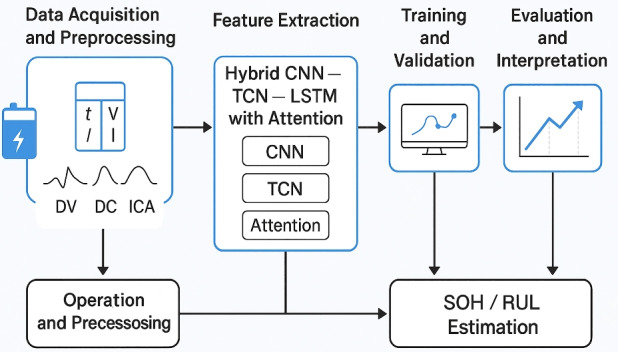
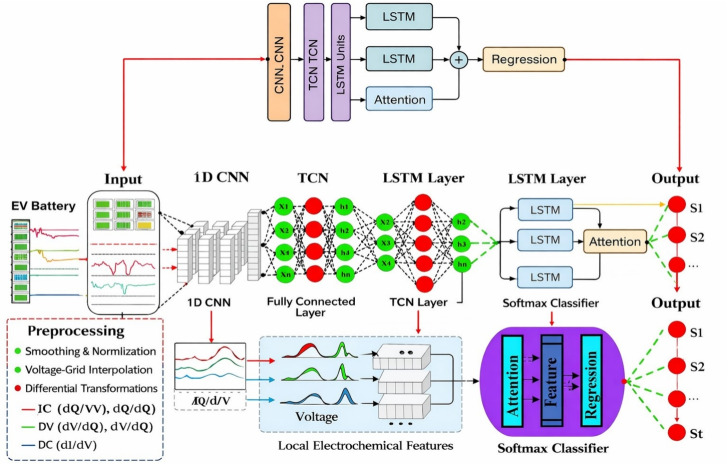
- Architecture: a deployment-oriented hybrid 1D-CNN + TCN + LSTM + additive attention model. Inputs are a fused three-channel tensor of ICA (dQ/dV), DV (dV/dQ), and DC (dI/dV); CNN uses kernel size k = 5 and stride s = 1, TCN uses dilated causal convolutions, LSTM models cycle-to-cycle dynamics, and attention produces a weighted context vector. Training uses MSE loss.
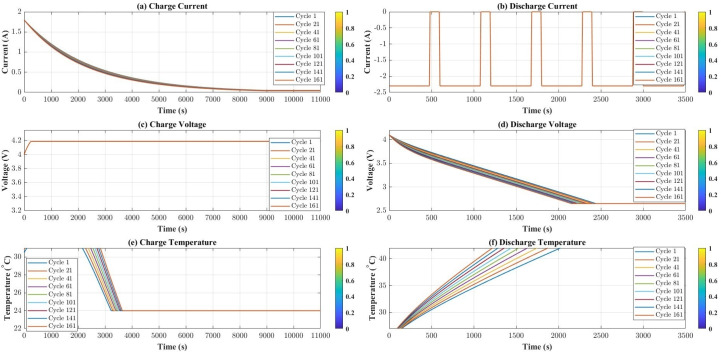
- Data and preprocessing: over 10,000 charge–discharge cycles/samples from NASA PCoE, Oxford Battery Degradation, and CALCE datasets, covering NMC, LFP, and NCA chemistries and 20–40 °C. Signals were Savitzky–Golay filtered (window = 15, polynomial order = 3), interpolated to 300 points between 2.5 V and 4.2 V, and min–max normalized; SOH was defined as Q_k/Q_BoL. Training used PyTorch 2.3.0 on an NVIDIA RTX A6000, Adam (lr = 0.001), batch size 64, 300 epochs with early stopping patience 20, dropout 0.2, and 5-fold stratified cycle segmentation. Evaluation used RMSE, MAE, R², MAPE, inference latency, cross-dataset transfer, and paired t-tests at 95% confidence.
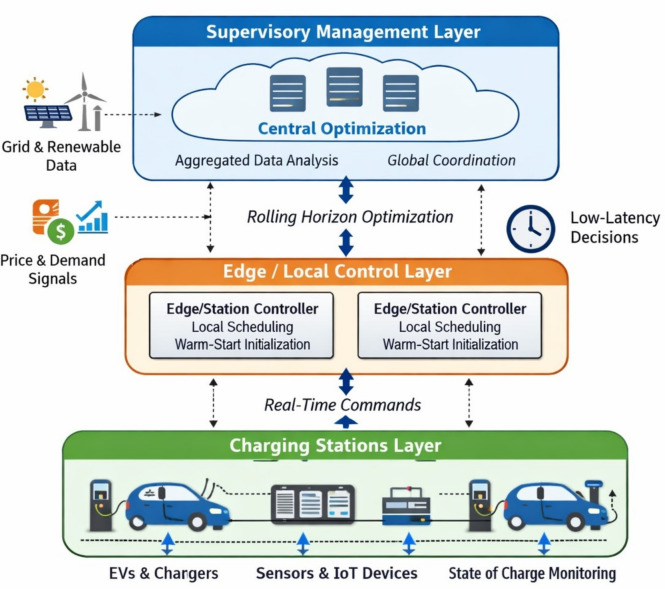
- Additional optimization formulation: the text also describes a multi-objective EV charging optimization with decision variables for charging power/scheduling, weighted objectives for cost, service quality, and grid stress, constraints for charger capacity, energy balance, storage SoC, and renewable availability, and scenario-based stochastic rolling-horizon evaluation.
Limitations
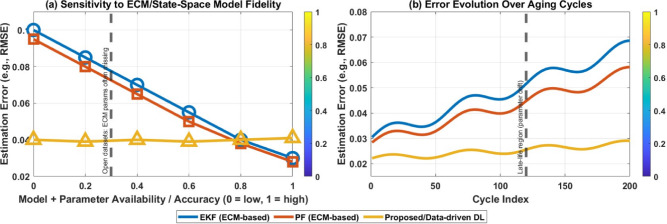
- Stated in the paper: reliance on complete charge–discharge cycles may limit direct applicability to fast charging (2C–3C) and opportunistic partial charging; datasets cover only moderate temperatures (20–40 °C), with extreme temperatures not tested; performance depends on data quality and representativeness; training remains computationally intensive; RUL is not experimentally validated and is treated only as a future extension; hardware-specific validation on ultra-low-power microcontrollers was not performed; EKF/PF baselines require ECM parameters not available in the evaluated datasets.
- Evident from the text: reported performance numbers are inconsistent across tables and figures (e.g., RMSE 0.021 vs 0.007 vs 0.0061; latency 3.68 ms vs 6.1 ms; improvement 13.5% vs up to 25%), Table 7 is an unfilled statistical-reporting template, and the manuscript mixes battery SOH experiments with an EV charging optimization study whose results are not tied to SOH estimation. Some figures, such as Figure 14, are explicitly described as illustrative rather than measured.
Model-written summary. Check it against the paper before relying on it.
Integrity signals
Registry
Cites
Statistics
Figures
Verification
Claims the paper makes
0 Valid · 7 Not valid · 27 Not checked · 239 Own results and interpretations
A result the paper reports from its own data — it cites no other source for it, so there is none to check. The quote shows it is in the paper.
In the paper
“energy consumption of 0.63 mJ per sample”
§ Deep learning-based battery health prediction for enhancing electric vehicle performance > Abstract
plain- Asserted: passes — The authors put it forward as true.
- Checkable: passes — It can be checked against evidence.
- Load-bearing: passes — The paper’s conclusions depend on it.
- Based: passes — The paper gives a reason why it holds.
A result the paper reports from its own data — it cites no other source for it, so there is none to check. The quote shows it is in the paper.
In the paper
“RMSE = 0.021”
§ Deep learning-based battery health prediction for enhancing electric vehicle performance > Abstract
plain- Asserted: passes — The authors put it forward as true.
- Checkable: passes — It can be checked against evidence.
- Load-bearing: passes — The paper’s conclusions depend on it.
- Based: passes — The paper gives a reason why it holds.
A result the paper reports from its own data — it cites no other source for it, so there is none to check. The quote shows it is in the paper.
In the paper
“a 27% reduction compared to Transformer-based architectures”
§ Deep learning-based battery health prediction for enhancing electric vehicle performance > Abstract
plainstates a cause- Asserted: passes — The authors put it forward as true.
- Checkable: passes — It can be checked against evidence.
- Load-bearing: passes — The paper’s conclusions depend on it.
- Based: passes — The paper gives a reason why it holds.
A result the paper reports from its own data — it cites no other source for it, so there is none to check. The quote shows it is in the paper.
In the paper
“The proposed model achieved a State-of-Health (SOH) prediction accuracy of R^2 = 0.983”
§ Deep learning-based battery health prediction for enhancing electric vehicle performance > Abstract
plain- Asserted: passes — The authors put it forward as true.
- Checkable: passes — It can be checked against evidence.
- Load-bearing: passes — The paper’s conclusions depend on it.
- Based: passes — The paper gives a reason why it holds.
A result the paper reports from its own data — it cites no other source for it, so there is none to check. The quote shows it is in the paper.
In the paper
“outperforming conventional CNN, LSTM, and XGBoost baselines by up to 25% in accuracy”
§ Deep learning-based battery health prediction for enhancing electric vehicle performance > Abstract
plainstates a cause- Asserted: passes — The authors put it forward as true.
- Checkable: passes — It can be checked against evidence.
- Load-bearing: passes — The paper’s conclusions depend on it.
- Based: passes — The paper gives a reason why it holds.
117 more claims
Create a free account to see all 273 claims and to verify the 39 references still open.
- It may state two separate claims as one. 117
- Probably not a substantial claim. 57
- The quote only partly states this claim. 3
Self-check
Percentages, sums and reported differences re-computed from the paper’s own numbers.
Each contradiction between two passages listed here was confirmed by an independent check.
Rated major: it would touch a result — a value a result rests on, reported and recomputed p-values on opposite sides of the significance level, two passages that conflict with no sign which is right, or a cited work retracted before this paper was published.
In the paper
§ Deep learning-based battery health prediction for enhancing electric vehicle performance > Results > Cross-dataset generalization and transferability
“When trained solely on NASA data, the model achieves strong cross-domain generalization with RMSE values of 0.0061 on NASA, 0.0078 on Oxford, and 0.0093 on CALCE datasets.”
§ Deep learning-based battery health prediction for enhancing electric vehicle performance > Results > Cross-dataset generalization and transferability
“To evaluate generalization, the model trained on the NASA PCoE dataset was directly tested on the Oxford and CALCE datasets without retraining. As shown in Table 9, the proposed model maintained high accuracy with only a slight performance drop (\DeltaRMSE = +0.005).”
Rated major: it would touch a result — a value a result rests on, reported and recomputed p-values on opposite sides of the significance level, two passages that conflict with no sign which is right, or a cited work retracted before this paper was published.
In the paper
§ Deep learning-based battery health prediction for enhancing electric vehicle performance > Methodology > Dataset
“A total of 10,000 dataset samples were used for model development and validation”
§ Deep learning-based battery health prediction for enhancing electric vehicle performance > Methodology > Dataset
“These indicators serve as the core multi-domain features for the proposed deep learning–based State-of-Health (SOH) estimation and Remaining Useful Life (RUL) prediction framework.”
Rated minor: it would not touch a result — a value no result rests on, a p-value that stays on the same side of the significance level, or a conflict that is clerical, resolved elsewhere in the paper, or outside its own findings.
In the paper
§ Deep learning-based battery health prediction for enhancing electric vehicle performance > Methodology > Data preprocessing and normalization
“In this study, the Methodology focuses exclusively on State-of-Health (SOH) estimation as the validated learning task. All descriptions suggesting an implemented Remaining Useful Life (RUL) prediction objective were removed or rephrased, and references to RUL are now limited to indicating a potential future extension of the framework”
§ Deep learning-based battery health prediction for enhancing electric vehicle performance > Methodology
“Finally, the evaluation and interpretation stage estimates the State of Health (SOH) and Remaining Useful Life (RUL) and provides explainable outputs via attention heatmaps and performance visualizations.”
Rated minor: it would not touch a result — a value no result rests on, a p-value that stays on the same side of the significance level, or a conflict that is clerical, resolved elsewhere in the paper, or outside its own findings.
In the paper
§ Deep learning-based battery health prediction for enhancing electric vehicle performance > Conclusion
“outperforming comparable architectures such as CNN–LSTM (RMSE = 0.028) and Transformer-based models (RMSE = 0.023)”
§ Deep learning-based battery health prediction for enhancing electric vehicle performance > Results > Quantitative performance evaluation
“| Transformer | 0.024 | 0.017 | 0.978 | 8.64 |”
Cited works that were retracted
Works this paper cites that were later retracted, from the retraction notices publishers deposit. Major when the notice came out before this paper was published.
A note, not an issue: for example, a cited work that was retracted only after this paper was published, which its authors could not have known.
In the paper
“Deb, N. et al. Integrating feature selection and explainable cnn for identification and classification of pests and beneficial insects. Sci. Rep. 15, 32520 (2025).”
Cited work 10.1038/s41598-025-14607-7 · retraction date not known · this paper published 2026-02-19
Citations
Cites
1 retracted
Liu, C., Chen, J., & Liu, Y. (2025) · Scientific Reports · doi:10.1038/s41598-025-14607-7 · Cited by 2
RetractedApplications of Physics-Informed Neural Networks in Power Systems - A Review
Huang, B., & Wang, J. (2023) · IEEE Transactions on Power Systems · doi:10.1109/tpwrs.2022.3162473 · Cited by 813
Fan, Z., Yan, Z., & Wen, S. (2023) · Sustainability · doi:10.3390/su151813493 · Cited by 346
Adaikkappan, M., & Sathiyamoorthy, N. (2022) · International Journal of Energy Research · doi:10.1002/er.7339 · Cited by 324
Waseem, M., Ahmad, M., Parveen, A., & Suhaib, M. (2023) · Journal of Power Sources · doi:10.1016/j.jpowsour.2023.233349 · Cited by 288
Li, C., Yang, L., Li, Q., Zhang, Q., Zhou, Z., Meng, Y., Zhao, X., Wang, L., Zhang, S., Li, Y., et al. (2024) · Journal of Energy Storage · doi:10.1016/j.est.2024.111167 · Cited by 268 · cited 1×
“Equivalent Circuit Models (ECMs) represent the internal battery dynamics using resistors and capacitors that mimic charge-transfer resistance and double-layer capacitance 14,36 .”
Machine learning for predicting battery capacity for electric vehicles
Zhao, J., Ling, H., Liu, J., Wang, J., Burke, A. F., & Lian, Y. (2023) · eTransportation · doi:10.1016/j.etran.2022.100214 · Cited by 200
Cao, K., Zhang, T., & Huang, J. (2024) · Scientific Reports · doi:10.1038/s41598-024-55483-x · Cited by 175
Adaptive self-attention LSTM for RUL prediction of lithium-ion batteries
Wang, Z., Liu, N., Chen, C., & Guo, Y. (2023) · Information Sciences · doi:10.1016/j.ins.2023.01.100 · Cited by 170
Adebanjo, I. T., Eko, J., Agbeyegbe, A. G., Yuk, S. F., Cowart, S. V., Nagelli, E. A., Burpo, F. J., Allen, J. L., Tran, D. T., Bhattarai, N., et al. (2025) · Energy Advances · doi:10.1039/d5ya00065c · Cited by 142
Accurate Prediction Approach of SOH for Lithium-Ion Batteries Based on LSTM Method
Zhang, L., Ji, T., Yu, S., & Liu, G. (2023) · Batteries · doi:10.3390/batteries9030177 · Cited by 124
Renold, A. P., & Kathayat, N. S. (2024) · IEEE Access · doi:10.1109/access.2024.3380452 · Cited by 121
Prospects for managing end‐of‐life lithium‐ion batteries: Present and future
Wang, X., Gu, Z., Ang, E. H., Zhao, X., Wu, X., & Liu, Y. (2022) · Interdisciplinary Materials · doi:10.1002/idm2.12041 · Cited by 120
Belli, L., Gaspar, W. B., & Jaswant, S. S. (2024) · Computer law & security review · doi:10.1016/j.clsr.2024.106017 · Cited by 85
Integration of solar energy in electrical, hybrid, autonomous vehicles: a technological review
Waseem, M., Sherwani, A. F., & Suhaib, M. (2019) · SN Applied Sciences · doi:10.1007/s42452-019-1458-4 · Cited by 78
Predictive pretrained transformer (PPT) for real-time battery health diagnostics
Zhao, J., Wang, Z., Wu, Y., & Burke, A. F. (2025) · Applied Energy · doi:10.1016/j.apenergy.2024.124746 · Cited by 77
Energy storage technology and its impact in electric vehicle: Current progress and future outlook
Waseem, M., Lakshmi, G. S., Ahmad, M., & Suhaib, M. (2025) · Next Energy · doi:10.1016/j.nxener.2024.100202 · Cited by 77
Li, M., Xu, W., Zhang, S., Liu, L., Hussain, A., Hu, E., Zhang, J., Mao, Z., & Chen, Z. (2025) · Materials · doi:10.3390/ma18010145 · Cited by 69
Waseem, M., Lakshmi, G. S., Amir, M., Ahmad, M., & Suhaib, M. (2025) · Journal of Power Sources · doi:10.1016/j.jpowsour.2025.236414 · Cited by 63
Utilizing Machine Learning to Advance Battery Materials Design: Challenges and Prospects
Manna, S., Paul, P., Manna, S. S., Das, S., & Pathak, B. (2025) · Chemistry of Materials · doi:10.1021/acs.chemmater.4c03486 · Cited by 62
Recent Progress of Deep Learning Methods for Health Monitoring of Lithium-Ion Batteries
Madani, S. S., Ziebert, C., Vahdatkhah, P., & Sadrnezhaad, S. K. (2024) · Batteries · doi:10.3390/batteries10060204 · Cited by 61
Sanjalawe, Y., Al-E’Mari, S., Fraihat, S., Naser Makhadmeh, S., & Alzubi, E. (2025) · IEEE Open Journal of the Communications Society · doi:10.1109/ojcoms.2025.3609144 · Cited by 60
Battery State of Health Estimate Strategies: From Data Analysis to End-Cloud Collaborative Framework
Yang, K., Zhang, L., Zhang, Z., Yu, H., Wang, W., Ouyang, M., Zhang, C., Sun, Q., Yan, X., Yang, S., et al. (2023) · Batteries · doi:10.3390/batteries9070351 · Cited by 58 · cited 1×
“For instance, Wang et al. 40 and Yang et al. 46 demonstrated that combining ICA and DVA features through deep feature fusion improved SOH estimation accuracy while preserving physical interpretability.”
Dineva, A. (2024) · Batteries · doi:10.3390/batteries10100356 · Cited by 52 · cited 2×
“Machine learning (ML) models, including Support Vector Machines (SVM), Random Forests (RF), Gaussian Process Regression (GPR), and Gradient Boosting Decision Trees (GBDT), have been applied for both SOH estimation and RUL prediction 12,21 .”
Chen, J., Marlow, M. N., Jiang, Q., & Wu, B. (2022) · Journal of Energy Storage · doi:10.1016/j.est.2021.103669 · Cited by 52
Waseem, M., Lakshmi, G. S., Sreeshobha, E., & Khan, S. (2025) · Energy Storage and Saving · doi:10.1016/j.enss.2024.09.002 · Cited by 47
Waseem, M., Suhaib, M., & Sherwani, A. F. (2019) · SN Applied Sciences · doi:10.1007/s42452-019-0235-8 · Cited by 46
Fault Diagnosis of Cascaded Multilevel Inverter Using Multiscale Kernel Convolutional Neural Network
Sivapriya, A., Kalaiarasi, N., Verma, R., Bharatiraja, C., & Munda, J. L. (2023) · IEEE Access · doi:10.1109/access.2023.3299852 · Cited by 44
Miller, T., Durlik, I., Kostecka, E., Kozlovska, P., Staude, M., & Sokołowska, S. (2025) · Energies · doi:10.3390/en18051192 · Cited by 40
Amir, M., Saifi, I. A., Waseem, M., & Tariq, M. (2025) · Green Energy and Intelligent Transportation · doi:10.1016/j.geits.2024.100196 · Cited by 39
Musa, M. A., Rahman, T., Deb, N., & Rahman, P. (2025) · Scientific Reports · doi:10.1038/s41598-025-07436-1 · Cited by 39
Self-citationEsmaeili, F., Cassie, E., Nguyen, H. P. T., Plank, N. O. V., Unsworth, C. P., & Wang, A. (2023) · Bioengineering · doi:10.3390/bioengineering10121348 · Cited by 37
Kostenko, G., & Zaporozhets, A. (2024) · Energies · doi:10.3390/en17205132 · Cited by 32
Waseem, M., Sreeshobha, E., Reddy, K. S., & Donateo, T. (2024) · Energies · doi:10.3390/en17236137 · Cited by 32
Cao, R., Cheng, H., Jia, X., Gao, X., Zhang, Z., Wang, M., Li, S., Zhang, C., Ma, B., Liu, X., et al. (2022) · Automotive Innovation · doi:10.1007/s42154-022-00181-5 · Cited by 31
An efficient VGG16-based deep learning model for automated potato pest detection
Deb, N., & Rahman, T. (2025) · Smart Agricultural Technology · doi:10.1016/j.atech.2025.101409 · Cited by 24
Self-citationBharatheedasan, K., Maity, T., Kumaraswamidhas, L. A., & Durairaj, M. (2023) · Sādhanā · doi:10.1007/s12046-023-02169-1 · Cited by 23
A review of participatory modelling techniques for energy transition scenarios
Campfens, J. K. E. K., Duygan, M., & Binder, C. R. (2025) · Advances in Applied Energy · doi:10.1016/j.adapen.2025.100215 · Cited by 22
Sakr, H. A., Eladl, A. A., & El-Afifi, M. I. (2025) · Journal of Energy Storage · doi:10.1016/j.est.2025.116409 · Cited by 21
Battery Early Prognostics Based on Pseudo Meta-Learning
Zhang, S., Liu, Z., & Su, H. (2024) · IEEE Transactions on Industrial Informatics · doi:10.1109/tii.2024.3412128 · Cited by 21
Nishat, T. A. H., Jeong, J.-H., Jo, H., Xia, S., & Liu, J. (2025) · Applied Energy · doi:10.1016/j.apenergy.2025.125731 · Cited by 21
Network traffic prediction based on transformer and temporal convolutional network
Wang, Y., & Chen, P. (2025) · PLoS ONE · doi:10.1371/journal.pone.0320368 · Cited by 21
ECG Signal Classification of Cardiovascular Disorder using CWT and DCNN
Rahman, T., Ahommed, R., Deb, N., Das, U. K., Moniruzzaman, M., Bhuiyan, M. A., Sultana, F., & Kausar, M. K. (2024) · Journal of Biomedical Physics and Engineering · doi:10.31661/jbpe.v0i0.2307-1636 · Cited by 19
Self-citationRahman, T., Deb, N., Larguech, S., Moniruzzaman, M., Jizat, N. M., Alharbi, S. S., & Al‐Bawri, S. S. (2025) · Energy Reports · doi:10.1016/j.egyr.2025.07.026 · Cited by 18
Self-citationBenchmark dataset for the study of the relaxation of commercial NMC-811 and LFP cells
Fernando, A., Kuipers, M., Angenendt, G., Kairies, K.-P., & Dubarry, M. (2024) · Cell Reports Physical Science · doi:10.1016/j.xcrp.2023.101754 · Cited by 16
Abdulameer, Y. H. (2025) · Journal of Wireless Mobile Networks, Ubiquitous Computing, and Dependable Applications · doi:10.58346/jowua.2025.i1.033 · Cited by 16
Design and Analysis of a Fuel Cell and Batteries in Energy Production for Electric Vehicle
Deb, N., Alam, M. Z., Rahman, T., Jami, M. S., Mansor, M. F., & Tajuddin, H. A. (2023) · Iranica Journal of Energy and Environment · doi:10.5829/ijee.2023.14.03.11 · Cited by 16
Self-citationA Concise Review of Power Batteries and Battery Management Systems for Electric and Hybrid Vehicles
Zhang, Q., Shang, Y., Li, Y., & Zhu, R. (2025) · Energies · doi:10.3390/en18143750 · Cited by 15
Rahman, T., & Deb, N. (2025) · Fuel · doi:10.1016/j.fuel.2025.137481 · Cited by 14
Self-citationSOH Estimation of Lithium Batteries Based on ICA and WOA-RBF Algorithm
Wang, Q., Gu, Y., Zhu, T., Ge, L., & Huang, Y. (2024) · Energy Engineering · doi:10.32604/ee.2024.053758 · Cited by 13 · cited 5×
“As reported by Wang et al. 63 , inaccurate diagnostics can lead to battery retirement up to 10–15% earlier than the actual end-of-life (EoL).”
InfluentialMTTF: a multimodal transformer for temperature forecasting
Cao, Y. H., Zhai, J., Wei, Z., Zhou, X., & Zhang, F. (2023) · International Journal of Computers and Applications · doi:10.1080/1206212x.2023.2289708 · Cited by 13
Decarbonizing all-electric communities via carbon-responsive control of behind-the-meter resources
Wang, J., El Kontar, R., Jin, X., & King, J. (2023) · Advances in Applied Energy · doi:10.1016/j.adapen.2023.100139 · Cited by 13
Deb, N., Rahman, T., Alam, M. Z., Miah, M. S., & Kamal, R. (2024) · International Journal of Polymer Science · doi:10.1155/2024/5264918 · Cited by 13
Self-citationFailure modes, safety concerns, testing protocol, and advancement in lithium-ion battery technology
Waseem, M., Reddy, K. S., Rao, T. R., Suhaib, M., & Khan, M. A. (2025) · Future Batteries · doi:10.1016/j.fub.2025.100113 · Cited by 12
Predicting the state of health of VRLA batteries in UPS using data-driven method
Shang, Y., Zheng, W., Yan, X., Nguyễn, Đ. H., & Jian, L. (2023) · Energy Reports · doi:10.1016/j.egyr.2023.04.264 · Cited by 12
Rahman, T., Alam, M. Z., Deb, N., & Kamal, R. (2022) · Journal of Interdisciplinary Mathematics · doi:10.1080/09720502.2022.2133231 · Cited by 12
Self-citationDeb, N., Rahman, M. T., Moniruzzaman, M., Obadi, A. S. B., Jizat, N. M., Al‐Bawri, S. S., & Rahman, A. A. M. (2025) · Scientific Reports · doi:10.1038/s41598-025-32520-x · Cited by 10
Self-citationDeb, N., & Rahman, T. (2026) · Journal of Agriculture and Food Research · doi:10.1016/j.jafr.2025.102604 · Cited by 9
Self-citationBoddu, Y., Manimaran, A., & Jayanth, T. (2025) · Earth Science Informatics · doi:10.1007/s12145-025-01987-7 · Cited by 9
A Study on the energy-efficiency of the Object Tracking Algorithms in Edge Devices
Fabrizio, G. D., Calisti, L., Contoli, C., Kania, N., & Lattanzi, E. (2023) · IEEE/ACM International Conference on Utility and Cloud Computing (UCC) · doi:10.1145/3603166.3632541 · Cited by 8
Li, W., Yang, Y., & Pischinger, S. (2025) · Batteries · doi:10.3390/batteries11050194 · Cited by 7
Hemavathi, S. (2025) · Energy Storage · doi:10.1002/est2.70244 · Cited by 7
Simscape Modelling and Analysis of Solar-Assisted Electric Traction System
Waseem, M., Ahmad, M., & Suhaib, M. (2023) · Transactions of Indian National Academy of Engineering · doi:10.1007/s41403-023-00408-9 · Cited by 7
Wang, C., Ye, S., An, D., & Xi, H. (2024) · doi:10.46855/energy-proceedings-10974 · Cited by 1
Winnik, J., Suski, D., & Trusiak, M. (2025) · Slovak-Czech-Polish Optical Conference on Wave and Quantum Aspects of Contemporary Optics · doi:10.1117/12.3052590 · Cited by 1
Research works printed but not linked: 1
- Deb, N., Rahman, T., Alam, M., Jami, M. S. & Miah, M. S. Investigation and comparative analysis of materials, efficiency, and design in microbial electrolysis cells for biomethane production. Adv. Environ. Technol. 11, 130–163 (2025).
Cited by
Deb, N., & Rahman, T. (2026) · Sensing and Imaging · doi:10.1007/s11220-026-00867-8 · Cited by 2
Self-citationBenbouhenni, H., & Bizon, N. (2026) · Batteries · doi:10.3390/batteries12090353 · Cited by 1
Jain, B., & Bandodkar, A. J. (2026) · Materials Horizons · doi:10.1039/d6mh01006g
Su, Y. (2026) · International Conference on Machine Learning and Intelligent Systems Engineering (MLISE) · doi:10.1109/mlise70044.2026.11607603
Explainable deep learning for Mango leaf disease recognition using AlexNet and grad-CAM
Ghosh, A. K., Rahman, T., Moniruzzaman, M., Deb, N., Mengash, H. A., Jizat, N. M., & Al‐Bawri, S. S. (2026) · Intelligent Data Analysis · doi:10.1177/1088467x261495708
Self-citation
Metadata
- Authors
- Rahman, T., Deb, N., Moniruzzaman, M., Mengash, H. A., Jizat, N. M., Rahman, A. A. M., & Al-Bawri, S. S.
- Affiliations
- International University of Business Agriculture and Technology (BD)
- Princess Nourah bint Abdulrahman University (SA)
- Multimedia University (MY)
- Southeast University (BD)
- Corresponding author
- Moniruzzaman, Md.
- Jizat, Noorlindawaty Md
- Rahman, Abdullah Al Mahfazur
- ORCID
- Venue
- Scientific Reports
- Published
- 2026-02-19
- Volume
- 16
- Issue
- 1
- Pages
- 9871
- ISSN
- 2045-2322 (ISSN-L)
- PMC
- PMC13018196
- OpenAlex
- W7130558283
- Cited by
- 20
- References
- 65
- Citations by year
- 2026: 20
- FWCI
- 21.76
- Type
- journal article
- Language
- en
- Open access
- gold
- doi.org
- Licence
- cc-by-nc-nd
- creativecommons.org/licenses/by-nc-nd/4.0 (tdm)
- creativecommons.org/licenses/by-nc-nd/4.0 (vor, 34 d)
- Locations
- Scientific Reports (publishedVersion, cc-by-nc-nd)
- PubMed Central (publishedVersion, cc-by-nc-nd)
- PubMed (publishedVersion)
- Siti Hasmah Digital Library-MMU Institutiona Repository (Multimedia University) (acceptedVersion)
- DOAJ (DOAJ: Directory of Open Access Journals) (submittedVersion)
- Funders
- Princess Nourah Bint Abdulrahman University
- Topics
- Physical Sciences › Engineering › Automotive Engineering › Battery Modeling and Management
- Physical Sciences › Engineering › Electrical and Electronic Engineering › Advancements in Battery Materials
- Physical Sciences › Engineering › Electrical and Electronic Engineering › Electric Vehicles and Infrastructure
- Keywords
- battery state of health estimation, state of health estimation, electric vehicle batteries, battery degradation, differential voltage analysis, incremental capacity analysis, attention mechanism, hybrid deep learning model, battery management systems, charge-discharge cycling
About these checks
Registry, retraction, Cites and statistics results are computed, not judged, with one exception: a printed reference that no index lists is read once by a model before it counts as a citation error. Claims are extracted by a model and kept only when their quote appears verbatim in the text; each cited source is then checked, with a model’s help, for whether it says what the claim relies on. Those verdicts can be wrong — read the claim’s quote and the cited source before relying on one.
A language model drew the claims from the paper on 2026-11-24, under version 3 of the claim definition (model deepseek-v4.1-flash, prompt extract-v3).
A second model labelled each claim on 2026-11-24 (model jev-1.13-20260917, definition revision gold-guideline-v0.2).
Statistics and arithmetic are recomputed, not judged.
Confidence bands are shown only for fields calibrated on our annotated test set. None is calibrated yet, so no band is shown.
What counts as a claim ›How we measure confidence ›How we check this ›
Are you an author, or do you see a problem with this page? Request a review
Data sources
Bibliographic data: Semantic Scholar, OpenAlex, Crossref.
Contains information from the Semantic Scholar Academic Graph Datasets, made available under the ODC Attribution License (ODC-BY 1.0).
Semantic Scholar’s data is described in: Kinney, R., et al. (2023). The Semantic Scholar Open Data Platform. arXiv:2301.10140.
