

A two-stage multi-objective optimization framework for coordinated EV charging scheduling and reactive power dispatch
Open accessThe DOI matches its Crossref record; 38 of the 38 references it cites were found in a registry or an index; none of the 17 sources its claims cite is checked for support yet.
Abstract
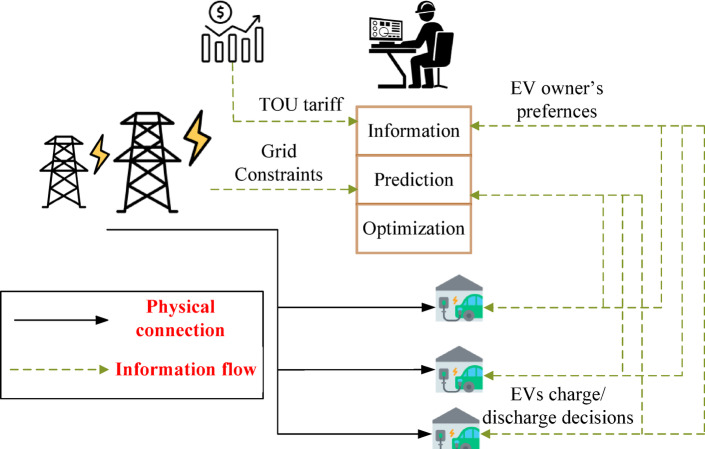
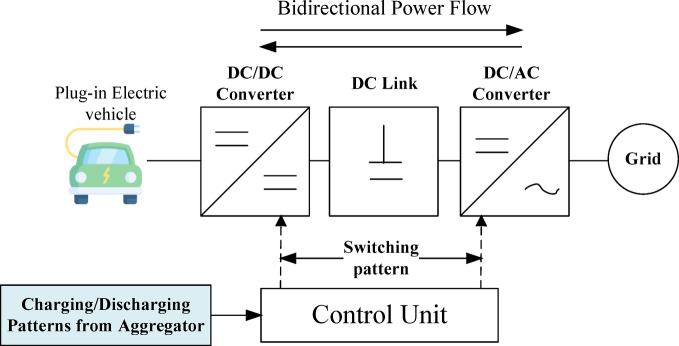
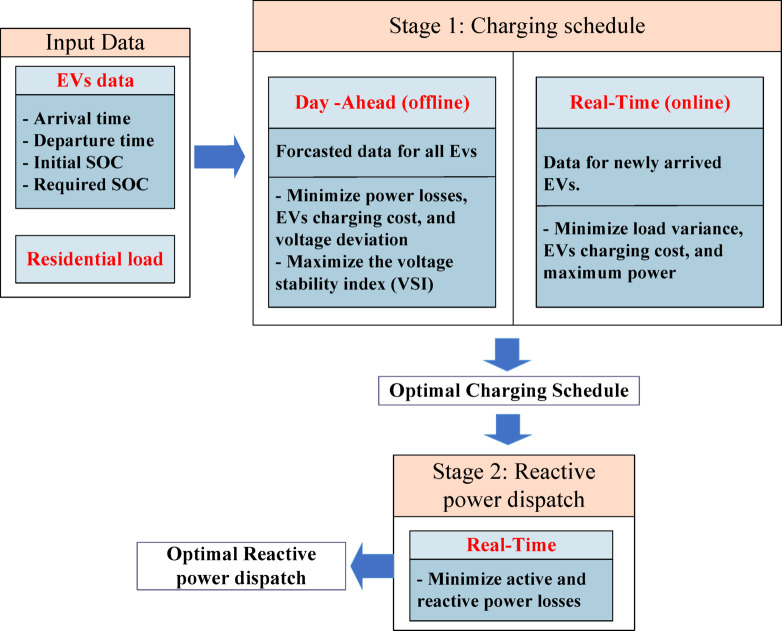
Car exhaust emissions significantly contribute to the depletion of the ozone layer. Electric vehicles (EVs) present a sustainable alternative to mitigate this environmental issue. However, the large-scale adoption of EVs introduces challenges for the power grid, primarily due to irregular and uncoordinated charging patterns. This study proposes a comprehensive two-stage framework for optimizing electric vehicle (EV) charging patterns and reactive power dispatch within power distribution systems. In Stage 1, two types of EV charging schedules are developed and compared: day-ahead charging and real-time charging. Day-ahead charging involves planning EV charging over a 24-hour horizon with the objective of minimizing load variance, energy cost, active power losses, and voltage drop, while simultaneously maximizing voltage stability. Real-time charging dynamically adjusts charging behavior based on immediate grid conditions to minimize load variance and charging costs. Stage 2 focuses on optimal real-time reactive power dispatch, utilizing the reactive power capabilities of EV inverters to further reduce the active and reactive power losses. Additionally, the study analyzes EV behavior in response to sudden load changes, providing critical insights for enhancing grid performance. Different optimization algorithms are implemented to efficiently solve the proposed models, including particle swarm optimization, dandelion optimization, wild horse optimization, and slime mould optimization. The optimization is formulated as a multi-objective problem to consider both grid constraints and customer satisfaction. The proposed framework is applied and tested on a 33-bus radial distribution system with 984 electric vehicles using MATLAB M-files, while power flow calculations are performed using the MATPOWER toolbox. Simulation results demonstrate the effectiveness of the proposed framework. Daily active power losses are reduced from 4.04 MWh to 2.55 MWh and 2.77 MWh under day-ahead and real-time planning strategies—representing reductions of 36.8% and 31.4%, respectively. Similarly, EV charging costs drop from 552.31 USD to 394.19 USD and 363.68 USD, achieving cost savings of 28.63% and 34.15%. Furthermore, voltage profiles are maintained within the acceptable operational limit of 0.95 p.u. These outcomes highlight the significant advantages of the proposed methodology in enhancing grid efficiency while ensuring user satisfaction.
Overview
CoChat Summary
TL;DR
This paper proposes a two-stage multi-objective framework for coordinated EV charging (day-ahead or real-time) and real-time reactive power dispatch using EV inverters on a 33-bus distribution system. It reports lower daily losses, lower charging costs, and improved voltage profiles, with SMA outperforming PSO, WHO, and DO.
Key findings
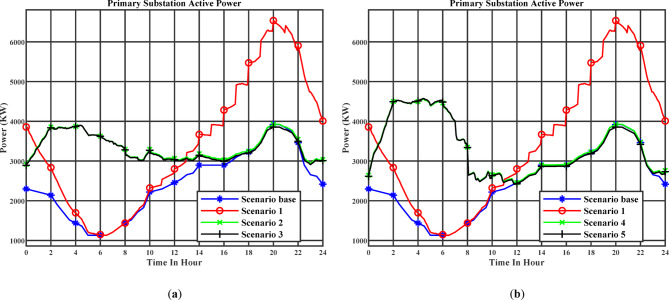
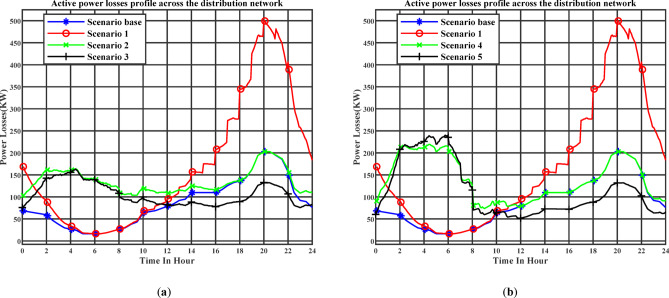
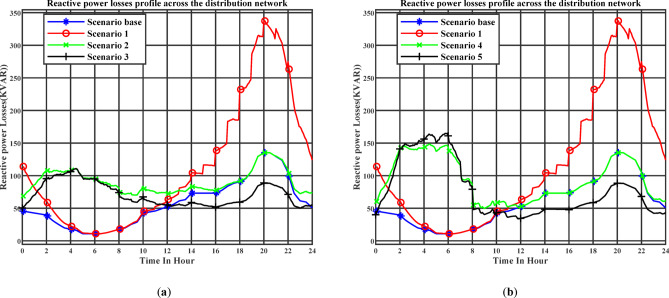
- Daily active power losses fall from 4.04 MWh under uncoordinated charging to 2.55 MWh (day-ahead + reactive support) and 2.77 MWh (real-time + reactive support), reductions of 36.8% and 31.4%.
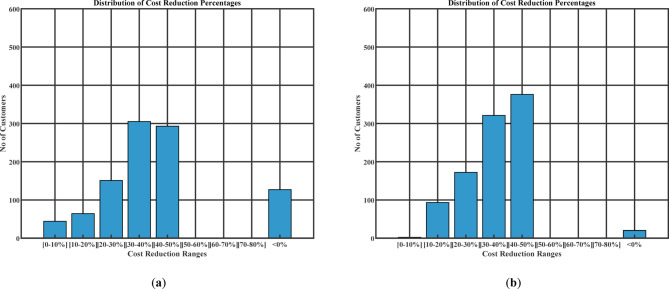
- Total charging cost drops from 552.31 USD to 394.19 USD (day-ahead) and 363.68 USD (real-time), savings of 28.63% and 34.15%.
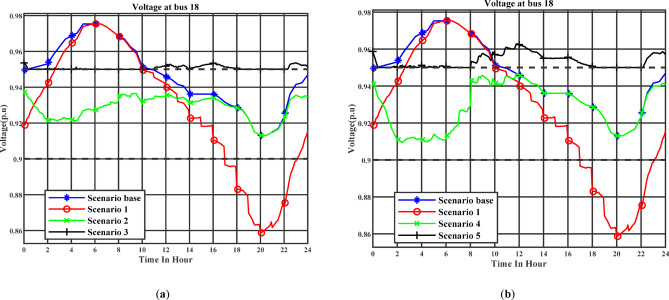
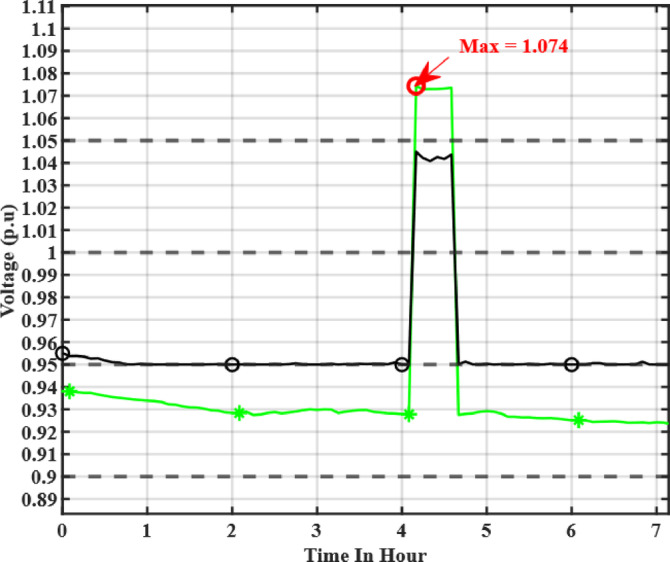
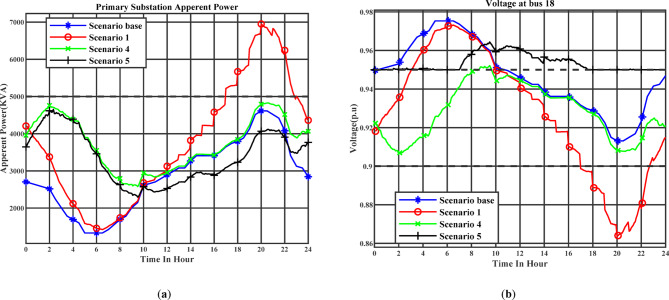
- With reactive power support, minimum bus voltage reaches 0.95 p.u.; uncoordinated charging drives Bus 18 below 0.9 p.u. during peak demand. In an overvoltage test, Bus 18 rises to 1.074 p.u. after a sudden load cut and is regulated below 1.05 p.u. by EV reactive absorption.
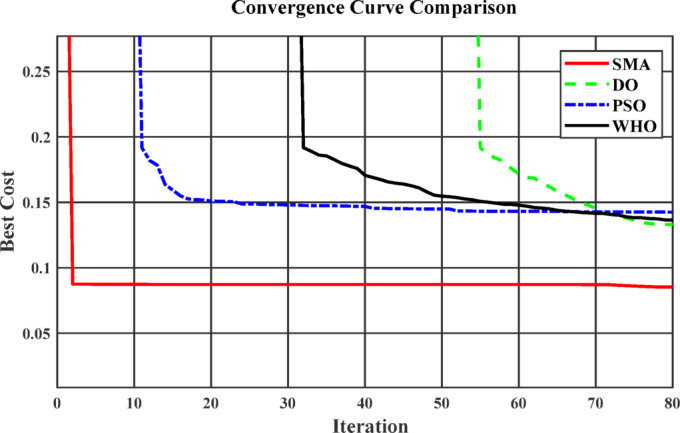
- SMA achieved the best Scenario 2 results among PSO, DO, and WHO (Vmin 0.91309 p.u., Ppeak 3924.31 kW, Plosses peak 202.708 kW, total charging cost 394.1933 USD), and Wilcoxon signed-rank tests rejected equality with PSO, WHO, and DO at α=0.05 (p = 9.3157e−06, 0.0278, 0.0256; h=1).
Methods
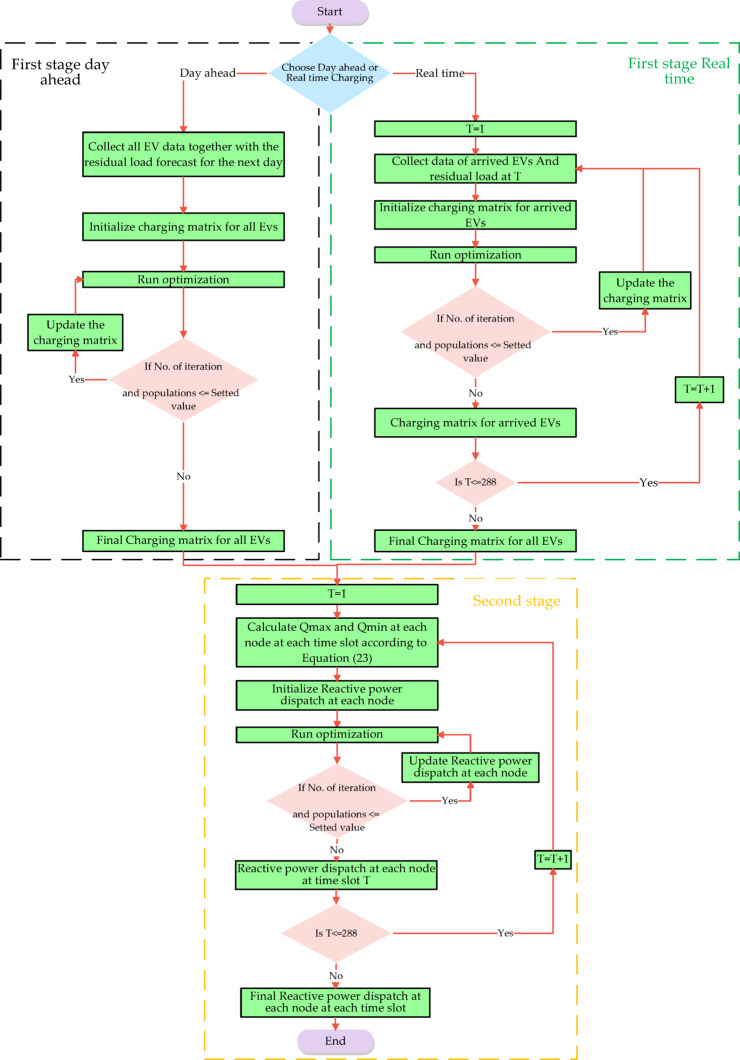
- Two-stage centralized aggregator framework: Stage 1 optimizes EV charging start times for day-ahead (24-h horizon, 288 5-min slots, AC load flow embedded) and real-time (per time slot for newly arrived EVs, no AC load flow in the optimization loop); Stage 2 optimizes node-level real-time reactive power dispatch from EV inverters.
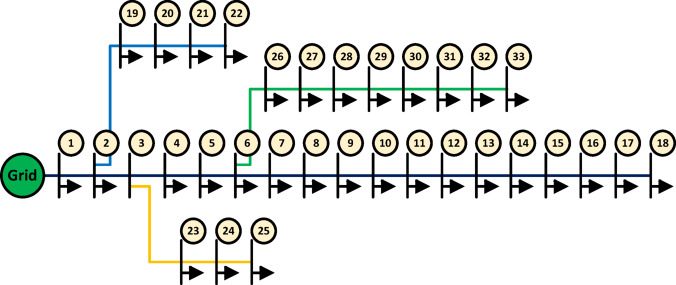
- Tested on the IEEE 33-bus radial distribution system (12.66 kV, 3.715 MW peak active load, 5 MVA substation) in MATLAB R2020a with MATPOWER; six scenarios cover base, unmanaged charging, day-ahead active-only, day-ahead + reactive, real-time active-only, and real-time + reactive. The abstract reports 984 EVs; Table 8 lists 21, 30, and 60 EVs across bus groups.
- Multi-objective weighted-sum optimization with min–max normalization and scaling; PSO, DO, WHO, and SMA are compared, with SMA selected for final results and statistical validation via Wilcoxon signed-rank tests.
Limitations
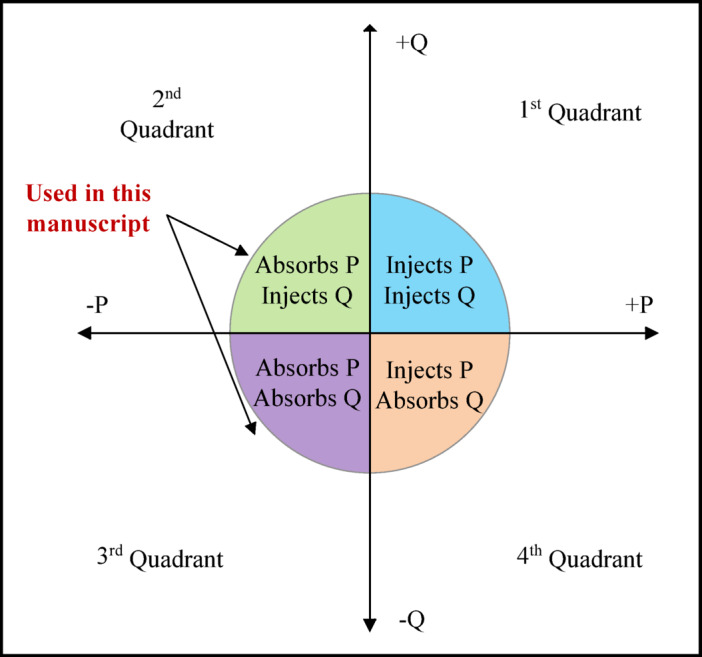
- Paper states: all EV chargers are assumed capable of reactive power support; unplanned EV departure events are not considered; V2G discharging operation is not included; intra-node reactive power coordination among EVs is not addressed.
- Evident from the text: day-ahead charging relies on forecast accuracy; real-time charging is myopic and may not be globally optimal; AC load flow is not embedded in the real-time optimization loop; reactive dispatch is aggregated at node level rather than individual EV level.
- Evident from the text: the abstract reports 984 EVs, while Table 8 lists 21, 30, and 60 EVs across bus groups, and the text does not reconcile this discrepancy.
Model-written summary. Check it against the paper before relying on it.
Integrity signals
Registry
Cites
Statistics
Figures
Verification
Claims the paper makes
0 Valid · 9 Not valid · 13 Not checked · 65 Own results and interpretations
A result the paper reports from its own data — it cites no other source for it, so there is none to check. The quote shows it is in the paper.
In the paper
“Furthermore, voltage profiles are maintained within the acceptable operational limit of 0.95 p.u.”
§ A two-stage multi-objective optimization framework for coordinated EV charging scheduling and reactive power dispatch > Abstract
plain- Asserted: passes — The authors put it forward as true.
- Checkable: passes — It can be checked against evidence.
- Load-bearing: passes — The paper’s conclusions depend on it.
- Based: passes — The paper gives a reason why it holds.
- Rests on 4 assumptions not shown here.
A result the paper reports from its own data — it cites no other source for it, so there is none to check. The quote shows it is in the paper.
In the paper
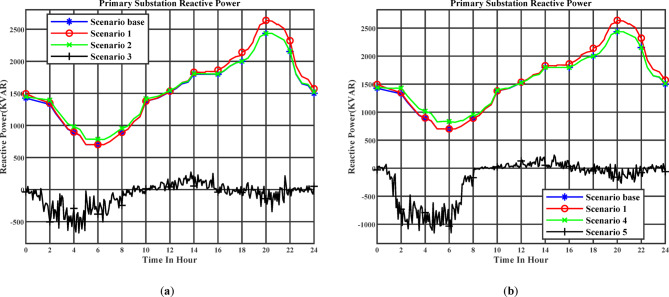
“The reactive power at the primary substation tends to approach zero, especially in Scenario 3.”
§ A two-stage multi-objective optimization framework for coordinated EV charging scheduling and reactive power dispatch > Simulation results and discussions > Simulation results
plain- Asserted: passes — The authors put it forward as true.
- Checkable: passes — It can be checked against evidence.
- Load-bearing: passes — The paper’s conclusions depend on it.
- Based: passes — The paper gives a reason why it holds.
- Rests on 2 assumptions not shown here.
A result the paper reports from its own data — it cites no other source for it, so there is none to check. The quote shows it is in the paper.
In the paper
“With regard to Table 9, the SMA algorithm demonstrates outstanding capability in achieving the global optimum solution, attaining the lowest fitness function among all compared methods.”
§ A two-stage multi-objective optimization framework for coordinated EV charging scheduling and reactive power dispatch > Simulation results and discussions > Metaheuristic algorithm analysis
boosted- Asserted: passes — The authors put it forward as true.
- Checkable: passes — It can be checked against evidence.
- Load-bearing: passes — The paper’s conclusions depend on it.
- Based: passes — The paper gives a reason why it holds.
A result the paper states — it cites no source for it, so there is none to check. The quote shows it is in the paper.
In the paper
“Coordinated charging cause flatten load curve, especially in the day-ahead charging schedule.”
§ A two-stage multi-objective optimization framework for coordinated EV charging scheduling and reactive power dispatch > Simulation results and discussions > Simulation results
plainstates a cause- Asserted: passes — The authors put it forward as true.
- Checkable: passes — It can be checked against evidence.
- Load-bearing: passes — The paper’s conclusions depend on it.
- Based: passes — The paper gives a reason why it holds.
- Rests on 2 assumptions not shown here.
A result the paper reports from its own data — it cites no other source for it, so there is none to check. The quote shows it is in the paper.
In the paper
“The simulation results demonstrate that under Scenarios 3 and 5, where EV chargers are equipped with the capability to inject or absorb reactive power and are actively managed to support the grid, voltage at Bus 18 remains consistently above the minimum limit of 0.95 p.u. throughout the day.”
§ A two-stage multi-objective optimization framework for coordinated EV charging scheduling and reactive power dispatch > Simulation results and discussions > Simulation results
boostedstates a cause- Asserted: passes — The authors put it forward as true.
- Checkable: passes — It can be checked against evidence.
- Load-bearing: passes — The paper’s conclusions depend on it.
- Based: passes — The paper gives a reason why it holds.
- Rests on an assumption not shown here.
26 more claims
Create a free account to see all 87 claims and to verify the 17 references still open.
- It may state two separate claims as one. 49
- The quote only partly states this claim. 2
- Probably not a substantial claim. 17
Self-check
Percentages, sums and reported differences re-computed from the paper’s own numbers.
Each contradiction between two passages listed here was confirmed by an independent check.
Rated minor: it would not touch a result — a value no result rests on, a p-value that stays on the same side of the significance level, or a conflict that is clerical, resolved elsewhere in the paper, or outside its own findings.
In the paper
§ A two-stage multi-objective optimization framework for coordinated EV charging scheduling and reactive power dispatch > Conclusion
“The total charging cost decreases from 552.31 USD to 39.19 USD and 363.68 USD under the Day-Ahead and Real-Time strategies, achieving cost savings of 28.63% and 34.15%, respectively.”
§ A two-stage multi-objective optimization framework for coordinated EV charging scheduling and reactive power dispatch > Simulation results and discussions > Simulation results
“The total charging cost decreases from 552.31 USD in the uncoordinated charging case to 394.19 USD under the Day-Ahead Planning strategy and 363.68 USD with Real-Time Planning.”
Rated minor: it would not touch a result — a value no result rests on, a p-value that stays on the same side of the significance level, or a conflict that is clerical, resolved elsewhere in the paper, or outside its own findings.
In the paper
§ A two-stage multi-objective optimization framework for coordinated EV charging scheduling and reactive power dispatch > Simulation results and discussions > Simulation results
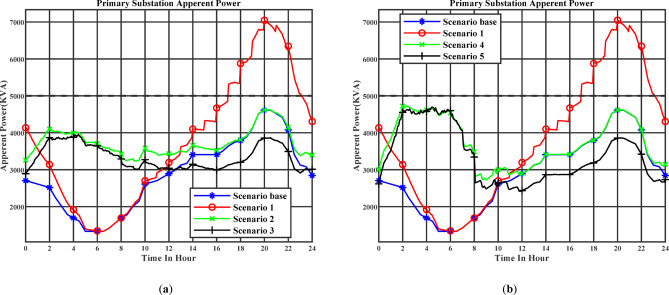
“| \:{S}_{peak} (MVA) | 4612.82 | 7047.87 | 4618.46 | 3957.02 | 4728.17 | 4693.51 |”
§ A two-stage multi-objective optimization framework for coordinated EV charging scheduling and reactive power dispatch > Simulation results and discussions > Simulation results
“The maximum apparent power is reduced to 4.618 MVA in Scenario 2 and 4.728 MVA in Scenario 4.”
Rated minor: it would not touch a result — a value no result rests on, a p-value that stays on the same side of the significance level, or a conflict that is clerical, resolved elsewhere in the paper, or outside its own findings.
In the paper
§ A two-stage multi-objective optimization framework for coordinated EV charging scheduling and reactive power dispatch > Proposed methodology for the optimal charging schedule and reactive power dispatch > First stage optimization
“9 \:{P}_{Avg}^{T}=\frac{1}{T}\mathrm{*}{\sum\:}_{t=0}^{T}({P}_{t}^{Load}+{\sum\:}_{m=1}^{{N}_{EV}}{P}_{t,m}^{EV})”
§ A two-stage multi-objective optimization framework for coordinated EV charging scheduling and reactive power dispatch > Proposed methodology for the optimal charging schedule and reactive power dispatch > First stage optimization
“T denotes the total number of time slots within 24 h which is equal to 288.”
Citations
Cites
Slime mould algorithm: A new method for stochastic optimization
Li, S., Chen, H., Wang, M., Heidari, A. A., & Mirjalili, S. (2020) · Future Generation Computer Systems · doi:10.1016/j.future.2020.03.055 · Cited by 3,036
Das, H. S., Rahman, M. M., Li, S., & Tan, C. W. (2020) · Renewable and Sustainable Energy Reviews · doi:10.1016/j.rser.2019.109618 · Cited by 1,140 · cited 1×
“By eliminating harmful greenhouse gas emissions, EVs contribute to reducing dependency on fossil fuels 1 .”
Habib, S., Khan, M. M., Abbas, F., Sang, L., Shahid, M. U., & Tang, H. (2018) · IEEE Access · doi:10.1109/access.2018.2812303 · Cited by 416
Single-Phase On-Board Bidirectional PEV Charger for V2G Reactive Power Operation
Kisacikoglu, M. C., Kesler, M., & Tolbert, L. M. (2015) · IEEE Transactions on Smart Grid · doi:10.1109/tsg.2014.2360685 · Cited by 381 · cited 1×
“Furthermore, the injection or absorption of reactive power does not impact the battery’s state of charge (SOC) or its lifespan 19 .”
Huang, Z., Fang, B., & Deng, J. (2020) · Protection and Control of Modern Power Systems · doi:10.1186/s41601-020-0154-0 · Cited by 175
Shaheen, H. I., Rashed, G. I., Yang, B., & Yang, J. (2024) · Journal of Energy Storage · doi:10.1016/j.est.2024.111816 · Cited by 139
Khalil, A. E., Boghdady, T. A., Alham, M. H., & Ibrahim, D. K. (2023) · IEEE Access · doi:10.1109/access.2023.3234043 · Cited by 119
Xu, B., Zhang, G., Li, K., Li, B., Chi, H., Yao, Y., & Fan, Z. (2022) · Protection and Control of Modern Power Systems · doi:10.1186/s41601-022-00271-w · Cited by 114
Pan, K., Liang, C.-D., & Lu, M. (2024) · International Journal of Electrical Power & Energy Systems · doi:10.1016/j.ijepes.2023.109766 · Cited by 97
Malefaki, S., Markatos, D., Filippatos, A., & Pantelakis, S. (2025) · Aerospace · doi:10.3390/aerospace12020100 · Cited by 92
Cited by
Still being checked.
Metadata
- Authors
- Badr, M. S., Sharaf, H. M., & Zobaa, A. M.
- Affiliations
- Cairo University (EG)
- Corresponding author
- Zobaa, Ahmed M.
- Venue
- Scientific Reports
- Published
- 2026-04-15
- Volume
- 16
- Issue
- 1
- Pages
- 12470
- ISSN
- 2045-2322 (ISSN-L)
- PMC
- PMC13087272
- OpenAlex
- W7154479684
- Cited by
- 4
- References
- 38
- Citations by year
- 2026: 4
- FWCI
- 4.14
- Type
- journal article
- Language
- en
- Open access
- gold
- doi.org
- Licence
- cc-by
- creativecommons.org/licenses/by/4.0 (tdm)
- creativecommons.org/licenses/by/4.0 (vor, 1 d)
- Locations
- Scientific Reports (publishedVersion, cc-by)
- PubMed Central (publishedVersion, cc-by)
- PubMed (publishedVersion)
- DOAJ (DOAJ: Directory of Open Access Journals) (submittedVersion)
- Funders
- Cairo University
- Topics
- Physical Sciences › Engineering › Electrical and Electronic Engineering › Electric Vehicles and Infrastructure
- Physical Sciences › Engineering › Electrical and Electronic Engineering › Optimal Power Flow Distribution
- Physical Sciences › Engineering › Electrical and Electronic Engineering › Smart Grid Energy Management
- Keywords
- electric vehicle charging scheduling, reactive power optimization, multi-objective optimization, distribution networks, active power losses, voltage stability, load variance, charging cost, metaheuristic optimization, particle swarm optimization, wild horse optimization, customer satisfaction, voltage profile
About these checks
Registry, retraction, Cites and statistics results are computed, not judged, with one exception: a printed reference that no index lists is read once by a model before it counts as a citation error. Claims are extracted by a model and kept only when their quote appears verbatim in the text; each cited source is then checked, with a model’s help, for whether it says what the claim relies on. Those verdicts can be wrong — read the claim’s quote and the cited source before relying on one.
A language model drew the claims from the paper on 2026-11-25, under version 3 of the claim definition (model deepseek-v4.1-flash, prompt extract-v3).
A second model labelled each claim on 2026-11-25 (model jev-1.13-20260917, definition revision gold-guideline-v0.2).
Statistics and arithmetic are recomputed, not judged.
Confidence bands are shown only for fields calibrated on our annotated test set. None is calibrated yet, so no band is shown.
What counts as a claim ›How we measure confidence ›How we check this ›
Are you an author, or do you see a problem with this page? Request a review
How to cite
Cite CoChat for the checks on this page, and the paper for its own findings.
- This page
- CoChat. (2026). Citation check: A two-stage multi-objective optimization framework for coordinated EV charging scheduling and reactive power dispatch. https://app.cochat.ai/papers/10.1038/s41598-026-45109-9
- The paper
- Badr, M. S., Sharaf, H. M., & Zobaa, A. M. (2026). A two-stage multi-objective optimization framework for coordinated EV charging scheduling and reactive power dispatch. Scientific Reports. https://doi.org/10.1038/s41598-026-45109-9
Data sources
Bibliographic data: Semantic Scholar, OpenAlex, Crossref.
Contains information from the Semantic Scholar Academic Graph Datasets, made available under the ODC Attribution License (ODC-BY 1.0).
Semantic Scholar’s data is described in: Kinney, R., et al. (2023). The Semantic Scholar Open Data Platform. arXiv:2301.10140.
