

Half the world’s population are exposed to increasing air pollution
Open accessThe DOI matches its Crossref record; 26 of the 26 references it cites were found in a registry or an index.
Abstract
Abstract Air pollution is high on the global agenda and is widely recognised as a threat to both public health and economic progress. The World Health Organization (WHO) estimates that 4.2 million deaths annually can be attributed to outdoor air pollution. Recently, there have been major advances in methods that allow the quantification of air pollution-related indicators to track progress towards the Sustainable Development Goals and that expand the evidence base of the impacts of air pollution on health. Despite efforts to reduce air pollution in many countries there are regions, notably Central and Southern Asia and Sub-Saharan Africa, in which populations continue to be exposed to increasing levels of air pollution. The majority of the world’s population continue to be exposed to levels of air pollution substantially above WHO Air Quality Guidelines and, as such, air pollution constitutes a major, and in many areas, increasing threat to public health.
Overview
The claims and statistics of this paper haven’t been checked yet.
Free: it reads the open-access text and checks the first 5 claims that cite a source we can check. Create a free account to check every claim.
Integrity signals
Registry
Cites
Statistics
Figures

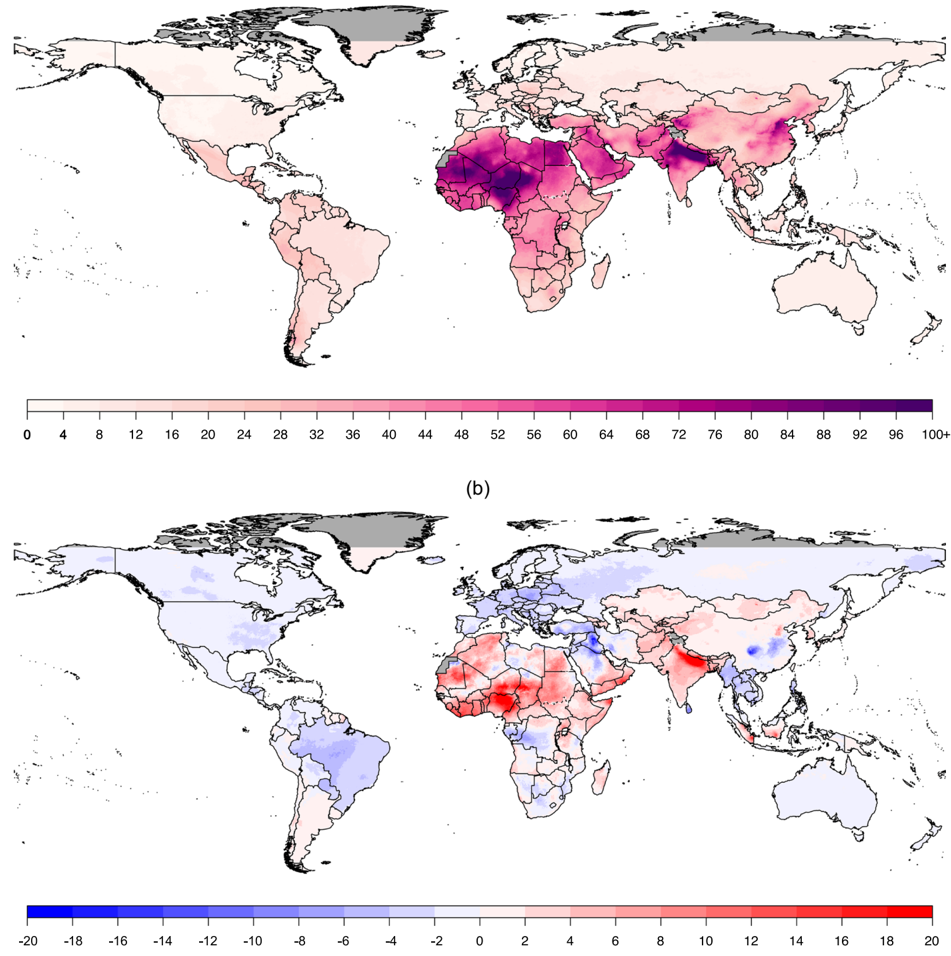
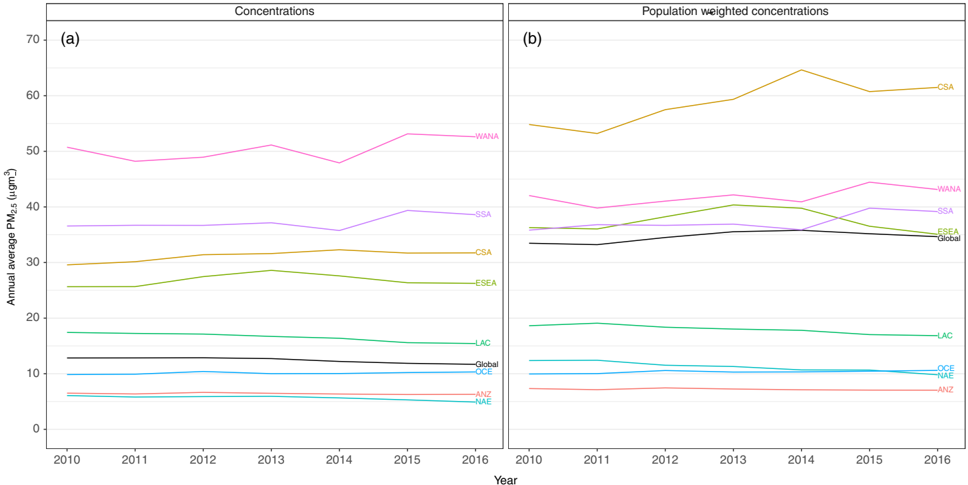
Verification
Claims the paper makes
The claims and statistics of this paper haven’t been checked yet.
Free: it reads the open-access text and checks the first 5 claims that cite a source we can check. Create a free account to check every claim.
Self-check
Percentages, sums and reported differences re-computed from the paper’s own numbers.
The self-check needs the paper’s full text.
Citations
Cites
Global estimates of mortality associated with long-term exposure to outdoor fine particulate matter
Burnett, R., Chen, H., Szyszkowicz, M., Fann, N., Hubbell, B., Pope, C. A., Apte, J. S., Brauer, M., Cohen, A., Weichenthal, S., et al. (2018) · Proceedings of the National Academy of Sciences · doi:10.1073/pnas.1803222115 · Cited by 2,504
A review of biomass burning: Emissions and impacts on air quality, health and climate in China
Chen, J., Li, C., Ristovski, Z., Milic, A., Gu, Y., Islam, M. S., Wang, S., Hao, J., Zhang, H., He, C., et al. (2017) · Science of The Total Environment · doi:10.1016/j.scitotenv.2016.11.025 · Cited by 1,262
van Donkelaar, A., Martin, R. V., Brauer, M., Hsu, N. C., Kahn, R. A., Levy, R. C., Lyapustin, A., Sayer, A. M., & Winker, D. M. (2016) · Environmental Science & Technology · doi:10.1021/acs.est.5b05833 · Cited by 1,206
Huang, J., Pan, X., Guo, X., & Li, G. (2018) · The Lancet Planetary Health · doi:10.1016/s2542-5196(18)30141-4 · Cited by 701
Particles, air quality, policy and health
Heal, M. R., Kumar, P., & Harrison, R. M. (2012) · Chemical Society Reviews · doi:10.1039/c2cs35076a · Cited by 693
Observed 20th century desert dust variability: impact on climate and biogeochemistry
Mahowald, N. M., Kloster, S., Engelstaedter, S., Moore, J. K., Mukhopadhyay, S., McConnell, J. R., Albani, S., Doney, S. C., Bhattacharya, A., Curran, M. A. J., et al. (2010) · Atmospheric Chemistry and Physics · doi:10.5194/acp-10-10875-2010 · Cited by 471
Air quality status and trends in Europe
Guerreiro, C. B. B., Foltescu, V., & de Leeuw, F. (2014) · Atmospheric Environment · doi:10.1016/j.atmosenv.2014.09.017 · Cited by 428
Crippa, M., Janssens-Maenhout, G., Dentener, F., Guizzardi, D., Sindelarova, K., Muntean, M., Van Dingenen, R., & Granier, C. (2016) · Atmospheric Chemistry and Physics · doi:10.5194/acp-16-3825-2016 · Cited by 369
Zhao, B., Zheng, H., Wang, S., Smith, K. R., Lu, X., Aunan, K., Gu, Y., Wang, Y., Ding, D., Xing, J., et al. (2018) · Proceedings of the National Academy of Sciences · doi:10.1073/pnas.1812955115 · Cited by 366
Update of WHO air quality guidelines
Krzyzanowski, M., & Cohen, A. (2008) · Air Quality, Atmosphere & Health · doi:10.1007/s11869-008-0008-9 · Cited by 297
Research works printed but not linked: 2
- Ambient air pollution: Global assessment of exposure and BOD, update 2018. WHO (2020) (In press).
- Goudie, A. S. & Middleton, N. J. Desert Dust in the Global System. (Springer Science & Business Media, 2006).
Cited by
Items 201–300 of 427
Dhital, N. B., Sapkota, R. P., Sharjeel, A., & Yang, H. (2024) · Atmospheric Pollution Research · doi:10.1016/j.apr.2024.102175 · Cited by 14
Advancing air quality monitoring: A low-cost sensor network in motion – Part I
Correia, C., Santana, P., Martins, V., Mariano, P., Almeida, A., & Almeida, S. M. (2024) · Journal of Environmental Management · doi:10.1016/j.jenvman.2024.121179 · Cited by 8
Global Inequality of PM 2.5 Exposure and Ecological Possession over 2001–2020
Chen, J., Huang, X., Shao, Z., Zheng, X., & Cai, B. (2025) · Journal of Remote Sensing · doi:10.34133/remotesensing.0446 · Cited by 10
Li, S., Liu, Y., Liu, B., Hu, Y., Ding, Y., Zhang, J., & Feng, L. (2022) · Toxicology · doi:10.1016/j.tox.2022.153225 · Cited by 8
Abbah, A. P., Xu, S., & Johannessen, A. (2024) · Frontiers in Environmental Health · doi:10.3389/fenvh.2024.1352786 · Cited by 12
“In Sub-Saharan Africa, and Central and Southern Asia, populations continue to experience exposure to high levels of air pollution (11).”
BackgroundOu, L., Honda, A., Miyasaka, N., Akaji, S., Omori, I., Ishikawa, R., Li, Y., Ueda, K., & Takano, H. (2021) · Toxicology Mechanisms and Methods · doi:10.1080/15376516.2021.2008569 · Cited by 8
“Presently, isolated diesel systems are still an extensively used technology for electricity generation in rural areas especially in developing regions such as the Middle East, Eastern and South-Eastern Asia, and Sub-Saharan regions of Africa (Cader et al. 2016; Shaddick et al. 2020).”
BackgroundAdvancements in Flexible Ceramic Fibers for High-Temperature Applications: A Comprehensive Review
Xu, Z. S., Lyu, Y., Hou, C., Han, Y., Bai, Y., Huang, Y., & Li, K. (2025) · High-temperature materials. · doi:10.70322/htm.2025.10007 · Cited by 7
Ahn, S., Kim, A., Chung, Y., Kang, C., Kim, S., Kwon, D., Park, J., Oh, J., Park, J., Moon, J., et al. (2025) · Environment & Health · doi:10.1021/envhealth.4c00201 · Cited by 9
He, J., Zhong, K., Qi, M., Gu, Y., Kang, Y., & Wang, Y. (2025) · Sustainable Cities and Society · doi:10.1016/j.scs.2025.107025 · Cited by 7
Impact of temperature increase on air pollutants - A case study in a small city in southern Brazil
Brum, A. N., Brum, R. D. L., Bonifácio, A. D. S., Júnior, F. M. R. D. S., & Zhang, L. (2024) · Case Studies in Chemical and Environmental Engineering · doi:10.1016/j.cscee.2024.100624 · Cited by 10
Islam, K. N., Sultana, S., Rahman, F., & Rahman, A. (2024) · PLoS ONE · doi:10.1371/journal.pone.0311183 · Cited by 7
Long, E., Rider, C. F., & Carlsten, C. (2024) · Particle and Fibre Toxicology · doi:10.1186/s12989-024-00603-8 · Cited by 10
“…is one of the major threats to human health in the modern era [1], with approximately half the global population exposed to increasing levels of air pollution [2] and 94% of the world’s population exposed to particulate matter (PM) above the limits recommended by the World Health Organization [3].”
BackgroundMajor and Trace Airborne Elements and Ecological Risk Assessment: Georgia Moss Survey 2019–2023
Chaligava, O., Zinicovscaia, I. I., Peshkova, A., Yushin, N. S., Frontasyeva, M. V., Vergel, K., Nurkassimova, M., & Cepoi, L. (2024) · Plants · doi:10.3390/plants13233298 · Cited by 10
Xu, X., Wen, Z. Y., Shi, X., Zhi, S., Cheng, W. X., Wei, Y., Ma, H., Li, T., & Wang, Z. (2023) · Frontiers in Public Health · doi:10.3389/fpubh.2023.1250572 · Cited by 8
“AQG2005 provided the first globally referenced framework for air pollution control targets and established transitional targets based on the potential risk of death from long-term exposure to each pollutant (59–61).”
BackgroundRotich, I. K., & Musyimi, P. K. (2024) · Aerosol Science and Engineering · doi:10.1007/s41810-023-00205-5 · Cited by 10
“It is estimated that over 99% of the global population breathes air that exceeds the World Health Organization (WHO) limits, but worse in low-income countries (Shaddick et al. 2020; WHO 2022a) (Fig.”
Nyadanu, S. D., Tessema, G. A., Mullins, B. J., Kumi-Boateng, B., Ofosu, A. A., & Pereira, G. F. (2022) · Atmospheric Pollution Research · doi:10.1016/j.apr.2022.101471 · Cited by 9
Khajavizadeh, L., & Andersson, M. (2023) · Journal of sensors and sensor systems · doi:10.5194/jsss-12-235-2023 · Cited by 7
“A SiO 2 / Si 3 N 4 / SiO x gate insulator stack was realized from thermal growth of a 50 nm SiO 2 film through dry oxidation at 1100 ◦ followed by plasma-enhanced chemical vapour deposition (PECVD) of a 25 nm Si 3 N 4 layer and wet oxidation at 900 ◦ ( ∼ 10 min) to form a ∼ 5 nm thick surface oxide…”
BackgroundMethodInfluentialComparing the characteristics of ambient fine particle pollution episodes across South Asian cities
Dhital, N. B. (2024) · Environmental Challenges · doi:10.1016/j.envc.2024.100912 · Cited by 6
Mendoza, D., Benney, T. M., Crosman, E. T., Bares, R., Mallia, D. V., Pirozzi, C. S., Freeman, A. L., & Boll, S. (2024) · Environments · doi:10.3390/environments11090186 · Cited by 7
Steinmetz, M. F. A., Aschersleben, J., & Panagiotidou, A. (2025) · Atmosphere · doi:10.3390/atmos16050561 · Cited by 8
Boyke, A. E., Menaker, S., Nunez, A., Black, K. L., & Ljubimov, V. A. (2025) · Journal of Xenobiotics · doi:10.3390/jox15030071 · Cited by 6
“It is currently estimated that nearly one half of the world’s entire population is potentially exposed to increasing levels of air pollution, and current research on the effects of climate change on air pollution predicts that air quality will further worsen as global temperatures rise [47,48].”
Garrick, J. M., Cole, T. B., Dao, K., Phillips, A., & Costa, L. G. (2023) · Environmental Toxicology · doi:10.1002/tox.23733 · Cited by 6
“3% of the world's population exposed to increased levels of PM between 2010 and 2016.(13) As of”
BackgroundDriving cycles for studying brake wear particle emissions on an inertial brake dynamometer
Vasiljević, S., Lukić, J., Miloradović, D., & Glišović, J. (2023) · Tribology and Materials · doi:10.46793/tribomat.2023.006 · Cited by 6
Size distribution of brake wear particulate matter based on a brake dynamometer investigation
Zhong, C., Sun, J., Liu, Z., Niu, H., Zhang, J., Liang, X., Yin, J., Wu, L., Peng, J., Zhang, Q., et al. (2024) · Frontiers in Future Transportation · doi:10.3389/ffutr.2024.1407660 · Cited by 6
“Atmospheric particulate matter (PM) causes many adverse effects (Fuzzi et al., 2015) on environmental quality (Pant and Harrison, 2013; Akhbarizadeh et al., 2021; Sridharan et al., 2021) and human health (West et al., 2016; Costa et al., 2017; Shaddick et al., 2020; Ambade et al., 2021).”
Assessment of Traffic‐Related Ambient Air Particulate Matter (PM) Levels in Douala, Cameroon
Ngangmo, Y. C., Mezoue, C. A., Meukaleuni, C., Wandjie, B. B. S., & Monkam, D. (2024) · Advances in Meteorology · doi:10.1155/2024/1787640 · Cited by 7
Agrawal, G., Agrawal, A. K., & MISRA, A. K. (2025) · Physica D Nonlinear Phenomena · doi:10.1016/j.physd.2024.134507 · Cited by 6
Hussain, S., & Hoque, R. R. (2022) · Disaster Resilience and Green Growth · doi:10.1007/978-981-16-7727-4_16 · Cited by 6
Goldilocks focal zone in femtosecond laser ignition of lean fuels
Zang, H., Li, H., Liang, T., Chen, S., Zhang, W., Fu, Y., Xu, H., & Li, R. (2022) · Science China Technological Sciences · doi:10.1007/s11431-022-2049-1 · Cited by 6
Douglas, A. N. J., Morgan, A. L., Irga, P. J., & Torpy, F. R. (2022) · Atmospheric Pollution Research · doi:10.1016/j.apr.2022.101570 · Cited by 7
Azahar, A. A., & Nurhafizah, M. D. (2024) · Synthetic Metals · doi:10.1016/j.synthmet.2024.117685 · Cited by 6
Okafor, S. O., Igwe, J. N., Izueke, E. M. C., Okoye, O. E., Okechukwu, A. B., & Obiozor, E. E. (2022) · International Journal of Sustainable Development and Planning · doi:10.18280/ijsdp.170135 · Cited by 8
Amma, C., Inomata, Y., Kohno, R., Satake, M., Furukawa, A., Nagata, Y., Sugiyama, H., Seto, T., & Suzuki, R. (2023) · Environmental Geochemistry and Health · doi:10.1007/s10653-023-01599-4 · Cited by 6
“Northeast Asia is one of the most polluted regions of the world (Ding et al., 2017; Manisalidis et al., 2020; Shaddick et al., 2020).”
BackgroundInvestigating the Relationship Between Air Quality and COVID-19 Transmission
Albrecht, L., Czarnecki, P., & Sakelaris, B. G. (2021) · Journal of Data Science · doi:10.6339/21-jds1010 · Cited by 7
Sharma, M., Kumar, P., Choudhary, M. P., & Mathur, A. K. (2025) · Environmental Monitoring and Assessment · doi:10.1007/s10661-025-14432-5 · Cited by 5
“These factors severely deteriorate urban air quality, exposing 80–90% of the population in major cities to pollutant concentrations exceeding World Health Organization (WHO) guidelines (Duarte et al., 2022; Health Effects Institute 2019; Shaddick et al., 2020).”
E-STGCN: extreme spatio-temporal graph convolutional networks for air quality forecasting
Panja, M., Chakraborty, T., Biswas, A., & Deb, S. (2026) · Journal of the Royal Statistical Society Series A (Statistics in Society) · doi:10.1093/jrsssa/qnag010 · Cited by 22
Temporal Trends in Air Pollution Exposure across Socioeconomic Groups in The Netherlands
Hlubek, N., Koop, Y., Wagtendonk, A., & Vaartjes, I. C. H. (2024) · International Journal of Environmental Research and Public Health · doi:10.3390/ijerph21080976 · Cited by 8
“Furthermore, the adoption and implementation of policy interventions have proved to be effective in improving air quality in North America and Europe by reducing the average population-weighted PM 2.5 concentrations between 2010 and 2016 in those regions [14–16].”
InfluentialContrasting nature of aerosols over South Asian cities and its surrounding environment
Pandey, A., Aditi, K., Baranwal, H., Siddiqui, A., & Banerjee, T. (2024) · Environmental Pollution · doi:10.1016/j.envpol.2024.124622 · Cited by 7
Xu, Y., Ma, T., Duan, F., Wang, S., Jiang, J., Cheng, Y., Su, H., An, T., Ma, Y., Kimoto, T., et al. (2024) · Environmental Pollution · doi:10.1016/j.envpol.2024.125483 · Cited by 5
Neupane, B. K., Acharya, B. K., Cao, C., Xu, M. G., Taylor, P. K., Wang, S., & Yang, Y. (2024) · Frontiers in Public Health · doi:10.3389/fpubh.2024.1490973 · Cited by 6
“Bagmati Province, encompassing Nepal’s capital (Kathmandu Valley), is the country’s most populous and developed region, with high urban density and considerable migration flows that contribute significantly to elevated air pollution levels (57, 58).”
Komarudin, U., Subarli, H., Kusnandar, K., & Najmurrokhman, A. (2021) · International Conference on Electronic and Electrical Engineering and Intelligent System (ICE3IS) · doi:10.1109/ice3is54102.2021.9649658 · Cited by 6
Atmospheric Ecology Modeling for the Sustainable Development of the Urban Environment
Rashevskiy, N., Sadovnikova, N., Ereshchenko, T., Сергеевич, П. Д., & Ignatyev, A. V. (2023) · Energies · doi:10.3390/en16041766 · Cited by 5
Pitawala, H. M. T. G. A., & Samaradiwakara, K. D. S. (2023) · Environment Development and Sustainability · doi:10.1007/s10668-023-03942-2 · Cited by 5
“Air pollution, particularly, dust pollution, affects the economies of countries (Quah & Boon, 2003; Shaddick et al., 2020).”
Divya, D., Sulaiman, M. A., & Kumari, A. (2024) · Elsevier eBooks · doi:10.1016/b978-0-443-16088-2.00013-2 · Cited by 6
Li, D., Wu, Q., Cheng, H., Feng, J., Li, D., Wang, Y., Cao, K., & Wang, L. (2024) · Environmental Pollution · doi:10.1016/j.envpol.2024.124391 · Cited by 5
Ma, D., Zhang, Q., Huang, Q., & Liu, B. (2024) · Environment Development and Sustainability · doi:10.1007/s10668-024-05309-7 · Cited by 5
Sooriyaarachchi, V., Lary, D. J., Wijeratne, L. O. H., & Waczak, J. (2024) · Sensors · doi:10.3390/s24227304 · Cited by 7
Design of Smart IoT Device for Monitoring Short-term Exposure to Air Pollution Peaks
Nizeyimana, E., Nsenga, J., Shibasaki, R., Hanyurwimfura, D., & Hwang, J. (2022) · International Journal of Advanced Computer Science and Applications · doi:10.14569/ijacsa.2022.0130103 · Cited by 5
“It is also where most sources of pollutants are found [13].”
BackgroundHigher diesel price is associated with lower level of pollution: Evidence from Vietnam
Hung, T. M., Ngo, H. K. T., Luong, L. M. T., Le, H. H. T. C., Phung, D. T., Chinh, P. M., Nghiem, S. H., Hue, N. T., & Thai, P. K. (2022) · Journal of Cleaner Production · doi:10.1016/j.jclepro.2022.132245 · Cited by 5
Stähle, C., Mayer, M., Kirchsteiger, B., Klaus, V., Kult-Herdin, J., Schmidt, C., Schreier, S. F., Karlický, J., Trimmel, H., Kasper‐Giebl, A., et al. (2022) · Air Quality Atmosphere & Health · doi:10.1007/s11869-022-01232-w · Cited by 7
“The impact of emission reductions is of specific interest, given that despite much progress in emission abatement in recent years, ambient air quality targets are still frequently exceeded in many countries worldwide (e.g. EEA 2020; Fleming et al. 2018; Shaddick et al. 2020; WHO 2016).”
BackgroundAwasthi, A., Das, S., Choudhury, M. R., Kaur, S., Dutta, S., Kumar, V., & Chaube, S. (2025) · Physics and Chemistry of the Earth, Parts A/B/C · doi:10.1016/j.pce.2025.104198 · Cited by 6
Navas‐Acién, A., Kaufman, J. D., Khatana, S. A. M., Parks, R. M., Rajagopalan, S., Smith, C. M., & Foraker, R. E. (2025) · Journal of the American Heart Association · doi:10.1161/jaha.125.044079 · Cited by 6
“24 Other reasons are more structural and driven by economics.”
Oldenburger, M. M., Hasrat, R., Marinović, A. A. B., Gremmer, E. R., Zwart, E., Goderski, G., Duijm, G., Bogaert, D., Meijer, A., Swart, A., et al. (2025) · Environmental Research · doi:10.1016/j.envres.2025.121392 · Cited by 4
Murena, F., & Toscano, D. (2023) · Urban Climate · doi:10.1016/j.uclim.2023.101751 · Cited by 4
Li, S., Liu, B., Liu, Y., Ding, Y., Zhang, J., & Feng, L. (2022) · Environmental Geochemistry and Health · doi:10.1007/s10653-022-01352-3 · Cited by 5
Yuan, Y., Zhang, X., Zhao, J., Shen, F., Nie, D., Wang, B., Wang, L., Xing, M., & Hegglin, M. I. (2023) · Frontiers in Public Health · doi:10.3389/fpubh.2023.1075262 · Cited by 5
Zhou, Q., & Qi, Z. (2024) · Environment Development and Sustainability · doi:10.1007/s10668-024-04870-5 · Cited by 4
“Regional imbalance in industrial patterns is an essential reason for the regional imbalance in population density (Shaddick et al., 2020).”
Nelin, T. D., Scott, K. A., Just, A. C., & Burris, H. H. (2023) · Children · doi:10.3390/children10101646 · Cited by 3
Antonenko, S. A., Vertsanova, O., Shadkhin, V., Бондаренко, М. О., Туз, В., Kurylenko, Y., & Chychuzhko, M. (2024) · Lecture notes on data engineering and communications technologies · doi:10.1007/978-3-031-71801-4_21 · Cited by 3
Chen, H., Dian, J., Fan, S., & Fang, Y. (2025) · Economic Analysis and Policy · doi:10.1016/j.eap.2025.02.039 · Cited by 5
Zhou, P., Chou, J., Shan, Y., Yang, L., Sun, M., Li, P., Wang, H., Luo, J., Cao, Z., Yao, Q., et al. (2025) · International Journal of Digital Earth · doi:10.1080/17538947.2025.2509825 · Cited by 4
“Regional air pollution has emerged as one of the critical challenges to global sustainable development (Çetin and Sevik 2016; Shaddick et al. 2020).”
Yagnik, H., Gupta, R. K., & Pandya, A. (2026) · Archives of Computational Methods in Engineering · doi:10.1007/s11831-026-10639-y · Cited by 4
Mukherjee, S., Kundu, U., Desai, D., & Pillai, P. P. (2022) · Journal of Molecular Neuroscience · doi:10.1007/s12031-022-02069-9 · Cited by 3
“With an increase in industrialization and anthropogenic activities, exposure to these PMs was seen to increase alongside a notable increase in health hazards such as cognitive impairments, respiratory disorders, and even carcinomas (Harrison and Yin 2000; Harbo Poulsen et al. 2020; Santibáñez-Andrade et al. 2020; Shad…”
BackgroundFeroz, S., Dawood, M. H., Sohail, S., Daniyal, M., Zafar, A., Shahid, U. B., & Ahmed, S. (2023) · Journal of International Medical Research · doi:10.1177/03000605231215168 · Cited by 3
Foundational guiding principles for a flourishing Earth system
Hejnowicz, A. P., & Ritchie‐Dunham, J. L. (2024) · Business and Society Review · doi:10.1111/basr.12349 · Cited by 4
Huang, W. Y. (2022) · Global Health Journal · doi:10.1016/j.glohj.2022.01.004 · Cited by 4
Estimating Inhaled Nitrogen Dioxide from the Human Biometric Response
Ruwali, S., Fernando, B., Talebi, S., Wijeratne, L. O. H., Waczak, J., Madusanka, P. M. H., Lary, D. J., Sadler, J., Lary, T., Lary, M. D., et al. (2024) · Advances in Environmental and Engineering Research · doi:10.21926/aeer.2402011 · Cited by 3
Patel, K. (2024) · International Journal of Sociology · doi:10.1080/00207659.2024.2361543 · Cited by 4
“This pattern is especially highlighted in industrializing nations, such as India and China, where air pollution levels remain significantly above The World Health Organization (WHO) recommendations of 10 m g/m 3 (Shaddick et al. 2020).”
Chukwu, T. M., Morse, S., & Murphy, R. J. (2024) · Environmental and Sustainability Indicators · doi:10.1016/j.indic.2024.100418 · Cited by 3
Yu, Y., Tang, Z., Huang, Y., Zhang, J., Wang, Y., Zhang, Y., & Wang, Q. (2024) · Scientific Reports · doi:10.1038/s41598-024-66951-9 · Cited by 3
Decoupling Analysis between Socio-Economic Growth and Air Pollution in Key Regions of China
Wei, M., Chuai, X., Li, Y., Han, J., & Zhang, C. (2024) · Sustainability · doi:10.3390/su16177571 · Cited by 3
Kim, T. E., Lim, J. W., Jeong, J. H., & Ryu, H. W. (2024) · Environments · doi:10.3390/environments11110259 · Cited by 5
Cha, J., Ruslan, N. A. A. A., Terengganu, U. M., Rose, L. C., Terengganu, U. M., Chua, K. H., Malaya, U., Alias, Z., Setiu, S. M. S., HASHIM, H., et al. (2022) · Journal of Sustainability Science and Management · doi:10.46754/jssm.2022.4.018 · Cited by 3
Dryden, H., & Duncan, D. (2021) · SSRN Electronic Journal · doi:10.2139/ssrn.3860950 · Cited by 4
Terraforming Mars: A Cabinet of Curiosities
Beech, M. (2021) · Wiley eBooks · doi:10.1002/9781119761990.ch18 · Cited by 3
The North-South divide in global air pollution: drivers and impactsPreprint
Zhao, A., Stevenson, D. S., Heal, M. R., & Bollasina, M. A. (2022) · Research Square · doi:10.21203/rs.3.rs-1188431/v1 · Cited by 3
Ravi, V., Thakrar, S. K., Heath, G. A., Wahyono, A., Suryadi, B., Avery, G., & Hill, J. (2022) · OSTI OAI (U.S. Department of Energy Office of Scientific and Technical Information) · doi:10.2172/1894482 · Cited by 3
Antenucci, E., Russo, A., Marchetti, M. A., & Garfì, V. (2025) · Environmental Science and Pollution Research · doi:10.1007/s11356-025-36640-9 · Cited by 2
“…are particularly pronounced within urban ecosystems, characterized by heightened levels of air pollution resulting from human activities, including the production of goods, residential heating, power generation, various energy sources, automobiles, and general transportation (Shaddick et al. 2020).”
Ziembicki, H., Górski, J., Gajewski, W., Skrzypska, N., & Skoczek, W. (2025) · Cureus · doi:10.7759/cureus.93164 · Cited by 4
“Air pollution is a growing problem worldwide, affecting more than half of the global population [25].”
Ahn, S., Oh, J., Yun, H., Min, H., Kim, Y., Kang, C., An, S., Kim, A., Kwon, D., Park, J., et al. (2025) · GeoHealth · doi:10.1029/2024gh001214 · Cited by 2
“Ambient fine particulate matter (PM 2.5 ) has been regarded as a crucial public health concern, and the World Health Organization (WHO) reported in 2019 that 4.2 million people die prematurely each year due to ambient air pollution (Shaddick et al., 2020).”
InfluentialImpact of Anthropogenic Emission Estimates on Air Quality and Human Health Effects
Salah, H., Ying, X., Partha, D. B., Mariscal, N., Wang, L., Tilmes, S., Tang, W., & Huang, Y. (2025) · GeoHealth · doi:10.1029/2024gh001223 · Cited by 4
“It is estimated that 55.3% of the world's population are exposed to increased levels of PM 2.5 (Shaddick et al., 2020) and this is expected to worsen due to globalization.”
InfluentialWang, M., Zhang, L., Xu, H., Zhang, Q., Du, B., & Li, C.-K. (2025) · Energy · doi:10.1016/j.energy.2025.139026 · Cited by 3
Jumilah, J., Suprapto, N., Hariyono, E., & Napasti, F. (2025) · E3S Web of Conferences · doi:10.1051/e3sconf/202564001012 · Cited by 4
A Bayesian PM2.5 model incorporating planetary boundary layer height variability in Tabriz, Iran
Shikhesmailie, A., Habibzadeh, N., & Moeinaddini, M. (2026) · Atmospheric Pollution Research · doi:10.1016/j.apr.2026.102963 · Cited by 2
Kurasz, A., Abohashem, S., El‐Bouri, W. K., Ortega‐Martorell, S., Olier, I., Wijata, A. M., Nalepa, J., Święczkowski, M., Jemielita, P., Duzinkiewicz, M., et al. (2026) · Thrombosis and Haemostasis · doi:10.1055/a-2820-4197 · Cited by 6
Indoor air quality and its impacts on asthma and COPD
Maung, T. Z., ANING, R., Newnham, M., Holt, E., Pfrang, C., & Turner, A. M. (2026) · BMJ Open Respiratory Research · doi:10.1136/bmjresp-2025-003807 · Cited by 2
Mitigating traffic-derived NOx in urban areas: Stable isotope evidence of NOx uptake by urban trees
Miao, C., Huang, L., Liu, J., Bai, D., Geng, S., He, X., & Yu, S. (2026) · Environmental Pollution · doi:10.1016/j.envpol.2026.128255 · Cited by 2
AN EXPLORATORY STUDY TO EXAMINE ABUNDANCE OF PM2.5 AND ASSOCIATED DISEASE BURDEN IN BANGLADESH
Dewan, A. M., Shahid, S., Asaduzzaman, M., & Faruque, F. (2022) · ISPRS annals of the photogrammetry, remote sensing and spatial information sciences · doi:10.5194/isprs-annals-v-3-2022-627-2022 · Cited by 2
Estimating annual ambient air pollution using structural properties of road networks
Berrisford, L. J., Ribeiro, E., & de Menezes, R. P. (2024) · Environment and Planning B Urban Analytics and City Science · doi:10.1177/23998083241230707 · Cited by 2
“Public Health England outlined air pollution as the most signi fi cant environmental threat to health in the UK, with 28,000-36,000 deaths attributable yearly to long-term exposure (Jim Stewart-Evans, 2019); unfortunately, this is also true worldwide (Shaddick et al., 2020).”
Measuring Progress: Water-related Ecosystems and the SDGs
United Nations Environment Programme (2023) · United Nations Environment Programme eBooks · doi:10.59117/20.500.11822/41997 · Cited by 13
Okolie, C. J., Iheaturu, C., Ojegbile, B. M., Ndu, C. G., & Tella, A. (2023) · The international archives of the photogrammetry, remote sensing and spatial information sciences/International archives of the photogrammetry, remote sensing and spatial information sciences · doi:10.5194/isprs-archives-xlviii-m-3-2023-155-2023 · Cited by 2
Zhu, X., Zhu, R., Ding, L., & Gong, Y. (2024) · Environmental Science and Pollution Research · doi:10.1007/s11356-024-32051-4 · Cited by 2
“Studies show that half of the world’s population are exposed to increasing air pollution (Shaddick et al. 2020), and global deaths as a result of PM 2.5 pollution increased by 89% to 124% from 1960 to 2009, dominated by significant increases in China and India (Butt et al., 2017; Shaddick et al.,…”
InfluentialSikarwar, A., & Golaz, V. (2024) · Environmental Research Letters · doi:10.1088/1748-9326/ad376b · Cited by 3
“The air quality guidelines (AQGs) recommended by the World Health Organization [25] suggest that PM 2.5 above 5 µ g m − 3 is harmful, which is also referenced in many global studies dealing with their health impacts [2, 26].”
BackgroundInfluentialAwolesi, O., Oni, P. G., Adekoya, O., Adekoya, S. B., Ogunmusi, O., Ghafari, F., Oje, A., & Lawal, O. (2024) · Journal of Geoscience and Environment Protection · doi:10.4236/gep.2024.127010 · Cited by 2
Савенець, М. В., Nadtochii, L., Kozlenko, T., Komisar, K. M., Umanets, A. P., & Zhemera, N. (2025) · Метеорологія. Гідрологія. Моніторинг довкілля. · doi:10.15407/meteorology2024.06.017 · Cited by 2
Kipterer, J. K., Sowe, A., Boitt, M. K., & Mundia, C. N. (2025) · Discover Public Health · doi:10.1186/s12982-025-00452-6 · Cited by 2
Mamić, L., & Pirotti, F. (2025) · Atmospheric Pollution Research · doi:10.1016/j.apr.2025.102514 · Cited by 5
Joseph, M. M., & Anil, A. T. (2025) · Environmental Quality Management · doi:10.1002/tqem.70074 · Cited by 2
Allen, C., Pedercini, M., Assuad, C. S. A., Pawlowsky, V. N., & Wellington-Moore, C. (2025) · Sustainability Science · doi:10.1007/s11625-025-01670-2 · Cited by 2
“The most damaging air pollutants are fine particulate matter (PM 2.5 ) which result from a range of common source activities including energy, road transport, industry, domestic cooking and heating, waste burning, forest fires and agriculture (Shaddick et al. 2020).”
InfluentialJordan, L., & Tang, A. (2021) · World sustainability series · doi:10.1007/978-3-030-69284-1_5 · Cited by 2
Валерьевна, В. А. (2022) · Applied Sciences · doi:10.3390/app12157758 · Cited by 2
Metadata
- Authors
- Shaddick, G., Thomas, M. L., Mudu, P., Ruggeri, G., & Gumy, S.
- Affiliations
- University of Exeter (GB)
- Imperial College London (GB)
- World Health Organization (CH)
- Corresponding author
- Shaddick, G.
- Venue
- npj Climate and Atmospheric Science
- Published
- 2020-06-17
- Volume
- 3
- Issue
- 1
- ISSN
- 2397-3722 (ISSN-L)
- OpenAlex
- W3035795589
- Cited by
- 428
- References
- 26
- Citations by year
- 2026: 41 · 2025: 63 · 2024: 105 · 2023: 65 · 2022: 93 · 2021: 50 · 2020: 11
- FWCI
- 21.89
- Type
- journal article
- Language
- en
- Open access
- gold
- doi.org
- Licence
- cc-by
- creativecommons.org/licenses/by/4.0 (tdm)
- creativecommons.org/licenses/by/4.0 (vor)
- Locations
- npj Climate and Atmospheric Science (publishedVersion, cc-by)
- Figshare (submittedVersion, cc-by)
- ORCA Online Research @Cardiff (Cardiff University) (submittedVersion)
- Open Research Exeter (University of Exeter) (submittedVersion, cc-by)
- Research Explorer (The University of Manchester) (submittedVersion, other-oa)
- Spiral (Imperial College London) (submittedVersion, cc-by)
- Topics
- Physical Sciences › Environmental Science › Health, Toxicology and Mutagenesis › Air Quality and Health Impacts
- Physical Sciences › Environmental Science › Environmental Engineering › Environmental and Air Quality Management
- Physical Sciences › Earth and Planetary Sciences › Atmospheric Science › Atmospheric chemistry and aerosols
- Keywords
- air pollution, population exposure, outdoor air pollution, air quality guidelines, air pollution health effects, Sustainable Development Goals, WHO air quality guidelines, sub-Saharan Africa
About these checks
Registry, retraction, Cites and statistics results are computed, not judged, with one exception: a printed reference that no index lists is read once by a model before it counts as a citation error. Claims are extracted by a model and kept only when their quote appears verbatim in the text; each cited source is then checked, with a model’s help, for whether it says what the claim relies on. Those verdicts can be wrong — read the claim’s quote and the cited source before relying on one.
Statistics and arithmetic are recomputed, not judged.
Confidence bands are shown only for fields calibrated on our annotated test set. None is calibrated yet, so no band is shown.
What counts as a claim ›How we measure confidence ›How we check this ›
Are you an author, or do you see a problem with this page? Request a review
Data sources
Bibliographic data: Semantic Scholar, OpenAlex, Crossref.
Contains information from the Semantic Scholar Academic Graph Datasets, made available under the ODC Attribution License (ODC-BY 1.0).
Semantic Scholar’s data is described in: Kinney, R., et al. (2023). The Semantic Scholar Open Data Platform. arXiv:2301.10140.
