

Distribution shift detection for the postmarket surveillance of medical AI algorithms: a retrospective simulation study
Open accessThe DOI matches its Crossref record; 22 of the 22 references it cites were found in a registry or an index.
Abstract
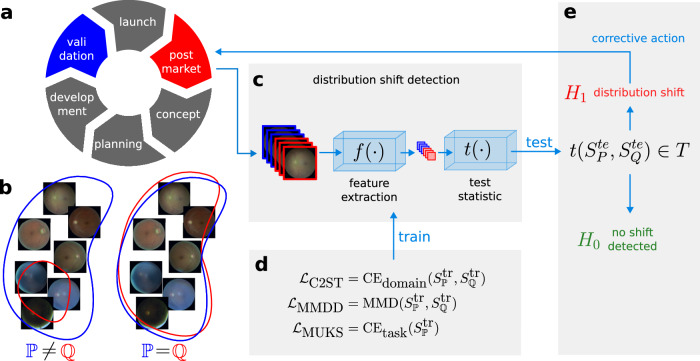
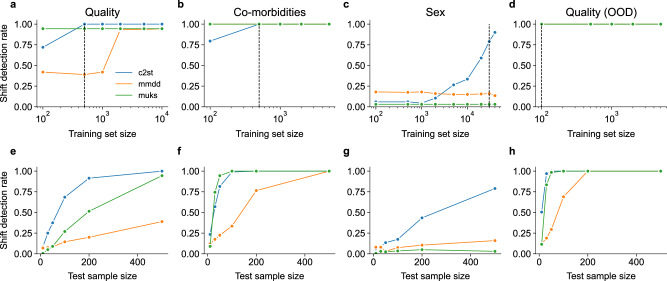
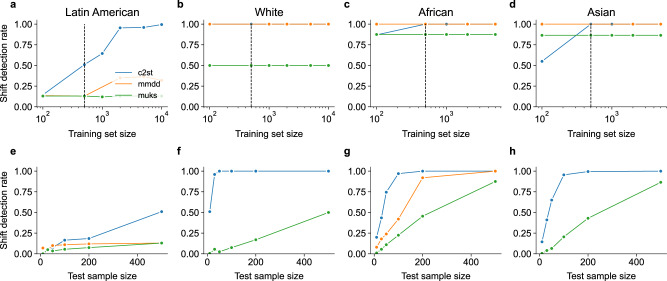
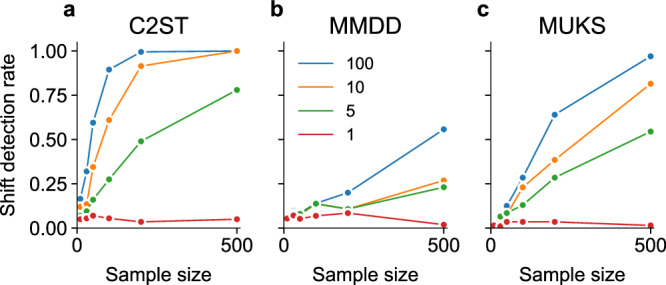
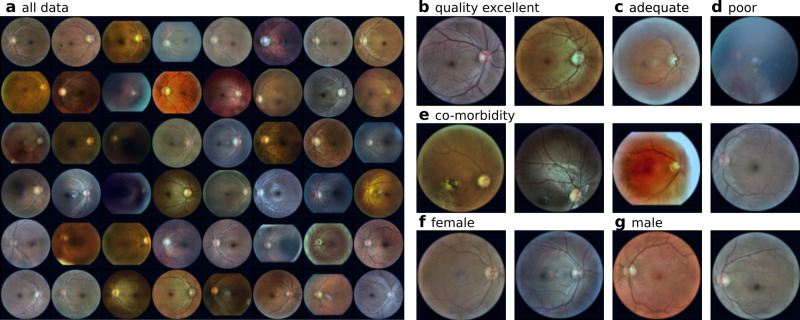
Distribution shifts remain a problem for the safe application of regulated medical AI systems, and may impact their real-world performance if undetected. Postmarket shifts can occur for example if algorithms developed on data from various acquisition settings and a heterogeneous population are predominantly applied in hospitals with lower quality data acquisition or other centre-specific acquisition factors, or where some ethnicities are over-represented. Therefore, distribution shift detection could be important for monitoring AI-based medical products during postmarket surveillance. We implemented and evaluated three deep-learning based shift detection techniques (classifier-based, deep kernel, and multiple univariate kolmogorov-smirnov tests) on simulated shifts in a dataset of 130’486 retinal images. We trained a deep learning classifier for diabetic retinopathy grading. We then simulated population shifts by changing the prevalence of patients’ sex, ethnicity, and co-morbidities, and example acquisition shifts by changes in image quality. We observed classification subgroup performance disparities w.r.t. image quality, patient sex, ethnicity and co-morbidity presence. The sensitivity at detecting referable diabetic retinopathy ranged from 0.50 to 0.79 for different ethnicities. This motivates the need for detecting shifts after deployment. Classifier-based tests performed best overall, with perfect detection rates for quality and co-morbidity subgroup shifts at a sample size of 1000. It was the only method to detect shifts in patient sex, but required large sample sizes ( $$> 30^{\prime} 000$$ > 3 0 ′ 000 ). All methods identified easier-to-detect out-of-distribution shifts with small (≤300) sample sizes. We conclude that effective tools exist for detecting clinically relevant distribution shifts. In particular classifier-based tests can be easily implemented components in the post-market surveillance strategy of medical device manufacturers.
Overview
The claims and statistics of this paper haven’t been checked yet.
Free: it reads the open-access text and checks the first 5 claims that cite a source we can check. Create a free account to check every claim.
Integrity signals
Registry
Cites
Statistics
Figures
Verification
Claims the paper makes
The claims and statistics of this paper haven’t been checked yet.
Free: it reads the open-access text and checks the first 5 claims that cite a source we can check. Create a free account to check every claim.
Claims other papers make about this one
Each is checked against this paper’s own text: does it say what the citing paper says it does?
The source backs part of the claim, not all of it — or backs it for a different population, condition or comparison.
In the citing paper
“agents trained with data from specific institutions or populations may exhibit unexpected failures when deployed in different clinical contexts [35].”
From Medical AI Agents for Clinical Decision Support: Viewpoint Using the Planning, Action, Reflection, and Memory (PARM) Analytical Lens (2026) · cites this paper as [35]
Experimental — accuracy not yet measured
Self-check
Percentages, sums and reported differences re-computed from the paper’s own numbers.
The self-check needs the paper’s full text.
Citations
Cites
Deep Residual Learning for Image Recognition
He, K., Zhang, X., Ren, S., & Sun, J. (2016) · 2016 IEEE Conference on Computer Vision and Pattern Recognition (CVPR) · doi:10.1109/cvpr.2016.90 · Cited by 235,474 · cited 1×
“We used a ResNet-50 neural network architecture 31 and a cross-entropy loss.”
MethodInternational Conference on Learning Representations (ICLR 2013)
松尾, 豊. (2013) · 人工知能学会誌 = Journal of Japanese Society for Artificial Intelligence · Cited by 6,286
Class-Balanced Loss Based on Effective Number of Samples
Cui, Y., Jia, M., Lin, T.-Y., Song, Y., & Belongie, S. (2019) · 2019 IEEE/CVF Conference on Computer Vision and Pattern Recognition (CVPR) · doi:10.1109/cvpr.2019.00949 · Cited by 3,094
A Baseline for Detecting Misclassified and Out-of-Distribution Examples in Neural Networks
Hendrycks, D., & Gimpel, K. (2016) · arXiv · doi:10.48550/arxiv.1610.02136 · Cited by 1,968
Liu, X., Faes, L., Kale, A. U., Wagner, S. K., Fu, D. J., Bruynseels, A., Mahendiran, T., Moraes, G., Shamdas, M., Kern, C., et al. (2019) · The Lancet Digital Health · doi:10.1016/s2589-7500(19)30123-2 · Cited by 1,883
Improving predictive inference under covariate shift by weighting the log-likelihood function
Shimodaira, H. (2000) · Journal of Statistical Planning and Inference · doi:10.1016/s0378-3758(00)00115-4 · Cited by 1,678
Benjamens, S., Dhunnoo, P., & Meskó, B. (2020) · npj Digital Medicine · doi:10.1038/s41746-020-00324-0 · Cited by 1,215 · cited 1×
“Undertheseregulations,arti fi cial intelligence (AI) algorithms for the automated analysis of retinal fundus images were among the fi rst to be approved and to be commercially available 3 .”
MethodThe Clinician and Dataset Shift in Artificial Intelligence
Finlayson, S. G., Subbaswamy, A., Singh, K., Bowers, J., Kupke, A., Zittrain, J., Kohane, I. S., & Saria, S. (2021) · New England Journal of Medicine · doi:10.1056/nejmc2104626 · Cited by 855
WILDS: A Benchmark of in-the-Wild Distribution Shifts
Koh, P. W., Sagawa, S., Marklund, H., Xie, S. M., Zhang, M., Balsubramani, A., Hu, W., Yasunaga, M., Phillips, R. L., Gao, I., et al. (2020) · arXiv · doi:10.48550/arxiv.2012.07421 · Cited by 518
Generalized ODIN: Detecting Out-of-Distribution Image Without Learning From Out-of-Distribution Data
Hsu, Y.-C., Shen, Y., Jin, H., & Kira, Z. (2020) · 2020 IEEE/CVF Conference on Computer Vision and Pattern Recognition (CVPR) · doi:10.1109/cvpr42600.2020.01096 · Cited by 499
Research works printed but not linked: 9
- European Parliament, Council of the European Union. Regulation (EU) 2017/745 of the European Parliament and of the Council of 5 april 2017 on medical devices, amending Directive 2001/83/EC, Regulation (EC) No 178/2002 and Regulation (EC) No 1223/2009 and repealing Council Directives 90/385/EEC and 93/42/EEC. Official Journal of the European Union (2017).
- Koch, L. M., Schürch, C. M., Gretton, A. & Berens, P. Hidden in plain sight: Subgroup shifts escape OOD detection. In Proc. Medical Imaging with Deep Learning (MIDL) (2022).
- Jain, S., Lawrence, H., Moitra, A. & Madry, A. Distilling model failures as directions in latent space. In Proc. International Conference on Learning Representations (ICLR) (2023).
- Liang, S., Li, Y. & Srikant, R. Enhancing The Reliability of Out-of-distribution Image Detection in Neural Networks. In Proc. International Conference on Learning Representations (ICLR) (2018).
- Hendrycks, D., Mazeika, M. & Dietterich, T. Deep anomaly detection with outlier exposure. In Proc. International Conference on Learning Representations (ICLR) (2019).
- Sagawa, S., Koh, P. W., Hashimoto, T. B. & Liang, P. Distributionally robust neural networks. In International Conference on Learning Representations (2020).
- Kübler, J. M., Stimper, V., Buchholz, S., Muandet, K. & Schölkopf, B. Automl two-sample test. In Proc. Advances in Neural Information Processing Systems (NeurIPS) (2022).
- Rabanser, S., Günnemann, S. & Lipton, Z. C. Failing Loudly: An Empirical Study of Methods for Detecting Dataset Shift. In Proc. Advances in Neural Information Processing Systems (NeurIPS) (2019).
- Gretton A Borgwardt K Rasch MJ Schoelkopf B Smola A J. Mach. Learn. Res. 2012 13 723 773
Cited by
Evaluating transparency in AI/ML model characteristics for FDA-reviewed medical devices
Mehta, V., Komanduri, A., Bhadouriya, R. S., Mehta, V., Johnson, M. D., Shrestha, P., Nikolov, M. C., Jain, B., Shah, N. H., & Schulman, K. A. (2025) · npj Digital Medicine · doi:10.1038/s41746-025-02052-9 · Cited by 61
Guan, H., Bates, D. W., & Zhou, L. N. (2025) · IEEE Transactions on Biomedical Engineering · doi:10.1109/tbme.2025.3642706 · Cited by 63
“The study [64] applies this method to monitor an AI system developed for diabetic retinopathy.”
Jeon, K., Park, W. Y., Kahn, C. E., Nagy, P. G., You, S. C., & Yoon, S. H. (2024) · Investigative Radiology · doi:10.1097/rli.0000000000001106 · Cited by 45
Applications of Multimodal Artificial Intelligence in Non-Hodgkin Lymphoma B Cells
Isavand, P., Aghamiri, S. S., & Amin, R. (2024) · Biomedicines · doi:10.3390/biomedicines12081753 · Cited by 28
“Such datasets can be susceptible to bias introduced by institutional factors, including manufacturer preferences for imaging equipment, established protocols for data acquisition, and variations in medical staff training [118,119].”
BackgroundAutomatic Dataset Shift Identification to Support Safe Deployment of Medical Imaging AI
Roschewitz, M., Mehta, R., Jones, C., & Glocker, B. (2025) · Lecture notes in computer science · doi:10.1007/978-3-032-04981-0_7 · Cited by 27
“Significant progress has been made in this field where state-of-the-art methods can detect various types of real-world shifts [12,23,24,30].”
Confidence intervals for performance estimates in brain MRI segmentation
Jurdi, R. E., Varoquaux, G. P., & Colliot, O. (2025) · Medical Image Analysis · doi:10.1016/j.media.2025.103565 · Cited by 23
Djoumessi, K., Huang, Z., Kuehlewein, L., Rickmann, A., Simon, N., Koch, L. M., & Berens, P. (2025) · PLOS Digital Health · doi:10.1371/journal.pdig.0000831 · Cited by 25
“A comparable dataset also obtained from EyePacs Inc. included ethnicity information and contained about 70% images from patients with Latin American ethnicity [29].”
Self-citationLightweight self supervised learning framework for domain generalization in histopathology
Shafique, A., Dy, A., Qin, X., Alshamlan, N., Androutsos, D., Done, S. J., & Khademi, A. (2025) · Scientific Reports · doi:10.1038/s41598-025-20411-0 · Cited by 12
“In histopathology, covariate shift (differences in image appearance due to staining, scanning, or pre-processing) is the most common 38 , and has been widely recognized as a critical technical challenge 39–41 .”
A global log for medical AIPreprint
Noori, A., Boussina, A. E., Bich, H. H., Anibal, J., Maslinski, J., Burger, M., Faltys, M., Rodman, A. M., Karthikesalingam, A., Blasimme, A., et al. (2025) · arXiv (Cornell University) · doi:10.48550/arxiv.2510.04033 · Cited by 16
Chang, L., Li, H., Wu, W., Liu, X., Yan, J., Chen, Z., Wu, H., & Song, S. (2025) · Journal of Translational Medicine · doi:10.1186/s12967-025-07591-z · Cited by 10
“Define clear roles, responsibilities, and escalation paths for adverse AI events [58, 200].”
An End-to-End Overview of Clinical Speech AI
Ng, S.-I., Xu, L., Siegert, I., Cummins, N., Benway, N. R., Liss, J., & Berisha, V. (2026) · IEEE Transactions on Audio Speech and Language Processing · doi:10.1109/taslpro.2026.3660470 · Cited by 13
“Algorithms that can automatically detect distribution shifts and alert developers of potential performance declines [318], [319], or even automatically re-calibrate models to adjust for the new data [320], [321], will be key to ensuring ongoing model reliability in clinical environments.”
Perdomo-Lampignano, J. A., Kale, A. U., Kumar, S., Shah, D., Reddy, B., & Lowe, D. J. (2026) · Journal of Medical Systems · doi:10.1007/s10916-026-02426-w · Cited by 7
Fernández-Narro, D., Ferri, P., Gutiérrez‐Sacristán, A., Garcia-Gomez, J. M., & Sáez, C. (2025) · JMIR Medical Informatics · doi:10.2196/78309 · Cited by 9
“Furthermore, Koch et al [38] have shown that detecting dataset shifts is crucial for monitoring AI-based medical products during postmarket surveillance, implementing 3 different methods to do it.”
Subgroup Performance Analysis in Hidden Stratifications
Bissoto, A. E., Hoang, T.-D., Flühmann, T., Sun, S., Baumgartner, C. F., & Koch, L. M. (2025) · Lecture notes in computer science · doi:10.1007/978-3-032-05185-1_57 · Cited by 11
“Machine learning (ML) models often perform systematically differently across patient subgroups [18,6,13,15].”
Self-citationPhysics-Constrained Optimization Framework for Detecting Stealthy Drift Perturbations
Ohemeng, M. O., & Sheldon, F. T. (2026) · Mathematics · doi:10.3390/math14071113 · Cited by 9
Benchmarking Dependence Measures to Prevent Shortcut Learning in Medical Imaging
Müller, S., Fay, L., Koch, L. M., Gatidis, S., Küstner, T., & Berens, P. (2024) · Lecture notes in computer science · doi:10.1007/978-3-031-73290-4_6 · Cited by 5
Self-citationYang, H., Chang, F., Muroi, F., Liu, Z., Zhang, W., & Cai, J. (2026) · Translational Psychiatry · doi:10.1038/s41398-026-03872-3 · Cited by 5
Hellmeier, F., Brosien, K., Eickhoff, C., & Meyer, A. (2024) · arXiv (Cornell University) · doi:10.48550/arxiv.2409.04794 · Cited by 9
“Similarly, approaches, such as those proposed by Koch et al. 23 can be used to detect significant operational shift.”
MethodVenugopal, V. K., Khubchandani, S. A., Liew, C. J. Y., Kitamura, F., Takhar, R., & Lip, G. (2026) · Radiographics · doi:10.1148/rg.250173 · Cited by 5
A roadmap for medical large language models: a review of foundations, applications, and challenges
Sha, Y.-Y., Yu, L., Lin, Z.-H., Kaur, A., Lou, Y., Gornale, S. S., Zhang, T., Wong, L. S., Wang, Z., Yan, Y., et al. (2026) · Military Medical Research · doi:10.1016/j.mmr.2026.100050 · Cited by 4
“In practice, training, evaluation, and deployment often take place under different data distributions, creating the risk of distribution shift [301].”
Navigating AI and machine learning in cancer research: an end-to-end translational framework
Saha, S., Ali, M. S., Tengli, A. K., Prasad, S. R., Mallikarjunaswamy, P., Pillappan, R., & Javarappa, K. K. (2026) · Journal of Translational Medicine · doi:10.1186/s12967-026-08503-5 · Cited by 3
“However, murine and human tumour microenvironments differ fundamentally in immune architecture, stromal composition, metabolic clearance rates, and vascular organization creating a profound cross-species transcriptomic divide that computational approaches must explicitly bridge [54, 75].”
InfluentialAI-based augmentation of oncology clinical trials
Villa, A., Eadie, A. L., Synnott, D., Romanò, R., Piffoux, M., Wong, E. Y. T., Scheinerman, N., Tan, D. S. W., de Braud, F., Koopman, M., et al. (2026) · Nature Reviews Clinical Oncology · doi:10.1038/s41571-026-01189-0 · Cited by 3
“Moreover, monitoring accuracy alone might miss underlying data drift, motivating explicit drift detection and governance strategies 165–167 .”
AI-ECG Detection of Structural Heart Disease in the Community Setting
Poterucha, T. J., Hughes, J. W., Brener, M. I., Chuang, M. L., Hamid, N. B., Snyder, C., Thompson, J. B., Ungarten, J., Takahashi, K., Lindman, B. R., et al. (2026) · Journal of the American College of Cardiology · doi:10.1016/j.jacc.2026.06.013 · Cited by 4
Neuro-symbolic LLM Integration in Clinical Medicine: A Systematic Review and TaxonomyPreprint
Gorenshtein, A., Omar, M., Barash, Y., Nadkarni, G. N., & Klang, E. (2026) · Research Square · doi:10.21203/rs.3.rs-8902022/v1 · Cited by 4
“48,49 Prospective studies should move beyond offline metrics to measure downstream endpoints that matter clinically, including error prevention, clinician trust calibration, time saved, and patient-facing safety outcomes.”
Dinc, R., & Ardic, N. (2026) · JMIR Medical Informatics · doi:10.2196/92584 · Cited by 2
“Such frameworks should also address distributional drift, as agents trained with data from specific institutions or populations may exhibit unexpected failures when deployed in different clinical contexts [35].”
Schreier, O., Yazdani, A., Galdadas, I., Kabak, R., Gervasio, F. L., Mu, G., & Teodoro, D. (2026) · JMIR AI · doi:10.2196/77732 · Cited by 2
Alignment of Policy, Practice, and Patient Safety for Trustworthy AI in Radiology
Doo, F. X., Davis, M., Poff, J. A., Lui, Y. W., Haines, K., & Towbin, A. J. (2026) · Radiology Artificial Intelligence · doi:10.1148/ryai.250982 · Cited by 2
Label-Free Estimation of Clinically Relevant Performance Metrics Under Distribution Shifts
Flühmann, T., Bissoto, A. E., Hoang, T.-D., & Koch, L. M. (2025) · Lecture notes in computer science · doi:10.1007/978-3-032-06593-3_8 · Cited by 1
Self-citationKhanal, P., & Khanal, A. (2025) · Crimson Journal of Science and Technology · doi:10.3126/cjost.v1i1.88577 · Cited by 1
“• Distribution-shift detection needs to accompany fusion so models flag out-of-spec sensor regimes(Koch et al., 2024).”
Deep Learning-Enabled Cross-Device Calibration for Smartphone-Based Optical Biosensing: A Review
Zuo, H.-M., Geng, Q., Li, H.-Y., Tao, M.-X., Feng, Y.-X., & Geng, Z.-X. (2026) · IEEE Sensors Journal · doi:10.1109/jsen.2026.3716330
“Lightweight statistical or classifier-based tests can signal when incoming smartphone captures drift away from the development distribution because of new device populations, degraded acquisition quality, or demographic imbalance, before silent performance loss reaches the user [127].”
Aliaga, C. A. T., Fuentes, V. G. H., Karim, H. B. A., AlDahoul, N., & Tan, M. J. (2026) · Frontiers in Artificial Intelligence · doi:10.3389/frai.2026.1894116 · Cited by 2
“Koch et al. (2024) show that shifts in patient subgroups, image quality, ethnicity, sex, and comorbidity can affect the performance of medical AI systems after deployment, motivating the need for postmarket surveillance strategies capable of detecting clinically relevant distribution shifts.”
Influence of Classification Task and Distribution Shift Type on OOD Detection in Fetal Ultrasound
Wong, C. K., Christensen, A. N., Bercea, C. I., Schnabel, J. A., Tolsgaard, M. G., & Feragen, A. (2025) · Lecture notes in computer science · doi:10.1007/978-3-032-04981-0_28
“For image quality and domain shift detection, [9] attempted to detect distribution shift for surveillance of deployed AI algorithms, and [15] developed calibration technique to estimate performance of a trained model under domain shift.”
Zhang, Z., Chen, J., Jin, G., & Guo, Z. (2025) · IEEE Journal of Biomedical and Health Informatics · doi:10.1109/jbhi.2025.3647132 · Cited by 1
“Second, the abnormality discrimination process in MedNet depends on a fixed decision threshold, which lacks adaptability to distributional variations across datasets, consequently limiting its applicability in diverse clinical environments [45].”
Akinwumi, P. O., Qian, M., Babatope, O. A., Olorunsogbon, T. A., & Ogunleye, R. O. (2026) · Research Square · doi:10.21203/rs.3.rs-8627838/v1
From cause to consequence: ethical considerations and the causal governance maturity model
Edokobi, O. (2026) · AI and Ethics · doi:10.1007/s43681-026-00992-w
“Because post‑market behavior may varies across settings, sponsors should also plan independent oversight and registry report‑ ing where feasible, so that site‑level generalization checks, discordance reviews, and drift detection can be carried out consistently over time and across facilities [89 ].”
Mitigating Shortcut Learning via Feature Disentanglement in Medical Imaging: A Benchmark StudyPreprint
Müller, S., & Berens, P. (2026) · arXiv (Cornell University) · doi:10.48550/arxiv.2602.18502 · Cited by 1
“Such behavior not only negatively affects out-of-distribution performance [37, 35] but may also lead to unfair decision-making, because shortcut learning often manifests as reliance on sensitive attributes [10].”
Self-citationResearch on machine learning-based clinical prediction models: a bibliometric analysis
Li, Q., Zeng, M., Liang, D., Zheng, X., Zhang, X., & Martín-Payo, R. (2026) · Frontiers in Oncology · doi:10.3389/fonc.2026.1786176
“Growing emphasis has also been placed on model lifecycle management, including post-deployment monitoring and systematic model updating to address distributional shift and maintain performance and reliability over time (58, 59).”
Diagnosis, Optimization, and Verification of Localized Failures in Traffic Flow Prediction Models
Tang, Y. (2026) · Advances in computer science research · doi:10.2991/978-94-6239-648-7_76
Lu, H., & Xu, J. (2026) · Scientific Reports · doi:10.1038/s41598-026-50146-5
“Koch et al 34 . demonstrated that models can rapidly fail post-deployment due to demographic structural changes, stressing the regulatory importance of distribution shift surveillance.”
Millar, A. S., Roman, C., Gouripeddi, R., & Facelli, J. C. (2026) · medRxiv · doi:10.64898/2026.05.12.26353057
“These challenges are magnified when AI systems trained on high-quality academic datasets must generalize to diverse clinical environments with varying field strengths, acquisition protocols, and image quality standards [7], [18].”
Are Existing AI Laws Sufficient to Address Emerging Threats in Healthcare AI? (Preprint)
Singh, H., Sr., Rana, S., Bhadada, S., Duggal, P., Goel, P., Bhagat, P., & Balsari, S. (2026) · JMIR Medical Informatics · doi:10.2196/preprints.100411
Masroor, M., Nguyen, C., Wells, K. D., & Carneiro, G. (2026) · Lecture notes in computer science · doi:10.1007/978-3-032-38079-1_27
Letramento algorítmico para o uso seguro da IA clínica em hospitais
Bacelar, A. (2026) · Educação & Inovação · doi:10.64326/educao.v2i11.450 · Cited by 1
Caparatta, T., Tsoi, A., Byramji, D. K., Farooq, S., Ruiz, K., Frank, C., Gartner, G., Schwarz, N., Fenn, A., Nazarian, J. P., et al. (2026) · Research Square · doi:10.21203/rs.3.rs-9899999/v1
Risk-adjusted conformity assessment of AI systems in healthcare: A scoping review
Reisinger, S., Kirmes, R., & Dockweiler, C. (2026) · Health Policy and Technology · doi:10.1016/j.hlpt.2026.101278 · Cited by 2
Grubinskienė, A., & Katkevičius, A. (2026) · IEEE Workshop on Advances in Information, Electronic and Electrical Engineering (AIEEE) · doi:10.1109/aieee71113.2026.11576907
“Without this information, even good model performance can be difficult to interpret and hard to transfer to another setting [2]-[4], [24]-[26], [41], [42].”
A Hidden Markov Framework for Concept Drift Detection and Classification
Kunjumon, K., Paul, A. M., Joby, M. K., Hemanth, K. S., & Misra, B. (2026) · doi:10.64189/vai.26102
“[14] Their work emphasizes the importance of detecting shifts after deployment, especially in safety-critical applications.”
Designing Human‐AI Architectural Robustness to Inherently Brittle AI
Singh, A., & Szajnfarber, Z. (2026) · Insight · doi:10.1002/inst.70058
Missing-Aware Evolving Fuzzy Learning for MASLD Risk Prediction from Irregular Time Series
Zhan, Z., Cheng, H. S., Liew, I. Y., Phua, H. P., Chow, A. L., Lee, E. S., Yew, K. C., & Fan, X. (2026) · Lecture notes in computer science · doi:10.1007/978-3-032-30710-1_29
Detecting Performance Drift in AI Models for Medical Image Analysis Using CUSUM Chart
Prathapan, S., Samala, R. K., Hadjiyski, N., Petrick, N., Zamzmi, G., Nelson, B., Delfino, J. G., D’Haese, P.-F., Maldonado, F., Nguyen, P., et al. (2026) · Journal of Imaging Informatics in Medicine · doi:10.1007/s10278-026-02113-9
Abdulkerimova, S. F., & Danilova, Y. A. (2026) · Real-World Data & Evidence · doi:10.37489/2782-3784-myrwd-107
Grasel, I. O., Gorre, N., & Naqa, I. E. (2026) · Research Square · doi:10.21203/rs.3.rs-10099224/v1
“…to be retrained and updated, a model cleared in 2020 for chest X-ray diagnostics could yield substantially different outputs in 2025, for example, not because the “device” itself changed, but because it encountered a distinct patient population, clinical environment, or imaging equipment [12].”
Continuous assurance for AI-driven clinical decision support systems
Al‐Horani, R. A., & Tadesse, A. F. (2026) · Frontiers in Artificial Intelligence · doi:10.3389/frai.2026.1870819 · Cited by 1
“The initial wave of AI-CDSS audit strategies largely adapted the phased-gate validation model entrenched in medical device regulation, emphasizing comprehensive pre-market testing followed by periodic post-market surveillance (Koch et al., 2024).”
Med-SAFE: Postmarket Safety-Actionability Screening for Robotic Medical DevicesPreprint
Bahaddad, A. A. S. (2026) · Research Square · doi:10.21203/rs.3.rs-9913804/v1
MEHDI, H. A. (2026) · Jyväskylä University Digital Archive (University of Jyväskylä)
Artificial intelligence must not worsen maternal health inequalities
Ahmad, M., Prabhu, K., Oakeshott, P., Ryan, R., & Razai, M. S. (2026) · Journal of the Royal Society of Medicine · doi:10.1177/01410768261474986
“30 Publishing equity-stratified performance on a public platform would allow independent scrutiny and help build trust among communities historically under-reached by health technology.”
Kim, E.-H., & Kim, H. (2026) · CardioMetabolic Syndrome Journal · doi:10.51789/cmsj.2026.6.e27
Islam, M. M., Alam, A. M. T., Rony, M. S. R., & Das, S. (2026) · International Journal of Medical Informatics · doi:10.1016/j.ijmedinf.2026.106684
Refined Exclusion in Medical AI: Data Justice and Patient Safety Governance
Lee, J. H., Choi, B., Jeong, K., Suh, S. W., Kim, J. H., & Son, D. (2026) · Journal of Medical Internet Research · doi:10.2196/102359
“Drift monitoring may help identify changes in inputs or performance, but a detected shift still requires clinical interpretation and governance action [33].”
Convergence of need technology and culture driving the era of physical AI in medicine
Prat, Y., Francos, R. M., Shoham, M., Zimlichman, E., & Tsur, A. (2026) · Frontiers in Digital Health · doi:10.3389/fdgth.2026.1914012
Post-Deployment Update Triggers for Clinical AI: An Error-Taxonomy Framework for Safe Model Revision
Herrera, L., Rojas, D., & Castro, A. (2024) · Journal of Health Informatics and Digital Systems · doi:10.68159/b329996013
Zhang, Y., Li, J., Yu, G., Guo, Y., Luo, X., Li, W., Xu, J., Liu, X., Xu, Z., Liang, M., et al. (2026) · SSRN Electronic Journal · doi:10.2139/ssrn.7417400
Empirical fair auditing of high-confidence failures under distribution shift
Bastola, L. P., Luo, S., Munna, M. M. I., & Khan, S. (2026) · Knowledge-Based Systems · doi:10.1016/j.knosys.2026.117025
Barnett, S., Pasquini, A., Kurniawan, S., Sivasothy, S., Hill, R., & Vasa, R. (2026) · IEEE/ACM International Conference on AI Engineering – Software Engineering for AI (CAIN) · doi:10.1145/3793653.3793778 · Cited by 1
“Koch et al. (2024) show that medical AI systems operate under persistent environmental and data distribution changes, rendering static validation insufficient [15].”
The evidence challenge facing large language models in medicine
Mahajan, A., Shah, N. H., & Powell, D. (2026) · npj Digital Medicine · doi:10.1038/s41746-026-03262-5 · Cited by 1
Edge AI for Biomedical Applications: Innovations in Sensing, Computing and Security
Shuvo, M. M. H., Roy, K. C., & Ghose, S. (2026) · Electronics · doi:10.3390/electronics15194373
Mansuri, A., Mehta, K., Chavoshi, M., Malik, J., Dapamede, T., Li, F., Isaac, R., Brown-Mulry, B., Sanyika, C. R., Jeon, Y., et al. (2026) · arXiv (Cornell University) · doi:10.48550/arxiv.2609.40236
Application of large language models in early screening of Alzheimer’s disease: a scoping review
Tian, J., Huang, W., Wen, Y., & Liang, Y. (2026) · Frontiers in Aging Neuroscience · doi:10.3389/fnagi.2026.1906641
“When models are applied to new environments with distributions different from the training data, distribution shifts may occur, potentially resulting in decreased model performance and reduced predictive stability (Koch et al., 2024).”
Yuji, K., & Yuji, W. (2026) · Expert Review of Medical Devices · doi:10.1080/17434440.2026.2753843
Amiel, R. (2026) · doi:10.37819/jaike.26.0002
“Over time, subtle performance changes emerged due to shifts in data characteristics, evolving clinical practices, and upstream system modifications (Koch et al., 2024).”
Феликсовна, А. С., & Андреевна, Д. Ю. (2026) · Real-World Data & Evidence
Kazerooni, A. F., Batal, F., Vunnava, B., Damaraju, E., Tavallaii, A., Gandhi, D. B., Gottipati, A., Zhu, P., Chrysochoou, D., Varshochi, S., et al. (2026) · medRxiv · doi:10.64898/2026.10.27.26366616
Gupta, A. K., Kumar, R., Hiran, K. K., Doshi, R., Vyas, A. K., & Prakash, A. J. (2026) · AI · doi:10.3390/ai7110445
Sunday, I. E., Nwogboji, E. U., & Bamigbola, P. I. (2026) · IIAR Journal of Communication Media and Digital Society · doi:10.68854/7evf1x91
Metadata
- Authors
- Koch, L. M., Baumgartner, C. F., & Berens, P.
- Affiliations
- University of Tübingen (DE)
- University of Lucerne (CH)
- Tübingen AI Center (DE)
- Corresponding author
- Koch, Lisa M.
- Venue
- npj Digital Medicine
- Published
- 2024-05-09
- Volume
- 7
- Issue
- 1
- Pages
- 120-120
- ISSN
- 2398-6352 (ISSN-L)
- PMC
- PMC11082139
- OpenAlex
- W4396780322
- Cited by
- 53
- References
- 20
- Citations by year
- 2026: 37 · 2025: 12 · 2024: 4
- FWCI
- 4.95
- Type
- journal article
- Language
- en
- Open access
- gold
- doi.org
- Licence
- cc-by
- creativecommons.org/licenses/by/4.0 (tdm)
- creativecommons.org/licenses/by/4.0 (vor)
- Locations
- npj Digital Medicine (publishedVersion, cc-by)
- PubMed Central (publishedVersion, cc-by)
- PubMed (publishedVersion)
- PUBLISSO (German National Library of Medicine) (submittedVersion, cc-by)
- DOAJ (DOAJ: Directory of Open Access Journals) (submittedVersion)
- Funders
- Eberhard Karls Universität Tübingen (390727645)
- Topics
- Health Sciences › Medicine › Health Informatics › Artificial Intelligence in Healthcare and Education
- Health Sciences › Medicine › Radiology, Nuclear Medicine and Imaging › Retinal Imaging and Analysis
- Physical Sciences › Computer Science › Artificial Intelligence › Ethics and Social Impacts of AI
- Keywords
- distribution shift detection, postmarket surveillance, artificial intelligence in healthcare, Kolmogorov-Smirnov test, diabetic retinopathy grading, fundus images, out-of-distribution detection, image quality, patient sex, ethnicity, comorbidities, medical device regulation
About these checks
Registry, retraction, Cites and statistics results are computed, not judged, with one exception: a printed reference that no index lists is read once by a model before it counts as a citation error. Claims are extracted by a model and kept only when their quote appears verbatim in the text; each cited source is then checked, with a model’s help, for whether it says what the claim relies on. Those verdicts can be wrong — read the claim’s quote and the cited source before relying on one.
Statistics and arithmetic are recomputed, not judged.
Confidence bands are shown only for fields calibrated on our annotated test set. None is calibrated yet, so no band is shown.
What counts as a claim ›How we measure confidence ›How we check this ›
Are you an author, or do you see a problem with this page? Request a review
Data sources
Bibliographic data: Semantic Scholar, OpenAlex, Crossref.
Contains information from the Semantic Scholar Academic Graph Datasets, made available under the ODC Attribution License (ODC-BY 1.0).
Semantic Scholar’s data is described in: Kinney, R., et al. (2023). The Semantic Scholar Open Data Platform. arXiv:2301.10140.
