

Carbon mineralization pathways for carbon capture, storage and utilization
Open accessThe DOI matches its Crossref record; 31 of the 32 references it cites were found in a registry or an index; 4 of the 32 sources its claims cite were checked for support.
Abstract
Carbon mineralization is a versatile and thermodynamically downhill process that can be harnessed for capturing, storing, and utilizing CO2 to synthesize products with enhanced properties. Here the author discusses the advances in and challenges of carbon mineralization, and concludes that tuning the chemical interactions involved will allow us to unlock its potential for advancing low carbon energy and resource conversion pathways.
Overview
CoChat Summary
TL;DR
This is a perspective/review on carbon mineralization as a thermodynamically downhill route for capturing, storing, and utilizing CO2 by converting it to solid carbonates. It argues that better control of chemical interactions, solvent/sorbent regeneration, and in operando characterization are needed to unlock applications in capture, hydrogen production, construction materials, and subsurface storage.
Key findings
- Carbon mineralization can directly convert anthropogenic CO2 into Ca- or Mg-carbonates, and the paper emphasizes that carbonate formation kinetics are often non-monotonic despite simple stoichiometry.
- For capture alone, calcium looping is described as using CaO to capture flue-gas CO2 and then heating CaCO3 at 900–950 °C to regenerate CaO and release pure CO2.
- In solvent-assisted mineralization, near complete conversion of CaO to CaCO3 is reported at 50 °C in 3 h using 30 wt% MEA or 1-M sodium glycinate with 15 wt% solids; solvent regeneration occurs at 50–75 °C, below conventional solvent regeneration at 100–120 °C.
- For direct silicate mineralization, the paper states complete conversions of calcium silicate (CaSiO3) and >80% conversion of magnesium silicate (Mg2SiO4) to carbonates at 150–200 °C, and near complete conversion of wollastonite and olivine in 3–6 h under 100–200 °C and 50–200 atm CO2.
Methods
- Narrative review/perspective synthesizing prior studies on in situ and ex situ carbon mineralization, integration with energy/resource conversion, and CO2 utilization/storage pathways.
- Draws on reported field studies, laboratory reaction studies, and application examples involving minerals, industrial residues, biomass, and flue-gas-derived CO2; no original dataset is presented in the text provided.
- Uses qualitative comparison of reaction conditions, conversion extents, and process integration options rather than a new statistical analysis.
Limitations
- The paper states that scientific challenges remain because alkaline sources such as minerals and industrial residues are heterogeneous, and the effects of silica and iron on carbonate formation mechanisms and rates still need elucidation.
- It also notes that predicting and controlling non-monotonic carbonate formation kinetics from multicomponent precursors remains a challenge.
- Evident from the text: this is a perspective article, so it does not present a single experimental sample, controlled comparative design, or primary analysis of new data.
Model-written summary. Check it against the paper before relying on it.
Integrity signals
Registry
Cites
Statistics
Figures
Verification
Claims the paper makes
3 Valid · 1 Not valid · 16 Not checked · 9 Own results and interpretations
At least one cited source doesn’t support this claim or points to a different paper, and none confirmed it — see the verdicts below.
In the paper
“Field-scale studies such as the injection of pressurized CO2 in reactive basalt formations in Iceland30 and in Washington State31 demonstrated that the Ca- and Mg-silicate constituents of basalt converted to Ca- and Mg-carbonates over the course of a few years.”
§ Carbon mineralization pathways for carbon capture, storage and utilization > Integration of carbon mineralization with energy and resource conversion pathways
What the sources say
- Not checked — no full text of the sourcecites [30] Snæbjörnsdóttir SÓ Carbon dioxide storage through mineral carbonation Nat. Rev. Earth Environ. 2020 1 90 102 10.1038/s43017-019-0011-8 source
- Disputedcites [31] Schaef HT McGrail BP Owen AT Basalt-CO2–H2O interactions and variability in carbonate mineralization rates Energy Procedia 2009 1 4899 4906 10.1016/j.egypro.2009.02.320 sourceExperimental — accuracy not yet measured
Split into 2 atoms — 0 confirmed, 1 partially supported, 1 disputed, 0 misattributed, 0 unverifiable. Expand the claim to see per-atom verdicts.
Checked by a reasoning model — may be wrong.
boostedstates a cause- Asserted: passes — The authors put it forward as true.
- Checkable: passes — It can be checked against evidence.
- Load-bearing: passes — The paper’s conclusions depend on it.
- Based: passes — The paper gives a reason why it holds.
The cited sources support only part of this claim — read each source’s verdict below.
In the paper
“Near complete conversion of calcium silicate minerals such as wollastonite (CaSiO3) and magnesium silicate minerals such as olivine ((Mg,Fe)2SiO4) were achieved on reacting for 3–6 h22–24.”
§ Carbon mineralization pathways for carbon capture, storage and utilization > Integration of carbon mineralization with energy and resource conversion pathways
What the sources say
- Partly supportedcites [22] Gadikota G Matter J Kelemen P Brady PV Park A-HA Elucidating the differences in the carbon mineralization behaviors of calcium and magnesium bearing alumino-silicates and magnesium silicates for CO2 storage Fuel 2020 277 117900 10.1016/j.fuel.2020.117900 sourceExperimental — accuracy not yet measured
Section 3.1 (p. 10) reports 85% olivine carbonation after 3 hours and 90% after 5 hours under conditions selected to mimic geologic CO2 storage. The Introduction (p. 4) reports laboratory results above 80% for both olivine and wollastonite, but does not give a 3–6-hour reaction time for wollastonite. Thus, the paper supports the timed near-complete conversion for olivine, not for both named minerals. (LLM, conf=0.88)
- Not checked — no full text of the sourcecites [23] Gadikota G Matter J Kelemen P Park A-HA Chemical and morphological changes during olivine carbonation for CO2 storage in the presence of NaCl and NaHCO3 Phys. Chem. Chem. Phys. 2014 16 4679 4693 10.1039/c3cp54903h 24469156 source
- Not checked — no full text of the sourcecites [24] Gerdemann SJ O’Connor WK Dahlin DC Penner LR Rush H Ex situ aqueous mineral carbonation Environ. Sci. Technol. 2007 41 2587 2593 10.1021/es0619253 17438820 source
plainstates a cause- Asserted: passes — The authors put it forward as true.
- Checkable: passes — It can be checked against evidence.
- Load-bearing: unclear — It is unclear whether the paper’s conclusions depend on it.
- Based: passes — The paper gives a reason why it holds.
- Partly supported
Every source the paper cites for this claim was checked and supports it.
In the paper
“In contrast, the reactivities of alumino-silicate bearing minerals and rocks do not exceed 50% at comparable reaction conditions22.”
§ Carbon mineralization pathways for carbon capture, storage and utilization > Integration of carbon mineralization with energy and resource conversion pathways
What the sources say
- Supportedcites [22] Gadikota G Matter J Kelemen P Brady PV Park A-HA Elucidating the differences in the carbon mineralization behaviors of calcium and magnesium bearing alumino-silicates and magnesium silicates for CO2 storage Fuel 2020 277 117900 10.1016/j.fuel.2020.117900 source
The Abstract (p. 2) reports carbonation extents of 35%, 19%, and 9% for labradorite, anorthosite, and basalt under the same reaction conditions, all below 50%. The Implications section (p. 18) compares alumino-silicate-bearing minerals and rocks with silicates at comparable conditions and reports lower carbonation extents for the former. (LLM, conf=0.88)
plain- Asserted: passes — The authors put it forward as true.
- Checkable: passes — It can be checked against evidence.
- Load-bearing: unclear — It is unclear whether the paper’s conclusions depend on it.
- Based: passes — The paper gives a reason why it holds.
- Supported
A claim is checked only against the cited paper’s full text, never its abstract, and none is available for its sources.
In the paper
“Alkaline industrial residues such as fly ash (e.g., Class C fly ash produced by burning lignite or coal has a higher lime content compared to anthracite and bituminous coals that result in Class F fly ash with lower lime content6), cement kiln dust, steel slag, and red mud can store about 200–300 Mt of CO2 annually2.”
§ Carbon mineralization pathways for carbon capture, storage and utilization > In situ and ex situ carbon mineralization
What the sources say
- Not checked — no full text of the sourcecites [6] Jala S Goyal D Fly ash as a soil ameliorant for improving crop production—a review Bioresour. Technol. 2006 97 1136 1147 10.1016/j.biortech.2004.09.004 16551534 source
- Not checked — no full text of the sourcecites [2] Sanna A Hall MR Maroto-Valer M Post-processing pathways in carbon capture and storage by mineral carbonation (CCSM) towards the introduction of carbon neutral materials Energy Environ. Sci. 2012 5 7781 7796 10.1039/c2ee03455g source
states a cause- Asserted: passes — The authors put it forward as true.
- Checkable: passes — It can be checked against evidence.
- Load-bearing: unclear — It is unclear whether the paper’s conclusions depend on it.
- Based: passes — The paper gives a reason why it holds.
A conclusion the paper draws from its own results — it cites no other source for it, so there is none to check. The quote shows it is in the paper.
In the paper
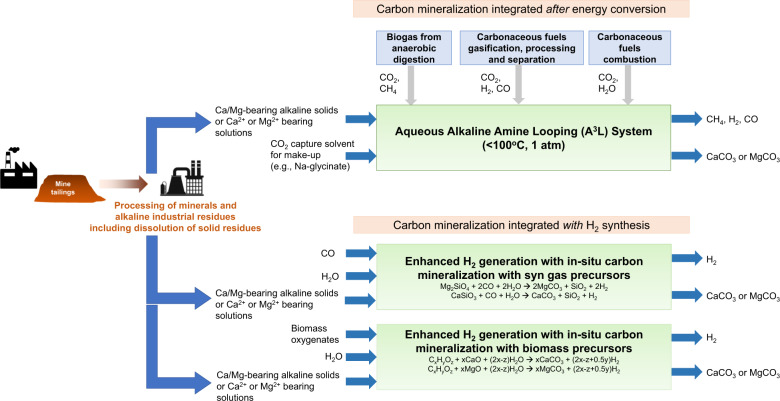
“Integrating alkaline sorbents with the WGSR for concurrent CO2 capture shifts the thermodynamic equilibrium toward enhanced H2 production.”
§ Carbon mineralization pathways for carbon capture, storage and utilization > Integration of carbon mineralization with energy and resource conversion pathways
plainstates a cause- Asserted: passes — The authors put it forward as true.
- Checkable: passes — It can be checked against evidence.
- Load-bearing: passes — The paper’s conclusions depend on it.
- Based: passes — The paper gives a reason why it holds.
13 more claims
Create a free account to see all 29 claims and to verify the 3 references still open.
- It may state two separate claims as one. 5
- Probably not a substantial claim. 7
Claims other papers make about this one
Each is checked against this paper’s own text: does it say what the citing paper says it does?
The source backs part of the claim, not all of it — or backs it for a different population, condition or comparison.
In the citing paper
“Mg silicate minerals have been considered the most feasible feedstock for carbon capture and utilization/storage by mineral carbonation due to their high abundance in ultramaphic rocks or inorganic industrial side-streams, especially mining tailings.1,3”
From Mechanisms of Mg carbonates precipitation and implications for CO 2 capture and utilization/storage (2023) · cites this paper as [3]
Experimental — accuracy not yet measuredThe cited source says what the claim attributes to it.
In the citing paper
“Despite the simplicity of the stoichiometric reaction orchestrating the formation of Mg carbonates, this also presents a complex set of chemical-morphological interactions that lead to challenging kinetics of carbonation nucleation and growth.3”
From Mechanisms of Mg carbonates precipitation and implications for CO 2 capture and utilization/storage (2023) · cites this paper as [3]
Citations
Cites
Carbon dioxide storage through mineral carbonation
Snæbjörnsdóttir, S. Ó., Sigfússon, B., Marieni, C., Goldberg, D., Gislason, S. R., & Oelkers, E. H. (2020) · Nature Reviews Earth & Environment · doi:10.1038/s43017-019-0011-8 · Cited by 977
Ex situ aqueous mineral carbonation
Gerdemann, S. J., O'Connor, W. K., Dahlin, D. C., Penner, L. R., & Rush, H. (2007) · Environmental Science & Technology · doi:10.1021/es0619253 · Cited by 633
Water-gas shift reaction: finding the mechanistic boundary
Rhodes, C., Hutchings, G. J., & Ward, A. M. (1995) · Catalysis Today · doi:10.1016/0920-5861(94)00135-o · Cited by 501
Fly ash as a soil ameliorant for improving crop production—a review
JALA, S., & GOYAL, D. (2006) · Bioresource Technology · doi:10.1016/j.biortech.2004.09.004 · Cited by 446
Calcium looping sorbents for CO2 capture
Erans, M., Manovic, V., & Anthony, E. J. (2016) · Applied Energy · doi:10.1016/j.apenergy.2016.07.074 · Cited by 369
Investigating the Application of Enzyme Carbonic Anhydrase for CO2 Sequestration Purposes
Mirjafari, P., Asghari, K., & Mahinpey, N. (2007) · Industrial & Engineering Chemistry Research · doi:10.1021/ie060287u · Cited by 306
Santos, R. M., Van Bouwel, J., Vandevelde, E., Mertens, G., Elsen, J., & Van Gerven, T. (2013) · International Journal of Greenhouse Gas Control · doi:10.1016/j.ijggc.2013.04.004 · Cited by 257
Gadikota, G., Matter, J., Kelemen, P., & Park, A.-H. A. (2014) · Physical Chemistry Chemical Physics · doi:10.1039/c3cp54903h · Cited by 247
Self-citationNational Academy of Sciences (2009) · National Academies Press eBooks · doi:10.17226/12620 · Cited by 243
Lima da Silva, A., & Müller, I. L. (2011) · International Journal of Hydrogen Energy · doi:10.1016/j.ijhydene.2010.11.051 · Cited by 152
Cited by
Items 101–200 of 236
Pachalieva, A. A., Hyman, J. D., O’Malley, D., Srinivasan, G., & Viswanathan, H. (2025) · Frontiers in Environmental Science · doi:10.3389/fenvs.2024.1454295 · Cited by 8
Determining the dominant factors controlling mineralization in three-dimensional fracture networks
Hyman, J. D., Murph, A. C., Boampong, L. O., Navarre‐Sitchler, A. K., Carey, J. W., Stauffer, P. H., & Viswanathan, H. (2024) · International journal of greenhouse gas control · doi:10.1016/j.ijggc.2024.104265 · Cited by 9
CO 2 Capture, Utilization, and Storage using Amino Acids
Sheikh, M. S., Sui, J., Wang, B., & Wang, X. (2025) · Advanced Sustainable Systems · doi:10.1002/adsu.202501422 · Cited by 10
Scaling considerations and optimal control for an offshore wind powered direct air capture system
Webster, S. R., Ishaq, H., & Crawford, C. A. (2024) · Journal of Physics Energy · doi:10.1088/2515-7655/ad31ba · Cited by 11
Williams, J. M., Zhao, D., Zhang, N., Kawashima, S., & Moment, A. J. (2025) · Industrial Chemistry and Materials · doi:10.1039/d4im00025k · Cited by 12
Liu, P., Wang, Y., Wang, X., & Zhang, W. (2025) · Journal of Cleaner Production · doi:10.1016/j.jclepro.2025.146029 · Cited by 9
Kouhi, R. M., Ardejani, F. D., Tonkaboni, S. Z. S., Moghaddam, M. M. J., Butscher, C., & Taherdangkoo, R. (2024) · Mine Water and the Environment · doi:10.1007/s10230-024-01005-0 · Cited by 8
Wang, Q., Yao, Z., Guo, L., & Shen, X. (2024) · International Journal of Minerals Metallurgy and Materials · doi:10.1007/s12613-023-2743-1 · Cited by 10
Madhav, D., Hautekeete, D., Thielemans, W., Desplentere, F., Moldenaers, P., & Vandeginste, V. (2025) · Chemical Engineering Journal · doi:10.1016/j.cej.2025.166002 · Cited by 7
Amine-mediated carbon dioxide capture and in-situ conversion
Yang, Z., Yue, C., Pang, W., Wang, H., Cong, X., Huang, S., Lv, J., Lv, J., Wang, M., & Ma, X. (2025) · Chemical Engineering Science · doi:10.1016/j.ces.2025.122104 · Cited by 7
An Evidence of Carbonic Anhydrase Activity in Native Microalgae for CO2 Capture Application
MubarakAli, D., Kathiravan, N., Jayakannan, A., Raghunathan, S., Kim, J., & Thajuddin, N. (2024) · Applied Biochemistry and Biotechnology · doi:10.1007/s12010-024-04908-4 · Cited by 7
Cheng, L., Chen, Y., Song, Z., Zhang, L., & Yu, Q. (2024) · Construction and Building Materials · doi:10.1016/j.conbuildmat.2024.137961 · Cited by 9
Xue, Q., Mutailipu, M., Yang, Y., Xue, F., & Wang, Q. (2024) · Environmental Earth Sciences · doi:10.1007/s12665-024-11836-3 · Cited by 8
Tu, W. H., Chan, G. H., Wong, S. I., Chan, W. P., de Smit, E., Abubakar, S. M., & Lisak, G. (2025) · Water Research · doi:10.1016/j.watres.2025.125040 · Cited by 11
Characterization of Humic Acid Salts and Their Use for CO2 Reduction
Spietz, T., Kazankapova, M. K., Dobras, S., Kassenova, Z. M., Yermagambet, B. T., Khalimon, A. Y., & Stelmach, S. (2024) · Minerals · doi:10.3390/min14090947 · Cited by 6
Bio-accelerated weathering of ultramafic minerals with Gluconobacter oxydans
Lee, J. J., Plante, L., Pian, B., Marecos, S., Medin, S. A., Klug, J. D., Reid, M. C., Gadikota, G., Gazel, E., & Barstow, B. (2025) · Scientific Reports · doi:10.1038/s41598-025-99655-9 · Cited by 15
Self-citationLong-term effects of post-earthquake landslides on vegetation ecosystem net carbon
He, W., Di, B., Wu, S., Li, J., Zeng, W., Zeng, Y., Li, R., Balikuddembe, J. K., Chen, H., Zhang, B., et al. (2025) · Ecological Indicators · doi:10.1016/j.ecolind.2025.113170 · Cited by 9
A Review of Solar‐Assisted Methods for CO 2 Capture, Utilization, and Storage
Khazanedari, K., Mehrpooya, M., Shahmirzadi, S. K., Mahmoudi, M., & Borhani, T. N. G. (2025) · Advanced Sustainable Systems · doi:10.1002/adsu.202500840 · Cited by 7
Insights into the mechanism of nitrate salt-mediated MgCO 3 formation
Santos, H. S., Nguyen, H., Bojdys, M. J., Esmaeili, P., Sirviö, J. A., & Kinnunen, P. (2025) · Physical Chemistry Chemical Physics · doi:10.1039/d5cp01372k · Cited by 6
Lu, P., Singh, S., Gonzalez, A., & Gadikota, G. (2025) · ACS Sustainable Chemistry & Engineering · doi:10.1021/acssuschemeng.5c00653 · Cited by 6
Self-citationCarter, M., Nguyen, H. G. T., Allen, A. J., Yi, F., Yang, W.-C. D., Baumann, A. E., McGivern, W. S., Manion, J. A., Kuzmenko, I., Tsinas, Z., et al. (2024) · Journal of CO2 Utilization · doi:10.1016/j.jcou.2024.102975 · Cited by 8
Xu, M., Yang, S., Yao, H., Cao, N., Deng, C., Liu, G., Yu, C. W., Wang, K., & Wang, G. (2025) · Results in Engineering · doi:10.1016/j.rineng.2025.107605 · Cited by 5
Akanji, S. P., Esteban, L., Giwelli, A. A., Sarout, J., Keshavarz, A., & Iglauer, S. (2025) · Advances in Colloid and Interface Science · doi:10.1016/j.cis.2025.103710 · Cited by 10
Huysmans, T., Meysman, F. J. R., & van de Velde, S. (2025) · Biogeosciences · doi:10.5194/bg-22-5557-2025 · Cited by 7
Zheng, X., Ji, L., Xu, Y., Li, L., Cui, Q., & Shuiping, Y. A. N. (2026) · Chemical Engineering Journal · doi:10.1016/j.cej.2026.174237 · Cited by 7
Gupta, S. P. (2024) · RSC Sustainability · doi:10.1039/d4su00541d · Cited by 7
Phenoxy-Nitrile Bifunctional Ionic Liquid for Efficient Electroreduction of CO2 to Oxalate
Yuan, L., Zhang, L., Li, G., Zeng, S., Xue, Q., Jiang, C., & Zhang, X. (2023) · Industrial & Engineering Chemistry Research · doi:10.1021/acs.iecr.3c02876 · Cited by 6
A strategic insight into the market for carbon management capacity
Fikru, M. G., Shen, T., Brodmann, J., & Ma, H. (2024) · Sustainable Futures · doi:10.1016/j.sftr.2024.100374 · Cited by 4
Tang, X., Zheng, C., Wang, Q., Fan, M., Tian, Y., Liu, H., Wang, K., Ji, Y., Wang, Y., & Zhu, Y. (2025) · Water Air & Soil Pollution · doi:10.1007/s11270-025-07995-z · Cited by 4
Ochonma, P., Blaudeau, C., Krasnoff, R., & Gadikota, G. (2021) · Frontiers in Energy Research · doi:10.3389/fenrg.2021.742323 · Cited by 6
Self-citationWang, Y., Alexakos, C., Zaidman, T. J., Houghton, J. L., Xie, Z., Fike, D. A., & Jun, Y. (2025) · The Journal of Physical Chemistry C · doi:10.1021/acs.jpcc.4c08473 · Cited by 6
Ghannam, Z., Kamal, M. S., Mahmoud, M., Fawad, M., Murtaza, M., Ali, M., & Patil, S. L. (2025) · Gas Science and Engineering · doi:10.1016/j.jgsce.2025.205819 · Cited by 9
Wang, Y., Liu, Y., Yin, T., Feng, J., Lin, C. M., & Tan, H. (2025) · Separation and Purification Technology · doi:10.1016/j.seppur.2025.132942 · Cited by 5
Pandey, A., & Bhaduri, G. A. (2023) · Chemical Engineering Research and Design · doi:10.1016/j.cherd.2023.10.040 · Cited by 5
Brown, M. L., Irish, M., Steinberg, D., et al. (2024) · Energies · doi:10.3390/en17153780 · Cited by 6
Shang, X., Shi, H., Li, Y., Yang, J., & Wang, Y. (2026) · Journal of Cleaner Production · doi:10.1016/j.jclepro.2026.147679 · Cited by 5
Bonthapally, R., Banerjee, A., Saini, A., Majumder, P., Vishal, V., & Dutta, A. (2025) · Carbon Capture Science & Technology · doi:10.1016/j.ccst.2025.100417 · Cited by 6
Recent advances and new concepts of carbon capture
Vakylabad, A. B. (2024) · Elsevier eBooks · doi:10.1016/b978-0-443-19233-3.00014-6 · Cited by 4
Catalyst-Mediated Efficient Sequestration of Gaseous CO2 to Solid CaCO3
Palwe, V., Panbude, U., Tembhare, S., Raghunathan, K., Maskare, D. Y., Rayalu, S. S., & Nagababu, P. (2025) · Water Air & Soil Pollution · doi:10.1007/s11270-025-08059-y · Cited by 3
Role of ammonium in CO2 mineralization and enhanced oil recovery
Al-Yaseri, A. Z., & Krishna, S. (2026) · Energy Geoscience · doi:10.1016/j.engeos.2026.100574 · Cited by 3
Gao, X., Ochonma, P., Prasad, D., Mahadik, M. A., Kuzmenko, I., Ilavský, J., & Gadikota, G. (2025) · Physical Chemistry Chemical Physics · doi:10.1039/d4cp04762a · Cited by 8
Self-citationImpact of pore heterogeneity on CO2 capture efficiency in porous media
Chen, X., Ge, H., Chen, J., & Wang, C. (2025) · Process Safety and Environmental Protection · doi:10.1016/j.cherd.2025.01.017 · Cited by 3
Chlela, S., & Selosse, S. (2025) · Current Sustainable/Renewable Energy Reports · doi:10.1007/s40518-025-00271-y · Cited by 13
Hu, J., Pincus, L. N., Wierzbicki, D., Du, Y., & Peters, C. A. (2025) · Environmental Science & Technology · doi:10.1021/acs.est.5c01640 · Cited by 4
Lizardite’s capacity for carbon dioxide sequestration through a mineral process
Kharchafi, A., Dahmani, J., Tanji, K., Gaidoumi, A. E., Iboustaten, E., Fahoul, Y., Belghiti, M. A. E., Mrabet, I. E., Arrahli, A., & Kherbeche, A. (2024) · Reaction Kinetics Mechanisms and Catalysis · doi:10.1007/s11144-023-02547-0 · Cited by 3
de Matos, C. S., Ulsen, C., & Filho, F. L. S. (2025) · Journal of Materials Research and Technology · doi:10.1016/j.jmrt.2025.02.127 · Cited by 3
Rapid conversion of carbon dioxide into titanium carbide by atmospheric microwave plasma
Khotmungkhun, K., Kleebbua, P., Chotiyasilp, A., Waritanant, T., Atithep, T., Junpha, J., & Subannajui, K. (2024) · Environmental Chemistry Letters · doi:10.1007/s10311-024-01746-y · Cited by 4
Wu, J., Zhang, Q., Wang, N., Kattel, G., Yang, C.-G., Frei, S., & Yu, Z.-G. (2026) · Environmental Research · doi:10.1016/j.envres.2026.123761 · Cited by 3
Soil stabilization using biological CO2 sequestration and CO2-based biocementation technique
Deylaghian, S., Nikooee, E., Ansari, M., Jahanmard, M. R., Aghili, H., Khodayari, E., Riahi, F., Niazi, A., & Nagel, T. (2026) · Journal of Rock Mechanics and Geotechnical Engineering · doi:10.1016/j.jrmge.2026.05.004 · Cited by 5
Asgar, H., Dasgupta, N., Yin, T., Hahn, S. H., Kuzmenko, I., van Duin, A. C. T., & Gadikota, G. (2025) · Energy & Fuels · doi:10.1021/acs.energyfuels.5c00121 · Cited by 2
Self-citationPorous Ca-doped Al2O3 with abundant basic sites for enhanced hydrolysis of fermentative antibiotics
Gao, Y., Zhang, L., Zhang, Y., Yang, M., & Ma, W. (2025) · Water Research · doi:10.1016/j.watres.2025.124138 · Cited by 2
Mohamed, D. K. B., Chin, H. Z., Wang, C., Bu, J., Tao, L., & Liu, W. (2025) · Journal of environmental chemical engineering · doi:10.1016/j.jece.2025.120253 · Cited by 5
CO2 mineralization feedstock types
Vakylabad, A. B., & Saberi, A. (2024) · Elsevier eBooks · doi:10.1016/b978-0-443-19231-9.00021-1 · Cited by 4
de Itriago, Y. C. A., Harrell, B., Singletary, P., Devier, S., & Harrison, E. (2024) · SPE Annual Technical Conference and Exhibition · doi:10.2118/220866-ms · Cited by 2
Mohamed, D. K. B., Lapkin, A. A., Wang, C., Bu, J., Tao, L., & Liu, W. (2025) · Industrial & Engineering Chemistry Research · doi:10.1021/acs.iecr.5c01369 · Cited by 3
Thamsiriprideeporn, C., & Suekane, T. (2021) · Greenhouse Gases Science and Technology · doi:10.1002/ghg.2123 · Cited by 3
Alam, M. S., Ahmed, M., Barik, A., Tofa, S. J., Uddin, M. K., Greco, A., Alam, M. M., & Chowdhury, M. A. (2026) · Organics · doi:10.3390/org7030031 · Cited by 2
CO 2 Fixation and Release Mediated by Carbonate-Based Coordination Polymers
Kadota, K., Matsui, S., Traverson, A., Hori, Y., Sotho, K., Morisato, K., Aoyama, Y., Shigeta, Y., Nishiyama, Y., & Horike, S. (2025) · Journal of the American Chemical Society · doi:10.1021/jacs.5c07425 · Cited by 1
Esmaeili, P., SANTOS, H. S., Ilango, N. K., Sliz, R., Ahmad, L., & Kinnunen, P. (2026) · Minerals Engineering · doi:10.1016/j.mineng.2026.110180 · Cited by 2
Synthesis of Aragonite from Precipitated Calcium Carbonate: A Pilot Scale Study
Sari, E., Desmiarti, R., Zulhadjri, Z., Alif, M. F., Rosadi, M. Y., & Arief, S. (2024) · Indonesian Journal of Chemistry · doi:10.22146/ijc.92169 · Cited by 2
Boampong, L. O., Murph, A. C., Hyman, J. D., Navarre‐Sitchler, A. K., & Viswanathan, H. (2026) · Chemical Geology · doi:10.1016/j.chemgeo.2026.123512 · Cited by 1
Mineral carbonation: Processes, mechanisms, and its role in the carbon–hydrogen cycle
Zhou, D., Cao, S., Li, X., Cheng, X., Liu, J., Dong, Y., Zhan, L., Wu, S., Jiang, S., & Shi, G. (2026) · Earth-Science Reviews · doi:10.1016/j.earscirev.2026.105549 · Cited by 2
Malladi, R. C., Czerwiński, J., Patyna, K., Borg, R. P., & Selvaraj, T. (2026) · Results in Engineering · doi:10.1016/j.rineng.2026.109698 · Cited by 2
Madhav, D., Walle, L. V. D., Hoecke, V. V., Thielemans, W., Desplentere, F., Moldenaers, P., & Vandeginste, V. (2026) · Chemical Engineering Journal Green and Sustainable · doi:10.1016/j.cejgas.2026.100037 · Cited by 1
Net negative carbon dioxide nickel mining examined through prospective technoeconomic assessmentPreprint
Renforth, P., Su, D., McBride, A. L., PEREIRA, R. J. L., Yaddala, J., Turvey, C., Hussain, A., Moyo, A., Hamilton, J., Wang, Z., et al. (2026) · Research Square · doi:10.21203/rs.3.rs-8049102/v1 · Cited by 2
Orhaneli Ofiyolitinin Karbondioksit Saklama Potansiyelinin Araştırılması: Deneysel Bulgular
Ercan, H. Ü., Göçmengil, G., Gülmez, F., Topkafa, M., & Ündül, Ö. (2022) · International Journal of Pure and Applied Sciences · doi:10.29132/ijpas.1098481 · Cited by 1
Fayyaz, B., & Ovalles, C. (2026) · Energy & Fuels · doi:10.1021/acs.energyfuels.6c03945 · Cited by 1
Triwigati, P. T., Jeon, S., Son, Y., & Park, Y. (2025) · ACS Sustainable Resource Management · doi:10.1021/acssusresmgt.5c00284 · Cited by 1
Onboard CO2 capture, storage, and utilization in the shipping industry: A review and outlookPreprint
Ballout, J., Linke, P., Al‐Mohannadi, D. M., Rousseau, J. H., Burton, G., & Al‐Rawashdeh, M. (2024) · SSRN Electronic Journal · doi:10.2139/ssrn.4645463 · Cited by 1
Innovative Technologies for Environmental and Sustainable Socioeconomic EcosystemsPreprint
Coccia, M. (2025) · SSRN Electronic Journal · doi:10.2139/ssrn.5033282 · Cited by 1
Feng, Y., Xu, J., Xu, J., Gao, L., Liu, B., Zhang, C., Shiai, X. U., & Lu, Y. (2026) · Separation and Purification Technology · doi:10.1016/j.seppur.2026.137211 · Cited by 1
Carbon capture using NaCl (halite)
Antia, D. D. J. (2024) · Elsevier eBooks · doi:10.1016/b978-0-323-96125-7.00001-0 · Cited by 2
Carbon capture using halite, seawater, and saline water
Antia, D. D. J. (2024) · Elsevier eBooks · doi:10.1016/b978-0-323-96125-7.00014-9 · Cited by 2
Coccia, M. (2022) · Research Square · doi:10.21203/rs.3.rs-2323975/v1 · Cited by 3
Niu, D., Lv, X., Zheng, Z., Yang, Z., Gao, C., & Zhang, Y. (2026) · Construction and Building Materials · doi:10.1016/j.conbuildmat.2026.147078 · Cited by 1
Unveiling the Green Alchemy: Waste Biomass to Hydrogen Production
Rathinavel, L., Jothinathan, D., Choure, K., & Pandey, A. (2024) · ACS symposium series · doi:10.1021/bk-2024-1473.ch014 · Cited by 1
Tailored Calcium Silicates Thin Films for Sustainable Carbon Capture Applications
Iozzia, M. L., Casu, A., Calloni, A., Hallqvist, C. P., Locarno, S. A., Gatta, G. D., Comboni, D., Bonizzoni, L., Vecchi, R., Bassi, A. L., et al. (2026) · Energy & Fuels · doi:10.1021/acs.energyfuels.6c01123 · Cited by 1
Triwigati, P. T., Noh, S., Sim, G., 서동주, Moon, S., & Park, Y. (2026) · Industrial & Engineering Chemistry Research · doi:10.1021/acs.iecr.5c05202
A modular building-block framework for navigating circular carbon pathways
Hunhevicz, J., Kiefer, F., & Sulzer, M. (2026) · RSC Sustainability · doi:10.1039/d6su00228e
Delerce, S. (2023) · theses.fr (ABES) · doi:10.70675/b7725389z4779z48ddz9393zba3923920a17
Hidden features in the OH-stretching spectra of amino acid decorated air–water interfaces
Premadasa, U. I., Dong, D., Bryantsev, V. S., Doughty, B., & Roy, S. (2026) · The Journal of Chemical Physics · doi:10.1063/5.0325058
Olivine dissolution kinetics at elevated temperatures and pressures
Chen, Q., & Trusler, J. P. M. (2025) · Chemical Engineering Journal · doi:10.1016/j.cej.2025.169095 · Cited by 4
Carbon dioxide point-source and direct air capture using biocatalytic textiles
Salmon, S., Shen, J., Xiao, M., Alspaugh, M., Frain, S., Jasper, W. J., & Thompson, J. (2026) · Carbon Capture Science & Technology · doi:10.1016/j.ccst.2026.100599
Gao, P., Qu, A., Xia, J., Li, Q., Song, Y., & Yang, L. (2026) · SSRN Electronic Journal · doi:10.2139/ssrn.7511958
Transforming China's Power Systems To Facilitate Carbon ReductionsPreprint
Pan, M., Xie, D. G., Gu, C., Liu, G., Wang, X., & Zhao, C. (2022) · Research Square · doi:10.21203/rs.3.rs-1278252/v1
Study on the interfacial evolution behavior of charged droplets in an alkaline slurry system
Liu, M., Zhou, Y., Wang, X., et al. (2025) · Chemical Engineering Science · doi:10.1016/j.ces.2025.122462
Metadata
- Authors
- Gadikota, G.
- Affiliations
- Cornell University (US)
- Corresponding author
- Gadikota, Greeshma
- ORCID
- Gadikota, Greeshma
- Venue
- Communications Chemistry
- Published
- 2021-02-26
- Volume
- 4
- Issue
- 1
- Pages
- 23-23
- ISSN
- 2399-3669 (ISSN-L)
- PMC
- PMC9814416
- OpenAlex
- W3133922718
- Cited by
- 238
- References
- 32
- Citations by year
- 2026: 50 · 2025: 65 · 2024: 61 · 2023: 36 · 2022: 19 · 2021: 7
- FWCI
- 9.96
- Type
- journal article
- Language
- en
- Open access
- gold
- doi.org
- Licence
- cc-by
- creativecommons.org/licenses/by/4.0 (tdm)
- creativecommons.org/licenses/by/4.0 (vor)
- Locations
- Communications Chemistry (publishedVersion, cc-by)
- PubMed Central (publishedVersion, cc-by)
- PubMed (publishedVersion)
- DOAJ (DOAJ: Directory of Open Access Journals) (submittedVersion, cc-by-sa)
- Funders
- U.S Department of Energy - Office of Basic Energy Sciences
- Topics
- Physical Sciences › Environmental Science › Environmental Engineering › CO2 Sequestration and Geologic Interactions
- Physical Sciences › Chemical Engineering › Filtration and Separation › Carbon Dioxide Capture Technologies
- Physical Sciences › Chemical Engineering › Process Chemistry and Technology › Carbon dioxide utilization in catalysis
- Keywords
- carbon mineralization, CO2 capture, CO2 sequestration, CO2 utilization, CO2 mineralization, low-carbon energy, resource transformation
About these checks
Registry, retraction, Cites and statistics results are computed, not judged, with one exception: a printed reference that no index lists is read once by a model before it counts as a citation error. Claims are extracted by a model and kept only when their quote appears verbatim in the text; each cited source is then checked, with a model’s help, for whether it says what the claim relies on. Those verdicts can be wrong — read the claim’s quote and the cited source before relying on one.
The claim verdicts this report counts are experimental: their accuracy is not yet measured.
A language model drew the claims from the paper on 2026-10-10, under version 3 of the claim definition (model deepseek-v4.1-flash, prompt extract-v3).
A second model labelled each claim on 2026-10-10 (model jev-1.13-20260917, definition revision gold-guideline-v0.2).
Cited sources are checked with a language model’s help (gpt-6-sol).
Statistics and arithmetic are recomputed, not judged.
Confidence bands are shown only for fields calibrated on our annotated test set. None is calibrated yet, so no band is shown.
What counts as a claim ›How we measure confidence ›How we check this ›
Are you an author, or do you see a problem with this page? Request a review
Data sources
Bibliographic data: Semantic Scholar, OpenAlex, Crossref.
Contains information from the Semantic Scholar Academic Graph Datasets, made available under the ODC Attribution License (ODC-BY 1.0).
Semantic Scholar’s data is described in: Kinney, R., et al. (2023). The Semantic Scholar Open Data Platform. arXiv:2301.10140.
