

Integrative proteomic analyses across common cardiac diseases yield mechanistic insights and enhanced prediction
Open accessPublished version of a preprint
The DOI matches its Crossref record; 78 of the 78 references it cites were found in a registry or an index.
Abstract
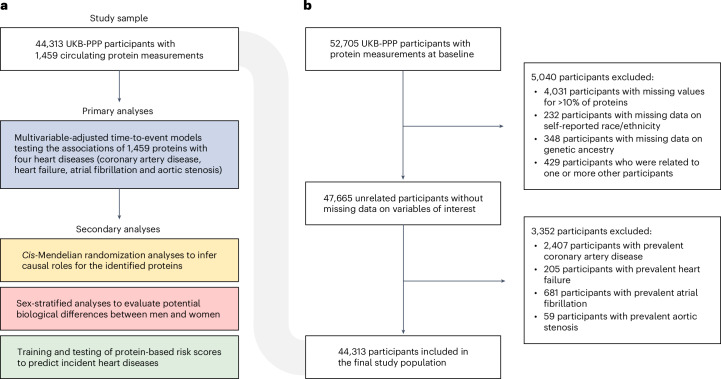
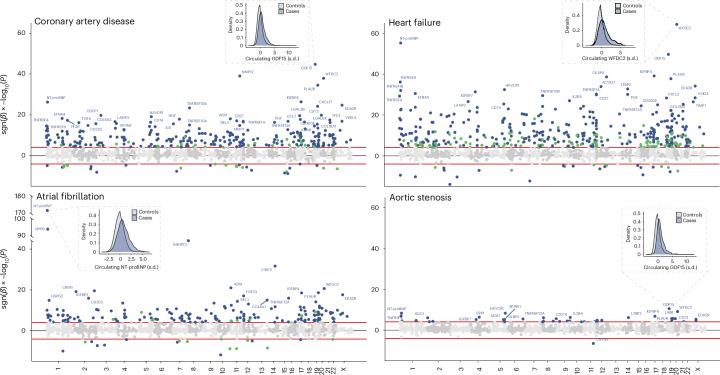
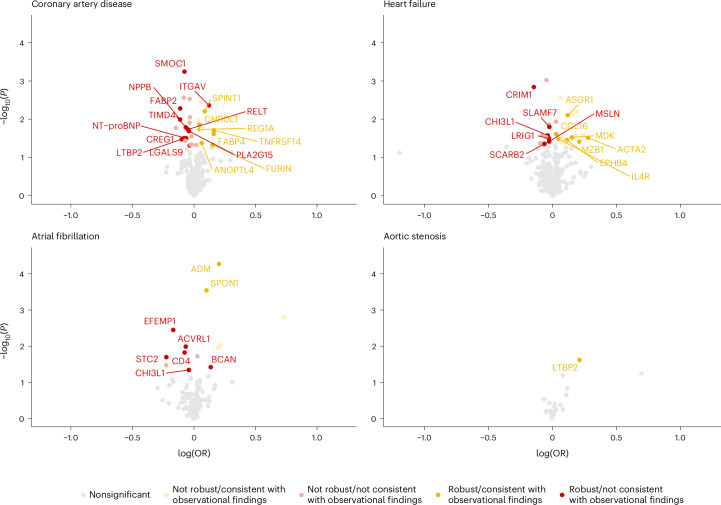
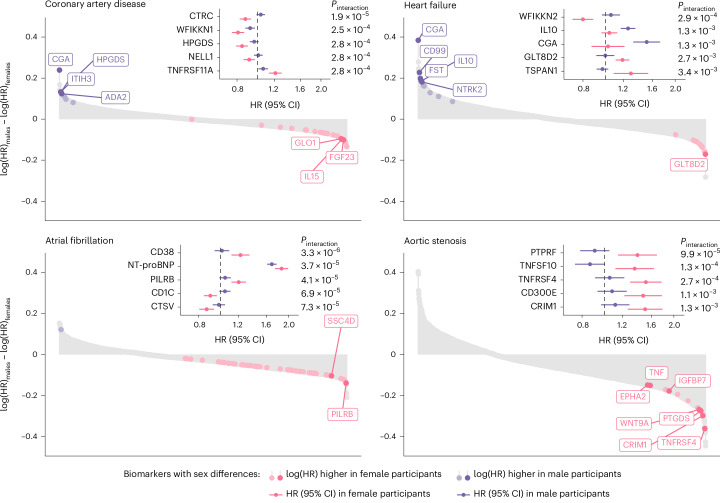
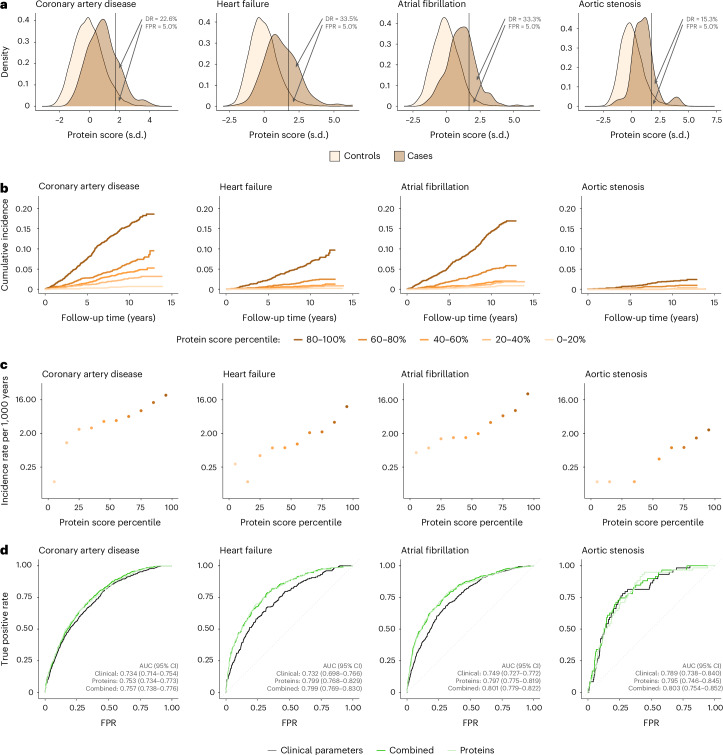
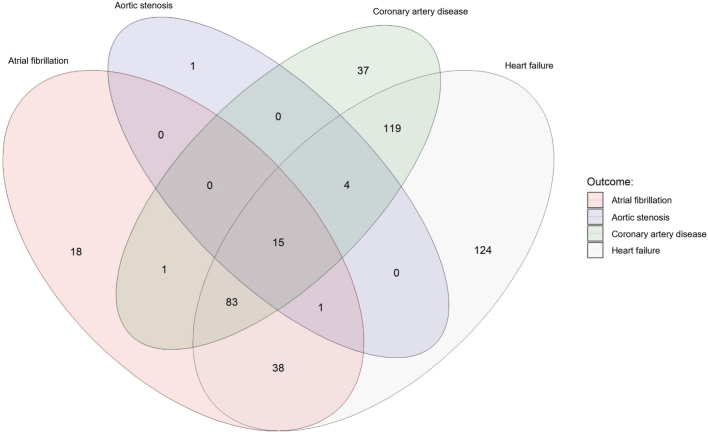
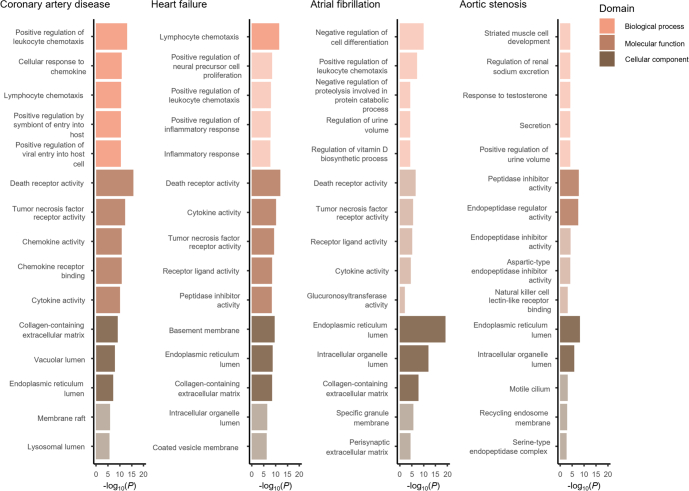
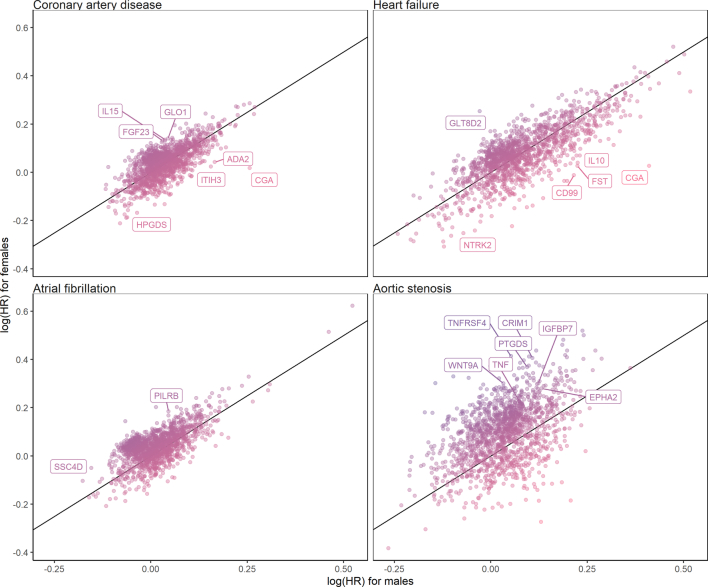
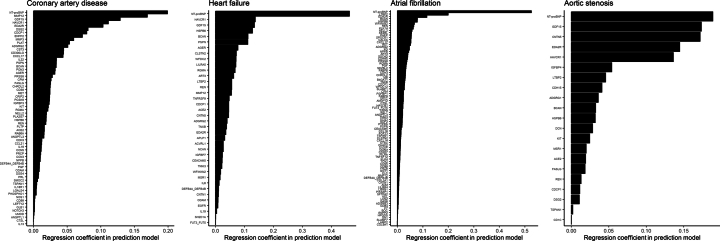
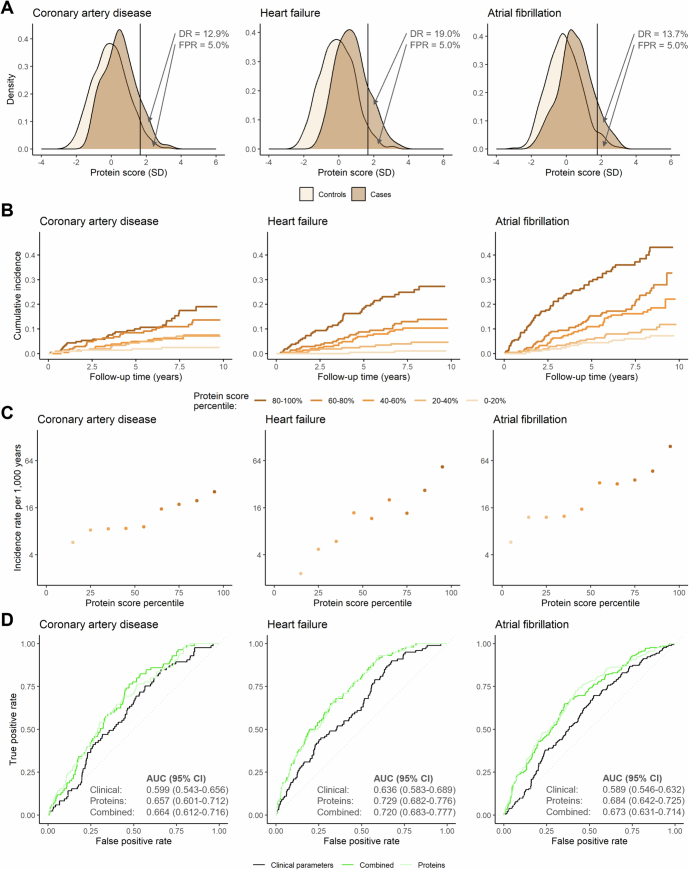
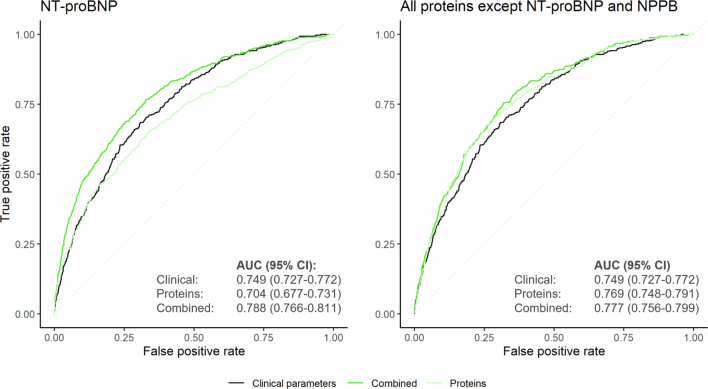
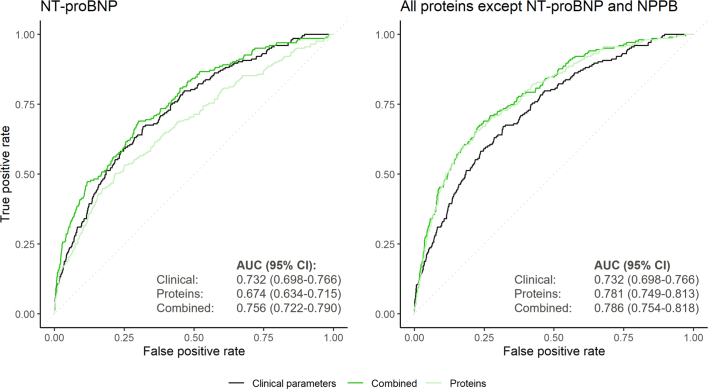
Cardiac diseases represent common highly morbid conditions for which molecular mechanisms remain incompletely understood. Here we report the analysis of 1,459 protein measurements in 44,313 UK Biobank participants to characterize the circulating proteome associated with incident coronary artery disease, heart failure, atrial fibrillation and aortic stenosis. Multivariable-adjusted Cox regression identified 820 protein–disease associations—including 441 proteins—at Bonferroni-adjusted P < 8.6 × 10⁻⁶. Cis-Mendelian randomization suggested causal roles aligning with epidemiological findings for 4% of proteins identified in primary analyses, prioritizing therapeutic targets across cardiac diseases (for example, spondin-1 for atrial fibrillation and the Kunitz-type protease inhibitor 1 for coronary artery disease). Interaction analyses identified seven protein–disease associations that differed Bonferroni-significantly by sex. Models incorporating proteomic data (versus clinical risk factors alone) improved prediction for coronary artery disease, heart failure and atrial fibrillation. These results lay a foundation for future investigations to uncover disease mechanisms and assess the utility of protein-based prevention strategies for cardiac diseases. Schuermans et al. identify a causal relationship between the circulating proteins spondin-1 and atrial fibrillation and SPINT1 and coronary artery disease and show that adding proteomic data improves clinical risk factor-based cardiovascular risk prediction.
Overview
The claims and statistics of this paper haven’t been checked yet.
Free: it reads the open-access text and checks the first 5 claims that cite a source we can check. Create a free account to check every claim.
Integrity signals
Registry
Cites
Statistics
Figures
Verification
Claims the paper makes
The claims and statistics of this paper haven’t been checked yet.
Free: it reads the open-access text and checks the first 5 claims that cite a source we can check. Create a free account to check every claim.
Claims other papers make about this one
Each is checked against this paper’s own text: does it say what the citing paper says it does?
The source backs part of the claim, not all of it — or backs it for a different population, condition or comparison.
In the citing paper
“Out of the 21 proteins identified in this study, we observed consistent associations for 13 proteins including GDF15, NT-proBNP, HAVCR1, TNFRSF9, IGFBP4, IL2RA, LTBP2, TNFRSF10A, PLAUR, IGFBP7, SPINK1, CD274, EDA2R 25 .”
From Connecting proteomics and genomics to identify causal biomarkers specific for aortic valve stenosis (2025) · cites this paper as [25]
Experimental — accuracy not yet measured
Self-check
Percentages, sums and reported differences re-computed from the paper’s own numbers.
The self-check needs the paper’s full text.
Citations
Cites
PLINK: a tool set for whole-genome association and population-based linkage analyses.
Purcell, S., Neale, B., Todd-Brown, K., Thomas, L., Ferreira, M. A. R., Bender, D., Maller, J., Sklar, P., de Bakker, P. I. W., Daly, M. J., et al. (2007) · The American Journal of Human Genetics · doi:10.1086/519795 · Cited by 34,089 · cited 1×
“All cis -pQTLs with P 5 × 10 −6 were clumped into largely independent loci (linkage disequilibrium R 2 0.1) using PLINK 52 .”
InfluentialRegularization Paths for Generalized Linear Models via Coordinate Descent
Friedman, J., Hastie, T., & Tibshirani, R. (2010) · Journal of Statistical Software · doi:10.18637/jss.v033.i01 · Cited by 19,927
Vos, T., Lim, S. S., Abbafati, C., Abbas, K. M., Abbasi, M., Abbasifard, M., Abbasi-Kangevari, M., Abbastabar, H., Abd-Allah, F., Abdelalim, A., et al. (2020) · The Lancet · doi:10.1016/s0140-6736(20)30925-9 · Cited by 19,358
A global reference for human genetic variation
The 1000 Genomes Project Consortium, authors, C., Auton, A., Abecasis, G. R., Steering committee, Altshuler, D. M., Durbin, R. M., Abecasis, G. R., Bentley, D. R., Chakravarti, A., et al. (2015) · Nature · doi:10.1038/nature15393 · Cited by 18,247 · cited 1×
“Linkage disequilibrium information was obtained from the European panel of phase 3 of the 1000 Genomes Project 53 .”
Tissue-based map of the human proteome
Uhlén, M., Fagerberg, L., Hallström, B. M., Lindskog, C., Oksvold, P., Mardinoglu, A., Sivertsson, Å., Kampf, C., Sjöstedt, E., Asplund, A., et al. (2015) · Science · doi:10.1126/science.1260419 · Cited by 15,286
ggplot2: Elegant Graphics for Data Analysis
Wickham, H. (2009) · doi:10.1007/978-0-387-98141-3 · Cited by 14,447
pROC: an open-source package for R and S+ to analyze and compare ROC curves
Robin, X., Turck, N., Hainard, A., Tiberti, N., Lisacek, F., Sanchez, J.-C., & Müller, M. (2011) · BMC Bioinformatics · doi:10.1186/1471-2105-12-77 · Cited by 13,697
Enrichr: a comprehensive gene set enrichment analysis web server 2016 update
Kuleshov, M. V., Jones, M. R., Rouillard, A. D., Fernandez, N. F., Duan, Q., Wang, Z., Koplev, S., Jenkins, S. L., Jagodnik, K. M., Lachmann, A., et al. (2016) · Nucleic Acids Research · doi:10.1093/nar/gkw377 · Cited by 10,799 · cited 3×
“To gain insights into biological pathways associated with the identified proteins, we carried the 820 observed protein–disease associations forward for pathway enrichment analysis using the Gene Ontology resource 16 via Enrichr 17 .”
The UK Biobank resource with deep phenotyping and genomic data
Bycroft, C., Freeman, C., Petkova, D., Band, G., Elliott, L. T., Sharp, K., Motyer, A., Vukcevic, D., Delaneau, O., O’Connell, J., et al. (2018) · Nature · doi:10.1038/s41586-018-0579-z · Cited by 8,876 · cited 2×
“Anthropometric data, physical measurements and blood samples were obtained by trained study staff 42 .”
The MR-Base platform supports systematic causal inference across the human phenome
Hemani, G., Zheng, J., Elsworth, B., Wade, K. H., Haberland, V., Baird, D., Laurin, C., Burgess, S., Bowden, J., Langdon, R., et al. (2018) · eLife · doi:10.7554/elife.34408 · Cited by 7,959 · cited 1×
“MR analyses were performed using the TwoSampleMR and MendelianRandomiza-tion packages in R 58,59 .”
Cited by
Plasma proteomics links brain and immune system aging with healthspan and longevity
Oh, H. S., Guen, Y. L., Rappoport, N., Urey, D. Y., Farinas, A., Rutledge, J., Channappa, D., Wagner, A. D., Mormino, E. C., Brunet, A., et al. (2025) · Nature Medicine · doi:10.1038/s41591-025-03798-1 · Cited by 193
A human pan-disease blood atlas of the circulating proteome
Álvez, M. B., Bergström, S., Kenrick, J., Johansson, E., Åberg, M., Akyıldız, M., Altay, Ö., Sköld, H., Antonopoulos, K., Apostolakis, E., et al. (2025) · Science · doi:10.1126/science.adx2678 · Cited by 94
Kasartzian, D.-I., & Tsiampalis, T. (2025) · Life · doi:10.3390/life15010094 · Cited by 74
“Similarly, models incorporating lipidomic and proteomic data extend the predictive scope by offering insights into the molecular mechanisms underlying CVD [34].”
Climente-González, H., Oh, M., Chajewska, U., Hosseini, R., Mukherjee, S., Gan, W., Traylor, M., Hu, S., Fatemifar, G., Ghouse, J., et al. (2025) · Communications Medicine · doi:10.1038/s43856-025-00872-0 · Cited by 46
Luo, Y., Zhang, N., Yang, J., Cui, M., Tsoi, K. K., Lip, G. Y. H., Liu, T., & Zhang, Q. (2026) · Nature Communications · doi:10.1038/s41467-026-68956-6 · Cited by 42
“…omics data into linear regression to predict disease risk, which are constrained by assumptions of non-correlation between predictors and linear exposure-outcome associations 16,18 – 20, 23, 25, Our study aims to bridge this gap by proposing a groundbreaking AI-based CardiOmicScore framework.”
Recent Advances in Immunothrombosis and Thromboinflammation
Kaiser, R. W. J., Gold, C., & Stark, K. (2025) · Thrombosis and Haemostasis · doi:10.1055/a-2523-1821 · Cited by 37
“…cannot only be used to broadly investigate immune cell function and identify disease-speci fi c signatures, for example, in cardiovascular disease, 180,181 but they can also be used to inform novel therapeutic gateways, for example, the speci fi c development of chimeric antigen receptor T cells…”
Goette, A., Lemoine, M. D., Borof, K., Schotten, U., BREITHARDT, G. E., Camm, A. J., Crijns, H. J. G. M., Eckardt, L., Metzner, A., Willems, S., et al. (2025) · EP Europace · doi:10.1093/europace/euaf256 · Cited by 33
“17 Of note, ANGPT2 levels increased with atrial cardiomyopathy severity in the present analysis.”
Yuan, S., Chen, J., Ruan, X., Li, Y., Abramowitz, S. A., Wang, L., Jiang, F., Xiong, Y., Levin, M. G., Voight, B. F., et al. (2025) · Nature Communications · doi:10.1038/s41467-025-61720-2 · Cited by 29
“A UK Biobank-based study demonstrated improved disease prediction when integrating a protein score with a clinical score 38 , while another UK Biobank study found a signi fi cant improvement when combining a protein score with a PGS 39 .”
From reactive to proactive: Continuous protein monitoring for preventive health care
Donnelly, J. M., Neff, R. A., Sedlack, A. J. H., Juska, V. B., Ayala‐Cardona, L. F., Bass, J. T., McNally, E. M., Shah, S. J., Alshurafa, N. I., Kimchi, E. Y., et al. (2025) · Science · doi:10.1126/science.ady6497 · Cited by 27
Mitsis, A., Khattab, E., Kyriakou, M., Sokratous, S., Sakellaropoulos, S., Tzikas, S., Kadoglou, N. P. E., & Kassimis, G. (2025) · Biomedicines · doi:10.3390/biomedicines13071723 · Cited by 25
Molecular damage associated with ageing drives inflammation in cardiovascular disease
Herman, A. B., Candia, J., Wilson, D. M., Donegà, S., Picard, M. A., & Ferrucci, L. (2026) · Nature Reviews Cardiology · doi:10.1038/s41569-026-01253-3 · Cited by 18
Emerging Technologies and Future Directions in Interorgan Crosstalk Cardiometabolic Research
Bae, H., Nguyen, C. M., Ruiz‐Orera, J., Mills, N. L., Snyder, M. P., Jang, C., Shah, S. H., Hübner, N., & Seldin, M. M. (2025) · Circulation Research · doi:10.1161/circresaha.125.325515 · Cited by 16
Outcomes and Management of Stressor-Associated Atrial Fibrillation
Haimovich, J. S., Kany, S., Ajufo, E. C., Andrade, J. G., Benjamin, E. J., Healey, J. S., Kirchhof, P. F., Lubitz, S. A., McIntyre, W. F., Rienstra, M., et al. (2025) · Journal of the American College of Cardiology · doi:10.1016/j.jacc.2025.07.031 · Cited by 14
Plasma proteomics profiles predict the risk of future aortic aneurysm and aortic dissection
Li, M., He, X., Gong, W., Xiao, S., Fu, K., Qin, Q., Wang, L., Li, X., Shu, C., Li, J., et al. (2025) · International Journal of Surgery · doi:10.1097/js9.0000000000002845 · Cited by 13
“Previous studies using the UK Biobank have demonstrated the value of proteomic data in predicting various CVDs, highlighting its potential for this application [21] .”
Biological aging clocks in health and disease
Wyss‐Coray, T., & Topol, E. J. (2026) · Nature Medicine · doi:10.1038/s41591-026-04495-3 · Cited by 19
“As reviewed above, many potentially causal links have been established between epigenetic and proteomic clocks and various diseases—espe-cially when these clocks are coupled with genomic data and Mendelian randomization—that help understand the biology of aging and mechanism of diseases 119–121 .”
Loss of Y chromosome: proteomic signatures in human cardiovascular disease
Weyrich, M., Windschmitt, J., Abplanalp, W. T., Ware, A. P., Sarakpi, T., Zewinger, S., Zanders, L., Dimmeler, S., Zeiher, A. M., & Speer, T. (2025) · European Heart Journal · doi:10.1093/eurheartj/ehaf657 · Cited by 10
“…proteins WFDC2, GDF15, PLAUR, LAMP3, TNFRSF10B, CXCL17, and CD300E, which were recently shown as major predictors of incident heart failure, 9 suggests that mLOY amplifies pathogenic pathways well established to not only contribute to cardiovascular disease incidence but also to…”
Chhay, P., Tang, O., Ai, L., Cordwell, S. J., Gray, M. P., Yang, J. Y. H., Eyk, J. E. V., Psaltis, P. J., & Figtree, G. A. (2025) · Circulation Genomic and Precision Medicine · doi:10.1161/circgen.125.005198 · Cited by 10
Wang, J.-H., Dong, S., Huang, W., Wang, H.-A., Liu, S., Ma, X., Zhu, R., Shi, W., Wu, H., Yu, K., et al. (2025) · Cardiovascular Diabetology · doi:10.1186/s12933-025-02847-w · Cited by 9
“…with at least one of the 26 CVD subtypes, resulting in the identification of 72 proteins causally linked to CVDs. Recently, Schuermans et al. [44] applied Cox regression followed by MR analysis on proteomics data from the UK Bio-bank, identifying 39 proteins causally associated with 4 CVD…”
Proteomic prediction of disease largely reflects environmental risk exposurePreprint
Tsuo, K., Argentieri, M. A., Gadd, D. A., Kurki, M., Zheng, Z., Baird, D. A., Marioni, R. E., Foley, C. N., Huang, H., Sun, B. B., et al. (2025) · medRxiv · doi:10.1101/2025.08.27.25334571 · Cited by 10
Brandão, L. E. M., Zhang, L., Grip, A., Hong, M., Kåks, E., Benfeitas, R., Sigurdardottir, F. D., Blennow, K., Zetterberg, H., Espes, D., et al. (2025) · Biomarker Research · doi:10.1186/s40364-025-00776-0 · Cited by 7
“Prospective studies often use proteomics to identify biomarkers that are associated with the risk of e.g., CVDs [4, 5].”
Xie, R., Herder, C., Sha, S., Brenner, H., Carlsson, S., & Schöttker, B. (2025) · Cardiovascular Diabetology · doi:10.1186/s12933-025-03036-5 · Cited by 10
“CTRC is a pancreatic serine protease that may reflect systemic proteolytic activity and metabolic disturbances in diabetes, and has recently been linked to coronary artery disease in a sex-specific manner [55, 56].”
Mulvey, J. F., Meyer, E. L., Svenningsen, M. S., & Lundby, A. (2025) · Current Cardiology Reports · doi:10.1007/s11886-025-02226-7 · Cited by 6
“Schuermans and colleagues leverage this dataset in order to calculate composite biomarker scores for 4 common cardiac diseases [37].”
Clinical Insights from Proteomics in Heart Failure
Lotfinaghsh, A., Imam, A., Pompian, A., Stitziel, N. O., & Javaheri, A. (2025) · Current Heart Failure Reports · doi:10.1007/s11897-025-00698-w · Cited by 6
“However, proteomics alone has demonstrated superior ability in identifying functional molecular changes central to HF's pathophysiology [4, 5].”
Multiomics approaches to cardiovascular disease: technological innovations and clinical translation
Zehra, B., Vinod, N., Bineshaq, S., Aleksandrova, I., Tambi, R., Faizan, M., Alasrawi, S., Almarri, M., Brueckner, M. K., Kuebler, W. M., et al. (2026) · American Journal of Physiology-Heart and Circulatory Physiology · doi:10.1152/ajpheart.00024.2026 · Cited by 5
Schuermans, A., Verstraete, A., Lammi, V., Nakanishi, T., Ardissino, M., den Eynde, J. V., Sun, B. B., Georgakis, M. K., Guillén‐Guío, B., Wain, L. V., et al. (2025) · Nature Cardiovascular Research · doi:10.1038/s44161-025-00749-4 · Cited by 5
“These sensitivity analyses were performed in line with previous reports 62,63,73 .”
Self-citationPersonal, social, and natural co-exposure pattern and plasma proteins in cardiometabolic diseases
Tang, X., Xu, H. Y., Wu, G., Yang, S., Ye, Y., An, Y., Jiang, Y., Wang, Z., Chen, S., Zhang, J., et al. (2025) · Nature Communications · doi:10.1038/s41467-025-65516-2 · Cited by 3
“Plasma proteins, in addition to serving as therapeutic and predictive disease biomolecules 20,21 , can provide insights into the intrinsic mechanisms associated with environmental exposures to human health conditions and cardiometabolic diseases 22,23 .”
Vitorino, R. M. P. (2026) · Proteomes · doi:10.3390/proteomes14020020 · Cited by 4
“Proteoform-resolved inputs are then integrated into shared knowledge graphs and AI models trained at different centers [31,32].”
Vogt, B. J., Chavez, M., Vélez, N. E. F., Gorashi, R. M., Reeves, R. R., & Shea, L. D. (2026) · Cell Reports · doi:10.1016/j.celrep.2026.117678 · Cited by 3
“78 These findings suggest a female-specific role for IGFBP2 in predicting treatment response in AVS and underscore the importance of considering biological sex when interpreting circulating biomarkers in AVS and other cardiovascular diseases.”
Li, H., Li, Y., Liu, Y., Cooper‐Knock, J., Gao, P., Shen, X., Chen, S., Xing, X., & Zhang, S. (2025) · medRxiv · doi:10.1101/2025.02.19.25322536 · Cited by 5
“…plasma proteomic profiling with detailed phenotypic information, these databases greatly facilitate the discovery of novel biomarkers and the development of effective predictive models, bridging the gap between molecular profiles and clinical outcomes and advancing precision medicine 13–18 .”
Glycemic status-dependent proteomic signatures of biological aging for health risk prediction
Li, J., Li, J., Xu, X., Yu, Y., Shen, W., Sun, Y., Fu, Y., Tan, X. W., Wang, N., Lu, Y., et al. (2025) · GeroScience · doi:10.1007/s11357-025-01950-w · Cited by 2
“…GDF15 and WFDC2 may converge indirectly in inflammation-and apoptosis-related pathways as nonspecific markers of multi-organ tissue damage [43, 44], upregulated in response to stressors such as inflammation, hypoxia, and oxidative stress, thereby contributing to aging and chronic disease…”
Huang, Y., Tutino, M., Singh, A., Rayner, N. W., Barysenka, A., Bocher, O., & Zeggini, E. (2026) · Cardiovascular Diabetology · doi:10.1186/s12933-026-03083-6 · Cited by 2
Ardissino, M., Morley, A., Truong, B. M. T., Schuermans, A., Reddy, R. K., Milani, M., Sacco, A., Ware, J. S., Burgess, S., Halliday, B. P., et al. (2026) · Circulation Genomic and Precision Medicine · doi:10.1161/circgen.125.005330 · Cited by 3
“Recent literature has identified a potential role of SPON1 in the development of other cardiovascular diseases, such as atrial fibrillation 34 ; however, no previous studies have specifically examined the relationship between SPON1 levels and SCAD.”
Self-citationClonal haematopoiesis and cardiovascular-kidney-metabolic syndrome: a cohort study
Chang, A. C. Y., Li, L., Ezzat, D., Flynn, S., Moor, N. D., Hemeryck, J., Mohammadnia, N., Schuermans, A., Yu, Z., Liu, Y., et al. (2026) · European Heart Journal · doi:10.1093/eurheartj/ehag655 · Cited by 3
Self-citationJónmundsson, Þ., Emilsson, V., Frick, E. A., Bjarnadottir, H., Jacobsen, E., Aspelund, T., Launer, L. J., Loureiro, J., Orth, A. P., Finkel, N., et al. (2025) · medRxiv · doi:10.64898/2025.12.02.25341031 · Cited by 2
A multi-omics framework for survival mediation analysis of high-dimensional proteogenomic data
Ahn, S., Fu, W., van Gerwen, M. A. G., Liu, L., & Li, Z. (2026) · PLoS Computational Biology · doi:10.1371/journal.pcbi.1014217 · Cited by 1
“…with idiopathic pulmonary fibrosis [1], glioblastoma [2], hepato-cellular carcinoma [3], small-cell lung carcinoma [4], cardiovascular diseases [5, 6], Alzheimer’s disease and related dementias [7], and oropharyngeal carcinoma [8], often using Cox proportional hazards (PH) regression models…”
Lazzari, L., Casati, I., Wang, S., Hezzell, M., Angelini, G. D., & Dong, T. (2025) · Biomedicines · doi:10.3390/biomedicines13122942 · Cited by 1
“Additionally, in a recent UK BioBank Pharma Proteomics Project (PPP) study, it was found that participants with coronary artery disease during follow-up were enriched for apoptosis-related proteins such as those from the tumour necrosis factor (TNF) receptor family [47].”
TNFR Pathway-Related Proteins and Recurrent Coronary Artery Disease Events
Lee, J., Bellomo, T. R., Halford, J. L., Cho, S. M. J., Koyama, S., Dron, J. S., Haidermota, S., Ruan, Y., Urbut, S., Truong, B. M. T., et al. (2026) · JACC Advances · doi:10.1016/j.jacadv.2026.102687 · Cited by 1
Self-citationBiobank-Scale Plasma Proteomics Identifies Novel Biomarkers in Hypertrophic Cardiomyopathy
Chan, J., Grace, C., Mazidi, M., Clarke, R., Ho, C. Y., Neubauer, S., Kramer, C. M., Watkins, H. C., Goel, A., Weintraub, W. S., et al. (2026) · Circulation Genomic and Precision Medicine · doi:10.1161/circgen.125.005325 · Cited by 1
“3,10 In this study (Figure 1), we leveraged the UKB-PPP to evaluate the association of 2922 proteins with HCM to discover disease-associated plasma protein biomarkers.”
Cross-Ancestry Proteogenomic Analyses Identified New Therapeutic Insights for Ischemic Heart Disease
Mazidi, M., Wright, N., Pozarickij, A., Millwood, I. Y., Walters, R. G., Kartsonaki, C., Bennett, D., Yao, P., Du, H., Fry, H., et al. (2026) · Journal of the American College of Cardiology · doi:10.1016/j.jacc.2026.05.049 · Cited by 3
Targeting Inflammation in Heart Failure Prevention
Tang, W. H. W. (2025) · JACC Heart Failure · doi:10.1016/j.jchf.2025.01.005 · Cited by 1
Connecting proteomics and genomics to identify causal biomarkers specific for aortic valve stenosis
Zamani, P., Houessou, U., Manikpurage, H. D., Dahmene, M., Li, Z., Gaudreault, N., Clavel, M.-A., Pibarot, P., Mathieu, P., Arsenault, B. J., et al. (2025) · medRxiv · doi:10.1101/2025.11.27.25339923
Mei, Y., Vad, O. B., Beyer, A. F., Ghouse, J., & Lundegaard, P. R. (2026) · Molecular & Cellular Proteomics · doi:10.1016/j.mcpro.2026.101692
Genomic medicine for heart failure prediction in patients with atrial fibrillation
Wijdeveld, L. F. J. M., & Jurgens, S. J. (2025) · EP Europace · doi:10.1093/europace/euaf113
Associations between carotid artery intima-media thickness, traditional risk factors and proteins
Lind, L., & Zheng, R. (2025) · npj Cardiovascular Health · doi:10.1038/s44325-025-00073-7 · Cited by 1
Liu, D., Liu, H., Chen, X., Zhang, X., Zhang, J.-X., Wu, J. Z., Chen, L., & Wang, N. (2025) · medRxiv · doi:10.1101/2025.07.31.25332495 · Cited by 1
Plasma proteomics and heart failure: A new frontier beyond ejection fraction
Okumura, T., Hiraiwa, H., Yanagisawa, S., Takefuji, M., & Murohara, T. (2025) · International Journal of Cardiology · doi:10.1016/j.ijcard.2025.133943
Cai, L., Shan, C., Chen, Y., Wang, G., Fang, B., Wang, H., Zhao, Q., Luo, J., Adi, D., Li, X., et al. (2025) · Clinical Proteomics · doi:10.1186/s12014-025-09561-5 · Cited by 1
“A study utilizing a population cohort of approximately 45,000 participants comprehensively described the circulating proteome associated with coronary artery disease, heart failure, atrial fibrillation, and aortic stenosis [51].”
One-size-fits-all? Rethinking the composite endpoint approach in aortic disease risk prediction
Zhang, B., & Wang, L. (2025) · International Journal of Surgery · doi:10.1097/js9.0000000000004158
Haimovich, J. S., Friedman, S. F., Reeder, C., Dsouza, V., Sommers, T. F., Usuda, K., Kany, S., Benjamin, E. J., Lubitz, S. A., Maddah, M., et al. (2026) · Journal of the American Heart Association · doi:10.1161/jaha.125.047146
“54–56”
Plasma protein profiles in different heart failure phenotypes
Lind, L., & Delgado-Velandía, M. (2026) · ESC Heart Failure · doi:10.1093/eschf/xvag098
“Using data from the UKB, two different studies have previously evaluated the plasma protein profile of HF, 3,11 and have found hundreds of proteins to be associated with HF.”
Miao, M.-Y., Lyu, J., Fang, F., Liu, Z., Xu, M., Zhang, H. Q., Pan, X., Qin, L., Wang, H., & Chen, G. (2026) · Journal of the American Heart Association · doi:10.1161/jaha.125.047797
“4 Recent proteomics studies have proposed that models incorporating protein biomarkers produced superior predictions of multiple health outcomes, such as cardiovascular diseases 5–7 and diabetes.”
Dai, S., Wu, M., Zheng, L., Chen, Y., Huang, S., Hao, J., Liu, F., He, X., Long, G., Zou, Y., et al. (2026) · Frontiers in Cardiovascular Medicine · doi:10.3389/fcvm.2026.1831086
“Although these findings do not establish causality, they support the biological plausibility of the proteomic signature identified in this study and are consistent with recent evidence that circulating proteomic signatures can yield mechanistic insights in common cardiac diseases (25).”
Li, M., Xiao, H., Hu, B., Gu, F., Li, X., Shu, C., Zhu, Z., & Li, J. (2026) · Diabetes Obesity and Metabolism · doi:10.1111/dom.70881
“This finding underscores the complementary value of proteomics biomarkers in risk stratification for obesity-related HF, aligning with previous studies demonstrating enhanced predictive performance through multi-omics integration [43–46].”
Wang, L., Yang, J., Ye, B., Liu, Y., & Xia, M. (2026) · Molecular Nutrition & Food Research · doi:10.1002/mnfr.70518
Chai, Y.-R., Lin, L., Su, W.-H., Zeng, W.-H., Li, Y.-Y., & Wang, D. (2026) · Research Square · doi:10.21203/rs.3.rs-9565765/v1
Yang, Y., Tan, D., Carrasco-Zanini, J., Su, C.-Y., Zhou, S., Koyama, S., Natarajan, P., Langenberg, C., Lu, T., & Yoshiji, S. (2026) · medRxiv · doi:10.64898/2026.06.10.26355410
Self-citationMolecular Research in Cardiovascular Disease, 3rd Edition
Dorobanţu, M. (2026) · International Journal of Molecular Sciences · doi:10.3390/ijms27135844
Heterogeneity in proteomic risk factors for coronary heart disease by sex and menopause status
Herold, J. M., Surapaneni, A., Coresh, J., Mavromatis, L. A., Ruggles, K. V., Boerwinkle, E., Reynolds, H., Ballantyne, C. M., Yu, B., Flaherty, C. M., et al. (2026) · American Journal of Preventive Cardiology · doi:10.1016/j.ajpc.2026.101727
“…driving sex differences in CHD. Prior studies have identified proteomic associations with incident and progressive CHD [11,12], but they have not consistently conducted sex-stratified analyses, assessed menopausal status, utilized long-term follow-up, and each had fewer proteins measured [13 – 15].”
Yan, Z., Zhai, J., Ge, Q., Wang, Z., Song, B., Wang, R., Zhang, L., & Zhang, W. (2026) · Analytical Chemistry · doi:10.1021/acs.analchem.6c02362
Hanatani, S., Yamamoto, M., Ogata, F., Okuno, Y., Araki, S., Arima, Y., Yamamoto, E., Izumiya, Y., & Tsujita, K. (2026) · Circulation Reports · doi:10.1253/circrep.cr-26-0186
“12 Furthermore, large-scale proteomic analyses have identified HE4 as one of the proteins most strongly associated with incident CVD, including HF. 13 , 14 These hypothesis-free findings support the pathophysiological relevance of HE4, and suggest that its association with CVD extends beyond…”
Biomarkers of Cardiovascular Stress: A Historical Review
Khosla, H., Kopel, J. J., Abohelwa, M., Awasthi, M., Mohlere, V., Singh, S. P., Shurmur, S. W., Ansari, M. A., Awasthi, Y., & Awasthi, S. (2026) · Journal of Cardiovascular Development and Disease · doi:10.3390/jcdd13080358
Proteomics in cardiology: research and practice
Fry, H., Im, P. K., Yao, P., Wang, B., Wright, N., Iona, A., Millwood, I. Y., Bennett, D., & Chen, Z. (2026) · Heart · doi:10.1136/heartjnl-2025-326751
Xu, Y., Loesch, D. P., Taylor, H. J., Keating, M. F., Ritchie, S. C., Jiang, X., Tran, T., Foguet, C., Khullar, S., Yin, J., et al. (2026) · medRxiv · doi:10.64898/2026.08.04.26359685
Short-term, Long-term, and Genetic Determinants of Human Plasma Proteome VariabilityPreprint
Benacom, D., Specht, A., Nicholas, J. C., Guillard, R., Gillman, M. G., Dubin, R. F., Ganz, P., Rotter, J. I., Taylor, K. D., Rich, S. S., et al. (2026) · bioRxiv (Cold Spring Harbor Laboratory) · doi:10.64898/2026.07.30.741635
“This technical improvement in protein measurement is paralleled by advances in modeling 6 which have enabled the development of candidate targeted panels with potential for clinical translation 7–14 .”
Precision medicine breakthrough: Multi-omics integration elevates CAD risk prediction
Su, Q., Li, Q.-Y., Hu, C.-K., Huang, Y., Mo, L., HUANG, W.-Z., & Pan, D.-G. (2026) · Ageing Research Reviews · doi:10.1016/j.arr.2026.103306
Yarmolinsky, J. W., Viallon, V., Burk, V. A., Muller, D. C., Kolijn, P. M., Lill, C. M., Tsilidis, K. K., Ferrari, P., Richenberg, G., Wang, Z., et al. (2026) · medRxiv · doi:10.64898/2026.09.22.26363676
Li, X. M., Zhang, H., Wang, S., Shi, J., Zhang, J., Chen, M., ZHAO, M., Yue, T., & Zheng, X. (2026) · Diabetes Obesity and Metabolism · doi:10.1111/dom.71399
Proteomic Signatures Capture Environmental Exposures Across Diverse PopulationsPreprint
Jee, Y. H., Tsuo, K., Parsa, S., Argentieri, M. A., Isaac, S., Elliott, A., Walters, R. K., Padhi, E. M., Kiernan, E., Lichtenstein, L., et al. (2026) · medRxiv · doi:10.64898/2026.10.06.26364311
Madsen, E. B., Christensen, L. L., Bach, S. R., Christiansen, L. S., Nørlund, M. K., Kristensen, T. T., T'Sjoen, G. G., Hermann, A. P., Palm, C. V. B., Frystyk, J., et al. (2026) · Clinical Endocrinology · doi:10.1111/cen.70209
Li, M., He, X., Xiao, S., Wang, J., Lunchang, W., Li, X., Shu, C., Zhu, Z., & Li, J. (2026) · Journal of Global Health · doi:10.7189/jogh.16.04313
“In contrast, proteomics – the large-scale study of proteins and their functions – has emerged as a promising approach for investigating the molecular mechanisms underlying cardiovascular diseases, including HF [ 19 – 21 ].”
Chen, J., Duan, F., Zhu, G., Liu, H., Wang, X., Cui, Y., Luo, Y., & Zhang, H. (2026) · Frontiers in Endocrinology · doi:10.3389/fendo.2026.1974206
Genetically informed search for potential osteoarthritis drug targets across the proteome
Liu, W., Zuckerman, B. P., Schuermans, A., Orozco, G., Honigberg, M. C., Bowes, J., O’Neill, T. W., & Zhao, S. S. (2026) · Osteoarthritis and Cartilage Open · doi:10.1016/j.ocarto.2026.100890
Self-citationNezhad, S. A., Nouri, A. M. E., Moreines, L. T., Mangalesh, S., Rastgou, P., Maheshwari, M., Rossi, R., Damluji, A. A., & Nanna, M. G. (2026) · Diagnostics · doi:10.3390/diagnostics16213480
Lv, J., Si, S., 王兆禹, Li, Z., Liu, J., & Tao, L. (2026) · Frontiers in Endocrinology · doi:10.3389/fendo.2026.1955231
Jin, X., Duan, X., Ma, J., Wang, Z., Chen, W., Xu, H., Yang, F., & Chen, J. (2026) · International Journal of Molecular Sciences · doi:10.3390/ijms272210057
PROTEOMICS, METABOLOMICS, AND TRANSCRIPTOMICS IN CARDIAC SURGERY - A NARRATIVE REVIEW
Jenko, M., Pirkmajer, S., Miš, K., Šoštarič, M., & Štupica, G. T. (2026) · Journal of Cardiothoracic and Vascular Anesthesia · doi:10.1053/j.jvca.2026.11.007
Proteomics and Risk of Incident Ischemic Stroke: Meta-Analysis of the ARIC Study and CHS
Wang, W., Wu, Y., Kalani, R., Ye, T., Bartz, T. M., Zhang, M. J., Pankow, J. S., Lakshminarayan, K., Alonso, Á., Lutsey, P. L., et al. (2026) · Stroke · doi:10.1161/strokeaha.125.053518
Metadata
- Authors
- Schuermans, A., Pournamdari, A. B., Lee, J., Bhukar, R., Ganesh, S., Darosa, N., Small, A. M., Yu, Z., Hornsby, W., Koyama, S., Kooperberg, C., Reiner, A. P., Januzzi, J. L., Honigberg, M. C., & Natarajan, P.
- Affiliations
- Broad Institute (US)
- Fred Hutch Cancer Center (US)
- Harvard University (US)
- Corresponding author
- Honigberg, Michael C.
- Natarajan, Pradeep
- ORCID
- Venue
- Nature Cardiovascular Research
- Published
- 2024-11-21
- Volume
- 3
- Issue
- 12
- Pages
- 1516-1530
- ISSN
- 2731-0590 (ISSN-L)
- PMC
- PMC11634769
- OpenAlex
- W4404595397
- Cited by
- 71
- References
- 75
- Citations by year
- 2026: 36 · 2025: 34 · 2024: 1
- FWCI
- 18.84
- Type
- journal article
- Language
- en
- Open access
- hybrid
- doi.org
- Licence
- cc-by-nc-nd
- creativecommons.org/licenses/by-nc-nd/4.0 (tdm)
- creativecommons.org/licenses/by-nc-nd/4.0 (vor)
- Locations
- Nature Cardiovascular Research (publishedVersion, cc-by-nc-nd)
- medRxiv (acceptedVersion)
- PubMed Central (publishedVersion, cc-by-nc-nd)
- PubMed (publishedVersion)
- PubMed Central (submittedVersion)
- Funders
- Massachusetts General Hospital (Paul & Phyllis Fireman Endowed Chair in Vascular Medicine)
- U.S. Department of Health & Human Services | NIH | National Heart, Lung, and Blood Institute (R01HL127564, K08HL166687)
- Belgian American Educational Foundation
- American Heart Association (940166, 979465)
- Topics
- Life Sciences › Biochemistry, Genetics and Molecular Biology › Genetics › Genetic Associations and Epidemiology
- Health Sciences › Medicine › Cardiology and Cardiovascular Medicine › Cardiovascular Health and Risk Factors
- Physical Sciences › Chemistry › Spectroscopy › Advanced Proteomics Techniques and Applications
- Keywords
- circulating proteome, heart disease, coronary artery disease, heart failure, atrial fibrillation, aortic stenosis, SPINT1, sex differences, cardiovascular risk prediction, causal inference, therapeutic target
About these checks
Registry, retraction, Cites and statistics results are computed, not judged, with one exception: a printed reference that no index lists is read once by a model before it counts as a citation error. Claims are extracted by a model and kept only when their quote appears verbatim in the text; each cited source is then checked, with a model’s help, for whether it says what the claim relies on. Those verdicts can be wrong — read the claim’s quote and the cited source before relying on one.
Statistics and arithmetic are recomputed, not judged.
Confidence bands are shown only for fields calibrated on our annotated test set. None is calibrated yet, so no band is shown.
What counts as a claim ›How we measure confidence ›How we check this ›
Are you an author, or do you see a problem with this page? Request a review
Data sources
Bibliographic data: Semantic Scholar, OpenAlex, Crossref.
Contains information from the Semantic Scholar Academic Graph Datasets, made available under the ODC Attribution License (ODC-BY 1.0).
Semantic Scholar’s data is described in: Kinney, R., et al. (2023). The Semantic Scholar Open Data Platform. arXiv:2301.10140.
