

Adenoviral vector-mediated expression of a gene encoding secreted, EpCAM-targeted carboxylesterase-2 sensitises colon cancer spheroids to CPT-11
Open accessThe DOI matches its Crossref record; 22 of the 23 references it cites were found in a registry or an index.
Abstract
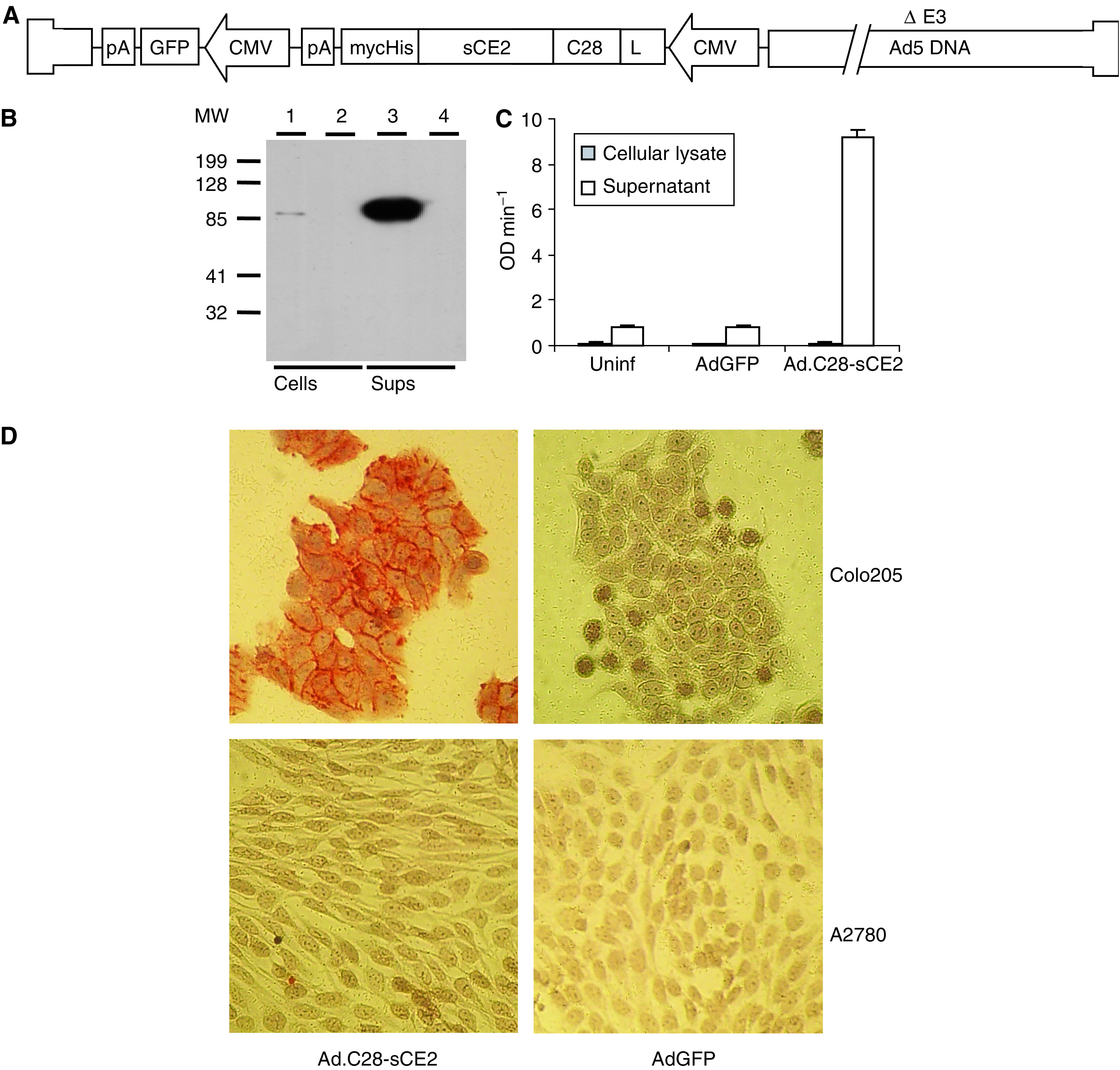
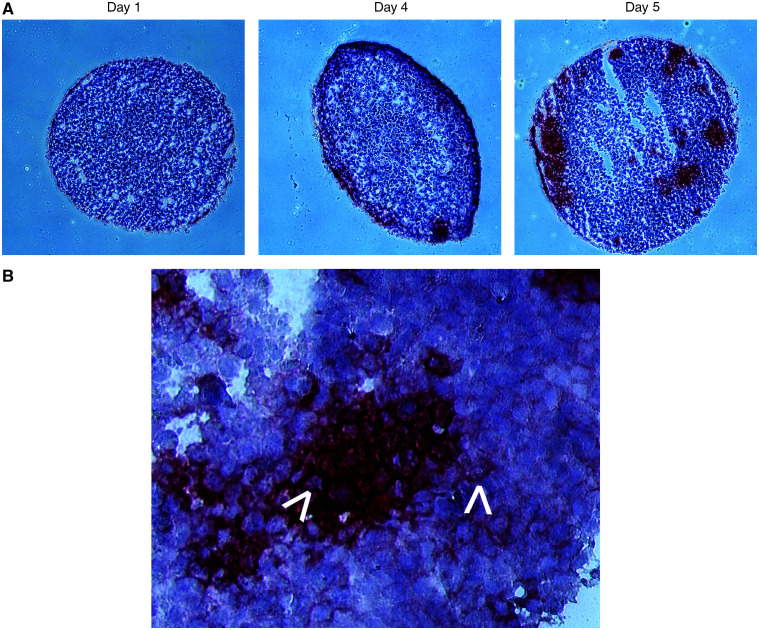
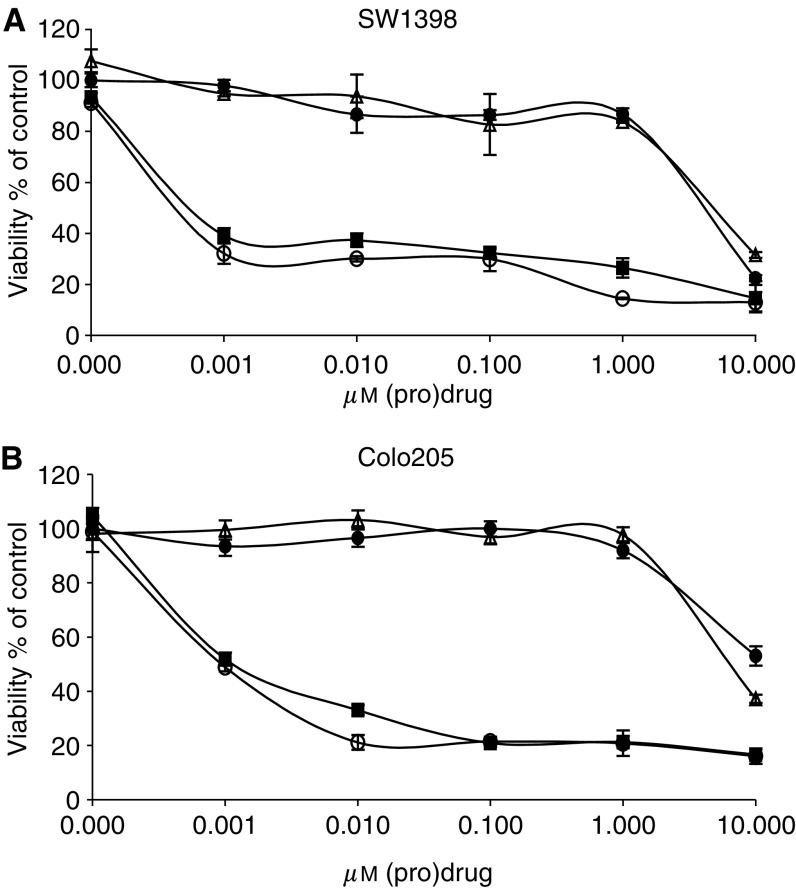
CPT-11 (irinotecan or 7-ethyl-10[4-(1-piperidino)-1-piperidino] carbonyloxycamptothecin) is an anticancer agent in use for the treatment of colon cancer. In order to be fully active, CPT-11 needs to be converted into SN-38 (7-ethyl-10-hydroxycamptothecin) by the enzyme carboxylesterase (CE). In humans, only a minority of CPT-11 is converted to SN-38. To increase the antitumour effect of CPT-11 by gene-directed enzyme prodrug therapy, we constructed a replication-deficient adenoviral vector Ad.C28-sCE2 containing a fusion gene encoding a secreted form of human liver CE2 targeted to the surface antigen epithelial cell adhesion molecule (EpCAM) that is highly expressed on most colon carcinoma cells. By targeting CE2 to EpCAM, the enzyme should accumulate specifically in tumours and leakage into the circulation should be minimised. Ad.C28-sCE2-transduced colon carcinoma cells expressed and secreted active CE that bound specifically to EpCAM-expressing cells. In sections of three-dimensional colon carcinoma spheroids transduced with Ad.C28-sCE2, it was shown that C28-sCE2 was capable of binding untransduced cells. Most importantly, treatment of these spheroids with nontoxic concentrations of CPT-11 resulted in growth inhibition comparable to treatment with SN-38. Therefore, Ad.C28-sCE2 holds promise in gene therapy approaches for the treatment of colon carcinoma.
Overview
The claims and statistics of this paper haven’t been checked yet.
Free: it reads the open-access text and checks the first 5 claims that cite a source we can check. Create a free account to check every claim.
Integrity signals
Registry
Cites
Statistics
Figures
Verification
Claims the paper makes
The claims and statistics of this paper haven’t been checked yet.
Free: it reads the open-access text and checks the first 5 claims that cite a source we can check. Create a free account to check every claim.
Claims other papers make about this one
Each is checked against this paper’s own text: does it say what the citing paper says it does?
The cited source says what the claim attributes to it.
In the citing paper
“Multiple preclinical studies have shown that selectively increasing the activity of CES in CRC by viruses can improve the efficacy of irinotecan [91,92,93].”
From Drug Resistance in Colorectal Cancer: From Mechanism to Clinic (2022) · cites this paper as [92]
Self-check
Percentages, sums and reported differences re-computed from the paper’s own numbers.
The self-check needs the paper’s full text.
Citations
Cites
Cleavage of Structural Proteins during the Assembly of the Head of Bacteriophage T4
LAEMMLI, U. K. (1970) · Nature · doi:10.1038/227680a0 · Cited by 249,961 · cited 1×
“C28-sCE2 were dissolved in sample buffer (Laemmli, 1970) with 2-mercaptoethanol and heated to 951C for 5 min.”
MethodRaza, H., John, A., & Nemmar, A. (2013) · Cellular Physiology and Biochemistry · doi:10.1159/000350087 · Cited by 47,221
A simplified system for generating recombinant adenoviruses
He, T.-C., Zhou, S., da Costa, L. T., Yu, J., Kinzler, K. W., & Vogelstein, B. (1998) · Proceedings of the National Academy of Sciences · doi:10.1073/pnas.95.5.2509 · Cited by 3,206 · cited 1×
“C28-sCE2 was constructed using the AdEasy System (He et al, 1998).”
MethodCharacterization of CPT-11 hydrolysis by human liver carboxylesterase isoforms hCE-1 and hCE-2.
Humerickhouse, R. A., Lohrbach, K., Li, L., BOSRON, W. F., & Dolan, M. E. (2000) · PubMed · Cited by 353
Gupta, E., Mick, R., Ramirez, J., Wang, X., Lestingi, T. M., Vokes, E. E., & Ratain, M. J. (1997) · Journal of Clinical Oncology · doi:10.1200/jco.1997.15.4.1502 · Cited by 182 · cited 1×
“Although SN-38 is detected in the plasma of cancer patients only minutes after administration of CPT-11 (Gupta et al, 1997), 90–95% of the prodrug is not converted to SN-38 (Rivory et al, 1997).”
BackgroundSATOH, T., HOSOKAWA, M., ATSUMI, R., SUZUKI, W., HAKUSUI, H., & NAGAI, E. (1994) · Biological and Pharmaceutical Bulletin · doi:10.1248/bpb.17.662 · Cited by 174 · cited 1×
“In order to be fully active, CPT-11 needs to be activated into the active compound SN-38 (7-ethyl-10-hydroxycamptothecin) by carboxylesterase (CE) enzymes (Tsuji et al, 1991; Satoh et al, 1994).”
BackgroundEvidence for a Role of the Epithelial Glycoprotein 40 (Ep-CAM) in Epithelial Cell-Cell Adhesion
Litvinov, S. V., Bakker, H. A. M., Gourevitch, M. M., Velders, M. P., & Warnaar, S. O. (1994) · Cell Adhesion and Communication · doi:10.3109/15419069409004452 · Cited by 137 · cited 1×
“This fusion protein has potential utility for GDEPT of colon cancer, because EpCAM is highly overexpressed in colon cancer cells including distant metastases (Litvinov et al, 1994).”
BackgroundRivory, L. P., Haaz, M., Canal, P., Lokiec, F. M., Armand, J., & Robert, J. (1997) · PubMed · Cited by 136
CPT-11 Converting Enzyme from Rat Serum: Purification and Some Properties.
Tsuji, T., Kaneda, N., Kunio, K. A. D. O., Yokokura, T., YOSHIMOTO, T., & Tsuru, D. (1991) · Journal of Pharmacobio-Dynamics · doi:10.1248/bpb1978.14.341 · Cited by 136 · cited 1×
“In order to be fully active, CPT-11 needs to be activated into the active compound SN-38 (7-ethyl-10-hydroxycamptothecin) by carboxylesterase (CE) enzymes (Tsuji et al, 1991; Satoh et al, 1994).”
BackgroundRecombinant adenovirus vectors with knobless fibers for targeted gene transfer
van Beusechem, V. W., van Rijswijk, A. L. C. T., van Es, H. H. G., Haisma, H. J., Pinedo, H. M., & Gerritsen, W. R. (2000) · Gene Therapy · doi:10.1038/sj.gt.3301323 · Cited by 83 · cited 1×
“For all experiments, AdGFP (van Beusechem et al, 2000) was taken along as a negative control.”
MethodSelf-citation
Cited by
de Man, F. M., Goey, A. K. L., van Schaik, R. H. N., Mathijssen, R. H. J., & Bins, S. (2018) · Clinical Pharmacokinetics · doi:10.1007/s40262-018-0644-7 · Cited by 421
Went, P., Vasei, M., Bubendorf, L., Terracciano, L., Tornillo, L., Riede, U., Kononen, J., Simon, R., Sauter, G., & Baeuerle, P. A. (2006) · British Journal of Cancer · doi:10.1038/sj.bjc.6602924 · Cited by 387
Drug Resistance in Colorectal Cancer: From Mechanism to Clinic
Wang, Q., Shen, X., Chen, G., & Du, J. (2022) · Cancers · doi:10.3390/cancers14122928 · Cited by 160
Organism-wide, cell-type-specific secretome mapping of exercise training in mice
Wei, W., Riley, N. M., Lyu, X., Shen, X., Guo, J., Raun, S. H., Zhao, M., Moya-Garzón, M. D., Basu, H., Tung, A. S.-H., et al. (2023) · Cell Metabolism · doi:10.1016/j.cmet.2023.04.011 · Cited by 108
Epithelial cell adhesion molecule-targeted drug delivery for cancer therapy
Simon, M., Stefan, N., Plückthun, A., & Zangemeister‐Wittke, U. (2013) · Expert Opinion on Drug Delivery · doi:10.1517/17425247.2013.759938 · Cited by 101
Brunner, A., Prelog, M., Verdorfer, I., Tzankov, A., Mikuz, G., & Ensinger, C. (2007) · Journal of Clinical Pathology · doi:10.1136/jcp.2007.049460 · Cited by 91
An improved human carboxylesterase for enzyme/prodrug therapy with CPT-11
Wierdl, M., Tsurkan, L. G., Hyatt, J. L., Edwards, C. C., Hatfield, M. J., Morton, C. L., Houghton, P. J., Danks, M. K., Redinbo, M. R., & Potter, P. M. (2008) · Cancer Gene Therapy · doi:10.1038/sj.cgt.7701112 · Cited by 49
Modifications of human carboxylesterase for improved prodrug activation
Hatfield, J. M., Wierdl, M., Wadkins, R. M., & Potter, P. M. (2008) · Expert Opinion on Drug Metabolism & Toxicology · doi:10.1517/17425255.4.9.1153 · Cited by 40
“Therefore, we and others have explored the use of human CEs to activate CPT-11 [13,44-47] .”
BackgroundA Membrane-Embedded Macromolecular Catalyst with Substrate Selectivity in Live Cells
Deng, Y., Wu, T., Chen, X., Chen, Y., Fei, Y., Liu, Y., Chen, Z., Xing, H., & Bai, Y. (2022) · Journal of the American Chemical Society · doi:10.1021/jacs.2c11168 · Cited by 35
Transcriptome‑wide piRNA profiling in human gastric cancer
Lin, X., Xia, Y., Hu, D., Mao, Q., Yu, Z., Zhang, H., Li, C., Chen, G., Liu, F., Zhu, W., et al. (2019) · Oncology Reports · doi:10.3892/or.2019.7073 · Cited by 33
Irinotecan-Induced Toxicity: A Pharmacogenetic Study Beyond UGT1A1
de With, M., van Doorn, L., Kloet, E., van Veggel, A., Matić, M., de Neijs, M. J., Hoop, E. O., van Meerten, E., van Schaik, R. H. N., Mathijssen, R. H. J., et al. (2023) · Clinical Pharmacokinetics · doi:10.1007/s40262-023-01279-7 · Cited by 25
Oosterhoff, D., Pinedo, H. M., Witlox, A. M. A., Carette, J. E., Gerritsen, W. R., & van Beusechem, V. W. (2005) · Gene Therapy · doi:10.1038/sj.gt.3302492 · Cited by 24
Self-citationUchino, J., Takayama, K., Harada, A., Sone, T., Harada, T., Curiel, D. T., Kuroki, M., & Nakanishi, Y. (2008) · Cancer Gene Therapy · doi:10.1038/sj.cgt.7701100 · Cited by 21
Effect of Cellular Location of Human Carboxylesterase 2 on CPT-11 Hydrolysis and Anticancer Activity
Hsieh, Y.-T., Lin, H.-P., Chen, B., Huang, P.-T., & Roffler, S. R. (2015) · PLoS ONE · doi:10.1371/journal.pone.0141088 · Cited by 16
Wang, H., Xi, Q., Liang, P., Zheng, L., Hong, Y., & Zuo, Y. (2021) · Amino Acids · doi:10.1007/s00726-021-02941-9 · Cited by 13
Matzow, T., Cowen, R. L., Williams, K. J., Telfer, B. A., Flint, P., Southgate, T. D., & Saunders, M. P. (2007) · The Journal of Gene Medicine · doi:10.1002/jgm.1016 · Cited by 16
Xie, F. W., Peng, Y., Chen, X., Chen, X., Li, J., Wang, W. W., Yu, Z., & Ouyang, X. (2013) · Neoplasma · doi:10.4149/neo_2014_014 · Cited by 13
“Research shows that CES reformation plays a significant role in improving the effect of CPT-11, and it may become the goal of gene therapy for colorectal cancer [16].”
BackgroundVirus-based therapies for colon cancer
Morse, M. A. (2005) · Expert Opinion on Biological Therapy · doi:10.1517/14712598.5.12.1627 · Cited by 10
“Oosterhoff [21] described a form of suicide gene therapy based on a replication-deficient adenoviral vector encoding a fusion molecule of the secreted form of human liver carboxylesterase, which could be targeted to tumours expressing the epithelial cell adhesion molecule.”
BackgroundPrados (2010) · International Journal of Oncology · doi:10.3892/ijo_00000803 · Cited by 9
Xie, F., Peng, Y., Chen, X., Chen, X., Li, J., Yu, Z., Wang, W., & Ouyang, X.-N. (2013) · Biomedicine & Pharmacotherapy · doi:10.1016/j.biopha.2013.06.013 · Cited by 7
He, Y., Wu, L., Qi, X., Wang, X., He, B., Zhang, W., Zhao, W., Deng, M., Xiong, X., Wang, Y., et al. (2024) · Integrative Cancer Therapies · doi:10.1177/15347354241242110 · Cited by 6
EpCAM-targeted induction of apoptosis
Bremer, E., & Helfrich, W. (2008) · Frontiers in bioscience · doi:10.2741/3062 · Cited by 3
Targeting Intercellular Communication in Cancer Gene Therapy
Amessou, M., & Kandouz, M. (2013) · InTech eBooks · doi:10.5772/54860 · Cited by 1
“C28-sCE2 containing a fusion gene en‐ coding a secreted form of human liver CE2 targeted to EpCAM was efficient in colon cancer spheroids [132].”
BackgroundGene Therapy and Oncolytic Viruses
Tamgüney, T., Korn, W. M., & McCormick, F. P. (2015) · Elsevier eBooks · doi:10.1016/b978-1-4557-4066-6.00054-8 · Cited by 1
Structural, Kinetic and Mutational Analysis of Two Bacterial Carboxylesterases
Liu, P. (2007) · Digital Archive @ GSU · doi:10.57709/1063861 · Cited by 1
Metadata
- Authors
- Oosterhoff, D., Overmeer, R. M., de Graaf, M., van der Meulen, I. H., Giaccone, G., van Beusechem, V. W., Haisma, H. J., Pinedo, H. M., & Gerritsen, W. R.
- Affiliations
- Amsterdam UMC Location Vrije Universiteit Amsterdam (NL)
- University of Groningen (NL)
- Corresponding author
- Oosterhoff, D
- Venue
- British Journal of Cancer
- Published
- 2005-03
- Volume
- 92
- Issue
- 5
- Pages
- 882-887
- ISSN
- 0007-0920 (ISSN-L)
- 1532-1827
- PMC
- PMC2361903
- OpenAlex
- W2140098860
- Cited by
- 26
- References
- 23
- Citations by year
- 2024: 1 · 2023: 2 · 2022: 4 · 2021: 1 · 2019: 1 · 2018: 1 · 2015: 2 · 2013: 4
- FWCI
- 1.62
- Type
- journal article
- Language
- en
- Open access
- hybrid
- doi.org
- Licence
- cc-by-nc-sa
- www.springer.com/tdm (unspecified)
- Locations
- British Journal of Cancer (publishedVersion, cc-by-nc-sa)
- PubMed Central (publishedVersion, cc-by)
- PubMed (publishedVersion)
- University of Groningen research database (University of Groningen / Centre for Information Technology) (publishedVersion, cc-by-nc-sa)
- Digital Academic REpository of VU University Amsterdam (Vrije Universiteit Amsterdam) (submittedVersion)
- Pure Amsterdam UMC (submittedVersion, other-oa)
- University of Groningen research database (University of Groningen / Centre for Information Technology) (submittedVersion, cc-by-nc-sa)
- Data Archiving and Networked Services (DANS) (submittedVersion, other-oa)
- Funders
- Koninklijke Nederlandse Akademie van Wetenschappen
- Topics
- Life Sciences › Biochemistry, Genetics and Molecular Biology › Genetics › Virus-based gene therapy research
- Life Sciences › Biochemistry, Genetics and Molecular Biology › Molecular Biology › Cancer therapeutics and mechanisms
- Life Sciences › Biochemistry, Genetics and Molecular Biology › Biotechnology › Bacterial Cancer Therapy
- Keywords
- CE2, EpCAM, adenoviral vector, gene-directed enzyme prodrug therapy, irinotecan, SN-38, colon cancer, secreted enzymes, targeted gene delivery, replication-defective adenovirus, gene therapy
- MeSH terms
- Irinotecan, Adenoviridae, Antineoplastic Agents, Phytogenic, Camptothecin, Cell Survival, Colonic Neoplasms, Female, Genetic Vectors, Humans, Ovarian Neoplasms, Gene Expression Regulation, Enzymologic, Gene Expression Regulation, Neoplastic, Carboxylesterase, Cell Line, Tumor
About these checks
Registry, retraction, Cites and statistics results are computed, not judged, with one exception: a printed reference that no index lists is read once by a model before it counts as a citation error. Claims are extracted by a model and kept only when their quote appears verbatim in the text; each cited source is then checked, with a model’s help, for whether it says what the claim relies on. Those verdicts can be wrong — read the claim’s quote and the cited source before relying on one.
Statistics and arithmetic are recomputed, not judged.
Confidence bands are shown only for fields calibrated on our annotated test set. None is calibrated yet, so no band is shown.
What counts as a claim ›How we measure confidence ›How we check this ›
Are you an author, or do you see a problem with this page? Request a review
Data sources
Bibliographic data: Semantic Scholar, OpenAlex, Crossref.
Contains information from the Semantic Scholar Academic Graph Datasets, made available under the ODC Attribution License (ODC-BY 1.0).
Semantic Scholar’s data is described in: Kinney, R., et al. (2023). The Semantic Scholar Open Data Platform. arXiv:2301.10140.
