

The DOI matches its Crossref record; 57 of the 57 references it cites were found in a registry or an index.
HnRNP L and hnRNP LL antagonistically modulate PTB-mediated splicing suppression of CHRNA1 pre-mRNA
Abstract
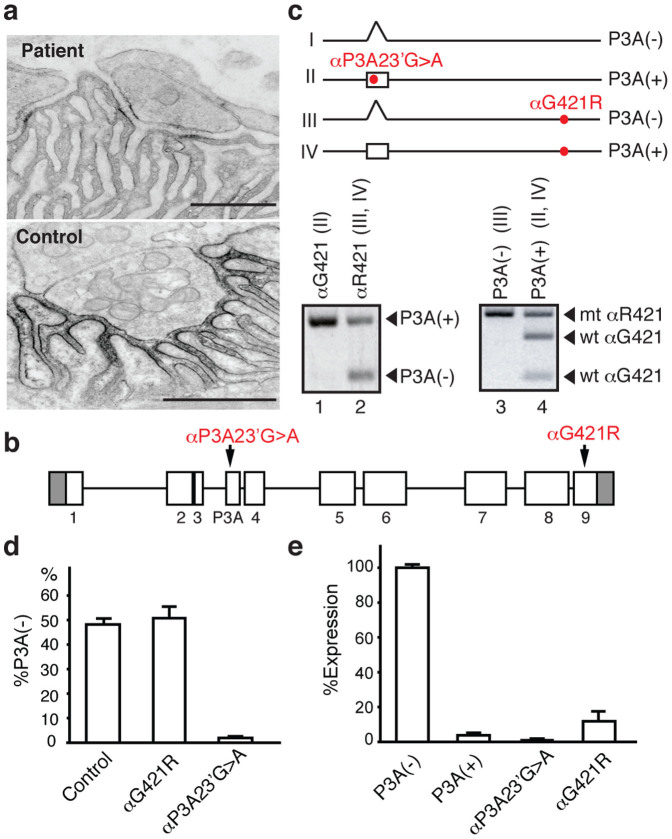
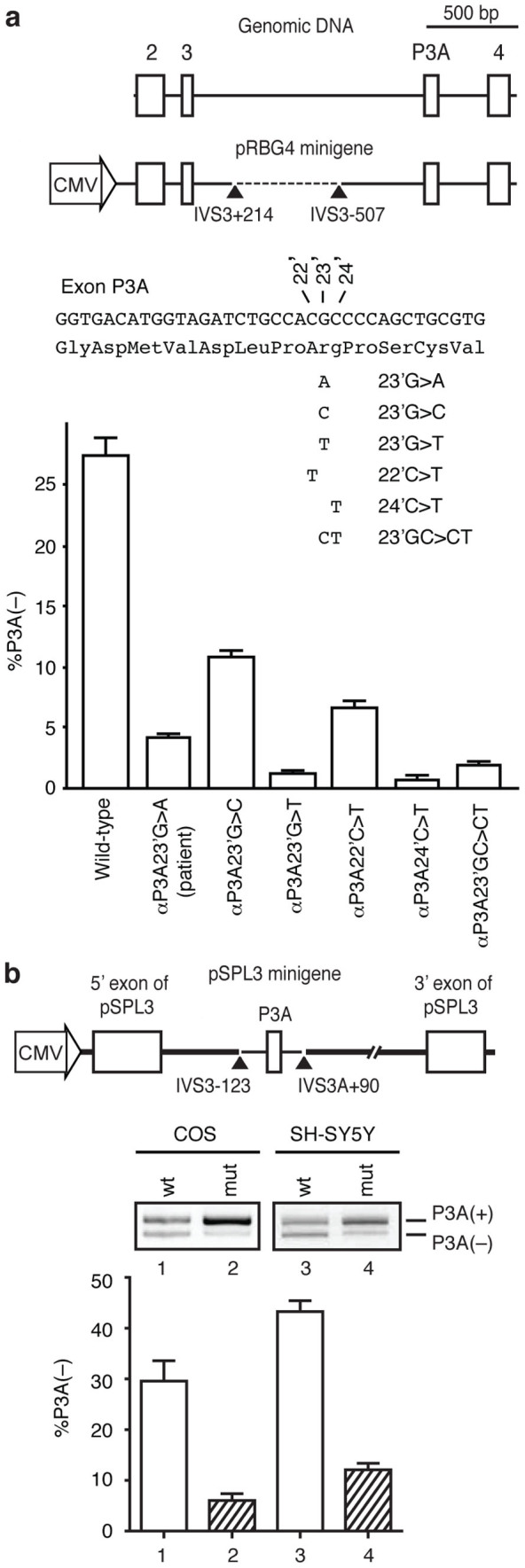
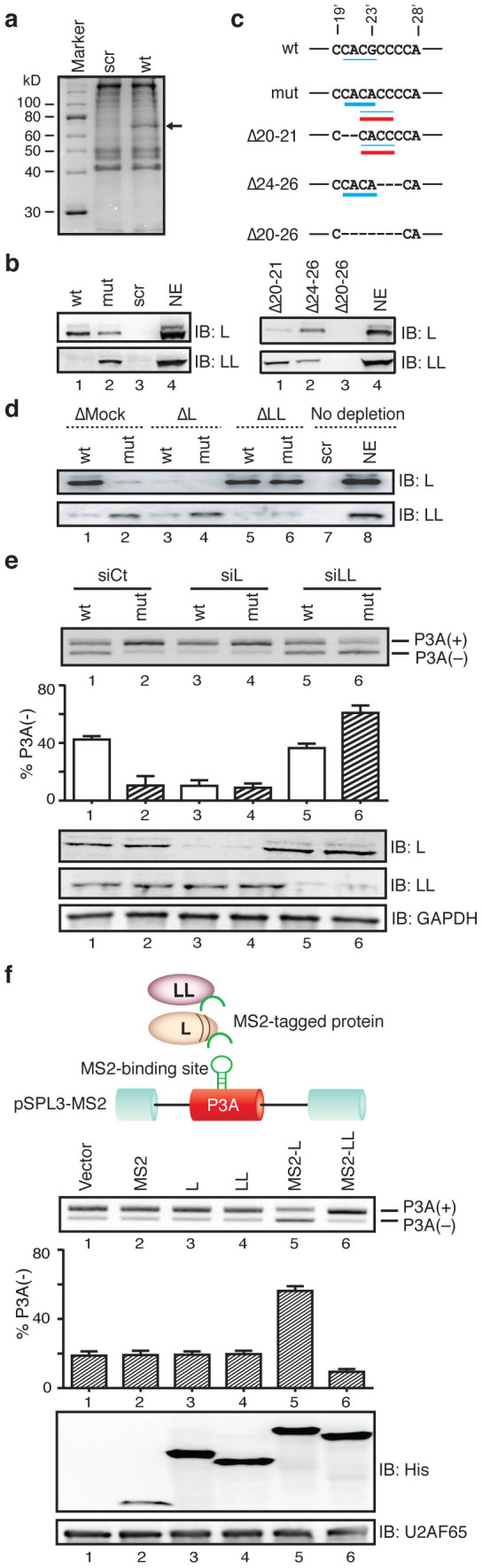
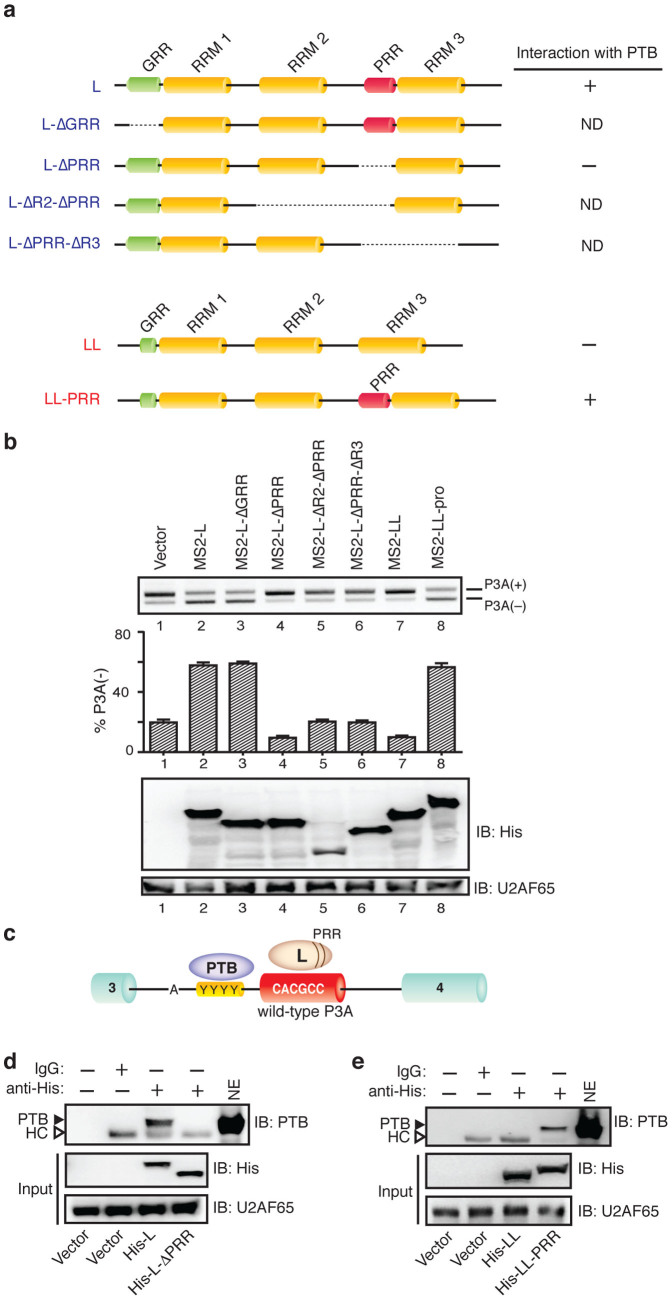
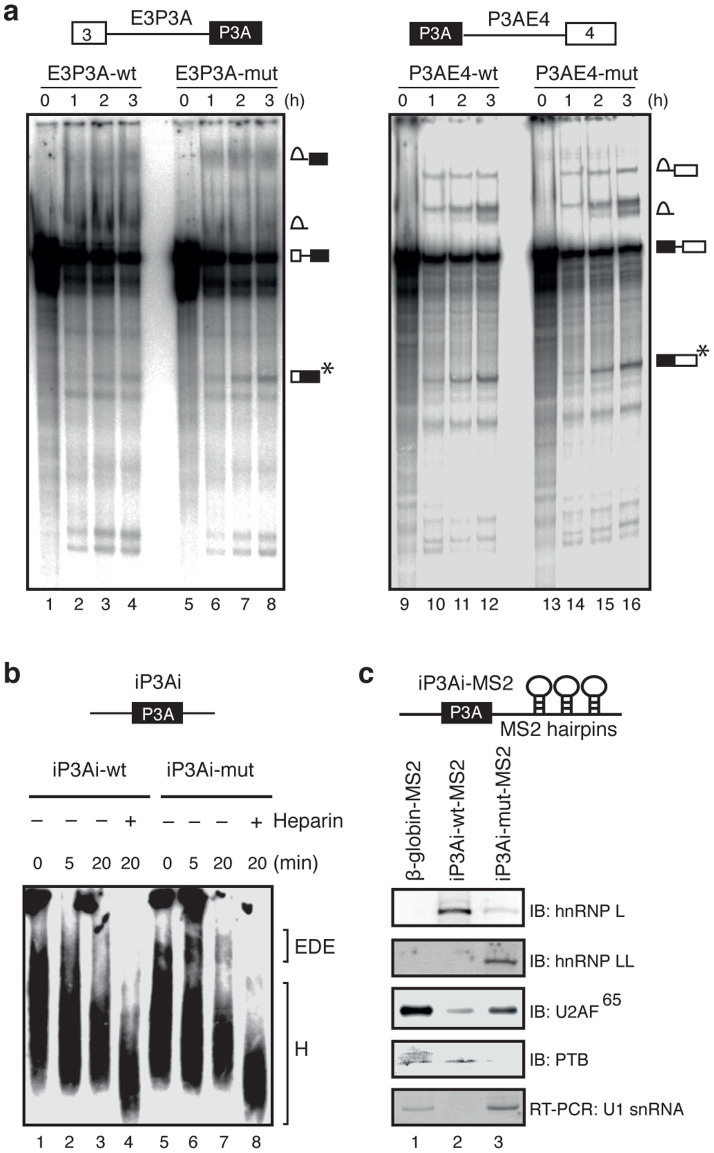
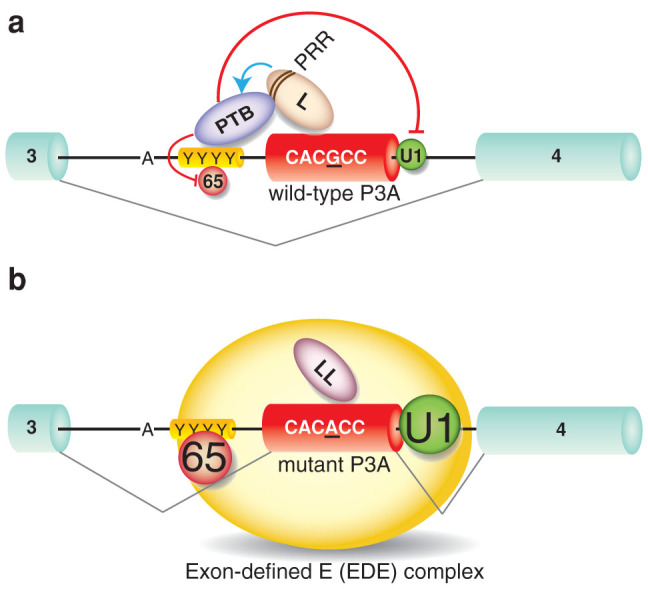
CHRNA1 gene, encoding the muscle nicotinic acetylcholine receptor alpha subunit, harbors an inframe exon P3A. Inclusion of exon P3A disables assembly of the acetylcholine receptor subunits. A single nucleotide mutation in exon P3A identified in congenital myasthenic syndrome causes exclusive inclusion of exon P3A. The mutation gains a de novo binding affinity for a splicing enhancing RNA-binding protein, hnRNP LL and displaces binding of a splicing suppressing RNA-binding protein, hnRNP L. The hnRNP L binds to another splicing repressor PTB through the proline-rich region and promotes PTB binding to the polypyrimidine tract upstream of exon P3A, whereas hnRNP LL lacking the proline-rich region cannot bind to PTB. Interaction of hnRNP L with PTB inhibits association of U2AF 65 and U1 snRNP with the upstream and downstream of P3A, respectively, which causes a defect in exon P3A definition. HnRNP L and hnRNP LL thus antagonistically modulate PTB-mediated splicing suppression of exon P3A.
Overview
The claims and statistics of this paper haven’t been checked yet.
Run the check — free, no account needed. It reads the open-access text and checks the sources it cites.
Integrity signals
Registry
Cites
Statistics
Figures
Verification
Claims the paper makes
The claims and statistics of this paper haven’t been checked yet.
Run the check — free, no account needed. It reads the open-access text and checks the sources it cites.
Claims other papers make about this one
Each is checked against this paper’s own text: does it say what the citing paper says it does?
The source backs part of the claim, not all of it — or backs it for a different population, condition or comparison.
In the citing paper
“The CACACA hexamer can be efficiently bound by heterogeneous nuclear ribonucleoproteins (hnRNPs), such as hnRNP L and hnRNP LL [76–78] but this binding may require more stringent spacing between the CA repeats.”
From Differential RNA packaging into small extracellular vesicles by neurons and astrocytes (2021) · cites this paper as [78]
Experimental — accuracy not yet measured
Self-check
Percentages, sums and reported differences re-computed from the paper’s own numbers.
The self-check needs the paper’s full text.
Citations
Cites
Pan, Q., Shai, O., Lee, L. J., Frey, B. J., & Blencowe, B. J. (2008) · Nature Genetics · doi:10.1038/ng.259 · Cited by 3,951
Cooper, T. A., Wan, L., & Dreyfuss, G. (2009) · Cell · doi:10.1016/j.cell.2009.02.011 · Cited by 1,159
Cartegni, L., & Krainer, A. R. (2002) · Nature Genetics · doi:10.1038/ng854 · Cited by 730
A negative element in SMN2 exon 7 inhibits splicing in spinal muscular atrophy
Kashima, T., & Manley, J. L. (2003) · Nature Genetics · doi:10.1038/ng1207 · Cited by 546
Singh, R., Valcárcel, J., & Green, M. R. (1995) · Science · doi:10.1126/science.7761834 · Cited by 537
Alu -Containing Exons are Alternatively Spliced
Sorek, R., Ast, G., & Graur, D. (2002) · Genome Research · doi:10.1101/gr.229302 · Cited by 505
Clower, C. V., Chatterjee, D., Wang, Z., Cantley, L. C., Vander Heiden, M. G., & Krainer, A. R. (2010) · Proceedings of the National Academy of Sciences · doi:10.1073/pnas.0914845107 · Cited by 424
Polypyrimidine Tract Binding Protein Antagonizes Exon Definition
Wagner, E. J., & Garcia-Blanco, M. A. (2001) · Molecular and Cellular Biology · doi:10.1128/mcb.21.10.3281-3288.2001 · Cited by 375
Determinants of Exon 7 Splicing in the Spinal Muscular Atrophy Genes, SMN1 and SMN2
Cartegni, L., Hastings, M. L., Calarco, J. A., de Stanchina, E., & Krainer, A. R. (2006) · The American Journal of Human Genetics · doi:10.1086/498853 · Cited by 306
Conversion of diploidy to haploidy
Yan, H., Papadopoulos, N., Marra, G., Perrera, C., Jiricny, J., Boland, C. R., Lynch, H. T., Chadwick, R. B., de la Chapelle, A., Berg, K., et al. (2000) · Nature · doi:10.1038/35001659 · Cited by 259
Splicing Regulation in Neurologic Disease
Licatalosi, D. D., & Darnell, R. B. (2006) · Neuron · doi:10.1016/j.neuron.2006.09.017 · Cited by 255
Engel, A. G., Lindstrom, J. M., Lambert, E. H., et al. (1977) · Neurology · doi:10.1212/wnl.27.4.307 · Cited by 250
Self-citationIntronic CA‐repeat and CA‐rich elements: a new class of regulators of mammalian alternative splicing
Hui, J., Hung, L.-H., Heiner, M., Schreiner, S., Neumüller, N., Reither, G., Haas, S. A., & Bindereif, A. (2005) · The EMBO Journal · doi:10.1038/sj.emboj.7600677 · Cited by 232
Ohno, K., Wang, H.-L., Milone, M., BREN, N. D., Brengman, J. M., Nakano, S., Quiram, P. A., Pruitt, J. N., Sine, S. M., & Engel, A. G. (1996) · Neuron · doi:10.1016/s0896-6273(00)80289-5 · Cited by 225
Self-citationhnRNP A1 functions with specificity in repression of SMN2 exon 7 splicing
Kashima, T., Rao, N., David, C., & Manley, J. L. (2007) · Human Molecular Genetics · doi:10.1093/hmg/ddm276 · Cited by 215
Regulation of CD45 Alternative Splicing by Heterogeneous Ribonucleoprotein, hnRNPLL
Oberdoerffer, S., Moita, L. F., Neems, D. S., Freitas, R. P., Hacohen, N., & Rao, A. (2008) · Science · doi:10.1126/science.1157610 · Cited by 205
Functional Association of U2 snRNP with the ATP-Independent Spliceosomal Complex E
Das, R., Zhou, Z., & Reed, R. (2000) · Molecular Cell · doi:10.1016/s1097-2765(00)80318-4 · Cited by 204
Sharma, S., Kohlstaedt, L. A., Damianov, A., Rio, D. C., & Black, D. L. (2008) · Nature Structural & Molecular Biology · doi:10.1038/nsmb.1375 · Cited by 177
Sleuthing molecular targets for neurological diseases at the neuromuscular junction
Engel, A. G., Ohno, K., & Sine, S. M. (2003) · Nature reviews. Neuroscience · doi:10.1038/nrn1101 · Cited by 171
Self-citationHahm, B., Kim, Y. K., Jong Heon, K. I. M., Kim, T. Y., & Jang, S. K. (1998) · Journal of Virology · doi:10.1128/jvi.72.11.8782-8788.1998 · Cited by 167
Novel modes of splicing repression by PTB
Spellman, R., & Smith, C. W. J. (2006) · Trends in Biochemical Sciences · doi:10.1016/j.tibs.2005.12.003 · Cited by 163
Diverse roles of hnRNP L in mammalian mRNA processing: A combined microarray and RNAi analysis
Hung, L.-H., Heiner, M., Hui, J., Schreiner, S., Beneš, V., & Bindereif, A. (2007) · RNA · doi:10.1261/rna.725208 · Cited by 159
End‐plate acetylcholine receptor deficiency due to nonsense mutations in the ε subunit
Engel, A. G., Ohno, K., Bouzat, C., Sine, S. M., & Griggs, R. C. (1996) · Annals of Neurology · doi:10.1002/ana.410400521 · Cited by 151
Self-citationHnRNP L represses exon splicing via a regulated exonic splicing silencer
Rothrock, C. R., House, A. E., & Lynch, K. W. (2005) · The EMBO Journal · doi:10.1038/sj.emboj.7600745 · Cited by 148
Auto- and Cross-Regulation of the hnRNP L Proteins by Alternative Splicing
Rossbach, O., Hung, L.-H., Schreiner, S., Grishina, I., Heiner, M., Hui, J., & Bindereif, A. (2009) · Molecular and Cellular Biology · doi:10.1128/mcb.01689-08 · Cited by 141
Current status of the congenital myasthenic syndromes
Engel, A. G. (2011) · Neuromuscular Disorders · doi:10.1016/j.nmd.2011.10.009 · Cited by 138
Self-citationGoehe, R. W., Shultz, J. C., Murudkar, C. S., Usanovic, S., Lamour, N. F., Massey, D. H., Zhang, L., Camidge, D. R., Shay, J. W., Minna, J. D., et al. (2010) · Journal of Clinical Investigation · doi:10.1172/jci43552 · Cited by 119
Congential Endplate acetylocholinesterase deficiency
Hutchinson, D. O., Walls, T. J., Nakano, S., Camp, S., Taylor, P., Harper, C. M., Groover, R. V., Peterson, H. A., Jamieson, D. G., & Engel, A. G. (1993) · Brain · doi:10.1093/brain/116.3.633 · Cited by 118
Self-citationThe human muscle nicotinic acetylcholine receptor alpha‐subunit exist as two isoforms: a novel exon.
Beeson, D., Morris, A., Vincent, A. C., & Newsom–Davis, J. (1990) · The EMBO Journal · doi:10.1002/j.1460-2075.1990.tb07378.x · Cited by 116
Koike, S., Schaeffer, L., & Changeux, J. (1995) · Proceedings of the National Academy of Sciences · doi:10.1073/pnas.92.23.10624 · Cited by 105
An exonic splicing silencer represses spliceosome assembly after ATP-dependent exon recognition
House, A. E., & Lynch, K. W. (2006) · Nature Structural & Molecular Biology · doi:10.1038/nsmb1149 · Cited by 102
A peptide motif in Raver1 mediates splicing repression by interaction with the PTB RRM2 domain
Rideau, A., Gooding, C., Simpson, P. J., Monie, T. P., Lorenz, M., Hüttelmaier, S., Singer, R. H., Matthews, S., Curry, S., & Smith, C. W. J. (2006) · Nature Structural & Molecular Biology · doi:10.1038/nsmb1137 · Cited by 100
Context-Dependent Regulatory Mechanism of the Splicing Factor hnRNP L
Motta-Mena, L. B., Heyd, F., & Lynch, K. W. (2010) · Molecular Cell · doi:10.1016/j.molcel.2009.12.027 · Cited by 99
U1 snRNA Directly Interacts with Polypyrimidine Tract-Binding Protein during Splicing Repression
Sharma, S., Maris, C., Allain, F. H. ‐., & Black, D. L. (2011) · Molecular Cell · doi:10.1016/j.molcel.2011.02.012 · Cited by 98
Duclert, A., Duclert‐Savatier, N., Schaeffer, L., & Changeux, J. (1996) · Journal of Biological Chemistry · doi:10.1074/jbc.271.29.17433 · Cited by 98
Functional persistence of exonized mammalian-wide interspersed repeat elements (MIRs)Preprint
Möller-Krull, M., Petrusma, M., Makałowski, W., Brosius, J., & Schmitz, J. (2007) · Genome Research · doi:10.1101/gr.6320607 · Cited by 97
Intersubunit contacts governing assembly of the mammalian nicotinic acetylcholine receptor
Kreienkamp, H., Maeda, R. K., Sinet, S. M., & Taylor, P. (1995) · Neuron · doi:10.1016/0896-6273(95)90320-8 · Cited by 96
Topp, J. D., Jackson, J., Melton, A. A., & Lynch, K. W. (2008) · RNA · doi:10.1261/rna.1212008 · Cited by 90
Novel functional role of CA repeats and hnRNP L in RNA stability
Hui, J., Reither, G., & Bindereif, A. (2003) · RNA · doi:10.1261/rna.5660803 · Cited by 79
Polypyrimidine tract‐binding protein interacts with HnRNP L
Hahm, B., Cho, O. H., Kim, J.-E., Kim, Y. K., Jong Heon, K. I. M., Oh, Y. L., & Jang, S. K. (1998) · FEBS Letters · doi:10.1016/s0014-5793(98)00269-5 · Cited by 76
Congenital myasthenic syndromes: I. Deficiency and short open‐time of the acetylcholine receptor
Engel, A. G., Nagel, A., Walls, T. J., et al. (1993) · Muscle & Nerve · doi:10.1002/mus.880161204 · Cited by 73
Self-citationChiou, N.-T., Shankarling, G. S., & Lynch, K. W. (2013) · Molecular Cell · doi:10.1016/j.molcel.2012.12.025 · Cited by 73
Uchitel, O. D., Engel, A. G., Walls, T. J., et al. (1993) · Muscle & Nerve · doi:10.1002/mus.880161205 · Cited by 73
Self-citationTong, A., Nguyen, J., & Lynch, K. W. (2005) · Journal of Biological Chemistry · doi:10.1074/jbc.m508123200 · Cited by 66
Guyon, T., Levasseur, P., Truffault, F., Cottin, C., Gaud, C., & Berrih‐Aknin, S. (1994) · Journal of Clinical Investigation · doi:10.1172/jci117302 · Cited by 65
Masuda, A., Shen, X., Ito, M., Matsuura, T., Engel, A. G., & Ohno, K. (2008) · Human Molecular Genetics · doi:10.1093/hmg/ddn305 · Cited by 61
Self-citationGuang, S., Felthauser, A. M., & Mertz, J. E. (2005) · Molecular and Cellular Biology · doi:10.1128/mcb.25.15.6303-6313.2005 · Cited by 60
HnRNP L and L-like cooperate in multiple-exon regulation of CD45 alternative splicing
Preußner, M., Schreiner, S., Hung, L.-H., Porstner, M., Jäck, H., Beneš, V., Rätsch, G., & Bindereif, A. (2012) · Nucleic Acids Research · doi:10.1093/nar/gks221 · Cited by 59
Missense Mutations in hMLH1 and hMSH2 Are Associated with Exonic Splicing Enhancers
Gorlov, I. P., Gorlova, O. Y., Frazier, M. L., & Amos, C. I. (2003) · The American Journal of Human Genetics · doi:10.1086/378819 · Cited by 53
Functional and non‐functional isoforms of the human muscle acetylcholine receptor.
Newland, C., Beeson, D., Vincent, A. C., & Newsom–Davis, J. (1995) · The Journal of Physiology · doi:10.1113/jphysiol.1995.sp021090 · Cited by 45
Ohe, K., & Mayeda, A. (2010) · Molecular and Cellular Biology · doi:10.1128/mcb.00114-10 · Cited by 34
Self-citationBian, Y., Masuda, A., Matsuura, T., Ito, M., Okushin, K., Engel, A. G., & Ohno, K. (2009) · Human Molecular Genetics · doi:10.1093/hmg/ddp023 · Cited by 33
Self-citationWilisch, A., Gutsche, S., Hoffacker, V., Schultz, A., Tzartos, S., Nix, W., Schalke, B., Schneider, C., Mullerhermelink, H., & Marx, A. (1999) · Neurology · doi:10.1212/wnl.52.7.1460 · Cited by 29
Human nicotinic acetylcholine receptor α-subunit isoforms: origins and expression
MacLennan, C. A., Beeson, D., Vincent, A. C., & Newsom–Davis, J. (1993) · Nucleic Acids Research · doi:10.1093/nar/21.23.5463 · Cited by 24
Yan, H., Papadopoulos, N. G., Marra, G., Perrera, C., Jiricny, J., Boland, C. R., Lynch, H. T., Chadwick, R. B., de la Chapelle, A., Berg, K., et al. (2000) · Cited by 21
Shankarling, G. S., & Lynch, K. W. (2013) · Biochemical Journal · doi:10.1042/bj20130432 · Cited by 17
Andreetta, F., Baggi, F., Antozzi, C. G., TORCHIANA, E., Bernasconi, P., Simoncini, O., Cornelio, F., & Mantegazza, R. (1997) · PubMed · Cited by 16
Research works printed but not linked: 3
- Newland, C. F., Beeson, D., Vincent, A. & Newsom-Davis, J. Functional and non-functional isoforms of the human muscle acetylcholine receptor. J Physiol 489, 767–778 (1995). · DOI
- Preussner, M. et al. HnRNP L and L-like cooperate in multiple-exon regulation of CD45 alternative splicing. Nucleic Acids Res 40, 5666–5678 (2012). · DOI
- Krull, M., Petrusma, M., Makalowski, W., Brosius, J. & Schmitz, J. Functional persistence of exonized mammalian-wide interspersed repeat elements (MIRs). Genome Res 17, 1139–1145 (2007). · DOI
Cited by
Differential RNA packaging into small extracellular vesicles by neurons and astrocytes
Luo, X., Jean-Toussaint, R., Sacan, A., & Ajit, S. K. (2021) · Cell Communication and Signaling · doi:10.1186/s12964-021-00757-4 · Cited by 32
Metadata
- Authors
- Rahman, M. A., Masuda, A., Ohe, K., Ito, M., Hutchinson, D. O., Mayeda, A., Engel, A. G., & Ohno, K.
- Venue
- Scientific Reports
- Published
- 2013-10-14
- Volume
- 3
- Issue
- 1
- ISSN
- 2045-2322
- PMC
- PMC3796306
- Cited by
- 44
- References
- 57
- Language
- en
- Licence
- creativecommons.org/licenses/by/3.0/ (tdm)
- creativecommons.org/licenses/by/3.0/ (vor)
About these checks
Registry, retraction, Cites and statistics results are computed, not judged, with one exception: a printed reference that no index lists is read once by a model before it counts as a citation error. Claims are extracted by a model and kept only when their quote appears verbatim in the text; each cited source is then checked, with a model’s help, for whether it says what the claim relies on. Those verdicts can be wrong — read the claim’s quote and the cited source before relying on one.
Statistics and arithmetic are recomputed, not judged.
Confidence bands are shown only for fields calibrated on our annotated test set. None is calibrated yet, so no band is shown.
What counts as a claim ›How we measure confidence ›How we check this ›
Are you an author, or do you see a problem with this page? Request a review
Data sources
Bibliographic data: Semantic Scholar, OpenAlex, Crossref.
Contains information from the Semantic Scholar Academic Graph Datasets, made available under the ODC Attribution License (ODC-BY 1.0).
Semantic Scholar’s data is described in: Kinney, R., et al. (2023). The Semantic Scholar Open Data Platform. arXiv:2301.10140.
