

The DOI matches its Crossref record.
Tillage practices and straw-returning methods affect topsoil bacterial community and organic C under a rice-wheat cropping system in central China
Open accessAbstract
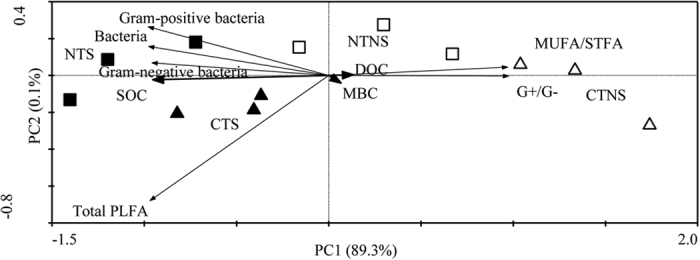
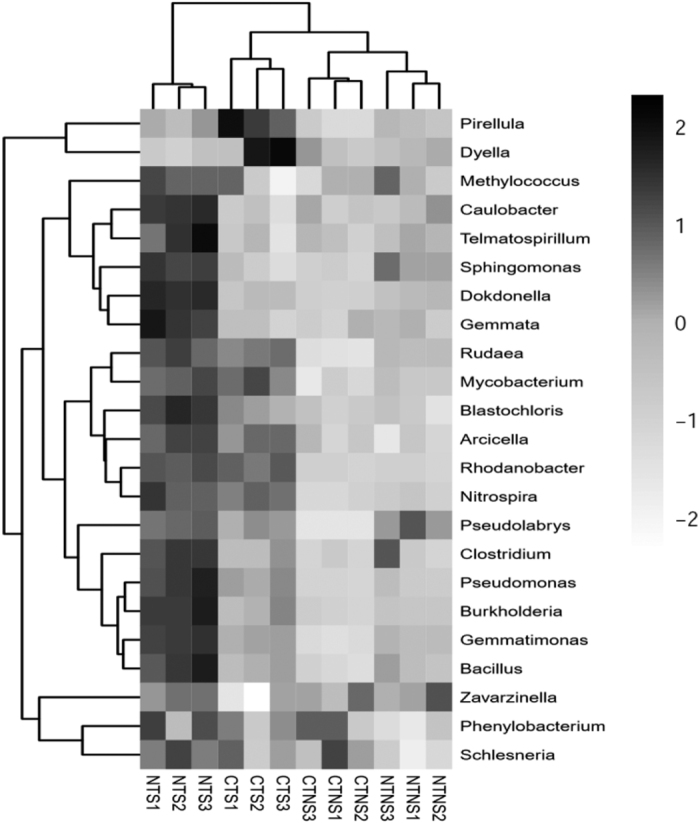
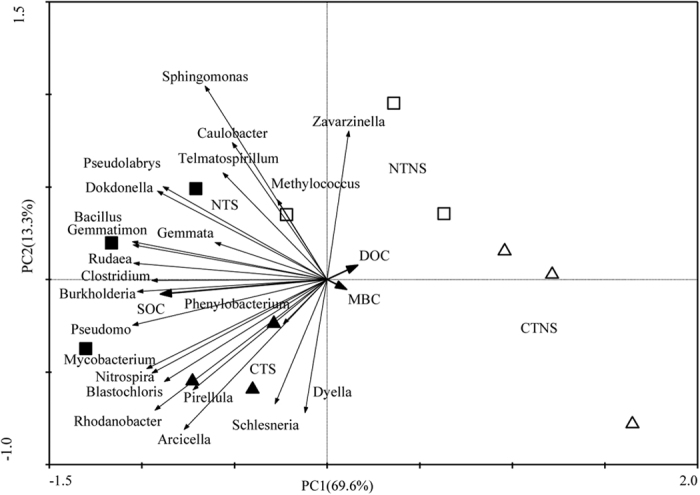
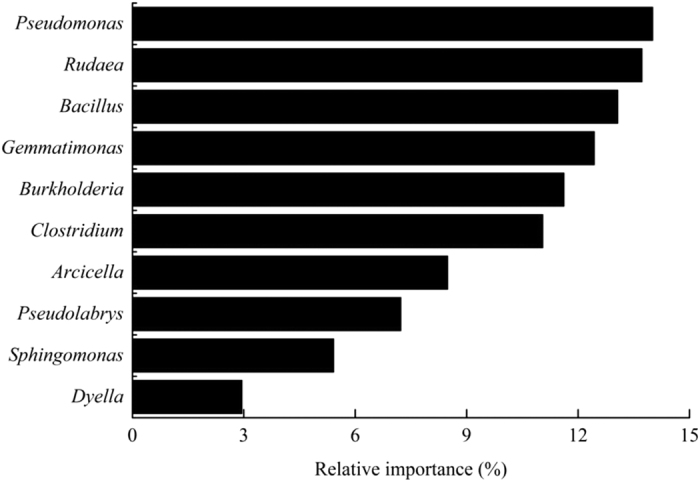
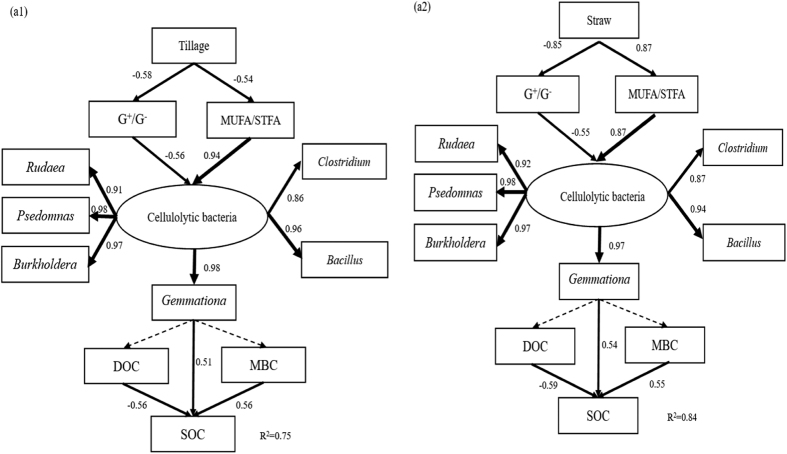
The objective of this study was to investigate how the relationships between bacterial communities and organic C (SOC) in topsoil (0–5 cm) are affected by tillage practices [conventional intensive tillage (CT) or no-tillage (NT)] and straw-returning methods [crop straw returning (S) or removal (NS)] under a rice-wheat rotation in central China. Soil bacterial communities were determined by high-throughput sequencing technology. After two cycles of annual rice-wheat rotation, compared with CT treatments, NT treatments generally had significantly more bacterial genera and monounsaturated fatty acids/saturated fatty acids (MUFA/STFA), but a decreased gram-positive bacteria/gram-negative bacteria ratio (G + /G − ). S treatments had significantly more bacterial genera and MUFA/STFA, but had decreased G + /G − compared with NS treatments. Multivariate analysis revealed that Gemmatimonas , Rudaea , Spingomonas , Pseudomonas , Dyella , Burkholderia , Clostridium , Pseudolabrys , Arcicella and Bacillus were correlated with SOC, and cellulolytic bacteria ( Burkholderia, Pseudomonas, Clostridium, Rudaea and Bacillus ) and Gemmationas explained 55.3% and 12.4% of the variance in SOC, respectively. Structural equation modeling further indicated that tillage and residue managements affected SOC directly and indirectly through these cellulolytic bacteria and Gemmationas . Our results suggest that Burkholderia, Pseudomonas, Clostridium, Rudaea , Bacillus and Gemmationas help to regulate SOC sequestration in topsoil under tillage and residue systems.
Overview
The claims and statistics of this paper haven’t been checked yet.
Run the check — free, no account needed. It reads the open-access text and checks the sources it cites.
Integrity signals
Registry
Cites
Statistics
Figures
Verification
Claims the paper makes
The claims and statistics of this paper haven’t been checked yet.
Run the check — free, no account needed. It reads the open-access text and checks the sources it cites.
Claims other papers make about this one
Each is checked against this paper’s own text: does it say what the citing paper says it does?
The source backs part of the claim, not all of it — or backs it for a different population, condition or comparison.
In the citing paper
“Returning straw to a rice-wheat cropping system in central China significantly increased bacterial abundance, activity and diversity (Guo et al., 2016).”
From Comparing straw, compost, and biochar regarding their suitability as agricultural soil amendments to affect soil structure, nutrient leaching, microbial communities, and the fate of pesticides (2021) · cites this paper as Guo et al., 2016
Experimental — accuracy not yet measured
Self-check
Percentages, sums and reported differences re-computed from the paper’s own numbers.
The self-check needs the paper’s full text.
Citations
Cites
Still being checked.
Research works printed but not linked: 56
- Mathew, R. P., Feng, Y., Githinji, L., Ankumah, R. & Balkcom, K. S. Impact of No-tillage and conventional tillage on soil microbial communities. Appl. Environ Soil Sci. 10.1155/2012/548620 (2012). · DOI
- Guo, L. J., Lin, S., Liu, T. Q., Cao, C. G. & Li, C. F. Effects of conservation tillage on topsoil microbial metabolic characteristics and organic carbon within aggregates under a rice (Oryza sativa L.) –wheat (Triticum aestivum L.) cropping system in central China. Plos One 11, e0146145 (2016). · DOI
- Varvel, G. E. & Wilhelm, W. W. Long-term soil organic carbon as affected by tillage and cropping systems. Soil. Sci. Soc. Am. J. 74, 915–921 (2010). · DOI
- Larkin, R. P. Soil health paradigms and implications for disease management. Annu. Rev. Phytopathol. 53, 199–221 (2015). · DOI
- Sun, R., Zhang, X. X., Guo, X., Wang, D. & Chu, H. Bacterial diversity in soils subjected to long-term chemical fertilization can be more stably maintained with the addition of livestock manure than wheat straw. Soil. Biol. Biochem. 88, 9–18 (2015). · DOI
- Zhang, S., Li, Q., Lü, Y., Zhang, X. & Liang, W. Contributions of soil biota to C sequestration varied with aggregate fractions under different tillage systems. Soil. Biol. Biochem. 62, 147–156 (2013). · DOI
- Guo, L. J., Zhang, Z. S., Wang, D. D., Li, C. F. & Cao, C. G. Effects of short-term conservation management practices on soil organic carbon fractions and microbial community composition under a rice-wheat rotation system. Biol. Fert. Soils 51, 65–75 (2015). · DOI
- Murugan, R., Koch, H. J. & Joergensen, R. G. Long-term influence of different tillage intensities on soil microbial biomass, residues and community structure at different depths. Biol. Fert. Soils 50, 487–498 (2014). · DOI
- Wuest, S. B., Caesar-TonThat, T., Wright, S. F. & Williams, J. D. Organic matter addition, N, and residue burning effects on infiltration, biological, and physical properties of an intensively tilled silt-loam soil. Soil. Till. Res. 84, 154–167 (2005). · DOI
- Goyal, S. & Sindhu, S. S. Composting of rice straw using different inocula and analysis of compost quality. Microbiol. J. 1, 126–138 (2011). · DOI
- Mau, R. L. et al. Linking soil bacterial biodiverstity and soil carbon stability. ISME J. 9, 1477–1480 (2015). · DOI
- Yue, H. W. et al. The microbe-mediated mechanisms affecting topsoil carbon stock in Tibetan grasslands. Int. Soc. Microb. Ecol. 9, 2012–2020 (2015).
- Acosta-Martínez, V. et al. Microbial community composition as affected by dryland cropping systems and tillage in a Semiarid Sandy soil. Diversity 2, 910–931 (2010). · DOI
- Figuerola, E. L. et al. Bacterial indicator of agricultural management for soil under no-till crop production. Plos One 7, e51075 (2012). · DOI
- Neumann, D., Heuer, A., Hemkemeyer, M., Martens, R. & Tebbe, C. C. Importance of soil organic matter for the diversity of microorganisms involved in the degradation of organic pollutants. ISME J. 8, 1289–1300 (2014). · DOI
- Zhao, J., Wang, B. Z. & Jia, Z. J. U. Phylogenetically distinct phylotypes modulate nitrification in a paddy soil. Appl. Environ. Microbiol. 81, 3218–3227 (2015). · DOI
- Ekblad, A. et al. The production and turnover of extramatrical mycelium of ectomycorrhizal fungi in forest soils: role in carbon cycling. Plant Soil 366, 1–27 (2013). · DOI
- Clemmensen, K. E. et al. Roots and associated fungi drive long-term carbon sequestration in boreal forest. Science 339, 1615–8 (2013). · DOI
- Witt. C. et al. Crop rotation and residue management effects on carbon sequestration, nitrogen cycling and productivity of irrigated rice systems. Plant Soil. 225, 263–278 (2012). · DOI
- Govaerts, B. et al. Infiltration, soil moisture, root rot and nematode populations after 12 years of different tillage, residue and crop rotation managements. Soil. Till. Res. 94, 209–219 (2007). · DOI
- Grosbellet, C., Vidal-Beaudet, L., Caubel, V. & Chapentier, S. Improvement of soil structure formation by degradation of coarse organic matter. Geoderma 162, 27–38 (2011). · DOI
- Zhang, B., Li, Y., Ren, T. & Tian, C. J. Short-term effect of tillage and crop rotation on microbial community structure and enzyme activities of a clay loam soil. Biol. Fert. Soils 50, 1077–1085 (2014). · DOI
- Zhu, L., Hu, N., Yang, M. F., Zhan, X. & Zhang, Z. Effects of different tillage and straw return on soil organic carbon in a rice-wheat rotation system. Plos One 9, e88900 (2014). · DOI
- Kumari, M. et al. Soil aggregation and associated organic carbon fractions as affected by tillage in a rice-wheat rotation in North India. Soil Sci. Soc. Am. J. 75, 560–567 (2011). · DOI
- Guo, J. H. et al. Significant acidification in major Chinese croplands. Science 327, 1008–1010 (2010). · DOI · Paper page
- Ding, L. L., Cheng, H., Liu, Z. F. & Ren, W. W. Experimental warming on the rice-wheat rotation agro-ecosystem. Plant. Sci. J. 31, 49–56 (2013). · DOI
- Editorial Board of China Agriculture Yearbook China. Agriculture Yearbook 2009, Electronic Edition. China Agriculture Press, Beijing, China (2012).
- Wolfarth, F., Schrader, S., Oldenburg, E. & Weinet, J. Nematode-collembolan-interaction promotes the degradation of Fusarium biomass and deoxynivalenol according to soil texture. Soil. Biol. Biochem. 57, 903–910 (2013). · DOI
- Swedrzyńska, D., Małecka, I., Blecharczyk, A., Swedrzyński, A. & Starzyk, J. Effects of various long-term tillage systems on some chemical and biological properties of soil. Pol. J. Environ. Studies 22, 1835–1844 (2013).
- Wang, Y. et al. Long-term impact of farming practices on soil organic carbon and nitrogen pools and microbial biomass and activity. Soil. Till. Res. 117, 8–16 (2011). · DOI
- Hammesfahr, U., Heuer, H., Manzke, B., Smalla, K. & Thiele-Bruhn, S. Impact of the antibiotic sulfadiazine and pig manure on the microbial community structure in agricultural soils. Soil. Biol. Biochem. 40, 1583–1591 (2008). · DOI
- Bossio, D. A. & Scow, K. M. Impacts of carbon and flooding on soil microbial communities: phospholipid fatty acid profiles and substrate utilization patterns. Microb. Ecol. 35, 265–278 (1998). · DOI · Paper page
- Wang, J. J. et al. Effects of tillage and residue management on soil microbial communities in north china. Plant. Soil. Environ. 58, 28–33 (2012). · DOI
- Eynard, A., Schumacher, M. J., Lindstrom, M. J., Malo, D. D. & Kohl, R. A. Effects of aggregate structure and organic C on wettability of Ustolls. Soil. Till. Res. 88, 205–216 (2006). · DOI
- Zeytin, S. & Baran, A. Influences of composted hazelnut husk on some physical properties of soils. Bioresource Technol. 88, 241–244 (2003). · DOI
- Koeck, D. E., Pechtl, A., Zverlov, V. V. & Schwarz, W. H. Genomics of cellulolytic bacteria. Curr. Opin. Biotech. 29, 171–183 (2014). · DOI
- Monserrate, E., Leschine, S. B. & Canale-Parola, E. Clostridium hungatei sp. nov., a mesophilic, N2-fixing cellulolytic bacterium isolated from soil. Int. J. Syst. Evol. Microbiol. 51, 123–132 (2001). · DOI
- Suresh, K., Prakash, D., Rastogi, N. & Jain, R. K. Clostridium nitrophenolicum sp. Nov., a novel anaerobic p-nitrophenol-degrading bacterium, isolated from a subsurface soil sample. Int. J. Syst. Evol. Microbiol. 57, 1886–1890 (2007). · DOI
- Desvaux, M., Guedon, E. & Petitdemange, H. Cellulose catabolism by Clostridium cellulolyticum growing in batch culture on defined medium. Appl. Environ. Microbiol. 66, 2461–2470 (2000). · DOI
- Koukiekolo, R. et al. Degradation of corn fiber by Clostridium cellulovorans cellulases and hemicellulases and contribution of scaffolding protein CbpA. Appl. Environ. Microbiol. 71, 3504–3511 (2005). · DOI
- Takaichi, S., Maoka, M., Takasaki, K. & Hanada, S. Carotenoids of Gemmatimonas aurantiaca (Gemmatimonadetes): identification of a novel carotenoid, deoxyoscillol 2-rhamnoside, and proposed biosynthetic pathway of oscillol 2, 29-dirhamnoside. Microbiology 156, 757–763 (2010). · DOI
- Glissmann, K. & Conrad, R. Fermentation pattern of methanogenic degradation of rice straw in anoxic paddy soil. FEMS Microb. Ecol. 31, 117–126 (2000). · DOI
- Glissmann, K. & Conrad, R. Saccharolytic activity and its role as a limiting step in methane formation during the anaerobic degradation of rice straw in rice paddy soil. Biol. Fert. Soils 35, 62–67 (2002). · DOI
- Glissmann, K., Weber, S. & Conrad, R. Localization of processes involved in methanogenic in degradation of rice straw in anoxic paddy soil. Environ. Microbiol. 3, 502–511 (2001). · DOI
- Yamada, T. et al. Bellilinea caldifistulae gen. nov., sp. nov. and Longilinea arvoryzae gen. nov., sp. nov., strictly anaerobic, filamentous bacteria of the phylum Chloroflexi isolated from methanogenic propionate-degrading consortia. Int. J. Syst. Evol. Microbiol. 57, 2299–2306 (2007). · DOI
- Takeuchi, M., Hamana, K. & Hiraishi, A. Proposal of the genus Sphingomonas sensu stricto and three new genera, Sphingobium, Novosphingobium and Sphingopyxis, on the basis of phylogenetic and chemotaxonomic analyses. Int. J. Syst. Evol. Microbiol. 51, 1405–1417 (2001). · DOI
- Peng, J., Lü, Z., Rui, J. & Lu, Y. Dynamics of the methanogenic archaeal community during plant residue decomposition in an anoxic rice field soil. Appl. Environ. Microbiol. 74, 2894–2901 (2008). · DOI
- Ayres, E., Steltzer, H., Berg, S. & Wall, D. H. Soil biota accelerate decomposition in high-elevation forests by specializing in the breakdown of litter produced by the plant species above them. J. Ecol. 97, 901–912 (2009). · DOI
- Yin, C., Jones, K. L., Peterson, D. E., Garrett, K. A. & Hulbert, S. H. Members of soil bacterial communities sensitive to tillage and crop rotation. Soil. Biol. Biochem. 42, 2111–2118 (2010). · DOI
- Blair, G. J., Lefory, R. D. B. & Lise, L. Soil carbon fractions based on their degree of oxidation and the development of a carbon management index for agricultural system. Aust. J. Agric. Res. 46, 1459–1466 (1995). · DOI
- Peiffer, J. A. et al. Diversity and heritability of the maize rhizosphere microbiome under field conditions. PNAS 110, 6548–6553 (2013). · DOI
- Zhao, J. C. et al. Impact of enhanced staphylococcus DNA extraction on microbial community measures in cystic fibrosis sputum. Plos One 7, e33127 (2012). · DOI
- Fierer, N., Hamady, M., Lauber, C. L. & Jackson, R. B. The influence of sex, handedness, and washing on the diversity of hand surface bacteria. PNAS 105, 17994–17999 (2008). · DOI
- Caporaso, J. G. et al. QIIME allows integration and analysis of high-throughput community sequencing data. Nat. Methods 7, 335–336 (2010). · DOI · Paper page
- Edgar, R. C., Haas, B. J., Clemente, J. C., Quince, C. & Knight, R. Uchime improves sensitivity and speed of chimera detection. Bioinformatics 27, 2194–2200 (2011). · DOI · Paper page
- Grace, J. B., Anderson, T. M., Smith, M. D., Seabloom, E. & Andelman, S. J. Does species diversity limit productivity in natural grassland communities? Ecol. Letters 10, 680–689 (2007). · DOI · Paper page
Cited by
Sorted by citations
Siedt, M., Schäffer, A., Smith, K. E. C., Nabel, M., Roß-Nickoll, M., & van Dongen, J. T. (2021) · Science of The Total Environment · doi:10.1016/j.scitotenv.2020.141607 · Cited by 563
Techno-economic analysis of phytoremediation: A strategic rethinking
Wang, J., & Aghajani Delavar, M. (2023) · Science of The Total Environment · doi:10.1016/j.scitotenv.2023.165949 · Cited by 143
Metadata
- Authors
- Guo, L., Zheng, S., Cao, C., & Li, C.
- Affiliations
- Huazhong Agricultural University (CN)
- Yangtze University (CN)
- Corresponding author
- Li, Chengfang
- Venue
- Scientific Reports
- Published
- 2016-09-09
- Volume
- 6
- Issue
- 1
- Pages
- 33155-33155
- ISSN
- 2045-2322 (ISSN-L)
- PMC
- PMC5017303
- OpenAlex
- W2515269027
- Cited by
- 139
- References
- 0
- Citations by year
- 2026: 7 · 2025: 14 · 2024: 20 · 2023: 18 · 2022: 20 · 2021: 19 · 2020: 12 · 2019: 19 · 2018: 6 · 2017: 4
- FWCI
- 11.32
- Type
- journal article
- Language
- en
- Open access
- gold
- doi.org
- Locations
- Scientific Reports (publishedVersion, cc-by)
- PubMed Central (publishedVersion, cc-by)
- PubMed (publishedVersion)
- Funders
- National Natural Science Foundation of China (2011BAD16B02, 31471454)
- Huazhong Agricultural University
- Topics
- Life Sciences › Agricultural and Biological Sciences › Soil Science › Soil Carbon and Nitrogen Dynamics
- Physical Sciences › Environmental Science › Ecology › Microbial Community Ecology and Physiology
- Life Sciences › Agricultural and Biological Sciences › Soil Science › Soil Management and Crop Yield
- Keywords
- tillage systems, straw incorporation, soil organic carbon, rice-wheat cropping system, no-tillage, crop residue management, cellulolytic bacteria, Gemmatimonas, Burkholderia, Pseudomonas, Clostridium, fatty acid composition, carbon sequestration
- MeSH terms
- Agriculture, Bacteria, Carbon, China, Oryza, Soil, Soil Microbiology, Crops, Agricultural, Molecular Typing, High-Throughput Nucleotide Sequencing
About these checks
Registry, retraction, Cites and statistics results are computed, not judged, with one exception: a printed reference that no index lists is read once by a model before it counts as a citation error. Claims are extracted by a model and kept only when their quote appears verbatim in the text; each cited source is then checked, with a model’s help, for whether it says what the claim relies on. Those verdicts can be wrong — read the claim’s quote and the cited source before relying on one.
Statistics and arithmetic are recomputed, not judged.
Confidence bands are shown only for fields calibrated on our annotated test set. None is calibrated yet, so no band is shown.
What counts as a claim ›How we measure confidence ›How we check this ›
Are you an author, or do you see a problem with this page? Request a review
