

The DOI matches its Crossref record; 1 of the 1 references it cites were found in a registry or an index.
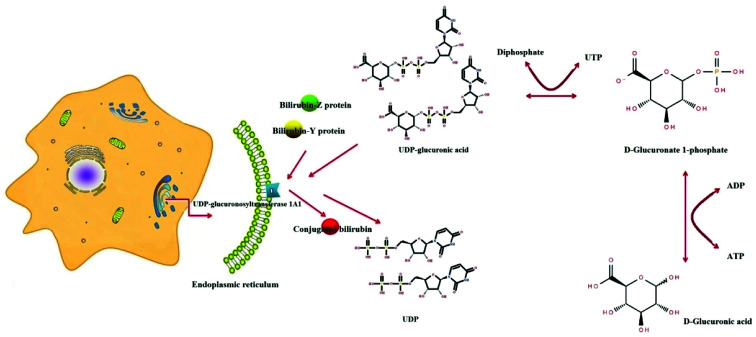
Functional metabolomics discover pentose and glucuronate interconversion pathways as promising targets for Yang Huang syndrome treatment with Yinchenhao Tang
Abstract
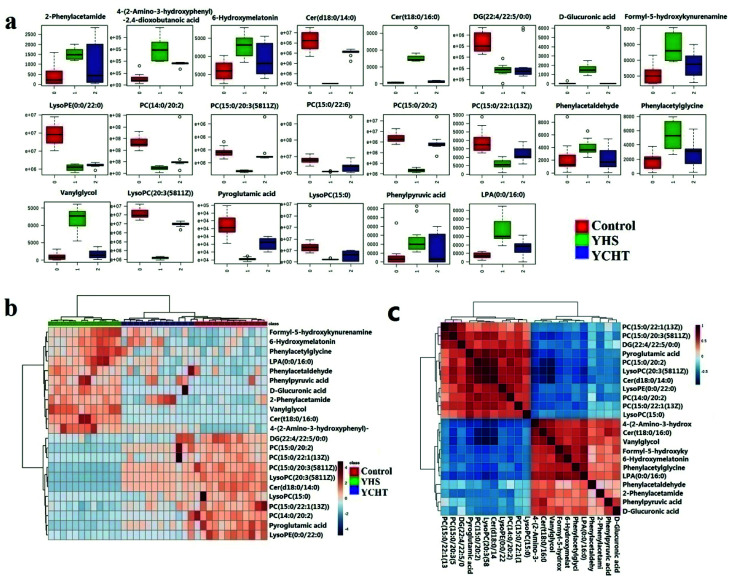
Yinchenhao Tang (YCHT), a classic traditional Chinese medicine (TCM) formulae, plays an important role in the treatment of Yang Huang syndrome (YHS).
Overview
The claims and statistics of this paper haven’t been checked yet.
Run the check — free, no account needed. It reads the open-access text and checks the sources it cites.
Integrity signals
Registry
Cites
Statistics
Figures
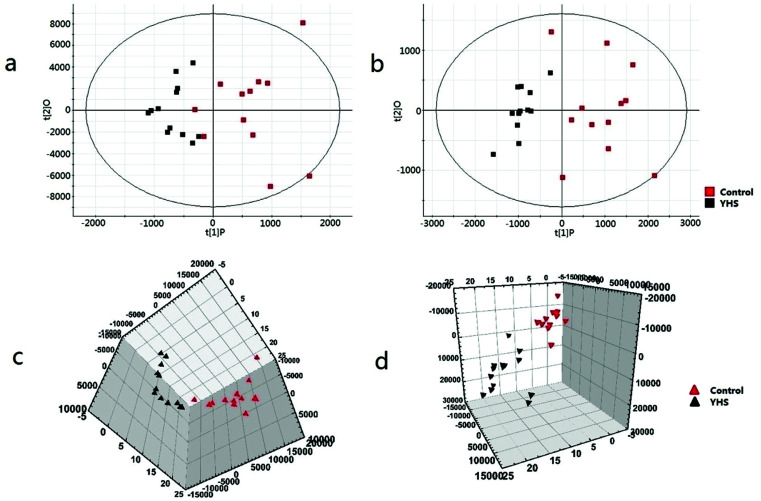
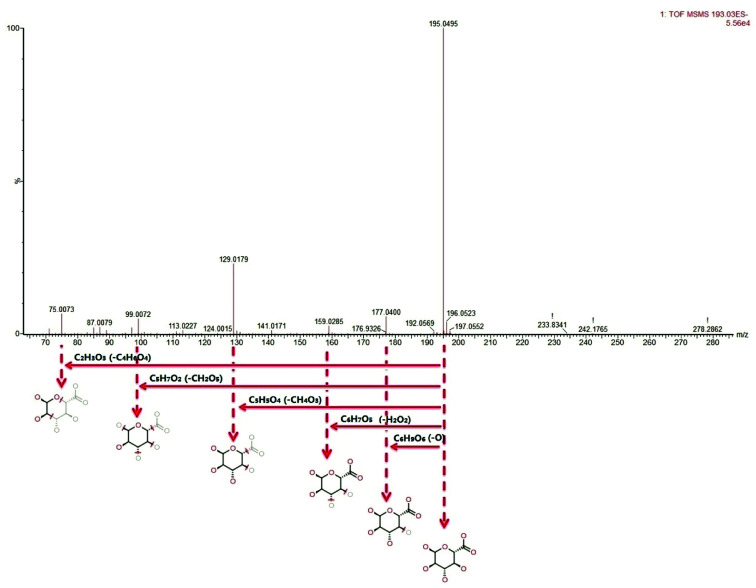
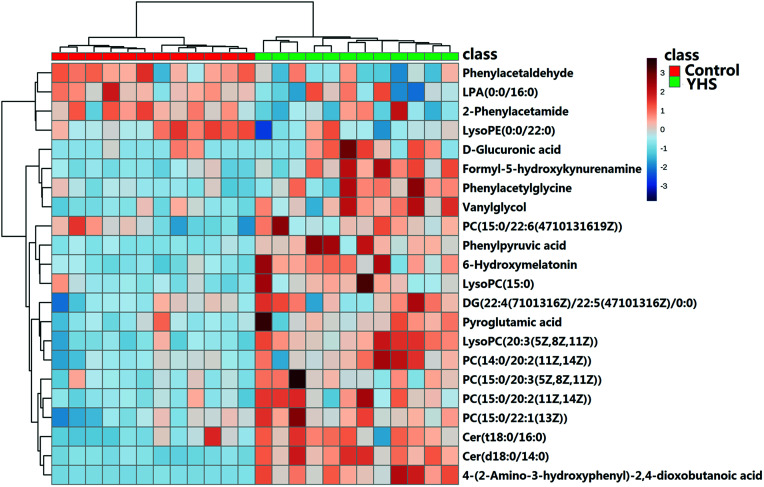
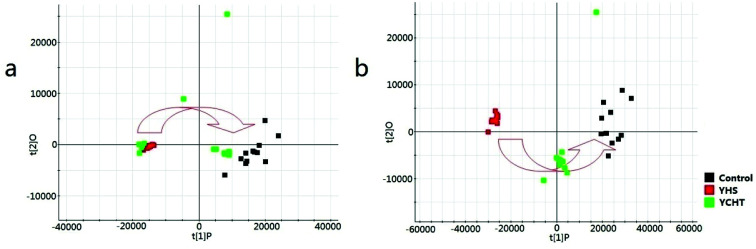
Verification
Claims the paper makes
The claims and statistics of this paper haven’t been checked yet.
Run the check — free, no account needed. It reads the open-access text and checks the sources it cites.
Claims other papers make about this one
Each is checked against this paper’s own text: does it say what the citing paper says it does?
In the citing paper
“An abnormal increase or decrease in the expression of these genes can result in several diseases, such as familial tumoral calcinosis.80,81”
From Effect of Fluoride on Gut Microbiota: A Systematic Review (2025) · cites this paper as [81]
Self-check
Percentages, sums and reported differences re-computed from the paper’s own numbers.
The self-check needs the paper’s full text.
Citations
Cites
Sheu, S.-Y., Ho, S.-R., Sun, J.-S., Chen, C.-Y., & Ke, C.-J. (2015) · BMC Complementary and Alternative Medicine · doi:10.1186/s12906-015-0520-z · Cited by 181
Research works printed but not linked: 33
- Müting, 1988, Dig. Dis. Sci., 33, 41, 10.1007/BF01536629 · DOI
- Z.Zhang , Shanghanlun , Peo Hygiene , Beijing , 2005 , p. 8
- Chu, 2016, J. Chromatogr. B: Anal. Technol. Biomed. Life Sci., 1015–1016, 50, 10.1016/j.jchromb.2016.02.007 · DOI
- Zhang, 2016, Sci. Rep., 6, 19333, 10.1038/srep19333 · DOI
- Wang, 2012, Mol. Cell. Proteomics, 11, 370, 10.1074/mcp.M111.016006 · DOI
- Zhang, 2017, Circulation, 137, 1
- S.Ballereau , E.Glaab and A.Kolodkin , et al., Functional Genomics, Proteomics, Metabolomics and Bioinformatics for Systems Biology , Systems Biology: Integrative Biology and Simulation Tools , ed. A. Prokop and B. Csukás , Springer , Netherlands , 2013 , pp. 3–41
- Wang, 2011, Analyst, 136, 5068, 10.1039/c1an15752c · DOI
- Wang, 2008, J. Pharm. Biomed. Anal., 46, 477, 10.1016/j.jpba.2007.11.014 · DOI
- Wang, 2008, J. Pharm. Biomed. Anal., 48, 1161, 10.1016/j.jpba.2008.07.028 · DOI
- Wang, 2015, Pharmacogn. Mag., 11, 417, 10.4103/0973-1296.153098 · DOI
- Zhang, 2016, Molecules, 21, E126, 10.3390/molecules21010126 · DOI
- Wang, 2013, Mol. Cell. Proteomics, 12, 1226, 10.1074/mcp.M112.021683 · DOI
- Hui, 2013, J. Pharm. Biomed. Anal., 75, 173
- Zhang, 2013, OMICS: J. Integr. Biol., 17, 224, 10.1089/omi.2012.0064 · DOI
- Yan, 2017, Sci. Rep., 7, 4211, 10.1038/s41598-017-04536-5 · DOI
- Zhang, 2017, RSC Adv., 7, 51069, 10.1039/C7RA09522H · DOI
- Zhang, 2014, Sci. Rep., 4, 6768, 10.1038/srep06768 · DOI
- Huang, 2017, Mol. Med. Rep., 16, 4583, 10.3892/mmr.2017.7149 · DOI
- Fang, 2016, Sci. Rep., 6, 37519, 10.1038/srep37519 · DOI
- Zhang, 2013, Evid.-Based Complementary Altern. Med., 2013, 257909
- Owens, 2005, Methods Enzymol., 400, 1, 10.1016/S0076-6879(05)00001-7 · DOI
- Kramer, 1957, Am. J. Dig. Dis., 2, 330, 10.1007/BF02231358 · DOI
- Yang, 2015, PLoS One, 7, e0132034, 10.1371/journal.pone.0132034 · DOI
- Gao, 2018, J. Chromatogr. B: Anal. Technol. Biomed. Life Sci., 1092, 286, 10.1016/j.jchromb.2018.06.032 · DOI
- Zhang, 2018, Phytomedicine, 84, 10.1016/j.phymed.2018.04.004 · DOI
- Zhang, 2014, Phytother. Res., 28, 526, 10.1002/ptr.5032 · DOI
- Wang, 2012, J. Proteomics, 75, 1411, 10.1016/j.jprot.2011.11.011 · DOI
- Nan, 2016, J. Chromatogr. B: Anal. Technol. Biomed. Life Sci., 1026, 217, 10.1016/j.jchromb.2015.12.004 · DOI
- Zhou, 2016, Chin. J. Nat. Med., 14, 561
- Wang, 2017, Phytomedicine, 10.1016/j.phymed.2017.12.014 · DOI
- Sun, 2018, J. Chromatogr. B: Anal. Technol. Biomed. Life Sci., 1081–1082, 41, 10.1016/j.jchromb.2018.02.035 · DOI
- Li, 20176, Sci. Rep., 7, 46234, 10.1038/srep46234 · DOI
Cited by
Sorted by citations
Effect of Fluoride on Gut Microbiota: A Systematic Review
Yasin, M., Zohoori, F. V., Kumah, E. A., Subramanian, M., Dean, P., & Orr, C. H. (2025) · Nutrition Reviews · doi:10.1093/nutrit/nuae202 · Cited by 8
Metadata
- Authors
- Sun, H., Zhang, A.-H., Song, Q., Fang, H., Liu, X.-Y., Su, J., Yang, L., Yu, M.-D., & Wang, X.-J.
- Affiliations
- National Chinmedomics Research Center
- ORCID
- Wang, Xi-jun
- Venue
- RSC Advances
- Publisher
- Royal Society of Chemistry (RSC)
- Published
- 2018
- Volume
- 8
- Issue
- 64
- Pages
- 36831-36839
- ISSN
- 2046-2069
- PMC
- PMC9089300
- Cited by
- 89
- References
- 1
- Language
- en
About these checks
Registry, retraction, Cites and statistics results are computed, not judged, with one exception: a printed reference that no index lists is read once by a model before it counts as a citation error. Claims are extracted by a model and kept only when their quote appears verbatim in the text; each cited source is then checked, with a model’s help, for whether it says what the claim relies on. Those verdicts can be wrong — read the claim’s quote and the cited source before relying on one.
Statistics and arithmetic are recomputed, not judged.
Confidence bands are shown only for fields calibrated on our annotated test set. None is calibrated yet, so no band is shown.
What counts as a claim ›How we measure confidence ›How we check this ›
Are you an author, or do you see a problem with this page? Request a review
