

The DOI matches its Crossref record; 2 of the 2 references it cites were found in a registry or an index.
Cascading Events, Technology and the Floods Directive: future challenges
Overview
The claims and statistics of this paper haven’t been checked yet.
Run the check — free, no account needed. It reads the open-access text and checks the sources it cites.
Integrity signals
Registry
Cites
Statistics
Figures
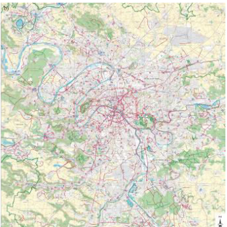
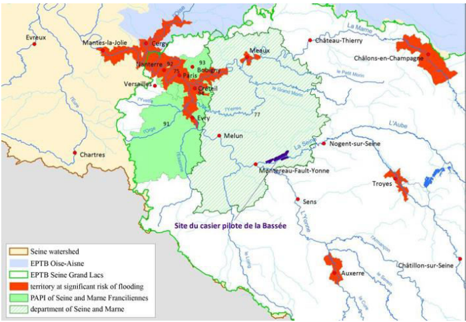
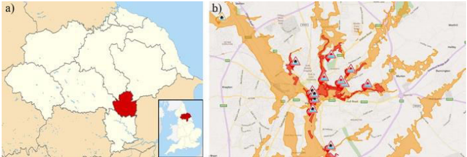
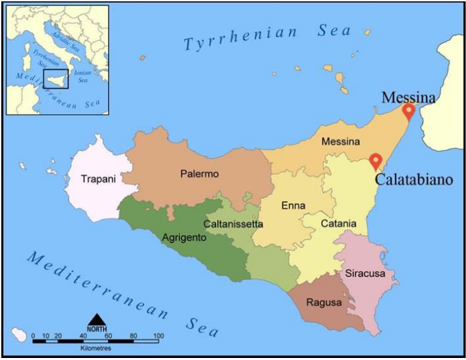
Verification
Claims the paper makes
The claims and statistics of this paper haven’t been checked yet.
Run the check — free, no account needed. It reads the open-access text and checks the sources it cites.
Claims other papers make about this one
Each is checked against this paper’s own text: does it say what the citing paper says it does?
In the citing paper
“Although watershed management that is climate resilient is becoming a standard management goal, the actual development of effective national approaches to flood management occurs along different trajectories depending upon varying national priorities and, especially, specific flood disasters (e.g.Santato et al. 2013, Serra-Llobet et al. 2013, Pescaroli and Nones, 2016).”
From Towards integrated flood management along the lower Rhine and Mississippi Rivers and the international legacy of the 2005 New Orleans Hurricanes Katrina–Rita flood disaster (2018) · cites this paper as Pescaroli and Nones, 2016
Self-check
Percentages, sums and reported differences re-computed from the paper’s own numbers.
The self-check needs the paper’s full text.
Citations
Cites
Designing Social Inquiry: Scientific Inference in Qualitative Research
King, G., Keohane, R. O., & Verba, S. (1994) · Princeton University Press · doi:10.1515/9781400821211 · Cited by 7,225
Globally networked risks and how to respond
Helbing, D. (2013) · Nature · doi:10.1038/nature12047 · Cited by 1,281
Research works printed but not linked: 47
- de Moel, 2009, Natural Hazards and Earth System Sciences, 9, 289, 10.5194/nhess-9-289-2009 · DOI
- Euripidou, 2004, Journal of Public Health, 26, 376, 10.1093/pubmed/fdh163 · DOI
- Nones M. and Pescaroli G. (2016). Implications of cascading effects for the EU Floods Directive.Int. Journal of River Basin Management. in press. doi: 10.1080/15715124.2016.1149074 · DOI
- Klijn, 2008, International Journal of River Basin Management, 6, 307, 10.1080/15715124.2008.9635358 · DOI
- Kundzewicz Z.W., Mata L.J., Arnell N.W., Döll P., Kabat P., Jimenez B., Miller K.A., Oki T., Sen Z. and Shiklomanox I. A. (2007). Freshwater resources and their management. inClimate change 2007: Impacts, Adaptation and Vulnerability. Contribution of Working Group II to the Fourth Assessment Report of the Intergovernmental Panel on Climate Change. edited by Parry M.L., Canziani O.F., Palutikof J.P., van der Linden P.J. and Hanson C.E. Cambridge University Press, Cambridge, UK
- Milly, 2002, Nature, 415, 514, 10.1038/415514a · DOI
- Parker, 2009, Meteorological Applications, 16, 103, 10.1002/met.119 · DOI
- Pescaroli, 2015, Natural Hazards Earth System Science, 15, 703, 10.5194/nhess-15-703-2015 · DOI
- Heintz, 2012, Water, 4, 135, 10.3390/w4010135 · DOI
- Merz, 2010, Natural Hazards Earth System Sciences, 10, 509, 10.5194/nhess-10-509-2010 · DOI
- Batica J. and Gourbesville P. (2014). Flood Resilience Index -methodology And Application.International Conference of Hydroinformatics, paper433
- Roos A. and Van der Geer I. (2008). New approaches for flood risk management in the Netherlands.Proceedings of the 4thInternational Symposium on Flood Defence, 6–8 May 2008, Toronto, Canada
- Bubeck P., Kreibich H., Penning-Rowsell E.C., Botzen W.J.W., De Moel H. and Klijn F. (2015). Explaining differences in flood management approaches in Europe and in the USA – a comparative analysis.Journal of Flood Risk Management. in press. doi: 10.1111/jfr3.1215 · DOI
- Van Alphen, 2009, Journal of Flood Risk Management, 2, 285, 10.1111/j.1753-318X.2009.01045.x · DOI
- Pescaroli, 2015, Planet@Risk, 2, 1
- Müller, 2013, International Journal of Disaster Risk Science, 4, 115, 10.1007/s13753-013-0013-y · DOI
- Nones, 2015, Water and Environmental Journal, 29, 412, 10.1111/wej.12129 · DOI
- Birkmann J., Kienberger S. and Alexander D.E. (2014).Assessment of Vulnerability to Natural Hazards: A European Perspective. Eds. Elsevier.
- Pescaroli G. and Alexander D.E. (2016). Critical infrastructure, panarchies and the vulnerability paths of cascading disasters.Natural Hazards, 1–18. doi: 10.1007/s11069-016-2186-3 · DOI
- Alexander D.E. (2000).Confronting Catastrophe. Terra Publishing, Harpenden. Oxford University Press, New York
- Burzel A., Hounjet M., Becker B.P.J., Di Pietro A. and Pollino M. (2014). Towards A Decision Support System For Consequence Analysis of Flooding On Critical Infrastructure.International Conference of Hydroinformatics, paper99.
- Evers, 2013, International Journal of River Basin Management, 11, 139, 10.1080/15715124.2013.811416 · DOI
- Dráb, 2010, Natural Hazards Earth System Sciences, 10, 1977, 10.5194/nhess-10-1977-2010 · DOI
- Birkmann, 2010, Sustainability Science, 5, 171, 10.1007/s11625-010-0108-y · DOI
- Khan, 2000, Process Safety Progress, 19, 40, 10.1002/prs.680190110 · DOI
- May F. (2007). Cascading Disaster Models in Postburn Flash Flood. in Butler B.W., Cook W.The Fire Environment – Innovations, Management and Policy; Conference Proceedings. US Department of Agriculture Forest Service, Washington, DC, 446–463
- Gill J.C. and Malamud B.D. (2016). Hazard Interactions and Interaction Networks (Cascades) within Multi-Hazard Methodologies.Earth System Dynamics Discussion. doi:10.5194/esd-2015-94 · DOI
- Hellström, 2007, Safety Science, 45, 415, 10.1016/j.ssci.2006.07.007 · DOI
- Ansell, 2010, Journal of Contingencies and Crisis Management, 18, 195, 10.1111/j.1468-5973.2010.00620.x · DOI
- Labaka, 2016, Technological Forecasting & Social Change, 103, 21, 10.1016/j.techfore.2015.11.005 · DOI
- Tockner, 2010, Freshwater Biology, 55, 135, 10.1111/j.1365-2427.2009.02371.x · DOI
- Slowik, 2015, Geomorphology, 251, 50, 10.1016/j.geomorph.2015.05.031 · DOI
- Ashton V., Aziz H., Keith S. and Smith T. (2003). Review of EU Flood R&D Projects. Report prepared as a part of the group management project on theM.Sc. Water Resources Technology and Management Course, University of Birmingham, Department of Civil Engineering, Birmingham
- Kay, 2009, Climatic Change, 92, 41, 10.1007/s10584-008-9471-4 · DOI
- Young, 2004, Science of The Total Environment, 322, 3, 10.1016/S0048-9697(03)00446-7 · DOI
- Marzo, 2012, Natural Hazards and Earth System Sciences, 12, 3241, 10.5194/nhess-12-3241-2012 · DOI
- Shaluf, 2007, Disaster Prevention and Management, 16, 380, 10.1108/09653560710758332 · DOI
- Galderisi, 2008, Natural Hazards, 46, 221, 10.1007/s11069-008-9224-8 · DOI
- Cozzani, 2010, Journal of Hazardous Materials, 175, 501, 10.1016/j.jhazmat.2009.10.033 · DOI
- Krausmann, 2011, Natural Hazards, 59, 285, 10.1007/s11069-011-9754-3 · DOI
- Whitfield, 2002, Process safety and environmental protection, 80, 40, 10.1205/095758202753502406 · DOI
- Suchara, 2008, Environmental Pollution, 151, 352, 10.1016/j.envpol.2007.06.029 · DOI
- Ulbrich, 2003, Weather, 58, 371, 10.1256/wea.61.03A · DOI
- Stachel, 2005, Journal of Environmental Science and Health, 40, 265, 10.1081/ESE-200045531 · DOI
- Hudec, 2004, Loss Prevention Bulletin (LPB), LPB180, 36
- Vácha, 2003, Plant Soil and Environment, 49, 307, 10.17221/4129-PSE · DOI
- Crichton, 2008, The Geneva Papers, 33, 117
Cited by
Sorted by citations
Hudson, P. F. (2018) · International Journal of River Basin Management · doi:10.1080/15715124.2017.1411921 · Cited by 6
Metadata
- Authors
- Pescaroli, G., & Nones, M.
- Venue
- E3S Web of Conferences
- Publisher
- EDP Sciences
- Published
- 2016
- Volume
- 7
- Pages
- 07003
- ISSN
- 2267-1242
- Cited by
- 15
- References
- 2
About these checks
Registry, retraction, Cites and statistics results are computed, not judged, with one exception: a printed reference that no index lists is read once by a model before it counts as a citation error. Claims are extracted by a model and kept only when their quote appears verbatim in the text; each cited source is then checked, with a model’s help, for whether it says what the claim relies on. Those verdicts can be wrong — read the claim’s quote and the cited source before relying on one.
Statistics and arithmetic are recomputed, not judged.
Confidence bands are shown only for fields calibrated on our annotated test set. None is calibrated yet, so no band is shown.
What counts as a claim ›How we measure confidence ›How we check this ›
Are you an author, or do you see a problem with this page? Request a review
