

Factors associated with the progression of gastric intestinal metaplasia: a multicenter, prospective cohort study
Open accessThe DOI matches its Crossref record; 47 of the 47 references it cites were found in a registry or an index.
Abstract
Abstract Background and study aims Gastric cancer (GC) is usually preceded by premalignant gastric lesions (GPLs) such as gastric intestinal metaplasia (GIM). Information on risk factors associated with neoplastic progression of GIM are scarce. This study aimed to identify predictors for progression of GIM in areas with low GC incidence. Patients and methods The Progression and Regression of Precancerous Gastric Lesions (PROREGAL) study includes patients with GPL. Patients underwent at least two upper endoscopies with random biopsy sampling. Progression of GIM means an increase in severity according to OLGIM (operative link on gastric intestinal metaplasia) during follow-up (FU). Family history and lifestyle factors were determined through questionnaires. Serum Helicobacter pylori infection, pepsinogens (PG), gastrin-17 and GC-associated single nucleotide polymorphisms (SNPs) were determined. Cox regression was performed for risk analysis and a chi-squared test for analysis of single nucleotide polymorphisms. Results Three hundred and eight patients (median age at inclusion 61 years, interquartile range (IQR: 17; male 48.4 %; median FU 48 months, IQR: 24) were included. During FU, 116 patients (37.7 %) showed progression of IM and six patients (1.9 %) developed high-grade dysplasia or GC. The minor allele (C) on TLR4 (rs11536889) was inversely associated with progression of GIM (OR 0.6; 95 %CI 0.4–1.0). Family history (HR 1.5; 95 %CI 0.9–2.4) and smoking (HR 1.6; 95 %CI 0.9–2.7) showed trends towards progression of GIM. Alcohol use, body mass index, history of H. pylori infection, and serological markers were not associated with progression. Conclusions Family history and smoking appear to be related to an increased risk of GIM progression in low GC incidence countries. TLR4 (rs11536889) showed a significant inverse association, suggesting that genetic information may play a role in GIM progression.
Overview
The claims and statistics of this paper haven’t been checked yet.
Free: it reads the open-access text and checks the first 5 claims that cite a source we can check. Create a free account to check every claim.
Integrity signals
Registry
Cites
Statistics
Figures
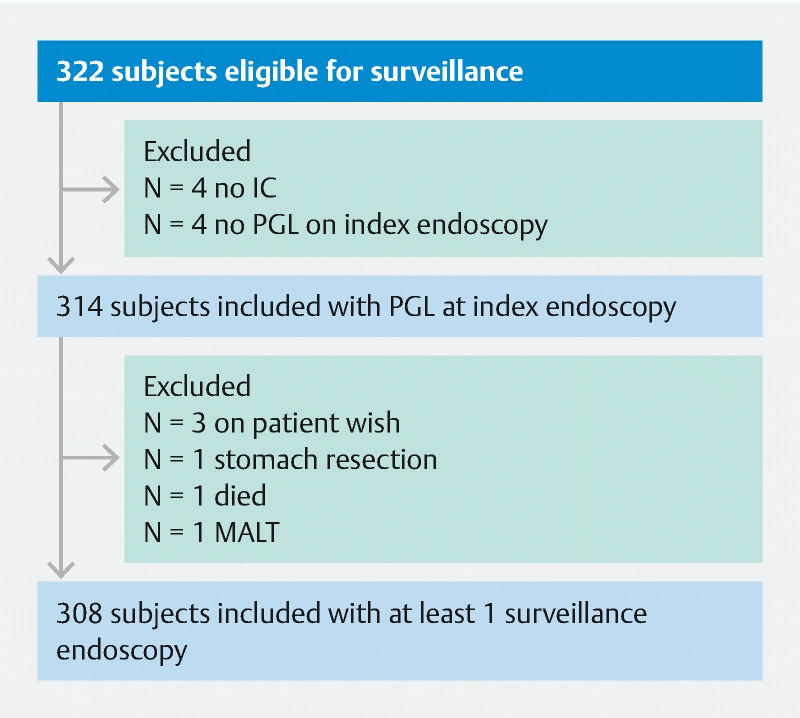
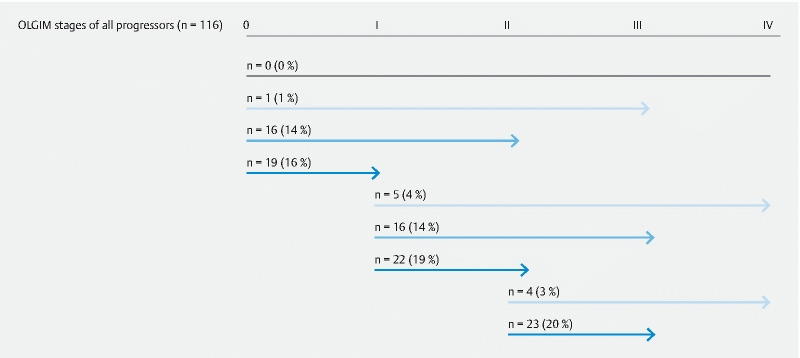
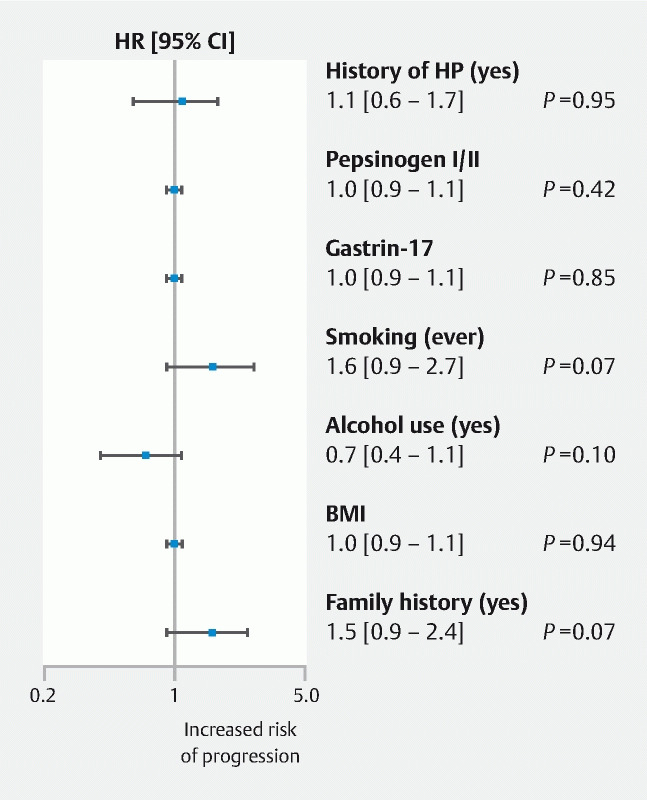
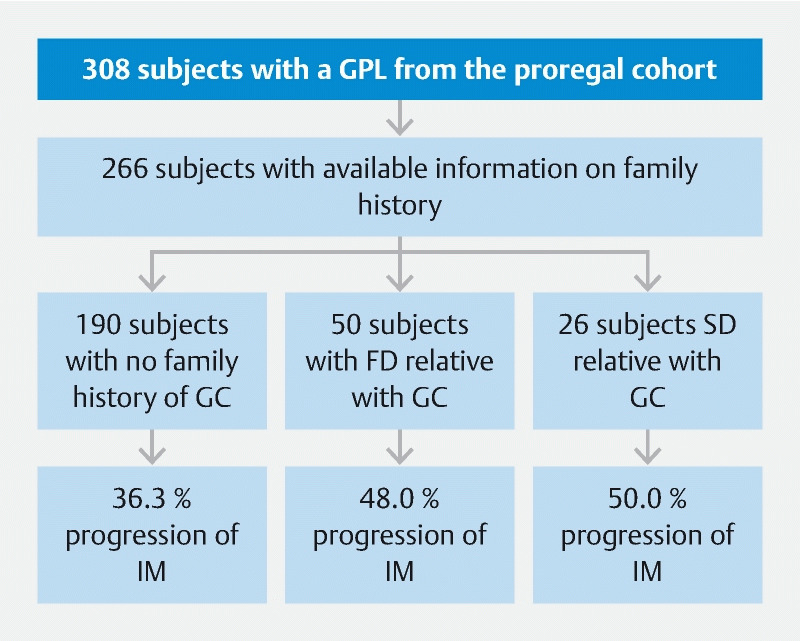
Verification
Claims the paper makes
The claims and statistics of this paper haven’t been checked yet.
Free: it reads the open-access text and checks the first 5 claims that cite a source we can check. Create a free account to check every claim.
Claims other papers make about this one
Each is checked against this paper’s own text: does it say what the citing paper says it does?
The source backs part of the claim, not all of it — or backs it for a different population, condition or comparison.
In the citing paper
“the risk of progression of AG to gastric adenocarcinoma ranges from 0.1 % to 0.3 % per year (similar to the estimated rate of malignant progression from nondysplastic Barrett’s esophagus or low-risk colorectal adenomas), but may be higher, depending on AG severity, extent, concomitant IM, and other factors.22–24”
From AGA Clinical Practice Update on the Diagnosis and Management of Atrophic Gastritis: Expert Review (2021) · cites this paper as [24]
Experimental — accuracy not yet measured
Self-check
Percentages, sums and reported differences re-computed from the paper’s own numbers.
The self-check needs the paper’s full text.
Citations
Cites
Schistosomes, liver flukes and Helicobacter pylori.
(1994) · PubMed · Cited by 2,352
Peduzzi, P., Concato, J., Feinstein, A. R., & Holford, T. R. (1995) · Journal of Clinical Epidemiology · doi:10.1016/0895-4356(95)00048-8 · Cited by 2,154 · cited 1×
“To avoid overfitting of the Cox regression model we have used an event per variable (EPV) of > 10 with a central limit theorem of 10 cases as generally proposed in sample size considerations for proportional hazards analysis [27].”
MethodWong, B. C.-Y., Lam, S. K., Wong, W. M., Chen, J. S., Zheng, T. T., Feng, R. E., Lai, K. C., Hu, W. H. C., Yuen, S. T., Leung, S. Y., et al. (2004) · JAMA · doi:10.1001/jama.291.2.187 · Cited by 1,435 · cited 1×
“pylori eradication were mostly seen in patients without premalignant gastric lesions at baseline [29, 30].”
BackgroundCooney, R., Baker, J., Brain, O., Danis, B., Pichulik, T., Allan, P., Ferguson, D. J. P., Campbell, B. J., Jewell, D., & Simmons, A. (2010) · Nature Medicine · doi:10.1038/nm.2069 · Cited by 1,047 · cited 1×
“Rs2241880 is a functional SNP that results in an amino acid change of threonine to alanine at position 300 in the ATG16L1 protein, which in turn causes impaired autophagy [41].”
BackgroundPimentel-Nunes, P., Libânio, D., Marcos-Pinto, R., Areia, M., Leja, M., Esposito, G., Garrido, M., Kikuste, I., Megraud, F., Matysiak-Budnik, T., et al. (2019) · Endoscopy · doi:10.1055/a-0859-1883 · Cited by 993 · cited 3×
“Both the AGA guidelines as well as the updated MAPS guidelines recommend providing more intensive surveillance in this at-risk population [8, 9].”
BackgroundMethodSelf-citationPlummer, M., Franceschi, S., Vignat, J., Forman, D., & de Martel, C. (2015) · International Journal of Cancer · doi:10.1002/ijc.28999 · Cited by 957 · cited 1×
“These in particular include atrophic gastritis (AG), gastric intestinal metaplasia (GIM), and dysplasia [1, 2].”
BackgroundDinis-Ribeiro, M., Areia, M., de Vries, A., Marcos-Pinto, R., Monteiro-Soares, M., O’Connor, A., Pereira, C., Pimentel-Nunes, P., Correia, R., Ensari, A., et al. (2012) · Endoscopy · doi:10.1055/s-0031-1291491 · Cited by 680
Self-citationBanks, M., Graham, D., Jansen, M., Gotoda, T., Coda, S., di Pietro, M., Uedo, N., Bhandari, P., Pritchard, D. M., Kuipers, E. J., et al. (2019) · Gut · doi:10.1136/gutjnl-2018-318126 · Cited by 647
Self-citationMa, J.-L., Zhang, L., Brown, L. M., Li, J.-Y., Shen, L., Pan, K.-F., Liu, W.-D., Hu, Y., Han, Z.-X., Crystal-Mansour, S., et al. (2012) · JNCI: Journal of the National Cancer Institute · doi:10.1093/jnci/djs003 · Cited by 457 · cited 1×
“pylori eradication were mostly seen in patients without premalignant gastric lesions at baseline [29, 30].”
BackgroundLeung, W. K. (2004) · Gut · doi:10.1136/gut.2003.034629 · Cited by 437 · cited 1×
“Besides genetic factors, smoking, alcohol use and increased BMI have also been identified as possible risk factors for neoplastic progression of GPL, in particular in high-risk populations [16, 17].”
Background
Cited by
AGA Clinical Practice Update on the Diagnosis and Management of Atrophic Gastritis: Expert Review
Shah, S. C., Piazuelo, M. B., Kuipers, E. J., & Li, D. (2021) · Gastroenterology · doi:10.1053/j.gastro.2021.06.078 · Cited by 560
Self-citationDinis-Ribeiro, M., Libânio, D., Uchima, H., Spaander, M. C. W., Bornschein, J., Matysiak-Budnik, T., Tziatzios, G., Santos-Antunes, J., Areia, M., Chapelle, N., et al. (2025) · Endoscopy · doi:10.1055/a-2529-5025 · Cited by 193
Self-citationACG Clinical Guideline: Diagnosis and Management of Gastric Premalignant Conditions
Morgan, D. R., Corral, J. E., Li, D., Montgomery, E. A., Riquelme, A. J., Kim, J. J., Sauer, B. G., & Shah, S. C. (2025) · The American Journal of Gastroenterology · doi:10.14309/ajg.0000000000003350 · Cited by 118
“By contrast, some individuals with mild GPMC (e.g., mild unifocal AG or GIM) may show regression, particularly after con fi rmed H. pylori eradication and improvement in the severity of background gastritis (22,120,122,123,125,126).”
Esposito, G., Dottori, L., Pivetta, G., Ligato, I., Dilaghi, E., & Lahner, E. (2022) · Nutrients · doi:10.3390/nu14081672 · Cited by 108
Gastric epithelial histology and precancerous conditions
Yang, H., Yang, W., & Hu, B. (2022) · World Journal of Gastrointestinal Oncology · doi:10.4251/wjgo.v14.i2.396 · Cited by 48
Benites-Goñi, H., Cabrera-Hinojosa, D., Latorre, G., Hernández, A. V., Uchima, H., & Riquelme, A. J. (2025) · Therapeutic Advances in Gastroenterology · doi:10.1177/17562848251325461 · Cited by 50
“41 Lee et al. 11 found that the pepsinogen ratio could contribute as a significant predictor of progression from OLGIM I to OLGIM II–IV.”
Drnovšek, J., Homan, M., Zidar, N., & Šmid, L. M. (2024) · Radiology and Oncology · doi:10.2478/raon-2024-0028 · Cited by 41
Molecular Alterations in Gastric Intestinal Metaplasia
Jonaitis, P., Kupčinskas, L., & Kupčinskas, J. (2021) · International Journal of Molecular Sciences · doi:10.3390/ijms22115758 · Cited by 31
Pseudopyloric Metaplasia Is Not Associated With the Development of Gastric Cancer
Dilaghi, E., Baldaro, F., Pilozzi, E., Conti, L., Palumbo, A., Esposito, G., Annibale, B., & Lahner, E. (2021) · The American Journal of Gastroenterology · doi:10.14309/ajg.0000000000001390 · Cited by 24
The oral-gut axis in chronic atrophic gastritis: current perspectives and integrated strategies
Zha, T., Ding, Y., Xu, X., Zhang, Y., Guo, J., Ge, H., & Xu, L. (2026) · Frontiers in Immunology · doi:10.3389/fimmu.2025.1699501 · Cited by 14
Zambuzzi, W. F., Ferreira, M. R., Wang, Z., & Peppelenbosch, M. P. (2025) · Biology · doi:10.3390/biology14060669 · Cited by 13
“…weight loss intermittent fasting would be expected to confer protection from gastric cancer development [109], in a large prospective multicenter cohort study body weight loss was not associated with reduced propensity to progression from intestinal metaplasia to full-blown gastric cancer [110].”
Self-citationIs intestinal metaplasia the point of no return in the progression of gastric carcinogenesis?
Wu, S.-R., Liu, Y.-H., & Shi, Y.-Q. (2021) · Chinese Medical Journal · doi:10.1097/cm9.0000000000001889 · Cited by 8
“In GC and GPLs, a family history of GC could still be viewed as an independent risk, even for IM.([34,35]) In a Chinese case-control study, the toll like receptor 4 (TLR4) rs11536889C allele increased the risk of GC.”
BackgroundInfluentialSchnizler, S., Naumann, M., & Vieth, M. W. (2024) · Histochemistry and Cell Biology · doi:10.1007/s00418-024-02345-2 · Cited by 3
Gastric intestinal metaplasia and gastric epithelial dysplasia – precursor lesions of gastric cancer
Ботезату, А. Н. (2025) · Moldovan Journal of Health Sciences · doi:10.52645/mjhs.2025.1.09 · Cited by 3
Optimizing Benefits‐Harms of H. pylori Screen‐and‐Treat Programs Tailored to the Regional Settings
Mülder, D. T., Yi-Chia, L., Dinis-Ribeiro, M. J., McLeod, M., Park, J. Y., & Lansdorp‐Vogelaar, I. (2026) · Helicobacter · doi:10.1111/hel.70111 · Cited by 2
“The feasibility of a combined approach has been established both in Asia [43] and Europe [44].”
Lee, M. W., Kim, N., Nam, K., Kim, S. E., Baik, G. H., Choi, S., Lee, W., Kim, H. J., Lee, J. Y., & Song, H. J. (2026) · Sex- and Gender-Specific Biomedicine · doi:10.65400/sgbm.2026.1.2.145 · Cited by 2
Ferreira, A. I., Capela, T. L., Silva, V. M., Xavier, S. A., Carvalho, P. B., Magalhães, J. T., & Cotter, J. B. (2023) · Scandinavian Journal of Gastroenterology · doi:10.1080/00365521.2023.2272563 · Cited by 2
“Although with a smaller effect, the presence of second-degree relative with history of GC also increases the risk for GC [2, 49].”
BackgroundA review of potential mechanisms and treatments of gastric intestinal metaplasia
Wu, Y., Zhang, K., Zheng, Y., & Jin, H. (2024) · European Journal of Gastroenterology & Hepatology · doi:10.1097/meg.0000000000002903 · Cited by 2
Prakash, P., Jain, S., Trieu, H., Chow, K., Karunasiri, D., Liang, T., Yung, E. E., Mason, H. M., Tan, H., & Tabibian, J. H. (2023) · BMC Gastroenterology · doi:10.1186/s12876-023-02797-1 · Cited by 2
“Smoking history and a family history of GAC, identified as risk factors for GAC and GIM progression in prior studies, were not reproduced as significantly more prevalent in patients with multifocal GIM at repeat EGD [13, 14].”
BackgroundToll-like receptor 10 gene polymorphism and risk of multiple sclerosis among Iraqi patients
Atiyah, N. S., Fadhil, H. Y., & Ad'hiah, A. H. (2022) · Egyptian Journal of Medical Human Genetics · doi:10.1186/s43042-022-00301-0 · Cited by 1
Kapteijn, N., Marijnissen, F. E., Pluimers, J. K. F., Holster, I. L., Capelle, L. G., Schot, I., Anten, M.-P., Witteman, E. M., ter Borg, F., Burger, J. P. W., et al. (2026) · Clinical and Translational Gastroenterology · doi:10.14309/ctg.0000000000001006 · Cited by 3
“Although smoking is an established risk factor, (18), and has been previous identi fi ed in this cohort (19), dietary factors such as high salt intake and alcohol consumption have also been implicated in gastric carcinogenesis (2,12,13,20).”
Self-citationGastric intestinal metaplasia development in African American predominant United States population
Ahmad, A. I., Lee, A. M., Caplan, C., Wikholm, C., Pothoulakis, I., Almothafer, Z., Raval, N., Marshall, S., Mishra, A. K., Hodgins, N. E., et al. (2022) · World Journal of Gastrointestinal Endoscopy · doi:10.4253/wjge.v14.i10.597 · Cited by 1
Zacharakis, G., Dahale, A. S., Elbary, E. R. A., Babikir, R. R. E., Alla, M. A. N., & Mustafa, M. O. (2024) · Saudi Journal of Gastroenterology · doi:10.4103/sjg.sjg_172_24 · Cited by 1
Cytokine profile in patients with atrophic gastritis in comorbidity with thyroid gland pathology
Mosiychuk, L. М., Tatarchuk, О. М., Konenko, I. S., & Петішко, О. П. (2022) · GASTROENTEROLOGY · doi:10.22141/2308-2097.56.3.2022.502
Kermansaravi, M., Valizadeh, R., & Farazmand, B. (2022) · 4open · doi:10.1051/fopen/2022019
Diagnosis and Management of Gastric Intestinal Metaplasia
Yoon, J. Y., Li, D., & Shah, S. C. (2023) · Springer eBooks · doi:10.1007/978-3-031-19671-3_47
Wang, H., Liu, J., Froze, A., Wu, Z., Somma, J., & Fu, Z. (2025) · Pathology - Research and Practice · doi:10.1016/j.prp.2025.156189
Prakash, P., Jain, S., Trieu, H., Chow, K. W., Karunasiri, D., Liang, T., Yung, E. E., Mason, H. M., Tan, H. T., & Tabibian, J. H. (2023) · Figshare · doi:10.6084/m9.figshare.22978309
Han, X., Liu, J., Yanan, W., Ren, Q., Hui, X., & Liang, G. (2026) · Biomedicines · doi:10.3390/biomedicines14112484
Kang, J., Ding, S., & Guo, X. (2026) · Cells · doi:10.3390/cells15212020
Metadata
- Authors
- Mommersteeg, M. C., Eikenboom, E. L., Nieuwenburg, S. A. V., Yu, B., den Hollander, W. J., Holster, I. L., den Hoed, C. M., Capelle, L. G., Tang, T. J., Anten, M.-P., Prytz-Berset, I., Witteman, E. M., ter Borg, F., Burger, J. P. W., Bruno, M. J., Fuhler, G. M., Peppelenbosch, M. P., Doukas, M., Kuipers, E. J., & Spaander, M. C. W.
- Affiliations
- Erasmus MC (NL)
- Leiden University Medical Centre, Leiden, The Netherlands
- Departments of Gastroenterology and Hepatology, Erasmus University Medical Centre, Rotterdam, The Netherlands
- Meander Medisch Centrum (NL)
- IJsselland Ziekenhuis (NL)
- Sint Franciscus Gasthuis (NL)
- More and Romsdal Trust Ålesund, Ålesund, Norway
- Canisius-Wilhelmina Ziekenhuis (NL)
- Deventer Hospital, Deventer, The Netherlands
- Rijnstate Hospital (NL)
- ORCID
- Venue
- Endoscopy International Open
- Publisher
- Georg Thieme Verlag KG
- Published
- 2021-02-18
- Volume
- 09
- Issue
- 03
- Pages
- E297-E305
- ISSN
- 2196-9736 (ISSN-L)
- 2364-3722
- PMC
- PMC7892268
- OpenAlex
- W3130942211
- Cited by
- 27
- References
- 46
- Citations by year
- 2026: 3 · 2025: 6 · 2024: 4 · 2023: 4 · 2022: 6 · 2021: 4
- FWCI
- 4.23
- Type
- journal article
- Language
- en
- Open access
- gold
- doi.org
- Licence
- Locations
- Endoscopy International Open (publishedVersion, cc-by-nc-nd)
- PubMed Central (publishedVersion, cc-by-nc-nd)
- PubMed (publishedVersion)
- EUR Research Repository (Erasmus University Rotterdam) (submittedVersion, cc-by-nc-nd)
- DOAJ (DOAJ: Directory of Open Access Journals) (submittedVersion, cc-by-sa)
- Topics
- Health Sciences › Medicine › Gastroenterology › Helicobacter pylori-related gastroenterology studies
- Health Sciences › Medicine › Oncology › Gastric Cancer Management and Outcomes
- Health Sciences › Medicine › Surgery › Esophageal Cancer Research and Treatment
- Keywords
- gastric intestinal metaplasia, tumor progression, gastric cancer, premalignant gastric lesions, TLR4, family history (medicine), smoking, genetic susceptibility, high-grade dysplasia
About these checks
Registry, retraction, Cites and statistics results are computed, not judged, with one exception: a printed reference that no index lists is read once by a model before it counts as a citation error. Claims are extracted by a model and kept only when their quote appears verbatim in the text; each cited source is then checked, with a model’s help, for whether it says what the claim relies on. Those verdicts can be wrong — read the claim’s quote and the cited source before relying on one.
Statistics and arithmetic are recomputed, not judged.
Confidence bands are shown only for fields calibrated on our annotated test set. None is calibrated yet, so no band is shown.
What counts as a claim ›How we measure confidence ›How we check this ›
Are you an author, or do you see a problem with this page? Request a review
Data sources
Bibliographic data: Semantic Scholar, OpenAlex, Crossref.
Contains information from the Semantic Scholar Academic Graph Datasets, made available under the ODC Attribution License (ODC-BY 1.0).
Semantic Scholar’s data is described in: Kinney, R., et al. (2023). The Semantic Scholar Open Data Platform. arXiv:2301.10140.
